Why MHA Vigilantes Season 2 Is the Best My Hero Academia Anime in Years
When MHA Vigilantes Season 2 premiered in January 2026, most fans expected a decent side story — a pleasant distraction while we waited for the main series to figure itself out. What we got instead was a character-driven masterpiece that makes the original My Hero Academia look like it’s been playing on easy mode. This isn’t hot take bait. This is a legitimate argument that the prequel spin-off has become the superior show.
The Vigilantes anime has always operated in the shadows of its bigger sibling. Season 1 was solid — gritty, personal, and refreshingly small-scale. But MHA Vigilantes Season 2 takes every promise from that first season and cranks the dial until it breaks. Thirteen episodes of street-level heroism that hit harder than anything Endeavor or Deku have done in seasons.
And here’s the thing nobody expected: the MHA prequel is outperforming the flagship on emotional resonance alone. No world-ending stakes. No inherited powers from legendary heroes. Just a guy in a hoodie sliding across Naruhata’s backstreets because he can’t stand by and do nothing. That simplicity is exactly why Vigilantes Season 2 resonates so deeply.
Street-Level Storytelling Beats Shonen Spectacle
The original My Hero Academia operates on a scale that’s become exhausting. United States of Smash. Multiple wars. World-ending threats every other arc. It’s spectacular, sure, but it’s also numbing. When every fight determines the fate of hero society itself, nothing feels urgent anymore. The explosions just become noise.
MHA Vigilantes understands something the main series forgot somewhere around season four: constraints create tension. Koichi Haimawari isn’t fighting to save the world. He’s fighting to save his neighborhood. His block. The people he sees at the convenience store every week. And that makes every single punch matter more than another continental collision ever could.
The Vigilantes Season 2 review consensus across the community keeps circling back to this word: grounded. When Knuckleduster bleeds, it’s not a dramatic slash across the cheek that heals by next episode. It’s ugly and real and costs him something. When Pop Step performs, you hear the exhaustion in her voice. These are people operating without safety nets, without hero licenses, without the institutional backing that characters in the main series take for granted every single day.
This season adapts the manga’s middle chapters — the Naruhata lockdown arc and the escalating conflict with Number 6 — and every episode reinforces why MHA Vigilantes Season 2 works so well. The stakes are personal. The victories are small and hard-won. The losses cut deep and leave visible scars.
Consider the structure: where mainline MHA builds toward massive climactic battles across entire city districts, Vigilantes Season 2 confines itself to Naruhata and its surrounding blocks. That constraint isn’t a limitation — it’s the entire point. You know these streets. You know the shop owners, the late-night ramen cart guy, the kids who hang out at the playground Koichi patrols. When danger comes to this neighborhood, you feel it because you’ve been living in it.
Why Unlicensed Heroism Hits Different
Here’s what makes Crawler Haimawari compelling in a way Deku stopped being seasons ago: Koichi isn’t chosen. All Might didn’t pick him. He doesn’t have a destiny written in stars. He’s just a guy with a slide-and-glide Quirk who decided that watching people get hurt wasn’t acceptable. That distinction matters more than any power-up.
In the Illegals anime, the line between heroism and vigilantism isn’t theoretical philosophy debated in a classroom — it’s daily survival on rain-slicked streets at two in the morning. Koichi gets hurt doing what licensed heroes won’t bother with. He cleans up messes that the official hero system ignores because there’s no camera crew, no PR value, no agency contract worth the effort.
And Vigilantes Season 2 makes you feel every bruise. When Koichi takes a hit, he doesn’t bounce back with newfound determination. He limps home, patches himself up with convenience store supplies, and goes back out the next night because nobody else will. That repetition — that grinding, unglamorous persistence — is more heroic than any Plus Ultra moment the main series has delivered in years.
The show doesn’t romanticize this life. Being an unlicensed hero in MHA Vigilantes means no insurance, no backup, no legal protection. It means running from the same police who should be thanking you. It means operating in a gray zone where one wrong move turns you from savior to criminal. Season 2 portrays that reality with a rawness the main series never dares to touch.
Koichi Crawler: The Hero MHA Needed But Didn’t Deserve
It is worth stopping on Koichi Crawler for a minute — because this character is doing things that the mainline MHA cast hasn’t managed in years: actually growing in ways that feel earned and permanent.
Season 2 forces Koichi into territory he never wanted to enter. The MHA prequel stops being about a friendly neighborhood helper and becomes about someone who has to choose — again and again — between his own safety and the people who rely on him. The writing gives him genuine moral dilemmas, not the manufactured kind where the right answer is obvious. These are the kind of choices that leave marks on your soul.
What makes the Vigilantes anime review conversation so heated right now is this character work. Koichi isn’t powerful. His Quirk lets him slide on the ground and crawl on walls. That’s the whole thing. No super strength, no energy blasts, no one-for-all inheritance passed down from a legendary hero. He’s just a guy who shows up. And somehow he’s become the most compelling protagonist in the entire My Hero Academia Vigilantes universe.
The Vigilantes Season 2 review threads keep highlighting the same defining moment — the episode where Koichi chooses to keep fighting despite knowing it could cost him everything he’s built. No dramatic power-up. No last-second awakening. Just a guy who refuses to stop showing up for people who have nobody else. That’s the kind of heroism that hits different when you’re an adult watching anime and thinking about the people who show up for you when nobody’s watching.
Compare that to Bakugo’s growth, which is compelling but ultimately still lives within the safety net of hero privilege. Koichi has no net. No agency. No ranking. He’s out there because the alternative — doing nothing — isn’t something he can live with. That’s the MHA Vigilantes thesis statement, and Season 2 embodies it completely.
Pop Step and Knuckleduster: The Supporting Cast That Puts Class 1-A to Shame
If Crawler Haimawari is the heart of MHA Vigilantes Season 2, then Pop Step and Knuckleduster are the lungs and spine. And honestly, both of them are doing more with less screen time than half of Class 1-A combined.
Pop Step’s arc this season is some of the strongest character writing in the entire franchise — not just the spin-off, the entire franchise. She goes from sassy sidekick to someone carrying real emotional weight, and the show earns every single beat of that progression. Her performances as an idol aren’t just set pieces or filler — they’re how she processes trauma, how she fights back against a world that keeps trying to silence women who refuse to play their assigned role.
Knuckleduster remains the most fascinating character in the MHA prequel, full stop. A man who lost everything — his Quirk, his family, his place in the world — and chose to punch back anyway. Not because he could win. Not because it was smart. Because someone had to and he was stubborn enough to volunteer. Season 2 gives him moments that will wreck you, especially as his investigation into the underground Trigger drug trade spirals into something personal and devastating.
The dynamic between these three is what elevates MHA Vigilantes above standard shonen fare. They’re not classmates assigned to sit together because of a seating chart. They’re outcasts who found each other in the margins of hero society and built something worth protecting from scratch. Their bond feels lived-in because the show actually took the time to build it.
Animation Quality: Bones Proves They Still Got It
Bones has been spreading thin across multiple projects, and it showed in recent MHA seasons. The production quality dip was noticeable. But MHA Vigilantes Season 2? This is Bones firing on all cylinders, reminding everyone why they became the go-to studio for superhero animation in the first place.
The fight choreography in Vigilantes Season 2 is genuinely stunning. Koichi’s movement style — that distinctive crawl-slide hybrid — gets animated with a fluidity that makes every chase sequence feel kinetic and fresh. Unlike the main series’ increasingly particle-heavy battles, these fights have weight and geography. You always know where everyone is, what the space looks like, and how the environment factors into every exchange.
The Naruhata streets become a character themselves. Narrow alleys, fire escapes, convenience store rooftops — the Illegals anime uses its urban setting with the kind of spatial awareness that makes great fight choreography sing. Every rooftop leap and wall-crawl matters because the environment is rendered with genuine care and consistency. You could map Naruhata from memory after this season.
Color work deserves special mention. The Vigilantes anime has always used a muted palette compared to the main series’ saturated superhero tones, and Season 2 pushes that contrast further. Night scenes glow with neon and streetlight warmth. Day scenes feel overexposed and harsh. The color grading shifts based on whose perspective we’re following — Koichi’s world is warmer, more lived-in. The villains’ scenes wash out into cold blues and harsh whites. It’s not just pretty — it’s intentional visual storytelling that reinforces the show’s central themes.
The sakuga moments in MHA Vigilantes Season 2 hit different too. When the animation goes all-out — and it does, multiple times per episode — it feels earned because the rest of the show is so restrained. You’ve been watching these characters move through realistic, grounded spaces, so when the choreography suddenly elevates, your brain registers that something extraordinary is happening. That contrast is what makes animation direction actually work.
The Sound Design Nobody’s Talking About
Quick shoutout to something the MHA Vigilantes Season 2 reviews keep sleeping on: the sound design. When Koichi slides across pavement, you hear the friction, the grit, the slight wobble. When Knuckleduster connects a punch, it lands with a crunch that makes you wince. The ambient noise of Naruhata — trains rumbling overhead, vending machines humming, distant traffic — creates an atmosphere that the main series’ orchestral bombast can’t match.
The Vigilantes Season 2 approach to sound is restrained in the same way its animation is. No overwrought insert songs during every emotional beat. No thundering bass drops for dramatic reveals. The silence is as effective as the noise, and when the soundtrack does swell, it actually means something because it hasn’t been screaming at you for twenty minutes straight.
Vigilantes vs MHA: The Real Comparison
Say it plainly since the community is already thinking it: Vigilantes vs MHA is not even close anymore. The prequel has become the better show, and pretending otherwise requires ignoring what’s right there on screen.
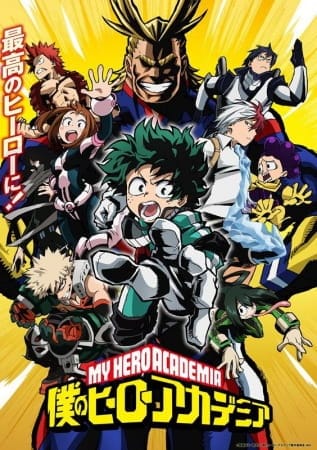
Mainline MHA started as a story about what it means to be a hero and slowly became a story about how to punch the strongest villain really hard. The thematic drift is real and well-documented. My Hero Academia Vigilantes started as a story about what happens when you try to be a hero without permission and has stayed laser-focused on that question for two seasons straight.
The MHA prequel doesn’t have the luxury of epic scale, and that’s exactly its strength. When Bakugo faces down a villain, the entire hero system has his back — agencies, sidekicks, government approval, the works. When Koichi faces down a villain in MHA Vigilantes, he’s alone, unlicensed, and one wrong move away from arrest. That asymmetry creates tension that the main series hasn’t consistently mustered since the League of Villains first appeared at USJ.
And here’s the thing the Vigilantes Season 2 review threads keep dancing around without saying directly: the prequel does a better job exploring hero society’s failures than the main show ever did. The original series talks about systemic problems in the hero system but always resolves them with enough willpower and friendship to paper over the cracks. Vigilantes shows us people falling through those cracks and doesn’t offer easy answers.
The underground hero scene in MHA Vigilantes Season 2 — the illegal Quirk usage, the Trigger drug epidemic, the people the licensed system abandoned — this is the world the main series hinted at but never properly explored. It turns out that seeing heroism from the bottom up is way more compelling than watching it from the top down. Who knew?
This isn’t about hating on the original. It’s about recognizing that Vigilantes vs MHA is no longer a question of spin-off versus main event. It’s a question of which show is doing more with its premise, and right now the answer is the one about the unlicensed guy sliding around in a hoodie.
How Season 2 Connects to MHA Lore
One of the smartest things about MHA Vigilantes Season 2 is how it weaves into the broader My Hero Academia mythology without becoming dependent on it. You can watch this show fresh, with zero main-series knowledge, and still follow every beat. But if you’ve been following MHA for years? The rewards are substantial.
You don’t need to have memorized every MHA plot beat to follow along, but the connections are rich. Season 2 drops lore tie-ins that reframe how you see certain main-series events. The Hero Killer Stain connection gets expanded in ways that make his later appearance in the main series feel inevitable rather than surprising. All Might’s presence is felt even when he’s off-screen — you sense the weight of his era bearing down on everyone in MHA Vigilantes. And the underground networks that Crawler Haimawari navigates? They’re the same networks the League of Villains exploits later in the main timeline.
This is where the Illegals anime earns its place in the franchise canon. It’s not just a side story you can skip — it’s the connective tissue that makes the main series’ world feel lived-in and real. When you see how MHA Vigilantes portrays the street-level consequences of hero society, the main series’ big moments gain weight they didn’t have before. The hero ranking system stops being abstract and starts being personal when you’ve watched Koichi get sidelined by someone with a better PR team.
The Vigilantes Season 2 timeline placement is also pitch-perfect. Set before the main series’ darkest turns, it functions as foreshadowing — you know the institutional failures Koichi witnesses will eventually erupt into the crises that define MHA’s later arcs. That dramatic irony gives every scene an undercurrent of dread that the show never has to spell out.
For longtime fans, the MHA prequel also answers questions the main series never addressed. How did the Trigger drug spread so quickly through Japan’s underground? What happens to people whose Quirks are too minor or too strange for the hero licensing system? Where do you go when the official heroes can’t be bothered with your neighborhood? These aren’t footnotes — they’re the foundation that makes the whole fictional world feel real.
The Villains Who Actually Feel Dangerous
Number 6 is the antagonist Vigilantes Season 2 needed and the main series wishes it had. Unlike the flagship show’s tendency toward villains with tragic backstories and sympathetic motivations that get resolved with a single conversation, Number 6 is genuinely unsettling. He’s not misunderstood. He’s not pursuing justice through wrong means. He’s a product of the system’s failures — and that makes him scarier than any world-ending threat because he could be real.
The MHA Vigilantes approach to villainy is refreshing and long overdue. These aren’t supervillains with grand ideologies and dramatic speeches. They’re criminals, opportunists, and broken people operating in spaces the hero system pretends don’t exist. The show treats them with complexity without excusing them, which is a balance this season’s anime lineup rarely achieves.
What makes the Vigilantes Season 2 villains work is their proximity. Number 6 isn’t threatening because he can destroy a city. He’s threatening because he operates in the same streets Koichi patrols, targets the same vulnerable people Koichi protects, and has resources that Koichi can’t match. The asymmetry is personal, not cosmic.
The “I Am a Hero Too” Special and What’s Next
As if MHA Vigilantes Season 2 wasn’t enough to keep fans busy, the May 2026 announcement of the “I Am a Hero Too” special sent the fandom into overdrive. And it makes perfect sense — this story clearly has more territory to explore and the audience is hungry for it.
Here’s the critical detail that’s got everyone speculating: Season 2 only adapted roughly half of the My Hero Academia Vigilantes manga. The Naruhata arc’s climactic moments, Number 6’s full confrontation with Koichi, the revelations about Crawler Haimawari‘s past and his connection to the broader hero world — there’s enough material for another full season, and based on how Vigilantes Season 2 has been received by both critics and fans, Bones would be wild not to greenlight Season 3.
The special promises to bridge the gap, giving fans new content while the studio figures out production timelines for a potential third season. If you’ve been comparing this season’s offerings and wondering what to prioritize, the Vigilantes special is absolutely the one to circle on your calendar.
For anyone who caught up on MHA Vigilantes Season 2 and needs more, the manga is sitting there waiting — and based on the anime’s adaptation quality, the source material is worth reading even if you usually skip ahead past the anime-only content.
The bigger question is what the special means for the franchise’s direction. If Vigilantes continues to outperform expectations, it could signal a shift in how Bones approaches the MHA universe — more focused, more grounded stories rather than increasingly bombastic spectacle. That would be the best possible outcome for everyone.
Final Verdict: Vigilantes Season 2 Is Essential Viewing
MHA Vigilantes Season 2 isn’t just good for a spin-off. It’s good, period. Better than the main series has been in years. Better than most shonen anime airing alongside it this season. And genuinely one of the strongest anime releases of early 2026, full stop.
The Vigilantes Season 2 review consensus is right: this show gets what makes My Hero Academia Vigilantes special and doubles down on every strength. Grounded stakes. Real consequences. Characters who earn their growth through struggle, not inheritance. Animation that serves the story instead of overwhelming it. And a willingness to explore the ugly parts of hero society that the main series only gestures toward before retreating to safety.
If you dropped off MHA during the later seasons — and honestly, a lot of us did, and that’s okay — MHA Vigilantes Season 2 is the reason to come back. It’s not just a companion piece to the flagship. It’s the show carrying the franchise’s soul right now. The fact that Crawler Haimawari is doing this without a single Quirk upgrade or power inheritance makes every victory feel earned and every loss feel permanent in a way the main series hasn’t managed since season three.
Bones has proven they can still deliver exceptional fight choreography and meaningful character arcs when they’re focused on the right story. The question isn’t whether MHA Vigilantes deserves a Season 3 — it’s whether the main series can learn from what the prequel is doing better. For more on where the original series landed, check out our MHA ending explained breakdown.
For ongoing coverage of this season and everything else worth watching, our Spring 2026 anime streaming guide has you covered. And the official MyAnimeList page is a great resource for manga comparisons and detailed lore.