Why Dorohedoro Season 2 Is the Anime We Needed Right Now
Eight episodes in, and Dorohedoro Season 2 has done something I didn’t think was possible — it made me care about these idiots even more than I already did. The identity reveals, the brutal confrontations, the slow unfurling of trauma that’s been sitting underneath all that black humor since day one. This isn’t just a continuation of Season 1’s chaotic energy. This is the show deciding it has something real to say.
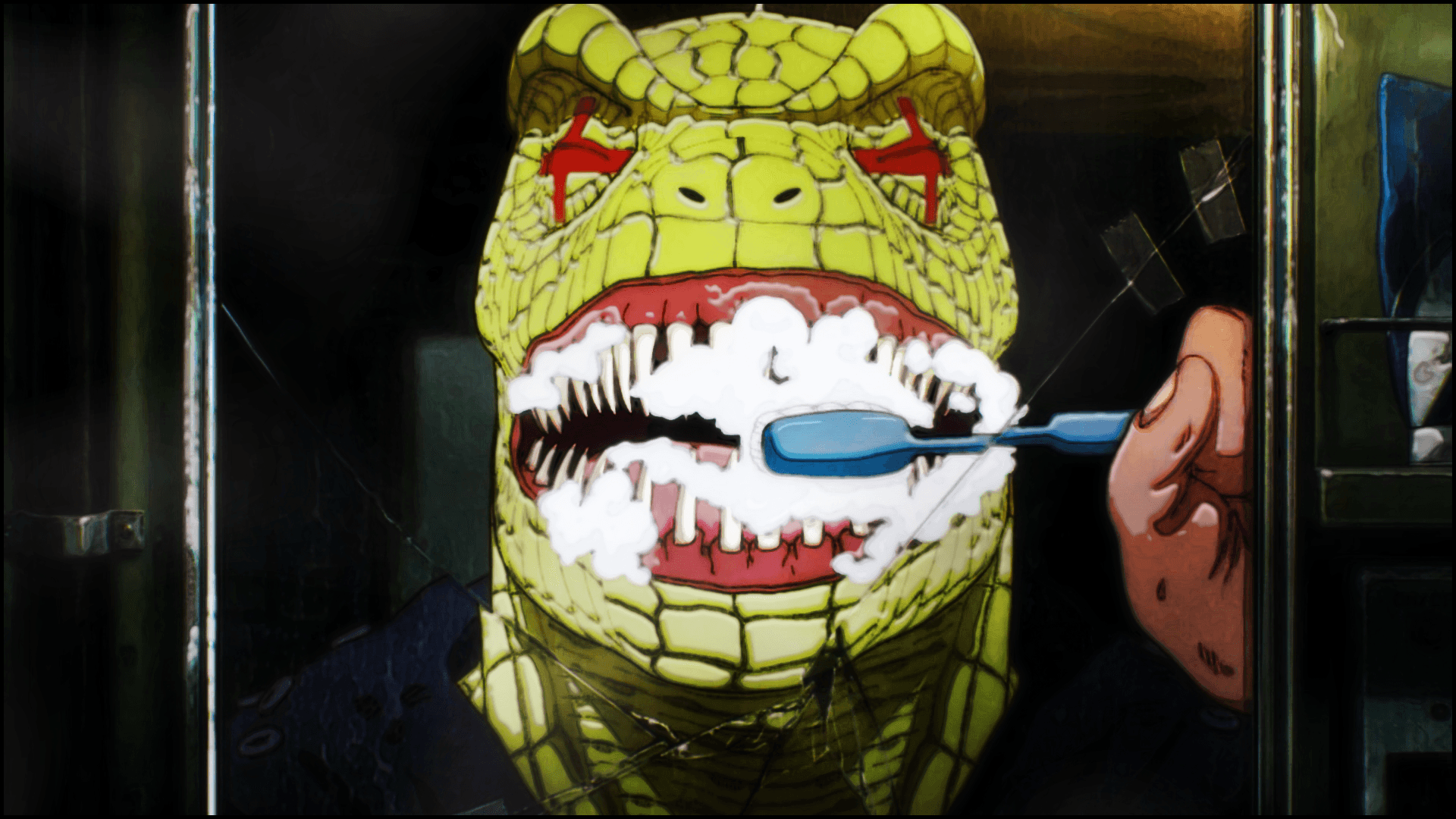
If you’ve been watching Dorohedoro Season 2 week by week, you already know the vibe shift. The goofball energy that made Season 1 such a wild ride hasn’t disappeared — it’s just wearing a darker mask now. And honestly? That’s exactly what this story needed.
There’s a specific kind of anime that gets better when it stops trying to make you comfortable. Cowboy Bebop did it. Vinland Saga did it. And now this new season is doing it — taking the weird, bloody, hilarious world it built and dragging it into genuinely uncomfortable emotional territory. The result is a season that doesn’t just match its predecessor. It challenges it.
Let’s break down the mid-season moments that are redefining what Dorohedoro Season 2 means for the franchise, for the characters, and for us as fans.
Caiman’s Identity Crisis: The Mystery That Keeps Twisting
The Caiman identity question has been the engine driving Dorohedoro since the very first chapter of Q Hayashida’s manga. Who was this guy before someone stuck a lizard head on him? Dorohedoro Season 2 doesn’t answer that question — it makes the question way more complicated, and that’s the best possible choice.
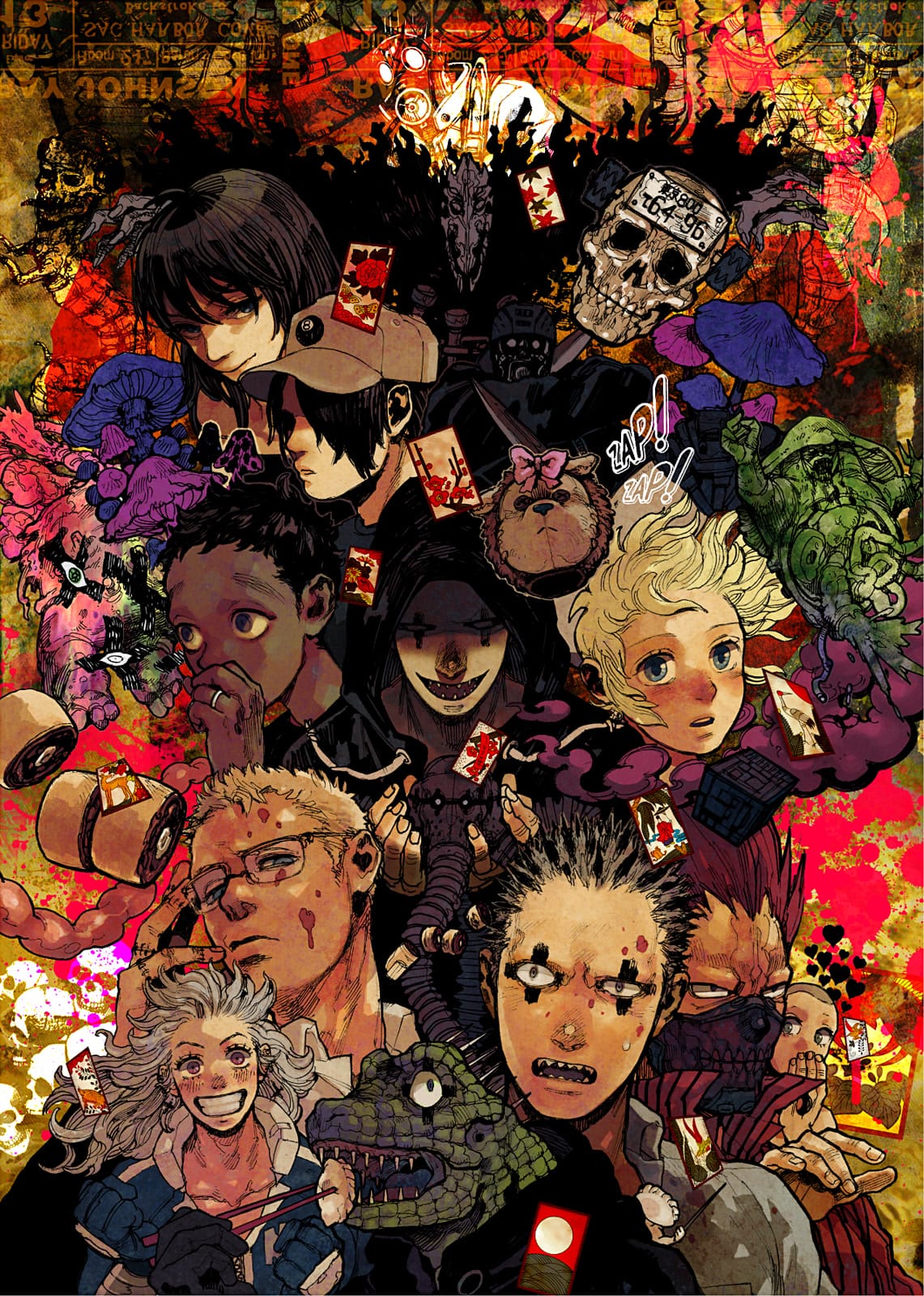
Episode 7 drops the bomb: Aikawa, the Cross-Eyes boss, isn’t just some antagonist. He’s woven into Caiman’s past in a way that reframes everything we thought we knew. When Caiman confronts Aikawa, the confrontation isn’t cathartic. It’s disorienting. Caiman doesn’t recognize Nikaido — his best friend, the person who’s been fighting beside him since episode one of the entire series — and that moment hits like a truck.
This is what makes Dorohedoro Season 2 so compelling. The Caiman identity mystery could have been a simple reveal — “here’s who you were, moving on.” Instead, the show treats identity as something fractured, unreliable, and deeply painful. Caiman isn’t just missing memories. He’s missing himself, and every answer opens three more questions.
The Cross-Eyes connection is the key. These aren’t random villains — they’re tied to the sorcerer system that transformed Caiman in the first place. The Cross-Eyes boss sitting at the center of this mystery means the personal and political stakes are fused together. Caiman identity isn’t just about one guy remembering his name. It’s about the entire power structure of this world.
What makes the Caiman identity arc in Dorohedoro Season 2 so effective is that it doesn’t treat amnesia as a convenient plot device. Amnesia stories in anime often feel like stalling tactics — the character forgets, wanders around, eventually remembers, and nothing fundamentally changes. But Caiman’s situation is different. He’s not just missing memories. He’s confronting the possibility that whoever he was before might not be someone he wants to be. The lizard head isn’t just a curse. It might be an escape from something worse.
Why the Non-Resolution Works
Here’s the thing that separates great storytelling from average storytelling: restraint. A lesser show would have handed us the answer by now. Dorohedoro Season 2 understands that the question is more interesting than the answer. Caiman staring at Aikawa and feeling something — recognition? rage? grief? — without being able to name it… that’s better than any clean resolution could ever be.
And the way MAPPA handles these scenes? The animation choices, the held silences, the way sound design drops out when Caiman’s world tilts sideways? That’s not just adaptation. That’s elevation.
Nikaido’s Backstory: Time Magic, Real Consequences
If Caiman’s identity is the season’s big mystery, Nikaido’s trauma is its emotional core. Episode 8 gives us the Nikaido backstory we’ve been waiting for, and it’s devastating in exactly the way this show excels at — quietly, personally, with no dramatic music telling you how to feel.
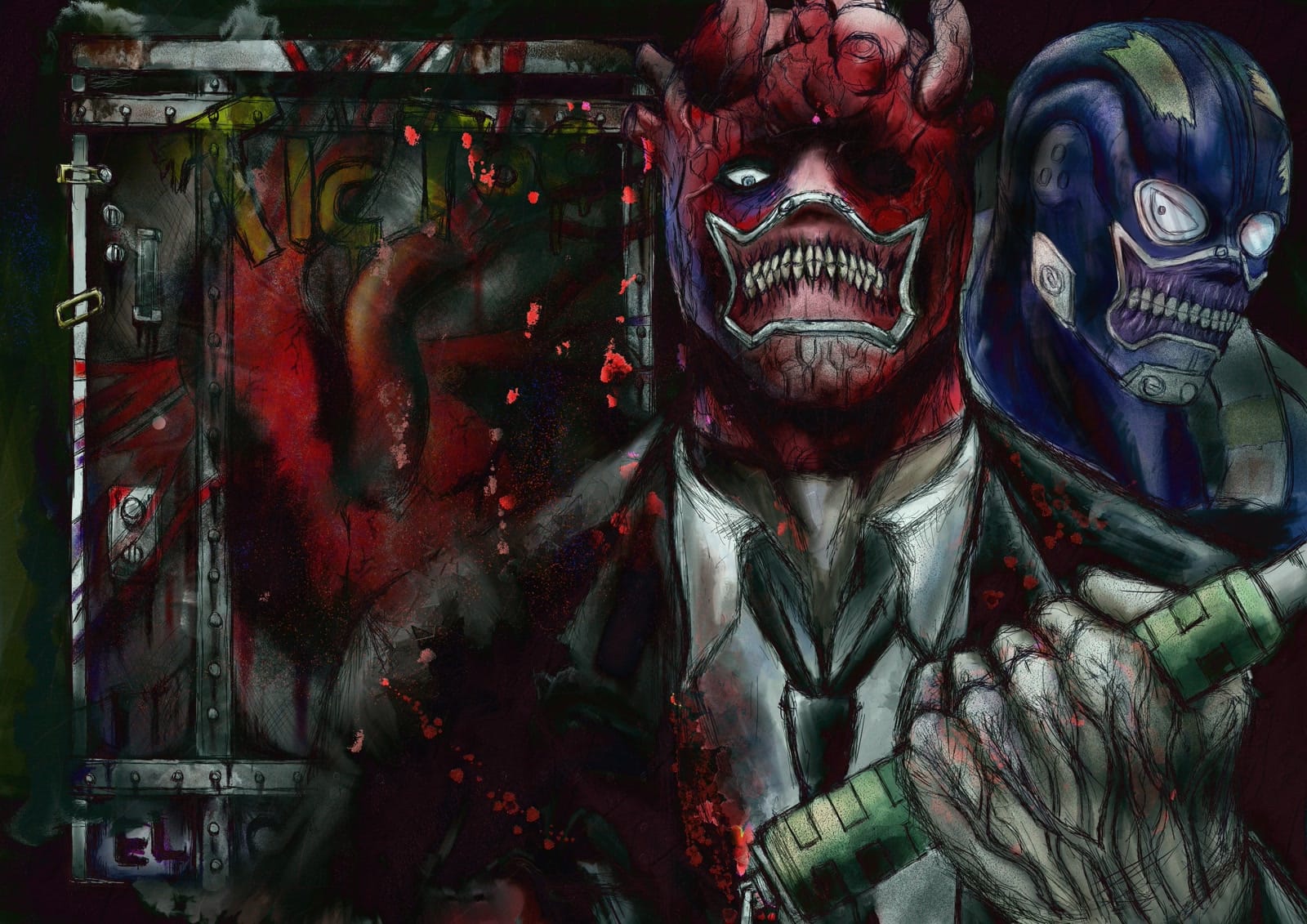
The reveal that Nikaido has used time magic before — and that it went horribly wrong — recontextualizes everything about her character. Her fierce loyalty to Caiman isn’t just friendship. It’s someone who has already broken time to protect someone she loves, paid an unbearable price, and is now watching history threaten to repeat itself. The Nikaido backstory adds tragic depth to every single scene she’s been in across both seasons.
What makes this work is the weight. Dorohedoro has always played fast and loose with its magic system — smoke this, transform that, mushroom everything. But time magic? Dorohedoro Season 2 treats time alteration as the serious business it should be. There are consequences. There’s a cost. And Nikaido has already paid it once.
This is where the show’s tonal shift really pays off. In Season 1, Nikaido’s competence and cool-headedness made her the reliable partner. Now we see that her steadiness was always armor. Underneath it, she’s carrying guilt and fear that would break most people. The fact that she keeps fighting anyway — that’s not just characterization, that’s character.
The Nikaido backstory also does something crucial for the show’s magic system. In a world where transformation and smoke powers are thrown around casually, time magic stands apart because Nikaido treats it with genuine fear. She doesn’t use it as a power-up or a convenient plot device. She uses it as a last resort, and the show makes sure we understand why. That restraint — from both the character and the writers — gives time magic a weight that makes every other magical ability in the show feel more consequential by association.
The Implications for What Comes Next
Nikaido’s history with time magic sets up an agonizing question for the rest of Dorohedoro Season 2. Will she use it again? She knows the cost. She’s lived with it. But Caiman is losing himself, and the people she loves keep getting torn apart. The show has carefully built a scenario where every option carries devastating consequences, and that’s exactly the kind of storytelling that keeps you up at 2 AM staring at the ceiling.
En’s Brutal Fate and the En Family’s Future
Episode 7 gave us one of the most shocking moments in the entire series: Aikawa tearing En in half. Not metaphorically. Literally. The En family patriarch — the mushroom-obsessed mob boss we’ve grown to love despite his villain status — ripped apart in seconds by a power that makes him look small.
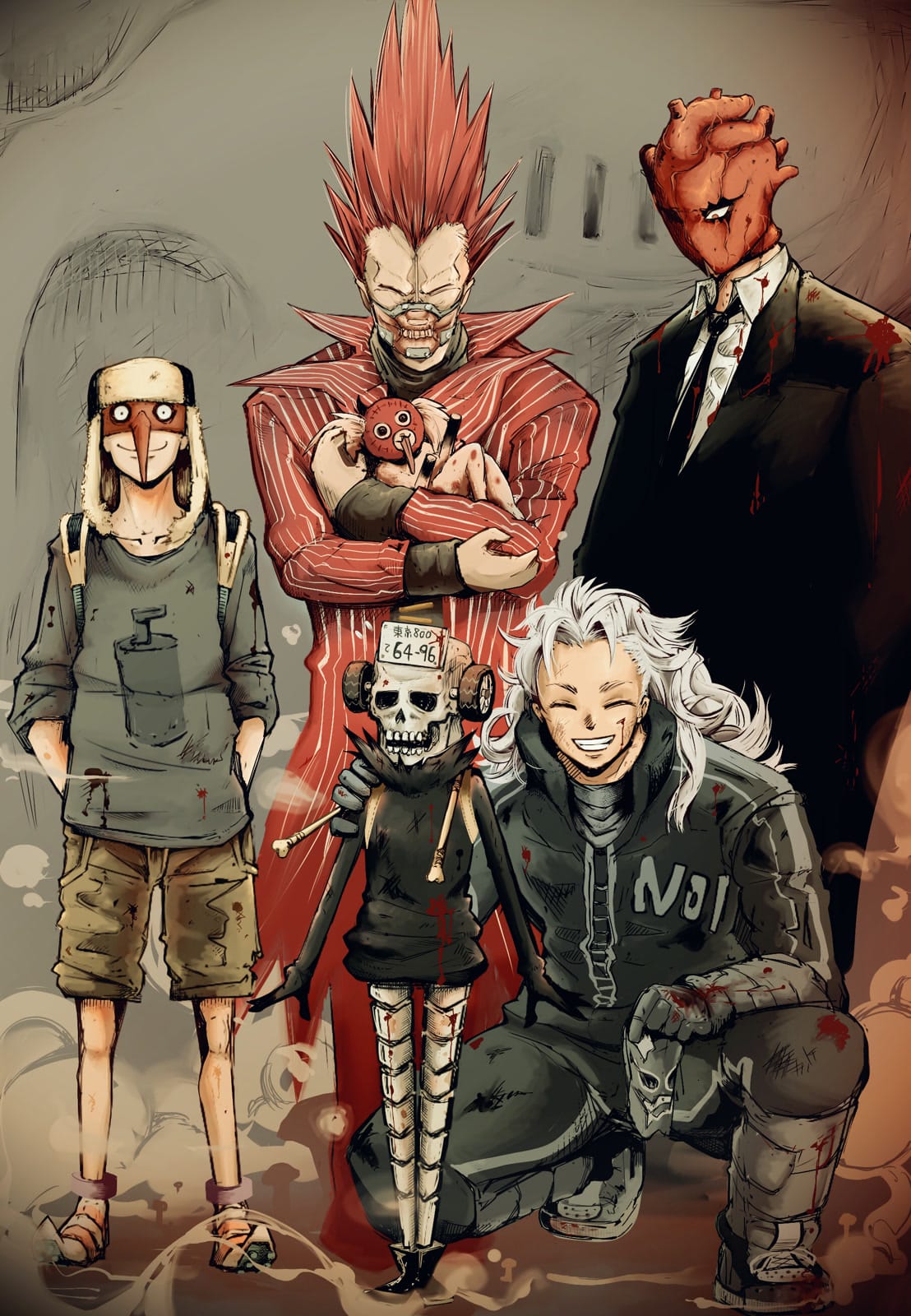
Is En actually dead? This is Dorohedoro, where characters survive smoke attacks, decapitation, and being turned into pies. The En family dynamics are central to the show’s appeal — En’s bizarre paternal devotion, Ebisu’s chaotic loyalty, the entire mansion full of sorcerers who’d die for their mushroom-headed boss. Killing him for real would be a bold structural choice that this season seems willing to make.
But here’s why it matters beyond the shock value: En’s confrontation with Aikawa isn’t just a fight scene. It’s a collision between two power structures. The En family represents the sorcerer establishment — organized, weirdly domestic, powerful but bound by rules. The Cross-Eyes represent something rawer, more chaotic, more dangerous. When Aikawa dismantles En so decisively, it’s not just a character moment. It’s a statement about where power actually sits in this world.
And regardless of whether En regenerates — which, let’s be real, he probably will because this is Dorohedoro and nobody stays dead — the fear is real. The En family has operated from a position of strength for the entire series. Now they’ve seen what true power looks like, and it doesn’t care about mushroom smoke or loyal soldiers or well-organized crime syndicates.
What I find most interesting about En’s confrontation with Aikawa is what it means for the En family as an institution. Ebisu, Noi, Shin, and the rest of En’s crew aren’t just followers — they’re family in a way that feels genuinely earned across both seasons. This season isn’t just threatening a character. It’s threatening an entire social structure that we’ve come to care about. The mansion scenes, the weird domestic rituals, Ebisu’s chaotic energy — all of that is now hanging in the balance, and the show knows exactly how much that hurts.
The Tone Shift: Why Going Darker Works
Season 1 of Dorohedoro was a masterclass in tonal balance. One minute you’re watching Caiman bite someone’s head in a geyser of blood, the next you’re laughing at Ebisu being a lovable disaster. It worked brilliantly. So when Dorohedoro Season 2 shifts toward darker territory, it would be easy to question the choice.
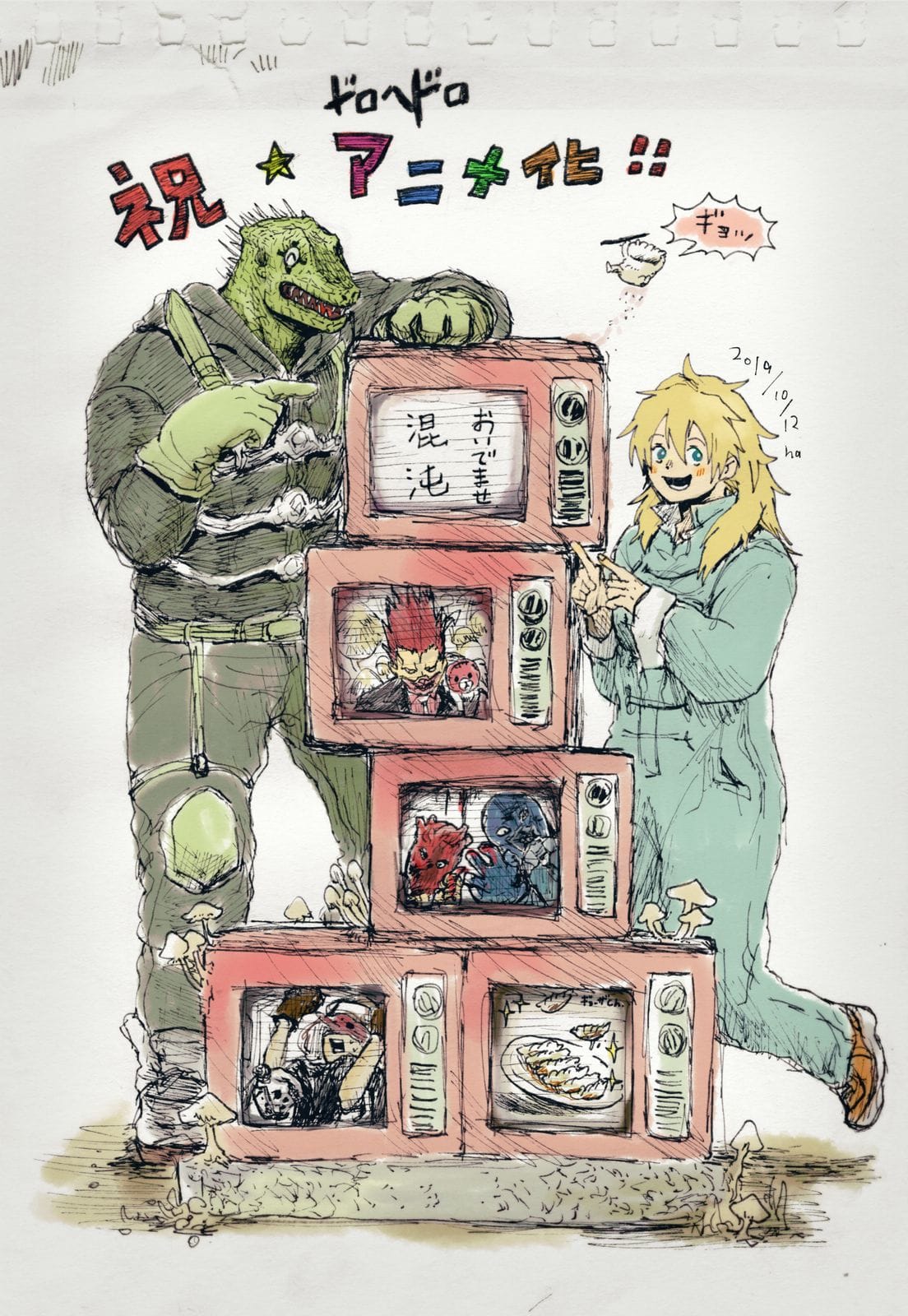
But the shift works — and it works because Season 1 earned it. We spent 12 episodes falling in love with these characters through comedy and horror in equal measure. Now that we’re invested, the show can afford to hurt us. The Cross-Eyes arc isn’t less funny because the stakes are higher; it’s funny in a different, more desperate way. Nikaido’s backstory doesn’t erase her deadpan humor; it gives it a tragic edge that makes every joke land differently.
This is something the best anime villains understand — tone isn’t a setting, it’s a tool. Dorohedoro Season 2 uses its darker moments to make the lighter ones feel earned, and vice versa. When characters who have suffered real loss still crack stupid jokes at each other, that’s not tonal inconsistency. That’s how real people work.
The MAPPA anime production team clearly understands this balance too. The visual palette has shifted — more shadows, more muted backgrounds, more frames dedicated to characters sitting in silence with their thoughts. But the character animation during comedy beats remains as elastic and expressive as ever. It’s not a different show. It’s the same show that grew up.
What We Lost and What We Gained
Yeah, I miss the diner scenes. I miss the casual hang-out energy where Caiman and Nikaido could just exist together without the weight of the world crushing them. But Dorohedoro Season 2 understands that those moments mean more when they’re hard-won. The show is making us earn our comfort, and that’s a choice I respect even when it hurts to watch.
The thing about tonal shifts in anime is that they’re easy to get wrong. You’ve seen shows that go dark for darkness’s sake — shock value deaths, edge for edge’s sake, misery that doesn’t illuminate anything. Dorohedoro Season 2 avoids every one of those traps because its darkness has been earned. Every painful moment in these eight episodes has roots in character decisions that go back to Season 1. Nothing feels arbitrary. Nothing feels like the writers just decided to make things bleak for attention. The darkness is organic, and that’s what makes it hit so hard.
World-Building That Keeps Expanding
Here’s something that doesn’t get talked about enough: Dorohedoro Season 2 has one of the most distinct and fully realized settings in all of anime. The Hole. The Sorcerers’ world. The Cross-Eyes territory. The mushroom mansions. The dirty, rain-soaked streets where humans get hunted for sport. Every location in this show feels like it has history, rules, and stories happening in the background that we’ll never see.
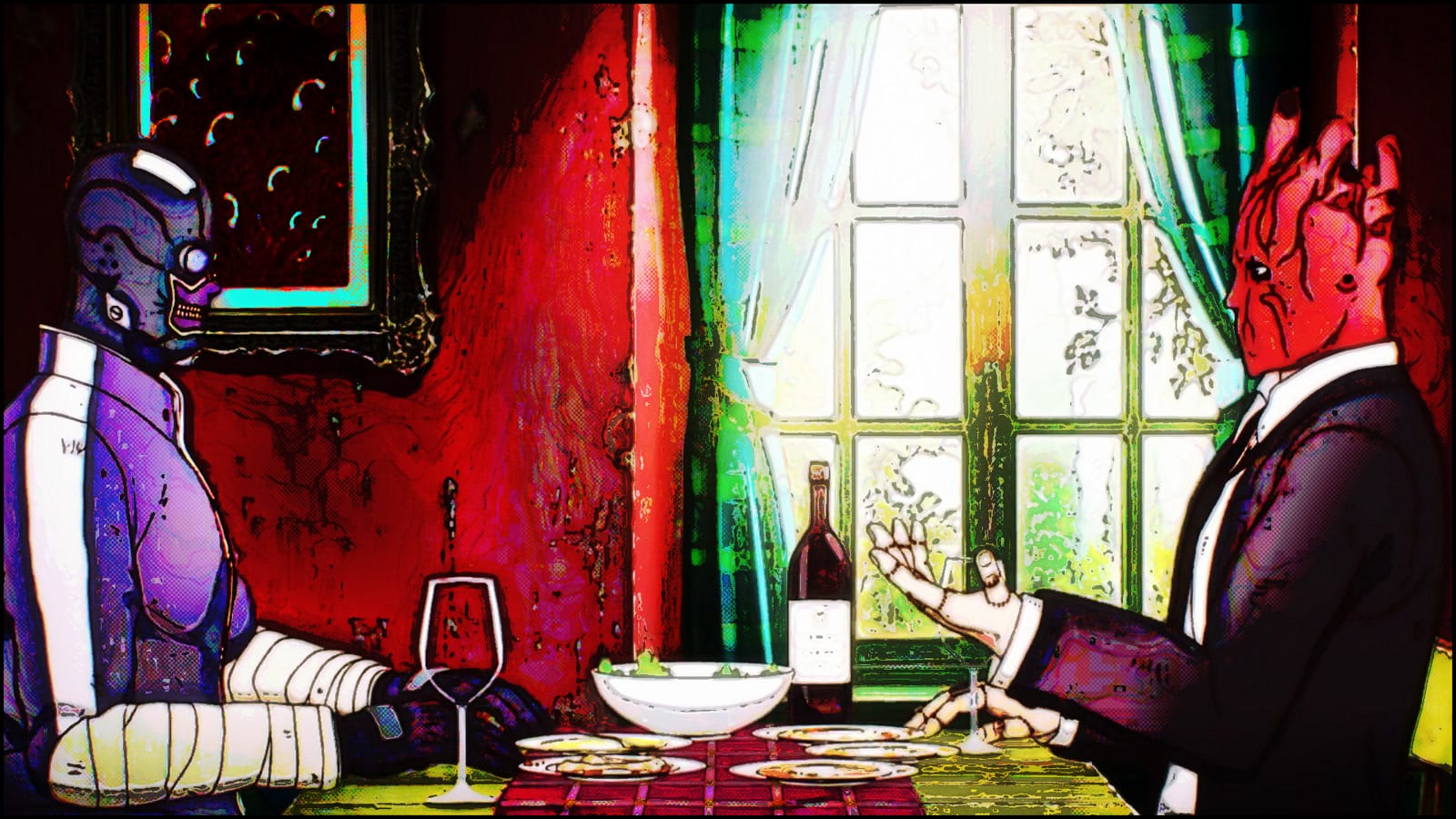
The Cross-Eyes are the biggest world-building addition this season. In Season 1, they were a menacing presence — symbols spray-painted on walls, bodies left in alleys, a threat lurking at the edges of every story. Dorohedoro Season 2 pulls them into the center, and the result is richer than anything we could have imagined. Their organization, their desperation, their own warped sense of community — these aren’t just villains. They’re a mirror of the En family structure, twisted into a different shape.
The Caiman identity arc ties directly into this world-building. Caiman isn’t just lost in his own head — he’s lost in a world that has categories for people (human, sorcerer, Cross-Eyes victim) and he fits none of them. His search for identity is also a search for where he belongs in a world built on rigid magical hierarchies. That’s what makes his story resonate beyond the mystery of his past.
And the magic system continues to be one of the best in anime. Not because it’s complex — it’s actually beautifully simple. Smoke = magic. Different smokes do different things. Mushrooms. Time. Fire. But the consequences of that system are what make it interesting. Every power has a cost, every transformation leaves marks, and the characters who use magic most freely are often the ones paying the steepest price. Dorohedoro Season 2 makes that cost more visible than ever.
The world-building in Dorohedoro Season 2 also does something subtle but important: it makes the Hole feel more like a real place. Season 1 gave us the visual shorthand — the rain, the grime, the desperation. But this season adds texture. We see how people actually live in the Hole. We understand the economic and social dynamics that keep humans trapped there. The Cross-Eyes aren’t just terrifying antagonists — they’re a symptom of a system that treats non-magic users as disposable. That layer of social commentary has always been present in Dorohedoro, but Season 2 makes it impossible to ignore.
MAPPA’s Animation: Capturing Q Hayashida’s Beautiful Mess
Let’s talk about what Dorohedoro Season 2 looks like, because it matters. Q Hayashida’s manga art is one of a kind — messy, gorgeous, detailed in ways that feel almost confrontational. There’s so much crosshatching and texture and visual noise that adapting it should be impossible. And yet, the MAPPA anime production doesn’t just capture that energy. It amplifies it.
The character animation this season is even more expressive than Season 1. Watch how Nikaido’s face moves during her backstory episode — the way her eyes change when she’s remembering versus when she’s trying to push the memory down. The subtle body language when Caiman can’t recognize her. These aren’t flashy sakuga moments designed for Twitter clips. They’re the kind of deliberate, character-driven animation that rewards rewatches.
And the fight choreography? Still top-tier. Dorohedoro Season 2 maintains the show’s signature approach to combat — brutal, fast, surprisingly tactical, and always messy in the best way. En versus Aikawa isn’t a clean duel. It’s a desperate, ugly clash where both sides are fighting with everything they have and it still isn’t enough. That’s the kind of fight choreography that sticks with you.
The background art deserves praise too. The Hole looks even more oppressive this season — the rain, the grime, the sense that this is a place where people go to be forgotten. And the contrast with the Sorcerers’ world remains one of anime’s best visual metaphors for inequality. MAPPA anime productions have always been technically impressive, but Dorohedoro has a specific visual identity that feels genuinely different from anything else on their roster.
The sound design this season also deserves a mention. The way the show uses silence — real, uncomfortable silence — during emotional moments is a technique that anime rarely employs this effectively. When Caiman doesn’t recognize Nikaido, there’s no swelling string score. There’s just quiet. And that quiet is louder than any soundtrack could be. It’s a directorial choice that shows real confidence in the material and trust in the audience to feel what’s happening without being told.
The Bottom Line: Why This Season Matters
Dorohedoro Season 2 isn’t just continuing a story — it’s escalating it in ways that matter. The Caiman identity mystery deepening instead of resolving. Nikaido’s backstory adding real emotional weight to her every action. En’s apparent death reshuffling the power dynamics. The Cross-Eyes emerging as a force that makes the established order look fragile. Every thread introduced in Season 1 is being pulled tighter, and the tension is exactly what a second season should deliver.
What makes this season special isn’t any single moment. It’s the cumulative effect of a show that trusts its audience enough to go dark without abandoning what made it great in the first place. The humor is still there — you can’t have a show where a character named Johnson exists and call it humorless. But it’s humor that’s been sharpened by genuine stakes, and that combination is what separates good anime from the stuff you remember years later.
Eight episodes in, Dorohedoro Season 2 has already cemented itself as one of the standout anime of 2026. The remaining episodes have an enormous amount of promise to live up to, and based on what we’ve seen so far, I actually believe they might pull it off. If you dropped off after Season 1, now is the time to come back. If you’ve been watching weekly, you already know — this season is something special.
And if you’re looking for more coverage on Dorohedoro Season 2, check out our complete episode guide for the full breakdown. The shorter-season revolution in anime is making shows like this possible, and that’s worth celebrating too.