What Separates Good Fight Scenes from Genuinely Great Ones
Most anime has fights. Only a handful have choreography. There’s a real difference — and if you’ve spent any serious time watching anime, you already feel it in your gut even if you’ve never put words to it. A good fight is exciting. A great fight is physical in a way that defies the fact you’re watching drawings move. The best anime fight scenes make your body respond before your brain catches up. Your shoulders tense. You hold your breath. You rewind three times because your eyes couldn’t process what just happened fast enough.

What makes that happen? Three things, working together. First: weight. Every strike has to feel like it costs something — either in energy, pain, or consequence. Second: clarity. Even in the most chaotic sequences, a great animator makes sure your eye follows the right line. You always know where the fighters are and what just happened, even when everything is moving at blinding speed. Third: emotional stakes. The best anime fight scenes aren’t just impressive action — they’re the physical expression of something the characters can’t say out loud. Rock Lee’s weights hitting the ground isn’t just a cool reveal. It’s a boy screaming that he’s been underestimated his entire life.
Below we’ve ranked and analyzed 20 fights that pushed animation to its absolute ceiling. We’ve dug into who animated each one, what specific techniques made them special, and why they still matter years after they first aired. Buckle up — this is going to cover a lot of ground.
Fluid Motion and Technical Fireworks: The Sakuga Legends
Some fights earn their reputation through pure animation craft. These are the sequences that animators study frame by frame, that get clipped and shared in sakuga communities obsessively, that make you pause mid-episode because your brain genuinely can’t reconcile what hand-drawn animation is doing on screen. The best anime fight scenes in this category aren’t just entertaining — they’re proof of what the medium is capable of at its absolute peak.
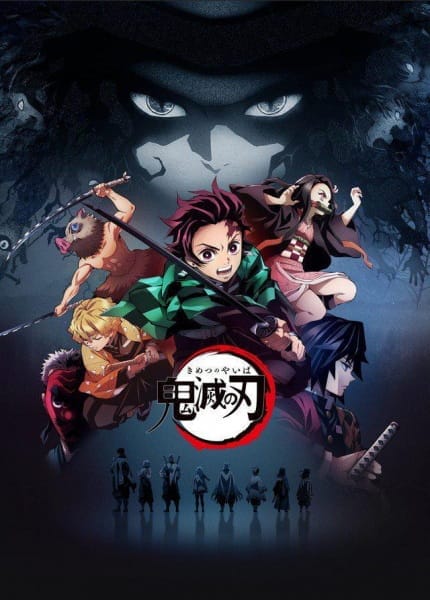
Demon Slayer — Tanjiro & Nezuko vs. Rui (Episode 19, “Hinokami”)
ufotable has been the gold standard for TV anime production for years, but Episode 19 of Demon Slayer’s first season stopped the entire internet cold. The sequence where Tanjiro activates Hinokami Kagura — the fire-breath technique passed down through his family — is widely considered one of the greatest single episodes in TV anime history. Key animator Akira Shigino led the climactic fight segment, with the studio’s proprietary CG compositing blended seamlessly over hand-drawn motion to create fire that genuinely looks alive. The water-to-fire transition, where Tanjiro shifts between breathing styles, uses color grading that shifts the entire scene’s emotional temperature in real time. What makes it technically special is ufotable’s insistence on animating on ones (24 frames per second) for the impact moments, compared to the industry standard of animating on twos or threes. You feel every frame. Director Haruo Sotozaki built the entire episode as a single emotional crescendo, and it pays off in a way that’s hard to describe without just telling you to go watch it right now.
One Punch Man — Saitama vs. Boros (Episode 12)
Madhouse’s 2015 adaptation of One Punch Man had some of the best anime fight scenes in TV history across its entire run, but the Saitama vs. Boros finale is the one everyone talks about. Animation director Yutaka Nakamura — known in the sakuga community as something close to a deity — took point on the key animation for this sequence, and you can see his fingerprints all over it. Nakamura’s specialty is what fans call “impact frames”: abstract, almost expressionist drawings inserted at the moment of maximum force, where the image explodes into color and shape rather than depicting a literal strike. The result is that each of Saitama’s and Boros’s attacks feels genuinely apocalyptic rather than just fast. Series director Shingo Natsume gave Nakamura unusual latitude, and the episode director Tomohiro Suzuki structured the pacing so each escalation has room to breathe before the next one tops it. The Serious Punch finale, where Saitama’s strike literally splits storm clouds apart from the ground below, remains one of the most jaw-dropping single images in anime history.
Fate/Zero — Archer (Gilgamesh) vs. Lancer (Episode 4)
ufotable again, because when you’re this good you show up twice on any honest list of the best anime fight scenes. The opening Servant battles of Fate/Zero established immediately that this adaptation was something different. Key animation by the ufotable team, under director Ei Aoki, used flowing camera choreography that felt more like live-action cinematography than animation — wide pulls, tight cuts, and angles that no real camera could physically achieve, used with the confidence of a team that knew exactly what they were doing. The particle effects from Gilgamesh’s Gate of Babylon weren’t CG layered over flat backgrounds. Each golden portal and flying Noble Phantasm had depth and parallax that made the environment feel three-dimensional. The fight also established ufotable’s approach to magical combat: power should feel ancient and strange and slightly wrong, not clean and superheroic.
Dragon Ball Super: Broly — Gogeta vs. Broly (2018 Film)
Toei Animation doesn’t often get credit in sakuga circles, but director Tatsuya Nagamine and character animation supervisor Naohiro Shintani delivered something extraordinary in the DBS: Broly film’s final act. The Gogeta vs. Broly sequence runs nearly thirty minutes and cycles through multiple animation registers — hyper-detailed hand-drawn impacts, expressionist smear frames, and dimensional shifts that literally change the art style of the scene mid-fight to reflect how much power is being exchanged. Shintani’s redesigned character models for the film (rounder, more expressive, with heavier line weight) turned out to be far more animatable than the TV designs, and the animation team exploited that fully. This is the fight that proved Dragon Ball fights could look like art.
Sword of the Stranger — Nanashi vs. Luo-Lang (2007 Film)
Bones produced this criminally underseen period-action film, and the final duel is probably the most technically precise sword fight ever animated. Yutaka Nakamura — yes, him again — handled key animation on the climax, and his approach here was the opposite of his OPM work: no smears, no impact frames, just absolute anatomical precision. Every cut and parry is grounded in actual kenjutsu body mechanics. The duel takes place in falling snow that the characters move through and disturb realistically. Director Masahiro Ando storyboarded the entire sequence as a series of medium shots with minimal cutting so you never lose spatial orientation. If you’ve only ever seen Nakamura’s work in shonen contexts, this film will genuinely reset your understanding of what he can do.
Weight, Consequence, and Tactical Genius
Not every great fight is about fluid beauty. Some of the best anime fight scenes work because they understand that real combat is ugly, exhausting, and horrifying — and they make you feel all three simultaneously. These sequences prioritize stakes over spectacle, and the result is something that hits harder than any sakuga showcase.
Attack on Titan — Levi vs. Beast Titan (Season 3, Part 2, Episode 17)
WIT Studio spent years building up to this moment, and when it arrived it was almost overwhelming. The sequence where Levi charges across a field of dead Survey Corps soldiers to reach Zeke is not the most fluid or technically complex piece of animation on this list. What it is, is devastating. Director Tetsuro Araki (series) and episode director Masashi Koizuka structured the approach as a prolonged, almost unbearable tension build — Levi moving alone through carnage — before a burst of kinetic action that clears the Beast Titan’s entire stone-throwing assault in seconds. The ODM gear animation in this sequence is the best WIT ever produced: blade trajectories have genuine arc and follow-through, and Levi’s body moves with the physical weight of someone operating at their absolute human limit. What makes it matter is that it’s also grief expressed as violence. Every dead soldier on that field was someone Levi knew. The fight is a eulogy at full speed.
Hunter x Hunter — Netero vs. Meruem (Episodes 127–131)
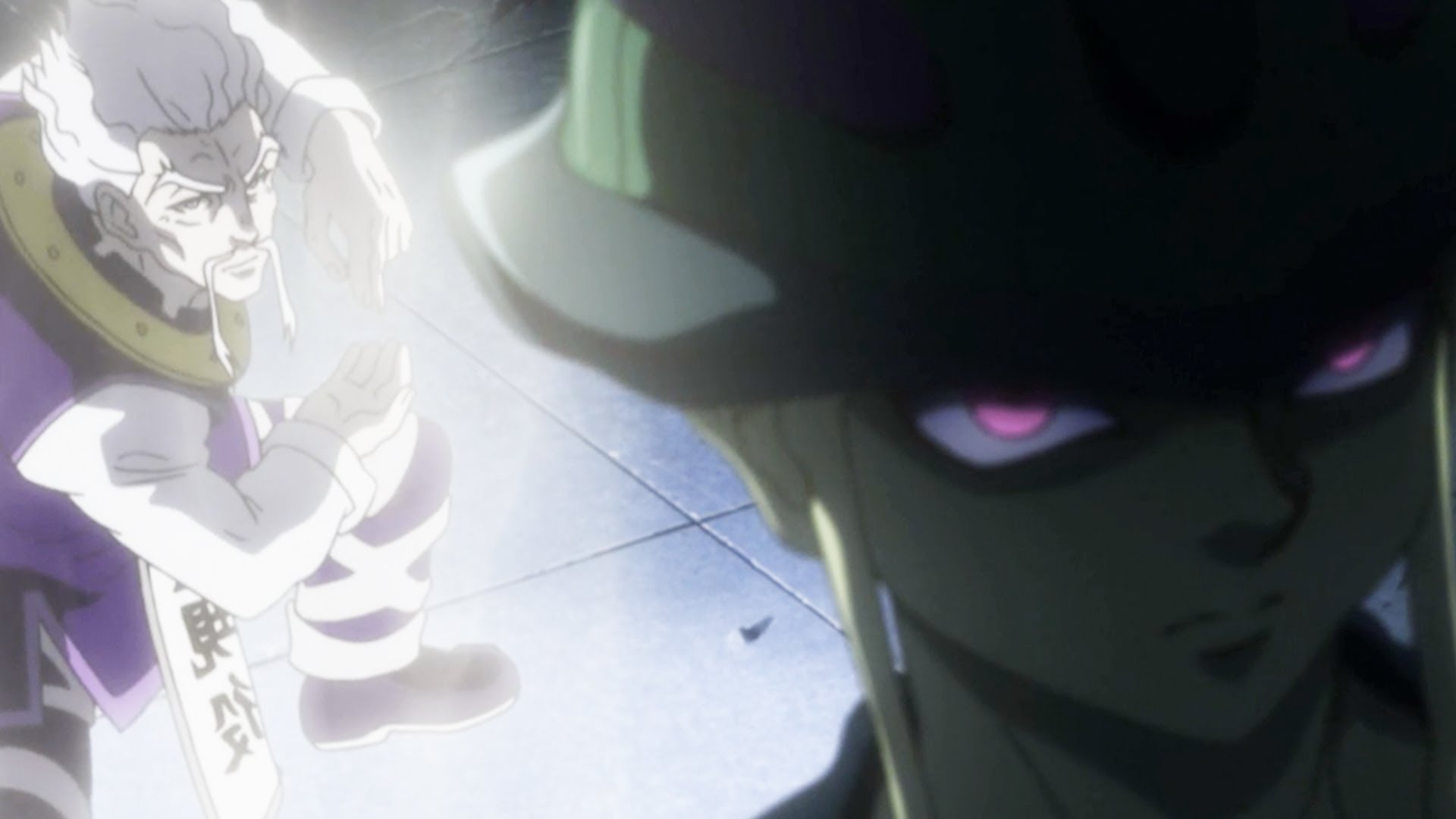
Madhouse’s adaptation of the Chimera Ant arc is one of the great achievements in anime history, and the Netero vs. Meruem fight at its center is the most intellectually structured fight sequence on this list. The choreography, overseen by director Hiroshi Kojina, is built around a genuine puzzle: how does a man, even the world’s greatest nen user, fight something that physically cannot be beaten? The 100-Type Guanyin Bodhisattva sequence — Netero’s prayer-based attack — is animated with a ritualistic formality that contrasts sharply with Meruem’s brutal, efficient counter-movements. The fight is essentially a philosophical argument made physical, and the animation understands that. The pacing is slow by shonen standards, deliberate, which makes the moments of explosive speed hit exponentially harder.
Vinland Saga — Thors vs. Askeladd’s Crew (Season 1, Episode 3)
WIT Studio’s adaptation established its tone immediately with this sequence. Thors, the greatest warrior of his generation who has renounced violence, is forced to fight through an entire ship crew to protect his son. Directed by Shuuhei Yabuta, the fight is choreographed as a series of clinical, efficient takedowns — no flourish, no dramatic poses, no slow-motion impact frames. Thors moves like someone who has done this a thousand times and finds no pleasure in it anymore. The animation intentionally de-glamorizes the violence: you see the grunt work of combat, bodies off-balance, someone’s nose breaking, a man too stunned to stand. It’s the most honest depiction of how actually dangerous a very skilled fighter would be in this list, and it’s quietly extraordinary for that.
Samurai Champloo — Mugen vs. Jin (Series Finale)
Shinichiro Watanabe’s hip-hop-inflected samurai series was always building toward Mugen and Jin finally settling things. When it arrived, Manglobe’s animation team delivered something genuinely unique: a sword fight where one combatant (Mugen) uses a style rooted in breakdancing and street improvisation, and the other (Jin) uses classical kenjutsu, and both feel completely authentic within their own logic. The choreography never lets you forget that these are fundamentally incompatible styles colliding — Mugen’s unpredictability against Jin’s precision. Each man adapts in real time, and the animation tracks those micro-adjustments. It’s as much a conversation as a fight. Key animator Shuichi Kaneko’s work on the finale is some of the sharpest character animation in the entire series.
Pure Emotion: The Fights That Actually Hurt
Technical achievement matters. Emotional truth matters more. A handful of the best anime fight scenes work primarily because they’re so anchored in character that by the time the actual combat lands, you’re already too invested to be objective about it. These sequences live in your chest long after the credits roll.
Naruto — Rock Lee vs. Gaara (Episode 48, “Gaara vs. Rock Lee: The Power of Youth Explodes!”)
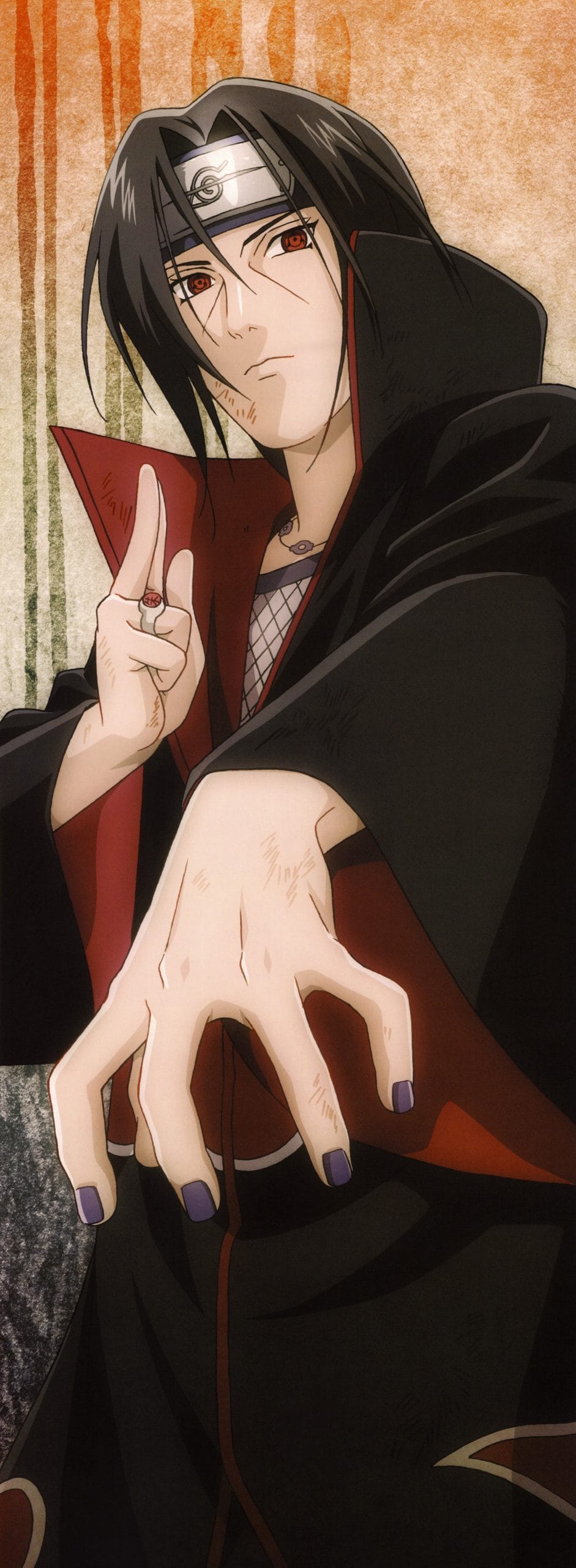
This is the one. If you grew up watching anime in the early 2000s, this fight is burned into your memory so deeply that you can probably still hear the sound of those training weights hitting sand. Key animator Norio Matsumoto made the conscious decision to animate this sequence off-model — Lee’s body proportions shift, stretch, and distort in ways that would normally be considered errors — because anatomical accuracy wasn’t the point. Fluidity was the point. Speed was the point. Matsumoto needed you to believe that a human body could move this fast, and he was willing to bend every rule to make that happen. The emotional engine underneath is Lee’s entire story: a kid told he had no talent, who turned sheer grinding work into something that could genuinely terrify a monster. When he drops those weights, you don’t cheer for the animation. You cheer for him.
Naruto — Naruto vs. Pain (Episodes 163–169)
The Pain arc finale is the longest sustained fight sequence in Naruto’s run, and it works because it earns every minute. Director Hayato Date structured the arc as a slow escalation of desperation — Naruto loses, adapts, loses again, transforms — that mirrors exactly how hopeless this fight should logically be. The Sage Mode sequences have some of the cleanest key animation in the entire series, with Naruto’s movements given a gravity and deliberateness that his earlier hyperactive style lacked. The sequence where he emerges from the crater to confront the assembled survivors of Konoha is one of anime’s great entrances, and it works because the fight has been building to that exact emotional beat for five episodes.
Mob Psycho 100 — Mob vs. Toichiro Suzuki (Season 2, Episode 5)
Bones and director Yuzuru Tachikawa approached Mob Psycho 100’s fight sequences differently from almost any other studio working in shonen. Rather than choreographing physical combat with bodies and strikes, the fights are primarily psychic — waves and explosions of raw emotional energy rendered as abstract color and shape. The season 2 fight between Mob and the boss of Claw is the peak of this approach. The animation shifts registers multiple times: grounded character animation, then watercolor abstraction, then geometric pattern work, then near-expressionist smearing. Key animation by Miyo Sato and others gave the sequence a texture that genuinely looks unlike anything else in anime. What makes it matter is that “Mob vs. Suzuki” is really “suppressed trauma vs. deliberate control,” and every visual choice reflects that.
My Hero Academia — All Might vs. All For One (Season 3, Episode 49)
Bones delivered their finest hour of MHA with this sequence, and it works almost entirely on emotional mechanics. All Might is already beaten. His power is spent. He has nothing left. What the Bones team, under director Kenji Nagasaki, understood is that the fight’s power comes not from All Might winning, but from All Might refusing to stop. The animation in the final moments — where All Might gathers every last fragment of One For All for a single punch — uses deliberate restraint. The movement slows. The detail increases. And then the impact, when it comes, is the most cathartic punch in the series. The aftermath, All Might holding up his deflated arm in defiance toward the cameras, is perhaps the most perfectly composed still image in all of MHA.
Style, Chaos, and Breaking Every Rule
Some fights don’t care about physical plausibility or anatomical logic. They’re using combat as a canvas for something else entirely — pure style, directorial vision, or a kind of controlled chaos that shouldn’t work but absolutely does. The best anime fight scenes in this category are often the most polarizing, but they’re also some of the most influential.
Jujutsu Kaisen — Shibuya Incident Arc Fights (Season 2, 2023)
MAPPA’s Season 2 production was notoriously brutal on its staff, but the animation that came out of it — particularly across the Shibuya Incident arc — represents some of the most technically ambitious TV animation of the 2020s. The Gojo sequences, built around his Infinity ability (attacks literally can’t reach him at full power) required animators to choreograph fights where the laws of physics are selectively suspended. MAPPA’s approach used speed-ramping and shutter effects borrowed from live-action action cinematography, applied to hand-drawn 2D animation in ways that created a genuinely novel visual language. The Mahoraga sequence in particular — directed by Shota Goshozono — is structured as a descent into complete chaos that mirrors Sukuna’s own nature.
Kill la Kill — Ryuko vs. Satsuki (Multiple Encounters, Series Finale)
Trigger’s breakout series was always consciously excessive, and director Hiroyuki Imaishi built that excess directly into the fight choreography. Character designer and key animator Sushio (real name Sushio, famously secretive about their full identity) gave Ryuko and Satsuki movement that was deliberately stylized beyond realism — elongated poses, impossible angles, color that shifts with emotional intensity. The fights in Kill la Kill work as pure id: everything is turned up past the point of taste, and somehow that commitment to maximum intensity becomes its own kind of artistry. The series finale, where Ryuko faces off against Ragyo, throws every visual trick the studio had at the screen simultaneously. It’s exhausting and exhilarating and completely sincere.
Gurren Lagann — Simon vs. Anti-Spiral (Series Finale, 2007)
Gainax’s signature series ended with Hiroyuki Imaishi’s most ambitious sequence to that point in his career: a fight between mechs the size of galaxies, which the show escalates by having the Anti-Spiral literally construct a new Big Bang as a weapon. The animation handles this insanity by cycling between grandiose scale shots and intimate cockpit close-ups, never letting the cosmic scale overwhelm the human stakes. Key animator Yoh Yoshinari contributed extraordinary work to the final battle, and the deliberate visual excess — mechs throwing galaxies, space itself tearing apart — is fully intentional. Imaishi understood that the whole series had been about the refusal to accept limits, and the finale animates that thesis statement directly.
Cowboy Bebop — Spike vs. Vicious (Session 26, “The Real Folk Blues Part 2”)
Sunrise’s Cowboy Bebop was never primarily an action series, which is exactly why its final confrontation lands so hard. Shinichiro Watanabe and his animation team — influenced heavily by Hong Kong woo-era action cinema — choreographed Spike’s final climb and duel with Vicious as something closer to a dance than a fight. The movement is loose, almost careless, in a way that reflects both characters’ relationship to whether they live or die. Watanabe uses long shots and minimal cutting, which is the opposite of how most anime action is staged. You watch the entire duel from a remove that feels somehow more intimate than close-up would. The ending is ambiguous and perfect.
The Avant-Garde: Fights That Broke the Form Entirely
A final category for sequences that don’t fit neatly anywhere else — works that used fight choreography to do something fundamentally experimental, that changed what anime could do because they refused to work within existing conventions. These are the best anime fight scenes for viewers who want their medium to surprise them.
Akira (1988 Film) — The Finale
Katsuhiro Otomo’s masterpiece still doesn’t look like anything else that exists in animation, nearly four decades later. The production used 68,000 animation cels — nearly double the industry standard of the era — to achieve a level of detail and fluidity that remains technically staggering. Otomo made two decisions that defined the film’s look: dialogue was recorded before animation began (retroactive lip-sync, borrowed from Disney but rare in Japan), allowing characters’ mouths to match speech naturally, and the entire film was animated at 24fps (animating on ones) throughout, rather than the 12fps standard. The result is that Akira moves with the weight of live action while maintaining the expressive distortion of animation. The final Tetsuo sequence — body horror and psychic warfare and a child’s terror rendered at the largest possible scale — remains the most ambitious piece of animation in the film’s long list of ambitious moments.
FLCL — Naota vs. Haruko (Multiple Episodes, 2000)
Gainax’s six-episode OVA used fight choreography as pure metaphor for adolescent chaos. Director Kazuya Tsurumaki, with key animation from a young Hiroyuki Imaishi, built fights that deliberately disrupt their own visual logic — manga panels appear mid-sequence, the animation style shifts from detailed to deliberately crude and back, robots emerge from a twelve-year-old’s skull. None of it follows action logic because it’s not about action. It’s about a kid overwhelmed by forces he doesn’t understand and can’t control. FLCL’s fights are the most honest depiction of how puberty actually feels that animation has ever produced, expressed through guitar riffs and giant irons falling from the sky.
JoJo’s Bizarre Adventure: Golden Wind — Giorno vs. Diavolo (Episode 38)
David Production’s adaptation of Hirohiko Araki’s most stylistically ambitious arc ended with a fight that had to somehow make a time-manipulation power versus a fate-manipulation power visually coherent and emotionally satisfying. Director Yasuhiro Kimura accomplished this through sheer commitment to Araki’s visual language — dramatic freeze-frames, color palette shifts, poses held for three times longer than conventional action would allow. The fight feels like moving through a fashion shoot that keeps getting interrupted by violence. It works because the entire Golden Wind arc has established that this world operates on rules of style and inevitability, and the final battle resolves on both axes simultaneously. It’s one of the most formally strange and satisfying fight conclusions in anime.
Fullmetal Alchemist: Brotherhood — Mustang vs. Envy (Episode 54)
Bones saved this confrontation for maximum impact. Roy Mustang — dignified, controlled, the tactician — loses that control completely when confronted with the creature that killed his best friend. Director Yasuhiro Irie animated the sequence as a systematic horror: Mustang doesn’t fight Envy so much as methodically incinerate every shape it tries to take, his face calm while he does it. The technical craft is in the fire effects, which required frame-by-frame hand-drawn animation to achieve the right behavior (CG fire at the time couldn’t replicate the irregular movement Bones wanted). But the sequence’s power is in what it says about grief transforming into something uglier and more dangerous than sadness. It’s the best character moment in the series expressed through a one-sided fight.
You Might Also Enjoy
- The Best Anime of All Time: 50 Series Worth Your Life Hours
- Demon Slayer Watch Order: Films, Series, and Where to Start
- Jujutsu Kaisen Season 2 Review: Did It Live Up to the Hype?
- Best Anime Studios Ranked: ufotable, MAPPA, Bones, and Beyond
- Hunter x Hunter Complete Guide: Where to Watch and What to Expect