Why Medalist Is the Anime Everyone Slept On — Until They Couldn’t
Here’s the thing about the Medalist anime — it walked into the Crunchyroll Anime Awards 2026 and took home Best New Series, and half the fandom hadn’t even heard of it yet. That’s not a knock against anyone. It’s just what happens when a figure skating anime flies under the radar during a stacked season that included heavy hitters and returning franchises.

The premise sounds simple enough: a disgraced former junior figure skating champion becomes the coach of an 11-year-old girl who dreams of competing at the highest level. But the Medalist anime takes that setup and turns it into something that hits you right in the chest. This isn’t just another sports anime with training arcs and tournament brackets. It’s a story about two broken people who find salvation in each other — and that emotional core is what makes it so hard to shake after the credits roll.
And the numbers back up the quality. The Medalist manga has surpassed 3 million copies in circulation, and after the anime adaptation aired, that number only climbed higher. Word of mouth turned the show from a quiet winter pickup into one of the most talked-about series of 2026. Social media lit up every week after new episodes. Fan art flooded Twitter. For a show about ice skating — not exactly the most mainstream anime sport — that kind of organic explosion is rare, and it tells you something real about the emotional impact this story delivers.
The Story — A Coach and His Student Refusing to Give Up
Tsukasa Akeboshi was once the brightest figure skating prospect Japan had ever seen. A junior champion with jaw-dropping talent and a future that seemed guaranteed. Coaches fought over him. Sponsors lined up. Every major competition had his name circled in the program as the one to watch. Then the scandal hit, and everything collapsed. By the time we meet him in the Medalist anime, he’s a hollowed-out shell of a person, barely scraping by and convinced his life amounts to nothing.
Inori Yuitsuka is 11 years old, and every skating coach in Japan has already written her off. Too old to start. Too late to matter. In the world of figure skating, that’s not cruelty — that’s just reality. Most competitive skaters begin training before they can even read. They learn edge work and basic positions as toddlers, and by the time they’re Inori’s age, they’re already landing double jumps and competing at regional levels. Inori’s starting from zero while everyone else is already laps ahead, and the show never lets you forget that gap.
What makes Medalist so powerful is how these two arcs mirror each other. Tsukasa needs redemption just as badly as Inori needs someone to believe in her. He’s not coaching out of altruism or some noble sense of purpose. He’s coaching because giving someone else a second chance is the only way he can imagine finding his own. The show never lets you forget that both of them are fighting for their lives on that ice, and that mutual desperation is what makes every small victory feel like a miracle.
And here’s where Medalist separates itself from the pack: it avoids the sports anime formula that’s been done a hundred times. There’s no rival school arc that drags on for eight episodes. No tournament bracket that turns the second half into a series of increasingly forgettable matches. The Medalist anime keeps its focus laser-tight on the relationship between coach and student, and that intimacy is exactly what makes it so devastating when things go wrong — and so triumphant when they go right.
The supporting cast deserves praise too. Every skater Inori encounters at competitions has their own story, their own reasons for being on the ice. The show doesn’t reduce rivals to one-dimensional obstacles. They’re people with their own dreams and pressures, and understanding that makes the competitive scenes feel layered and real rather than just a procession of opponents to defeat.
Why Medalist’s Figure Skating Scenes Are the Best Animation of 2026
Let’s talk about ENGI Studio, because they did something extraordinary with the Medalist anime. Figure skating is one of the hardest sports to animate convincingly. The spins, the jumps, the way a skater’s body moves through the air — every frame has to convey both athleticism and artistry simultaneously. Get the physics wrong and it looks floaty and fake. Get the choreography wrong and it looks mechanical and lifeless. ENGI nailed both.
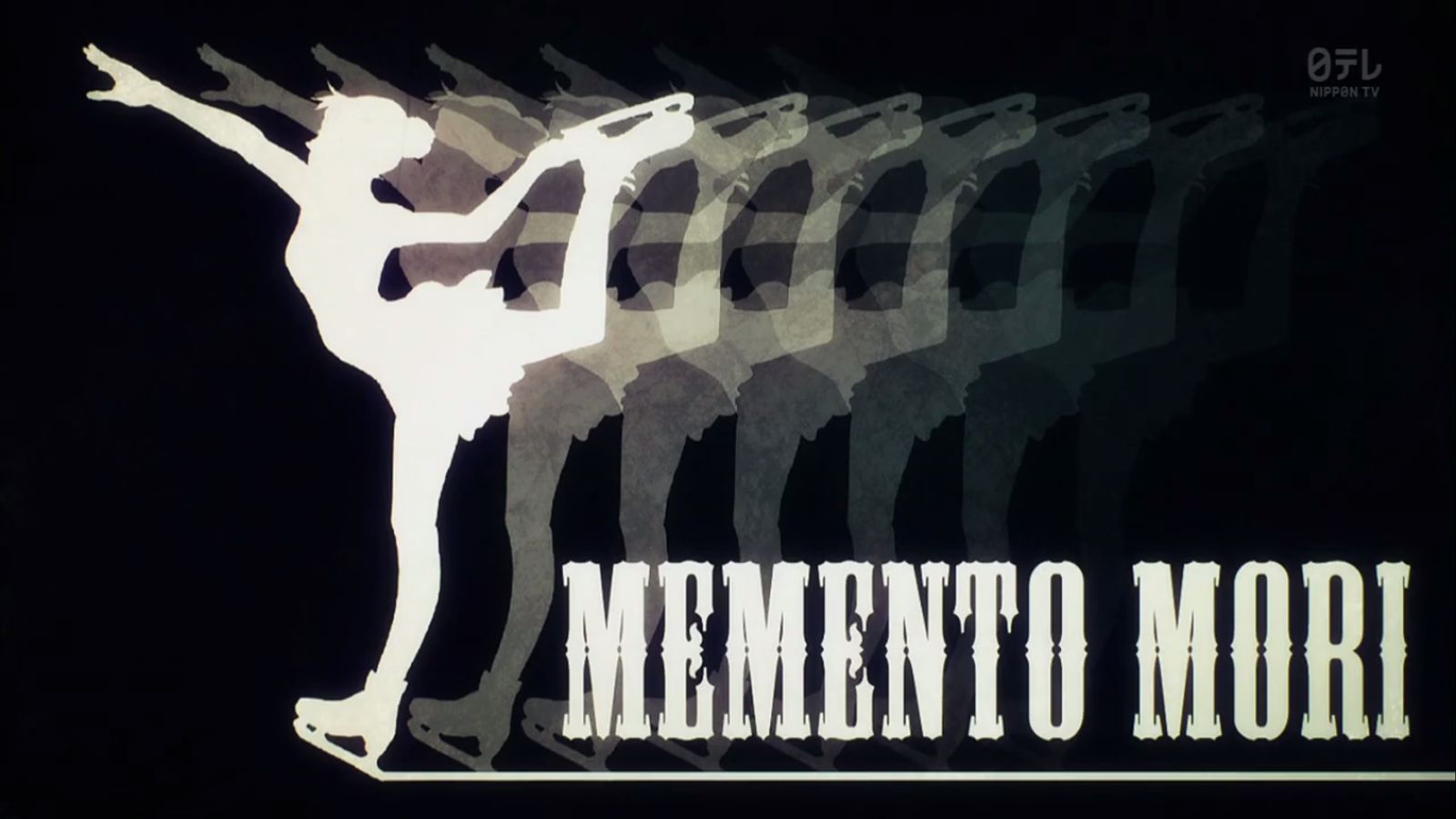
The skating sequences in Medalist aren’t just well-drawn — they’re choreographically accurate. Triple axels, triple lutzes, camel spins, step sequences, combination spins — these are real competitive figure skating moves, animated with a level of fidelity that makes you forget you’re watching 2D art. Every jump has proper edge work and takeoff technique. Every spin has realistic rotational speed. The attention to detail is staggering, and it’s clear that ENGI consulted with actual figure skaters and coaches to get this right.
But what elevates these scenes above pure technical achievement is the emotional weight behind them. When Inori lands her first clean jump in competition, you feel every single practice session that led to that moment. Every early morning. Every bruised knee. Every time she fell and got back up. When Tsukasa watches from the boards, you can read his entire history of failure and hope in his expression alone. The Medalist anime understands that the best sports animation isn’t about making things look cool — it’s about making you feel why they matter.
The camera work during skating routines deserves special mention. ENGI uses dynamic angles — close-ups on Inori’s blades during edge transitions, sweeping shots that follow her across the ice, and freeze-frame moments on jumps that let you appreciate the body positioning. It’s the kind of cinematography that makes you lean forward in your seat, and it rivals the best animation we’ve seen in 2026 across any genre.
Compared to other sports anime this year, the Medalist anime sits comfortably at the top of the visual hierarchy. Where most shows save their animation budget for climactic fights or final matches, Medalist spreads that quality across every routine. Even practice scenes have fluid, expressive movement that communicates character through body language alone. ENGI clearly understood that in a figure skating anime, the skating is the story — and they animated it accordingly.
Inori Yuitsuka — Anime’s Most Relatable Underdog in Years
Inori Yuitsuka is not a prodigy. Let me say that again, because it matters: Inori Yuitsuka is not a prodigy. In a medium overflowing with characters who discover world-class talent the moment they pick up a ball, racquet, or sword, the Medalist anime gives us a protagonist whose greatest strength is simply refusing to quit. She’s not secretly gifted. She doesn’t have some hidden genetic advantage. She’s a kid who loves skating and refuses to accept that she’s already too late to start.
And the show doesn’t sugarcoat what she’s up against. Starting figure skating at 11 years old is too late. That’s not anime drama — that’s how the real sport works. Competitive skaters typically begin training at ages 4, 5, or 6. By 11, most future champions are already landing double axels and competing at regionals. Inori can barely stand on the ice when we first meet her, and the show doesn’t pretend that determination alone will close a five-year gap overnight. It takes her episodes to master basic skills that other skaters learned as children. The show respects the difficulty.
Watching her progress across the season is genuinely painful and exhilarating in equal measure. The falls are brutal — not stylized anime falls, but the kind of real, bone-jarring impacts that make you wince. The frustration is palpable. There’s a scene midway through the season where Inori sits on the ice after failing a jump for the hundredth time, and the silence says more than any speech ever could. When she finally lands that jump episodes later, the payoff is earned in a way that most refreshing anime protagonists never get to experience, because their victories come too easily.
What makes Inori different from the typical shonen underdog is that her struggle isn’t just about getting stronger or faster. It’s about proving that the timeline everyone else has decided is “correct” doesn’t have to be hers. The show isn’t saying “you can do anything if you try hard enough” — that would be dishonest. It’s saying “the odds are real and brutal, but you get to decide whether to face them anyway.” That’s a much harder, much braver message, and Inori embodies it completely.
Her relationship with failure is what makes her such a compelling protagonist. Inori doesn’t bounce back from setbacks with a motivational speech and renewed determination like so many sports anime leads. She gets angry. She gets sad. She questions whether everyone was right about her being too late. And then, after sitting with those feelings for a while, she gets back on the ice anyway. Not because she’s braver than anyone else, but because she literally can’t imagine not skating. That kind of love for a pursuit — irrational, stubborn, all-consuming — is what the best character writing in anime is built on.
Tsukasa Akeboshi — The Broken Coach Who Found Purpose Again
If Inori is the heart of the Medalist anime, Tsukasa Akeboshi is its spine. This is a man who had everything — talent, rankings, a trajectory toward greatness — and lost it all in a scandal that followed him like a shadow for years. The show doesn’t reveal the full details immediately, and that restraint makes every flashback hit harder when the truth finally surfaces. You spend the early episodes knowing something terrible happened to this man, and when the show finally shows you what it was, the context recontextualizes everything you’ve seen up to that point.
Tsukasa’s scandal mirrors real controversies that have rocked the figure skating world over the years. Without spoiling specifics, the show tackles the intersection of competitive pressure, institutional failure, and personal responsibility with a maturity that most anime wouldn’t even attempt. This isn’t a villain backstory designed to make you sympathize with a bad person — it’s a nuanced portrait of someone who was failed by the system and then failed himself in turn. The show holds both truths at once: Tsukasa was a victim of circumstances beyond his control, and he also made choices that hurt people. Neither reality cancels the other out.
The coach-student dynamic between Tsukasa and Inori is what makes the Medalist anime truly special. It’s not a one-way relationship where the wise mentor dispenses knowledge to the eager student. These two need each other. Tsukasa is barely holding himself together when they meet, and coaching Inori becomes his reason to keep going. She saves him just as much as he saves her, and the show never forgets that balance. There are moments where Inori’s determination pulls Tsukasa out of a spiral, and moments where Tsukasa’s belief in Inori pushes her past a wall she couldn’t climb alone. It’s a partnership, not a hierarchy.
In the pantheon of great anime mentors, Tsukasa stands alongside characters like Askeladd from Vinland Saga — mentors who are deeply flawed, sometimes wrong, and always compelling. The Medalist anime doesn’t try to make Tsukasa perfect. He makes mistakes. He pushes too hard. He projects his own ambitions onto Inori in ways that aren’t always healthy. There’s a particular episode where his coaching crosses a line, and the show doesn’t excuse it — it forces him to confront what he’s doing and why. Watching him grow past those tendencies is some of the most rewarding character development you’ll find in any show this year.
What makes Tsukasa different from most anime coaches is that his teaching philosophy evolves over the season. He starts out trying to mold Inori into the skater he wishes he could have been, and gradually learns to see her as her own person with her own style and her own goals. That arc — from projecting to actually coaching — is quietly revolutionary for the sports anime genre, and it’s one of many reasons Medalist feels so different from its peers.
How Medalist Compares to Other Sports Anime
Let’s get the obvious comparison out of the way: Blue Lock Season 2 and the Medalist anime represent completely different philosophies of sports storytelling. Blue Lock is loud, bombastic, and built on the premise that ego and competition drive greatness. It’s about individuals fighting each other for supremacy, and it thrives on that tension. The Medalist anime is quiet, intimate, and built on the idea that connection and shared struggle can forge something unbreakable. It’s about two people learning to trust each other, and it thrives on that tenderness.
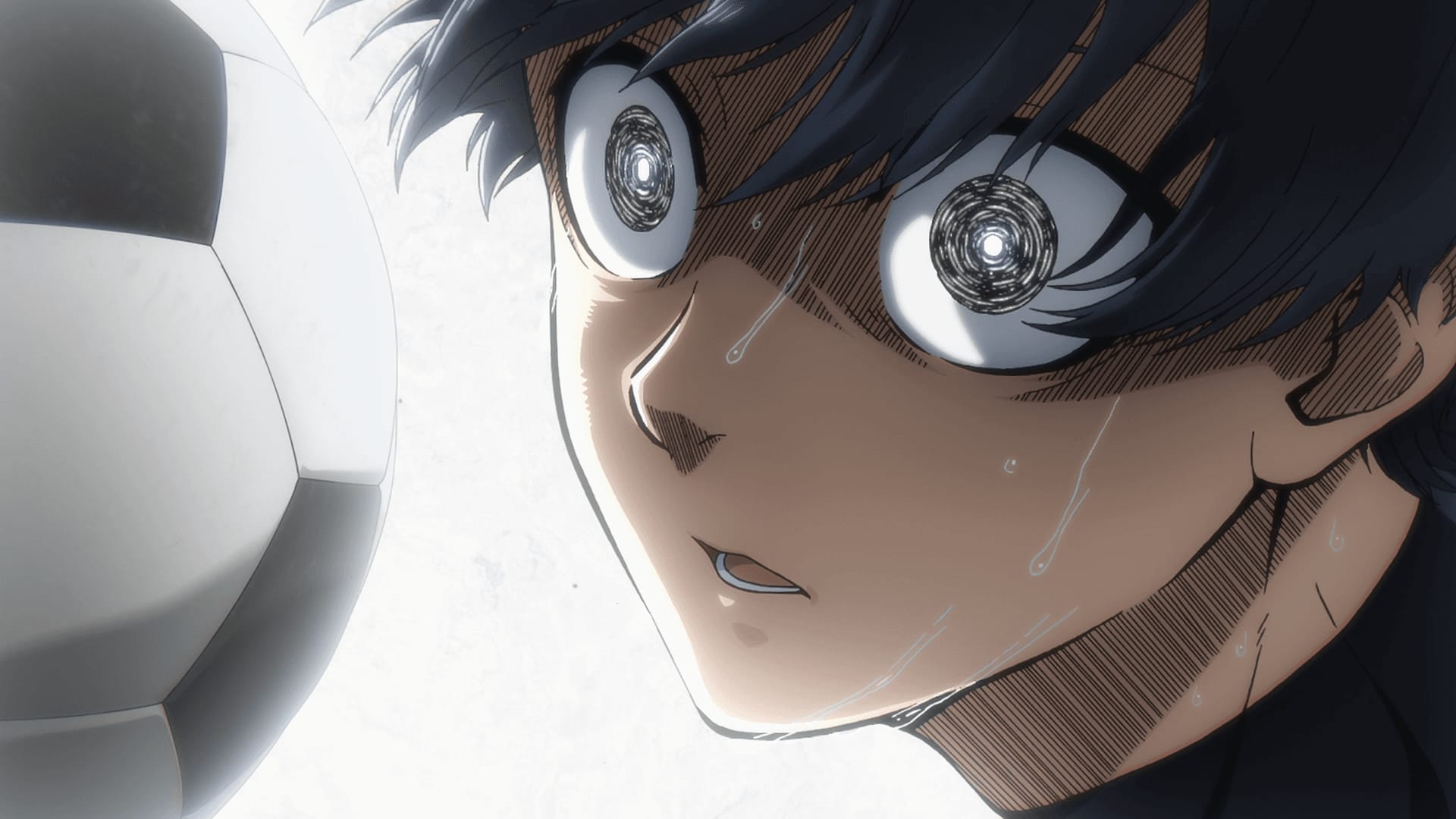
Neither approach is inherently better, but Medalist benefits enormously from its smaller scale. By keeping the focus on two characters rather than an entire team or tournament bracket, every emotional beat lands with more precision. You’re not tracking a dozen subplots. You’re not trying to remember which rival goes to which school. You’re walking alongside Inori and Tsukasa, feeling every stumble and every small victory. The result is a show that knows exactly what it wants to say and says it without filler.
The psychological realism is what really sets the Medalist anime apart from its peers. In too many sports anime, the obstacles are external — a stronger opponent, a tougher tournament, a rival team. In Medalist, the biggest obstacles are internal. Inori’s fear. Tsukasa’s guilt. The weight of expectations that neither of them asked for but both of them carry every single day. This is sports anime that understands the sport is just the arena — the real competition happens inside the athlete’s head, and it spends more time in that space than almost any show in the genre.
Where does the Medalist anime rank among the greats? It’s early, but the case is strong. It sits comfortably alongside the best character-driven sports anime ever made. If you loved the introspective quality of Ping Pong the Animation or the quiet emotional devastation of Run with the Wind, it operates in that same register. And if Season 2 maintains this quality — and based on the source material, there’s every reason to believe it will — we’re looking at a show that could enter the all-time conversation alongside Haikyuu and other titans of the genre.
The Medalist anime also benefits from existing in 2026, when anime production values are at an all-time high and audiences are more receptive to slower, character-driven stories. Five years ago, a figure skating anime about an 11-year-old and her disgraced coach might have struggled to find an audience. Today, in a post-Frieren world where audiences have shown they’ll show up for patience and emotional depth, it is arriving at exactly the right moment.
Why You Should Watch Medalist Before Season 2 Arrives
Season 2 of the Medalist anime is confirmed, and if you’re not caught up, now is the time. The first season covered roughly the first five volumes of the Medalist manga, which means there’s a mountain of source material still waiting to be adapted. Based on where the story goes next, Season 2 is going to hit even harder emotionally than Season 1 — and that’s saying something.
You can learn more about the series on the official Medalist anime website, which also helps confirm release information and promotional updates. The dub is genuinely strong — Tsukasa’s English voice actor captures the character’s weary desperation and fragile hope with real nuance, and Inori’s performance strikes the right balance between childish determination and raw vulnerability. If you’re a dub watcher, you’re not missing out on the experience.
For manga readers, the Medalist manga by Tsurumaikada is well worth exploring even if you’ve seen the anime. The source material goes deeper into Tsukasa’s backstory, the competitive skating world’s politics, and Inori’s emotional journey. The manga’s art is stunning — detailed enough that you can identify specific skating moves from a single panel — and the anime adaptation actually adds meaningful content rather than just copying panels. It’s one of those rare cases where both versions are excellent in their own right.
The Medalist anime has also carved out a unique space in AnimeTiger’s broader conversations around mature, emotionally layered anime. It’s not violent or explicit, but it deals with themes — failure, shame, institutional betrayal, the weight of societal expectations — that resonate more deeply with older viewers. If you’ve ever been told you were too late to pursue something you loved, this show will hit you in places you didn’t expect.
Here’s my bottom line: the Medalist anime is a 9 out of 10. It’s the most emotionally honest sports anime since Run with the Wind, the best-looking figure skating anything committed to screen, and a show that treats its audience like adults without being grim for the sake of it. The animation is top-tier. The writing is tight. The characters will live in your head rent-free for weeks after you finish. If you’ve been sleeping on the Medalist anime, stop. You’re missing something special.
And if you loved the emotional depth of Frieren Season 2 or the nuanced character work in Apothecary Diaries Season 2, the show hits those same notes — just on ice. It’s the kind of show that reminds you why you started watching anime in the first place.
You Might Also Enjoy
Frieren Season 2 Review — If Medalist’s emotional gut-punches worked on you, Frieren’s meditative take on grief and memory will wreck you in the best way. Both shows understand that the quietest moments carry the heaviest weight.
Blue Lock Season 2 Analysis — The polar opposite of Medalist’s intimate approach, but essential viewing if you love sports anime that goes hard on competition and psychology. Where Medalist whispers, Blue Lock screams.
Frieren Season 2 Review, Why It’s Still One of 2026’s Best Anime — If Medalist hits you through quiet emotional damage and patient character work, Frieren scratches a similar itch from a fantasy angle.
Apothecary Diaries Season 2 — Another show that won big at the 2026 Anime Awards, with character work and world-building that rivals Medalist’s emotional precision. If you appreciate stories that reward your attention, this one delivers.
Most Iconic Anime Villains Ranked — Medalist’s antagonists are compelling because they’re not cartoon villains — they’re real people with real motivations. This list explores anime villains who share that same complexity and depth.