When a Legendary Mangaka Goes Rogue
Every few years, a show drops that makes you pause mid-scroll and say, “Wait, what is this?” The Kill Blue anime is exactly that show. Tadatoshi Fujimaki — the mind behind Kuroko’s Basketball, one of the biggest sports anime of the 2010s — didn’t play it safe for his follow-up. He went completely off-road.
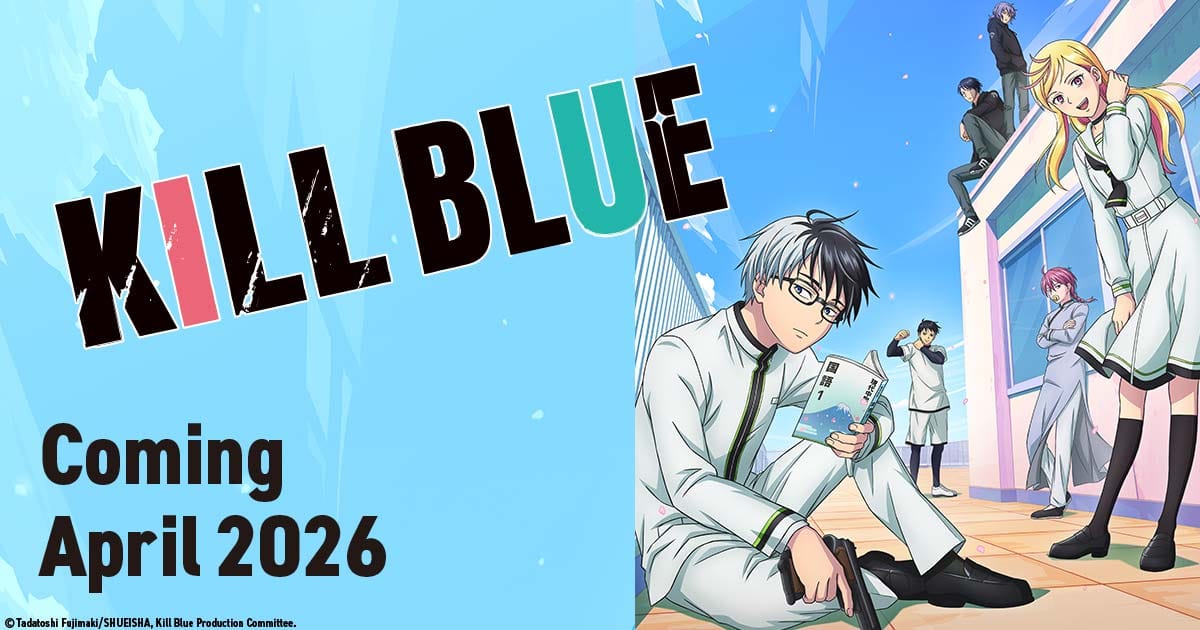
Kill Blue isn’t a sports story. It’s not a tournament arc. It’s a 39-year-old hitman who gets genetically de-aged into a 13-year-old and then discovers he loves middle school. That’s not a typo. That’s the actual premise, and it works better than it has any right to.
After premiering April 11, 2026 on TV Tokyo, the show has quickly become one of Spring 2026’s most talked-about titles. Not because of hype. Not because of brand recognition. Because it’s genuinely, absurdly fun — and that’s something this season desperately needed.
If you told me a year ago that the creator of Kuroko’s Basketball would make a show about a de-aged hitman eating school lunch and I’d be counting down to each new episode, I’d have laughed. But here we are. Kill Blue isn’t just a curiosity — it’s a genuinely great time, and it deserves way more attention than it’s getting in the shadow of Spring 2026’s bigger names.
The Premise: Absurd on Paper, Brilliant in Execution
Juzo Ogami is a contracted killer for Z.O.O., a syndicate that handles the kind of jobs governments won’t touch. He’s 39, cold, efficient, and has never set foot in a classroom. During a routine hit targeting criminals connected to Mitsuoka Pharmaceuticals, a genetically modified wasp stings him.
The result? His DNA gets rewritten. His body regresses to age 13 overnight. A hardened assassin suddenly can’t reach the top shelf, can’t physically overpower his targets, and definitely can’t show up at Z.O.O. headquarters looking like a middle schooler.
His boss — pragmatic as ever — doesn’t fire him. Instead, he reassigns him: infiltrate the middle school his daughter plans to attend and assess whether it’s safe. It’s supposed to be a boring stakeout. Instead, Ogami has the time of his life.
The anime sells this premise entirely through its comedy timing. Watching a man who has killed for a living get genuinely excited about cafeteria curry rice is funny. Watching him treat a group project like a tactical operation is funnier. The show never winks too hard — it just lets the absurdity breathe.
And the premise works because Fujimaki commits to it fully. This isn’t a one-episode gag that gets old. The de-aging is permanent (or at least, not easily reversible), which means Ogami has to actually live as a middle schooler. Every day brings new discoveries — not just comedic set pieces, but real moments of a man experiencing normalcy for the first time. That depth is what separates it from a throwaway parody premise.
Fujimaki’s Evolution: From Courts to Classrooms
Let’s talk about the elephant in the room. Tadatoshi Fujimaki created Kuroko’s Basketball, a series that moved over 30 million copies and defined an entire generation of sports anime. The shonen anime revolution of the 2010s owes a lot to what Kuroko pulled off.
So when Fujimaki announces a new series, the bar is already sky-high. This could have been a safe bet — another sports manga, another team dynamic, another underdog story. Instead, Fujimaki chose an assassin comedy with body horror elements and a middle school setting.
That’s not playing it safe. That’s a creative swinging for the fences with a completely different bat.
The Jump editorial team must have had questions. A hitman comedy in the magazine that built its name on battle shonen and sports? But Fujimaki’s name carries weight, and more importantly, his storytelling instincts are sharp enough to make anything work. The manga ran for two and a half years in the most competitive manga magazine on earth. That’s not luck. That’s craft.
What carries over from Kuroko is Fujimaki’s ability to write characters you root for almost immediately. Kuroko worked because the Generation of Miracles felt like real rivals with real egos. Kill Blue works because Ogami’s earnest discovery of normal life hits harder than you’d expect from a show about a contract killer.
The Kuroko’s Basketball creator’s new anime isn’t trying to recapture that lightning. It’s chasing entirely different weather, and that’s what makes it exciting.
Juzo Ogami: The Assassin Who Just Wants to Fit In
Ogami is the engine that drives Kill Blue. He’s not a fish out of water — he’s a shark dropped into a koi pond who realizes the koi pond is actually kind of nice.
His assassin instincts keep bleeding into school life in ways the show mines for constant comedy. He evaluates the cafeteria layout like a tactical position. He sizes up the PTA like potential hostiles. He approaches a math test with the intensity of a contract negotiation.
But here’s what makes the show genuinely warm instead of just a gag reel: Ogami likes this. He never went to school. He never had friends his own age (because he was always busy, you know, killing people). Middle school is giving him something he didn’t know he was missing, and the show lets that emotional beat land without undercutting it.
The comedy works because the character work is real. Every joke about Ogami treating lunch period like a stakeout works because underneath it, this is a man experiencing joy for what might be the first time. That’s a potent cocktail — lethal assassin meets sincere schoolboy — and Fujimaki mixes it perfectly.
The supporting cast around Ogami matters too. His classmates aren’t just punchline delivery machines — they have their own quirks, insecurities, and story arcs that his presence disrupts in interesting ways. Watching a literal trained killer navigate the social politics of a Japanese middle school creates comedy that writes itself, but the show never coasts on the gimmick alone.
Noren Mitsuoka: The Key to Everything
If Ogami is the heart of the show, Noren Mitsuoka is the lock he needs to pick. She’s the heiress of Mitsuoka Pharmaceuticals — the very company whose genetic experiments created the wasp that de-aged him in the first place.
Noren isn’t a simple love interest or a passive plot device. She’s sharp, suspicious, and deeply entangled in her family’s corporate web. Ogami needs her to potentially reverse his condition. She needs to figure out why this weirdly intense 13-year-old keeps showing up wherever she goes.
Their dynamic is one of the anime’s strongest assets. It’s cat-and-mouse dressed up as a middle school friendship. Every scene between them has layers — he’s hiding who he is, she’s smarter than she lets on, and both of them are playing games the other can’t fully see.
Fujimaki wrote Kuroko and Kagami’s partnership with precision. Here, he writes a relationship built on mutual deception, and it crackles with the same energy. The difference is that this time, neither side fully trusts the other, and that tension keeps every scene between them electric.
Noren also connects the show’s comedy to its actual stakes. Mitsuoka Pharmaceuticals isn’t just backstory — they’re actively dangerous, and her proximity to that danger gives the Kill Blue review material that goes beyond “this is funny.” There are real consequences lurking under the laughs.
The question of whether Noren will figure out Ogami’s true identity — or whether she already knows more than she’s letting on — gives the show a slow-burn tension that runs underneath every classroom scene. It’s the kind of layered writing that rewards paying attention. Nothing is throwaway.
Studio Cue Steps Up
Studio Cue was a relative unknown before landing the Kill Blue anime. That’s always a gamble — handing a beloved mangaka’s new work to an unproven studio. But four episodes in, the results speak for themselves.
The character designs by Miho Daidōji stay remarkably faithful to Fujimaki’s manga art while smoothing out the rough edges for animation. Ogami’s expressions — especially the deadpan assassin stare bleeding into genuine schoolboy enthusiasm — translate beautifully to motion.
Action scenes are where studio Cue flexes hardest. Ogami’s combat sequences are fast, precise, and surprisingly brutal for a show that spends half its runtime on cafeteria comedy. The direction by Yasunori Ide and the series composition supervision by Hiro Kaburagi keep the tone balanced — never too dark, never too silly.
Ryo Konishi’s score deserves a shoutout too. It shifts between tense, minimalist tracks during the assassin beats and bright, almost nostalgic melodies during school scenes. The music tells you exactly how to feel without ever being heavy-handed about it.
For a Kill Blue Spring 2026 adaptation, the production values punch well above what most people expected from a debut studio. It’s not ufotable-level, but it doesn’t need to be. It needs personality, and it has that in spades.
The Assassin-Comedy Genre Is Having a Moment
The show doesn’t exist in a vacuum. The assassin-comedy genre is thriving right now, and it’s worth looking at how Fujimaki’s entry stacks up against its peers.
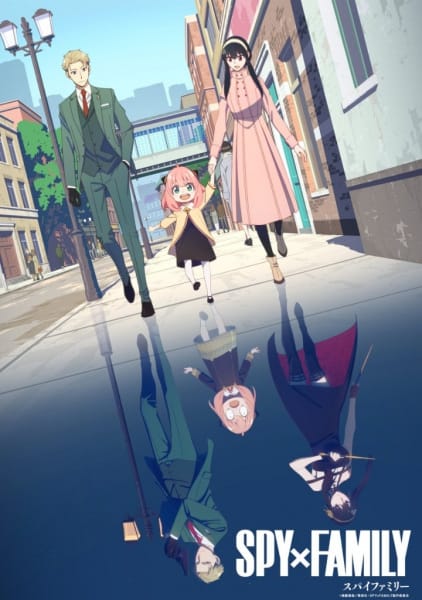
Sakamoto Days goes all-in on action spectacle with its retired-hitman-running-a-store premise. Spy x Family layers espionage comedy with found-family warmth. Marriagetoxin blends assassin work with genuine romantic tension.
It carves its own lane by making the comedy come from discovery rather than hiding. Sakamoto hides his past. Loid Forger builds an elaborate fake family. Ogami can’t hide — his body literally gave out on him — so instead he leans into the school experience with wide-open sincerity.
That’s a crucial difference. The other shows are about maintaining a double life. This one is about a man who accidentally stumbles into a real life and doesn’t want to let it go. The assassin work is still there — Ogami hasn’t retired — but his investment in being a student feels more genuine than any cover story.
The show also gets darker than its genre-mates when it wants to. Z.O.O. isn’t a cartoonish evil organization. The targets Ogami eliminates have weight. Mitsuoka Pharmaceuticals’ experiments have victims. The show earns its comedy by making the world around it feel genuinely dangerous.
This tonal range is where Kill Blue outshines pure comedies. Ogami’s assassinations aren’t played for laughs — they’re quick, clinical, and slightly unsettling. The contrast between those scenes and his school life makes both registers stronger. The comedy hits harder because you know what Ogami is actually capable of. The action hits harder because you’ve seen him be genuinely soft.
Spring 2026 Is Stacked — Where Does Kill Blue Rank?
Let’s be honest: Spring 2026 is absurdly competitive. Witch Hat Atelier is delivering on years of manga-reader hype. Frieren Season 2 doesn’t need an introduction. Re:Zero Season 4 is breaking hearts weekly. Gachiakuta is the gritty shonen people can’t stop arguing about.
In that crowd, it could have gotten swallowed. A debut studio adapting a completed manga with a premise that sounds like a parody pitch? On paper, it’s the undercard.
In practice, it’s holding its own. The show has carved out space precisely because it’s so different from everything else airing. When every other show is either epic fantasy, dark drama, or high-octane action, a show that makes you genuinely laugh while still delivering sharp action sequences becomes a palette cleanser — but one with actual substance.
My watch order each week goes something like: Frieren for the emotional damage, Re:Zero for the suffering, Witch Hat Atelier for the wonder, and then Kill Blue to remind me that anime can still be pure, stupid fun without being dumb. That’s a valuable slot in any seasonal lineup.
It’s not competing with Frieren for emotional depth. It’s not trying to out-action Darwin Incident. It’s doing its own thing, and doing it well enough that weekly discussion threads are growing, not shrinking. That’s the real metric: are people still talking about it four episodes in? The answer is yes.
The show fills a specific niche in the Kill Blue Spring 2026 viewing schedule — the show you watch when you want something fun that doesn’t make you feel empty afterward. That’s rarer than it sounds in a season this heavy.
Complete Source Material: A Blessing for the Adaptation
Here’s something that sets the Kill Blue anime apart from most of its competition: the manga is already finished. Serialized in Weekly Shōnen Jump from April 2023 to September 2025, the series ran for 13 volumes and concluded before the anime even premiered.
That’s a massive advantage. Studios adapting ongoing manga constantly face the dilemma of catching up to the source material. They either pad with filler, invent anime-original endings, or go on indefinite hiatus. Kill Blue doesn’t have any of those problems.
Director Yasunori Ide and series composer Hiro Kaburagi can pace the entire adaptation knowing exactly where the story goes. They can plant seeds early. They can structure arcs with confidence. They can even adjust the anime’s rhythm based on what works best for the screen without worrying about contradicting future manga chapters.
For viewers, this means the adaptation has a real shot at being a complete story. No “read the manga” ending. No sudden cancellation leaving threads dangling. Every plot point the show sets up has a resolution waiting in the source material.
The manga ending in September 2025 also means Fujimaki was actively finishing the story while the anime was in production. That level of creator involvement — knowing your manga is done, now watching it come alive in a different medium — typically results in better adaptations. The Kuroko’s Basketball creator’s new anime benefits from an author who had closure, not one racing against publication deadlines.
Thirteen volumes is also a sweet spot for adaptation length. It’s enough for a tight 24-26 episode season or a well-paced two-cour run without needing to stretch or compress. Expect the anime to cover the full story with room to breathe.
Why You Should Be Watching Kill Blue
The Kill Blue anime isn’t trying to be the show of the season. It’s not angling for awards or critical prestige. It’s trying to be the show you look forward to every week because it makes you smile, surprises you with its action, and actually makes you care about a hitman who just wants to pass math class.
Tadatoshi Fujimaki proved with Kuroko’s Basketball that he understands character dynamics, escalating tension, and how to make a genre feel fresh. With Kill Blue, he applies those same skills to a completely different type of story — and the results are better than anyone predicted.
Studio Cue has delivered an adaptation that respects the manga while finding its own voice. The animation is solid, the direction is confident, and the music hits every note it needs to. For a debut studio, that’s remarkable.
But what really sells the show is Ogami himself. A 39-year-old assassin experiencing the simple joys of school lunch, group study, and having friends for the first time — that’s not just funny. It’s kind of beautiful. And the show knows it. It lets those moments land without undercutting them with a gag every five seconds.
The Juzo Ogami character works because Fujimaki understands something fundamental: the best comedy comes from characters who take their ridiculous situations completely seriously. Ogami doesn’t find middle school funny. He finds it important. That sincerity is what makes the whole thing sing.
In a season dominated by heavy hitters, Kill Blue is the wild card that earned its seat at the table. If you’re not watching it yet, you’re missing Spring 2026’s most pleasant surprise. Juzo Ogami would tell you to catch up — right after he finishes his cafeteria curry.
It is proof that you don’t need a massive production budget, an ongoing manga with 50+ volumes, or an established franchise to make something that resonates. You need a great premise, a creator who knows what they’re doing, and the courage to commit to something weird. This show has all three.
You Might Also Enjoy
If the assassin-comedy vibe of Kill Blue has you hooked, these are worth your time:
Sakamoto Days — Another retired-hitman comedy, but with way more explosions and a convenience store instead of a classroom. The action choreography alone makes it essential viewing.
Marriagetoxin — An assassin trying to get married instead of going to school. Bones Films brings gorgeous animation to a premise that sounds absurd but hits surprisingly hard.
Gachiakuta — Gritty, raw, and completely different in tone, but if you want another fresh shonen voice that breaks genre conventions, this is it.
Darwin Incident — For when you want your Spring 2026 viewing to get darker and more politically charged. Less laughs, more tension, equally gripping.
Shonen anime revolution — How the industry is shifting toward tighter, complete adaptations — exactly the model this adaptation benefits from.
For more on the source material, check out the Kill Blue page on Wikipedia.