Why The Darwin Incident Anime Is 2026’s Most Uncomfortable Masterpiece
Some anime entertain you. Some anime make you think. And then there’s the Darwin Incident anime, which grabs you by the collar and forces you to confront questions you never asked for. This 13-episode series from Bellnox Films isn’t just another spring 2026 release — it’s a statement piece. A brutal, beautiful, deeply uncomfortable statement about what happens when science, morality, and extremism all collide in a single life.
Based on Shun Umezawa’s award-winning manga, the Darwin Incident anime arrived on January 7, 2026, and wrapped its run on April 1 with a finale that left fans buzzing — and fiercely arguing. Aired on TXN (TV Tokyo) and licensed by Amazon Prime Video, this show reached a global audience that’s still processing what it just watched. If you slept on this one, it’s time to wake up.
The Setup: A Humanzee Walks Into High School
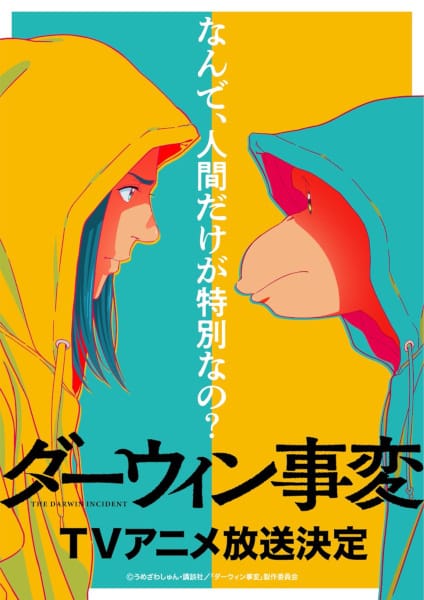
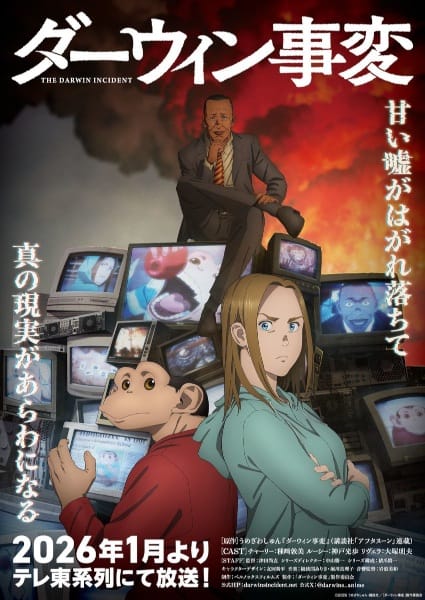
The premise alone is enough to stop you mid-scroll through your seasonal watchlist. An extremist animal-rights group called the Animal Liberation Alliance (ALA) raids a biological research facility and rescues a miscarrying chimpanzee. At a nearby animal hospital, she gives birth to something that shouldn’t exist — Charlie, a human-chimpanzee hybrid created through genome editing. A humanzee. The word sounds like science fiction. This show makes it feel like science fact.
Fifteen years later, Charlie is enrolled at Shrews High School in small-town Missouri, raised by his adoptive parents — primatologist Gilbert Stein and lawyer Hannah Stein. He’s smarter than any human and stronger than any chimp. He’s also socially awkward, visibly different from every person around him, and surrounded by people who either fear him, pity him, or want to use him for their own agendas.
The series doesn’t soft-pedal any of this. Charlie’s existence is a political act whether he likes it or not, and the show makes that crystal clear from episode one. His high school life isn’t a cute fish-out-of-water comedy — it’s a pressure cooker that keeps tightening its lid with every passing episode.
What makes the setup so effective is that the show doesn’t reduce Charlie to a metaphor. He’s a kid trying to figure out who he is while the entire world projects its fears and desires onto him. That specificity — that he’s a person, not a symbol — is what separates this show from lesser sci-fi that would rather preach than feel.
Charlie and Lucy: The Heart of the Storm
Atsumi Tanezaki voices Charlie with a quiet intensity that makes every scene heavier than its dialogue suggests. Charlie isn’t loud or flashy — he’s observant, careful, and clearly carrying weight no teenager should ever have to shoulder. Tanezaki captures that restrained tension perfectly, giving Charlie a voice that’s gentle but always one syllable away from breaking. It’s a performance that says more in silence than most actors manage in monologue.
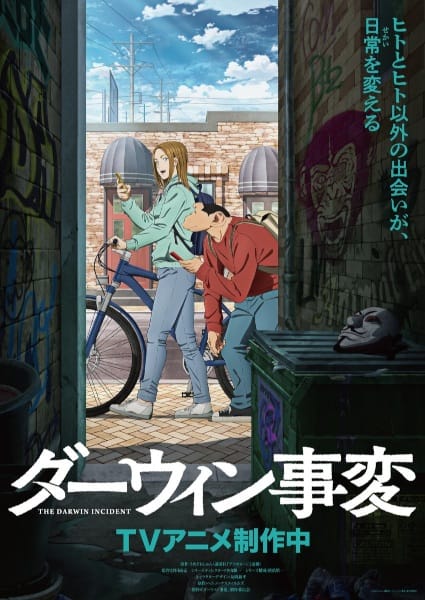
Then there’s Lucy Eldred, voiced by Mitsuho Kambe. Lucy’s an honors student stuck in a small town, hungry for something real and fed up with shallow relationships that go nowhere. When Charlie catches her falling out of a tree (yes, literally), their friendship becomes the emotional anchor of the entire series. Lucy isn’t a damsel or a sidekick — she’s someone actively choosing to stand next to Charlie when everyone else keeps their distance.
Their bond is what makes the show work on a human level. You care about what happens to Charlie because you care about what happens to Lucy. When the world pushes Charlie away, Lucy pushes back with a stubbornness that feels earned, not scripted. That dynamic grounds even the most intense episodes in something personal and real.
This show understands that friendship isn’t just a plot device — it’s a form of resistance. In a world that wants to categorize Charlie as either an animal or an experiment, Lucy simply treats him like a person. That act of basic decency becomes radical, and the show knows it.
Rivera and the ALA: Villainy With a Smile
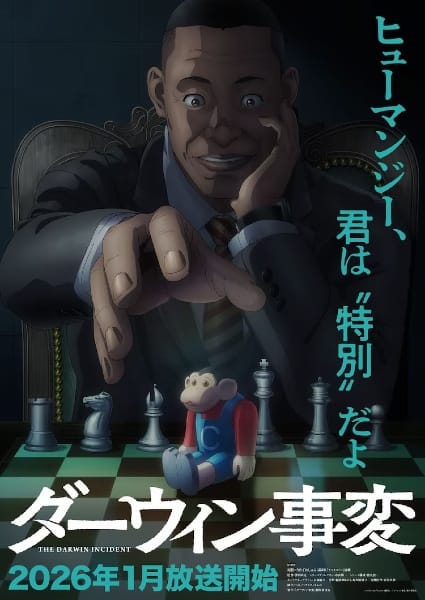
If Charlie and Lucy are the heart of the show, Rivera Feyerabend is its spine — cold, calculating, and terrifyingly composed. Voiced by the legendary Akio Otsuka, Rivera leads the ALA with a friendly demeanor that dissolves the instant it stops being useful. He smiles like your favorite uncle and strategizes like a general planning a siege.
Rivera doesn’t see Charlie as a person. He sees a symbol. A weapon. A living recruitment poster for the ALA animal liberation movement. The show’s most chilling moments aren’t the action sequences — they’re the quiet conversations where Rivera manipulates people like chess pieces, moving them into position while they think they’re making their own choices. His interest in Charlie isn’t compassion. It’s strategy, plain and brutal.
The ALA itself is one of the most disturbing elements of the Darwin Incident anime — and one of its most realistic. This isn’t a cartoon villain organization twirling mustaches and laughing maniacally. The ALA believes in something — animal liberation — and that belief justifies any atrocity. Lesley K. Lippman, the former U.S. Army officer serving as Rivera’s second-in-command, brings military precision to their operations. Dafne M. Linares adds operational depth and field competence. These aren’t extras in matching outfits — they’re committed extremists who happen to be right about some things and horrifyingly wrong about others.
What makes the ALA so effective as antagonists is the show’s refusal to make them simple. They have legitimate grievances. Animal experimentation is cruel. Industrial farming is monstrous. But the ALA’s methods — manipulation, violence, radicalization — poison their own cause. The show holds both truths simultaneously, and that’s what makes it a genuine social thriller anime instead of a lecture.
The School Shooting: When the Show Stops Playing Nice
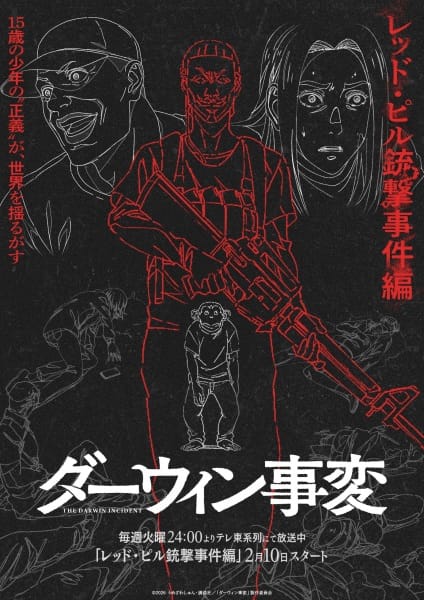
There’s no way to talk about the Darwin Incident anime without talking about the school shooting arc. This is where the show drops any pretense of being a thoughtful character drama and becomes something much darker and much more necessary.
Gare is a student at Shrews High who genuinely sympathizes with the ALA’s cause. He cares about animals. He believes the system is broken. And Rivera doesn’t recruit him with fire-and-brimstone speeches — he manipulates Gare’s real beliefs and genuine social isolation until the kid picks up a weapon and turns it on his own classmates. The result is a mass shooting at the school that’s filmed with unflinching specificity.
This is the series at its most confrontational. The show isn’t using the shooting for shock value or cheap emotional manipulation — it’s demonstrating how extremism weaponizes vulnerability. Gare isn’t a monster. He’s a kid who cared about animals and got twisted by someone who saw that caring as an opening, a vulnerability to exploit. The parallels to real-world radicalization aren’t subtle, and they’re not supposed to be.
This single arc elevates the Darwin Incident anime from “interesting concept” to “essential viewing.” It’s the moment where all the thematic threads converge into something you can’t look away from. If you can sit through these episodes without your stomach tightening, you weren’t paying attention. The show demands that you sit with the discomfort instead of looking away — and that demand is exactly what makes it one of the most important anime of 2026.
Identity, Prejudice, and the Weight of Existing
Beyond the thriller mechanics and the political intrigue, the show is fundamentally about identity. Charlie didn’t choose to exist. He didn’t choose to be a humanzee. He didn’t choose to be a symbol for the ALA or a threat to conservatives or a scientific anomaly that makes researchers salivate. But he is all of those things, every single day, and the show never lets you forget it.
The treatment of social prejudice here is sharp and specific — not a generic “racism is bad” message but a detailed examination of how fear of the unknown calcifies into structural hostility. Deputy Philip Graham starts as an antagonist — suspicious, hostile, ready to treat Charlie as a threat before he’s even done anything wrong. But over 13 episodes, Graham’s arc mirrors what real prejudice looks like when someone actually has to live alongside the person they feared. He doesn’t have a dramatic change of heart or a tearful epiphany. He just starts helping, incrementally, because it’s the right thing to do. Yōji Ueda’s performance gives Graham a gruff authenticity that makes the arc feel earned rather than forced.
Charlie’s adoptive parents represent another dimension of the identity question. Gilbert understands Charlie’s biology — he’s a primatologist, after all — but sometimes struggles with Charlie’s humanity in practice. Hannah understands his legal rights as a lawyer, but can’t shield him from a world that doesn’t know what box to put him in. The Darwin Incident anime shows that even love has limits when society refuses to accommodate difference, and that truth hits harder than any action sequence. The Stein family isn’t dysfunctional — they’re doing their best in a system that wasn’t built for their son.
Production: Bellnox Films Delivers the Goods
Let’s talk craft, because this show deserves its flowers on the production side too. Produced by Bellnox Films, the show features animation quality that stayed consistent across all 13 episodes — no embarrassing mid-season dips, no phoned-in episodes where characters go off-model, no awkward shortcuts that break immersion. That consistency matters enormously for a social thriller anime where every frame carries emotional weight and subtext.
Directors Naokatsu Tsuda and Katsuichi Nakayama balance two very different registers throughout the series: the quiet, observational scenes of Charlie navigating school life, and the explosive, high-stakes confrontations with the ALA and institutional forces. Neither tone overwhelms the other. The school scenes feel as vital as the raids, and the raids feel as personal as the school scenes. That’s directorial control, and it’s harder to pull off than most viewers realize.
Shinichi Inotsume’s scripts give the characters room to breathe while keeping the plot moving at a pace that never drags. The Darwin Incident anime trusts its audience to sit with slow moments and absorb character detail without needing constant stimulation. That trust is rare in modern anime, and it pays off by making the intense moments hit that much harder.
The music by Alisa Okehazama and Mariko Horikawa deserves special mention. It’s restrained where other scores would overplay, and it swells only when it truly matters. The show knows that silence can be louder than any orchestral hit, and the score reflects that understanding with precision and taste.
For a 2026 anime review to be fair, you have to acknowledge when a studio gets it right. Bellnox Films got it right. They delivered a show that looks as good in episode 13 as it does in episode 1, and in today’s production environment, that’s not nothing.
The Finale: A Question, Not an Answer
Episode 13 doesn’t tie things up with a bow. The finale deliberately avoids a clean conclusion — Rivera’s presence still looms as an ongoing threat, the institutional forces circling Charlie haven’t retreated, and the ALA’s capacity for violence is far from neutralized. If you need narrative closure, this finale will frustrate you.
But that frustration is the entire point. Charlie’s story isn’t over because the issues it raises aren’t resolved. Genome editing anime that wraps things up neatly would be lying to you. Animal rights anime that pretends the debate is settled would be patronizing. Social prejudice doesn’t end when the credits roll, and the Darwin Incident anime has the integrity to admit that. That refusal to fake closure is a huge part of why the Darwin Incident anime sticks in your head after the credits.
The IMDb rating of 6.7 reflects this divisiveness honestly. Some viewers wanted resolution. Others recognized that the show’s refusal to conclude is itself a statement — perhaps the most important statement the Darwin Incident anime makes about storytelling itself. ANN praised the balance between high-stakes drama and Charlie’s high-school moments, and that balance is exactly why this show deserves sustained attention. It doesn’t sacrifice character for plot or plot for character. It holds both and demands you hold both too.
If you’re hunting for shows that challenge rather than comfort, check out our shonen anime revolution piece on why shorter seasons are raising the bar for quality storytelling across the industry.
The Manga Legacy: Why This Adaptation Had to Happen
Shun Umezawa’s source material didn’t come out of nowhere. The manga won the 15th Manga Taishō in 2022 and earned an Excellence Award at the 25th Japan Media Arts Festival. Over 1.6 million copies in circulation by May 2024. These aren’t participation trophies — they’re recognition from the Japanese literary and arts establishment that Umezawa created something that transcends typical manga categories entirely.
Serialized in Monthly Afternoon (Kodansha) since June 2020, the manga built its reputation on the same core tension the Darwin Incident anime captures so effectively: the gap between what Charlie is and what the world demands him to be. Umezawa’s pages crackle with the same tension, and the adaptation preserves that energy while finding new ways to express it in motion and sound. The Wikipedia page for The Darwin Incident traces the manga’s accolades in detail, and every single one of them is earned.
The anime adaptation had massive shoes to fill, and it filled them admirably. Not perfectly — some of the visual subtleties of Umezawa’s art don’t fully translate to animation, and some manga readers will inevitably prefer the source — but faithfully enough that manga readers and newcomers can find common ground. The adaptation doesn’t replace the manga; it extends its reach to an audience that might never pick up a physical volume or discover Monthly Afternoon on their own.
This is what good adaptation looks like. Respect for the source material. Confidence to be its own thing. And a clear understanding that the themes — identity, extremism, prejudice, the ethics of creation — are more urgent now than when Umezawa first put pen to paper in 2020.
Should You Watch The Darwin Incident Anime?
Yes. Full stop. No hesitation.
This show isn’t comfortable viewing. It’s not escapist. It won’t leave you feeling warm and fuzzy about the state of the world. But that’s exactly why it matters. In a spring 2026 season packed with sequels and safe bets, this show took a real swing at something that matters — animal rights anime that doesn’t preach, genome editing anime that doesn’t simplify, a social thriller anime that trusts its audience to handle complexity without hand-holding. If you want one bold recommendation this season, make it the Darwin Incident anime.
Charlie the humanzee is one of the most compelling protagonists in recent anime history — not because he’s powerful, but because he’s vulnerable in a world that refuses to make room for him. The Darwin Incident anime gives us a character worth fighting for, and that makes all the difference. Lucy is the friend everyone deserves and very few people actually get. Rivera is the villain you can’t stop thinking about because his logic, stripped of its cruelty, isn’t entirely wrong — and that’s what makes him terrifying.
If you loved BEASTARS’ final season, the Darwin Incident anime hits similar thematic notes with sharper political teeth and a more explicit engagement with real-world extremism. And if Frieren Season 2 is your 2026 comfort watch, this is its necessary counterweight — the show that reminds you anime can still make you sweat and think at the same time.
Stream it on Amazon Prime Video. Watch all 13 episodes. Sit with the finale’s deliberate discomfort. Then come back and tell me I’m wrong about this one. You won’t.
The Darwin Incident anime isn’t just one of the best shows of 2026 — it’s one of the most necessary. And in a medium drowning in isekai power fantasies and nostalgic retreads, necessary counts for a lot. Shun Umezawa gave us a story worth telling, Bellnox Films gave us an adaptation worth watching, and Charlie the Charlie humanzee gives us a character worth remembering long after the season ends.
You Might Also Enjoy
If the show left you hungry for more shows that push boundaries and ask hard questions, these are worth your time:
BEASTARS Final Season Part 2 Review — Another show about what it means to be caught between species, with its own take on prejudice, desire, and the violence of social hierarchies.
Frieren Season 2 Review: Best Anime of 2026? — A very different vibe, but the same commitment to asking hard questions through genre fiction rather than despite it.
Ramparts of Ice: Spring 2026’s Surprise Hit — Another spring 2026 standout proving this season was stacked with risk-takers and boundary-pushers.
Daemons of the Shadow Realm: Why Arakawa’s New Anime Is Spring 2026’s #1 Show — Hiromu Arakawa’s latest, and another reason spring 2026 will be remembered as an all-time great season.
The Shonen Anime Revolution: Why Shorter Seasons Are Winning — The industry shift that made focused, 13-episode shows like the Darwin Incident anime possible in the first place.