The Man Behind the Myth: Vash the Stampede’s Pacifist Philosophy
There is a reason the wanted posters for Vash the Stampede carry a bounty of $$60 billion double dollars. Entire towns have been leveled in his wake. He is described as a walking natural disaster, a force so destructive that insurance companies collapse under the weight of his path. And yet, in over a hundred years of life, Vash the Stampede has never once taken a human life on purpose.
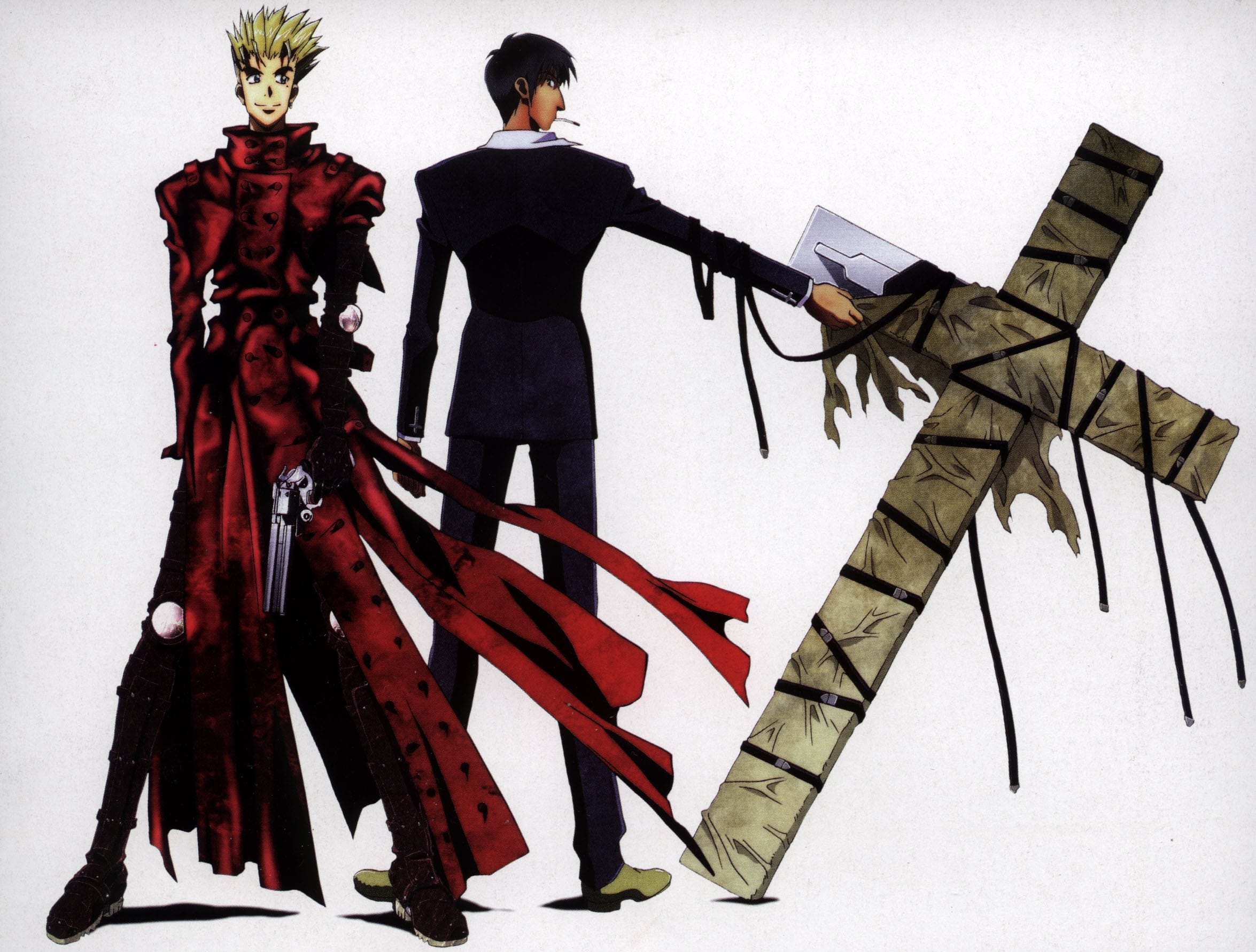
That is the central contradiction that makes any serious Vash the Stampede character analysis so compelling. He is the most dangerous man on the planet Gunsmoke, and he refuses to kill. Not because he is weak, not because he lacks the firepower, and not because he has never had cause. He refuses because he has made an unbreakable promise to himself — a promise rooted in love, in grief, and in a philosophy he inherited from someone who believed in humanity far more than humanity has ever deserved.
Vash’s pacifism is not the naive kind that pretends violence does not exist. It is the hard kind. The kind forged by watching people die for you, by carrying scars across every inch of your body, by choosing over and over again — in the face of hate and bullets and people who have given up — to protect a life instead of taking one. In Trigun, creator Yasuhiro Nightow never lets the philosophy feel cheap. Every time Vash saves someone who probably doesn’t deserve it, the show asks you: is he foolish, or is he the only one paying attention to what actually matters?
The answer, slowly and painfully, turns out to be the latter. Vash’s code comes from Rem Saverem, the woman who raised him on the SEEDS ships before everything went wrong. She taught him that no one has the right to take a life — that every person contains a world inside them. Vash took that lesson and made it the core of his identity. Even when it costs him everything. Even when the person he is saving tries to kill him on the way down.
Donuts and Devastation: The Goofy Exterior That Hides Something Real
If you watched the first couple of episodes of Trigun without any context, you might think you had stumbled into a straightforward comedy. Vash trips over himself, begs for donuts with the urgency of a man dying of hunger, flirts embarrassingly with every woman in range, and generally behaves like the least threatening person in any room he enters.
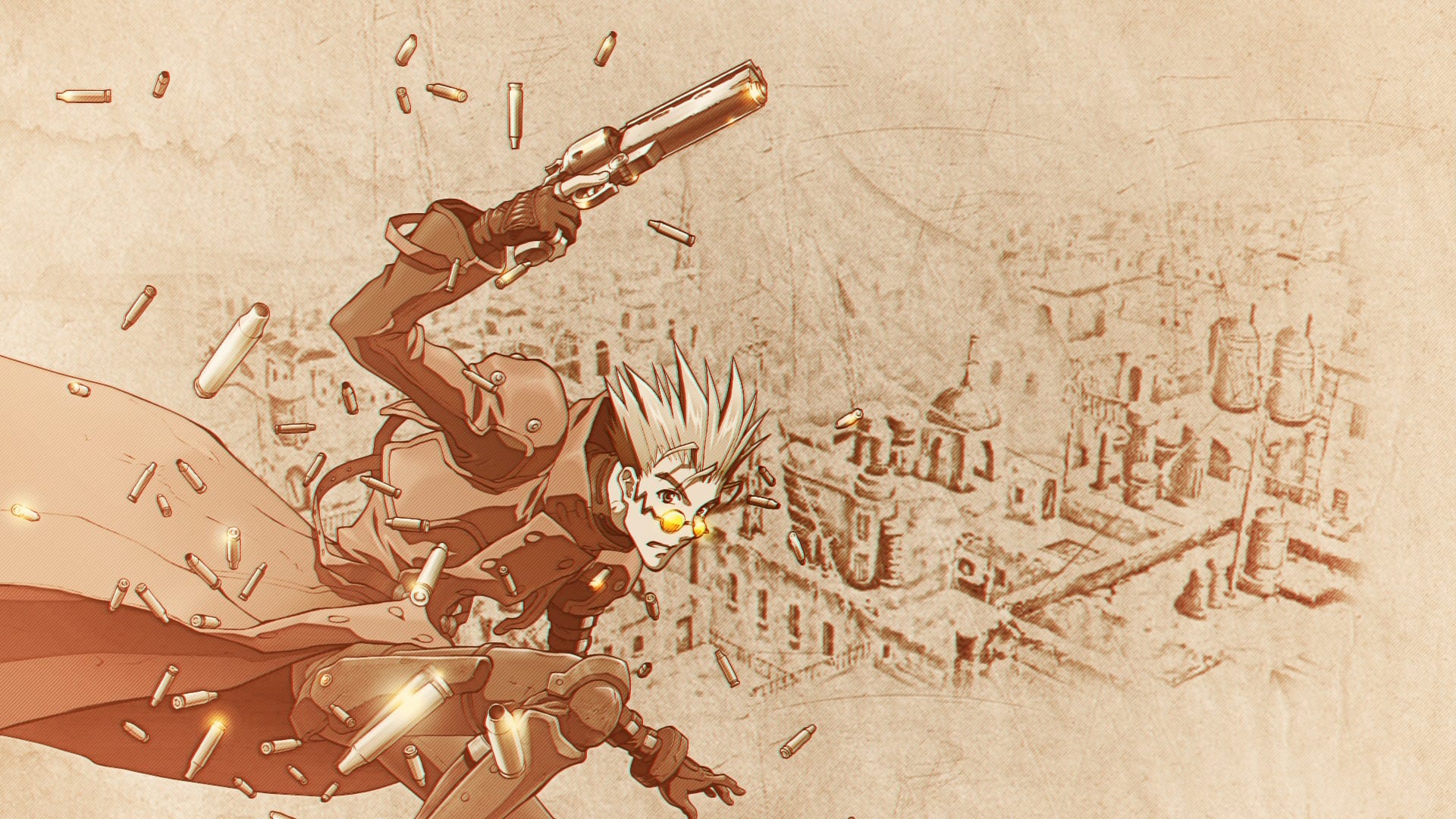
This is not an accident. It is armor.
The goofiness serves a real purpose. After a century of being feared, hunted, and blamed for catastrophes he did not cause, Vash has learned that putting people at ease keeps them alive. A threatening presence invites threats. A clown in a red coat invites confusion, maybe laughter. And in that confusion, he can do his actual work — defusing situations, disarming gunmen, finding the non-lethal third option that everyone else missed because they were too busy reaching for their weapons.
But the deeper truth is that the humor is also how Vash survives emotionally. He is carrying grief that would crush a normal person. The weight of the July City incident alone — a catastrophe that killed millions and that he blames himself for — is something no amount of therapy could fully address. The laughter is not fake. It is real joy that coexists with real pain. Vash is genuinely capable of finding something to love about every day, every stranger, every bad meal in a bad town on a dying desert planet. That capacity for joy, sitting right next to that depth of pain, is what makes him feel so fully drawn as a character.
This is one of the things a Vash the Stampede character analysis tends to linger on: the show earns its tonal whiplash. When the comedy stops and Vash’s expression shifts — when the dumb grin disappears and you see the eyes underneath — it lands hard precisely because you have been laughing with him for twenty minutes. Nightow understood that you cannot break a reader’s heart unless you’ve first made them love the character. He made you love Vash by making him fun. Then he showed you the cost.
Two Roads: Vash, Wolfwood, and What It Means to Survive
Nicholas D. Wolfwood is, in many ways, the most important character in understanding who Vash actually is. Not because Wolfwood is a villain or a foil in any simple sense — but because he represents the path Vash did not take, and the argument against everything Vash believes.
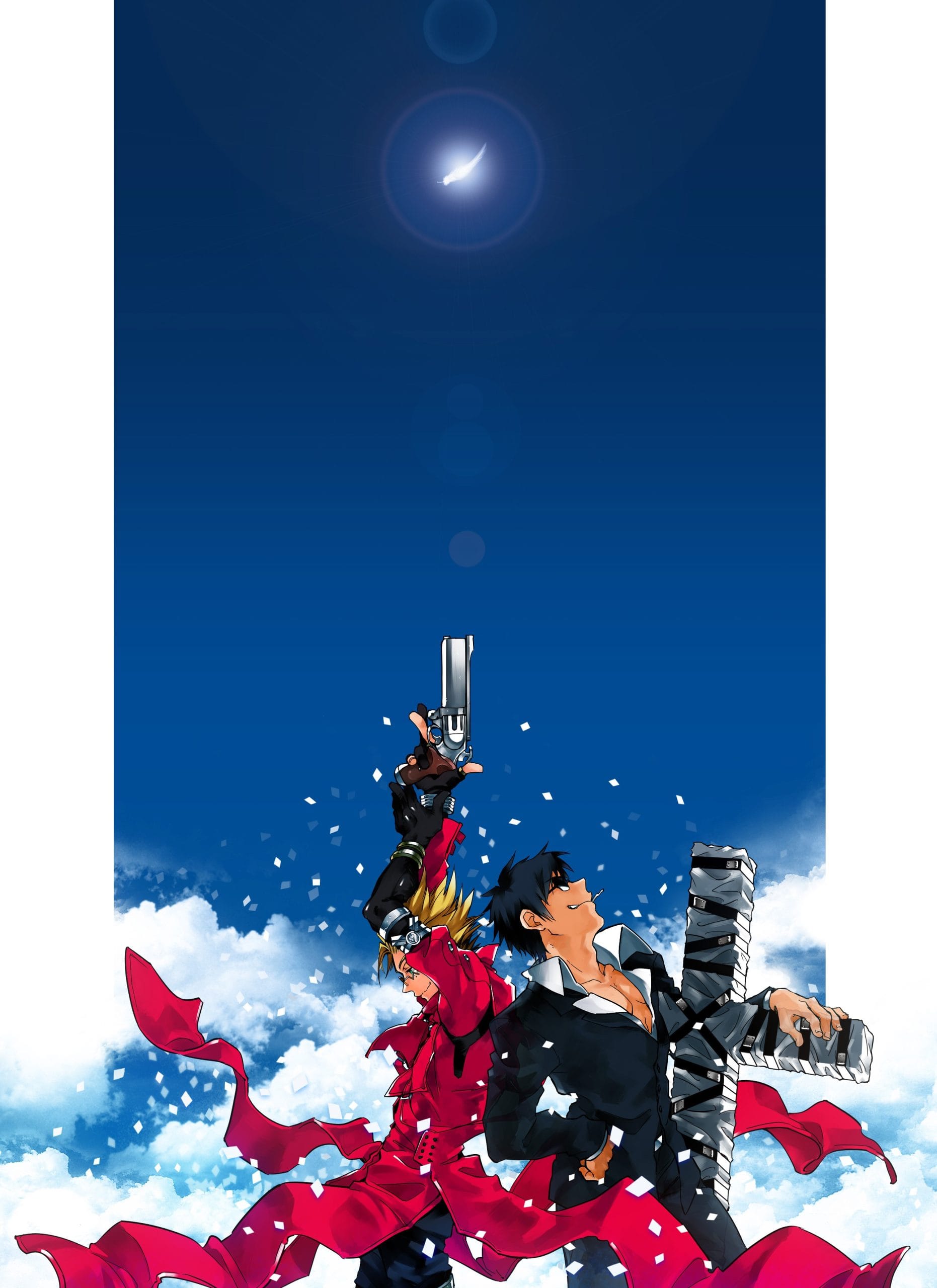
Wolfwood is a priest who kills. He carries a giant cross that is actually a weapon, walks the same dusty roads as Vash, and uses lethal force without the same hesitation. He loves children — genuinely, fiercely — and he funds an orphanage with money from assassination contracts. He is not a hypocrite exactly. He just lives in a world where he has accepted that some people need to die so that others can live. It is a utilitarian math that Vash refuses to do.
The tension between them is never played as simple. Trigun gives Wolfwood’s position real weight. There are moments when Wolfwood’s way seems obviously correct — when Vash’s insistence on finding another path just gets people hurt. And there are moments when Vash’s way proves that Wolfwood’s math was wrong, that the third option was there all along if you were willing to bleed for it.
What makes their relationship one of the best friendships in pacifist anime is that neither of them fully converts the other. They walk together, argue, save each other’s lives, and Wolfwood — in the end — dies carrying the weight of every choice he made. His final scene is one of the most quietly devastating in the medium. He chose to die on his own terms, in a church, confessing. Vash, who loved him, could not save him from the consequences of the life Wolfwood chose.
That loss reshapes Vash. Not into someone who gives up on pacifism — but into someone who understands at a bone-deep level that his philosophy demands constant sacrifice, from him and from the people around him. Wolfwood’s death is the price of Vash’s world. He carries it.
The Brother He Could Not Save: Vash Versus Knives
If there is a single relationship that defines the full scope of any Vash the Stampede character analysis, it is the one between Vash and his twin brother Millions Knives. They were born together. They grew up together. They watched Rem die together. And then one of them decided humanity was a plague, and the other decided humanity was worth everything.
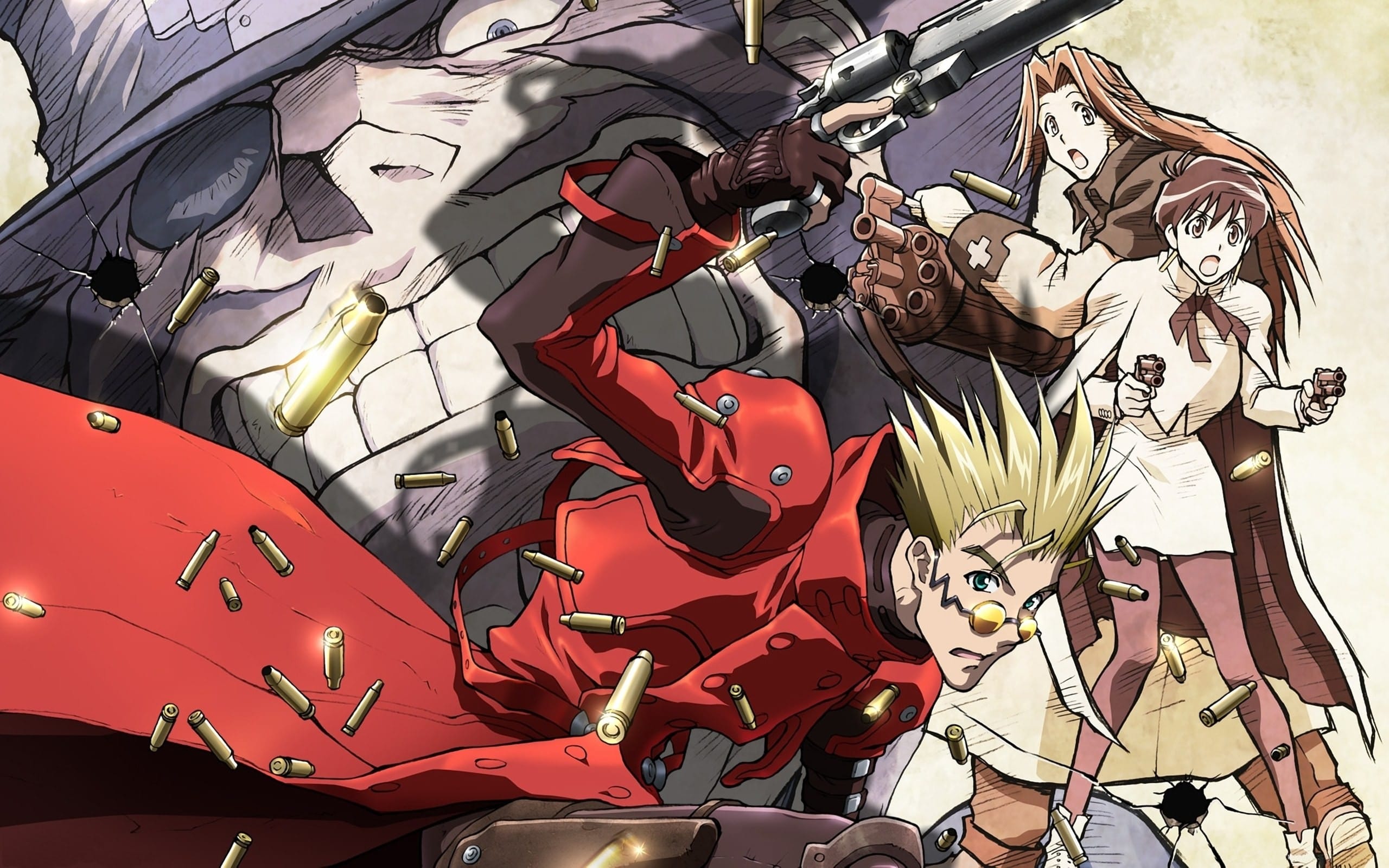
Knives is the dark mirror. He has all of Vash’s power, all of Vash’s intelligence, and none of his capacity for love. Where Vash looked at humans and saw Rem — saw the best of what people could be — Knives looked at humans and saw cruelty, parasites, a species unworthy of the plants that sustain them. Knives spent a century building toward a genocide. Vash spent that same century trying to stop him without killing him.
That last part is what separates Vash from almost any other anime protagonist. His goal is not to defeat his brother. It is to save him. He holds onto the possibility of Knives’ redemption with the same desperate grip that he holds onto life itself. It would be easy — almost satisfying in a conventional narrative sense — for Vash to put a bullet in his brother and be done with it. He has more than enough reason. He has the power. He has been given every justification the story can offer.
He doesn’t do it. He finds the third option even here, even at the end, even after everything. This is either the purest expression of his philosophy or the most stubborn, depending on your read. The show’s genius is that it lets you hold both interpretations. Vash’s refusal to kill Knives is not presented as automatically correct. It is presented as a choice — the hardest possible choice — made by someone who has thought about it longer and more deeply than anyone else alive.
Whether it works is almost beside the point. Vash’s resolve against Knives is not about outcome. It is about refusing to become the kind of person who gives up on someone, even someone who has given the universe plenty of reasons to give up on them.
Why Vash the Stampede Stands Apart as an Anime Protagonist
The landscape of anime protagonists is wide. You have the hot-blooded fighters, the reluctant heroes, the prodigies with tragic pasts, the quiet types who turn terrifying when pushed. Most of them, when the story demands it, will kill. The climax of most shonen and action series involves defeating the final enemy by force. This is not a criticism — it is just how stories tend to work. Good versus evil, and evil gets destroyed.
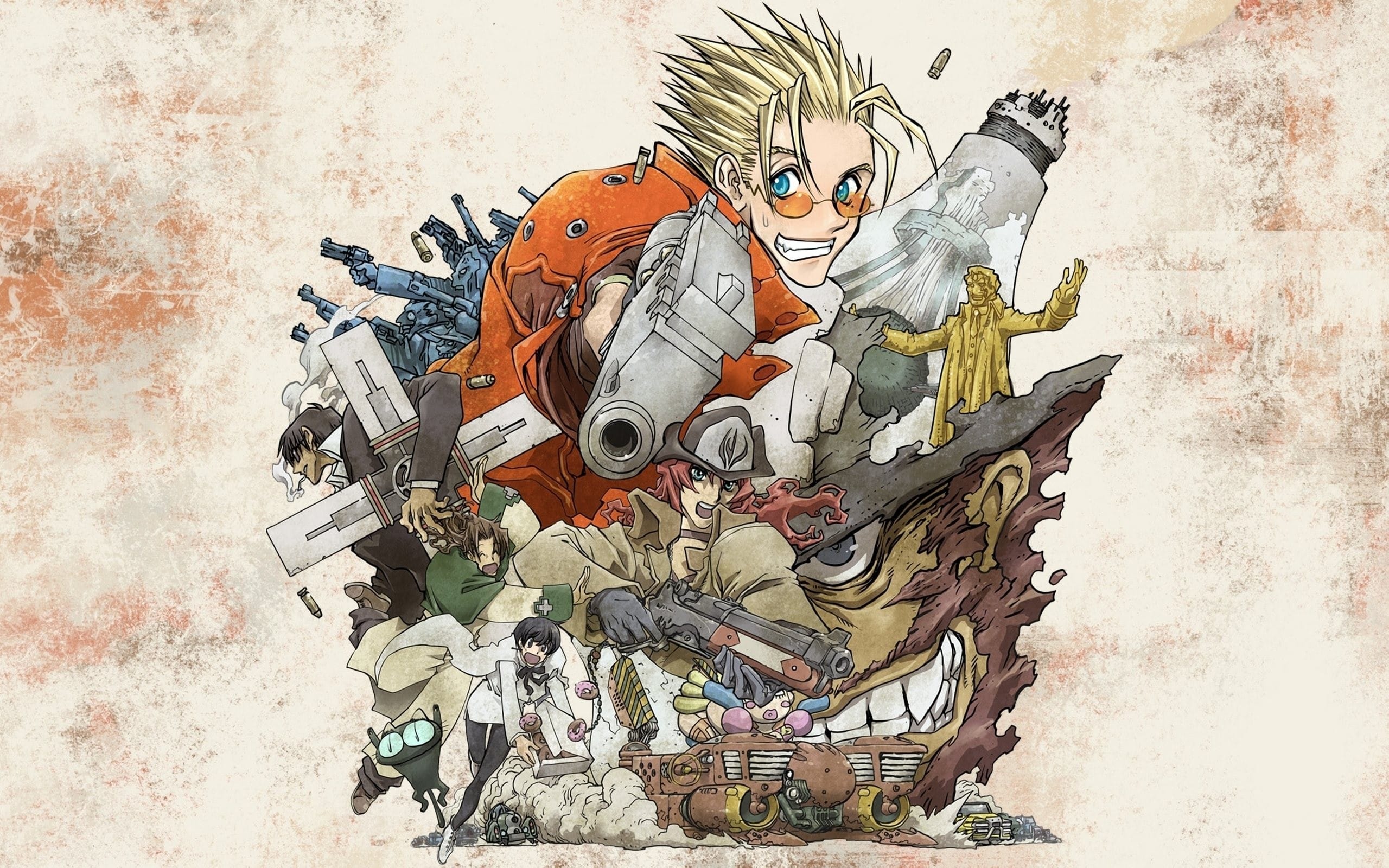
Vash does not fit that shape. His victories are weird. They are messy and expensive and often look like failures from the outside. He gets shot constantly. His body is a road map of every fight he has walked away from — prosthetic arm, bullet wounds, scars that tell the story of someone who has been absorbing damage for a century rather than dealing it. This is what pacifism actually looks like in a violent world. It costs the pacifist. You bear the violence so others don’t have to.
What makes the Vash the Stampede character analysis worth writing is that he achieves something rare in fiction: a character whose core philosophy is tested to its absolute limit, who does not compromise it, and who is not punished by the narrative for that refusal. He is not naive. He is not proven wrong. He is just — relentlessly, exhaustingly, gloriously — right that every life matters, and he pays whatever price that belief demands.
In the wider conversation about pacifist anime, Trigun occupies a singular spot. Other shows engage with pacifism as a theme. Vash lives it as an identity, not a strategy. It is not a tactic he uses when convenient. It is who he is. Remove it and you don’t have a darker, more practical Vash. You just don’t have Vash.
He is also one of the few protagonists in the medium who is explicitly coded as loving people — not just a specific love interest, not just his core group of companions, but humanity in general. That broad, unconditional love for strangers is genuinely radical in a genre that usually frames love as romantic or tribal. Vash loves the guy who just tried to shoot him. He loves the town that chased him out yesterday. He loves the species that has been blaming him for disasters he didn’t cause. It is, depending on the moment, either the most beautiful thing about him or the saddest.
That combination — the goofiness, the grief, the scars, the unbreakable code, the love that doesn’t quit — is why Vash the Stampede remains one of the most original anime protagonists ever written. Decades after Trigun first aired, he still doesn’t have many peers. There are characters who share his ideals, or his humor, or his tragedy. Very few manage all three at once and make it feel earned rather than designed.
He is the proof that you can be the most dangerous gunfighter on the planet and choose, every single day, to use that power to protect instead of destroy. That choice, made over and over in the face of everything that argues against it, is what makes him worth writing about.
You Might Also Enjoy
- Edward Elric Character Analysis: The Alchemist Who Refused to Stop Fighting
- The Best Pacifist Anime Characters Who Chose a Different Path
- Trigun Stampede vs. Original Trigun: Which One Should You Watch First?
- 10 Anime Protagonists With Tragic Backstories That Actually Pay Off
- Best 90s Anime That Still Hold Up Today