There are arcs in anime that feel like natural progressions. And then there are arcs that fundamentally reshape what a series even is. The Slime Season 4 War Arc is the second kind. We’ve watched Rimuru Tempest go from confused corporate drone to Demon Lord, from Demon Lord to something that made every god and ancient dragon in this universe nervous. But the War Arc? That’s where the ceiling gets ripped off completely — and it’s been a long time coming.
If you’ve been keeping up with the light novel or manga, you already know what’s waiting. If you’re anime-only, strap in. What’s coming isn’t just powerful in a “cool fight scenes” way — it’s powerful in a way that recontextualizes everything you’ve watched since episode one. This is the Slime Season 4 War Arc breakdown you need before the adaptation drops.
For a full overview of what’s confirmed and scheduled, hit our Slime Season 4 Complete Guide first. Then come back here for the deep analysis.
The Eastern Empire Invasion: When the World Stops Being Safe
Up until now, the threats Rimuru has faced were largely reactive — rogue adventurers, political schemes, the occasional unhinged Demon Lord. Even Clayman, for all his manipulation, was operating at a scale that Rimuru could eventually manage. The Eastern Empire is different. Completely different.
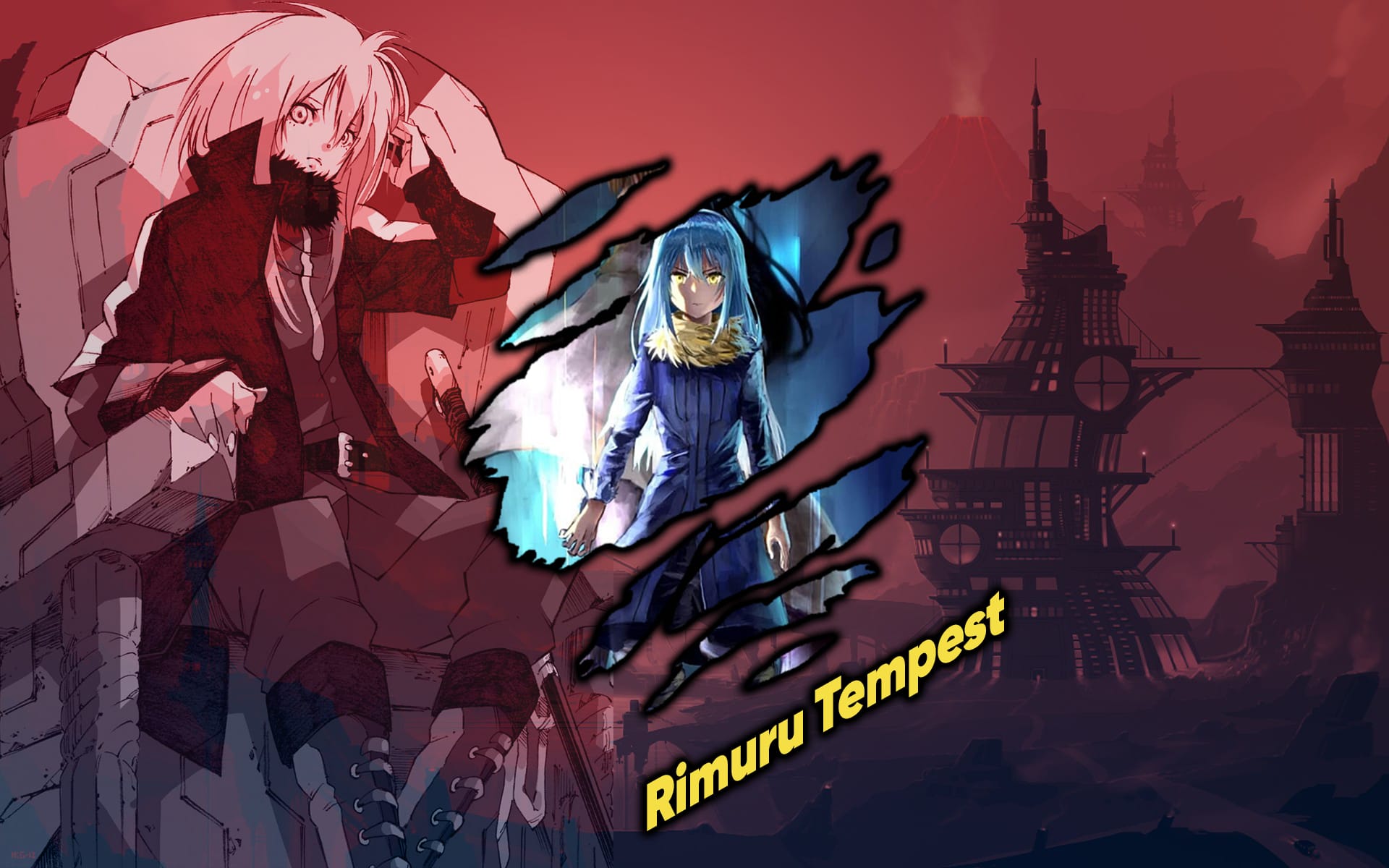
The Nasca Namrium Ulmeria United Eastern Empire isn’t sending scouts or assassins. They’re mobilizing a full military campaign — a calculated, resource-heavy invasion backed by a seemingly infinite supply of soul-engineered soldiers, Otherworlders forcibly reincarnated as weapons, and commanders who have been preparing for this exact confrontation for decades. Emperor Ludora has been playing a game nobody else even knew was on the board.
What makes the Eastern Empire arc land so hard narratively is scale. Tempest has grown into something that genuinely looks like a thriving nation — trade, diplomacy, culture, people who trust Rimuru’s protection. The invasion is a direct threat to all of that. It’s not just power-scaling fodder; it’s Rimuru being forced to reckon with the cost of being a ruler, not just a fighter. Every citizen, every ally, every agreement Rimuru has ever made is suddenly on the line simultaneously.
The military strategy elements here are also genuinely well-constructed. Tensura’s author, Fuse, takes the logistics seriously — troop movements, feints, the Empire’s use of Spirit Arm technology and their engineered Otherworlder units. It rewards paying attention rather than just waiting for the next flashy ability reveal.
Rimuru’s Evolution to True Dragon: What It Actually Means
Let’s be precise about this, because fandom shorthand tends to flatten what’s actually happening. When people say “Rimuru becomes a True Dragon,” they’re describing the endpoint of a transformation that started the moment Veldora was absorbed back in episode one. The War Arc is where that process fully crystallizes — and the implications are staggering.
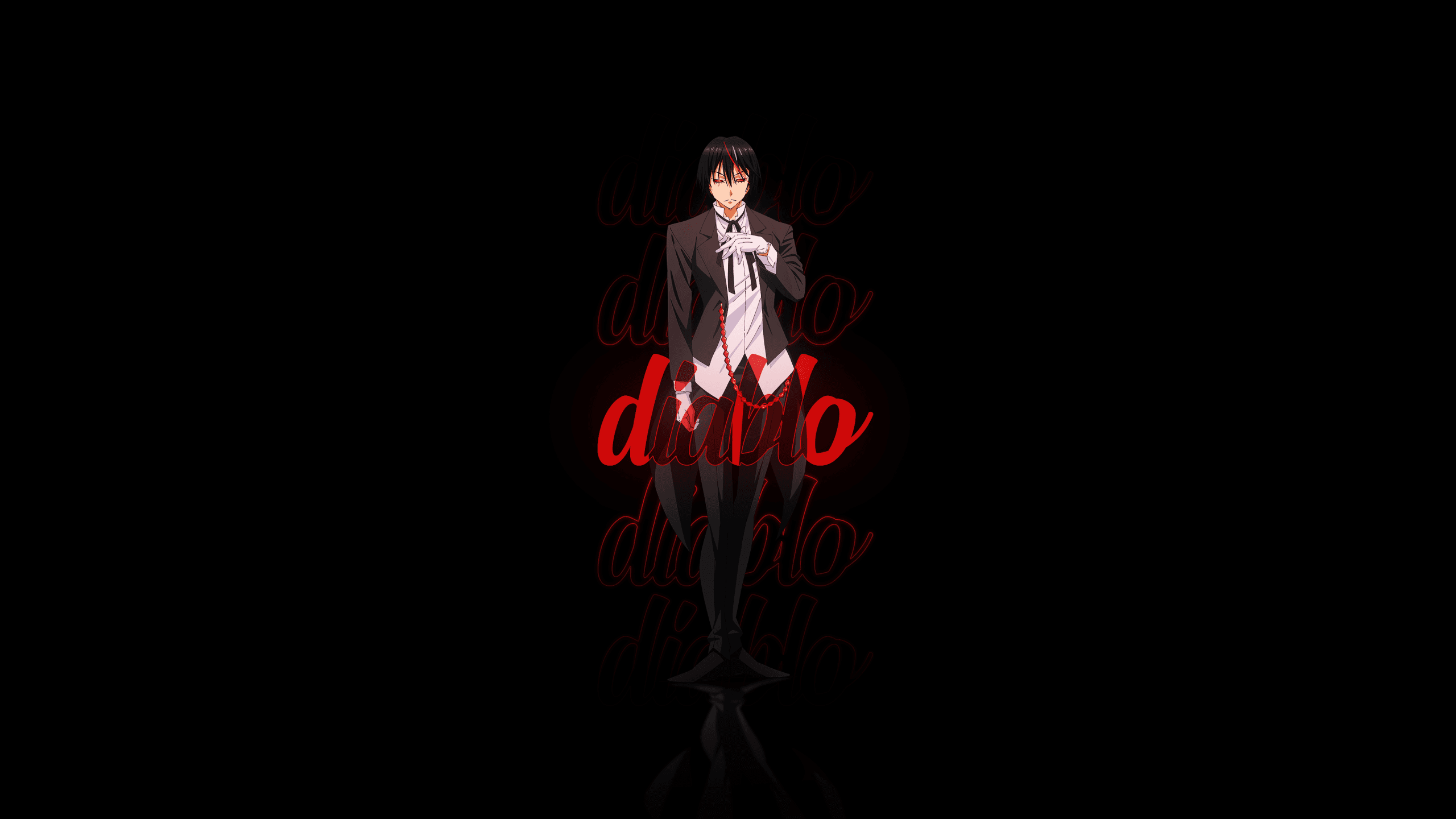
True Dragons in Tensura aren’t just a tier above Demon Lords. They’re existential forces. Veldora, Velzard, Velgrynd, and Milim (as a Dragon hybrid) have been passive constants in this world’s power structure for millennia. The fact that a reincarnated human slime is joining that category doesn’t just break the power chart — it breaks the logic of the world’s history. Ancient beings who haven’t moved in thousands of years are suddenly paying attention.
The mechanics of the transformation matter too. Rimuru’s path to True Dragon status runs through the complete analysis and replication of Veldora’s Infinite Prison, the maturation of Raphael into the Ultimate Skill Wisdom King Raphael into something even further beyond, and the convergence of his unique abilities into a coherent, terrifying whole. This isn’t a power-up from a dramatic moment. It’s the payoff of every single ability Rimuru has ever absorbed, catalogued, and refined since chapter one.
What it means for the story: Rimuru stops being a protagonist who has to get clever or lucky. He becomes a protagonist who is genuinely a top-tier existence — and the War Arc forces that evolution because nothing less would have been sufficient to survive what the Empire throws at him. That’s good writing. The power-up is earned, not handed.
For a deeper look at how Rimuru’s abilities and personality have evolved across the whole series, our Rimuru Tempest Character Analysis covers the full arc of his growth.
The Octagram in Full — Finally
Since Walpurgis Night, the Octagram has been framed as the supreme authority among Demon Lords — eight beings of incomprehensible power who nominally govern the demonic side of this world’s balance. The War Arc is the first time we see meaningful chunks of that group actually do things in coordination with Rimuru rather than around him or against him.
Milim’s role in this arc is complicated and deliberate. Her relationship with the Empire — and what the Empire has done to maintain it — is one of the arc’s best reveals, touching on just how deep the Emperor’s planning goes. Milim being the most straightforwardly powerful being we’ve seen for most of the series and then watching her be neutralized through means that have nothing to do with raw power is genuinely unsettling. It reframes her from comic relief/force-of-nature into a tragic figure for the duration of this arc.
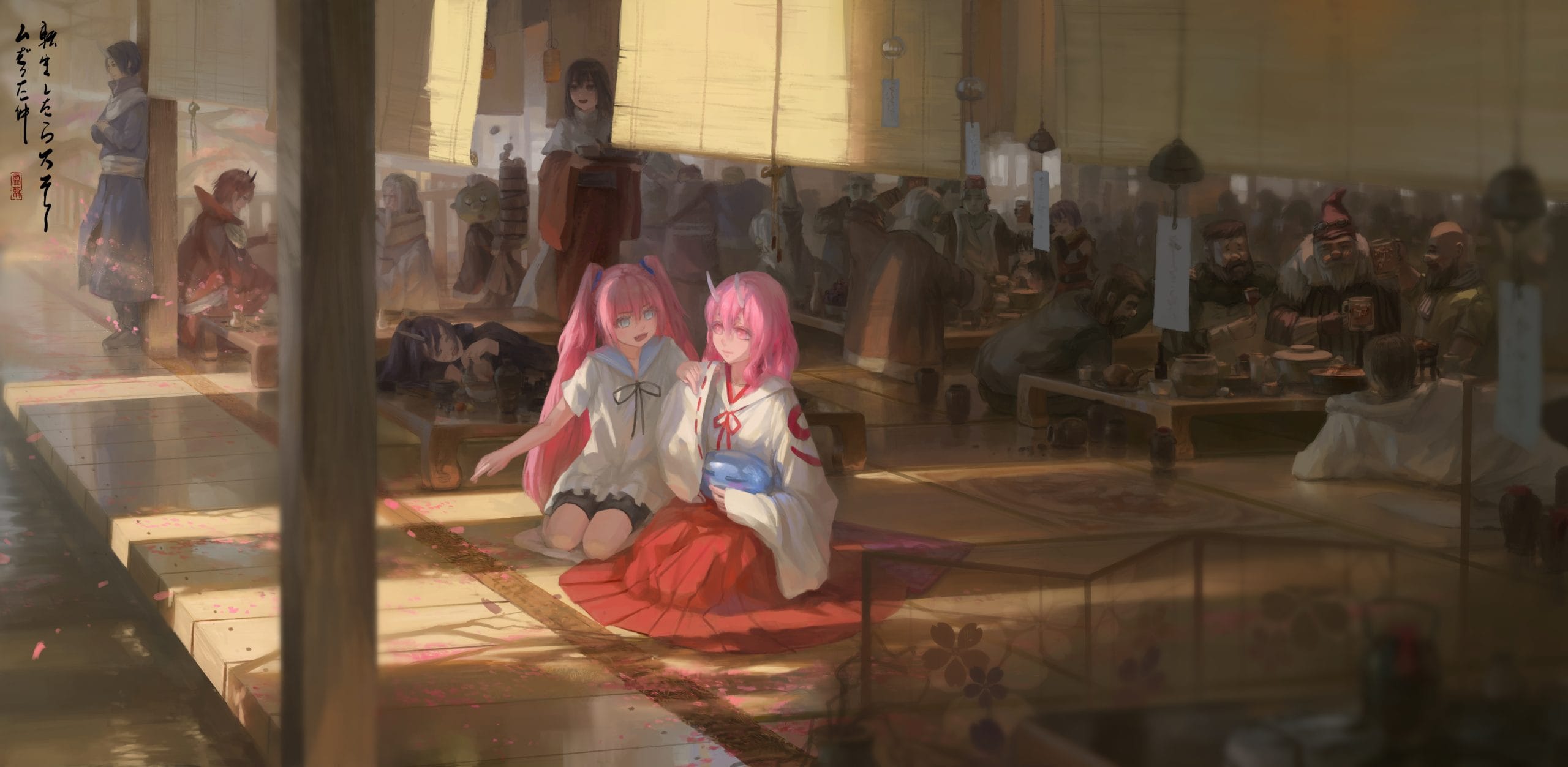
Diablo’s deployment is everything fans of his character have been waiting for. We’ve seen flashes of what he’s capable of — his battlefield against Clayman’s forces, his casual dismissal of things that would threaten anyone else — but the War Arc gives him room to operate at actual scale. The gap between Diablo and the characters around him becomes viscerally apparent.
Benimaru’s growth through this arc also deserves to be called out. He’s been Rimuru’s top field commander and the most obviously “anime protagonist energy” character in the supporting cast. The War Arc is where that stops being a character trait and starts being a reality backed by genuine power and battlefield intelligence.
Guy Crimson: The Most Important Character Who Hasn’t Moved Yet
If there’s one character whose shadow hangs over the War Arc more than any other, it’s Guy Crimson — and he barely has to show up to do it.
Guy is, by the internal logic of Tensura, the most powerful Demon Lord in the Octagram and arguably one of the two or three most powerful entities in the entire world. He’s been around longer than most civilizations. He has complete information. And he does essentially nothing — not out of laziness, but because he’s been waiting for something specific: a peer. Someone worth treating as an equal rather than a chess piece.
The War Arc is where Rimuru starts to become that. Guy’s observation of the Eastern Empire conflict, his subtle intervention (or deliberate non-intervention), and his final assessment of what Rimuru’s transformation means for the world’s future are all written with the weight of thousands of years of accumulated patience finally resolving. The scene where Guy acknowledges Rimuru as a fellow True Dragon isn’t played for hype. It’s played as a reckoning. That subtlety is what makes it hit harder than any fight scene could.
Guy also serves a structural narrative purpose: he’s the measure. When Guy Crimson takes something seriously, the reader understands exactly how serious the situation actually is. In earlier arcs, he was amused. In the War Arc, he’s engaged. That shift in register communicates more than pages of exposition could.
Feldway and the Angels: The Real Hidden Threat
The Eastern Empire is terrifying. But the Empire is, at some level, a human institution with human motivations — resources, power, the Emperor’s obsession. Feldway and the angelic forces he commands are something else: they’re the first direct intrusion of what the series has been quietly building toward since the Otherworlder mythology started expanding.
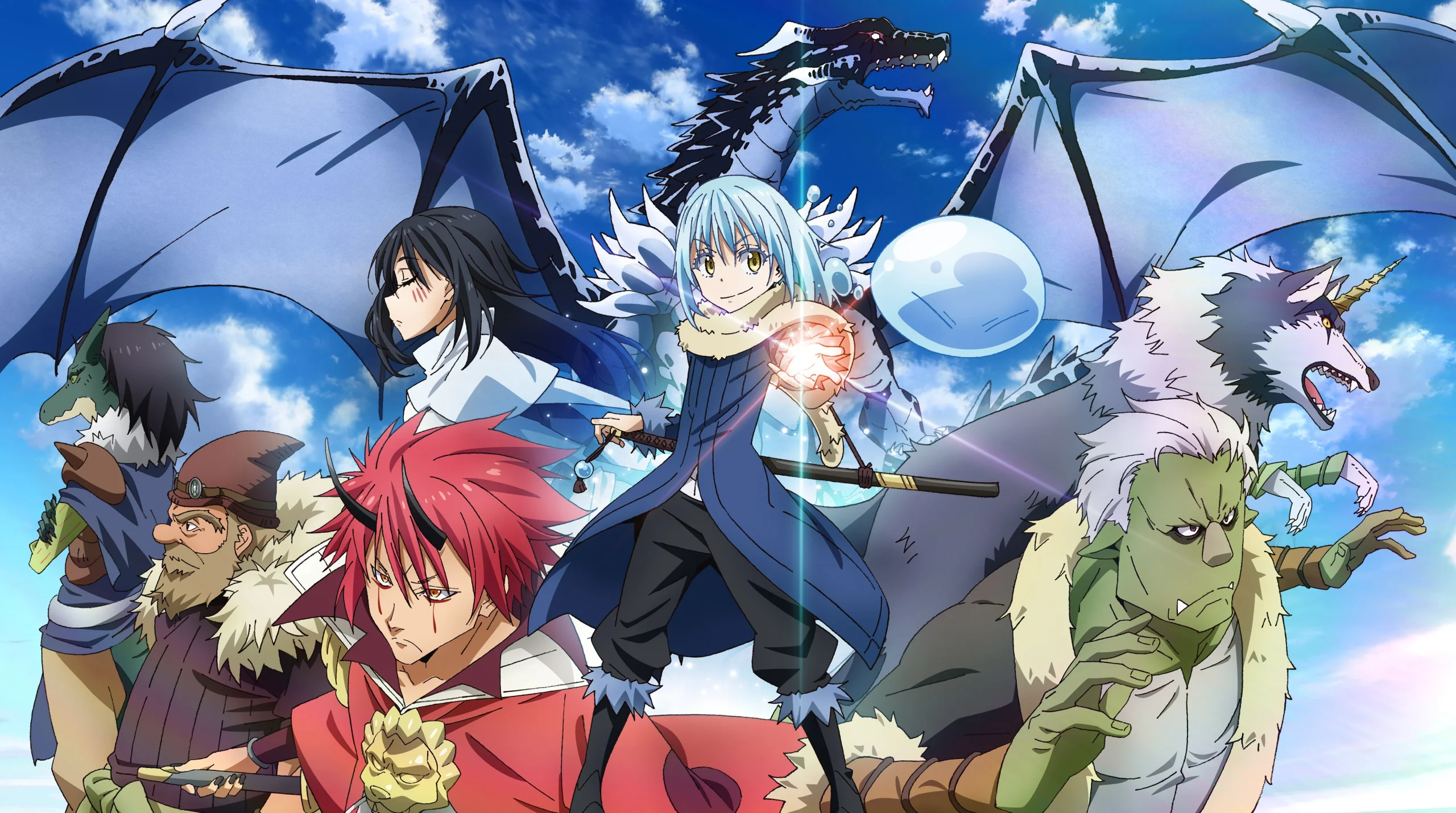
Feldway is a Seraphim — one of the highest-ranking angels in a celestial hierarchy that exists as a direct counterpart to the demonic power structure. His involvement with the Eastern Empire isn’t ideological; it’s instrumental. He’s pursuing an agenda that predates the Empire entirely, connected to the fate of a specific divine being whose absence has been felt as background radiation throughout the series if you were paying attention.
What Feldway’s presence does for the War Arc is raise the stakes beyond politics. The Eastern Empire represents a worldly threat. The Seraphim represent an existential one — a threat to the nature of souls, reincarnation, and the fundamental contract by which this isekai world operates. That’s the arc’s masterstroke: it uses the Empire as the immediate crisis while Feldway’s forces represent the deeper disruption that the War Arc sets in motion for everything that follows.
The battle sequences involving the angelic army also push the animation staff in the best possible direction — the aesthetic contrast between demonic and angelic aesthetics in Tensura has always been rich, and these confrontations pay off the visual worldbuilding in spectacular fashion. If the adaptation does this right, these are the moments that end up in every season highlight reel.
Power Scaling Implications: Where Tensura Goes From Here
One of the legitimate criticisms that gets leveled at isekai power fantasy is that scaling can become meaningless — every arc just introduces a bigger number, and the tension dissolves because nothing the heroes have accomplished feels durable. Tensura has always been somewhat vulnerable to this critique, but the War Arc actually handles the problem more elegantly than it might appear.
The key is that Rimuru’s ascension to True Dragon status doesn’t trivialize the world — it elevates the threats that come after it. By establishing that True Dragons are an apex category with only a handful of members in history, the series creates a coherent ceiling. And then the War Arc immediately demonstrates that even True Dragon-tier power isn’t unlimited: Feldway and the celestial hierarchy operate under different rules, Veldanava’s absence is still the defining wound in this world’s architecture, and there are beings and conditions that even Rimuru’s new form cannot simply overwhelm.
What the power-scaling in the War Arc actually does is make every future conflict legible. We now understand approximately where Rimuru sits relative to the rest of the cast and the threats that remain. That clarity — knowing roughly what’s a peer fight, what’s a stomp, and what’s genuinely dangerous — is what allows the series to continue generating tension at this tier. Knowing Rimuru is immensely powerful doesn’t remove suspense; knowing what can still challenge him does.
For anime fans curious about what other high-ceiling power fantasy series are worth watching alongside Tensura, our Spring 2026 Anime Season Complete Guide has several strong options landing in the same window.
Why This Is Peak Tensura — And Why It Earns That Title
Here’s the honest version: not everyone loves every part of Tensura. The early isekai chapters can feel light. Some of the political intrigue in the middle sections drags if you’re not invested in the nation-building. Walpurgis Night is fantastic but front-loaded with setup. There have been stretches where the series coasted on charm and Rimuru’s likability rather than delivering genuine dramatic weight.
The War Arc is when all of that investment pays off — not just for impatient readers, but structurally. Every relationship that was built during the nation-building phase has something on the line. Every ability Rimuru spent chapters cataloguing gets deployed with purpose. Every character who received development time in prior arcs delivers a meaningful moment here. This is the arc that justifies the pacing of everything before it.
It’s also the arc where Tensura most clearly articulates what it actually is: not a simple power fantasy, but a story about the cost and weight of leadership. Rimuru spends almost as much time making decisions about the survival of others as he does fighting, and those decisions — who to protect, who to sacrifice, what principles are worth compromising and which ones aren’t — give the action sequences an emotional foundation they’d otherwise lack.
The War Arc also has the best individual character moments of the entire series. There are scenes here — for Shion, for Shuna, for Benimaru, for Gobta in his own weird way — that readers of the light novel or manga have been waiting years to see animated. These aren’t just cool moments. They’re the culmination of character arcs that started back when Tempest was a small goblin village in a forest, and they land with the full weight of that history behind them.
According to Natalie.mu, the Tensura franchise has maintained extraordinary commercial momentum with each successive release — the War Arc’s manga volumes broke previous series records. That reception isn’t accidental. The arc delivers on the promise of everything that came before it, and fans who’d been patient knew exactly what they were getting.
What to Expect From the Anime Adaptation
The question hanging over every discussion of the Slime Season 4 War Arc isn’t whether the material is good — it’s whether the adaptation will do it justice. That’s a real question, and it deserves a real answer.
The production track record through Season 3 is genuinely encouraging. 8-bit has handled the escalating scale of Tensura better than most studios handle their flagship properties — the Walpurgis Night sequence in particular showed real ambition with its staging and choreography. The War Arc demands more: more simultaneous combat threads, more visual distinction between the various power tiers in play, and at least a handful of moments that need to be genuinely jaw-dropping to land correctly.
The True Dragon transformation is the obvious benchmark. How that sequence is handled — the visual language chosen, the music, the duration, the weight given to the moment before the transformation versus the reveal itself — will define how the season is remembered. Done wrong, it’s a flashy light show. Done right, it’s the single most significant visual moment in five seasons of television.
The angelic warfare aesthetic is another opportunity. Tensura has always had a strong visual identity on the demonic side — Rimuru’s black particles, Diablo’s refined-chaos energy, Milim’s overwhelming pink destruction. The angels are deliberately designed as the visual opposite: precise, geometric, overwhelming in a cold and systematic way. Getting that contrast right requires intentionality that goes beyond standard action choreography.
The adaptation also needs to handle Feldway’s presence carefully. He’s not a character who communicates through action — he communicates through implication, through what he doesn’t do, through the reactions of characters who understand exactly what his arrival means. That kind of performance lives or dies in direction, voice acting, and subtle scene composition. It’s the hardest kind of antagonist to adapt well, which is also why getting it right would elevate the season significantly.
If the studio commits to giving the War Arc the episode count it needs — resisting the temptation to compress the most complex material in the series — and if the production maintains the visual ambition shown in Season 3’s best moments, the Slime Season 4 War Arc has every chance of being the defining anime event of its season. The source material is there. The audience is ready. The only variable left is execution.
Whatever happens, this is the arc Tensura fans have been building toward for years. The Eastern Empire is coming. Rimuru is becoming something unprecedented. Guy Crimson is finally paying attention. And the world that Rimuru spent three seasons building is about to be tested in ways that will determine what it actually is — and whether it deserves to survive.
The War Arc isn’t just important. It’s necessary. And if the anime delivers even 80% of what the source material promises, it’s going to be unforgettable.