Every few months, like clockwork, someone posts a hot take on Reddit or drops a reply in an anime Discord: “Classroom of the Elite is mid. Y’all are delusional.” And every time, it kicks off an absolute war. Passionate defenders. Equally passionate detractors. Dozens of replies going nowhere fast.
Here’s the thing — both sides have a point. That’s what makes Classroom of the Elite one of the most genuinely interesting arguments in anime right now. It’s not mid. It’s also not the flawless 10/10 masterpiece a loud contingent insists it is. The truth lives somewhere in the middle, and that middle is more interesting than either extreme.
So let’s actually go there. No cheerleading, no dunking. Just an honest breakdown of what this show does brilliantly, where it falls flat, and what the whole debate really says about us as fans.
First, Some Context: What We’re Actually Arguing About
Classroom of the Elite — Youkoso Jitsuryoku Shijou Shugi no Kyoushitsu e, if you want to feel fancy — is a light novel adaptation from 2017, later receiving a second season in 2022 and a third in 2024. The premise: an elite high school where students earn points as currency, classes compete for resources and rankings, and the social hierarchy is brutal and meritocratic. Our protagonist, Ayanokoji Kiyotaka, is a cold, calculating genius who deliberately placed himself in the lowest-ranked Class D. Hijinks — and elaborate psychological warfare — ensue.
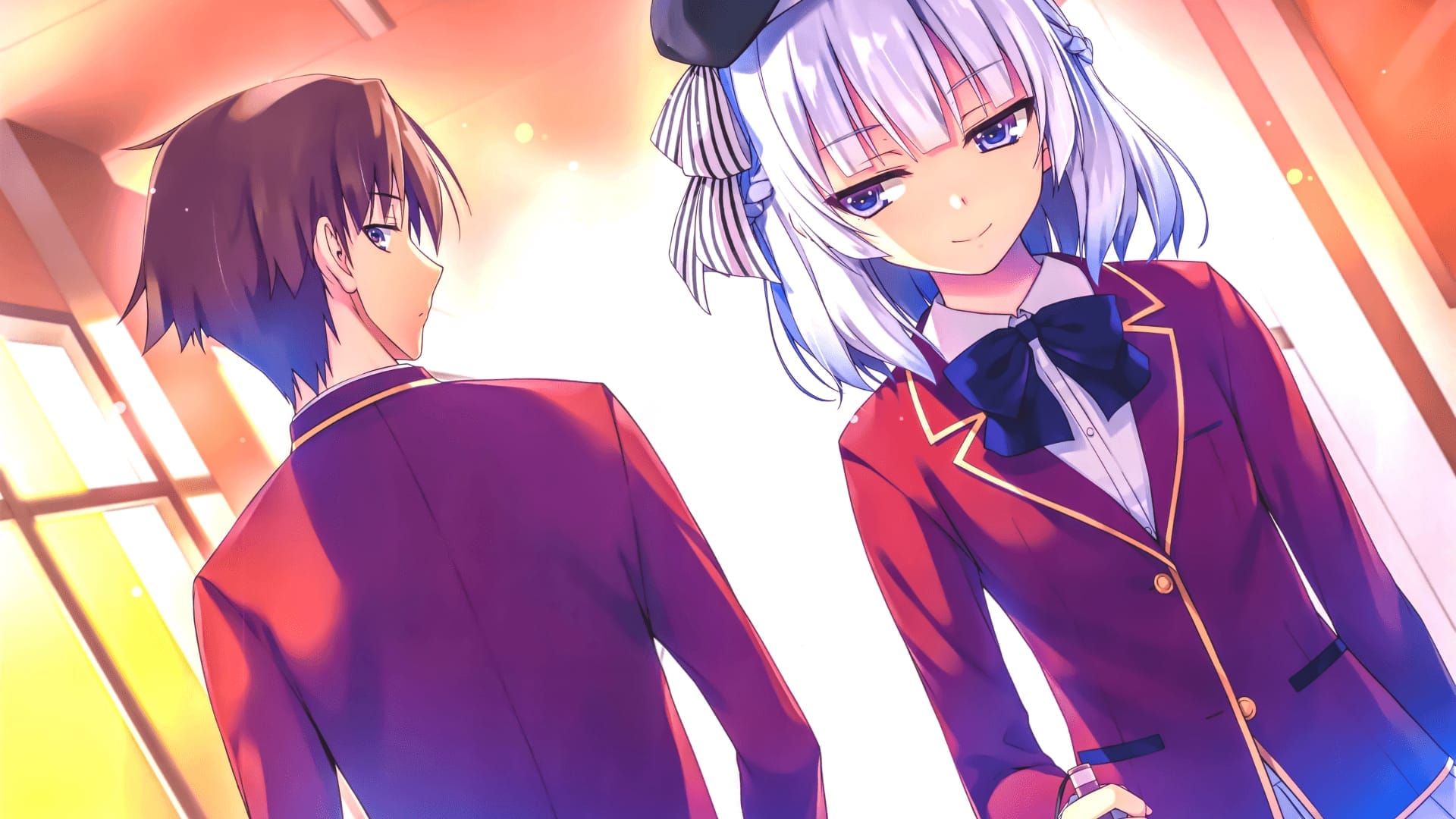
The source material, written by Shougo Kinugasa, is a monster-length light novel series with a dedicated fanbase. Book readers will fight you. They will fight me for writing this article. That’s fine. We’ll get to them.
The Classroom of the Elite overrated discourse tends to collapse two separate arguments into one: Is the anime adaptation overrated? And is the story itself overrated? These are different questions with different answers, and conflating them is how most of these arguments go off the rails.
The Case FOR Classroom of the Elite
Let’s start here, because the show genuinely earns its reputation in several key areas.

The Mind Games Are Legitimately Good
The psychological chess matches at the core of COTE are the real product, and when they land, they land. The school exam arcs, the island survival arc, the Paper Shuffle exam — these sequences have a particular flavor that’s rare in anime: the satisfaction of watching someone two steps ahead of everyone else while you, the viewer, were maybe one step ahead of the other characters but still got outplayed by the protagonist.
That’s a hard thing to pull off. Most “genius” protagonists in anime telegraph their brilliance through exposition or reaction shots from other characters. Ayanokoji’s plans often feel genuinely surprising in retrospect, with enough foreshadowing that you feel slightly dumb for not seeing it coming. That’s the sweet spot.
Ayanokoji Is a Different Kind of Protagonist
This is where the series does something genuinely subversive. Ayanokoji isn’t a hero. He’s not particularly likable. He uses people instrumentally, maintains emotional distance from everyone around him, and his stated goal for much of the series is simply not to be noticed. He’s a character study in someone who has been so thoroughly conditioned to suppress his nature that watching him slowly, reluctantly engage with the world around him is more compelling than a dozen conventional protagonist arcs.
Check out our deep dive on what makes Ayanokoji tick as a character — because there’s more going on under that flat affect than the anime fully has time to show.
The contrast with characters like Light Yagami in Death Note is instructive. Light’s genius is performative — he monologues, he emotes, he needs you to know he’s winning. Ayanokoji’s genius is almost passive-aggressive. He genuinely doesn’t care if you see it. For a certain type of viewer, that’s catnip.
The Source Material Is Genuinely Strong
Here’s the argument that book readers make, and they’re not wrong: the light novels are substantially richer than the anime. The internal monologues are deeper. The character motivations are clearer. The arcs that feel rushed or underdeveloped in the anime have room to breathe on the page.
Volumes 4.5 and 7.5 alone — the “special” volumes that focus on individual characters — do more character work than the entire animated series to date. If you’ve only watched the anime and are calling COTE overrated, you may be rating the adaptation, not the story. And there is a difference.
The Case AGAINST Classroom of the Elite
Alright. Time to be honest about the problems, because there are real ones.

The Adaptation Is Rushed to the Point of Damage
Season 1 is the most egregious example. It covers a massive amount of source material at a pace that leaves casual viewers genuinely confused about character motivations. The Ryuuen introduction, the full scope of the island arc’s politics, Horikita’s arc — all of it is compressed in ways that make the show feel like Cliff’s Notes for a better story.
This is a real problem because it skews the audience. People who bounce off Season 1 because it feels thin are reacting to a genuine deficiency in the adaptation, not the source material. But they’re still reacting to the product that was shipped, and that matters.
Season 2 and 3 improved this significantly — the pacing tightened, the adaptation choices were smarter — but the damage was partially done. A lot of potential fans checked out after Season 1 and never came back.
The Side Characters Are Undercooked
This is the criticism that hits hardest, and it’s valid across both the anime and to a lesser extent the novels. Horikita is positioned as a co-lead in marketing and promotional art, but the anime reduces her to a character who needs rescuing and enlightening. Kushida’s arc has potential that the adaptation barely touches. Ryuuen, one of the most interesting antagonists, doesn’t get nearly enough screen time to fully develop his worldview.
When your protagonist is deliberately opaque and emotionally distant by design, the supporting cast needs to carry emotional weight. In COTE, too often they don’t. That’s a structural problem that no amount of “but the novels” can fully fix when we’re talking about the anime as an anime.
The Power Fantasy Problem
Look, we need to talk about it. There’s a subset of COTE’s fanbase that isn’t watching it for the psychological depth or the social commentary. They’re watching it because Ayanokoji is an unstoppable sigma male who outsmart everyone and eventually gets a harem, and that’s their jam.
That’s fine — people like what they like. But it creates a weird dynamic where legitimate criticism of the show gets dismissed as “not getting it,” and genuine fans of the story’s more interesting ideas end up defending something that’s also popular for less interesting reasons.
Some of the later volumes of the light novel lean into this harder than the earlier ones, which is its own conversation. The point is that COTE’s reputation is partially built on an audience that’s not engaging with its best qualities, and that makes the “overrated” charge stick more than it should.
Comparing It to the Greats: Death Note and Code Geass
COTE gets compared to Death Note and Code Geass constantly, and it’s worth interrogating that comparison rather than just accepting it.

Death Note is structurally a thriller. It has a clear central conflict, a protagonist and antagonist in direct opposition, and tonal consistency that keeps escalating. The genius on display is theatrical — Light and L performing for each other and for us. Death Note’s decline (post-L) is real and documented, but the peak is a complete, self-contained experience that doesn’t require supplementary reading material to fully appreciate.
Code Geass runs on vibes, ambition, and sheer audacity. It’s messier than Death Note and proudly so. The mech battles, the social commentary, the tragedy — it’s maximalist in a way that COTE deliberately isn’t. Code Geass earns its reputation by going all-in on every emotional beat, for better and worse.
COTE is doing something different from both. It’s quieter, colder, more methodical. The problem is that “quieter and colder” can look like restraint when it’s working and look like emptiness when it isn’t. The adaptation’s pacing problems mean it too often looks like the latter to first-time viewers.
The honest comparison is that COTE’s ceiling, story-wise, might be as high as either of those classics. Its floor, adaptation-wise, is lower than both.
For more on why anime sequels and continuations so often fumble what made the original work, our piece on the problem with anime sequels is worth a read.
The Honest Assessment
Here’s where we land after actually thinking about it:

Is Classroom of the Elite overrated? The anime, as adapted? A little, yes — mostly because the adaptation leaves too much on the table and Season 1’s pacing actively misleads new viewers about what the show is. It promises depth and occasionally delivers it, but not consistently enough to fully justify the “elite psychological thriller” marketing.
Is the story overrated? No. The light novels are doing something genuinely interesting with a genuinely interesting protagonist, and the source material has earned its reputation among people who’ve engaged with it seriously. The problem isn’t that fans are wrong to love it — it’s that the adaptation hasn’t fully delivered what makes it worth loving to the people who need that from the anime.
That gap between story quality and adaptation quality is the actual source of the overrated discourse. Light novel readers say “you don’t understand” because the story they love is better than what’s on screen. Anime-only viewers say “it’s overrated” because they’re judging what they can actually see. Both groups are correct about their object of discussion. They’re just discussing different objects.
For context on where COTE Season 2 fits in the broader scene, the complete Year 2 guide breaks down the arc structure and what the adaptation gets right this time around.
What Year 3 and Beyond Needs to Fix
If the adaptation wants to close the gap between what COTE is and what it should be on screen, here’s what actually needs to happen:
Give the side characters room. Horikita’s development, Kushida’s actual arc, even the Class C and B students — these are not decorative. The psychological ecosystem of ANHS is interesting precisely because everyone is playing the game, not just Ayanokoji. Treat them accordingly.
Trust the material’s quietness. The source material’s power comes partly from restraint — from what isn’t said, from what Ayanokoji doesn’t do, from the accumulation of detail. Compression destroys this. Better to adapt less and go deeper than to adapt more and go thin.
Commit to the darkness. Some of the late-game reveals about Ayanokoji’s background and the true nature of the school are genuinely unsettling. The anime has been dancing around this. Leaning into it would elevate the whole project.
Better soundtrack and direction in the key moments. The mind game sequences deserve choreography — visual and musical — that matches their narrative weight. Some of the best moments in Seasons 2 and 3 showed what’s possible. More of that, please.
How COTE’s ongoing seasons compare to what’s landing in the current season is a different conversation — check out the Spring 2026 anime season guide for the full picture of what you should be watching right now.
The Verdict
Classroom of the Elite is not the flawless 10/10 that its most fervent defenders claim. It is also not the soulless power fantasy that its harshest critics dismiss it as. It’s a legitimately smart piece of fiction saddled with an adaptation that has never fully done it justice — and surrounded by a fanbase that’s sometimes arguing past each other because they’re working from different versions of the same story.
The most honest thing you can say about COTE is this: it rewards the investment. The people who go deep — who read the novels, who sit with the character dynamics, who follow the threads across multiple arcs — tend to love it genuinely and for good reasons. The people who bounce off the anime at the surface level are also responding to real weaknesses in how it’s been adapted.
Overrated implies the reputation exceeds the reality. For COTE, it’s more accurate to say the reality of the source material exceeds what the adaptation has delivered. That’s a different problem, and it’s one that still has time to be fixed.
We’re watching. And we’ll be here when it gets it right.
For a deep breakdown of Ayanokoji’s psychology and what makes him work as a protagonist, don’t miss our full character analysis. And if you want to see how anime fans at large are rating the current season, MAL’s COTE ratings page is always worth a look for the current temperature check.