Why The Ribbon Hero Could Be the Anime Film That Defines 2026
Every few years, an anime project comes along that makes you stop scrolling and actually pay attention. Not because of flashy marketing or a viral trailer — though The Ribbon Hero has both — but because the pieces on the board are too interesting to ignore. An Osamu Tezuka adaptation. A debut feature from one of the most exciting animators working today. A score by the composer who defined the sound of modern anime. And Netflix backing the whole thing with a worldwide release on August 8, 2026, preceded by a world premiere at the Annecy International Animation Film Festival on June 24. This isn’t just another streaming anime. The Ribbon Hero anime has the potential to be the kind of film that reshapes how we think about adapting classic manga for a new generation.
The Legacy of Princess Knight
Before we can understand why this film is such a big deal, we need to talk about what it’s building on. Princess Knight — originally serialized as Ribbon no Kishi in Kodansha’s Shōjo Club magazine starting in 1953 — is one of the most consequential manga ever created. Period. Not “most consequential shoujo manga.” Not “most influential work by Tezuka aimed at girls.” It sits in the pantheon of works that fundamentally changed the medium.
Osamu Tezuka, already the godfather of manga thanks to Astro Boy and Kimba the White Lion, was approached by a Kodansha editor who wanted him to create something aimed at a female audience — something that could replicate the success he’d had with his boy-oriented series. What Tezuka delivered was something nobody expected. Princess Knight told the story of Sapphire, a princess who is mistakenly given both a boy’s soul and a girl’s soul by the mischievous angel Tink. This dual nature gives Sapphire the strength and bravery traditionally coded as masculine alongside the compassion and grace coded as feminine, and she must navigate a kingdom where women cannot inherit the throne.
The series was directly influenced by the Takarazuka Revue, the all-female theater troupe from Tezuka’s hometown, where women perform both male and female roles with spectacular theatricality. That influence — the fluidity of gender performance, the grandiosity of costume and identity — pulses through every page. Princess Knight didn’t just create the template for gender-bending anime and manga; it invented it. Without Sapphire, there is no Ouran High School Host Club, no Revolutionary Girl Utena, no entire lineage of shoujo protagonists who defy the roles assigned to them.
That’s the weight this adaptation carries. It’s not adapting some forgotten curio from Tezuka’s back catalog. It’s adapting the work that birthed an entire genre of gender-bending anime and permanently altered the trajectory of shoujo manga. When The Comics Journal reviewed the English translation, they described Princess Knight as the work that “transformed the shojo comic market in Japan,” turning what had been a niche space for gag strips and moral lectures into a category capable of real narrative ambition. The Ribbon Hero isn’t just a nostalgia play — it’s a return to the source code.
What Is The Ribbon Hero?
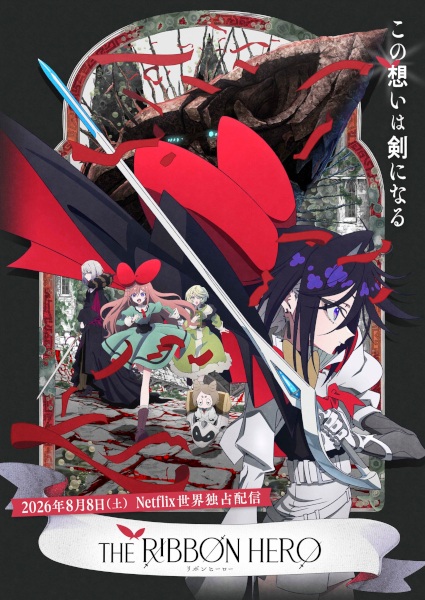
So what is The Ribbon Hero actually about? The film follows Sapphire, the princess of the fallen kingdom of Silverland. Having lost her homeland to a devastating calamity, Sapphire refuses to accept the same fate for her new home, Goldland. She takes up arms — and her iconic ribbon — to defend Goldland and its people from the catastrophe that destroyed everything she once knew.
If you’re familiar with the original Princess Knight, you’ll notice the bones of the story are still there: a princess who refuses to be defined by the role society assigns her, who fights for her people with both ferocity and compassion. But The Ribbon Hero anime isn’t a frame-by-frame recreation. The shift from Silverland to Goldland, the framing of Sapphire as a hero who has already lost everything once — these are meaningful departures that give the adaptation its own identity. This is Sapphire as a refugee turned warrior, not just a princess playing at knighthood. The stakes feel more visceral, the emotional core more urgent.
Voice acting duties fall to Saya of the comedy duo Lalande (credited as Saaya Kadokura), marking her first time headlining an animated feature. It’s an unconventional choice — Saya is primarily known as a comedian and actress, not a voice actress — but it tracks with the production’s willingness to break from tradition. Tezuka himself was always an iconoclast. Casting a comedian in the lead role of a story about someone who refuses to stay in the box they were put in feels almost poetically appropriate for this film.
The Dream Team Behind It
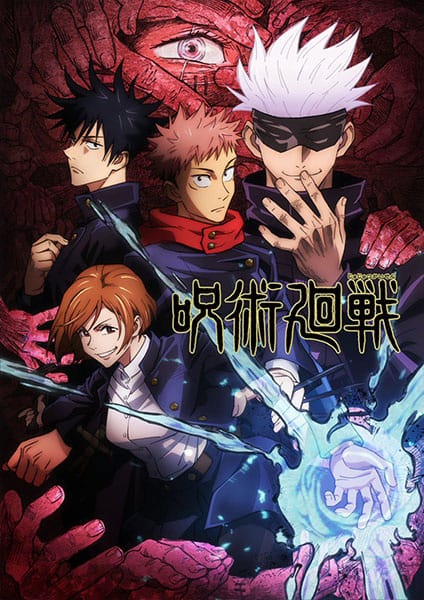
Let’s talk about the people making The Ribbon Hero, because this is where the project goes from “interesting” to “holy crap.” The film is the feature directorial debut of Yuuki Igarashi, and if you’ve seen the Star Wars: Visions episode “Lop & Ocho,” you already know why his name on this project is a big deal. That short was one of the standout entries in the entire Visions project — emotionally resonant, visually striking, and told a complete story in a compact runtime. Igarashi also delivered one of the most memorable ending sequences in recent anime as the solo key animator for the first ending of Jujutsu Kaisen. His animation work on Mob Psycho 100 further cemented his reputation as one of the most talented animators of his generation.
Now he’s directing his first feature, and he’s chosen to do it with Osamu Tezuka’s most foundational shoujo work. That’s not a coincidence. Igarashi clearly understands that Princess Knight is about fluidity — of gender, of identity, of the roles we choose versus the ones assigned to us — and his visual storytelling in “Lop & Ocho” demonstrated exactly the kind of emotional sensitivity this material demands.
The character designs come from Kei Mochizuki (Fate/Grand Order, Touken Ranbu), with concept collaboration from Mai Yoneyama (Cyberpunk: Edgerunners, LAZARUS). If you watched Edgerunners and felt the character work was next-level, Yoneyama’s involvement in The Ribbon Hero anime should make your pulse quicken. Kazunari Arakaki handles animation character design, and Cedric Herold serves as art director. The cinematography comes from Hikaru Fukuda, with editing by Junichi Uematsu.
And then there’s the music. Satoru Kosaki and Ryuichi Takada are composing the score. We need to talk about what that means.
Why Outline Studio Matters
The Ribbon Hero anime is produced by Outline, the studio Igarashi himself founded in July 2022 as a subsidiary of Twin Engine. That’s important context. Outline isn’t some established production house cranking out seasonal content on an assembly line. It’s a new studio — the Ribbon Hero anime is its first feature-length project — built around a singular creative vision. Twin Engine serves as the production partner, bringing their experience with projects like Megalo Box, Fire Force, and Vinland Saga to provide infrastructure and support.
Why does a new studio matter for this project? Because Netflix anime productions have a checkered reputation. For every Cyberpunk: Edgerunners or Pluto that emerges as a genuine masterpiece, there’s a parade of projects that feel like they were designed by committee — slick, expensive, and oddly hollow. The difference between a great Netflix anime and a mediocre one almost always comes down to whether there’s a strong creative voice driving the vision, or whether the project was generated by algorithm.
Outline’s structure — a studio led by the director himself, backed by a proven production company in Twin Engine — is the kind of setup that has produced some of the best anime in history. Think about how Studio Ghibli operates around Miyazaki, or how Science SARU exists as Masaaki Yuasa’s creative vehicle. Outline isn’t on that level yet — it’s brand new — but the DNA is there. A director-led studio with a first feature that’s an adaptation of Osamu Tezuka’s most important shoujo manga? That’s not corporate content strategy. That’s someone with a vision and the backing to execute it.
The Ribbon Hero anime being Outline’s debut also means there’s no institutional fatigue. No house style that everything has to conform to. Igarashi and his team are building the studio’s identity with this film. Every frame of The Ribbon Hero anime isn’t just telling Sapphire’s story — it’s telling Outline’s story too. That kind of creative hunger is impossible to fake, and it’s exactly what a Tezuka adaptation deserves.
Satoru Kosaki’s Score and What It Means
Alright, let’s talk about Satoru Kosaki, because his involvement in The Ribbon Hero anime might be the single most exciting creative choice in the entire production. Kosaki is one of the most important anime composers working today, and that’s not hyperbole — it’s just the discography talking.
He composed the music for Bakemonogatari and the broader Monogatari series, creating a sound world that became so iconic it essentially defined an entire aesthetic era of anime. The Monogatari soundtrack isn’t just background music — it’s a character in the story, shifting between genres and moods with the kind of versatility that most composers can only aspire to. He composed the music for Puella Magi Madoka Magica, turning what could have been a straightforward magical girl score into something haunting, experimental, and emotionally devastating. His work on Beastars brought a completely different palette — moody, jazz-inflected, emotionally layered. And his contributions to The Apothecary Diaries, Lucky Star, and The Melancholy of Haruhi Suzumiya demonstrate a range that spans from infectious pop to orchestral gravitas.
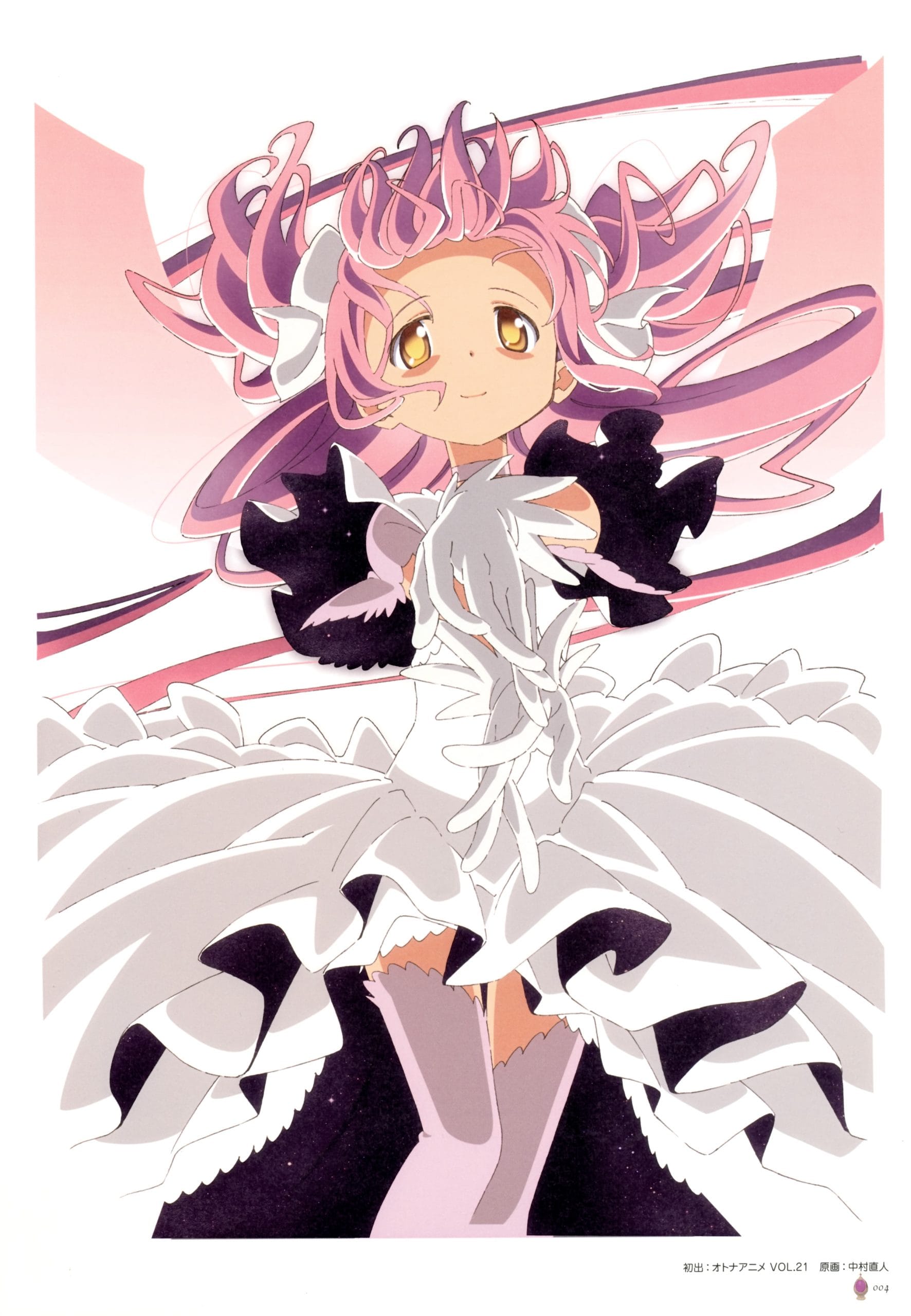
Kosaki also contributed to the music of Your Name (Kimi no Na wa), Makoto Shinkai’s global phenomenon. That’s not a minor credit — it’s a reminder that Kosaki understands how to score for films that need to work for a mass audience without sacrificing musical integrity.
For The Ribbon Hero, Kosaki is joined by Ryuichi Takada. Together, they’re scoring a story about a princess warrior navigating identity, loss, and defiance. If you know Kosaki’s work, you can already imagine what he’ll bring: the emotional precision of his Monogatari scores, the dark undercurrents of Madoka, the sweeping accessibility of his film work. The film’s score isn’t going to be wallpaper. It’s going to be one of the most discussed aspects of the film, and I’d bet real money on it.
The Annecy Premiere and Netflix Strategy
The Ribbon Hero anime isn’t just dropping on Netflix without ceremony. It’s getting a world premiere at the 2026 Annecy International Animation Film Festival on June 24, as part of the festival’s “Annecy Presents” programming. If you know anime, you know that Annecy is the most prestigious animation festival in the world. Getting a premiere slot there isn’t just a nice bit of prestige — it’s a signal. It means the film is being positioned as serious art, not just streaming content.
Netflix’s strategy here is worth paying attention to. They’ve been investing heavily in anime for years, and the results have been mixed. But their best anime projects — Edgerunners, Pluto, the recent Ghost in the Shell — share a common thread: they give talented creators the resources and freedom to adapt important source material with real creative vision, and then they give those projects the festival treatment before the streaming drop. The film’s Annecy premiere before its August 8 worldwide release is the same playbook they used for some of their most critically successful anime. It builds buzz, earns credibility with the hardcore community, and positions the film as something worth paying attention to before the algorithm buries it under six hundred episodes of generic content.
And the timing matters. August 2026 is shaping up to be an absolutely stacked month for anime — check our most anticipated summer 2026 anime ranked for the full picture. The Ribbon Hero anime dropping on August 8 puts it ahead of the late-summer crowd, giving it breathing room to find its audience before the fall season kicks in. Netflix clearly believes this film has the potential to break out beyond the core anime audience, and the Annecy premiere is their way of making that case to the industry.
Why This Film Could Redefine Tezuka Adaptations
Osamu Tezuka’s work has been adapted to anime countless times, but the results have been uneven. The original Astro Boy anime was groundbreaking for its era but feels dated now. The various Black Jack adaptations have ranged from excellent to forgettable. Metropolis (2001), directed by Rintaro from a Tezuka manga, is visually stunning but narratively uneven. Pluto (2023), Naoki Urasawa’s radical reimagining of Tezuka’s Astro Boy arc “The Greatest Robot on Earth,” was arguably the most successful modern Tezuka adaptation — but it was Urasawa’s reinterpretation of Tezuka, not a direct adaptation.
The challenge with adapting Tezuka has always been the same: his work is so foundational, so deeply woven into the DNA of anime and manga, that straightforward adaptations often feel redundant. The ideas have already been absorbed and iterated on by decades of creators who followed. Why watch a faithful Princess Knight adaptation when its DNA already runs through every gender-bending anime that came after?
The Ribbon Hero seems to understand this challenge at a fundamental level. It’s not trying to be a museum piece — a careful preservation of Tezuka’s original for the archives. It’s also not trying to be a radical deconstruction that replaces Tezuka’s themes with modern ones. Instead, it’s doing something braver: it’s reimagining the story. The shift from Silverland to Goldland, the framing of Sapphire as a displaced hero rather than a sheltered princess, the decision to cast a comedian in the lead role — these are choices that respect the source material by engaging with it as a living text rather than a sacred relic.
Director Igarashi seems to understand this instinctively. In his statement about the film, he spoke about his respect for Tezuka, for Ichizo Kobayashi of the Takarazuka Revue, and for “the supreme, classic entertainment they brought into the world.” He also noted that they “created their works while overcoming hardships such as infectious diseases and war, and those works became the very foundation of our culture.” That’s not the language of someone making a brand exercise. That’s the language of someone who understands what he’s carrying and why it matters.
The film also arrives at a moment when audiences are primed for its themes. Gender identity, the performance of self, the tension between who you are and who you’re expected to be — these aren’t abstract concepts in 2026. They’re the defining cultural conversations of the moment, and Princess Knight was having them in 1953. The fact that The Ribbon Hero anime is bringing those themes to a global Netflix audience of millions, with top-tier production values and a world-class creative team, is genuinely significant. This is the kind of adaptation that doesn’t just honor a legacy — it extends it. If you’re looking for more anime that push boundaries in 2026, our summer 2026 anime preview and watchlist has you covered.
The Bigger Picture: Netflix Anime in 2026
The Ribbon Hero anime doesn’t exist in a vacuum. It’s part of a broader wave of ambitious Netflix anime productions landing in 2026, including the long-awaited Ghost in the Shell anime from Science SARU and other high-profile projects. But The Ribbon Hero anime stands apart from most of those projects in one crucial way: it’s not based on a currently popular franchise. There’s no built-in audience of manga readers eagerly awaiting each chapter. Princess Knight is a foundational text, yes, but it’s not Attack on Titan or Jujutsu Kaisen in terms of current mainstream awareness.
That makes this film a risk — and Netflix knows it. That’s why they’re giving it the Annecy premiere, the global simultaneous release, and the kind of creative freedom that lets Igarashi build his own studio around the project. They’re betting that a great story, told well by the right people, can find its audience. It’s the same bet they made with Chainsaw Man: Reze Arc and other passion-driven projects, and it’s the kind of bet that has produced Netflix’s best anime work.
And for those of us who care about anime as an art form rather than just as content, The Ribbon Hero anime represents something even more important: proof that there’s still room in the streaming ecosystem for projects that lead with creative vision rather than algorithmic optimization. Igarashi isn’t a brand name like Makoto Shinkai or Mamoru Hosoda — yet. But the Annecy premiere, the Netflix backing, and the sheer quality of the team assembled suggest that a lot of people who know what they’re looking at believe this film is going to be something special.
If you’re someone who cares about where anime is headed — not just what’s trending this season, but where the medium is actually evolving — The Ribbon Hero anime is a project worth paying attention to. It’s the rare adaptation that seems to understand its source material deeply enough to transform it rather than merely reproduce it. In a year that’s already packed with must-watch anime, this one might end up being the most important of the bunch.
You Might Also Enjoy
If The Ribbon Hero has you hyped for more boundary-pushing anime in 2026, here are some other features and shows worth keeping on your radar:
- Ghost in the Shell 2026 — Another Netflix-backed anime film reimagining a foundational sci-fi property, this time with Science SARU at the helm. If The Ribbon Hero anime represents the best of Tezuka adaptation, this represents the cutting edge of Shirow reimagining.
- Sekiro no Defeat — A hand-drawn anime film that’s proving there’s still life in traditional animation techniques. Like The Ribbon Hero, it’s a project driven by creative passion rather than market calculation.
- Most Anticipated Summer 2026 Anime Ranked — Our full breakdown of the summer season, including where The Ribbon Hero anime fits among the year’s biggest releases.
- Scarlet: Mamoru Hosoda’s Hamlet Anime — Hosoda’s latest is another literary adaptation, reimagining Shakespeare through an anime lens. The parallels with The Ribbon Hero’s approach to adaptation are fascinating.
- Chainsaw Man: Reze Arc — The next chapter in the Chainsaw Man saga, and another Netflix anime film betting on directorial vision over franchise fatigue.
The Ribbon Hero streams worldwide on Netflix on August 8, 2026, with a world premiere at the Annecy International Animation Film Festival on June 24. Keep an eye on the official site for updates, and check the latest coverage at Anime News Network. This is one premiere you won’t want to miss.