Why Scarlet Changes the Game for Anime Cinema
If you told me a year ago that one of the most talked-about anime films of 2026 would be a Hamlet-inspired revenge story set in a visually explosive underworld, I’d have believed you — but only if you said Mamoru Hosoda was directing. Scarlet Mamoru Hosoda isn’t just another entry in an already legendary filmography. It’s the director firing on every cylinder he’s ever built, then adding new ones. The film hits Netflix US on June 6, 2026, and if you’ve been sleeping on it since its Venice premiere last September, now’s the time to wake up.
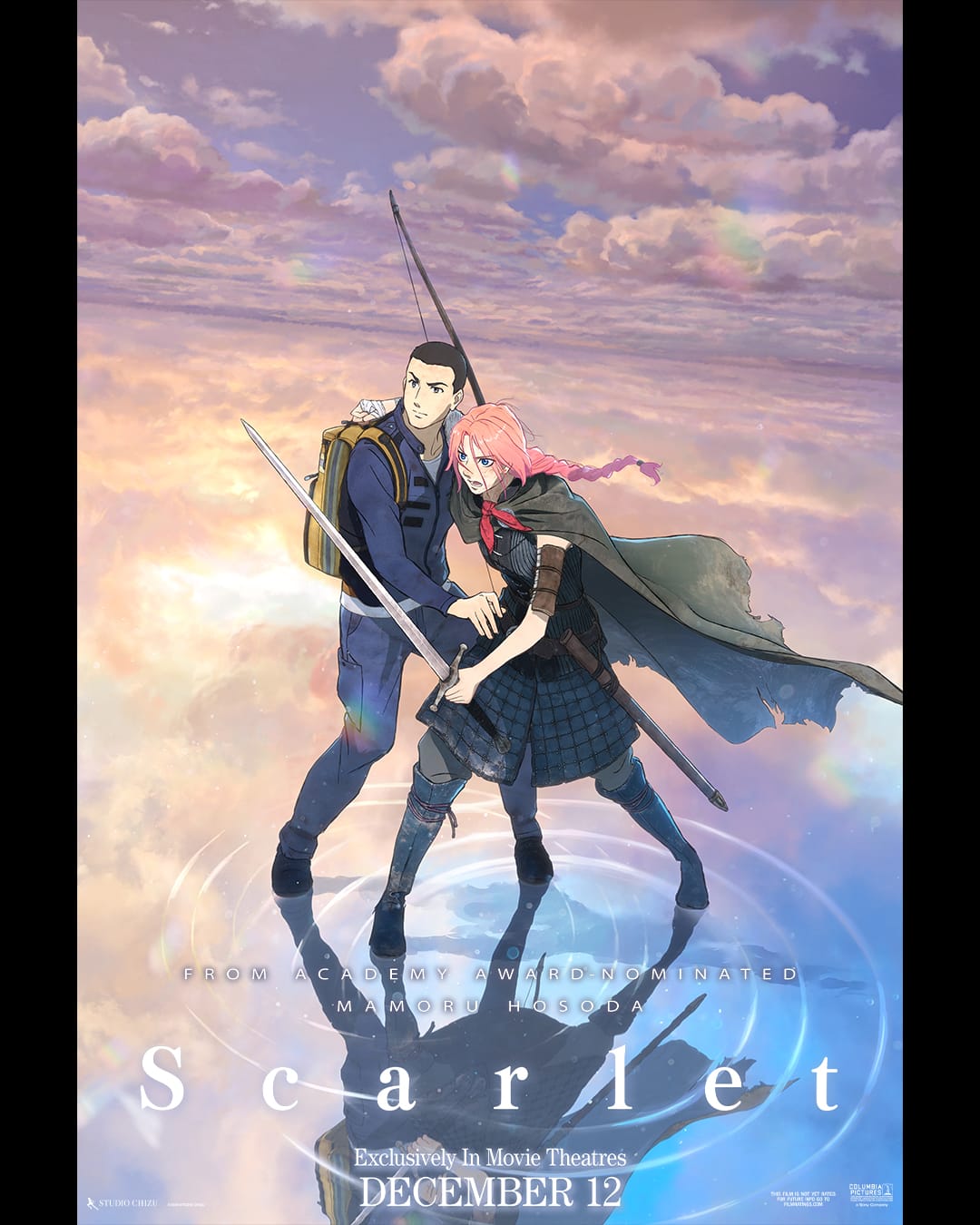
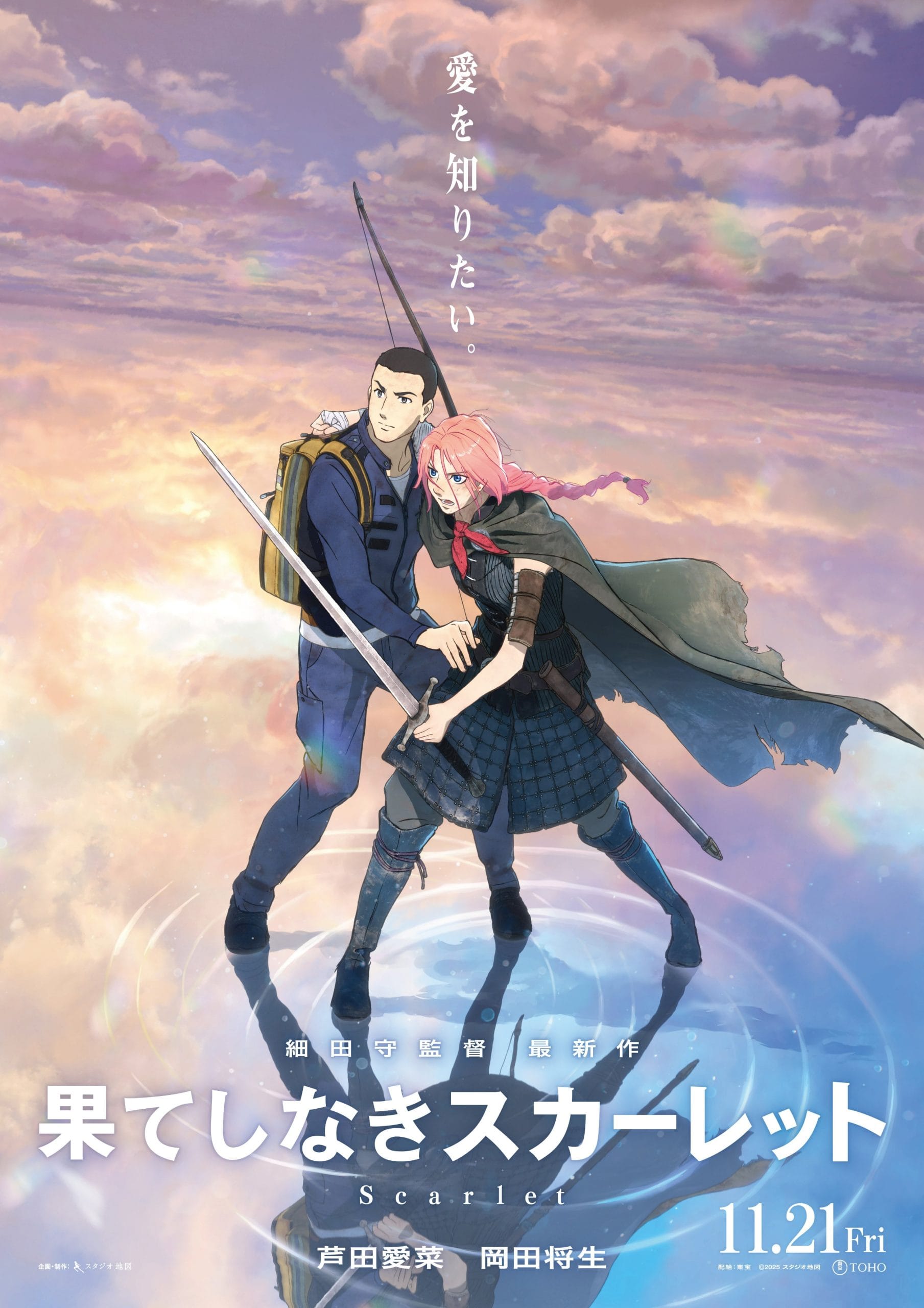
What makes Scarlet (果てしなきスカーレット, Hateshinaki Sukaretto — “Endless Scarlet”) so significant isn’t just that Hosoda chose Shakespeare’s Hamlet as source material. It’s that he chose it and then made it his own. This isn’t a faithful adaptation with anime aesthetics slapped on top. Hosoda took the bones of Hamlet — the murdered king, the usurper uncle, the young heir consumed by vengeance — and rebuilt them into something that could only exist in animation. The Scarlet Mamoru Hosoda collaboration with Studio Chizu represents a director pushing past every comfort zone he’s established over two decades of filmmaking.
The film premiered at the 81st Venice International Film Festival on September 4, 2025, out of competition — a rare honor for an animated feature, and a signal that Scarlet was being taken seriously as cinema, not just as anime. Its 74% on Rotten Tomatoes from 69 critics tells you something too: this is a film that divides opinion, provokes debate, and lingers in your head long after the credits roll. That’s exactly what the best anime movies should do.
The Story — Hamlet Reimagined Through Hosoda’s Lens
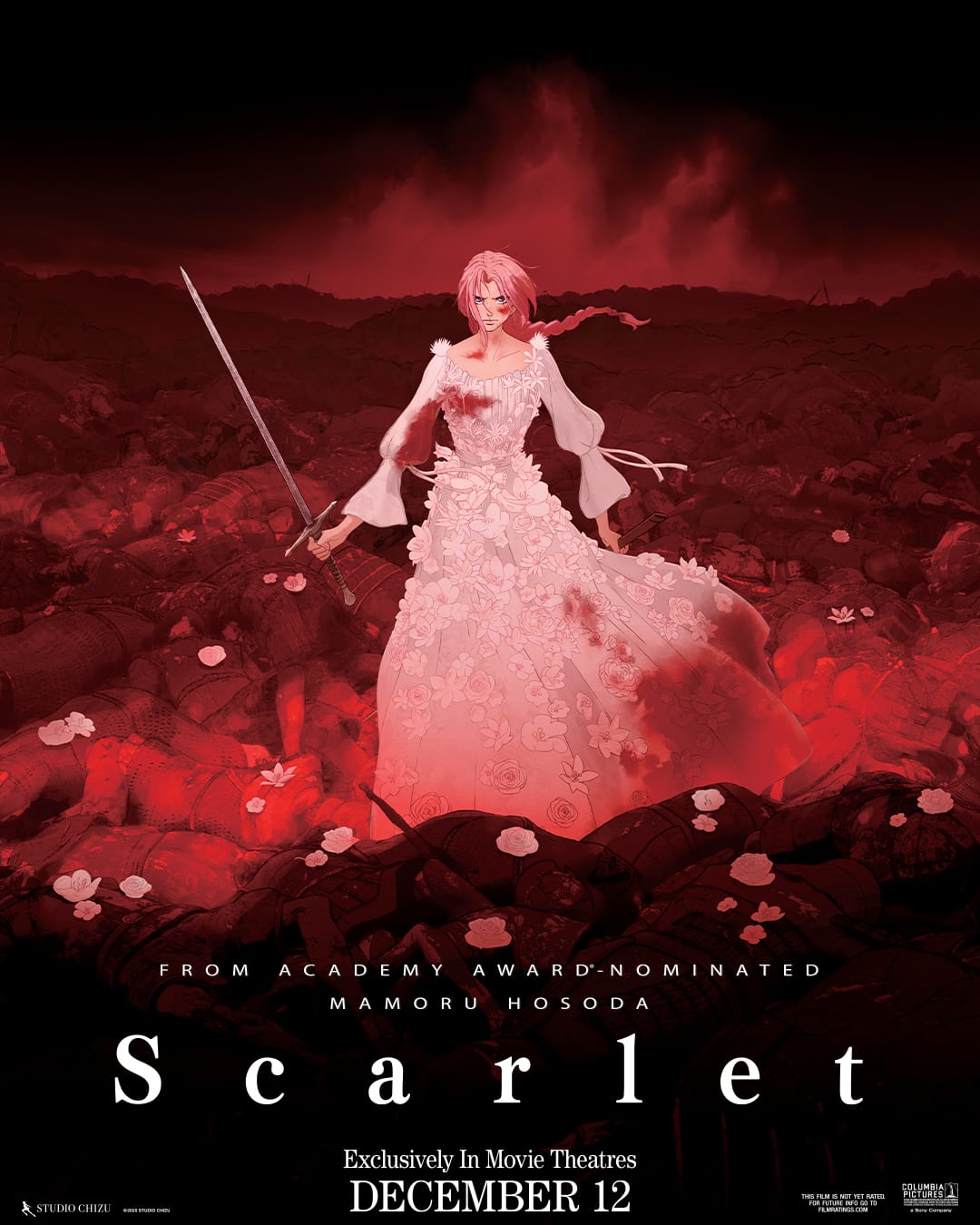
At its core, Scarlet Mamoru Hosoda tells a story as old as storytelling itself: a young woman seeks revenge for her father’s murder. Princess Scarlet’s father, King Amleth — yes, the name is deliberate, echoing the medieval Scandinavian legend that inspired Shakespeare — has been killed by her uncle Claudius, who has seized the throne. Scarlet swears vengeance, but the path to achieving it is anything but straightforward.
The twist that transforms this from a straight retelling into something genuinely fresh: Scarlet’s quest takes her into an underworld where the living and the dead coexist. This isn’t a simple afterlife — it’s a fully realized parallel dimension with its own rules, its own hierarchies, and its own beauty. Hosoda has always been fascinated by digital worlds and parallel realities (anyone who’s seen how anime handles alternate dimensions knows this is fertile ground), but in Scarlet he treats the underworld not as a virtual construct but as a mythological space with genuine weight and consequence.
Enter Hijiri, a modern-day paramedic who somehow finds himself pulled into this underworld alongside Scarlet. Their dynamic — a medieval princess driven by blood debt and a contemporary man whose entire professional life is about saving people — creates the emotional engine of the film. Scarlet Mamoru Hosoda isn’t interested in a simple revenge narrative where the hero slashes their way to satisfaction. The film forces its protagonist to confront the cost of vengeance at every turn, and Hijiri serves as the voice of another way forward — not through preachy moralizing, but through the simple, visceral reality of someone who has spent his career keeping people alive.
The 111-minute runtime gives Hosoda enough space to build this world properly without wearing out its welcome. Every scene matters. Every visual choice communicates something about character or theme. This is anime for adults in the truest sense — not because it’s violent or explicit, but because it demands emotional engagement and rewards careful attention.
From The Girl Who Leapt Through Time to Scarlet — Hosoda’s Evolution
To understand why Scarlet Mamoru Hosoda feels like such a leap, you have to look at where he’s been. The Scarlet Mamoru Hosoda conversation only makes full sense when you map it against the rest of his career. Hosoda’s filmography is one of the most distinctive in all of anime, and each film has been a stepping stone toward the ambitions of Scarlet.
The Girl Who Leapt Through Time (2006) established him as a solo director with a unique voice — a time-travel story that was really about regret, choice, and the bittersweet ache of growing up. Summer Wars (2009) expanded his canvas to an entire digital world, the OZ platform, while grounding it in the chaotic warmth of a Japanese family gathering. Wolf Children (2012) was his most emotionally devastating work, a meditation on single motherhood and identity that proved he could wring genuine tears without manipulation. The Boy and the Beast (2015) took him into a fantasy underworld for the first time, though on a smaller scale than what Scarlet attempts. Mirai (2018) played with time and family on a more intimate scale. And Belle (2021) gave him a massive virtual world to design alongside a retelling of Beauty and the Beast.
Notice the pattern? Hosoda keeps returning to the same obsessions — parallel worlds, family bonds, the tension between digital and physical reality, the emotional lives of young people — but each time, the scope expands and the execution sharpens. Scarlet Mamoru Hosoda is the culmination of all those themes compressed into a single, propulsive narrative. The underworld setting lets him revisit the “other world” concept from Summer Wars and Belle, but with mythological stakes instead of virtual ones. The revenge plot gives him the dramatic intensity that Wolf Children achieved through parenthood. The action elements push past what he attempted in The Boy and the Beast.
Hosoda himself has said that Scarlet has “a different feel” from his past works, and he’s not kidding. This is a director who has always blended action and emotion, but here the action serves a darker, more primal engine: revenge. The romance subplot — another first for Hosoda at this intensity — adds emotional complexity that his previous films hinted at but never fully explored. The Hosoda filmography has been building to this.
The Underworld Setting — Where the Living and Dead Coexist
The underworld in Scarlet isn’t just a backdrop — it’s practically a character. Hosoda and his team at Studio Chizu have created a space that operates on dream logic while still feeling tangible and dangerous. The living and the dead don’t just occupy the same space; they interact, conflict, and sometimes cooperate. It’s a concept that echoes classical mythology from multiple cultures — the Greek underworld, the Japanese yomi, the Celtic otherworld — but synthesized into something distinctly original.
What makes this setting so effective for a Hamlet adaptation is the way it literalizes the metaphor of being haunted. In Shakespeare’s play, Hamlet is visited by his father’s ghost — a single spectral presence that sets everything in motion. In Scarlet Mamoru Hosoda‘s version, the entire underworld is that ghost. The dead are everywhere. They have societies, conflicts, and agendas. Scarlet can’t escape her father’s murder because the evidence of mortality surrounds her at every moment. The underworld doesn’t just host her revenge quest — it demands it.
And then there’s the dragon. Without spoiling specifics, the dragon in Scarlet is one of the most visually stunning creations in any anime movie 2026 has to offer, and it serves as both an obstacle and a symbol — representing the monstrous scale of grief and rage that Scarlet carries within her. Studio Chizu’s animation of this creature alone is worth the price of admission, combining fluid traditional techniques with digital effects in a way that feels organic rather than gimmicky.
The Characters That Make Scarlet Unforgettable
A revenge story lives or dies by its characters, and Scarlet Mamoru Hosoda delivers some of the most complex figures in recent anime cinema. This isn’t a simple hero-vs-villain setup — each character carries genuine weight, and their conflicts feel rooted in real emotional logic rather than narrative convenience.
Princess Scarlet — A Revenge Story With Heart
Princess Scarlet could have been a standard revenge protagonist — all rage and swordplay — but Hosoda and voice actress Mana Ashida make her something much richer. Scarlet is fierce, absolutely, but she’s also uncertain. She’s grieving. She’s torn between the oath she’s sworn and the person she might become if she chooses a different path. The beauty of Scarlet Mamoru Hosoda as a character study is that Scarlet’s struggle never feels abstract — it’s written on her face, in her body language, in the way she hesitates at precisely the moments when a simpler story would have her strike.
Mana Ashida’s performance deserves special praise. She’s been acting since she was a child, and she brings a lifetime of experience to this role — capturing both the steel and the vulnerability that makes Scarlet feel like a real person rather than a revenge archetype. In the English dub, Erin Yvette matches that energy with a performance that captures the character’s intensity without flattening her emotional range.
What makes Scarlet genuinely subversive as a character is how the film uses her revenge quest to explore something deeper. She’s not just asking “should I kill my uncle?” — she’s asking whether vengeance can ever fill the void left by loss. The Hamlet anime parallel is obvious, but Hosoda pushes further than Shakespeare in some ways, giving Scarlet an actual relationship with the underworld’s dead that complicates her mission in ways Hamlet never had to confront.
Hijiri — The Modern Paramedic Trapped Between Worlds
If Scarlet is the engine of the story, Hijiri is its heart. A paramedic from our world who gets pulled into the underworld, he represents something crucial: the perspective of someone whose entire professional identity is built around preserving life, suddenly thrust into a realm where the dead walk and the living are the anomaly. Voiced by Masaki Okada (Japanese) and Chris Hackney (English), Hijiri isn’t just Scarlet’s companion — he’s her counterweight.
Every great revenge narrative needs a character who questions the premise, but Hijiri goes beyond the typical “revenge is bad” moralizing. He’s practical. He’s seen death up close. He knows what it costs, and that knowledge gives his objections real weight rather than philosophical abstraction. When he pleads with Scarlet to consider another path, it hits different because he’s earned the right to say it. The dynamic between these two — the medieval princess consumed by blood debt and the modern healer desperate to save her from herself — is the emotional core of Scarlet Mamoru Hosoda, and it works beautifully.
Hijiri also serves an important structural role: he’s our entry point into the underworld. As a modern person encountering this realm for the first time, his wonder, confusion, and fear mirror the audience’s own experience. He asks the questions we’d ask. He reacts the way we’d react. Through him, Hosoda makes the underworld feel genuinely alien rather than just aesthetically different from our own world.
Claudius — Shakespeare’s Villain Reborn
Any adaptation of Hamlet rises or falls on its Claudius, and Koji Yakusho — one of Japan’s most respected actors, fresh off his Cannes Best Actor win — delivers a villain who is simultaneously despicable and understandable. This Claudius isn’t a cackling tyrant. He’s a man who made a terrible choice and has been living with — and rationalizing — the consequences ever since. That’s far more frightening than a cartoon villain.
In the English dub, David Kaye brings a cold authority to the role that captures the character’s political cunning while hinting at the guilt underneath. What makes Claudius work in Scarlet Mamoru Hosoda is that he’s not just an obstacle for Scarlet to overcome — he’s a mirror. He’s what vengeance looks like when it succeeds. He killed for power, got the power, and now rules with the constant knowledge of what he did to obtain it. That complexity elevates the film beyond standard good-vs-evil territory into something genuinely Shakespearean — which is, of course, the entire point.
The scenes between Scarlet and Claudius crackle with tension because both characters understand each other more than they’d like to admit. They’re both people defined by death — one by causing it, one by avenging it. The film refuses to make their conflict simple, and that refusal is exactly what makes it resonate.
The Animation — Studio Chizu at Its Peak
Let’s be real: Studio Chizu has been one of the premier animation studios in the world since its founding, and Scarlet might be their most visually accomplished work yet. Hosoda’s films have always been gorgeous, but there’s a leap here — a confidence in the visuals that matches the ambition of the storytelling.
The underworld sequences are where Studio Chizu truly flexes. The color palette shifts between warm ambers and deep crimsons, scarlet most of all, creating an atmosphere that feels simultaneously alluring and dangerous. The character animation maintains the expressive, slightly rounded style that’s become Hosoda’s signature, but with more detail and fluidity than ever before. Faces register complex emotions with subtle shifts in expression that feel closer to live-action acting than traditional anime key framing. This is another place where Scarlet Mamoru Hosoda separates itself from safer prestige anime films.
The action scenes deserve their own paragraph. Hosoda has always been good at action — the Digimon movie, the fight sequences in The Boy and the Beast — but Scarlet Mamoru Hosoda represents a genuine evolution. The battles are kinetic without being chaotic, emotional without being melodramatic. Every punch, slash, and dodge communicates character. The dragon sequences, in particular, showcase an understanding of scale and movement that puts most anime films in 2026 to shame.
What’s most impressive is how Studio Chizu handles the transitions between the living world and the underworld. Rather than relying on obvious visual effects — a swirl of light, a portal, a dissolve — the shifts happen through color, atmosphere, and small details that accumulate until you realize you’re somewhere else entirely. It’s masterful visual storytelling that trusts the audience to keep up.
The production is a co-production between Studio Chizu, Nippon Television, and Columbia Pictures, with producers Nozomu Takahashi, Yuichiro Saito, and Toshimi Tanio overseeing the project. That level of backing — and the creative freedom it apparently afforded Hosoda — is reflected in every frame. This isn’t a compromised vision. This is a director given the resources to fully realize his most ambitious concept.
Voice Acting and Music — Taisei Iwasaki’s Score
The voice cast of Scarlet is exceptional across both language tracks. Mana Ashida as Scarlet brings a raw emotional intensity that makes you forget she’s voicing an animated character. Masaki Okada infuses Hijiri with warmth and groundedness that perfectly balances Scarlet’s ferocity. And Koji Yakusho as Claudius delivers exactly the kind of restrained menace you’d expect from one of Japan’s finest working actors — every line feels like it’s hiding something.
The English dub, for those who prefer it, is equally strong. Erin Yvette captures Scarlet’s fire without losing her vulnerability. Chris Hackney makes Hijiri feel like a real person caught in impossible circumstances rather than a plot device. And David Kaye brings his considerable voice acting experience to Claudius, finding the humanity in a character who could easily become a one-note villain.
But the unsung hero of Scarlet Mamoru Hosoda might be composer Taisei Iwasaki. His score for Scarlet is a revelation — blending orchestral sweep with electronic textures and traditional Japanese instrumentation in a way that feels organic rather than eclectic. The underworld scenes get ambient, drifting compositions that make the space feel vast and unknowable. The action sequences pulse with rhythmic intensity. And the emotional beats — particularly the scenes between Scarlet and Hijiri — are underscored with a tenderness that never overpowers the visuals.
Iwasaki’s music understands something fundamental about this film: it’s not just a revenge story. It’s a story about whether revenge is worth its cost. The score reflects that ambiguity, never telling you how to feel but always enriching what’s on screen. In a year that’s already given us exceptional anime soundtracks — Frieren Season 2’s haunting orchestration among them — Iwasaki’s work on Scarlet stands out as something genuinely special.
Critical Reception — 74% on Rotten Tomatoes and Festival Acclaim
The critical response to Scarlet Mamoru Hosoda has been… complicated, and that’s actually a good thing. A 74% on Rotten Tomatoes from 69 critics is solid but not overwhelming, and the reviews reveal a film that polarizes its audience in interesting ways. Some critics have praised it as Hosoda’s most mature and ambitious work. Others have found the Hamlet parallels restrictive or the underworld mythology underdeveloped. Still others have praised the visuals while questioning the narrative structure.
The Venice Film Festival premiere on September 4, 2025, generated significant buzz, even though it screened out of competition. The fact that Venice programmed an animated feature at all — let alone one from a Japanese director working in a tradition that Western festivals still undervalue — speaks to the film’s artistic credibility. The Japanese premiere on November 21, 2025, was met with strong audience reactions and solid box office, confirming that domestic audiences connected with the material even if some international critics were uncertain.
What I find most telling about the critical reception is this: the negative reviews tend to focus on what the film isn’t rather than what it is. Critics wanted a more faithful Hamlet adaptation, or a more straightforward Hosoda film, or a more conventional revenge narrative. Scarlet Mamoru Hosoda is none of those things, it’s a film that exists in the space between genres and traditions, and that space makes some people uncomfortable. But that discomfort is precisely what makes it worth watching. You can review the production details and release history on the Scarlet film page.
The festival circuit response has been particularly interesting. Audiences at Venice, and subsequent festival screenings, have been more enthusiastic than the critical aggregate suggests. There’s something about experiencing this film in a dark theater with an engaged crowd that amplifies its power — the gasps during the dragon sequences, the silence during the emotional beats, the applause at the end. With the 2026 anime awards season approaching, don’t be surprised if Scarlet picks up significant nominations in the film categories.
Why Scarlet Matters for Anime in 2026
Here’s the thing about Scarlet Mamoru Hosoda that goes beyond whether it’s a “good movie” or not: it represents something important for the state of anime in 2026. The reason Scarlet Mamoru Hosoda matters as a phrase fans keep repeating is simple, this film marks a real auteur swing in a year crowded with safer hits. We’re in a moment where the global appetite for anime has never been higher, but the films getting the most attention tend to be either franchise extensions (your Demon Slayers and Jujutsu Kaisens) or auteur passion projects (your Suzumes and, yes, your Scarlets). The first category drives box office. The second drives the art form forward.
Scarlet occupies a unique position in this moment. It’s an original story (not adapted from a manga or light novel), created by one of anime’s most respected directors, produced at significant scale, and given a genuine global rollout. The Netflix US streaming debut on June 6, 2026, following a theatrical release that began February 6, 2026, means this film will reach a massive audience. That matters because every person who watches Scarlet and loves it becomes someone who might seek out other ambitious anime films, creating demand for the kind of risk-taking that pushes the medium forward.
The Hamlet connection is more than a gimmick, too. It gives Western audiences an entry point that most anime films lack. You don’t need to know Japanese pop culture or anime conventions to engage with Scarlet — you just need to know Shakespeare’s most famous play, which virtually everyone does. That accessibility, combined with the film’s placement in a stacked summer 2026 anime lineup, could make Scarlet a gateway film for people who don’t typically watch anime but are curious about what the medium can do.
For anime fans specifically, Scarlet Mamoru Hosoda matters because it demonstrates that one of our greatest living directors is still evolving. Hosoda could have spent his career making variations on Summer Wars and been beloved forever. Instead, he’s 58 years old and making his most challenging, most formally ambitious film. That’s inspiring. That’s worth supporting. And that’s why, even with mixed critical notices, Scarlet will likely be remembered as one of the defining anime films of this decade — alongside other boundary-pushing works like the new Ghost in the Shell.
Should You Watch Scarlet on Netflix?
Yes. Absolutely, unreservedly yes — but with a caveat. Scarlet Mamoru Hosoda is not a comfort-watch anime film. It’s not the kind of movie you put on in the background while scrolling your phone. It demands attention. It challenges you. It asks you to sit with uncomfortable emotions and unresolved tensions. If you’re looking for something light and easy, this isn’t it. Watch one of the other great anime films of 2026 for that.
But if you want a film that treats anime as a serious art form capable of engaging with one of Western literature’s greatest works — and doing it in a way that could only work in animation — then Scarlet is essential viewing. Mamoru Hosoda has made a film about the cost of revenge that doesn’t offer easy answers, populated it with characters who feel like real people caught in impossible situations, and wrapped it all in some of the most stunning animation Studio Chizu has ever produced. The Hateshinaki Sukaretto — the “Endless Scarlet” — is a title that works on multiple levels: it describes the film’s visual palette, its protagonist’s burning rage, and the way its story stays with you long after you’ve finished watching.
When Scarlet hits Netflix on June 6, 2026, clear your evening. Turn off your phone. Watch it with someone if you can — you’ll want to talk about it afterward. This is Scarlet Mamoru Hosoda at his most ambitious, most challenging, and most rewarding. The anime movie 2026 conversation doesn’t end here — but it definitely includes this film near the top.