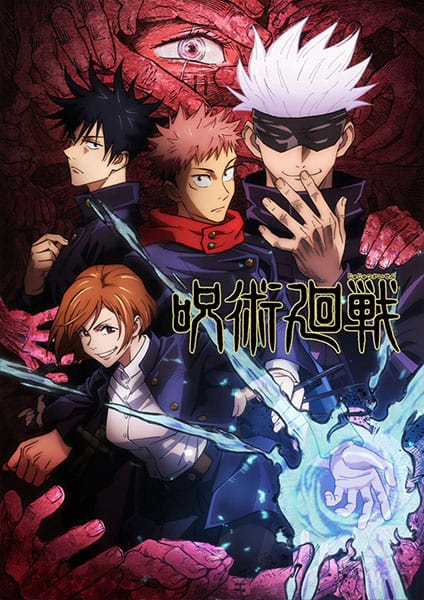
In Jujutsu Kaisen, curses are born from human fear and suffering. But Ryomen Sukuna wasn’t born a curse—he was a human sorcerer who chose to become something worse. The King of Curses earned his title through unmatched cruelty and power during Japan’s golden age of sorcery, and a thousand years of death haven’t diminished either.
Origins: The Golden Age Demon
Sukuna lived during the Heian period, when cursed energy and jujutsu sorcery reached their peak. While other sorcerers used their powers to protect humanity, Sukuna used his to dominate it. He was a human who became so powerful and cruel that society literally couldn’t distinguish him from a demon.
The Sorcerer Who Couldn’t Be Killed
During his lifetime, no sorcerer could defeat Sukuna. The strongest practitioners of the era united against him and failed. Only his natural death ended his reign—and even that was temporary. His power was preserved in twenty indestructible fingers, each containing a fraction of his strength.
Why He Matters
Sukuna isn’t just powerful—he’s the benchmark. When characters in JJK discuss strength, Sukuna’s full power is the measuring stick. Gojo admits that Sukuna at full strength might defeat him. Every antagonist ultimately exists in Sukuna’s shadow.
Cursed Technique: Cleave and Dismantle
Sukuna’s innate technique manipulates cutting. This sounds simple until you see it in action—invisible slashes that adjust automatically to target durability.
Dismantle
The default slashing attack, Dismantle cuts inanimate objects and weaker cursed energy users. Sukuna can manifest countless Dismantles simultaneously, turning areas into blenders.
Cleave
The more refined technique, Cleave automatically adjusts its cutting power to match the target’s toughness and cursed energy. This means Cleave is perfectly efficient—it uses exactly enough force to cut through whatever Sukuna’s fighting.
Fire Arrow
Beyond cutting, Sukuna commands fire abilities—unusual since sorcerers typically have only one innate technique. His fire arrow can disintegrate entire city blocks. This secondary power raises questions about Sukuna’s true nature.
Malevolent Shrine: The Open Domain
Sukuna’s Domain Expansion is uniquely terrifying because it doesn’t use a barrier. Normal domains trap both user and targets inside; Malevolent Shrine spreads its guaranteed-hit effect across a 200-meter radius without enclosure.
Why This Matters
Domain versus domain battles typically involve barrier clashes. Sukuna’s barrierless domain is considered more refined—a technique showing complete mastery rather than relying on containment. When Malevolent Shrine faces Gojo’s Unlimited Void, Sukuna’s technical superiority gives him advantages.
The Effect
Within Malevolent Shrine’s radius, Cleave and Dismantle attack constantly. Victims are sliced continuously from all directions. Without barrier protection or extraordinary durability, everything inside the radius dies.
Relationship With Yuji
Sukuna’s dynamic with his host Yuji Itadori drives much of JJK’s emotional stakes. Trapped inside a teenager he considers boring, Sukuna schemes constantly for freedom and entertainment.
Contempt
Sukuna views Yuji as an inferior vessel—useful for carrying fingers but utterly beneath notice as a person. He doesn’t hate Yuji; hatred requires acknowledgment of significance. Sukuna simply doesn’t care about Yuji beyond practical utility.
Manipulation
When Sukuna does interact with Yuji, it’s to break him. Forcing Yuji’s body to kill during Shibuya, taunting him about deaths he caused—Sukuna enjoys causing suffering not from malice but from sheer amusement.
The Binding Vow
Sukuna’s forced agreement with Yuji (one minute of control, no killing during that time) shows his cunning. He adhered to the letter while violating the spirit, using that minute to remove Yuji’s heart and establish leverage.
Goals and Philosophy
Sukuna’s motivations are deceptively simple: he wants freedom, power, and entertainment. He was the strongest in life and intends to reclaim that status in the modern era.
Beyond Human Morality
Sukuna doesn’t see himself as evil—he sees good and evil as meaningless constraints for the weak. Power defines reality. What he wants is what happens. Morality is for people who can’t take what they desire directly.
Interest in Megumi
Sukuna’s unusual interest in Megumi Fushiguro hints at deeper plans. Megumi’s Ten Shadows Technique specifically intrigues Sukuna—and in the Culling Game, we learn why. Sukuna eventually uses Megumi’s body as his vessel, gaining access to Mahoraga and Ten Shadows abilities.
The Megumi Possession
When Sukuna takes Megumi’s body, he becomes the primary antagonist rather than a background threat. This body switch grants him independence from Yuji and access to additional techniques.
Combined Powers
Sukuna with Ten Shadows creates absurd power combinations. He can summon shikigami while using Cleave/Dismantle, adapt Mahoraga’s wheel to his techniques, and generally operate without restrictions.
Destroying Megumi
More cruelly, Sukuna works to destroy Megumi’s soul from within—killing his sister Tsumiki, ensuring Megumi sees everything, breaking his will to resist. This isn’t necessary for control; it’s pure sadism. Sukuna wants to annihilate everything Megumi cares about before discarding him.
The Gojo Fight
The battle between Sukuna and Gojo represents JJK’s ultimate clash—the modern era’s strongest versus the golden age’s king.
Equals in Power
Their fight proves both claims legitimate. Gojo pushes Sukuna harder than anyone in centuries. Sukuna matches abilities Gojo has never faced. The battle destroys cities and forces both combatants to their absolute limits.
Sukuna’s Victory
Sukuna wins—barely, using Mahoraga’s adapted abilities to create attacks that circumvent Infinity. But even victory shows respect: Sukuna acknowledges Gojo as “the strongest of this generation” and seems genuinely engaged by the challenge.
Why Sukuna Works
Competence
Sukuna never fails due to stupidity. He plans, adapts, and executes effectively. His losses or setbacks come from genuinely overwhelming opposition, not villain incompetence.
Charisma
Despite being irredeemably evil, Sukuna is entertaining. His combat commentary, casual cruelty, and obvious enjoyment of strong opponents make him compelling to watch.
Threat Level
Every scene with Sukuna carries tension because his power is established thoroughly. When he takes action, people die. This consistent threat makes his appearances meaningful.
Conclusion
Ryomen Sukuna represents JJK’s purest antagonist—power without conscience, cruelty without justification. He doesn’t have tragic backstory softening his evil. He chose to become a monster because being a monster was fun.
His effectiveness as a villain comes from that simplicity. In a series exploring complex morality, Sukuna stands as pure darkness. He’s what unchecked power without humanity looks like, and the answer isn’t sympathetic—it’s terrifying.
The King of Curses earned his throne through a thousand years of accumulated power and a personality that makes him the worst possible wielder of that power. And that’s exactly why he’s JJK’s perfect final boss.
You Might Also Like
- Sukuna’s True Power Explained: The King of Curses at Full Strength
- Sukuna’s True Power Explained: The King of Curses at Full Strength
- How Did Sukuna Die? The King of Curses’ Death Explained