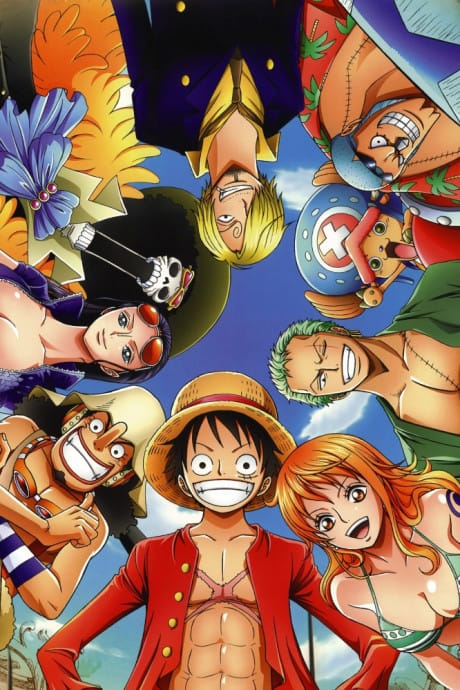
Before Gojo was overwhelming, before Luffy was stretching, before any of today’s overpowered protagonists existed, there was Son Goku. The Saiyan raised on Earth has been the face of anime globally for nearly four decades, inspiring countless characters and establishing the shonen power fantasy archetype. But beyond his influence, Goku himself has evolved tremendously from the monkey-tailed boy in Dragon Ball to the Ultra Instinct master of Dragon Ball Super.
Origins: The Monkey King and Beyond
Goku is loosely based on Sun Wukong from Journey to the West—hence the monkey tail, the power pole, and the flying cloud. But Toriyama transformed this mythological inspiration into something entirely original: a naive, food-obsessed martial artist whose purity of heart made him impossible to corrupt.
The Saiyan Who Forgot
Sent to Earth as an infant to destroy it, baby Kakarot suffered a head injury that wiped his Saiyan programming. Instead of a conquering warrior, Goku became the kindest fighter in the universe—raised by Grandpa Gohan to love martial arts for self-improvement rather than domination.
This origin establishes Goku’s core appeal: he’s genuinely good not because of moral reasoning but because destruction simply doesn’t occur to him as desirable. He wants to fight, eat, and protect his friends. Everything else is background noise.
Dragon Ball: The Journey
The original Dragon Ball focused on adventure and comedy, with Goku as an innocent country boy discovering civilization. His first major fights—against the Red Ribbon Army, Tien, and King Piccolo—established his growth pattern: face overwhelming enemy, nearly die, come back stronger.
Training and Mastery
Under Master Roshi, Goku learned the Kamehameha instantly—a technique that took Roshi fifty years to develop. Under Kami, he reached levels beyond human capability. Each mentor found that Goku’s potential exceeded their ability to teach.
But Goku’s rapid growth never came from destiny or prophecy. He trained constantly, pushed limits, and genuinely loved getting stronger. His work ethic matches his talent.
Dragon Ball Z: The Legendary Super Saiyan
Z transformed Goku from Earth’s defender to the universe’s greatest warrior. The revelation of his Saiyan heritage explained his power but also created tension: Goku was part of a warrior race that destroyed planets for profit.
Saiyan Arc: Identity Crisis
Meeting Raditz and Vegeta forced Goku to confront his origins. He chose to remain Goku rather than embrace “Kakarot”—not rejecting his Saiyan biology but his people’s values. He’d use Saiyan power while maintaining Earth’s kindness.
Frieza and the Super Saiyan
Goku’s transformation on Namek remains one of anime’s most iconic moments. Triggered by Krillin’s death, Super Saiyan represented rage channeled into power—seemingly contradicting Goku’s gentle nature.
But this transformation revealed something important: Goku’s kindness wasn’t weakness. The same pure heart that made him incorruptible also made him capable of righteous anger. Super Saiyan didn’t corrupt him; it expressed his fury at injustice.
Cell and the Passing of Torches
The Cell Saga attempted to transition Goku to a mentor role. He recognized Gohan’s potential, pushed his son to surpass him, and sacrificed himself to stop Cell’s self-destruction. This should have ended Goku’s story—the hero passing the torch to the next generation.
Instead, Gohan’s reluctant warrior nature proved unsuitable for the protagonist role. Goku returned, but the Cell Saga demonstrated something crucial: Goku was never really fighting for duty. He fought because he loved fighting. Retirement didn’t suit him.
Buu and Family Dynamics
The Buu Saga showed Goku’s limitations as a father. He chose to stay dead and train rather than return to his family. He prioritized fighting over responsibility. These aren’t heroic traits, and the series doesn’t entirely excuse them.
Goku’s character flaw is clear: he’s addicted to combat and self-improvement, sometimes to the detriment of those who love him. The Saiyan battle instinct he supposedly rejected still drives him more than family duty.
Dragon Ball Super: The Quest for More
Super took Goku’s love of fighting and made it central to cosmic-level threats. God forms, universe-ending tournaments, and multiverse conflicts all stem from Goku’s desire for worthy opponents.
Super Saiyan God and Beyond
Absorbing God Ki opened new transformation paths. Super Saiyan Blue combined divine energy with Saiyan power. But the real evolution came from training with angels rather than other Saiyans.
Ultra Instinct
Ultra Instinct represents Goku’s ultimate form—not a power boost but a state of being where his body moves without conscious thought. Against Jiren, Goku achieved what angels practice for eons: perfect martial efficiency without mental interference.
This transformation completed Goku’s arc from instinctual fighter to martial philosophy master. He’s no longer just punching harder; he’s transcended the need to think about combat entirely.
True Ultra Instinct
In the manga’s Granolah arc, Goku developed True Ultra Instinct—channeling his emotions into Ultra Instinct rather than suppressing them. This acknowledged that Goku’s Saiyan nature and Ultra Instinct could coexist, accepting rather than rejecting his fighting spirit.
Character Analysis
The Innocent Warrior
Goku’s defining trait is innocent enthusiasm. He gets excited about strong opponents regardless of the threat they pose. He offers mercy to defeated enemies because holding grudges seems pointless. He can’t understand evil motivations because cruelty doesn’t compute in his worldview.
This innocence isn’t stupidity—Goku has excellent battle instincts and can be strategically clever. He simply lacks interest in complexity outside combat. Politics, schemes, and manipulation bore him.
The Absent Father
Goku’s failures as a father and husband are consistent throughout the series. He died and chose to stay dead. He prioritized training over family. He’s barely been present for Goten’s life. Chi-Chi essentially raised their children alone.
The series plays this for comedy, but it represents a genuine character flaw. Goku isn’t a good family man by normal standards. His love for fighting supersedes domestic responsibility.
Mercy and Its Consequences
Goku’s tendency to spare defeated enemies has both saved and endangered the universe. Vegeta became an ally after mercy. Frieza eventually provided crucial assistance. But villains have also recovered and caused more destruction because Goku couldn’t finish them.
This mercy isn’t strategic—Goku simply doesn’t want to kill opponents who might become future challenges. His selfishness as a martial artist coincidentally aligns with moral mercy.
Influence on the Genre
Goku established the shonen protagonist template: pure-hearted hero who grows stronger through adversity, defeats evil through determination and training, and transforms into more powerful forms at crucial moments. Every major shonen protagonist since owes something to this formula.
The Power Scaling Legacy
Dragon Ball also established—and struggled with—power scaling. Each saga required enemies stronger than the last, pushing both heroes and villains to ever-more-ridiculous heights. This necessity has plagued the franchise, as meaningful stakes become harder to create when characters can destroy galaxies.
Conclusion
Son Goku is simultaneously simple and complex. Simple because his motivations (fight, eat, protect friends) haven’t changed in forty years. Complex because that simplicity creates fascinating contradictions: a pacifist who loves violence, a kind man who neglects his family, an innocent who regularly saves the universe.
His evolution from Dragon Ball to Super tracks the power fantasy escalation of the genre he defined. But Goku himself remains constant—a pure-hearted warrior who just wants to punch things and eat afterwards. That consistency, maintained across decades, is why he endures.
Goku isn’t the most nuanced protagonist in anime. He’s not the most relatable or the most realistic. But he is the most influential, and his simple joy in combat continues to inspire new generations of fighters who just want to test their limits.
You Might Also Like
- Frieren Power System Explained: Magic, Demons, and Mana
- Frieren Power System Explained: Magic, Demons, and Mana
- What Did Gojo Say to Geto? A Heartbreaking Farewell