Four Trophies, One Unstoppable Show
When the 2026 Crunchyroll Anime Awards wrapped up, one thing was crystal clear: Apothecary Diaries Season 2 didn’t just show up — it took over. Four wins. Best Drama. Best Director. Best Main Character. Best Voice Artist Performance Japanese. That’s not a participation trophy collection; that’s a coronation.
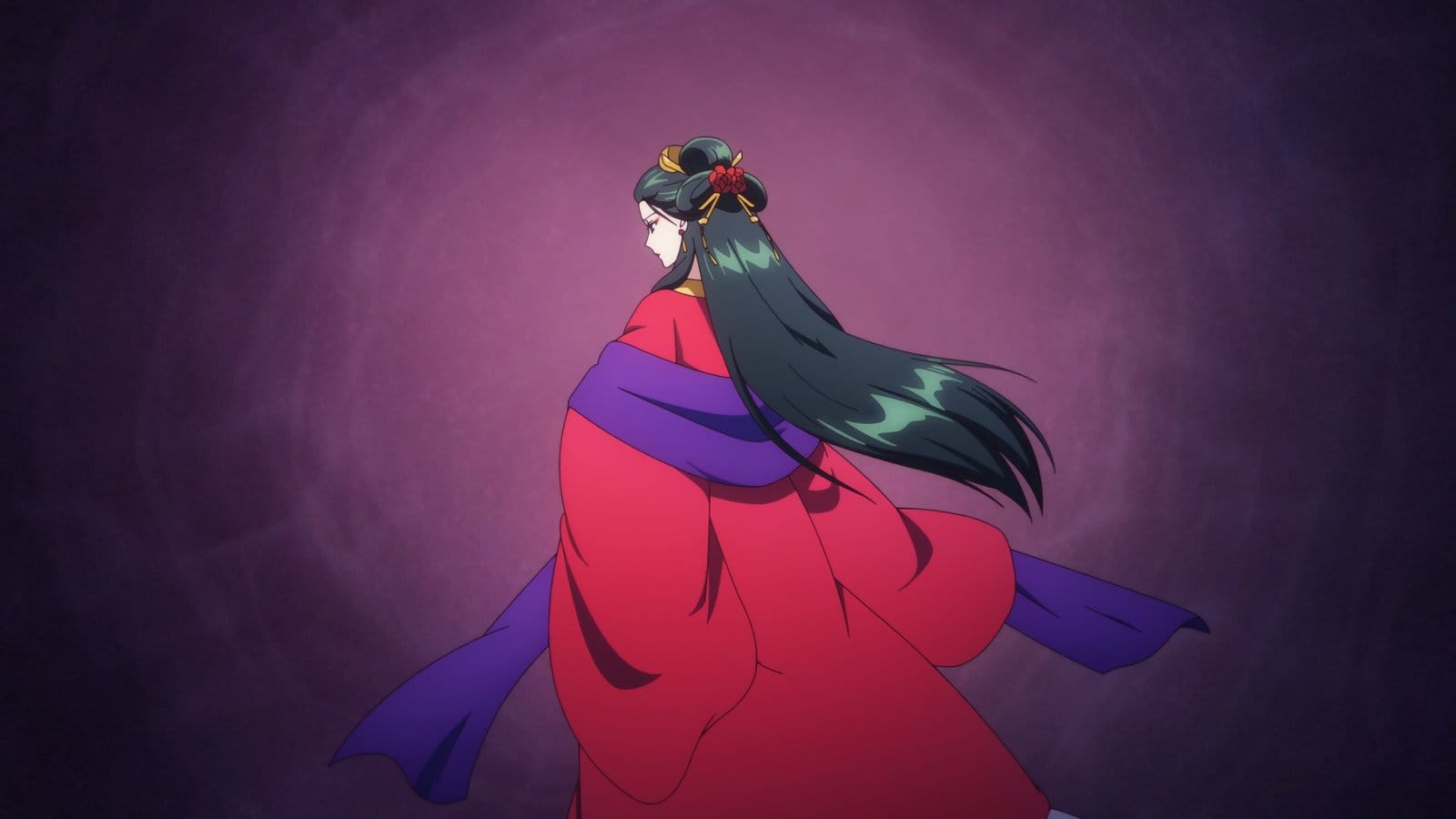
And honestly? If you’ve been watching this season, you’re probably nodding right now. Apothecary Diaries Season 2 elevated every single thing that made Season 1 great and cranked the dial until it broke. More poison mysteries. Deeper political intrigue. Jinshi actually getting a real character arc. Maomao being, well, Maomao — but somehow even better than before.
But let’s be real for a second. Going into the Crunchyroll Anime Awards, a lot of people assumed the drama categories would go to heavier, more conventional picks. A mystery anime set in a fictional imperial court? Winning Best Drama? Over everything else? That’s the kind of result that makes you sit up and pay attention.
Let’s break down exactly how this season pulled off such a dominant showing, why it matters for the broader anime scene, and what this tells us about where the industry is heading next.
The Awards Breakdown: What Apothecary Diaries Season 2 Actually Won
Let’s get the receipts. At the 2026 Crunchyroll Anime Awards, Apothecary Diaries Season 2 walked away with four wins. Not nominations — wins. That’s a huge distinction in a year where the competition was absolutely ferocious.
Best Drama — This one hit different. In a year stacked with emotional heavy-hitters, the fact that a mystery anime set in an imperial court won Best Drama tells you everything about the show’s writing. It’s not just about solving poison cases; it’s about the weight of every secret, every betrayal, every quiet moment between Maomao and Jinshi that carries more tension than a dozen fight scenes.
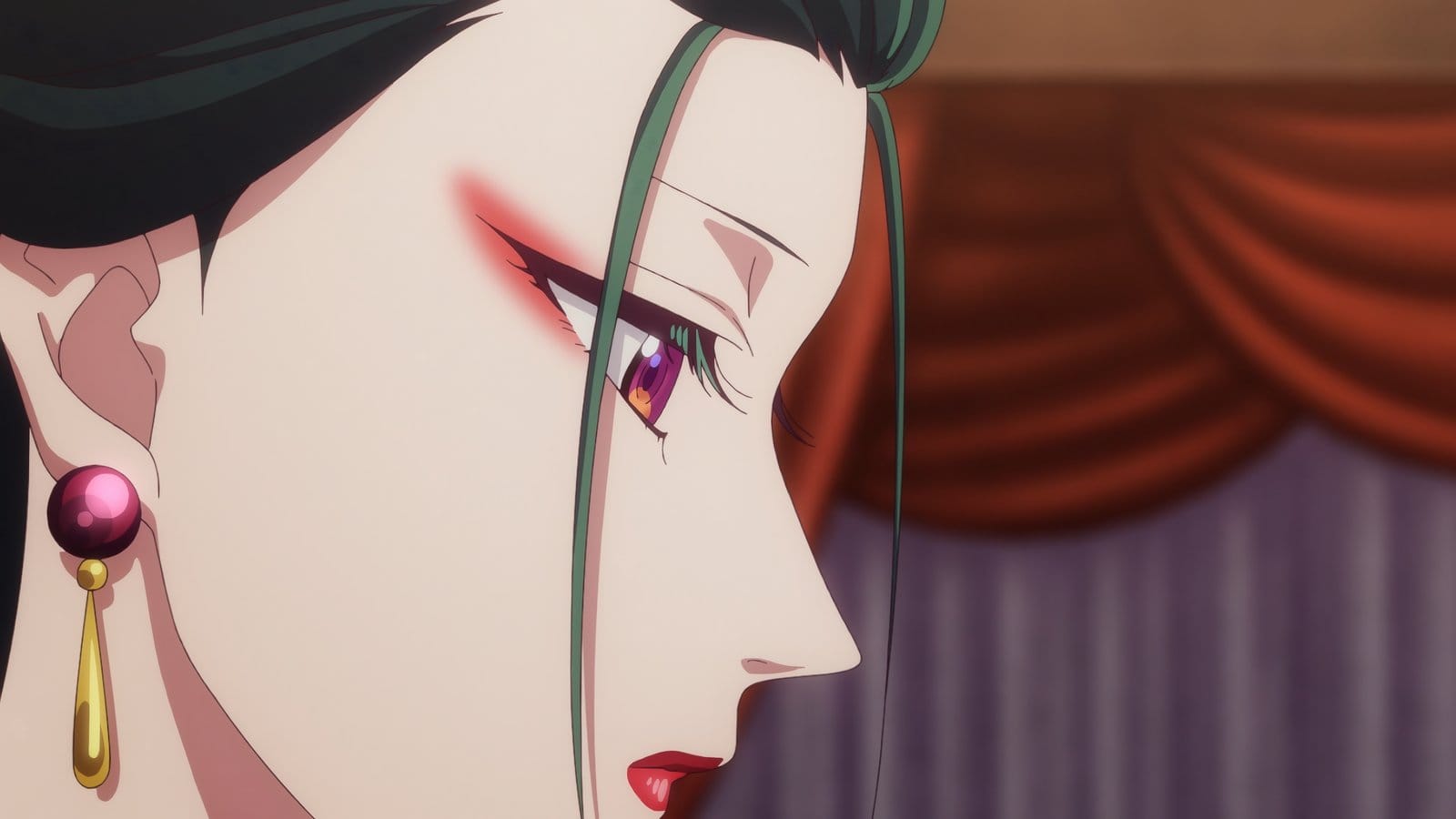
Best Director — Akinori Fudesaka and Norihiro Naganuma took home this award, and deservedly so. The directing in this season is surgical. Every shot matters. Every silence communicates something important. These two understood that in a mystery anime, pacing isn’t optional — it’s the entire product. Get the rhythm wrong and the mystery falls flat. Get it right, like they did, and every reveal hits like a freight train.
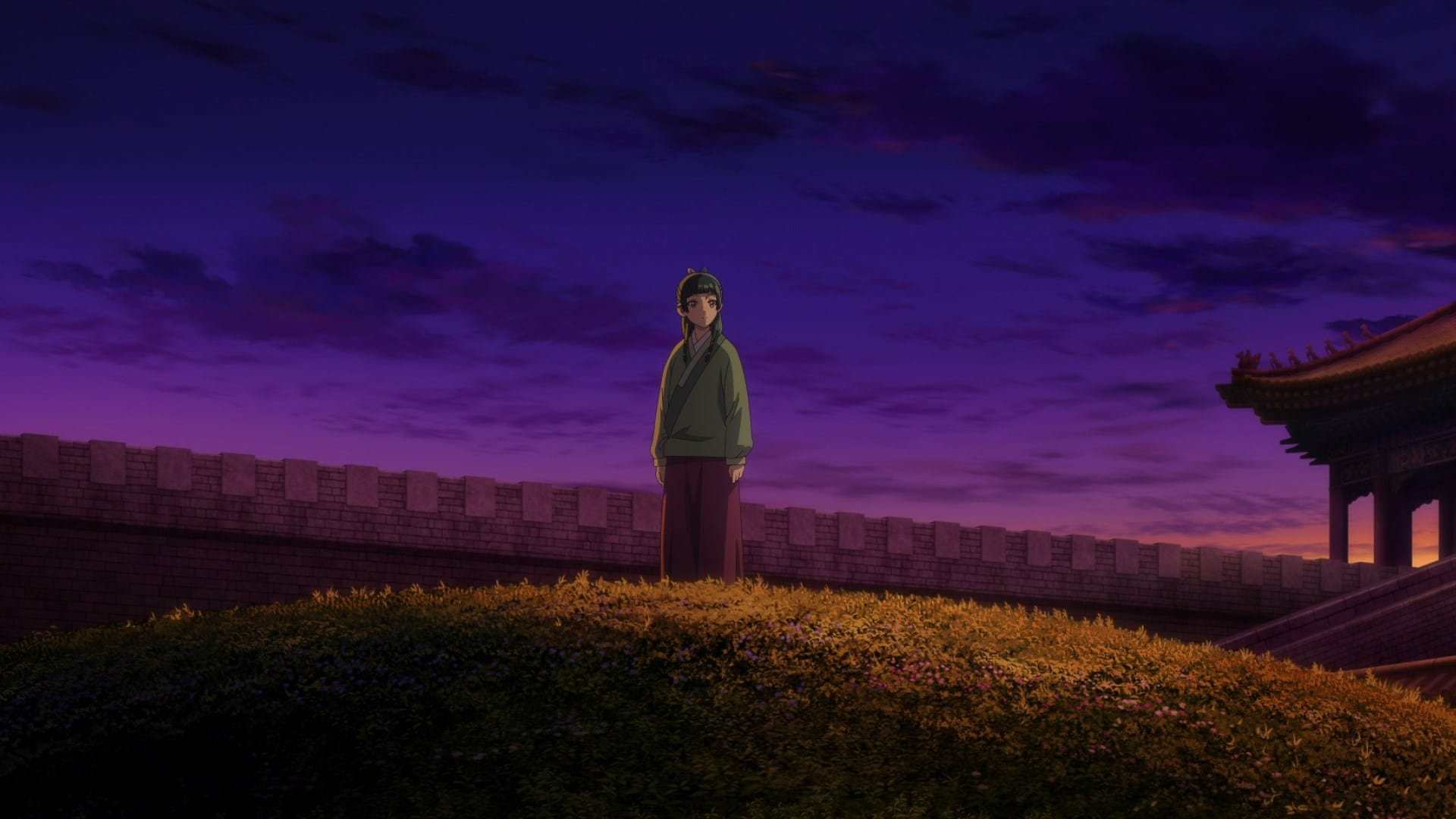
Best Main Character (Maomao) — This was never in doubt. Maomao is one of the most compelling protagonists in modern anime, period. A pharmacist’s daughter who’d rather be experimenting with poison than dealing with court politics, yet keeps getting dragged into both. She’s sharp, she’s funny, she’s deeply human, and she absolutely earned this award over every other contender.
Best Voice Artist Performance Japanese (Aoi Yuki as Maomao) — Aoi Yuki doesn’t just voice Maomao — she is Maomao. The range she displays this season is staggering. From deadpan comedic delivery to raw emotional vulnerability, Aoi Yuki’s performance is the kind that redefines what voice acting can accomplish in anime.
Four awards. In a single night. For a show that isn’t a battle shonen, isn’t an isekai power fantasy, and doesn’t have a single flashy transformation sequence. That’s The Apothecary Diaries for you — winning on craft alone.
Why Best Drama Matters More Than You Think
Here’s the thing about Best Drama that people aren’t talking about enough: Apothecary Diaries Season 2 won in a year where the competition was absurd. Demon Slayer Infinity Castle took Film of the Year and Best Score. Solo Leveling Season 2 won Best Action and Best Animation. MHA took Anime of the Year.
These are massive, globally recognized franchises with enormous fanbases and production budgets that dwarf what Kusuriya no Hitorigoto is working with. And yet, when it came to drama — when it came to emotional storytelling — the voters chose a mystery anime about a girl solving poison cases in an imperial court.
That’s not an accident. Apothecary Diaries Season 2 earned this because it does something most anime struggle with: it makes you care about every single character. Not just Maomao and Jinshi (though obviously them). The side characters, the suspects, even the victims — they all feel like real people with real motivations, not just plot devices waiting to be resolved.
The imperial court setting gives the show layers of tension that a typical shonen or isekai simply can’t match. Every interaction is loaded with subtext. Every conversation could be a trap. When Maomao figures out a poison mystery, the reveal isn’t just satisfying — it’s emotionally devastating because the stakes always feel real. Someone could lose their life, their position, or their freedom with one wrong word.
Think about what makes drama actually work. It’s not just sad moments or emotional speeches. It’s earned weight — scenes that land because you’ve spent hours investing in these characters and understanding what they stand to lose. Apothecary Diaries Season 2 understands this at a fundamental level. The show never forces emotion. It builds it patiently, episode after episode, until you realize you care more about these court officials and apothecaries than you do about half the shonen protagonists on your watchlist.
And that’s exactly what Best Drama recognizes. Not just intensity, but earned emotional depth. Apothecary Diaries Season 2 has that quality in spades, and the Crunchyroll Anime Awards voters clearly agreed.
Maomao and Aoi Yuki: The Performance That Defined the Year
Winning both Best Main Character AND Best Voice Artist Performance is rare at the Crunchyroll Anime Awards. It means the character and the performance are inseparable — you literally can’t imagine anyone else in the role. And for this show, that double win feels like the most obvious thing in the world.
Aoi Yuki has been killing it as Maomao since Season 1, but Season 2 demanded so much more from her. Season 2 pushed Maomao into emotionally vulnerable territory that Season 1 only hinted at. The comedic beats are still there — Maomao’s deadpan reactions and obsessive fascination with poison remain comedy gold. But now there’s genuine emotional weight underneath the humor.
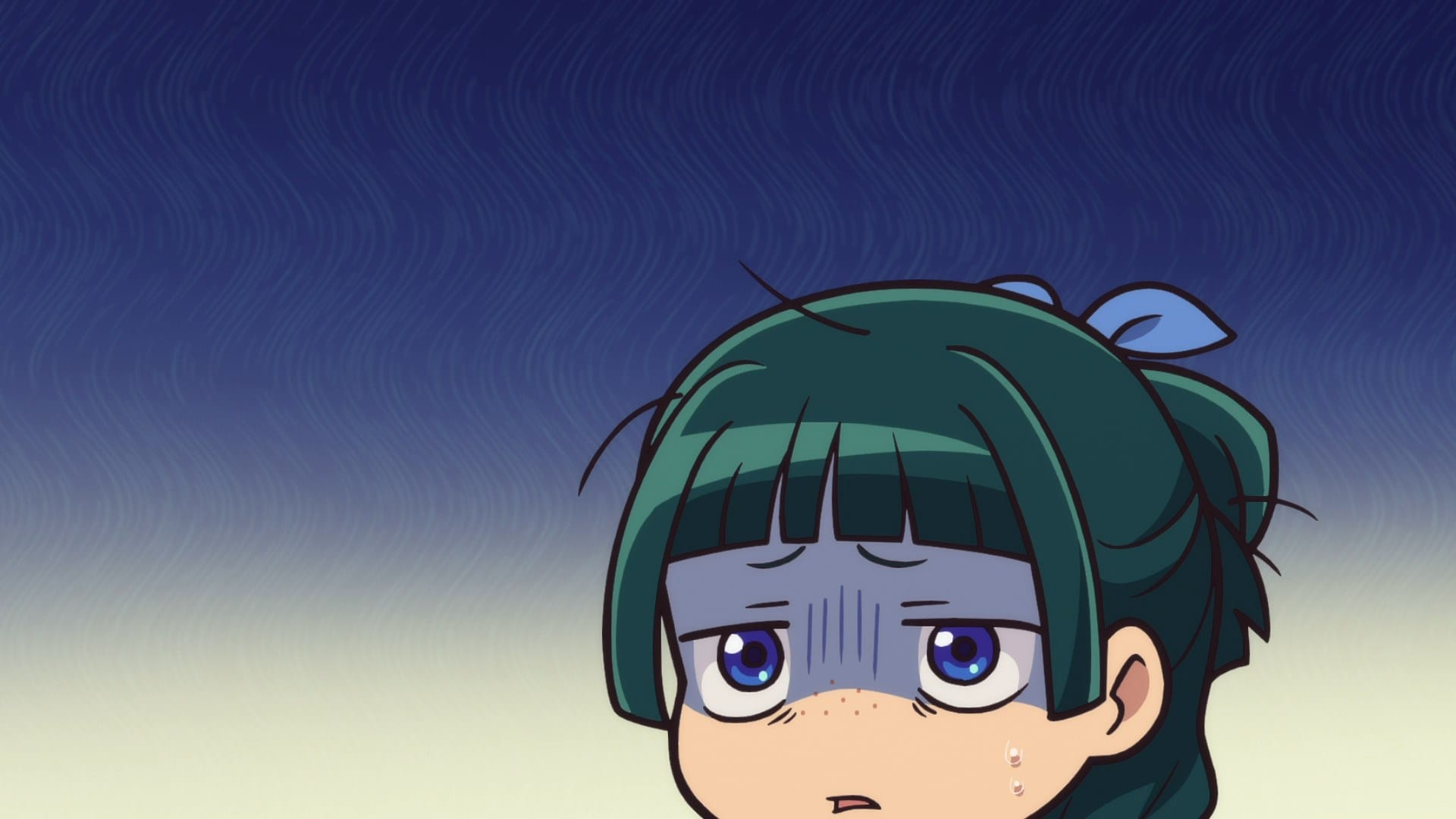
Remember that moment when Maomao’s walls crack? When the mask slips and you see the person underneath the apothecary’s detachment? Aoi Yuki’s performance in those scenes is the reason this show won Best Drama. She sells the vulnerability without ever making Maomao feel weak. That’s a razor-thin line to walk, and she nails it every single time.
And the community noticed. Maomao isn’t your typical anime protagonist. She’s not powered by friendship or destiny or some ancient prophecy. She’s powered by curiosity, stubbornness, and an encyclopedic knowledge of substances that could kill you. That Apothecary Diaries Season 2 got recognized for this — twice — says the anime audience is hungry for characters who break the mold and don’t follow the usual formula.
What makes Maomao such a standout in this season specifically is how the writing deepens her contradictions. In Season 1, she was brilliant but somewhat inscrutable — a genius who kept everyone at arm’s length. Season 2 starts pulling back the curtain. You see why she is the way she is. You see the cracks. And through Aoi Yuki’s performance, you feel those cracks in real time.
It also doesn’t hurt that the Kusuriya no Hitorigoto source material gives Aoi Yuki incredible dialogue to work with. Natsu Hyūga’s light novel writing is sharp, witty, and deeply layered — and the anime adaptation has done a remarkable job preserving that voice while adding visual depth that only animation can provide.
The Directors: Why Fudesaka and Naganuma Earned Every Bit of That Win
Let’s talk about that Best Director win for a second, because it deserves more attention than it’s getting. Akinori Fudesaka and Norihiro Naganuma didn’t just direct a good season of anime — they directed what might be the most precisely paced mystery anime in years.
Directing a mystery is fundamentally different from directing an action show. In an action series, you can lean on spectacle — big fights, flashy animation, hype moments. In a mystery, your pacing is the show. Reveal too much too fast and the audience gets bored. Hold back too long and they stop caring. The directors of Apothecary Diaries Season 2 found the perfect rhythm for this material.
Every episode builds tension methodically. Every scene serves a purpose. The show trusts its audience to pay attention to small details — a shift in someone’s expression, a passing comment that seems throwaway but becomes critical three episodes later. This is the kind of directing that doesn’t get enough credit because it’s invisible when it’s working well.
But it is working well. The imperial court setting requires constant visual storytelling — who stands where, who avoids eye contact, whose hands shake during a conversation. Fudesaka and Naganuma layer all of this into the frame without ever making it feel heavy-handed.
TOHO Animation Studio and OLM, the same studios that handled Season 1, clearly invested in getting this right. The production quality this season isn’t just maintaining the standard — it’s raising it. The backgrounds are richer, the character animations more expressive, and the overall visual language more confident. This is a team that grew with the material.
What This Means for Anime: The Shift Is Real
Here’s where things get interesting. Apothecary Diaries Season 2 winning four major awards at the Crunchyroll Anime Awards isn’t just a win for one show — it’s a signal that the anime scene is shifting.
For years, the anime awards have been dominated by action franchises. And look, this year was no exception on that front — Solo Leveling Season 2 took Best Action and Best Animation, MHA grabbed Anime of the Year. Those wins make sense. Those shows are phenomenal at what they do.
But the fact that a mystery anime set in a fictional Chinese-inspired imperial court swept the drama and character categories? That’s a shift, and it’s one that’s been building for a while.
73 million votes were cast globally for the 2026 awards, up from 51 million in 2025 — a 43% increase. The audience is growing, and it’s diversifying. People aren’t just voting for flashy fight scenes anymore. They’re voting for story. For character. For shows that make them feel something beyond hype and adrenaline.
This season proves that a show doesn’t need explosive battles or power-up transformations to win big. It needs great writing, great characters, and great execution. TOHO Animation Studio and OLM delivered all three, just like they did in Season 1, but with even more confidence and ambition this time around.
The light novel adaptation pipeline has been heating up for a while now, but Kusuriya no Hitorigoto is in a different tier entirely. It’s not isekai. It’s not battle shonen. It’s a slow-burn mystery drama that trusts its audience to pay attention — and the audience showed up for it in historic numbers.
This is the kind of result that changes what gets greenlit. Studio executives pay attention to awards. They pay attention to what generates 73 million votes. When a mystery anime about poison and court politics wins four major categories, it opens doors for other unconventional adaptations that might have been considered too niche or too slow for mainstream appeal.
Why Maomao Hits So Hard With Modern Anime Fans
Part of the reason Apothecary Diaries Season 2 connected this strongly is that Maomao feels fresh even in a medium packed with unforgettable protagonists. She’s not trying to save the world. She’s not chasing a throne. She’s not screaming about becoming number one. She’s trying to understand what happened, who is lying, and why a body or symptom doesn’t add up.
That makes her insanely fun to watch. Her intelligence isn’t abstract. It’s practical. She notices tiny details, tests theories, reads people fast, and gets visibly excited by toxic substances in a way that somehow stays charming instead of horrifying. Only Apothecary Diaries Season 2 could make poison geekery feel this lovable.
Maomao also benefits from writing that never forces her into a generic heroine mold. She can be cold, petty, funny, awkward, compassionate, and a little unhinged, sometimes within the same scene. That complexity is exactly why Best Main Character felt so inevitable. Fans weren’t voting for a mascot. They were voting for a fully realized person.
And because Aoi Yuki plays every shade of Maomao so precisely, the performance gives those layers even more force. The dry sarcasm lands. The quiet hurt lands. The moments when curiosity overrides self-preservation land hardest of all. Apothecary Diaries Season 2 understands that a smart protagonist only works if the audience enjoys living inside her head, and this show nails that.
Why This Win Matters for Non-Battle Anime
There is another reason this awards run feels important. Apothecary Diaries Season 2 is a reminder that anime doesn’t have to be built around combat escalation to dominate online conversation. A lot of the biggest seasonal hits still come from battle-first storytelling, and that’s not changing anytime soon. But this show wins people over through deduction, tension, chemistry, and atmosphere.
That gives it a different kind of staying power. Fans don’t only debate who would win in a fight. They debate motives, court politics, hidden identities, and whether Jinshi is being sincere or calculating in any given moment. That’s a healthier kind of fandom fuel for a long-running series because it keeps discussion alive between episodes.
It also opens the door for more adaptations that might once have been seen as risky. If Apothecary Diaries Season 2 can become an awards force while staying unapologetically itself, then publishers with strong mystery, historical, romance, or court-drama properties suddenly have a much stronger pitch. That’s good for viewers who want something beyond the usual seasonal formula.
Anime has always been broad as a medium, but award momentum helps shape what gets financed next. A night like this tells the industry there is real upside in backing shows led by voice, perspective, and structure instead of only spectacle.
Season 2 vs Season 1: How Apothecary Diaries Season 2 Leveled Up
If Season 1 was the show introducing itself to the world, Apothecary Diaries Season 2 was the show proving it was here to stay. Let’s be real — Season 1 was already excellent. It introduced us to Maomao’s world, established the imperial court dynamics, and hooked us with clever poison mysteries. But Season 2? Season 2 went harder in every possible way.
The political intrigue got deeper. Season 1 teased the power dynamics of the court; Season 2 dove headfirst into them. The stakes escalated from personal survival to court-wide consequences. Decisions Maomao makes now don’t just affect her — they ripple through the entire political structure of the imperial court.
Jinshi’s character arc, which was mostly mysterious glances and cryptic smiles in Season 1, got genuine development in Apothecary Diaries Season 2. We finally started understanding who he is, what he wants, and why he keeps pulling Maomao back into his orbit. Their dynamic has always been the emotional core of the show, but Season 2 makes it genuinely complex — full of unspoken tension, mutual respect, and the slow realization that they might be the only two people who truly understand each other in this court full of schemers.
The poison mysteries got more complex too. Season 1 cases were satisfying puzzles, but Apothecary Diaries Season 2 raised the stakes dramatically. Each mystery now ripples outward, affecting court politics, personal relationships, and Maomao’s own understanding of her place in this world. The cases aren’t just intellectual exercises anymore — they’re pressure cookers that force character development alongside the detective work.
And visually? The production quality held strong and then some. TOHO Animation Studio and OLM clearly didn’t phone it in for the second season. If anything, the directing from Akinori Fudesaka and Norihiro Naganuma got more ambitious — more creative shot compositions, more deliberate use of silence, more trust in the audience to read between the lines.
That Best Director win wasn’t charity. It was recognition that the show understood exactly what kind of story it wanted to tell and executed on that vision with remarkable precision.
The Competition: A Stacked Year Makes the Win Even Sweeter
You can’t talk about Apothecary Diaries Season 2‘s wins without acknowledging the field it was competing against. This was an absurdly stacked year at the Crunchyroll Anime Awards.
My Hero Academia won Anime of the Year — and say what you want about its final season, that’s a heavyweight franchise taking the top prize. MHA’s conclusion was divisive, sure, but it clearly connected with enough voters to secure the biggest award of the night.
Demon Slayer Infinity Castle won Film of the Year and Best Score, because of course it did — ufotable’s production values are on another planet entirely. The score was haunting, the animation was flawless, and the emotional beats landed with the kind of precision that only ufotable seems capable of consistently delivering.
Gachiakuta had a breakout night, winning Best New Series, Best Background Art, and Best Character Design. That’s a new franchise announcing itself in a big way, and the second season announcement at the awards only confirmed it’s got staying power. Keep your eye on that one.
Solo Leveling Season 2 took Best Action and Best Animation — exactly what you’d expect from a show that treats every single frame like a flex. The action choreography and visual polish are on another level.
And in the middle of all this, Apothecary Diaries Season 2 walked away with four awards in categories that reward storytelling craft over spectacle. In a year overflowing with visual powerhouses, the drama and character categories went to a mystery anime about a poison-obsessed apothecary navigating court politics in a fictional Chinese-inspired imperial court.
That’s not just impressive. That’s a statement. And it’s one the entire industry should be paying close attention to.
What Comes Next: The Future Is Bright for Kusuriya no Hitorigoto
With four major awards, a passionate global fanbase, and source material that still has plenty of story to tell, Season 2’s success almost certainly guarantees more seasons. Natsu Hyūga’s light novel series has been running since 2011, and there’s no shortage of material for TOHO Animation Studio and OLM to adapt.
What’s exciting is watching how the show will continue to evolve. Season 2 already raised the bar on political intrigue and character depth. Season 3 — whenever it comes — will need to push even further. But if this season proved anything, it’s that this creative team knows how to rise to a challenge and deliver beyond expectations.
The bigger picture? This win reinforces something the anime industry has been slowly figuring out: audiences want variety. They’ll still show up for Solo Leveling’s jaw-dropping action sequences and Demon Slayer’s breathtaking animation. But they’ll also show up — in record numbers — for a thoughtful, slow-burn mystery anime set in an imperial court.
That’s good news for everyone. More studios will greenlight unconventional projects. More light novel adaptations will get the production budgets they deserve, instead of being treated as afterthoughts. And more shows like Kusuriya no Hitorigoto — shows that prioritize character and story over spectacle — will find their audience.
The Crunchyroll Anime Awards have always reflected what’s popular. But this year, with 73 million votes cast globally, they reflected something deeper: a genuine appetite for stories that challenge, surprise, and stay with you long after the credits roll.
Apothecary Diaries Season 2 didn’t just win awards. It won an argument. And that argument is simple: anime can be anything. It doesn’t need to follow a formula. It doesn’t need to be loud to be heard. The audience is ready for more, and Kusuriya no Hitorigoto just proved it.
If you haven’t watched it yet, what are you waiting for? Four Crunchyroll Anime Awards don’t lie. Maomao is waiting, and she’s got poison to analyze.
You Might Also Enjoy
If this deep dive into Apothecary Diaries Season 2‘s dominance has you hungry for more coverage, check these out:
Crunchyroll Anime Awards 2026: Complete Winners Breakdown and Analysis
Gachiakuta: Why It Could Be 2026’s Next Big Shonen Anime
Solo Leveling Season 3: Why the Jeju Island Arc Changes Everything
Dandadan Season 2 Got Robbed at the Crunchyroll Anime Awards 2026