If you haven’t done a Parasyte anime review in your own head lately, it’s time. Parasyte: The Maxim aired in 2014, adapted from Hitoshi Iwaaki’s manga that ran through the late ’80s and ’90s, and it landed like a gut punch then. Twelve years on, with the world looking the way it does, it hits even harder. This is one of those rare horror anime that doesn’t just scare you — it makes you uncomfortable about being human. If you want body horror anime that actually has something to say, Parasyte belongs at the top of your list. And if you’ve already seen it, this might convince you it’s time to rewatch.
The Premise: Alien Parasites, a Sleeping World, and One Very Unlucky Teenager
The setup is deceptively simple. Worm-like alien organisms fall to Earth with one directive: take over a human host, specifically the brain, and blend in. Most of them succeed. Shinichi Izumi, a quiet high school student in Tokyo, almost becomes one of the statistics — but his parasite fails to reach his brain and instead takes over his right hand. The parasite, who Shinichi names Migi (Japanese for “right”), is stuck. So are they both. They can’t separate without dying, so they form the most reluctant partnership in the history of seinen anime.
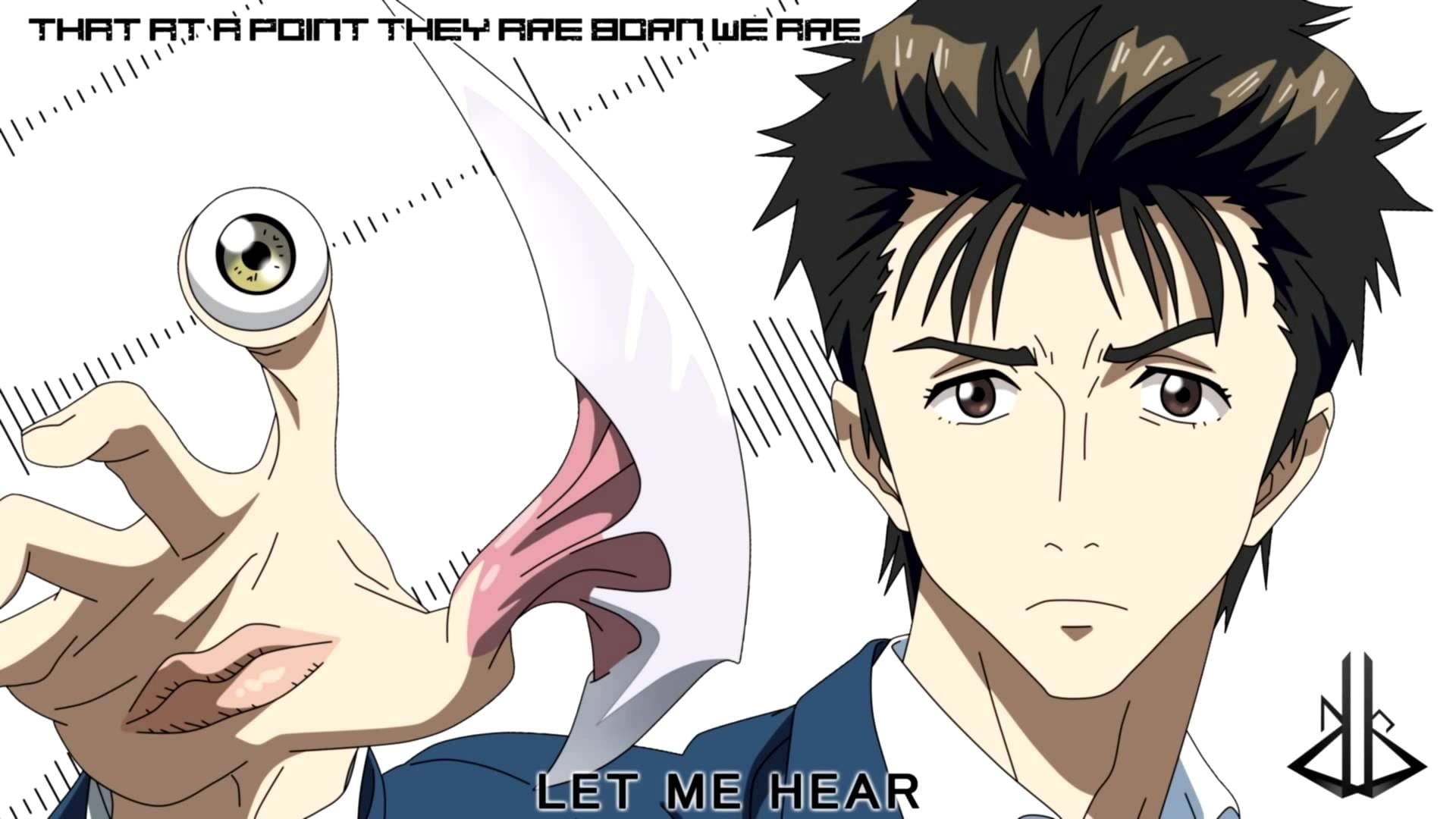
What makes this premise brilliant isn’t the alien invasion angle — it’s the inversion. The parasites that successfully take a brain become perfect predators wearing human faces. They go to work, raise families, run for local office. They smile and shake hands. Shinichi is the anomaly: fully human from the neck up, compromised from the wrist down. He can see what the parasites are. He knows what’s walking among people. And almost no one believes him.
The horror anime atmosphere builds slowly and carefully. Director Kenichi Shimizu and Madhouse don’t rely on jump scares or cheap gore to keep you watching. Instead, there’s a creeping dread that comes from watching ordinary life continue while something monstrous hides inside it. The suburban streets, school hallways, and fluorescent-lit convenience stores aren’t backdrops — they’re part of the horror. Everything looks normal. Nothing is.
Shinichi’s Transformation: He Doesn’t Just Survive — He Becomes Something Else
This is where Parasyte separates itself from most horror anime. The real story isn’t about aliens. It’s about what happens to a person when they’re forced to confront violence, loss, and their own capacity for coldness — and come out the other side changed.
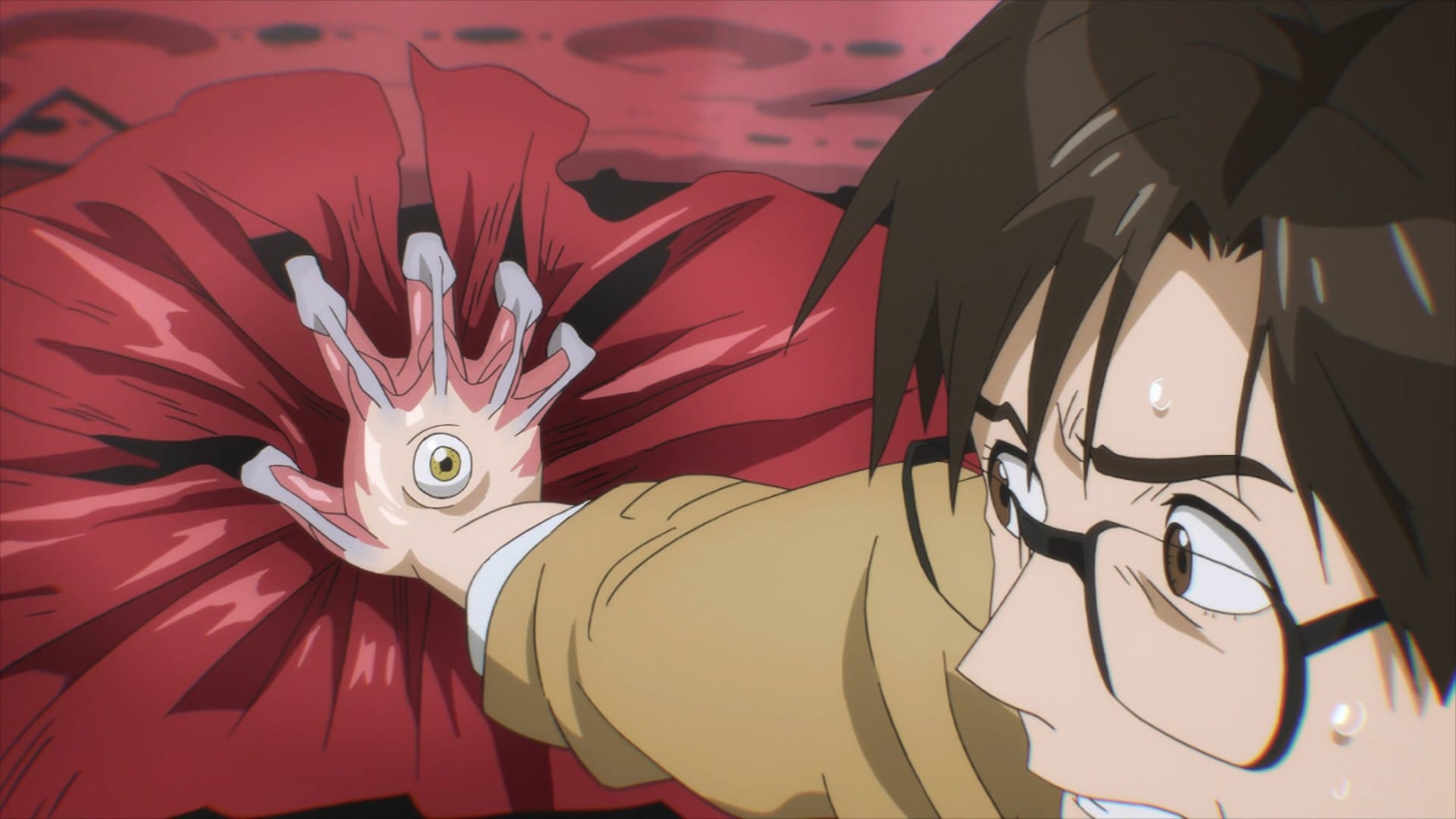
Early Shinichi is a genuinely sweet kid. He’s awkward around his crush Satomi, he’s kind to people smaller than him, he cries when things go wrong. That version of Shinichi doesn’t survive the series intact. As Migi’s biology gradually bleeds into his own — giving him physical strength, sharper senses, faster reflexes — something emotional bleeds out. He becomes less reactive. Less affected. At one point he watches something devastating happen and his eyes just stay flat. Satomi notices before he does.
The show frames this transformation without easy moral judgment. Shinichi’s emotional distance isn’t laziness or trauma response in the conventional sense — it’s adaptation. The world he’s in requires something from him that his original self couldn’t provide. But losing that softness costs him, and the series doesn’t let him or the audience pretend it doesn’t. Some of the most affecting moments in Parasyte aren’t the action sequences — they’re Shinichi alone, trying to feel something and not quite getting there.
This is the philosophical muscle that Iwaaki built into the source material, and the anime carries it faithfully. What does it mean to become harder in order to survive? What version of yourself do you lose in the process, and is that version worth grieving? Parasyte asks those questions without giving you a clean answer, which is exactly right.
Migi: The Best Non-Human Character in Horror Anime
Let’s just say it: Migi is one of the great anime characters, full stop. Not just in horror anime. Not just in seinen anime. Just — anime, period.
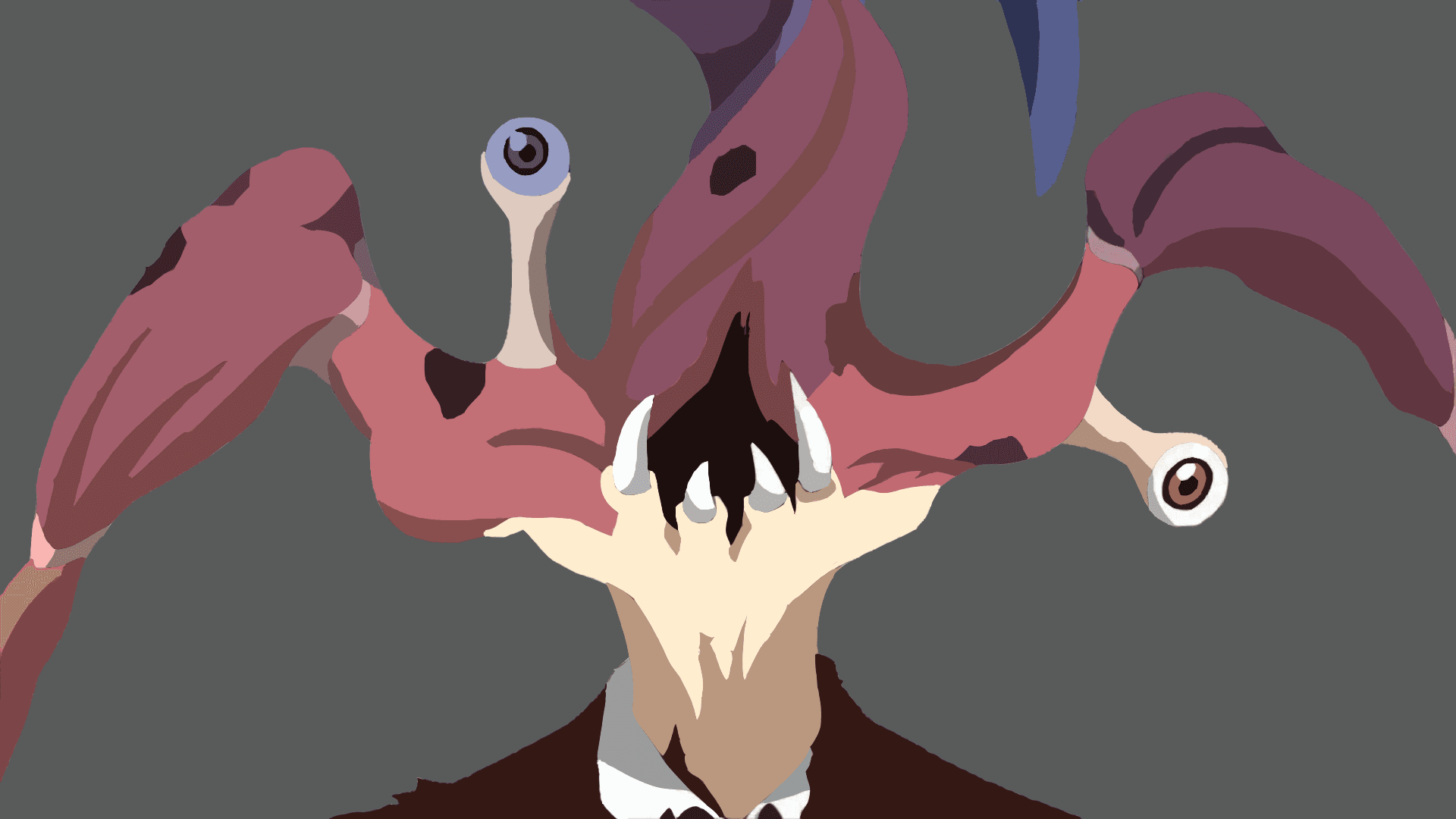
Migi starts the series as pure function. He has no emotions, no loyalty, no particular interest in human life beyond what keeps the host organism — Shinichi — alive long enough to ensure Migi’s own survival. He learns language in hours by watching TV. He calculates threat assessments with the affect of someone balancing a spreadsheet. When Shinichi is in danger, Migi doesn’t help because he cares. He helps because dead Shinichi means dead Migi.
And then, slowly, something shifts. Migi begins asking questions that go beyond survival calculus. He watches humans choose to sacrifice themselves. He observes Shinichi cry. He starts noting things that have no tactical relevance — aesthetic things, emotional patterns, behavior that doesn’t optimize for anything. He never becomes sentimental. He never becomes fully human. But he becomes curious about humanity in a way that reads almost like affection, even if he’d reject the word.
What makes Migi exceptional is that the series never forces him through a conventional emotional arc. He doesn’t learn to love. He doesn’t have a redemption moment. He stays alien, stays logical, stays fundamentally other — and yet you end up caring about him deeply precisely because the show respects what he is. He’s not human. He doesn’t pretend to be. And the question of whether the connection between him and Shinichi counts as friendship, by any meaningful definition, lingers long after the final episode.
Aya Hirano’s voice performance in the Japanese dub deserves credit here. Migi speaks in a flat, slightly clinical tone that never tips into robotic parody. There’s an intelligence behind every line reading — something that sounds like it’s processing rather than feeling, which is exactly what Migi would be doing.
Body Horror Done Right: The Visceral Visual Language of Parasyte
This is a body horror anime. That’s not incidental — the horror is the point, and Madhouse commits to it fully. The parasite transformations are grotesque in the way that good body horror should be: not just stomach-turning, but deeply, philosophically unsettling.
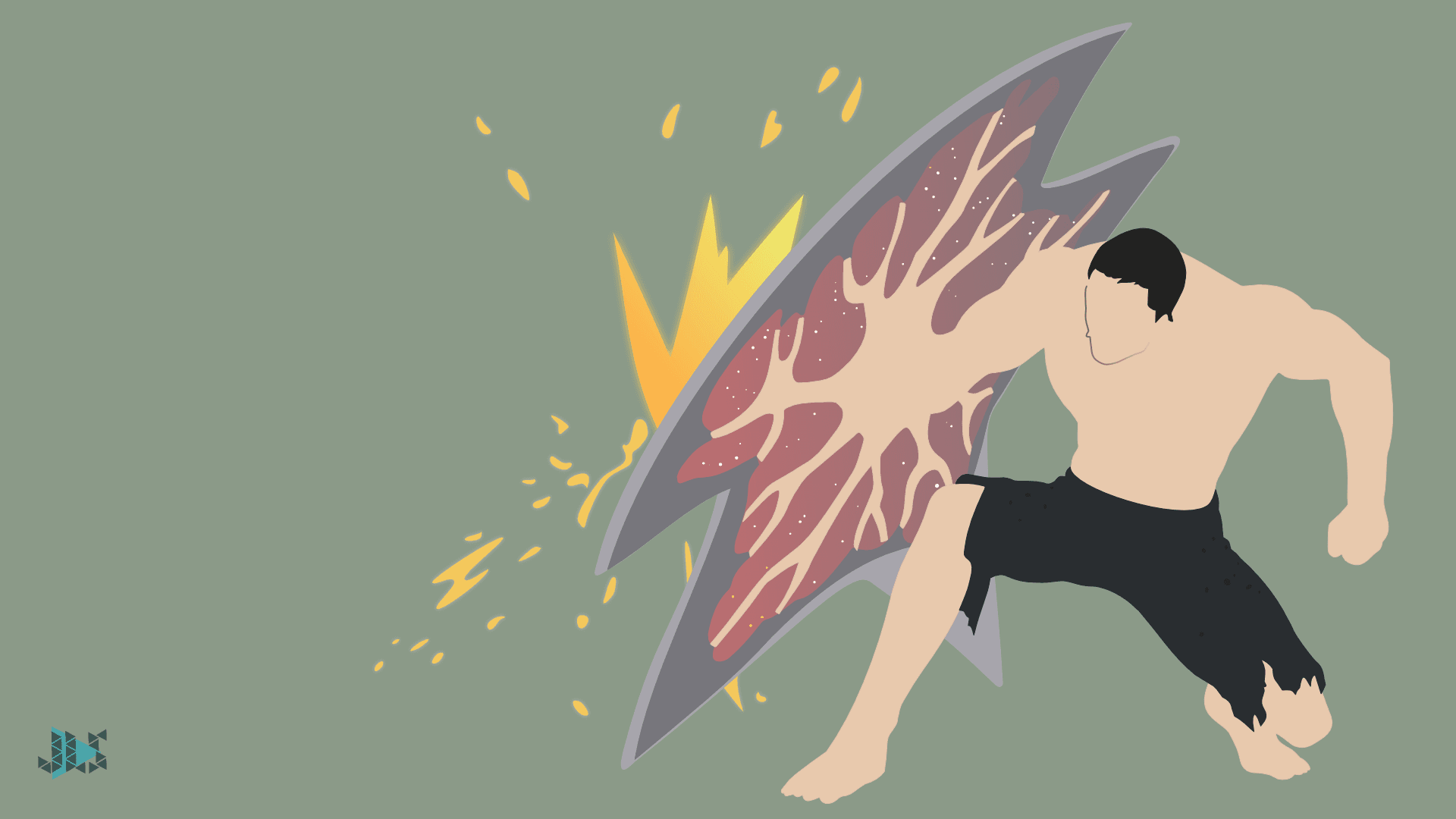
When a parasite that controls the head needs to fight or feed, the human face cracks open. The head splits into petals, tendrils, blades. The geometry is wrong in ways that feel almost mathematical — too precise, too efficient, nothing wasted. It doesn’t look like a monster from a horror movie. It looks like biology that operates by completely different rules, and that’s what makes it so effective. The horror anime genre has a long history of body transformation sequences, from Akira to Tokyo Ghoul, but Parasyte’s version hits differently because of what it represents. These aren’t mutations. They’re optimization. The body doing exactly what it was redesigned to do.
The action sequences — and there are many — use this visual language brilliantly. Fights between Shinichi and parasite-hosts aren’t action movie spectacle. They’re fast, brutal, and often shocking. The speed is inhuman. The violence is consequential. People die in ways the camera doesn’t look away from. The show earns its seinen classification not through edginess but through a clear-eyed willingness to show what violence actually costs.
Madhouse’s animation holds up remarkably in 2026. The character designs are grounded and realistic in a way that ages better than more stylized work. When the transformations hit, they hit against a backdrop of visual normalcy, which amplifies everything. The horror lives in the contrast.
The Environmental Thread: Nature’s Logic and the Human Pest Problem
Here’s where Parasyte gets genuinely dangerous as a piece of storytelling. One of its recurring ideas, voiced through different characters across the series, is that humans are a plague species. We consume resources, destroy ecosystems, eliminate other life without a second thought — and then call ourselves the pinnacle of evolution. The parasites, by this reading, are just another predator. We eat cows. They eat us. Where exactly is the moral distinction?
The series doesn’t fully endorse this view — it’s too honest to offer simple answers — but it doesn’t dismiss it either. A parasite-host character named Reiko Tamura spends much of the series functioning as a kind of cold intellectual voice for this perspective. She’s conducting research on what it means to be human. She’s not wrong about everything she observes. The series gives her enough screen time and enough intelligence that her arguments have weight, even when her methods are monstrous.
Iwaaki wrote the original manga during a period of heightened environmental awareness in Japan, and the ecological themes were deliberate. The anime carries them intact. In 2026, with climate crisis discourse louder than ever and biodiversity loss accelerating, watching a series argue that human beings might not be the victims of the story — that we might be the infestation — lands with specific weight. It’s not comfortable. It’s not supposed to be.
This is what separates Parasyte from horror anime that’s purely interested in entertainment. It wants you to think about what you are. What your species is. Whether the thing you’re rooting against — alien organisms that consume humans — is actually so different from the thing you belong to.
Why Parasyte Hits Different in 2026
When Parasyte aired in 2014, the world was anxious but not like this. Twelve years later, there’s something about the show’s core questions that feel less like philosophy and more like a description of current events.
The parasites succeed by blending in — by looking exactly like the people around them while holding completely different values. They smile at neighborhood meetings. They make speeches. They’re in positions of power. In 2026, “something monstrous wearing a human face” is no longer a horror premise — it’s a metaphor that maps onto a dozen real-world dynamics, depending on your politics and your level of dread. The series doesn’t need to be updated. Reality caught up to it.
Shinichi’s emotional shutdown also reads differently now than it might have in 2014. We have a lot more language around dissociation, around the ways sustained stress and exposure to violence change people at a neurological level, around what it costs someone to keep functioning in a world that requires them to witness terrible things repeatedly. Shinichi’s arc maps onto those experiences without using any of that vocabulary. The series just shows you what it looks like from the outside, and from the inside, and lets you draw your own conclusions.
The environmental thread, as noted above, has only grown more urgent. And Migi’s alien perspective on human behavior — the way he observes and processes things without the filters of socialization or sentiment — functions almost like a mirror. What do humans look like to something that has no stake in human self-image? The answer Parasyte gives isn’t flattering. But it’s honest.
There’s also something to be said for the way the series handles truth and denial. Characters in Parasyte who know what’s happening spend enormous energy trying to convince people who don’t. They’re ignored, dismissed, treated as unstable. The parasites benefit from this. The gap between what some people know and what most people are willing to believe is where the real horror lives. That particular dynamic feels achingly familiar in 2026 in ways it probably didn’t to every viewer in 2014.
Verdict: Required Viewing, Not Just for Horror Fans
A Parasyte anime review can’t end without being direct: this is a masterwork of the medium. Not perfect — the pacing in the middle third occasionally loses momentum, and a couple of secondary characters don’t get the space they deserve — but it’s a series with genuine intelligence behind every major choice. It’s horror anime that respects its audience. It’s seinen anime that uses the genre’s freedom not for shock value alone but for real moral weight.
If you came up on horror anime through mainstream gateway shows, Parasyte is the series that’ll show you how much further the genre can go. If you’re already deep in the seinen anime catalogue, and somehow haven’t watched this, stop what you’re doing. And if you watched it in 2014 and haven’t been back since — go back. It’s different now. Or rather, you’re different. And the world is different. And Parasyte was always waiting for this moment to make complete sense.
The score by Ken Arai deserves a mention on the way out. It blends electronic and orchestral elements in ways that feel cold and organic simultaneously — exactly like the show’s central subject matter. The opening theme, “Let Me Hear” by Fear, and Loathing in Las Vegas, is still one of the best anime openings of the 2010s. It captures the show’s energy perfectly: unnerving, relentless, alive.
Watch Parasyte: The Maxim. All 24 episodes. Don’t skip the quiet moments. The quiet moments are where it does its best work.
Rating: 9.2/10
You Might Also Enjoy
- Tokyo Ghoul Review — When Monsters Are the Most Human Characters in the Room
- Vinland Saga and the Long Game of Becoming a Better Person
- Berserk (1997) Review: The Original Dark Fantasy That Still Hasn’t Been Topped
- Devilman Crybaby Review — Go Nagai’s Vision, Masaaki Yuasa’s Chaos
- Monster Review: 74 Episodes of Psychological Horror with No Wasted Frame