Why Bakugo Katsuki Is the Most Fascinating Character in My Hero Academia
Ask any MHA fan who the most controversial character in the series is, and you’ll get the same name every time: Bakugo Katsuki. He bullied Deku for years, screamed his way through every social interaction, and spent the first chunk of the series being genuinely insufferable. And yet — somehow — he’s also one of the most beloved characters in modern shonen anime. A complete bakugo katsuki character analysis reveals that this isn’t a contradiction. It’s the whole point. Horikoshi didn’t create Bakugo to be likable. He created him to be real — a character whose flaws are so specific and psychologically coherent that watching him grow feels like watching an actual person change, not a fictional arc reset button being pressed.
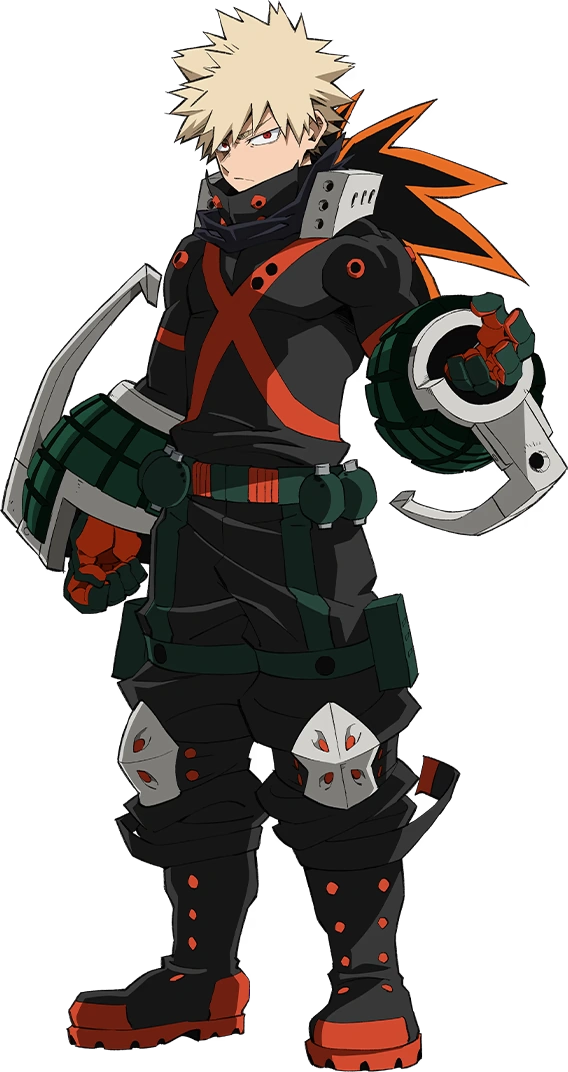
This is a deep breakdown of everything that makes Bakugo tick. His origins, his trauma, his rivalry with Izuku Midoriya, his slow-burn transformation, and his defining moments in the Final War. If you’re already an MHA fan, you already know the surface stuff. We’re going past the surface.
For context on where Katsuki Bakugo ranks among anime’s greatest characters, check out his MyAnimeList profile — he consistently polls in the top tier of character popularity rankings, which tells you everything about the gap between how he’s written versus how casual observers think he should be received.
The Boy Who Was Always “Better” — Bakugo’s Origins and Childhood
To understand the bakugo katsuki character analysis fully, you have to start at the beginning — and the beginning is ugly. Bakugo was born with one of the most powerful Quirks in a generation: Explosion. It’s flashy, it’s destructive, it scales with him, and it’s genuinely S-tier in terms of offensive potential. From the moment his Quirk manifested, everyone around him — adults, peers, teachers — treated him like he was already a winner. Destiny’s chosen child. The kid who couldn’t lose.
That’s the origin of his arrogance, but it’s also the origin of his deepest fear. When every person in your life tells you that you’re exceptional, “being exceptional” stops being an achievement — it becomes a survival condition. Katsuki Bakugo didn’t grow up confident. He grew up terrified of not being exceptional, which is an entirely different psychological state that just looks like confidence from the outside.
His childhood relationship with Izuku “Deku” Midoriya is crucial here. They were friends as kids — genuinely close, before Quirks became the defining social hierarchy of their world. But once Bakugo’s Quirk manifested powerfully and Deku remained Quirkless, the dynamic curdled. Bakugo didn’t just see Deku as weaker. He saw Deku as a mirror of what he feared most: someone without power who still tried. To young Katsuki Bakugo, Deku’s persistence in the face of powerlessness wasn’t inspiring — it was threatening. It implied that power wasn’t everything. And if power wasn’t everything, then Bakugo’s entire identity was built on sand.
So he pushed Deku down. Called him Deku — literally “useless.” Made sure that the distance between them stayed as wide as possible, because narrowing it meant confronting a reality he wasn’t equipped to handle. This isn’t rationalized villainy. This is a child using cruelty as emotional armor, which is one of the most recognizable and uncomfortable things Horikoshi ever put on the page.
The Pride Problem — Why Bakugo’s Ego Is Trauma in Disguise
A lot of people write off Bakugo Katsuki as just an angry, arrogant jerk, and that reading isn’t entirely wrong — it’s just incomplete. Any serious bakugo katsuki character analysis has to wrestle with the fact that his ego functions as a psychological defense mechanism, not just a personality trait. The distinction matters enormously for how you interpret everything he does.
Consider the Sports Festival arc. Katsuki Bakugo wins the tournament — battles through the whole bracket, demolishes Todoroki in the finals — and receives his gold medal in handcuffs because he refused to allow a “proper” victory ceremony he hadn’t actually earned in his own mind. Think about what that reveals. He won. Objectively, undeniably won. And it felt like nothing, because the path to that win included a Todoroki who held back his full power. Bakugo didn’t want the prize. He wanted the validation, and validation you can’t trust doesn’t land.
That’s not arrogance in the simple sense. That’s a person who has tied their entire self-worth to a standard of excellence that keeps shifting upward the moment they get close to it. No win is ever clean enough. No victory is ever pure enough. It’s the psychology of someone who has been told they’re the best for so long that “being the best” became the only version of themselves they’re allowed to be.
The Villain Alliance Kidnapping Arc — When the Armor Cracks
The League of Villains kidnapping arc is where Bakugo Katsuki gets genuinely stress-tested for the first time, and it’s one of the most revealing extended sequences in the series. The villains don’t capture him because he’s weak — they capture him because he’s famous and powerful, hoping to corrupt him. What they find is someone completely impossible to manipulate.
Bakugo refuses. Not reluctantly, not after deliberation — immediately and absolutely. He doesn’t entertain joining Shigaraki’s crew for a single second, even when he’s outnumbered and the power differential is obvious. And the reason he refuses is interesting: it’s not that he’s morally opposed to villainy in some abstract sense. It’s that winning as a villain would be a meaningless win. His goal is to become the greatest hero — not the most powerful person, but the greatest hero — and that goal is non-negotiable regardless of circumstance. That’s a character with a core identity that external pressure can’t dissolve.
The rescue operation that follows, where his classmates and the pro heroes come for him, clearly affects Katsuki Bakugo even though he’d never admit it. He processes it badly — he blows up at Deku again, the famous “never win to lose” confrontation — but the confrontation itself is him trying to make sense of feelings he doesn’t have the vocabulary for. That’s the arc where you start to see what’s underneath the volume.
All Might’s Influence — The Conversation That Changes Everything
One of the most underrated moments in the entire series is Bakugo Katsuki’s conversation with All Might after the kidnapping arc. Most fans focus on the Deku-All Might relationship because it’s the central thread of My Hero Academia. But Bakugo’s exchange with All Might hits completely differently — because Bakugo actually figured it out.
He deduced that All Might chose Deku as his successor. He confronts All Might directly. And All Might doesn’t insult him by pretending otherwise. He confirms it, and more importantly, he tells Bakugo that he chose Deku specifically because of qualities Bakugo doesn’t have — not raw power, but the instinct to run toward danger without thinking. That conversation forces Katsuki Bakugo to sit with something genuinely painful: that someone else has something valuable that he lacks, and that someone else saw it first. For someone whose identity is built on being the best, that’s not just a bruise. That’s a fracture.
And he doesn’t crumble. He adapts. Slowly, grinding, with the kind of resentment that only real growth produces. That’s what makes the bakugo katsuki character analysis so rich — his development isn’t clean or linear or pleasant. It’s the kind of growth that looks like regression from certain angles.
The Deku Rivalry — One of Shonen’s Most Psychologically Complex Dynamics
Let’s be honest: the Bakugo Katsuki and Deku rivalry is in conversation with the greatest rival dynamics in shonen history. Vegeta and Goku. Sasuke and Naruto. Zoro and Sanji (sort of). Each of those rivalries has something distinct to say about ambition, identity, and what drives people to push beyond their limits. The Katsuki Bakugo and Deku dynamic stands apart because of how asymmetrical and emotionally loaded it is from the start.
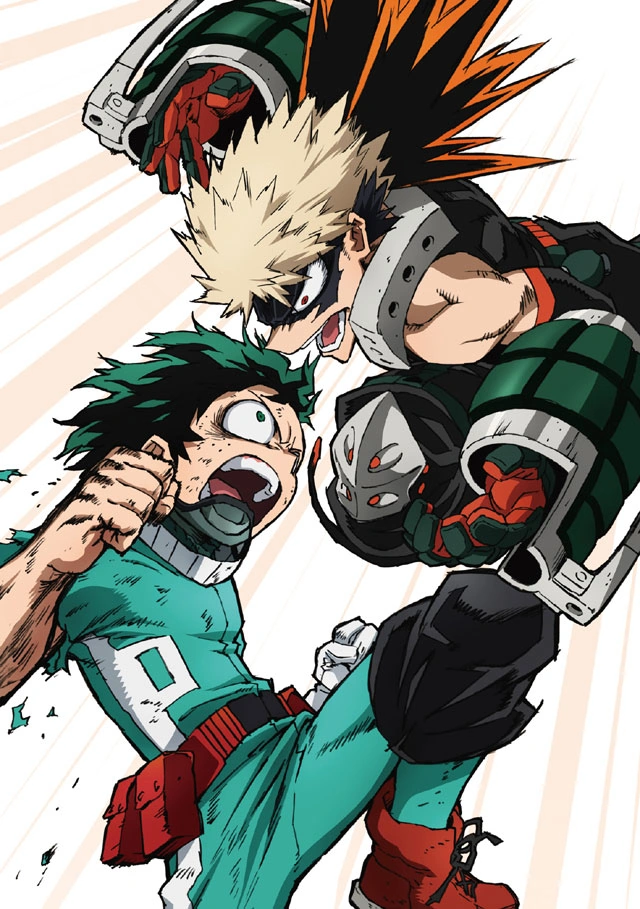
Compare it briefly to the obvious touchstone: Sasuke and Naruto. That rivalry is clean in its symmetry — two orphans, parallel pain, mirrored ambitions pulling in opposite directions. Beautiful in its design, but emotionally legible. You always know exactly what’s being communicated. The Bakugo Katsuki / Deku dynamic is messier. Bakugo’s the one who had everything, Deku’s the one who had nothing, and yet Deku ended up with the power Bakugo would have killed for. The power that Bakugo didn’t get because he was already exceptional enough. That irony is specific and it bites.
And unlike Sasuke, who leaves and becomes a villain before finding his way back, Katsuki Bakugo stays in the same building as Deku for the entire series. He doesn’t get to dramatically exit and return. He has to sit with his feelings, in class, every day, while watching Deku improve. That’s a more realistic and in some ways more brutal kind of rivalry — the kind where you can’t avoid the person who challenges everything you’ve built yourself around.
The Apology Scene — How to Earn a Redemption Beat
The apology. You know the one. If you’ve done even a surface-level bakugo katsuki character analysis, you know exactly what scene I’m talking about — the moment where Katsuki Bakugo finally says the words to Deku. It’s one of those moments that breaks MHA fan communities in half: some people found it deeply earned, some found it too late, some found it insufficient.
Here’s the thing: Horikoshi wasn’t going for a feel-good moment. The apology isn’t framed as closure. Bakugo is crying. He’s on his knees. He’s barely coherent. And what he says amounts to: I’ve always known what I was doing to you, and I couldn’t stop, and I’m sorry. It’s not graceful. It’s not redemptive in a satisfying Hollywood sense. It’s a person who has been carrying something corrosive for years finally setting it down, not because they’ve become good but because they can no longer pretend the weight isn’t real.
That’s the difference between an earned redemption beat and a cheap one. Cheap redemption is the villain who suddenly chooses love in the third act with minimal setup. Earned redemption is years of characterization where you watch someone slowly, painfully, without fanfare, become capable of a moment of genuine humility. Katsuki Bakugo’s apology lands because it took four seasons to get there and it still doesn’t resolve everything. That’s what real apologies look like.
For more on how MHA handles its characters’ emotional complexity, the breakdown of Dabi’s tragic villain arc is worth reading alongside this — Horikoshi clearly has a specific philosophy about what makes a character’s darkness feel earned versus gratuitous.
Bakugo Katsuki’s Growth Arc — A Masterclass in Earned Character Development
Step back and look at the full bakugo katsuki character analysis arc across the entire series and what you see is genuinely rare in long-form shonen: consistent, coherent character development that never sacrifices who the character fundamentally is in order to make them more palatable. Katsuki Bakugo at the end of the series is different from Katsuki Bakugo at the beginning — but he’s still recognizably, unmistakably himself.
He still has the volcanic temper. He still has the competitive drive that borders on obsessive. He still has the absolute refusal to accept anything less than the best from himself and the people around him. What changes is the direction of those traits. Early series Bakugo uses his standards as weapons against others. Later series Katsuki Bakugo starts — slowly, grudgingly — turning those same standards into something that elevates the people around him rather than diminishing them.
The Shonen Rival Template — And Why Bakugo Breaks It
In classic shonen structure, the rival exists to push the protagonist. Vegeta pushes Goku. Sasuke pushes Naruto. Zoro pushes Luffy, in a different way. The rival is a foil — defined primarily by their relationship to the main character’s arc. They exist in service of the protagonist’s story.
Bakugo Katsuki refuses that role. He has his own arc, his own psychological depth, his own goals that are not defined in relation to Deku. Yes, the rivalry is real and important. But Bakugo’s obsession with becoming the number one hero is not about beating Deku — it predates their rivalry becoming a rivalry. It comes from somewhere internal that Deku just happens to illuminate. That distinction is part of what makes the bakugo katsuki character analysis so interesting compared to most shonen rival studies: he’s not a foil, he’s a protagonist wearing rival clothes.
Horikoshi has said as much in interviews — Bakugo was designed to be a co-protagonist, not a rival in the traditional sense. You can feel that in how much page time and interiority he gets. He’s not there to make Deku look good. He’s there because his story is worth telling on its own terms.
Best Jeanist, Gang Orca, and the Internship Arcs
The internship sequences where Katsuki Bakugo works under Best Jeanist are often underrated moments of growth. Best Jeanist is one of the few people in the series who doesn’t either worship Bakugo’s power or try to dominate him through force — he simply refuses to engage with the performance. He treats Katsuki Bakugo like someone with potential that’s being wasted on posturing, and that approach gets further under Bakugo’s skin than anything else could.
You see Katsuki Bakugo actually absorbing lessons during this period — about hero presentation, about public trust, about the gap between raw power and actual heroism. It’s not dramatic. He doesn’t thank anyone or have a breakthrough monologue. He just… learns. Quietly. While still being obnoxious. That’s the right tempo for his character. If you want to understand how Quirk types shape hero development, Bakugo’s arc is one of the clearest examples of a power-type hero being forced to develop tactical and emotional intelligence to compensate for the limitations even an exceptional Quirk creates.
The Final War Arc — Bakugo Katsuki’s Ultimate Test
The Final War arc is where the bakugo katsuki character analysis reaches its peak intensity. Without getting deep into manga-specific spoilers for anime-only fans: Bakugo is pushed beyond anything the series has put him through before. He faces Shigaraki at a level where raw power alone isn’t the answer. And in the process, he experiences something the series has been building toward for years — a moment where his survival is genuinely uncertain.
The near-death sequence hits differently because of everything that came before it. By this point in the series, you’ve invested enough in Katsuki Bakugo that the emotional stakes land. When the series plays it as genuinely as it does — when it doesn’t pull the punch — the community reaction is exactly what you’d expect from fans who’ve been watching this character for years.
His return, and the form that return takes, is one of the most satisfying payoffs in the series — not because it’s a power-up in the traditional sense, but because of what it means thematically. Katsuki Bakugo coming back in that arc, in that way, is the series saying something specific about what kind of hero he’s become and what kind of hero he always had the potential to be. It earns the emotion because it was built on a foundation of consistent, difficult character work.
Bakugo as a Hero vs. Bakugo as a Rival
One of the things the Final War arc crystallizes is the distinction between Bakugo Katsuki as Deku’s rival and Katsuki Bakugo as a hero in his own right. For most of the series, those two identities are in tension. In the Final War, the rivalry steps back and the hero steps forward.
He fights not to beat Deku or prove something against his childhood friend — he fights because there are people in danger and he is someone who refuses to let that stand. That’s the synthesis the whole arc has been building to. The explosive, selfish, terrified kid from Aldera Junior High has become someone who puts himself between civilians and catastrophic danger not because it’s a rule but because he genuinely cannot do anything else. That’s not a replacement of Katsuki Bakugo’s personality — it’s the fulfillment of it. The shonen rival becoming a shonen hero, on his own terms, through his own suffering.
For context on how the series handles its ending and what it means for all the major characters, the MHA ending explained breakdown is essential reading. Bakugo’s final arc position makes a lot more sense when you understand where Horikoshi was pointing the whole narrative.
Why the Bakugo Katsuki Character Analysis Is an Argument for Difficult Characters
Here’s the honest conclusion that any complete bakugo katsuki character analysis has to land on: Katsuki Bakugo is one of the best-written characters in modern shonen anime not despite being difficult but because of it. He is not a character designed to be loved quickly. He’s a character designed to be understood slowly — and the understanding, when it comes, is proportional to the time you’ve invested.
Compare him again to the big shonen rivals. Vegeta starts as a villain and becomes a gruff anti-hero who protects the people he loves while refusing to admit he loves them — enormously popular, but the arc is broad and the characterization is sometimes inconsistent across decades of Dragon Ball. Sasuke’s arc is emotionally powerful but requires a lot of narrative handholding in Shippuden to get him from darkness back to light. Zoro is iconic but primarily defined through cool rather than psychological depth.
Bakugo Katsuki is the most psychologically coherent of the group. His childhood trauma explains his behavior. His behavior generates his arc. His arc produces genuine change without erasing who he is. It’s character writing that respects both the character’s internal logic and the audience’s intelligence, which is genuinely hard to pull off across hundreds of chapters and episodes of serialized fiction.
For fans who want to see how other MHA characters hold up under the same analytical lens, the Ochako Uraraka deep dive is worth your time — she’s often dismissed in similar ways to early-arc Bakugo, and for similarly flawed reasons. And if you want to see how Katsuki Bakugo’s arc compares to the greatest character arcs in anime broadly, the Naruto Uzumaki complete character analysis makes for a fascinating parallel read — two protagonists (or near-protagonists) defined by what they lack and what they build to compensate.
The shonen genre has given us countless rivals and anti-heroes over the decades. Most of them are defined by a handful of cool moments and a redemption scene that gets applauded at conventions. Bakugo Katsuki is something rarer: a character who earns every moment, costs the reader something emotionally, and arrives at his arc’s destination in a way that feels inevitable without ever feeling cheap. That’s not common. That’s worth celebrating.
If you came into MHA hating Katsuki Bakugo and you’re still watching or reading — there’s a reason you’re still there. He’s designed to do that. He’s designed to make you stay.
You Might Also Enjoy
- Dabi: MHA’s Most Tragic Villain Explained — if Bakugo’s psychology interests you, Dabi is the dark mirror version of the same themes
- Ochako Uraraka: MHA’s Most Underrated Heroine — another character whose depth gets buried by surface-level readings
- MHA Ending Explained — everything you need to understand where the series left every major character
- Best Anime Fights of All Time — Bakugo appears more than once on this list, and rightfully so
- Naruto Uzumaki: Complete Character Analysis — the ultimate companion piece for fans thinking about shonen protagonist archetypes