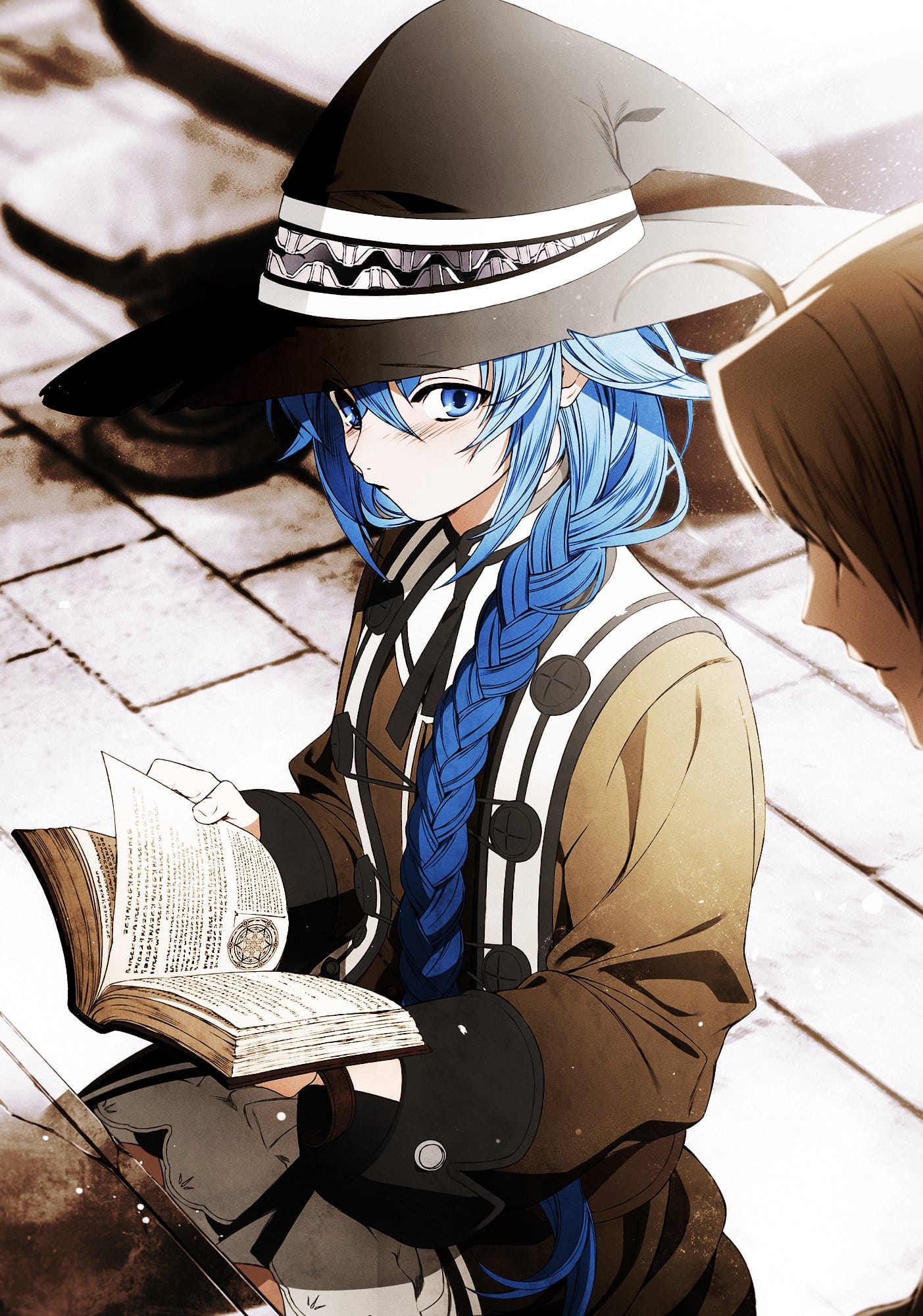
There’s a moment early in Witch Hat Atelier that most shounen fantasy series wouldn’t dare to write. A girl who has spent her entire childhood dreaming of magic finally touches a forbidden spell book — and in doing so, accidentally turns her mother to stone. Not a villain. Her mother. That’s your protagonist’s origin story, and it’s not played for shock value. It just quietly sits there, heavy and real, and it changes everything that comes after.
That girl is Coco. And if you haven’t already fallen down the rabbit hole that is Witch Hat Atelier, the Spring 2026 anime adaptation is your excuse to fix that immediately. This isn’t a hype piece. This is a proper reckoning with why Coco might be one of the most emotionally honest magical protagonists ever put on a page — and soon, on a screen.
Who Is Coco? The Girl Who Broke Everything She Loved
Coco is a non-magical girl living in a world where witches are born, not made. Magic is hereditary, secretive, protected by ancient laws — and completely off-limits to commoners. But Coco has been obsessed with magic since before she could articulate why. She grows up watching the world around her hum with power she can never touch, sketching magical diagrams in her notebooks, memorizing every detail she can observe. It’s the kind of obsession that looks adorable on a child and quietly devastating when you realize how much she must have ached.

Then a traveling witch named Qifrey stops at her family’s tailor shop, and Coco glimpses his forbidden spell book. Curiosity wins. She copies a glyph she doesn’t understand. And in an instant, her mother is frozen in stone — a victim of a curse Coco set in motion without knowing what she was touching.
Most stories would make this a dramatic inciting incident and then move on. Witch Hat Atelier never lets Coco — or the reader — fully move on. That weight travels with her through every chapter. It’s not wallowed in or melodramatically revisited every few pages. It just exists, the way real guilt exists. In the background. In the way she works harder than everyone else. In the specific quality of her determination, which isn’t ambition so much as it is penance.
The Backstory That Earns Every Victory
What Kamome Shirahama does with Coco’s backstory is something a lot of fantasy writers fumble: she makes the cost of the inciting event feel proportionate to everything that follows. Coco’s mother didn’t just get hurt — she was completely removed from Coco’s daily life, petrified and helpless, and the only way to reverse the curse is to master the very magic that caused it. That’s not a cute motivation. That’s a genuine trap, and Coco is trapped in it willingly.
What makes this work so well is that Coco doesn’t perform her guilt. She doesn’t have a breakdown every episode or monologue about her pain. Instead, she channels it into action. She asks better questions than any of the other apprentices. She studies longer. She makes mistakes — sometimes spectacular ones — but she treats each mistake as information rather than evidence of her unworthiness. That’s a specific kind of psychological maturity that feels genuinely earned rather than written in from the outside.
Compare this to the standard “tragic backstory” formula: parent dies, protagonist gets angry, power reveals, problem solved. Coco’s situation is more tangled than that. Her mother is alive but unreachable. The harm she caused was unintentional but still real. The solution requires her to become the very thing the world told her she could never be. There’s no clean catharsis waiting at the end of a training montage. Just work, and more work, and the hope that it will eventually be enough.
Qifrey: The Mentor Who Doesn’t Have Easy Answers
A protagonist is only as interesting as the relationships that shape her, and Coco’s relationship with Qifrey is one of the most layered mentor-student dynamics in recent fantasy manga. Qifrey is a master witch who takes Coco on as his apprentice partly out of genuine recognition of her talent and partly because — and this is crucial — he has his own complicated reasons for wanting her close. He is not a clean moral authority. He keeps secrets. His past is thorny. His motivations are never entirely transparent.
And yet the care is real. You feel it in the way he teaches — not by dumping information but by creating conditions where Coco can discover things herself. He corrects her without humiliating her. He pushes her without breaking her. When she makes breakthroughs, his pride is quiet but unmistakable. When she’s in danger, his protectiveness is fierce in a way that doesn’t feel performed.
This complexity is important because it mirrors what Coco herself is going through. She’s learning to trust a world that has reasons not to trust her back. She’s building something in an environment where the foundations keep shifting. Qifrey is her anchor, but he’s an anchor with his own weight and drift. The dynamic never tips into the easy warmth of a generic teacher-student pairing, and it’s all the better for it.
For a deeper look at why Witch Hat Atelier is shaping up to be one of the most significant adaptations of the year, check out our Spring 2026 anime season complete guide — the full picture of what’s hitting screens is genuinely stacked.
What Coco Teaches About Persistence — Without Being Preachy About It
Here’s the thing about most “never give up” protagonists: they tend to be a bit exhausting. The sheer relentless optimism, the power of friendship speeches, the way they seem to draw strength from nowhere. It’s not that these characters are bad — Naruto built an entire generation of passionate fans on exactly this template — but they can start to feel like motivational posters given a fighting style.
Coco is something different. Her persistence isn’t a personality trait so much as it is a survival mechanism rooted in specific circumstances. She cannot give up. Her mother is still frozen. The alternative to pushing forward isn’t a comfortable status quo; it’s a kind of failure she won’t let herself consider. That specificity transforms her stubbornness from a generic virtue into something psychologically real.
What’s even more impressive is that the manga refuses to make her persistence always triumphant. She struggles. She falls behind the other apprentices in certain areas. She encounters problems her hard work can’t immediately solve. There are moments of genuine doubt — not performed doubt that gets resolved in five pages, but the kind that sits with her for a while. This honesty about the texture of perseverance is rare in the genre, and it’s a big part of why readers connect with Coco so deeply.
The magic system itself reinforces this thematically. In Witch Hat Atelier, magic works through precise, hand-drawn glyphs. It is inherently a craft. You have to practice it. You have to develop the muscle memory, the understanding of proportion and flow. There is no “power level” to reveal — only refinement. For a protagonist who started with zero magical training, this means every spell Coco successfully casts represents real accumulated labor. The victories feel earned because structurally, they are earned.
How Coco Compares to Other Magical Protagonists
The “girl discovers she has magical potential” genre is well-trodden at this point. So where does Coco actually sit in the scene?
Take Tohru Honda from Fruits Basket: a beloved protagonist whose emotional intelligence and warmth drive the narrative. Tohru is exceptional at receiving others’ pain and transforming it. Coco is more of an actor — she’s the one generating change through her own effort, not primarily through empathy. Different engines.
Take Emma from The Promised Neverland: another protagonist defined by a specific, urgent, morally complex situation. Emma and Coco actually rhyme in interesting ways — both are responding to circumstances where the stakes are someone they love, both refuse easy answers, both are smarter than they first appear. But Emma operates in a thriller register; Coco’s world is slower, more artisanal, more concerned with the beauty of what she’s building.
Take Asta from Black Clover: a no-magic kid in a magic world who refuses to quit. The broad strokes align, but the execution is almost opposite. Asta is maximalist; Coco is precise. Asta screams his way to power; Coco draws her way there, carefully, line by line. Both are valid. They just scratch very different itches.
The protagonist Coco most closely resembles, to my mind, is Izuku Midoriya in the early arcs of My Hero Academia — specifically the quality of his analytical notebook habit, the way his love for the subject matter translates into unusual insight. Both characters are outsiders who got in by a combination of luck and refusal to quit. Both are students who understand that love for their field is itself a kind of power. The difference is that Coco operates in a world without power scaling as a concept, which keeps her story more grounded and her growth more tangible.
If you’re scouting which Spring 2026 titles actually deserve your limited attention, our breakdown of the most anticipated anime of Spring 2026 puts Witch Hat Atelier in proper context among some genuinely competitive company.
Why Witch Hat Atelier Is a Different Kind of Magical World
Character analysis can’t happen in a vacuum. Coco is so compelling partly because the world she inhabits is so specifically, deliberately constructed. Witch Hat Atelier as a setting deserves its own extended treatment — and it gets it in our underrated anime picks for Spring 2026 — but a few things matter directly for understanding Coco’s journey.
Magic in this world has a social architecture. It’s not just a power system; it’s a class system. Witches are born, not made, and the secrecy surrounding magic is enforced by law and tradition. The forbidden nature of what Coco accessed when she touched that spell book isn’t just narrative drama — it implicates the entire structure of the world she’s trying to join. When she becomes Qifrey’s apprentice, she’s not just learning to cast spells. She’s navigating an institution with its own politics, gatekeeping, and centuries of accumulated weight.
Kamome Shirahama’s art amplifies all of this. Witch Hat Atelier is one of the most visually distinctive manga in recent memory — the intricate hatching, the sense of textile and craft in every panel, the way the magical glyphs look like they required actual draftsmanship to design. The art doesn’t just illustrate the story; it embodies its themes. In a story about a girl learning a craft, reading a manga that itself looks like a work of craft creates a specific reading experience that’s hard to replicate.
This is one of the things the anime adaptation has both an enormous opportunity and an enormous challenge with. The visual identity of the source material is so specific that any adaptation has to make meaningful choices about how to translate it into animation. Based on everything known about the production, there’s reason for cautious optimism — but fans of the manga will be watching closely. Very closely.
For ongoing coverage as production details emerge, the manga is available in English through Manga Plus, and diving in before the anime airs is genuinely one of the better pre-season decisions you can make this year.
The Spring 2026 Anime Adaptation: What’s at Stake
Spring 2026 is a loaded season by any measure, and Witch Hat Atelier enters it carrying years of accumulated fan investment and some genuinely high expectations. The manga has been serializing since 2016, which means the story is rich, the fan base is passionate, and the scrutiny will be real.
What makes the adaptation interesting from a storytelling standpoint is that Coco’s arc is so internally driven. A lot of what makes her compelling is what goes on inside her head — the guilt she carries quietly, the observations she makes about magic and about people, the small moments of triumph and self-doubt that don’t announce themselves loudly. These are the kinds of things that live naturally on a manga page and require real directorial care to translate into animation without losing their texture.
Done right, though, the anime format has things to offer that the manga can’t. Movement in the spellcasting sequences. Sound design for a world that is deeply concerned with craft and precision. Score that can underline the emotional weight of Coco’s quieter moments without overselling them. A great adaptation of Witch Hat Atelier could be genuinely revelatory — the kind of thing that introduces this story to an audience ten times the size of the existing manga readership, and does right by all of them.
Coco deserves that audience. She’s a protagonist built for the long haul — not the kind of character who dazzles immediately but the kind who becomes more valuable the more time you spend with her. Her story is about what you build when the cost of stopping is something you refuse to pay. That’s not a flashy premise. It’s just a true one, and truth has a way of landing eventually.
Final Thoughts: Why Coco Matters Right Now
In a season where anime is offering everything from action spectacle to peak isekai to competitive sports drama, Witch Hat Atelier is betting on something quieter and harder to pitch: a girl learning a craft out of love and guilt and stubborn refusal to accept a world without her mother in it. No tournament arcs. No power scaling. Just accumulation — of skill, of knowledge, of trust, of something that might eventually be called belonging.
Coco works as a protagonist because she’s built around a specific kind of integrity. She didn’t earn the right to pursue magic through heritage or destiny. She stumbled into it through curiosity and paid for it immediately and catastrophically. Everything since has been her answer to that cost. There’s no shortcut version of her journey. No cheat code. Just the work.
That’s the Coco Witch Hat Atelier character analysis in its essence: a girl who made a terrible mistake, accepted the full weight of it, and decided that the only appropriate response was to become someone who could fix it. In a scene full of protagonists powered by anger, destiny, or raw talent, Coco runs on something more durable. She runs on need — and she has learned to make that need into something useful, something beautiful, something that looks increasingly like mastery.
She’s the protagonist anime needed. Spring 2026 is when everyone else gets to find out.