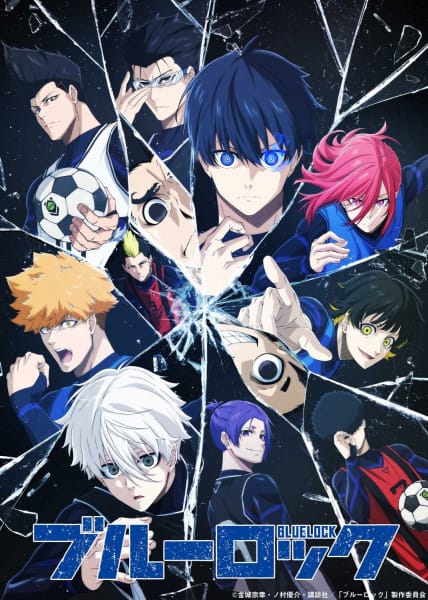
Blue Lock takes everything you expect from sports anime and inverts it. Teamwork is weakness. Individual ego is strength. The protagonist isn’t playing to have fun—he’s playing to destroy everyone else. It’s sports anime for people who find traditional sports anime naive.
The Premise
Japan’s national soccer team keeps failing. Blue Lock, a radical training program, isolates 300 strikers in a facility where only one will emerge. The goal: create the world’s most egotistical striker, because only ego drives championship-winning goals. Everyone else will be banned from the national team forever.
Inverting Sports Tropes
Ego Over Teamwork
Traditional sports anime preach teamwork. Blue Lock argues that in the moment of scoring, you’re alone with the goal. That moment requires absolute self-belief—ego. Teamwork matters only until it’s time to score; then only individual brilliance counts.
Zero-Sum Competition
Most sports anime have rivals become friends who push each other higher. Blue Lock’s rivals are obstacles to eliminate. Cooperation is temporary strategy, not relationship-building. This ruthlessness feels transgressive and refreshing.
No Heart-Warming Defeats
Losing in Blue Lock means elimination—potentially forever. There’s no “we learned something valuable in defeat.” The stakes are genuine, the consequences permanent.
Animation Quality
8bit delivered stylish animation that emphasizes speed and impact. The distinctive art style—sharp angles, bold colors, dynamic panels-to-frames adaptation—creates visual identity beyond typical sports anime.
Match Sequences
Soccer animation is difficult; Blue Lock handles it well. Ball movement tracks clearly, plays develop visually, and the “flow state” moments receive appropriate dramatic enhancement.
Character Design
Each player has distinctive appearance and movement style. You can identify characters from silhouettes—a necessity given 300 potential players.
Character Development
Isagi
The protagonist starts ordinary—talented but not exceptional. His development is psychological: learning to believe his instincts, finding his unique weapon, developing “spatial awareness” that borders on supernatural. He’s underdog who earns upgrades rather than receiving them.
Bachira
The “monster” who plays for fun provides contrast to ego-driven gameplay. His childhood loneliness and imaginary friend backstory add unexpected depth to comic-relief character.
Rin
The primary rival has genuine psychological complexity. His relationship with his brother, his perfectionism, his hatred of anything less than dominance—Rin is compelling antagonist who you might prefer to the protagonist.
Nagi
The lazy genius represents natural talent that effort can’t match. His minimal motivation contrasts everyone else’s desperation. He’s infuriating and fascinating.
The Training Structure
Blue Lock functions like battle royale: eliminations, team shuffles, ever-harder challenges. This structure creates constant stakes while rotating character focus. The facility’s mystery adds intrigue beyond games.
Mini-Games
Soccer variations (3v3, tag-based elimination, etc.) keep matches fresh. Each format tests different skills, preventing repetition while maintaining soccer core.
Psychological Focus
Blue Lock is as much psychological thriller as sports anime. Characters analyze opponents’ mental states, exploit weaknesses, and evolve through mindset changes rather than just physical training.
The “Zone”
Flow state in sports is real; Blue Lock dramatizes it as near-supernatural perception. When characters enter the zone, animation and music shift to represent altered consciousness.
Music
The OST pulses with electronic energy matching the series’ intensity. Battle music underlies soccer matches without irony—this is combat in short pants. The opening theme (“GOAL!” by Unison Square Garden) became appropriately viral.
Thematic Content
Ego as Liberation
Blue Lock argues that suppressing ego (Japanese cultural tendency) prevents excellence. Embracing selfishness isn’t moral failure but competitive necessity. This theme resonates differently across cultures.
Talent vs. Effort
Can effort overcome natural talent? Blue Lock’s answer is complex—effort matters, but certain abilities can’t be trained. This realism feels harsher than typical sports anime promises.
Criticisms
Limited Soccer Realism
Actual soccer doesn’t work like Blue Lock depicts. The “chemical reactions” and instant combination plays stretch believability. Accept the premise or bounce off it.
Character Overload
300 strikers means many are underdeveloped. Some eliminated players had potential that’s never realized. The structure necessarily sacrifices character depth for scope.
Repetitive Structure
Match-training-match rhythm can feel repetitive, particularly in weekly viewing. Binging improves pacing perception.
Verdict
8/10 – Blue Lock succeeds by committing fully to its premise. It’s not trying to be traditional sports anime—it’s deconstructing the genre while remaining entertaining. The ego philosophy might repel some viewers, but it also provides unique perspective on competition.
If you want heartwarming teamwork and lessons about friendship, look elsewhere. If you want ruthless competition with psychological depth and stylish presentation, Blue Lock delivers something rare and compelling.
You Might Also Like
- When is Denji’s Birthday? Here’s My Take on His Mystery Day
- Spy x Family vs Frieren: Wholesome Anime Battle
- Blue Lock Season 1 Complete Review