Muzan vs All Demons: Could He Beat Everyone?

Muzan Kibutsuji created every demon in existence. He is the origin point, the progenitor, the source of all demonic power. Every Upper Moon, every Lower Moon, every random demon terrorizing villages—they all trace their bloodline back to him. But could the original actually defeat all of his creations at once?
This isn’t about Muzan fighting demons one at a time. This is every demon in history ganging up on their creator simultaneously. Could Muzan survive the combined assault of his entire lineage?
Muzan Kibutsuji: Powers & Abilities
Key Abilities
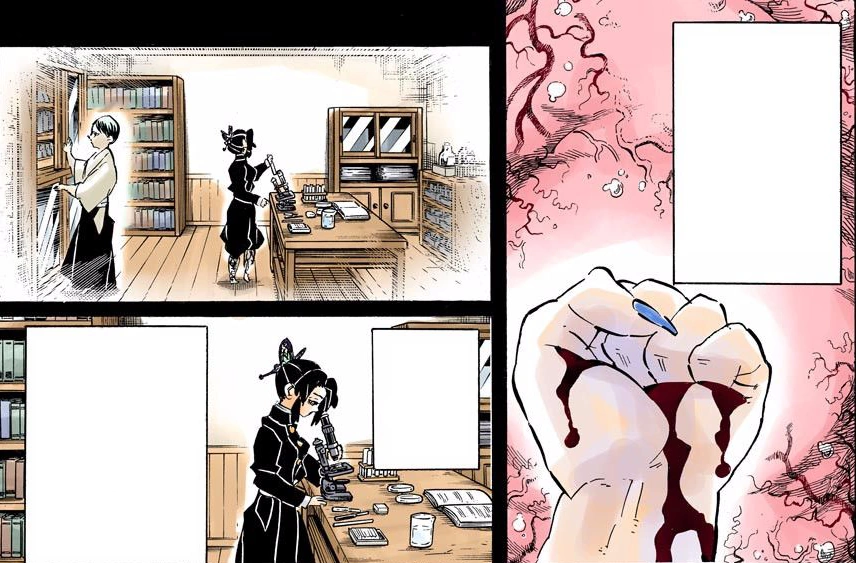
Muzan isn’t just the strongest demon—he’s fundamentally different from every other demon. While other demons derive their power from his blood, Muzan generates power intrinsically. This gap defines why other demons can’t simply absorb enough humans to reach his level.
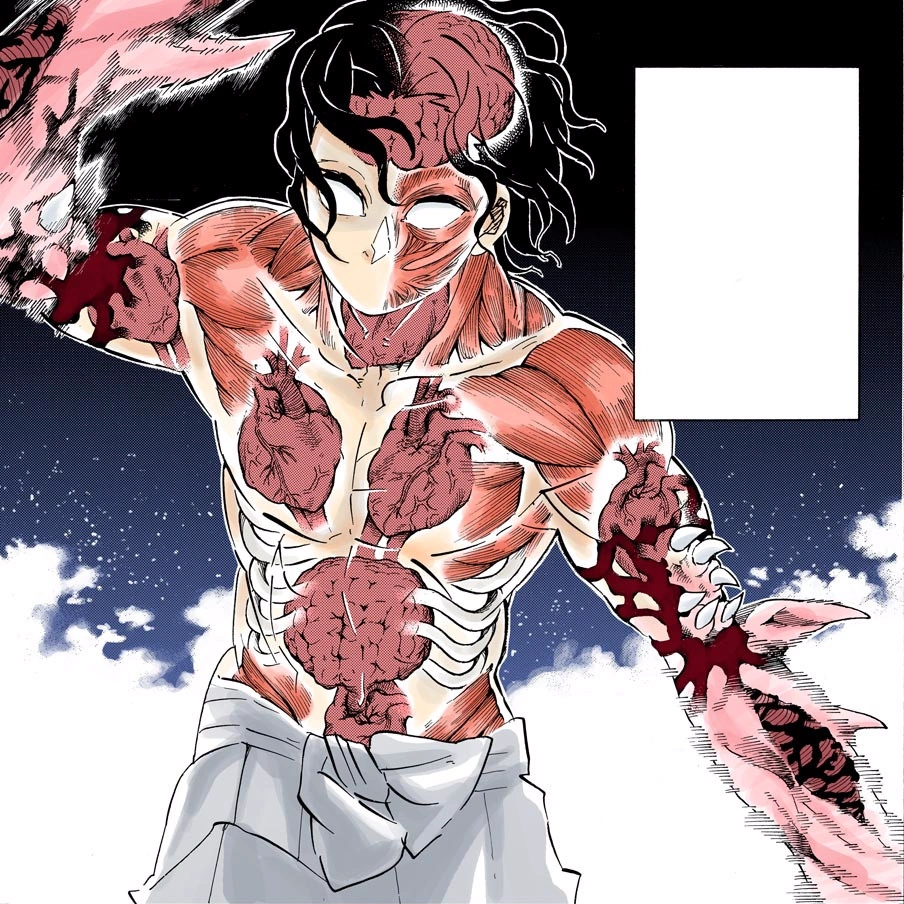
Progenitor Biology: Muzan’s cells operate differently from any other demon. He has five brains and seven hearts distributed throughout his body, making traditional vital targeting useless. Complete destruction of everything simultaneously is the only path to killing him.
Absolute Regeneration: While all demons regenerate, Muzan’s regeneration outpaces anything else shown. He reformed from decapitation, rebuilt destroyed organs instantly, and continued fighting while losing significant portions of his body.
Blood Memory Absorption: Muzan can absorb other demons, gaining their power, memories, and abilities. When he consumes a demon, their centuries of accumulated strength add to his own.
Shapeshifting Mastery: Muzan manipulates his body at cellular level, changing gender, age, and appearance at will. In combat, this translates to forming additional limbs, weapons, and attacking appendages from any point on his body.
Combat Forms: His fighting form extends multiple whip-like tendrils from his body, each striking independently and faster than most Hashira can track. The attack density is overwhelming—opponents face dozens of simultaneous strikes from every direction.
Demon King Authority: Muzan’s blood in other demons allows him limited control. He can destroy demons remotely, read their minds, and influence their actions. While combat negates some control, this connection provides battlefield intelligence.
Anti-Wisteria Adaptation: By the final battle, Muzan had partially adapted to Wisteria’s effects, reducing its paralytic capability. This adaptation demonstrates his continuous evolution.
Best Feats
- Created the entire demon species spanning over a thousand years
- Killed Lower Moons 2-5 casually when they displeased him
- Fought all active Hashira plus Tanjiro simultaneously
- Regenerated from multiple simultaneous Nichirin blade wounds
- Resisted red Nichirin blade effects through sheer regeneration speed
- Nearly achieved immunity to sunlight in his final moments
- His blood alone transforms humans into Upper Moon-level threats
All Demons Combined: Powers & Abilities
Upper Moon One: Kokushibo
The strongest Upper Moon and second-strongest demon overall. Moon Breathing generates dozens of crescent blades with each swing. His Transparent World sees through opponents’ bodies. Most critically, he was a demon for over 400 years—the longest surviving non-Muzan demon.
Upper Moon Two: Doma
Ice manipulation that freezes opponents’ lungs mid-breath. He can create ice clones, ice Bodhisattvas, and area-effect freezing mist. His cold personality hides the third-strongest demon.
Upper Moon Three: Akaza
Compass Needle detects fighting spirit, making ambush impossible. Destructive Death combat style delivers explosive punches. His regeneration speed ranks among the fastest of any Upper Moon.
Upper Moon Four: Nakime
Infinity Castle manipulation warps space itself, allowing teleportation and battlefield control. An unusual ability but devastatingly useful in group combat.
Upper Moons Five and Six
Gyokko’s pot dimension creation and artistic “blood demon art.” Gyutaro/Daki’s paired combat with sickles and sashes. Supporting firepower.
Former Upper Moons
Kaigaku (Thunder Breathing demon), Hantengu’s emotion clones (cumulative power when combined), and every predecessor Upper Moon from the past millennium.
Lower Moons and Common Demons
Thousands upon thousands of demons spanning Muzan’s entire existence. Each individually weak but representing overwhelming numbers.
Battle Analysis
Speed
Muzan’s combat speed overwhelmed multiple Hashira simultaneously. His tendril attacks strike from every angle faster than master swordsmen can defend.
The Army’s fastest member is Kokushibo, who matched multiple Hashira while barely trying. Akaza’s combat speed also competes at the highest levels.
Edge: Muzan (individual), Demons (collective) — One-on-one, Muzan is faster. But the army attacks from every direction simultaneously, negating pure speed advantage.
Power
Muzan’s raw output is the highest of any demon. His attacks carry killing force against even Hashira-level opponents. Each tendril hit is potentially fatal.
The Army brings devastating variety. Kokushibo’s Moon Breathing fills space with blades. Doma’s ice restricts movement. Akaza’s Destructive Death punches land with explosive force. Combined, their power output potentially exceeds Muzan’s.
Edge: Demons (Collective) — The combination of six Upper Moon-level Blood Demon Arts represents firepower Muzan can’t match alone, especially since he can’t use absorbed abilities instantly.
Durability
Muzan has five brains and seven hearts, requires total destruction to kill, and regenerates faster than any other demon. Without sunlight or special circumstances, he’s functionally immortal.
The Army has standard demon regeneration—impressive but not Muzan-level. However, numbers matter. Losing demons doesn’t eliminate the army; their distributed existence means no single attack clears them.
Edge: Muzan — Individual durability heavily favors Muzan. His distributed vital points make killing him nearly impossible for other demons.
Hax/Special Abilities
Muzan can absorb demons, gaining their power. His cellular authority can theoretically affect any demon containing his blood. If he can touch and absorb them faster than they damage him, he wins eventually.
The Army brings Nakime’s spatial manipulation (which could separate Muzan from recovery time), Doma’s lung-freezing ice (which Muzan’s demon biology might still require), and Kokushibo’s Transparent World for targeting Muzan’s distributed organs.
Edge: Situational — Muzan’s absorption is the ultimate win condition, but preventing it through Nakime’s teleportation and concentrated assault could deny it.
The Verdict: Could Muzan Beat Everyone?

Yes—but it would take time, and it’s closer than you’d expect.
The straightforward expectation is that the demon who created all others obviously wins. His blood flows through every opponent. His power dwarfs any individual. He’s had over a thousand years to grow stronger than any challenger.
But this isn’t a tournament. This is every demon attacking simultaneously.
Here’s what makes it competitive: Muzan fights at one time, one place. The demons number in the thousands. While individually insignificant, Lower Moons and common demons serve as distractions, absorbing attacks that could target Upper Moons. The fodder demons force Muzan to waste effort.
Meanwhile, the Upper Moons coordinate their Blood Demon Arts:
- Nakime warps space to deny Muzan positioning advantages
- Doma floods the area with freezing mist to slow regeneration
- Kokushibo engages directly, his Moon Breathing filling space with crescent blades
- Akaza watches for openings with Compass Needle
This combination troubles even Muzan. His regeneration is incredible, but regenerating while simultaneously fighting six specialized Blood Demon Arts taxes even his reserves.
However, here’s why Muzan still wins:
Absorption ends the fight. Every demon Muzan absorbs strengthens him and weakens the army. Unlike fighting Demon Slayers who die permanently, fighting demons gives Muzan resources. He might take significant damage initially, but each Upper Moon he consumes dramatically shifts the balance.
The demons can’t kill him. Without sunlight or Nichirin blades, demons can’t actually destroy Muzan permanently. They can damage him endlessly, but he regenerates. Eventually, he recovers faster than they deal damage.
His blood control matters. While combat limits his authority, Muzan can still interfere with demons psychologically. He created their very existence—that connection doesn’t disappear.
The fight looks like this: initial overwhelming assault deals significant damage to Muzan. He loses several brains and hearts. But he can’t die. He regenerates. He absorbs weakened demons. Each absorption makes subsequent absorptions easier. The tide turns. Upper Moons fall one by one. Eventually, only Kokushibo remains, and even he can’t solo Muzan.
Winner: Muzan Kibutsuji (Extreme Difficulty)
The Demon King remains king. But this theoretical fight reveals why the Demon Slayer Corps strategy of sunlight exposure was the only viable path—without it, even impossible odds merely delay Muzan.
Related: Upper Moon Ranking: Who’s Actually Strongest?, How Tanjiro Beat Muzan: Full Breakdown, Demon Slayer Power Scaling Explained
You Might Also Like
- Demon Slayer Corps Power Ranking 2026: Every Hashira and Slayer Ranked
- Demon Slayer Corps Power Ranking 2026: Every Hashira and Slayer Ranked
- Top 15 Strongest Anime Characters in 2026 (Updated Rankings)