A Cancelled Manga’s Revenge: Why Black Torch Anime Is the Comeback Story of 2026
Some anime announcements make you nod. Others make you leap out of your chair. When the Black Torch anime was confirmed for Summer 2026, an entire corner of the fandom lost its mind — and for good reason. This isn’t just another seasonal debut. This is a manga that Shonen Jump cancelled eight years ago, now roaring back with a full production from 100studio, a stacked voice cast, and a Crunchyroll simulcast. That doesn’t happen. Except, somehow, it’s happening.
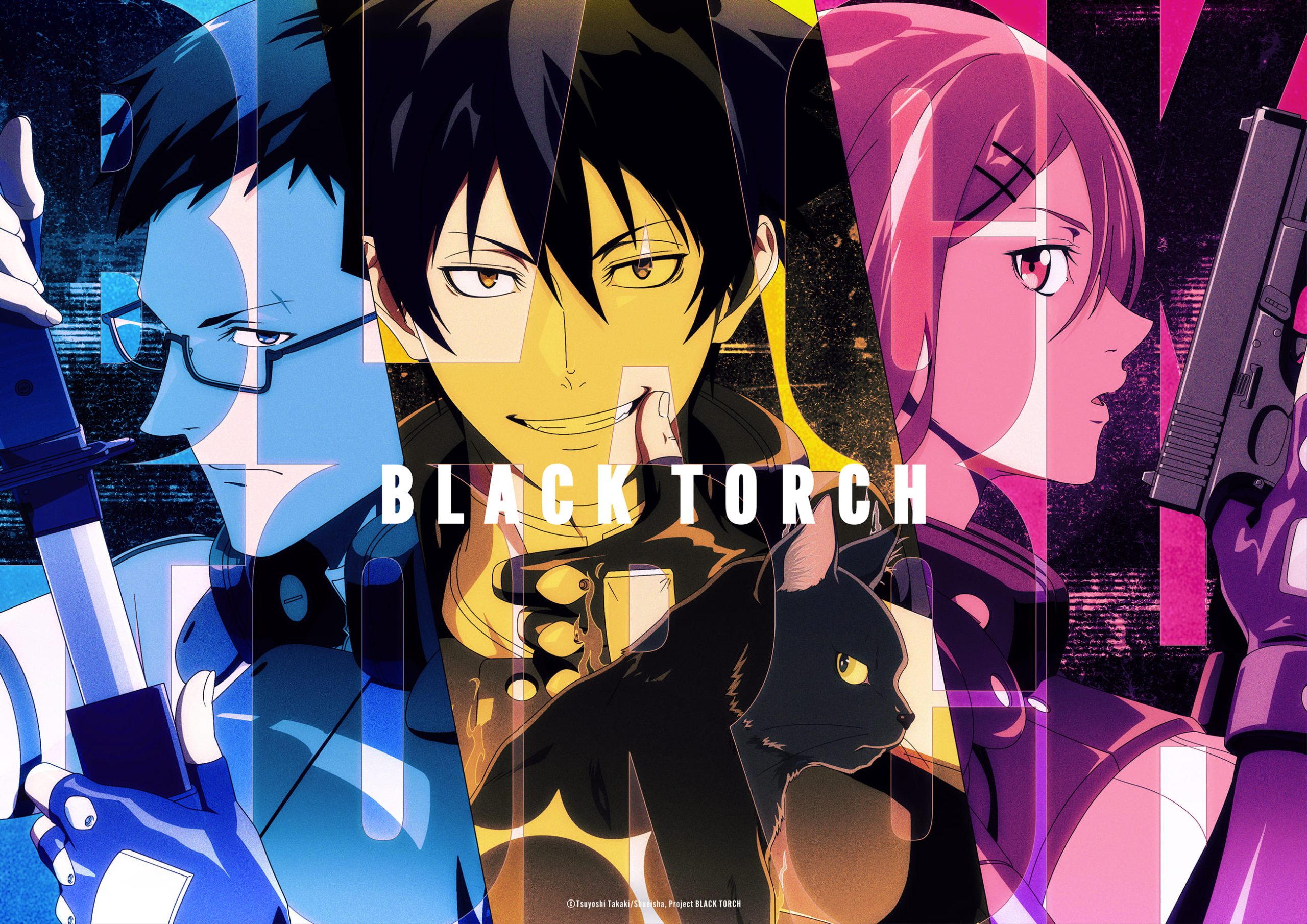
Tsuyoshi Takaki’s Black Torch ran for barely a year and a half across Jump Square and Shonen Jump+ before the axe fell in mid-2018. Five volumes. That’s it. Most cancelled manga fade into obscurity, remembered only by the handful of readers who stuck around. But the Black Torch anime adaptation — premiering July 4, 2026, on Tokyo MX — is about to change that narrative completely.
If you’re not already tracking this show, you need to start. The Summer 2026 anime season is absolutely loaded, but Black Torch stands apart because of what it represents: proof that a cancelled manga can claw its way back.
The Impossible Revival: How a Cancelled Shonen Jump Manga Got Its Anime
Let’s be real about how rare this is. Shonen Jump has cancelled hundreds of manga over its decades-long history. The vast majority of those series disappear forever. No anime. No reprints. No second chance. The magazine moves on, readers move on, and the creator starts their next project. That’s the brutal reality of the industry’s most competitive editorial platform.
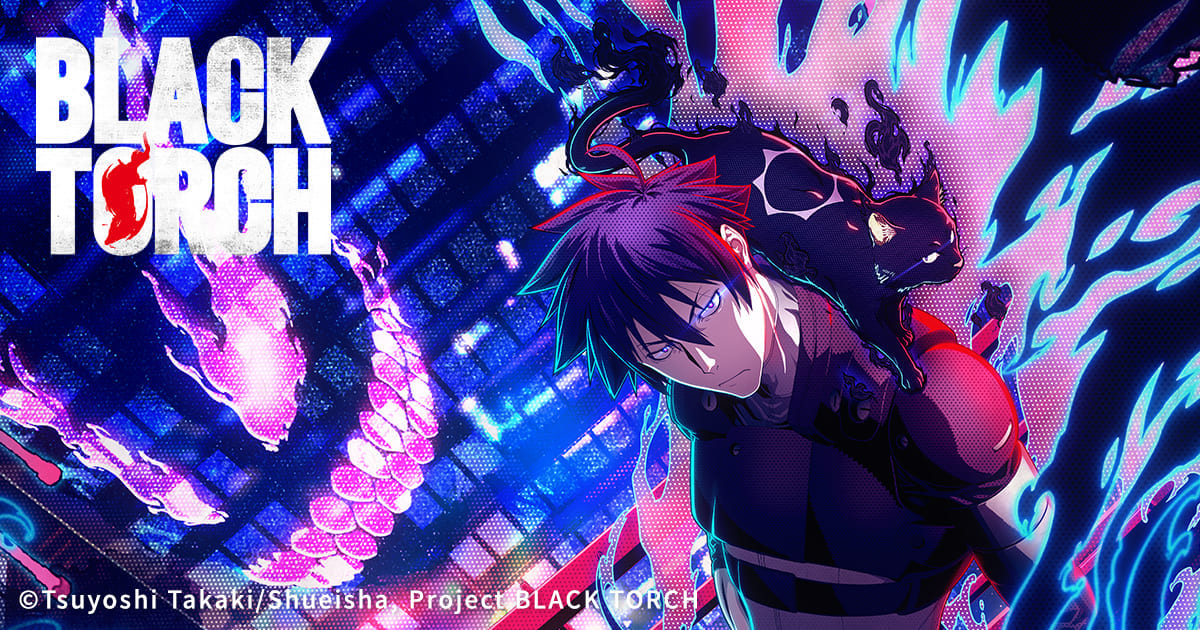
Black Torch followed that familiar trajectory at first. Takaki’s series launched in Jump Square in December 2016 with genuine buzz — a ninja protagonist who communicates with animals, fused with a snarky mononoke cat spirit, fighting for a shadowy government bureau. The premise had teeth. The art was explosive. But Jump Square’s readership didn’t sustain the serialization, and after moving to Shonen Jump+ for its final chapters, Black Torch ended in July 2018 with just five volumes to its name.
That should have been the end. For six years, it basically was. Viz Media completed the English release in 2019, and the fandom shrank to a devoted few who kept recommending those five volumes on Twitter and Reddit threads, hoping against hope for an anime that would never come.
Then the announcement hit. The Black Torch anime was real. Not a web short. Not a one-episode OVA. A full television series with a legitimate studio, a veteran director, and Crunchyroll backing. For anyone who’s ever loved a cancelled manga, this is the dream scenario — and it’s worth understanding exactly why it matters.
The answer lies in a shift that’s been building across the anime industry. As we explored in our piece on the shonen anime revolution toward shorter seasons, studios are increasingly treating single-cour adaptations as a valid endpoint rather than a failure. Five volumes of manga is the perfect amount of material for a tight, complete 12-to-13-episode season. Black Torch didn’t get an anime despite being short — it got an anime because it’s short.
Jiro Azuma and Rago: The Duo That Deserves the Spotlight
At the heart of the Black Torch anime is a relationship that Takaki wrote better than most shonen manage in triple the chapters. Jiro Azuma isn’t your standard hot-headed protagonist. He’s a ninja-trained teenager raised by his grandfather in the old ways — disciplined, loyal, and carrying the unusual ability to speak with animals. He’s not loud for the sake of being loud. He’s determined because everything he’s been taught tells him to protect what matters.
And then there’s Rago. A mononoke — an evil spirit — in the shape of a cat, who’s been sealed away for centuries until Jiro accidentally frees him. Rago is arrogant, dismissive, and absolutely convinced that humans are inferior. He’s the kind of spirit who’d eat you as soon as look at you, and he makes no secret of it.
What makes their dynamic sing is the catalyst that binds them. When a hostile mononoke attacks, Jiro dies protecting Rago. Not out of strategy. Not out of duty. Out of sheer, stubborn conviction that even a so-called evil spirit deserves to live. Rago, confronted with a human who sacrificed himself for him, does the one thing mononoke aren’t supposed to do: he revives Jiro by fusing his own spirit with the boy’s body.
From that moment, Jiro and Rago are stuck together — literally sharing a body and bickering through every fight. It’s a setup that echoes the best partnerships in anime history: the reluctant bond that deepens into genuine trust. Think Yusuke and Kuwabara’s rivalry, or Naruto and Kurama’s evolution from hatred to partnership, but compressed into a tighter, faster arc because Black Torch doesn’t have 700 chapters to get there.
The Black Torch anime has a chance to let this relationship breathe in ways the manga couldn’t always afford to. Voice acting adds texture — the difference between reading Rago’s sarcastic quips and hearing them delivered with proper timing is massive. Animation lets their fights flow with the choreographic weight Takaki’s panels always implied but could only show in frozen instants.
Together, Jiro and Rago join the Bureau of Espionage, a secret government organization that hunts mononoke threats. The Bureau gives the story its structure — missions, teammates, escalating enemies — but it’s the Jiro-Rago bond that gives it a soul. And that soul is exactly what could make the Black Torch anime one of the most emotionally resonant shows of the year.
100studio and the Art of Bringing Takaki’s Vision to Life
When the Black Torch anime was announced with 100studio as the production house, reactions were mixed — and honestly, that’s fair. 100studio is a relatively new player in the anime industry. They don’t have the decades-long track record of a Bones or a Madhouse. But dismissing them based on age alone would miss what makes this partnership exciting.
What 100studio does have is ambition and a clear creative direction. The studio’s leadership has talked about prioritizing dynamic action choreography and bold visual storytelling — exactly what a ninja anime fused with supernatural elements demands. Takaki’s manga art is kinetic, full of impact frames and aggressive line work that screams across every page. Translating that energy to animation requires a studio willing to take risks, not one playing it safe with a house style.
The director, Kei Umabiki, brings experience that matters for a series like this. Action-heavy, emotionally grounded, with a central partnership that needs to feel authentic from episode one — that’s a specific skill set. Umabiki understands that the fights in Black Torch aren’t just spectacle. Every clash between Jiro and a mononoke is also a test of the bond he shares with Rago. The animation has to sell both the physical impact and the emotional weight simultaneously.
Then there’s the music. Yutaka Yamada handling the score is a massive get. Yamada’s work on series like Tokyo Ghoul and Vinland Saga proved he can craft soundscapes that amplify tension and emotion without overwhelming the visuals. His style — moody, percussive, willing to go quiet when the scene demands it — fits a show where ninja combat meets spiritual horror. The Black Torch anime having Yamada on music signals that 100studio isn’t cutting corners on any department.
Writer Gigaemon Ichikawa rounding out the core creative team brings a different kind of reassurance. Adapting a five-volume manga into a single season means every episode has to count — there’s no room for filler or meandering side plots that bloat longer adaptations. Ichikawa’s job is to make sure the pacing is tight, the character beats land, and the story reaches a satisfying conclusion within its runtime. It’s a challenge, but it’s also exactly the kind of focused storytelling that shorter adaptations do best.
The production’s ambition is clear in the staff choices. This isn’t a throwaway adaptation of a cancelled manga. The Black Torch anime has a team that treats this material like it deserves — and that’s the most encouraging sign possible.
The Voice Cast: Stacked From Top to Bottom
If you want to know how seriously a production is taking its source material, look at the cast. The Black Torch anime voice actor lineup reads like an all-star roster, and every choice tells you something about what the show is prioritizing.
Ryota Suzuki as Jiro Azuma is inspired casting. Suzuki has built a reputation for bringing warmth and intensity to characters who carry more weight than they show on the surface — exactly what Jiro needs. This is a protagonist whose strength comes from conviction, not bluster, and Suzuki’s voice has the range to sell both the quiet moments with his animal companions and the explosive combat sequences.
Yoji Ueda as Rago is a masterclass in character-actor matching. Rago needs to be arrogant, ancient, funny, and unexpectedly moving — sometimes within the same scene. Ueda’s career is built on precisely that kind of layered performance. When Rago dismisses humans as inferior, Ueda will make it sting. When Rago grudgingly starts to care about Jiro, Ueda will make you feel it.
The supporting cast doesn’t slack either. Sayaka Senbongi as Ichika brings the sharp-edged competence the Bureau of Espionage’s field agents require. Junya Enoki — fresh off his role as Yuji Itadori in Jujutsu Kaisen — as Reiji guarantees that even the side characters will have presence. Reina Ueda as Hana, Junichi Suwabe as Ryosuke, Nobuhiko Okamoto as Koga, and Toshiyuki Morikawa as Amagi round out a cast that could headline their own shows.
The English dub isn’t an afterthought either. A.J. Beckles leading as Jiro and Keith Silverstein — one of the most versatile voice actors working in anime dubbing today — as Rago gives the Black Torch anime an English version that matches the Japanese production’s ambition. Erin Yvette as Ichika and Kyle McCarley as Reiji complete a dub cast that takes this adaptation as seriously as the original.
This level of casting isn’t random. Studios don’t assemble rosters like this for shows they expect to fail. Every name attached to the Black Torch anime signals the same thing: this production believes in this material, and they’re putting the resources behind it to make sure audiences believe too.
Five Volumes, One Perfect Season: Why Less Is More
Here’s the thing about the Black Torch anime that most coverage won’t emphasize enough: five volumes of source material isn’t a weakness. It might be the show’s greatest strength.
The anime industry has spent decades trapped in a model where only long-running series were considered successful. If a show didn’t hit 50 episodes, it was a disappointment. If it didn’t run for years, it didn’t matter. That model produced plenty of great anime, but it also produced an ocean of filler arcs, stretched-out pacing, and adaptations that caught up to their manga and had to invent endings out of thin air.
Black Torch doesn’t have any of those problems. Five volumes of completed story means the writers know exactly where they’re going. There’s no need for anime-original filler. No need to stretch a single fight across three episodes. No need to end on a cliffhanger that the manga hasn’t resolved yet. The Black Torch anime can tell a complete story from beginning to end, and that’s something most shonen adaptations can’t promise.
This is the model that’s reshaping how the industry approaches adaptations, and it’s why we’re seeing more shorter, tighter seasons. As our analysis of Gachiakuta as 2026’s next big shonen anime explored, the advantage of adapting a finished or near-finished manga is enormous. You get coherent pacing, satisfying conclusions, and a viewing experience that respects the audience’s time.
For Black Torch specifically, five volumes is enough to introduce Jiro’s world, establish the Jiro-Rago bond, develop the Bureau of Espionage team, escalate the mononoke threat, and deliver a climactic confrontation that resolves the core story — all within 12 or 13 episodes. The manga doesn’t overstay its welcome, and the anime won’t either.
Think about the shows that left the biggest marks in recent years. Mob Psycho 100 — three tight seasons, no filler, complete story. Dorohedoro — one season that adapted its source with surgical precision and is now heading into its final arc with Season 3 confirmed. The Black Torch anime is positioned to follow that same path: respect the source, tell the complete story, and leave audiences wanting more rather than wishing it had ended sooner.
The 2026 Shonen Landscape: Where Black Torch Fits
Summer 2026 is shaping up to be a ridiculous season for shonen anime. You’ve got Bleach: TYBW Part 4 delivering the anime finale of a generation, Ghost in the Shell getting the Science SARU treatment, and Kill Blue proving that Spring 2026’s wildest shonen has legs into summer. It’s a crowded field.
So where does the Black Torch anime fit in this lineup? It occupies a specific niche that none of these other shows fill: the underdog comeback story. Bleach is finishing what it started. Ghost in the Shell is reinventing a franchise. Kill Blue is riding its own momentum. Black Torch is the show that shouldn’t exist — and does.
That narrative isn’t just marketing. It’s baked into the DNA of what makes Black Torch compelling. The manga was cancelled. The fandom was small but passionate. Eight years passed. And now, against all industry logic, it’s getting a high-quality anime adaptation with real production values and serious talent behind it. In a season full of expected hits, the Black Torch anime is the unexpected one — and unexpected hits often hit hardest.
Thematically, Black Torch also fills a gap in the current shonen scene. We’re in an era of power-fantasy protagonists and world-ending stakes. Jiro Azuma is a different breed. His power comes from sacrifice — literally dying to protect someone, then sharing his body with a spirit who’d rather consume him. His fights aren’t about becoming the strongest. They’re about protecting what matters with what you have. That’s a refreshing counterpoint to the escalation-heavy storytelling that dominates so much of modern shonen.
The ninja-meets-supernatural angle also carves out its own space. My Hero Academia’s final season explored hero society. Jujutsu Kaisen mapped cursed energy systems. Black Torch operates in the space between — where ninja tradition meets mononoke horror, and the Bureau of Espionage represents humanity’s fragile organized resistance against supernatural threats. It’s familiar enough to welcome new viewers and distinct enough to stand out.
The Cancelled Manga Club: Why Black Torch’s Second Chance Matters for the Industry
Zoom out from Black Torch itself for a second and look at the bigger picture. The anime industry has a cancellation problem — not in terms of production, but in terms of what gets adapted. The overwhelming majority of anime adaptations come from manga that are either ongoing hits or recently completed successes. Series that were cancelled mid-run almost never get picked up.
This creates a self-reinforcing cycle. A manga gets cancelled because it doesn’t have enough readers. No anime gets made because the manga was cancelled. No new readers discover the series because there’s no anime to bring them in. The series stays dead. The fans who loved it stay heartbroken. The creator moves on to their next project, and the industry loses whatever potential that story had.
The Black Torch anime breaks that cycle. If it succeeds — and every indicator suggests it will — it proves that cancelled manga can have second lives. It proves that a passionate fanbase, even a small one, can matter. It proves that five volumes of exceptional storytelling can be worth adapting even without the commercial validation of a long-running serialization.
This isn’t just about one show. It’s about what success for the Black Torch anime could represent for every cancelled manga that deserves another look. Double Arts. Hard-Boiled Cop and Dolphin. Red Hood. Dozens of series that showed brilliance in their short runs and then vanished. If Black Torch opens the door for even a fraction of those to get reconsidered, the impact extends far beyond one season of television.
The streaming economics support this shift, too. Crunchyroll doesn’t need Black Torch to run for 100 episodes. They need content that attracts viewers, generates buzz, and fills their catalog with diverse stories. A 12-episode adaptation of a cancelled manga with a built-in passionate niche and a compelling underdog narrative? That’s exactly the kind of smart, targeted content investment that modern streaming enables.
Takaki’s series deserved better than its cancellation the first time around. The Black Torch anime is the chance to make that right — and if the industry is paying attention, it won’t be the last cancelled manga to get this opportunity.
The Bureau of Espionage and the World of Mononoke
Beyond Jiro and Rago’s partnership, the Black Torch anime has a world that deserves attention. The Bureau of Espionage is Black Torch’s answer to the supernatural organization trope, and it’s more interesting than it first appears.
On the surface, the Bureau seems familiar — a secret government agency that deals with supernatural threats, staffed by agents with their own abilities and agendas. But Takaki’s version has texture that elevates it beyond the template. The Bureau operates in a space where traditional ninja clans still exist, where mononoke are treated as both enemies and sources of power, and where the line between protecting humanity and exploiting supernatural forces is dangerously thin.
Ichika, Reiji, Hana, Ryosuke, Koga, and Amagi aren’t just teammates filling out a roster. Each of them represents a different approach to the Bureau’s mission. Some believe in the cause. Some are there because they have nowhere else to go. Some have relationships with mononoke that complicate the Bureau’s human-first mandate. The Black Torch anime doesn’t have 50 episodes to explore all of these dynamics, but the focused runtime means it can hit the most important beats without meandering.
The mononoke themselves deserve mention too. In Black Torch’s mythology, mononoke aren’t a monolithic category of evil spirits. They have hierarchies, histories, and motivations. Rago is our entry point into their world, and his presence inside Jiro creates a bridge that most Bureau agents don’t have — direct, constant access to a mononoke perspective. It’s a setup that lets the show explore whether the Bureau’s “destroy all mononoke” policy is as clear-cut as it seems.
This thematic depth — the questioning of easy categories, the idea that the enemy might be more complex than the official line suggests — gives the Black Torch anime weight beyond its action sequences. It’s the kind of storytelling that rewards paying attention, and it’s why those five volumes have such a devoted following despite the manga’s short run.
What the Trailers and Promos Are Telling Us
The marketing for the Black Torch anime has been surprisingly substantial for a show adapting a cancelled manga. The official website at blacktorch-anime.com has been steadily releasing character designs, key visuals, and cast announcements that build confidence with every update.
The character designs deserve particular attention. Takaki’s manga style is distinctive — sharp angles, heavy shadows, a sense of weight in every panel. Translating that to animation without losing the character’s identity is one of the hardest things an adaptation can do, and the revealed designs suggest 100studio is threading that needle. Jiro looks like Jiro. Rago looks like Rago. The designs aren’t smoothed out into generic anime aesthetics. They retain the edge that made the manga’s art stand out.
The key visuals have also been strategic. Rather than showing everything at once, the marketing has focused on the Jiro-Rago dynamic — their partnership, their conflict, the visual of a boy and a spirit sharing one body. It’s the right choice. That relationship is the show’s emotional core, and centering it in the promotional material tells potential viewers exactly what they’re signing up for.
Viz Media’s involvement is another positive signal. They published all five volumes of the manga in English between 2018 and 2019, and their licensing of the anime for Western distribution means the Black Torch anime will be accessible to the audience that’s been waiting for it longest. No region-locked streaming, no months-long delay between Japanese and English releases. Simulcast on Crunchyroll, dubbed in English with a cast that matches the Japanese production’s quality.
Every piece of the rollout — from the staff announcements to the casting to the streaming partnership — communicates the same message: this is a real production with real resources behind it. The Black Torch anime isn’t a footnote. It’s a priority.
Why You Should Watch Black Torch This Summer
Let’s cut through the analysis and get to the point. The Black Torch anime is the show this summer that has the most to prove and the most to gain. It’s not the biggest franchise. It’s not the most anticipated sequel. It’s not the adaptation of a manga everyone already knows. It’s the underdog — the cancelled series that refused to stay dead, the five-volume story that’s getting the production it always deserved.
Watch it because the Jiro-Rago dynamic is the kind of character partnership that anime does better than any other medium. Watch it because Tsuyoshi Takaki’s art deserves to be in motion. Watch it because 100studio and Kei Umabiki and Yutaka Yamada are treating this material with the respect it’s earned. Watch it because the voice cast — in both Japanese and English — is stacked with talent that will make every scene hit harder.
But most of all, watch the Black Torch anime because of what it represents. Every season, we get adaptations of manga that were already guaranteed successes. We get sequels to shows that everyone knew would continue. We get the safe bets, the proven properties, the things that make financial sense on paper before anyone even starts production.
Black Torch is different. This is a show that exists because someone believed a cancelled manga deserved another chance. It exists because the fans who kept those five volumes alive for eight years were loud enough to matter. It exists because the anime industry is finally starting to recognize that great stories don’t stop being great just because their serialization ended early.
July 4, 2026. Tokyo MX. Crunchyroll simulcast. The Black Torch anime arrives, and it arrives with something to prove. Don’t sleep on it.
You Might Also Enjoy
If the Black Torch anime has you hyped for more shonen action and underdog stories, check these out:
- Gachiakuta: The Next Big Shonen Anime of 2026 — Another manga-to-anime adaptation bringing fresh energy to the shonen space this year.
- Summer 2026 Anime Preview: The Best Shows on Your Watchlist — Your complete guide to the stacked summer season, including where Black Torch fits.
- The Shonen Anime Revolution: Why Shorter Seasons Are Winning — Deep dive into why five volumes might be the perfect manga length for a complete anime.
- Dorohedoro Season 3 Confirmed: MAPPA’s Final Arc — Another shorter-series success story proving that tight storytelling beats endless filler.
- The Bell Curve: How My Hero Academia’s Final Season Went From Beloved to Hated to Anime of the Year — A look at how fan-favorite shonen can surprise you when the stakes get real.