Every anime community eventually arrives at this exact conversation. Someone drops a casual “just started FMA, which version should I watch?” and suddenly the thread has 400 replies. The fullmetal alchemist brotherhood vs 2003 debate is one of the most passionate, enduring arguments in all of anime fandom — and honestly? It deserves to be. Both shows are legitimately excellent. Both follow Edward Elric and Alphonse Elric, two brothers who attempted human transmutation, paid an unimaginable price, and set out to reclaim what was taken from them. But from roughly episode 25 onward, these two series become completely different stories with different villains, different philosophies, and radically different endings. One is ranked #1 on MyAnimeList. The other is a darker, more melancholic take that many veterans swear by. This guide is going to settle — or at least productively complicate — the fullmetal alchemist brotherhood vs 2003 question once and for all.
The Quick Answer: Which Should New Fans Watch First?
If you’re brand new to the franchise, watch FMA Brotherhood first. Full stop. Fullmetal Alchemist: Brotherhood (2009) is the complete adaptation of Hiromu Arakawa‘s manga, it’s the story she intended to tell, and it’s the version that earned the #1 ranking on MyAnimeList — a position it’s held for years. It has a better-developed second half, a more satisfying villain, and one of the most emotionally complete finales in shounen history. For anyone using our beginner’s guide to anime, Brotherhood is the obvious entry point into the FMA universe.

But here’s where the fullmetal alchemist brotherhood vs 2003 conversation gets genuinely interesting: watching only Brotherhood means you’re missing something real. FMA 2003 is not a failed adaptation or a lesser version — it’s an alternate universe story that goes to places the manga never did, explores themes Brotherhood doesn’t fully touch, and features some of the most gut-punching emotional moments in either series. The smart play, especially if you love this franchise, is to watch both. Just watch them in the right order.
The short version: Brotherhood first, 2003 second. Now let’s get into why.
Fullmetal Alchemist 2003: What It Got Right
FMA 2003 came out before Hiromu Arakawa‘s manga was finished. The production team at BONES animation worked closely with Arakawa to build a story using the established characters and setting, but ultimately going in a completely original direction. The result is darker, slower, and more grounded than Brotherhood — and for a specific type of viewer, it hits harder.
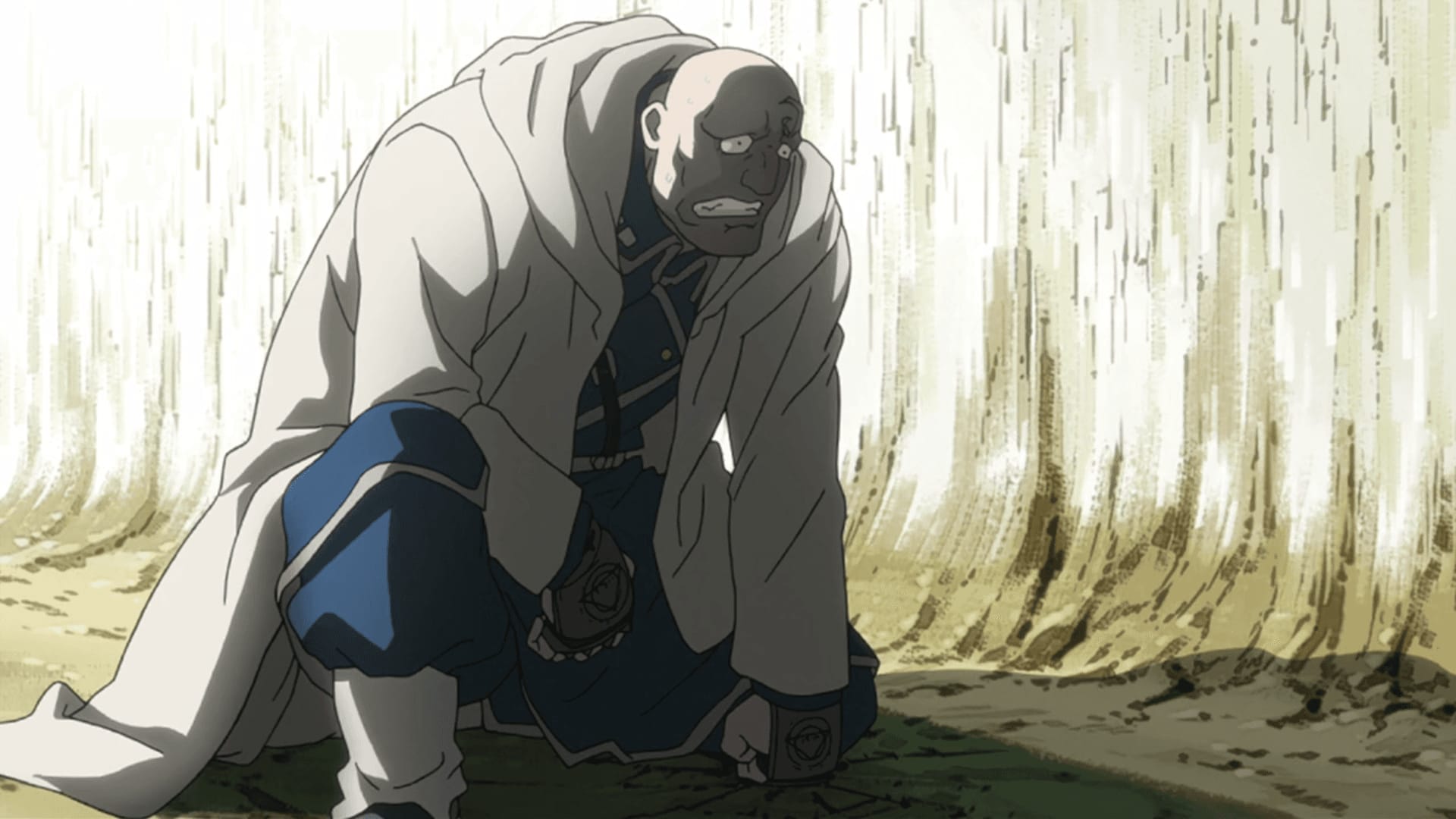
The tone in 2003 is relentlessly bleak. The world feels grimier. The consequences feel heavier. When something terrible happens to a character, the show doesn’t rush past it — it sits in the aftermath and lets you feel it. The Ishvalan War sequences in 2003, while shorter in screen time than Brotherhood’s version, carry an almost unbearable weight because of how the show has been conditioning you emotionally. Roy Mustang‘s guilt isn’t just backstory in 2003 — it’s a wound that actively shapes every scene he’s in.
Hohenheim is one of the biggest differentiators between the two series. In 2003, he’s a tragic, essentially condemned figure — a man who’s been alive for centuries, watching everyone he loves die, carrying guilt that has hollowed him out. He’s not a hero. He’s barely a father. That version of Hohenheim is genuinely affecting in a way that’s different from Brotherhood’s take. Neither is better, they’re just telling very different stories about what it means to be immortal and absent.
The Homunculi in 2003 are also completely unique. Their origins are tied directly to failed human transmutations — they are, essentially, what happens when a soul tries to come back and gets it wrong. Each Homunculus has a specific connection to a person who was lost. This gives them a tragic dimension that Brotherhood’s Homunculi don’t have. Pride, Lust, Greed — they’re all different characters in 2003, with different motivations rooted in their origins rather than in a philosophical agenda.
The original ending is divisive. It’s bleak, it’s strange, and it wraps up in a feature film (Conqueror of Shamballa) that takes the story in a direction no one expected. Some fans love it for that audacity. Others find it unsatisfying. But it’s undeniably a complete artistic vision — just not the one Arakawa had in mind.
Fullmetal Alchemist Brotherhood: Why It’s #1 on MAL
When you’re comparing fullmetal alchemist brotherhood vs 2003, the first thing to understand about Brotherhood is that it’s not a reboot made because 2003 was bad. It was made because the manga had finally finished and the story could be told completely. FMA Brotherhood is Hiromu Arakawa‘s actual vision — every plot point, every character arc, every thematic conclusion — adapted faithfully and with significant production resources behind it.
The second half of Brotherhood is where it separates from every other shounen series of its era. Think about how a lot of long-running anime go: arcs drag, filler breaks momentum, the finale feels rushed. Brotherhood has none of that. From the Xerxes flashback onward, it’s almost relentless — escalating stakes, expanding cast, every plot thread moving toward a single convergence. The pacing in the second half is what puts it in the conversation with the greatest anime ever made.
The additions Brotherhood gets to make — characters who barely appear in 2003 — are massive. Ling Yao, the Xingese prince hunting for immortality for his clan, adds a whole new energy to the cast. His dynamic with Edward Elric is one of the best friendships in the series. His arc with Greed — which Brotherhood handles completely differently from 2003 — is one of the most emotionally satisfying payoffs in the entire run.
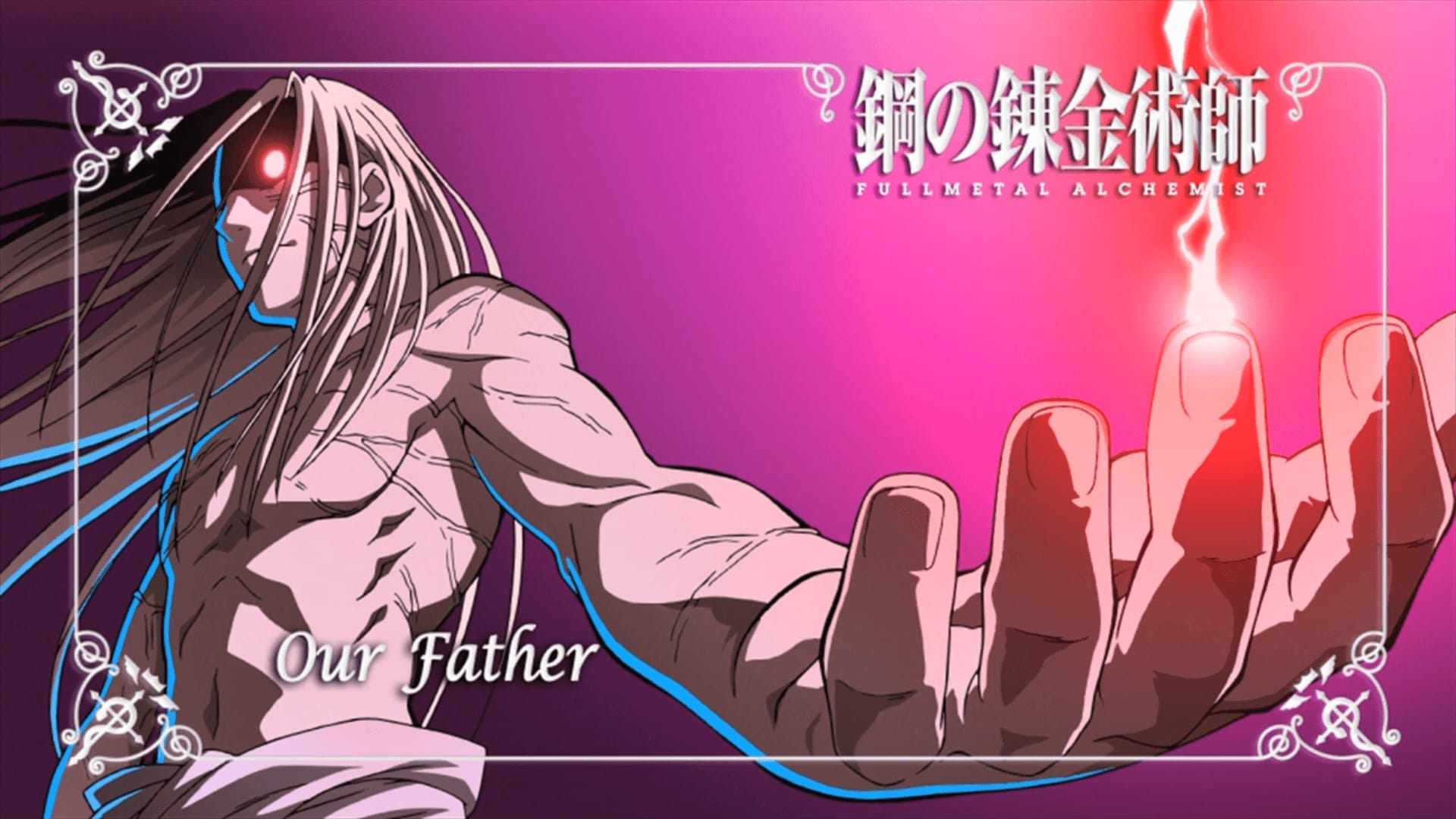
And then there’s Father. The main antagonist in Brotherhood is philosophically the opposite of everything Edward and Alphonse represent. Where they’re trying to regain their humanity, Father is trying to shed his. He wants to become something beyond human, beyond God. As a villain, he’s terrifying in a conceptual way that Dante — the 2003 antagonist — isn’t. Dante’s motivations are more personal and more mundane. Father operates on a cosmic scale. Both are valid approaches to villainy, but Father gives Brotherhood an ending that feels appropriately enormous.
Brotherhood also commits fully to the question of what alchemy actually is and where it comes from. The Truth, the Gate, the cost — these concepts are developed across 64 episodes into something philosophically coherent. When the finale asks Ed to make a final choice about alchemy, it lands because everything before it was building to exactly that moment.
The Stories Diverge: Where the Two Series Split
Here’s something new fans often don’t realize when approaching fullmetal alchemist brotherhood vs 2003: both series start with essentially the same story. The first 25 or so episodes of FMA 2003 and the early episodes of Brotherhood cover the same ground — the Elric brothers’ backstory, their training under Izumi Curtis, the Nina Tucker incident, the fight with Scar, the introduction of the State Military. If you’ve seen one, you’ve seen a version of the other for the first run.
The split happens around the Lab 5 / Philosopher’s Stone arc. From that point, 2003 and Brotherhood take the same ingredients — Edward, Alphonse, Roy Mustang, the Homunculi, the concept of the Philosopher’s Stone — and construct completely different stories around them. The Homunculi have different origins. The State’s conspiracy has a different shape. The endgame is entirely different.
Brotherhood does get a fair criticism here: it rushes the shared early material. Because the 2003 series had already covered this ground and many viewers in 2009 had seen it, Brotherhood moves through the first act quickly. The Nina Tucker arc, which hits like a truck in 2003 because the show has spent time on her and her father, goes by faster in Brotherhood. If Brotherhood is your first FMA experience, you might feel like the early episodes are sprinting. They are, a bit. That’s the one real production concession Brotherhood made, and it’s worth knowing going in.
The films tell you a lot about each series’ identity. 2003’s follow-up, Conqueror of Shamballa, takes the brothers into an alternate-universe version of 1920s Germany. It’s weird, it’s ambitious, and it divides the fanbase cleanly. Brotherhood’s film, The Sacred Star of Milos, is a self-contained side story with no real impact on the main series — good action, forgettable otherwise. Neither film is essential, but Shamballa is at least swinging for something.
Character Differences That Actually Matter
When you really dig into fullmetal alchemist brotherhood vs 2003 at the character level, this is where the two series start feeling like genuinely different shows rather than the same show told twice. The core emotional DNA of Edward Elric and Alphonse Elric is present in both — their bond, their guilt, their refusal to give up — but the specifics diverge in meaningful ways.

Roy Mustang might actually be the character who benefits most from 2003’s slower, darker pace. His Ishvalan War guilt is more central to his identity in that series. You spend more time with the weight he carries. The scene where he confronts what he did during the Ishvalan genocide hits differently in 2003 because the show has let that guilt breathe. Brotherhood’s Roy is more dynamically written in terms of plot function — his arc against Envy in the final act is one of the best sequences in the entire series — but 2003’s Roy carries more psychological complexity through the middle section.
Ed and Al are excellent in both versions. The emotional beats just vary. Brotherhood’s Al has a more developed arc around his questions about identity — whether the memories he has are real, whether he deserves to exist. 2003’s Al wrestles with different questions, tied to his series-specific mythology. Brotherhood’s Ed is more overtly funny and expressive; 2003’s Ed carries a heavier baseline sadness. Neither version is a lesser character, they’re just different people wearing the same face.
The Homunculi are where the two series diverge most starkly. In Brotherhood, following the manga, the Homunculi are artificial humans created by Father and given sin-names. They’re powerful, varied, and serve a specific purpose in Father’s plan. In 2003, each Homunculus is a failed human transmutation — essentially the wrong version of a dead person trying to exist. This gives them an entirely different emotional profile. Lust in 2003, for example, has a genuine tragedy to her that Brotherhood’s Lust doesn’t. Brotherhood’s Envy, on the other hand, gets one of the most devastating character revelations in either series.
Dante (2003’s villain) vs. Father (Brotherhood’s villain) is a philosophical contrast worth examining. Dante wants personal immortality — she’s been body-hopping for centuries and she’s tired and bitter about it. Father wants to transcend humanity entirely. Dante’s motivations are comprehensible and even pathetic in a human way. Father is alien. If you prefer grounded, human-scaled antagonists, 2003 might actually give you the more satisfying villain experience. If you want scope and philosophical stakes, Father is in a different category entirely.
Animation and Music: 2003 vs Brotherhood
Both series were produced by BONES animation, and both look good for their eras. But comparing fullmetal alchemist brotherhood vs 2003 on a technical level is a bit like comparing two films from the same studio a decade apart — the fundamentals are similar, but the evolution is obvious.
FMA 2003 has a distinctive visual palette: muted colors, heavy shadows, a general atmosphere of overcast gloom that suits the tone perfectly. Michiru Oshima’s soundtrack is exceptional — orchestral, melancholic, with a recurring motif that becomes genuinely heartbreaking by the series’ end. The music in 2003 feels like it’s mourning something. That’s not a criticism. It’s exactly right for what that show is doing emotionally. The opening and ending themes — including “Melissa” by Porno Graffitti and “Ready Steady Go” by L’Arc-en-Ciel — are classics that defined early 2000s anime for an entire generation.
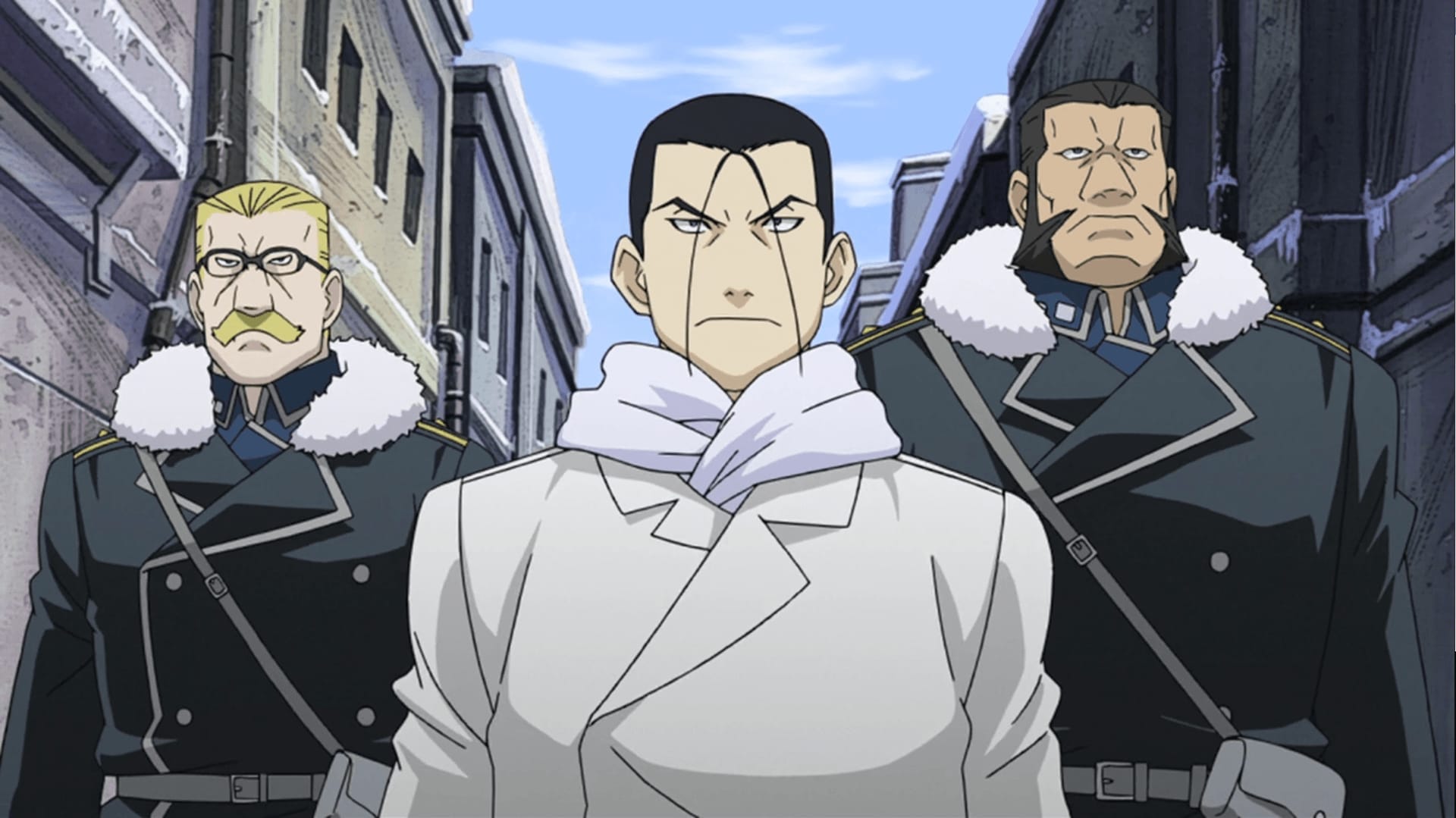
Brotherhood’s animation is sharper, faster, and more kinetically alive. The action sequences aren’t just better choreographed — they’re a generation ahead in terms of fluid movement and impact. When Edward Elric fights in Brotherhood, you feel every hit. The alchemy transformations are more spectacular. The soundtrack, handled by Yuki Hayashi and Akira Senju, skews more epic and orchestral — it’s built for the scale of the story being told. The opening themes (“Again” by YUI, “Period” by Chemistry, “Golden Time Lover” by Sukima Switch) are all bangers with real staying power. For a breakdown of how these fight sequences pushed the medium, check out our list of best anime fight choreography.
The honest assessment: if 2003’s visual style hadn’t been so deliberately melancholic and perfect for that show, the comparison would be completely one-sided. As it is, they’re both doing exactly what they need to do visually and sonically for the stories they’re telling. Brotherhood wins on technical achievement. 2003 wins on atmosphere.
The Verdict: Should You Watch Both?
Yes. Watch both. That’s the actual answer to the fullmetal alchemist brotherhood vs 2003 question, if you’re a real fan of the franchise. But the order matters, and the mindset matters.
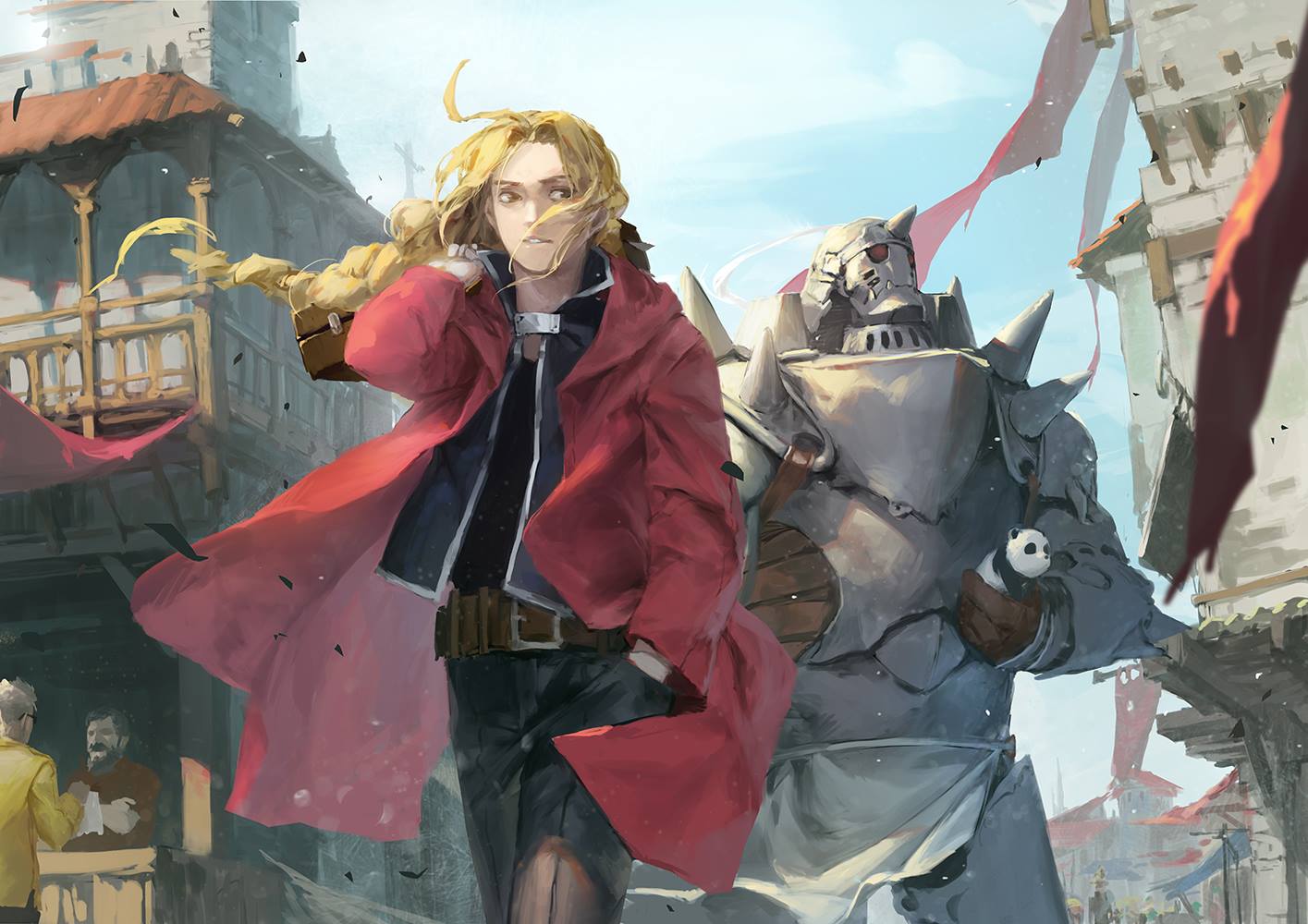
Watch Brotherhood first. This is non-negotiable for new viewers. Brotherhood is the complete story, the author’s intended narrative, the version that pays off everything it sets up, and the one with the more satisfying ending. Watching it first means you experience the FMA universe as it was designed to be experienced. You get the full context — the mythology, the characters, the world — before you go into the alternate timeline.
Then watch FMA 2003 as what it actually is: an alternate universe story told by talented people who were handed the beginning of a great premise and asked to build a completely original ending. Going in with that framing makes 2003 much easier to appreciate. You’re not watching an inferior version of Brotherhood. You’re watching a different author’s interpretation of the same characters. That’s genuinely interesting, and there are specific things 2003 does — Hohenheim’s tragedy, the Homunculi origins, Roy’s psychological depth, the pervasive melancholy — that Brotherhood doesn’t fully replicate.
The fullmetal alchemist brotherhood vs 2003 debate gets toxic when people treat it as zero-sum. FMA fans who dismiss 2003 as outdated are missing a legitimately affecting series. FMA veterans who insist 2003 is superior are usually making an emotional argument, not an analytical one — they saw it first, it hit them at the right age, and Brotherhood’s pacing in the early episodes rubbed them wrong. Both experiences are valid. Both shows are worth your time.
Here’s a quick-reference breakdown of which viewer each series is best suited for:
| You’ll prefer FMA Brotherhood if… | You’ll prefer FMA 2003 if… |
|---|---|
| You want a complete, faithful manga adaptation | You want darker, slower, more atmospheric storytelling |
| You love ambitious second-half pacing | You connect with tragic, psychologically complex characters |
| You want Ling Yao, Father, and the full Homunculi cast | You find the original Homunculi origins more compelling |
| You care about how the manga actually ends | You’re open to a completely original ending |
| You’re newer to anime | You have more experience with older anime styles |
The fullmetal alchemist brotherhood vs 2003 comparison ultimately comes down to what you want from a story. Brotherhood is bigger, more complete, and more triumphant. 2003 is smaller, more personal, and more elegiac. Between them, they represent two of the best anime ever made — and that’s the kind of problem every anime fan should want to have. Brotherhood lands among the best anime of the 2010s, full stop. And 2003 represents one of the high points of the previous era — check out our guide to getting into older anime if you’re approaching it for the first time.
If you’re still on the fence about where to start the fullmetal alchemist brotherhood vs 2003 journey, consider this: both series are finished, both are fully dubbed and subbed, and neither has filler arcs to wade through. They’re among the most satisfying completed anime to binge in the medium. There’s genuinely no bad entry point into this franchise — just an optimal one.
You Might Also Enjoy
If the fullmetal alchemist brotherhood vs 2003 deep-dive has you hungry for more great anime, here are some places to go next:
- Anime adaptations vs originals — The FMA situation is one of the most famous examples of this debate in anime. This piece explores the broader question of when original anime works better and when faithful adaptations win.
- Best anime fights of all time — Brotherhood features several fights that belong in this conversation. Ed vs. Greed, Mustang vs. Envy, the Promised Day climax — if Brotherhood’s action sequences got you excited, this list will keep that energy going.
- Best anime for adults — Both FMA series deal with themes of war, loss, and what it costs to be human. If that’s the register that hits you, this list has a lot more where that came from.
- Golden age of anime — FMA 2003 came out during one of the richest eras in anime history. This piece puts it in context with everything else that was happening at the same time.
- Best completed anime to binge — Both FMA series are perfect for long weekend binges. This list has other fully-finished series with the same binge-worthiness.
The fullmetal alchemist brotherhood vs 2003 question has no wrong answer — only better and best. Brotherhood is the definitive version of the story. But the FMA universe is large enough, and 2003’s alternate take is rich enough, that watching both is the real reward. Start with Brotherhood. Let it blow you away. Then go back to 2003 and let it haunt you. That’s the full experience, and it’s one of the best the medium has to offer. Anyone still sitting on the fence about the fullmetal alchemist brotherhood vs 2003 choice now has every reason to just start watching.