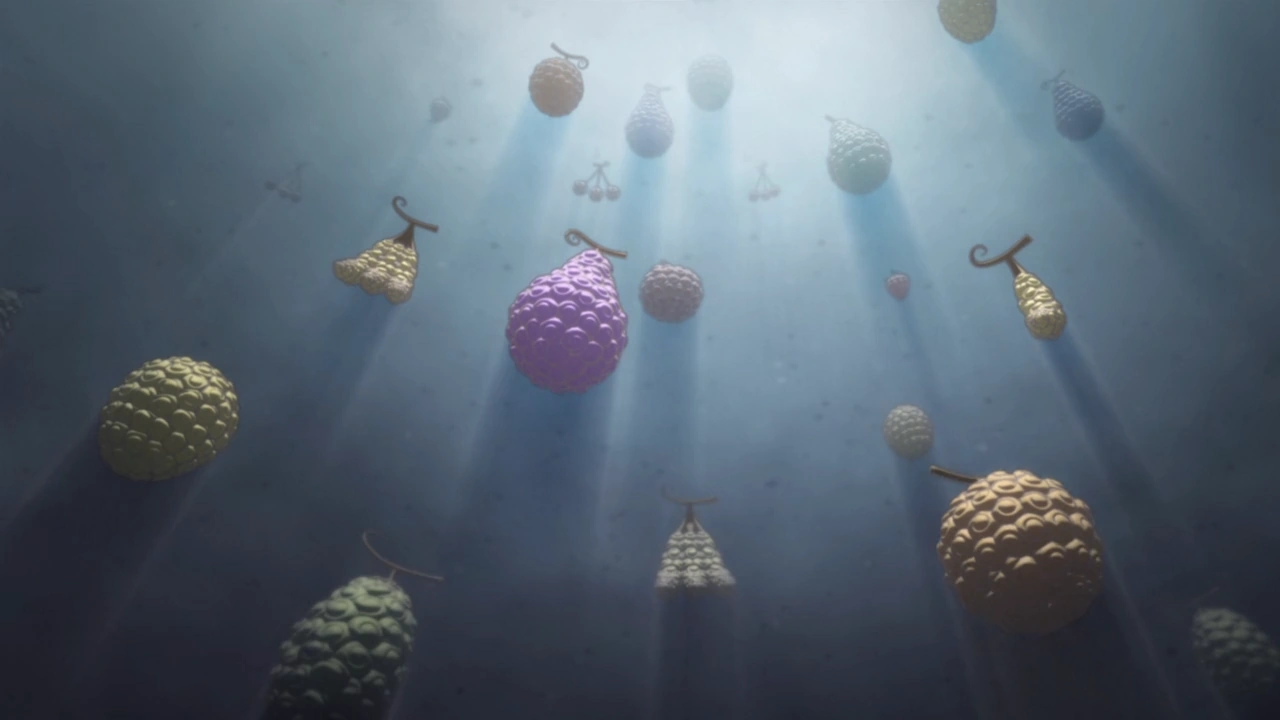
Devil Fruits are the defining supernatural element of One Piece, transforming ordinary people into superhuman forces of nature. These mysterious fruits have shaped the entire world’s power structure for over 800 years, creating pirates who can control earthquakes, Marines who freeze oceans, and revolutionaries who manipulate weather itself.
After 25+ years of One Piece storytelling, the Devil Fruit system has evolved far beyond its simple origins. The Wano arc’s revelation about the Gomu Gomu no Mi’s true nature—the Hito Hito no Mi, Model: Nika—fundamentally recontextualized everything we thought we understood. This guide covers the complete Devil Fruit system as we understand it in 2026, including Awakening, the three fruit types, and the most powerful fruits in existence.
The Basics: How Devil Fruits Work
Devil Fruits are strange, patterned fruits that grant supernatural abilities to whoever consumes them. The rules are consistent across the world:
Core Rules
The Devil Inside
Recent revelations suggest Devil Fruits literally contain devils or spirits. When Vegapunk explained that fruits are manifestations of human desires—things humanity wished were possible—it added a philosophical layer. Each fruit represents someone’s dream of evolution given form.
The Three Types: Paramecia, Zoan, and Logia
Every Devil Fruit falls into one of three categories, each with distinct characteristics and combat applications.
Paramecia: The Most Diverse Type
Paramecia fruits are the catch-all category for fruits that don’t fit Zoan or Logia classifications. They grant abilities that affect the user’s body, manipulate their environment, or produce substances.
Subcategories include:
Body Modification:
Environment Manipulation:
Substance Production:
Paramecia fruits range from joke-tier (the Jacket-Jacket Fruit) to god-tier (the Quake-Quake Fruit that can literally destroy the world). Creativity matters immensely—Luffy’s rubber powers seemed weak until he invented Gear techniques that revolutionized their application.
Zoan: The Transformation Type
Zoan fruits allow transformation into animals or, in special cases, mythical creatures. Users gain three forms:
Zoan Subcategories:
Standard Zoan: Regular animals (leopard, giraffe, elephant). Power scales with the animal’s natural strength.
Ancient Zoan: Prehistoric creatures (dinosaurs, mammoths). Rarer and significantly more powerful than standard zoans with enhanced durability and strength.
Mythical Zoan: Legendary creatures (phoenix, dragon, Buddha). The rarest category—even scarcer than Logia fruits. These grant additional supernatural abilities beyond transformation:
The Hito Hito no Mi, Model: Nika falls here—a mythical zoan so rare the World Government spent 800 years trying to acquire it.
Logia: The Element Type
Logia fruits transform users into natural elements, granting three signature abilities:
Logia users dominated the pre-Haki era because conventional attacks couldn’t touch them. Examples include:
However, Haki changed everything. Armament Haki allows physical contact with Logia users, and Observation Haki predicts their movements. In the New World, Logia intangibility is a baseline advantage, not an invincibility shield.
Devil Fruit Awakening
Awakening represents the ultimate evolution of Devil Fruit mastery. When users achieve complete harmony with their fruit’s abilities, they unlock transcendent powers.
Awakening by Type
Paramecia Awakening: Typically allows the user to affect their environment with their ability, not just their body. Doflamingo’s String-String Fruit awakening turned buildings into strings. Kid and Law’s awakenings let them assign magnetism and “room” effects to other objects.
Zoan Awakening: Grants enhanced recovery, durability, and (shown in Impel Down) potentially reduced intelligence in exchange for raw power. The Impel Down guards were awakened zoans—near-mindless but incredibly tough. Luffy’s awakening maintained his intelligence while granting ridiculous physical boosts.
Logia Awakening: Least explored, but implied to allow permanent environmental transformation. Punk Hazard’s split climate (half frozen, half burning) resulted from Akainu and Aokiji’s battle—likely awakened logias permanently altering the island.
Luffy’s Awakening: The Nika Revelation
The biggest twist in One Piece history: Luffy’s Gomu Gomu no Mi is actually the Hito Hito no Mi, Model: Nika—a mythical zoan based on the Sun God Nika, a legendary figure of liberation.
Awakened, Luffy gains:
The World Government renamed this fruit to hide its significance, fearing anyone who awakened it would become a symbol of liberation.
Strongest Devil Fruits Ranked
Based on destructive potential, versatility, and demonstrated feats:
S-Tier (World-Changing)
– Can literally destroy the world through earthquakes and tsunamis
– Mythical zoan with cartoon physics and liberation mythology
– Nullifies other Devil Fruits on contact; can absorb anything
– “Ultimate Devil Fruit” capable of granting eternal life through sacrifice
A-Tier (Admiral/Emperor Level)
– Highest offensive power among Logia fruits
– Emperor-level mythical zoan with multiple elemental powers
– Light-speed movement and attacks
– Regenerative flames that heal any injury
– Freezes oceans; permanent environmental change potential
B-Tier (Warlord/Commander Level)
– Gravity manipulation including meteor summoning
The list continues deep into C and D tiers, demonstrating that even “weak” fruits like the Jacket-Jacket Fruit exist alongside world-destroyers.
FAQ
Q: Can Haki beat any Devil Fruit?
A: Haki allows you to hit Logia users and resist some Paramecia effects, but it doesn’t nullify Devil Fruit powers entirely. Sufficient fruit power can overwhelm Haki defenses.
Q: Why can Blackbeard have two Devil Fruits?
A: Still unexplained. Theories include his unusual body structure (Marco noted he’s “not normal”), the Dark-Dark Fruit’s unique absorption properties, or inherited knowledge from the Rocks Pirates.
Q: Are Smile fruits real Devil Fruits?
A: Smiles are artificial zoan fruits created by Caesar Clown. They have a 10% success rate—failures become unable to express negative emotions. Successful users gain permanent partial transformations.
Q: Can Devil Fruits be removed from a living user?
A: Only through death… until the Wano arc suggested Vegapunk may have methods. This remains unexplored territory.
Q: What’s the weakest Devil Fruit?
A: Arguably the Jacket-Jacket Fruit (requires someone to wear you) or the Human-Human Fruit consumed by a human (Chopper only benefited because he was a reindeer).
Conclusion
Devil Fruits represent Oda’s masterwork of worldbuilding—a system that seems simple (eat fruit, get powers, avoid water) but contains incredible depth. The three-type structure provides clear categories while allowing endless creativity within each. Awakening adds a progression system that rewards long-term character development. And revelations like the Nika fruit prove that even 25 years in, the system can still surprise us.
What makes Devil Fruits compelling isn’t raw power—it’s how users creatively apply seemingly simple abilities. Luffy took “become rubber” and invented Gear Second through Fourth, completely reinventing what rubber powers could mean. That creative potential, combined with the clear cost (sea weakness) and the mystery of the devils within, makes Devil Fruits one of anime’s most enduring power systems.
Related: Luffy’s Gear 5 Explained | One Piece Power Scaling Guide | Best One Piece Arcs Ranked
You Might Also Like
- Solo Leveling System Explained: Complete Guide to Sung Jinwoo’s Powers
- Attack on Titan: Every Titan Shifter’s Powers Explained
- Gojo vs Ichigo: Who Would Win? Battle of Superhuman Powers