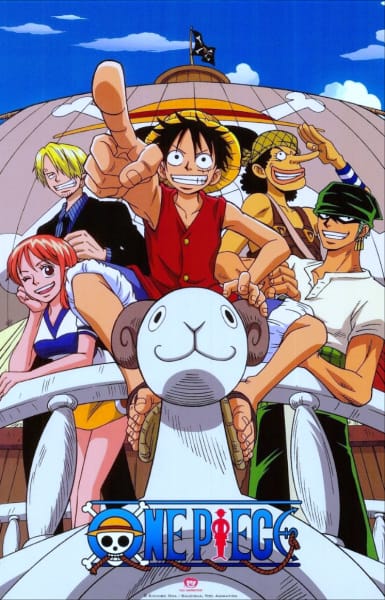
Roronoa Zoro wants one thing: to become the World’s Greatest Swordsman. This singular obsession has driven him through over a thousand episodes of One Piece, creating one of anime’s most dedicated and beloved characters. The three-sword style master is more than Luffy’s right hand—he’s the Straw Hat Pirates’ backbone of strength and resolve.
The Pirate Hunter’s Origin
Before joining Luffy, Zoro was a bounty hunter known as “Pirate Hunter Zoro.” He hunted criminals for reward money to survive, building a fearsome reputation while working toward his ultimate goal.
Kuina and the Promise
Zoro’s ambition stems from childhood rivalry with Kuina, the daughter of his dojo master. Despite training desperately, Zoro never beat her—not once in two thousand duels. Their promise to both pursue the title of World’s Greatest Swordsman bound them together.
When Kuina died in an accident, Zoro inherited her sword Wado Ichimonji and her dream. His goal is no longer personal ambition alone—it’s fulfilling a promise to his dead rival.
Three Sword Style
Zoro’s fighting style is unique: three swords, one held in each hand and one in his mouth. This seemingly impractical technique becomes devastatingly effective through Zoro’s dedication and creativity.
Why Three Swords
Zoro began using two swords, adding the third after Kuina’s death. Wado Ichimonji in his mouth represents her presence in every battle. The style is tribute as much as technique.
Named Techniques
Zoro’s attacks reference Buddhist and demonic imagery: Oni Giri (Demon Slash), Tora Gari (Tiger Hunt), Shishi Sonson (Lion’s Song). These names reflect his nickname “Demon Hunter” and his fearsome reputation.
Evolution
From single-sword basics to multi-sword combinations, from pure physical power to Haki-enhanced attacks, Zoro’s style evolves throughout One Piece. His Asura technique—manifesting extra heads and arms—shows how far he’s pushed the limits of swordsmanship.
Key Battles
Mihawk at Baratie
Zoro’s first meeting with Dracule Mihawk, the current World’s Greatest Swordsman, ended in devastating defeat. Mihawk barely tried while nearly killing Zoro. But Zoro’s refusal to show his back—turning defeat into declaration—earned Mihawk’s respect.
This loss established the stakes. The gap between Zoro and his goal was enormous. Every subsequent battle measures progress toward closing that gap.
Mr. 1 and Cutting Steel
Zoro’s battle against Daz Bonez (Mr. 1) in Alabasta represented a breakthrough. Learning to cut steel through Observation Haki’s nascent form, Zoro surpassed a limitation that should have guaranteed his death.
Kuma at Thriller Bark
Zoro’s offer to take Luffy’s pain from Bartholomew Kuma—then surviving it—cemented his position as the crew’s most dedicated member. “Nothing happened” became iconic: Zoro enduring unimaginable agony while denying any suffering occurred.
Kaido and King
In Wano, Zoro scarred Kaido—a feat thought impossible—and defeated King, the strongest subordinate of a Yonko. These victories confirm his approaching his goal.
Relationship With Luffy
Zoro was Luffy’s first crewmate, and their dynamic is One Piece’s foundational relationship. While Luffy is captain, Zoro is the crew’s sword—protecting Luffy’s dream by being strong enough to cut through any obstacle.
Absolute Loyalty
Zoro’s loyalty to Luffy is unconditional but not subservient. He follows Luffy because Luffy is worthy of being Pirate King. If Luffy compromised that worthiness, Zoro would leave—as he stated directly during the Usopp conflict.
The First Mate
Though never officially designated, Zoro functions as first mate. He maintains crew discipline, makes hard decisions when Luffy can’t, and represents the crew’s martial strength. When Luffy isn’t present, Zoro leads.
Character Traits
Directional Failure
Zoro’s terrible sense of direction is One Piece’s longest-running gag. He gets lost in straight corridors, mistakes up for down, and needs supervision to reach destinations. This weakness humanizes someone otherwise overwhelming.
Honor and Bushido
Zoro lives by a personal code emphasizing strength, loyalty, and never running from fights. His refusal to show his back to enemies, his acceptance of honorable defeat, and his disdain for cowardice all reflect bushido influences.
The Stoic Softie
Despite his serious demeanor, Zoro cares deeply about his crew. He trains constantly to protect them, takes damage to spare them, and would die for any Straw Hat without hesitation. His stoicism is armor, not emptiness.
Power Development
Pre-Timeskip
Before the two-year training break, Zoro was strong but limited. He could defeat most opponents but struggled against top-tier threats. His loss at Sabaody against Kuma showed the New World’s danger level.
Mihawk’s Training
Zoro spent the timeskip training under Mihawk himself—the man he swore to defeat. This contradictory choice shows Zoro’s pragmatism: becoming strong enough to beat Mihawk required learning from him.
Haki Mastery
Post-timeskip Zoro commands all three types of Haki. His Conqueror’s Haki, awakened during the Kaido fight, places him among One Piece’s elite. Combined with Enma (Oden’s sword), Zoro’s power now approaches the world’s strongest.
Enma and Wano
The Wano arc gave Zoro new focus through Enma, a sword that forcibly draws out its wielder’s Haki. Mastering Enma while retaining control represents his current growth challenge.
Connection to Oden
Enma’s previous owner Kozuki Oden was the only samurai to wound Kaido. Zoro following that legacy—scarring Kaido himself—establishes him as Wano’s spiritual successor to its greatest swordsman.
Facing King
Zoro’s defeat of King, a Lunarian with seemingly indestructible defense, required mastering Enma fully. This victory proved Zoro belongs among the New World’s elite.
The Path Forward
Zoro’s remaining goal is clear: defeat Mihawk and become World’s Greatest Swordsman. Every battle moves toward this confrontation. Every power-up prepares him for it.
What Comes After?
Unlike characters whose goals are vague (“become Pirate King” is defined by reaching One Piece), Zoro’s goal has a specific endpoint. What happens after he defeats Mihawk remains unknown—but Oda has decades of content left to answer.
Why Zoro Works
Zoro succeeds as a character because of consistency. His goal never wavers. His loyalty never questions. His training never stops. In a series full of transforming power systems and complex motivations, Zoro offers simplicity: become the strongest swordsman, protect the captain, cut through everything in the way.
That straightforward determination, combined with genuine vulnerability (his losses, his direction problems, his buried emotions), creates a character who’s both aspirational and human.
Conclusion
Roronoa Zoro has spent over twenty-five years real time pursuing one dream. His path from pirate hunter to potential World’s Greatest Swordsman tracks One Piece’s entire journey. Every scar, every new technique, every victory and defeat marks progress toward Mihawk.
What makes Zoro special isn’t just his strength—it’s his certainty. He knows exactly what he wants and dedicates everything to achieving it. In a world of complex motivations and wavering commitments, Zoro’s clarity is refreshing and inspiring.
The World’s Greatest Swordsman title is coming. And watching Zoro earn it, one three-sword technique at a time, is half the fun of One Piece.
You Might Also Like
- Luffy’s Growth: How One Piece’s Protagonist Evolved Over 1000+ Episodes
- Who Trained Denji and Power? Meet the Strongest Devil Hunter
- Spy x Family vs Frieren: Wholesome Anime Battle