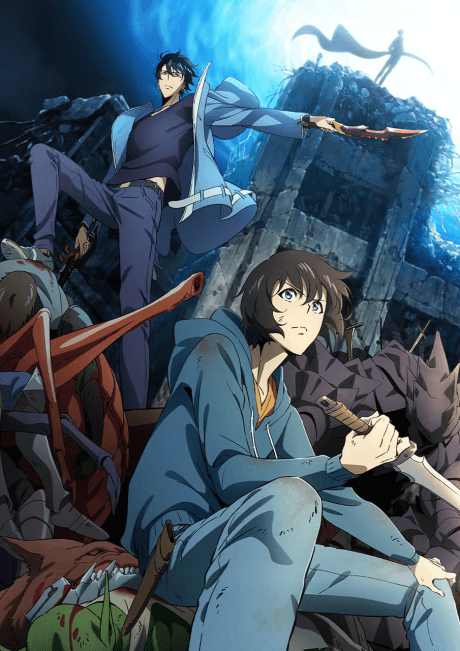
Solo Leveling arrived in 2024 with expectations that could crush most anime. The manhwa had millions of devoted fans who’d waited years for an adaptation. A-1 Pictures had to deliver something worthy of Sung Jinwoo’s legend. They did—and then some.
The Premise
In a world where gates to monster-filled dungeons appeared, humanity gained hunters to fight back. Sung Jinwoo is the World’s Weakest Hunter—an E-rank scraping by on the lowest-level raids. When a hidden double dungeon nearly kills him, he gains a mysterious “System” that allows him to level up like a video game character. His journey from weakest to strongest begins.
Animation Quality
A-1 Pictures delivered cinema-quality animation on a TV budget. The Jeju Island arc alone would justify the production—Jinwoo’s shadow summons flowing like oil paintings, combat that tracks perfectly despite impossible speed, and transformation sequences that make you want to rewind immediately.
Fight Choreography
Every major battle feels unique. The Double Dungeon’s desperate survival differs from the Jeju Island dominance display. A-1 understood that power progression should feel visual, not just stated. Early Jinwoo moves desperately; late Jinwoo flows like water.
Shadow Aesthetics
The shadow soldiers could have been generic dark shapes. Instead, each shadow has personality through movement—Igris’s knightly precision, Beru’s insectoid aggression, the horde’s coordinated sweep. The purple-black palette makes every extraction feel momentous.
Story Adaptation
The anime covers the manhwa faithfully, trimming excessive fights while preserving emotional beats. Jinwoo’s isolation as he grows stronger comes through in quieted conversations and widening distance from former party members.
Pacing
Season 1 moves efficiently through early arcs, establishing Jinwoo’s baseline, his growth system, and the larger world stakes without rushing. The cliffhanger ending promises more without feeling incomplete—a difficult balance.
What’s Missing
Some manhwa readers note compressed internal monologue, particularly Jinwoo’s strategic thinking. The anime shows him winning but sometimes skips the calculations that make victories feel earned. This is minor but noticeable.
Sound Design
The OST hits exactly when needed—epic orchestral swells for major battles, eerie ambiance for dungeon exploration, and a main theme that’s already iconic. Voice acting brings characters to life, particularly Jinwoo’s gradual shift from desperate to confident.
The System Voice
Notification sounds and the System’s voice became instantly recognizable. They punctuate victories and level-ups with Pavlovian satisfaction. You feel Jinwoo’s dopamine hit with every “You have leveled up.”
Character Development
Jinwoo’s development from someone who hunts to survive to someone who hunts because he’s unstoppable tracks well. His personality doesn’t change dramatically—he remains focused, strategic, and protective—but his confidence and presence evolve visibly.
Supporting Cast
Secondary characters get less development, which is accurate to source material. Solo Leveling is Jinwoo’s story; others exist in his orbit. Those wanting ensemble casts should look elsewhere.
The Power Fantasy Appeal
Solo Leveling is unabashedly power fantasy, and the anime leans into this. Watching Jinwoo dominate enemies who once threatened him delivers pure satisfaction. The progression is the point—if constant winning bores you, this isn’t your show.
Earned Dominance
What separates Solo Leveling from generic power fantasy is the starting point. We saw Jinwoo suffer. We watched him nearly die. Every later victory references that weakness, making dominance feel earned rather than given.
Criticisms
Limited Character Depth
Outside Jinwoo, character development is shallow. His family, love interest, and allies serve narrative functions more than existing as people. This is faithful to source material but limits emotional range.
Predictable Outcomes
After the early arcs, tension diminishes. You know Jinwoo will win; the question is just how stylishly. Those wanting genuine stakes may find this frustrating.
System as Narrative Crutch
The System explains everything—power gains, new abilities, stat tracking. This clarity helps progression but can feel game-like rather than narratively organic. Suspension of disbelief required.
Does It Live Up to the Manhwa?
For manhwa readers: yes, with caveats. The anime captures the visual spectacle better than static panels could. Some rushed pacing and trimmed content are inevitable in adaptation. The core experience—watching Jinwoo become the Shadow Monarch—translates beautifully.
For newcomers: this is an excellent entry point. The animation elevates source material into something spectacular. You can read the manhwa afterward for additional content.
Verdict
9/10 – Solo Leveling Season 1 delivers exactly what fans wanted: Sung Jinwoo’s ascent rendered in stunning animation with momentum that demands continuation. It’s not deep, but it’s not trying to be. It’s pure progression fantasy executed at the highest level.
If you want to watch someone become the strongest and look incredible doing it, Solo Leveling is essential viewing. If you need complex character dynamics or moral ambiguity, look elsewhere. Know what you’re signing up for, and you’ll have an incredible time.
You Might Also Like
- Sung Jinwoo Power Levels: From E-Rank to Shadow Monarch in Solo Leveling
- Sung Jinwoo Power Levels: From E-Rank to Shadow Monarch in Solo Leveling
- Solo Leveling Season 1 Review