Why Lazarus Is the Anime Watanabe Fans Have Been Waiting For
When the Lazarus anime dropped in April 2025, it didn’t just arrive — it kicked the door down. Shinichiro Watanabe, the legend behind Cowboy Bebop and Samurai Champloo, returned to the sci-fi arena with a project that felt fresh yet unmistakably his. And honestly? It’s the most fired up I’ve been about an original anime in years.

The Lazarus anime isn’t trying to be Cowboy Bebop 2.0. It’s something different — a pharmaceutical thriller set in a world where a miracle drug turns out to be a ticking death sentence. But that Watanabe DNA is everywhere: the kinetic action, the genre-blending soundtrack, the characters who feel like real people with real damage. If you’ve been waiting for the Cowboy Bebop director to swing for the fences again, this is your pitch.
What makes the Lazarus anime premise feel different from other sci-fi originals this season is how confidently it commits to its central premise. There’s no hedging, no filler arcs, no safe middle-of-the-road storytelling. Watanabe and his team built a world where the stakes are literally life and death for millions of people, and they never let you forget it. Every episode counts. Every scene pushes the needle forward.
Thirteen episodes. One continuous story. And an ending that left the door wide open. So let’s get into why the Lazarus anime deserves way more than a single season — and why you should be watching it right now if you aren’t already.
The Premise: A Painkiller That Kills You
The setup for the Lazarus anime is absolutely savage. In 2052, a neuroscientist named Dr. Skinner creates Hapna — a drug that eliminates all pain. Physical, emotional, existential. Total anesthesia. People line up around the block. It becomes the most prescribed pharmaceutical in history.
Then Skinner vanishes. Three years of peace. And then he drops a broadcast that hits like a freight train: Hapna has a fatal half-life. Everyone who took it will die in 30 days. Every single person who trusted that miracle pill is now living on borrowed time.
This is where the Lazarus anime earns its name. A task force code-named Lazarus — five agents with nothing in common except their desperation — is assembled to hunt Skinner down and extract the vaccine before the clock runs out. It’s adult anime doing what it does best: taking a sci-fi concept and wringing every drop of tension from it.
The Hapna drug concept is genuinely unsettling because it mirrors real-world pharmaceutical scandals. The show doesn’t need to spell out the parallels — you feel them in your gut. A miracle cure that turns into a mass death sentence? That’s not fantasy. That’s just capitalism with a sci-fi coat of paint.
What’s particularly sharp about the Lazarus anime premise is how it forces you to confront the logic of convenience. Of course people took Hapna. Pain is exhausting. Chronic pain is dehumanizing. The show doesn’t mock the people who reached for relief — it understands them completely. That’s what makes the betrayal so devastating. The Lazarus anime doesn’t give you easy villains. It gives you systems that fail people who were just trying to survive.
The Characters: A Team That Shouldn’t Work But Does
Watanabe has always been great at assembling misfit crews. The Lazarus characters continue that tradition with a five-person team that looks dysfunctional on paper and clicks like crazy on screen.

Axel Gilberto is the face of the team — a parkour specialist who treats entire cityscapes as personal playgrounds. Voiced by Mamoru Miyano (yeah, that Mamoru Miyano), Axel brings an infectious physicality to every scene. He’s the guy who runs toward the explosion instead of away from it. His action sequences are where the show shows off some of its best choreography.
Doug Hadine is the coordinator — the one keeping this chaotic team pointed in the same direction. Voiced by Makoto Furukawa, Doug is the strategic brain, the guy who sees the board three moves ahead. He’s not the flashiest fighter, but he might be the most essential member.
Christine “Chris” Blake is the gun specialist and a Russian ex-special forces operator. She’s the muscle with military precision and a past that catches up with her. Chris brings a cold professionalism that contrasts beautifully with the rest of the team’s chaos.
Leland Astor is a 16-year-old drone pilot. Yes, a teenager on a suicide mission. The Lazarus anime doesn’t shy away from what that means — Leland’s youth makes every close call hit harder. He’s the heart of the team, the one who hasn’t yet learned to numb himself to the violence.
Eleina, the 15-year-old hacker known as “Mad Screamer,” rounds out the crew. She’s the digital ghost, the one who can infiltrate any system. There’s something poetic about a kid who’s never felt safe in the physical world becoming untouchable in the digital one. Her relationship with Leland — two teenagers navigating an adult war — gives the Lazarus anime some of its most emotionally charged moments.
And overseeing all of this is Hersch Lindemann, voiced by the legendary Megumi Hayashibara. Hersch is the kind of leader who carries secrets like cargo — always more than they’re showing, always calculating. The dynamic between Hersch and the team gives the Lazarus anime its emotional spine. Hersch represents the question the show keeps asking: can you trust the person holding your life in their hands when you know they’re hiding something?
What makes these Lazarus characters work isn’t their individual competence — it’s their friction. They argue. They disagree on approach. They push each other’s buttons in ways that feel earned because their backgrounds are so different. A Russian ex-soldier, a Brazilian parkour runner, a teenage drone pilot — these people would never share a room under normal circumstances. The show makes you believe that shared desperation is enough to forge a team, and then makes you watch that team actually become one.
Action Choreography That Sets a New Bar
If you came to the Lazarus anime looking for fights that make you rewind three times, you’re in the right place. Watanabe’s action direction has always been about rhythm — the beats between punches matter as much as the punches themselves. And with MAPPA anime production behind him, every frame of combat in this show looks like money on screen.
Axel’s parkour sequences are the obvious showstopper. The man flows through architecture like water through cracks — vaulting, sliding, bouncing off walls with a fluidity that makes you forget you’re watching animation. These aren’t just action scenes. They’re choreography on the level of the best anime fight choreography we’ve ever seen, but applied to chase sequences and environmental traversal instead of straight duels.
Chris’s gun fights are a different beast entirely. Tight, controlled, military-precise. Where Axel is jazz improvisation, Chris is classical composition. The contrast between their combat styles isn’t accidental — it’s Watanabe showing you who these people are through how they move. Every fight in this show is character development disguised as spectacle.
And then there are the team fights. When the Lazarus squad operates together, the team dynamic turns into something genuinely special. Leland feeding drone intel, Eleina hacking security systems, Doug coordinating — it’s a symphony. MAPPA’s animation quality means every frame carries weight. No floating stills, no corner-cutting. This is what happens when a MAPPA anime gets a director who actually understands cinematic rhythm.
The show also understands negative space. Not every scene needs to be an explosion. Some of the best action moments in the Lazarus anime are the quiet ones — a held breath before a sprint, the click of a loaded magazine, the moment where a character decides to move. Watanabe learned this lesson directing Spike Spiegel, and he hasn’t forgotten it. The pauses between the punches are where the tension actually lives.
The episode 7 rooftop chase alone is worth the price of admission. Three minutes of pure kinetic storytelling that communicates character, stakes, and world-building through movement alone. This is Watanabe operating at the top of his game.
The Soundtrack: Kamasi Washington, Bonobo, and Floating Points
Okay, let’s talk about the music because this is where the show separates itself from everything else airing in 2025. The man has always treated music as a character, not decoration. Cowboy Bebop had Yoko Kanno. Samurai Champloo had Nujabes. And Lazarus has a trifecta that shouldn’t work on paper but absolutely demolishes in practice.
Kamasi Washington brings his epic jazz orchestration. If you’ve heard The Epic, you know this man composes in cinematic scope. His tracks for the Lazarus anime feel like church for people who believe in revolution — soaring horns, deep grooves, spiritual weight. When Axel is free-running through the city, Kamasi’s score makes it feel like something mythic is happening.
Bonobo handles the electronic texture. His production is all atmosphere and tension — the kind of music that makes a quiet hallway feel like it’s holding its breath. The way Bonobo’s ambient layers sit underneath the action gives the Lazarus anime this constant sense of unease, even in the calm moments.
Floating Points ties it all together. Sam Shepherd’s work bridges the jazz and electronic worlds, and his compositions for this show carry an emotional depth that sneaks up on you. The quieter character moments — Eleina alone at her screens, Leland watching the sky — are where Floating Points’ contributions really shine.
Together, these three create a sonic identity that’s unlike anything else in anime. It’s not Cowboy Bebop’s jazz-blues-rock fusion. It’s not Champloo’s hip-hop samurai aesthetic. The Lazarus anime sound is Afrofuturist jazz meets electronic tension meets symphonic emotion. And it absolutely works.
What’s brilliant about the soundtrack is how it shifts depending on whose perspective we’re in. Kamasi’s orchestration swells behind Axel’s physical sequences. Bonobo’s electronic unease underlines Eleina’s hacking scenes. Floating Points’ emotional depth carries Leland’s quiet moments. The show doesn’t just use music as background — it uses music as narrative voice, telling you things about these characters that dialogue alone can’t convey.
Themes: Pain, Humanity, and the Lie of Utopia
Beneath the action and the style, Lazarus gives you questions that stick with you long after the credits roll. The biggest one: what does it mean to be human if you can’t feel pain?
Hapna isn’t just a plot device. It’s a philosophical thought experiment weaponized into thriller fuel. A drug that removes all pain sounds like a utopia until you realize that pain is information. It’s your body saying “stop,” “protect,” “this matters.” Without it, you’re not liberated — you’re disarmed. The Lazarus anime makes this point not through speeches but through what happens to people who took Hapna. They stopped caring. Stopped protecting themselves. Stopped being fully human.
The pharmaceutical ethics angle hits especially hard in 2025. We’ve lived through real-world medical scandals — opioid crises, rushed approvals, profit-driven negligence. Dr. Skinner isn’t a cartoon villain. He’s a mirror. The show asks: what happens when someone with the brains to cure pain decides to weaponize it instead? And what happens when the system that distributed that cure faces zero accountability?
Then there’s the utopia versus dystopia thread. The world of the Lazarus anime looks beautiful — clean cities, advanced tech, the promise of pain-free living. But scratch the surface and it’s a surveillance state propped up by pharmaceutical dependency. The show’s Afrofuturist aesthetic makes this contrast even sharper. The future looks amazing. The future is also killing you.
What I love most is that the Lazarus anime doesn’t lecture. It doesn’t need to. The themes are baked into the premise, the characters, and the world. You feel the questions before you articulate them. That’s the kind of psychological anime that respects its audience’s intelligence.
Why the Lazarus Anime Deserves Season 2
Here’s the thing about the Lazarus anime ending — it resolves its immediate story but opens a much bigger one. Watanabe himself hinted at a potential sequel in July 2025, and if you’ve seen the final episode, you know exactly why that matters.
The first season is about finding Skinner and getting the vaccine. But what happens after? A world that just learned its miracle drug was a death sentence doesn’t just bounce back. The societal fallout alone could fuel an entire season — trust in institutions shattered, pharmaceutical companies in freefall, governments scrambling to contain panic.
And then there are the characters. The Lazarus characters we spent 13 episodes getting attached to have more story to tell. Axel’s past was hinted at but never fully explored. Chris’s military history has layers the show only started peeling back. Eleina and Leland are still kids trying to make sense of an adult world that keeps failing them. A Season 2 could explore these backstories the way only a second season can.
The show also earned a “Best Original Anime” nomination at the 10th Crunchyroll Anime Awards in 2026. That’s not nothing. The audience is there. The critical recognition is there. The story is there. What’s missing is the green light.
A second season could also expand the world-building. We saw one city in Season 1. A global pharmaceutical crisis means global consequences. How are different countries handling the Hapna fallout? What does the underground look like? What other pharmaceutical secrets are still buried? The sci-fi anime 2025 field is crowded, but Lazarus has the bones to be a franchise, not just a single season.
And let’s not ignore the business case. This was a co-production between Adult Swim and TV Tokyo — a rare east-west collaboration that actually worked. The international audience is built in. The Adult Swim anime slot gave it visibility with western audiences who might not watch seasonal shows otherwise. The Crunchyroll nomination adds prestige. From every angle, Season 2 makes sense. It just needs someone to pull the trigger.
Where to Watch the Lazarus Anime
If you’re looking to watch the Lazarus anime, you’ve got options. It aired on Adult Swim and Toonami in the US, with simulcasts on TV Tokyo in Japan. For streaming, check out our guide to the best anime streaming services for current availability.
The English dub is worth checking out too. The Adult Swim anime partnership means this show got a quality localization — and given the international cast, the dub actually makes thematic sense. We’ve talked before about anime that’s better dubbed than subbed, and Lazarus makes a strong case for that list.
For those catching up in 2026, the Lazarus anime is also included in our spring 2026 anime streaming guide alongside the other shows worth your time this season.
All 13 episodes are relatively tight — no filler, no wheel-spinning. This is a show that respects your time. Binge it in a weekend or savor it episode by episode. Either way, you’re getting one of the most cohesive original anime stories in recent memory.
Final Verdict: Watanabe’s Best Since Bebop
Let’s be real — calling anything “Watanabe’s best since Cowboy Bebop” is a heavy claim. The man directed Spike Spiegel, the character who defined anime cool for an entire generation. But the Lazarus anime earns that comparison not by imitating Bebop but by doing what Watanabe does best: creating worlds that feel alive, characters worth caring about, and music that becomes part of your DNA.
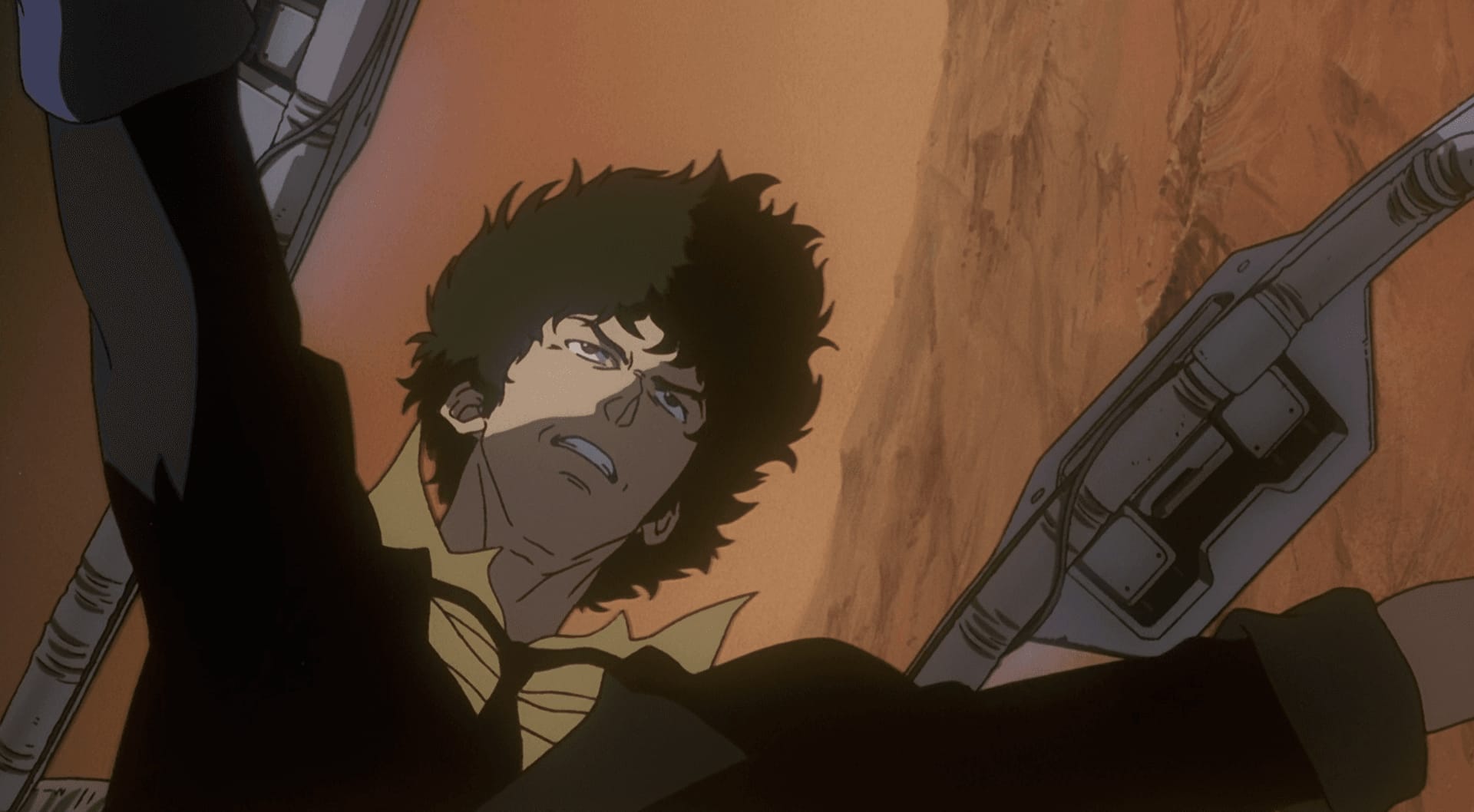
Lazarus takes the sci-fi thriller format and injects it with Watanabe’s signature style — genre-bending music, kinetic action, and characters who feel like they existed before the show started and will exist after it ends. The MAPPA animation elevates every scene. The soundtrack is legitimately one of the best in modern anime. And the themes hit different in a post-pandemic world still reckoning with what happens when institutions fail us.
Is it perfect? No. The pacing stumbles in episodes 9 and 10, and some character arcs feel like they needed more room to breathe — which is exactly why Season 2 needs to happen. The Lazarus anime has more story to tell, more world to explore, and more questions to answer. It deserves the runway.
If you slept on this show during its initial run, wake up. The Lazarus anime is proof that original anime can still surprise you, still make you feel something, and still leave you demanding more. And honestly? In a season full of sequels and adaptations, that’s exactly what we need.
Watch it. Then join the rest of us in the Season 2 campaign. This story isn’t over.
You Might Also Enjoy
If the Lazarus anime hooked you on Watanabe’s style, here are more anime worth your time:
- Cowboy Bebop: Still the Coolest Anime Ever Made — The show that started it all for Watanabe fans
- Best Anime for Adults: Shows That Respect Your Intelligence — More anime that don’t talk down to you
- Best Anime Fight Choreography: The Fights That Redefined Animation — If Lazarus’s action got you hooked, these will too
- Parasyte Hits Different in 2026 — Another sci-fi thriller with body horror and philosophical weight
- Best Psychological Anime: Shows That Mess With Your Head — For when you want themes that linger