The Creator of Fullmetal Alchemist Just Dropped Spring 2026’s Biggest Anime
If you’ve been anywhere near anime Twitter or Japanese streaming charts this season, you already know the name. Daemons of the Shadow Realm just claimed the #1 spot on Niconico’s Spring 2026 streaming rankings — and it’s not even close. We’re talking about the first new anime from Hiromu Arakawa since Fullmetal Alchemist: Brotherhood cemented itself as one of the greatest anime of all time. That’s not hype. That’s a fact. And Daemons of the Shadow Realm is proving that Arakawa hasn’t lost a single step.
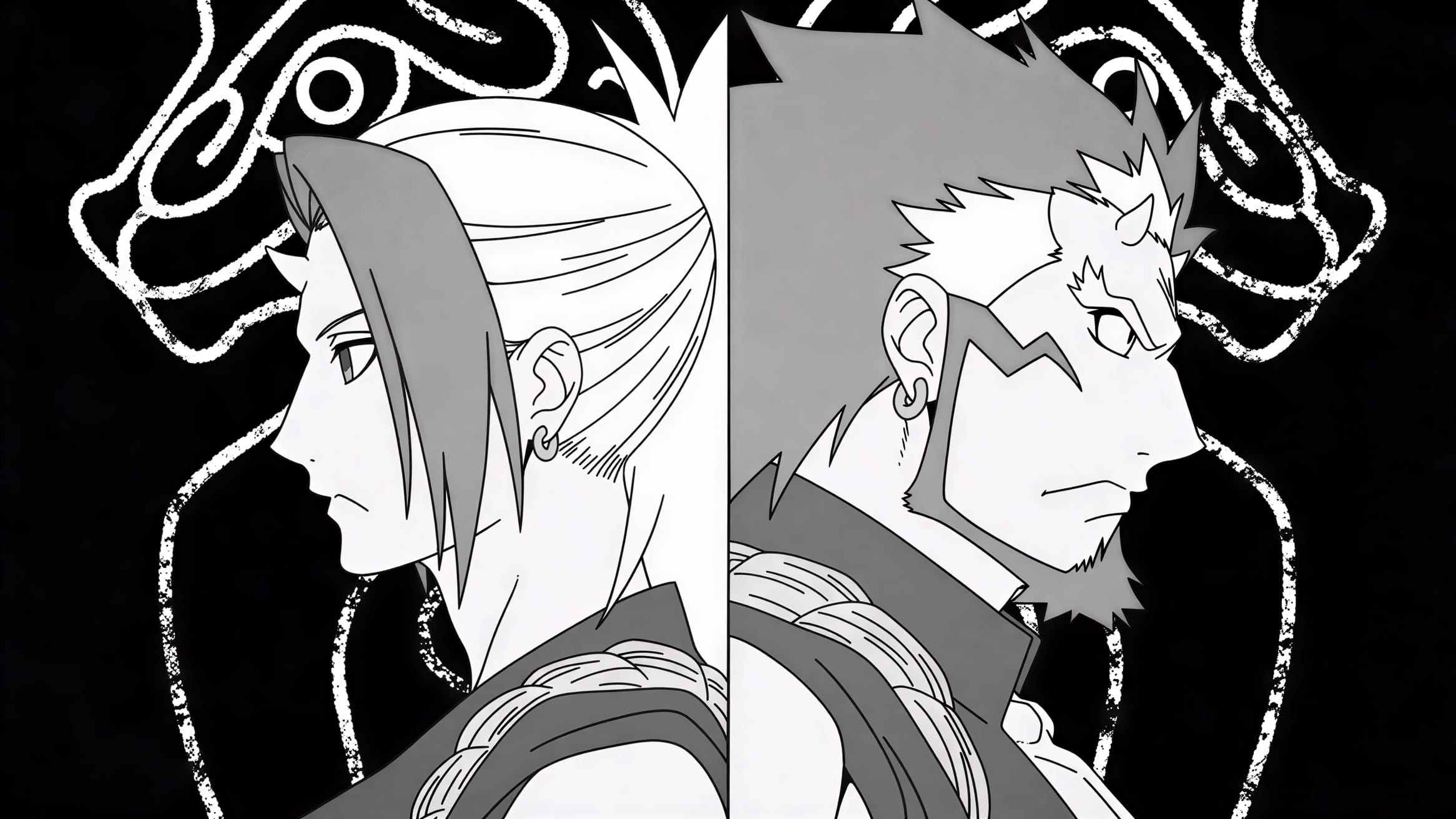
Animated by Bones Film and premiering in April 2026, this series has already racked up an IMDB rating of 8.3+ from over 3,284 votes. The manga? 7.5 million copies sold as of April 2026, and that number is climbing fast with every new episode that airs. The word-of-mouth momentum is unlike anything we’ve seen since Chainsaw Man’s debut season — maybe even bigger, because Arakawa’s name carries a weight that no other active mangaka can match. Whether you’re a day-one Arakawa stan or you just found out about this show because your timeline won’t shut up about it, here’s everything you need to know about why Daemons of the Shadow Realm is the Spring 2026 anime everyone is watching.
Who Is Hiromu Arakawa and Why This Matters
Let’s get the obvious out of the way: Hiromu Arakawa is the mangaka behind Fullmetal Alchemist, a series that sold over 80 million copies, spawned two anime adaptations, a live-action trilogy, and permanently altered the DNA of shōnen manga. FMA didn’t just have great action — it had philosophy, political intrigue, genuine emotional devastation, and humor that actually landed. Arakawa built a world where equivalent exchange wasn’t just a magic rule; it was a metaphor for everything. She’s also the creator of Silver Spoon, a slice-of-life masterpiece that proved her range extends far beyond action and alchemy. The woman can write comedy, tragedy, farming drama, and now — as Daemons of the Shadow Realm proves — she can write horror that genuinely gets under your skin.
Arakawa’s return to anime is a massive event. She’s not a creator who rushes. She takes her time, builds her worlds brick by brick, and when she’s ready, the result is something that endures. Daemons of the Shadow Realm has been serialized in Monthly Shōnen Gangan since December 2021 — she’s been laying the groundwork for over four years, carefully constructing the lore, the daemon system, and the twin prophecy that drives the narrative. That patience shows in every frame of the anime. And now that Bones Film is bringing it to the screen, the result is everything her fans hoped for and then some. The production quality is stunning — Bones has a long history with Arakawa’s work, having animated both FMA series, and their familiarity with her style translates into some of the most fluid, expressive animation of the year. If you loved FMA’s blend of heart and horror, you owe it to yourself to see what she’s doing now.
What Is Daemons of the Shadow Realm About?
At its core, Daemons of the Shadow Realm is a story about twins separated at birth — Yuru and Asa — who are prophesied to be the “children who sunder day and night.” That’s not a metaphor. Born on the equinox, on either side of sunrise, these two carry a cosmic burden that has destroyed nations before them. The prophecy isn’t new: previous sets of twins caused nation-splitting conflicts — east versus west 400 years ago, north versus south before that. Every time these paired souls appear, the world tears itself apart trying to control or destroy them.
Yuru grew up in an isolated mountain village, raised by the village chief Yamaha, believing he was just a normal kid with an unusual birthright. Asa, his twin sister, was taken at birth — raised in secret as a decoy, trained in an organization that studies and controls daemons. The village itself has been guarding Yuru’s sealed daemons Right and Left for 400 years, a duty passed down through generations, all revolving around a boy who didn’t even know the full truth about himself. When the village is massacred in episodes 1-2 (and Arakawa does not hold back — this is some of the most visceral horror she’s ever written), Yuru’s world collapses and he’s thrust into a conflict he never asked for, with powers he barely understands. Episode 3 shows Yuru adjusting to the modern world for the first time, encountering cell phones, crowded streets, and the overwhelming noise of a society that moved on without him. He’s also learning the truth about his birth, the prophecy, and the terrifying scope of what he and Asa are destined to do — or what the world expects them to destroy.
The manga has been building this story since 2021, and the anime adaptation by Bones Film captures every ounce of tension, wonder, and dread that Arakawa packs into her panels. The direction is confident — the pacing of episodes 1-3 mirrors the manga’s opening arc almost beat for beat, giving the village massacre room to breathe and letting the horror land before pulling you into Yuru’s disorientation in the modern world. This is a Spring 2026 anime that respects its source material — and it shows in every scene, every quiet moment, and every brutal twist.
The Daemon Power System Explained
Alright, let’s talk about the daemon system, because this is where this series has daemons — and the rules governing them are just as intricate and just as tied to the story’s themes.
Yuru’s Daemons: Right and Left. Yuru inherits two ancient daemons named Right and Left, both sealed for 400 years. These aren’t just power-ups — they have personalities, histories, and their own agendas. Right and Left have been waiting centuries for a wielder worthy of them, and Yuru’s awakening sets events into motion that the world thought were buried with the last set of twins.
Asa’s Power: Kai/Break. Asa wields the ability to unravel anything. Break barriers. Shatter seals. Nullify protections. Kai (解) means “to unravel” or “to release,” and that’s exactly what her power does — it takes apart anything that’s been closed or bound. It’s an offensive, destructive power that makes Asa incredibly dangerous and incredibly valuable to the people who raised her.
Yuru’s Destined Power: Fuu/Seal. Here’s where it gets beautiful. Yuru’s true destined ability is Fuu/Seal (封) — the power to forcibly close anything. Where Asa breaks things open, Yuru seals them shut. They are cosmic opposites, two halves of a mechanism that can either save the world or crack it in half. The symmetry is pure Arakawa — just as alchemy’s equivalent exchange demanded balance, the daemon system in Daemons of the Shadow Realm demands that opening and closing, breaking and sealing, exist as paired forces that cannot exist without each other.
What makes the daemon system so compelling is how it mirrors the relationship between the twins themselves. Asa opens; Yuru closes. Asa destroys; Yuru preserves. They are two halves of a single mechanism, and neither can fulfill their purpose without the other. The power system isn’t just flavor — it’s the story’s thesis statement, written in the language of magic and combat.
And here’s the kicker — Arakawa layers another dimension on top of the break/seal duality. Right and Left, Yuru’s sealed daemons, aren’t just tools waiting to be wielded. They’re characters. They’ve been conscious for those 400 years of imprisonment, and they have opinions about what’s happening. Right and Left remember the last set of twins, remember the catastrophe they caused, and carry their own guilt and rage about being sealed away. When Yuru finally connects with them, it’s not a power-up montage — it’s a negotiation with ancient beings who have every reason to distrust humans. That emotional complexity is what separates Daemons of the Shadow Realm from every other anime with a “summon creatures to fight” premise. These daemons aren’t pets or weapons. They’re participants in the story, with their own arc that’s only beginning to unfold three episodes in.
This power system is already generating massive discussion among fans, and for good reason — it’s one of the most thematically coherent magic systems in recent anime. If you love analyzing how power systems reflect a story’s deeper themes, check out our breakdown of the best anime power systems this season.
Yuru and Asa in Daemons of the Shadow Realm — The Sibling Dynamic That Drives Everything
You can’t talk about this series without talking about the twins, because their relationship is the engine that powers the entire story. Yuru (voiced by Kenshô Ono) and Asa (voiced by Yume Miyamoto) are separated before they can even form memories of each other — and yet their bond, their conflict, and their inevitable collision are what make this series hit so hard.
The decoy Asa twist is one of the most gut-wrenching reveals in recent anime. Asa wasn’t just hidden away — she was raised as a decoy, a shield meant to protect Yuru (or possibly to mislead the forces hunting them). The implications of that — that one twin was treated as disposable from birth — adds a layer of tragedy that Arakawa handles with her signature blend of restraint and emotional devastation. Asa knows she’s a substitute. She’s been told her entire life that her purpose is to be a shadow of someone she’s never met.
Yuru, meanwhile, didn’t even know Asa existed until the massacre ripped his world apart. His journey isn’t just about surviving or mastering his daemons — it’s about finding his sister, understanding what was taken from both of them, and deciding whether the prophecy that defines them is something to fulfill or something to destroy. This sibling dynamic is the emotional core of Daemons of the Shadow Realm, and it’s why the series hits so much harder than your average action anime. For more on why sibling dynamics drive the best anime, see our ranked list of anime’s greatest duos.
Why Japan Can’t Stop Watching
Numbers don’t lie. Daemons of the Shadow Realm is sitting at #1 on Niconico’s Spring 2026 streaming rankings. The manga has moved 7.5 million copies. The IMDB rating sits at 8.3+ with thousands of votes. But the raw data only tells you the what — the why is what matters.
Japan is obsessed because Daemons of the Shadow Realm does something that very few anime manage: it makes you laugh and then makes you stare at the screen in genuine horror within the same episode. The tonal whiplash is Arakawa’s specialty — she did it in FMA with the shift from comedic Ed/Al banter to the horrors of human transmutation — and she’s doing it here with even more confidence. The village massacre in episodes 1-2 is brutal. Jin, Asa’s superior, has a daemon named Makoto that manifests as a deep-sea anglerfish — a creature so viscerally wrong and terrifying that it’s become the season’s most-shared reaction screenshot. When Makoto first appeared, Japanese Twitter practically melted.
Then there’s the supporting cast. Dera, the daemon retainer who guides Yuru, brings dry humor and ancient knowledge in equal measure — he’s the kind of character who drops casual references to events from centuries ago like they happened last Tuesday, and it always lands because Arakawa’s comedic timing is razor-sharp. Hana adds warmth and humanity to scenes that desperately need it, serving as Yuru’s bridge to a world that should feel alien to him. Yamaha, the village chief, carries the weight of secrets that could fill a library — his death in the early episodes isn’t just shocking, it’s the moment that tells you this story doesn’t care about protecting characters you love. Every character feels like they have a history, a motivation, and a role to play in something much bigger than themselves. That’s Arakawa’s worldbuilding at work — she doesn’t do filler characters, and she certainly doesn’t waste them when they exit the story.
And the voice acting? Kenshô Ono and Yume Miyamoto are delivering career-defining performances. Ono captures Yuru’s mix of rural innocence and stubborn determination perfectly, while Miyamoto gives Asa a quiet intensity that makes every scene she’s in feel like something important is about to happen. The contrast between their delivery styles — Ono’s warmth and openness versus Miyamoto’s guarded precision — mirrors the twins’ dynamic in a way that feels almost too perfect to be accidental. The casting is flawless. For more on what else is worth watching this season, our Spring 2026 anime streaming guide has you covered.
How It Compares to Fullmetal Alchemist
It’s impossible not to compare Daemons of the Shadow Realm to Fullmetal Alchemist, so let’s just do it honestly.
The similarities are real and they’re intentional. Both series center on siblings carrying a cosmic burden. Both feature Arakawa’s signature blend of irreverent humor and devastating tragedy. Both have power systems that are deeply tied to the story’s philosophical themes — equivalent exchange in FMA, the break/seal duality in Daemons of the Shadow Realm. Both refuse to talk down to their audience. Both understand that the best way to make darkness hit harder is to let the light shine first.
The differences matter too. Daemons of the Shadow Realm is set in a modern world — Yuru has to adjust to contemporary Japan, which creates a fish-out-of-water dynamic that FMA never had. Episode 3 makes this painfully funny and painfully sad at the same time, as Yuru encounters everyday technology and social norms that are completely alien to him. The daemon system operates on fundamentally different logic than alchemy; it’s less about understanding natural laws and more about bargaining with ancient, powerful, and not entirely trustworthy entities. The daemons have their own wills, their own histories, and their own reasons for cooperating — or not. And where FMA’s Elric brothers chose their path voluntarily, Yuru and Asa had their fate forced on them before birth. The prophecy isn’t something they pursued — it’s something they’re trying to survive. That fundamental shift in agency changes everything about how the story feels.
There’s also a structural difference worth noting. FMA was essentially a road story — Ed and Al traveling from city to city, uncovering a conspiracy that connected everything. Daemons of the Shadow Realm is more concentric. It starts small — a village, a boy, some statues — and expands outward in rings of revelation. Each new piece of information recontextualizes what came before, making you rethink scenes you already watched. That rewatch value is part of why the Niconico numbers are so high; people are going back to catch foreshadowing they missed the first time. Arakawa plants seeds three episodes deep that reference things from episode one, and the payoff is incredibly satisfying when you catch it.
If you loved the dark-world-meets-absurdist-humor vibe of Dorohedoro, Daemons of the Shadow Realm occupies a similar space — but with Arakawa’s particular genius for weaving humor, horror, and heart into a single, cohesive narrative. And if you want to know more about the studio bringing this to life, our guide to Spring 2026’s animation studios breaks down what Bones Film brings to the table.
Should You Watch Daemons of the Shadow Realm?
Yes. Absolutely. No hesitation.
Daemons of the Shadow Realm is the rare anime that works on every level — as an action series, as a character drama, as a philosophical exploration of fate and freedom, and as a showcase for one of manga’s greatest living creators operating at full power. Whether you’re here for the jaw-dropping daemon battles, the gut-wrenching sibling drama, the intricate power system that rewards close attention, or just the sheer pleasure of watching Arakawa do her thing again — Daemons of the Shadow Realm delivers on all fronts. The Niconico #1 ranking isn’t a fluke. The 7.5 million manga copies aren’t hype. This is the real deal, and it’s only getting better with each episode.
If you’re a Fullmetal Alchemist fan, this is Arakawa doing what she does best with a completely new canvas. The familiar DNA is all there — the humor, the horror, the meticulous worldbuilding, the refusal to give easy answers — but Daemons of the Shadow Realm is very much its own beast. If you’ve never watched FMA, Daemons of the Shadow Realm is a perfect entry point into her work — and alongside Witch Hat Atelier, it’s proof that Spring 2026 might be one of the strongest anime seasons in recent memory.
Where to watch: Daemons of the Shadow Realm is streaming on Crunchyroll and other platforms — check your regional availability for the Spring 2026 anime season. New episodes drop weekly. You can also track episode ratings and community discussion on the show’s MyAnimeList page. Don’t sleep on this one — get in now before the spoilers become impossible to avoid.
You Might Also Enjoy
- Fullmetal Alchemist: Brotherhood Review — Arakawa’s masterpiece that started it all
- Spring 2026 Anime Streaming Guide — Everything worth watching this season
- Dorohedoro Season 2 Guide — Dark humor and horror in a world just as wild
- Why Witch Hat Atelier Is a Must-Watch for Spring 2026 — Another standout in a packed season
- Best Anime Duos Ranked — From Ed and Al to Yuru and Asa
- Best Anime Power Systems Spring 2026 — How daemon magic stacks up