Why Akane-banashi Is the Anime Everyone’s Talking About This Spring
Every once in a while, a show comes along that completely upends your expectations. The Akane-banashi anime is exactly that — a Shonen Jump adaptation about rakugo, traditional Japanese storytelling, that hits harder than most battle series ever could. And it just delivered one of the best premieres of Spring 2026.
I went into this show knowing almost nothing about rakugo. By the end of episode one, I was gripping my couch cushion like I was watching a championship fight. That’s not exaggeration. This series somehow makes sitting on a cushion and telling stories feel like witnessing a Bankai release. That’s the Akane-banashi experience in a nutshell.
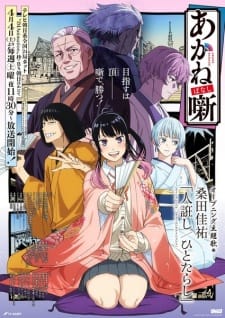
The Spring 2026 anime season is absolutely stacked — new entries from established franchises, hotly anticipated sequels, original projects with killer staff behind them. Yet Akane-banashi has carved out its own conversation, and it’s not slowing down. Critics from Anime News Network, Screen Rant, and CBR have all singled it out as a standout premiere.
So what makes this series so special? Why is a show about storytelling generating more hype than series with actual superpowers? Let me break it all down.
What Is Rakugo — And Why Should You Care?
Before Akane-banashi, most international anime fans had never encountered rakugo. It’s a centuries-old Japanese performance art where a single performer, called a rakugoka, sits on a cushion and tells a story using only their voice, a fan, and a hand towel. No costumes. No props beyond those two items. No special effects. Just one person, one cushion, and an audience.
Sound boring? That’s exactly what I thought. And that’s exactly why Akane-banashi is so impressive — it proves how completely wrong that assumption is.
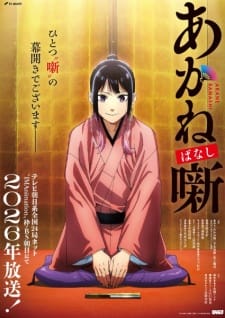
Rakugo is actually fierce, competitive, and deeply personal. A rakugoka’s ranking isn’t handed to them — it’s earned through rigorous evaluation by masters who can end your career with a single vote. The art form demands extraordinary memorization, emotional range, comedic timing, and the ability to hold an audience spellbound for thirty minutes or more with nothing but your voice.
In many ways, rakugo is the ultimate test of a performer’s soul. And this series takes that competitive structure and wraps it around one of the most compelling character journeys I’ve seen in years.
The Story That Hits Like a Shonen Punch
Here’s the setup: Akane Osaki is a 17-year-old girl whose father, Shinta Osaki, was a rising star in the rakugo world. He was on the verge of promotion to the prestigious rank of shin’uchi — the highest rank a rakugoka can achieve. One performance away from achieving his lifelong dream. And then the masters expelled him.
No explanation. No second chance. Just decades of work erased in a single night. Shinta’s devastation is palpable, and the anime makes sure you feel every ounce of it. This isn’t a footnote or a flashback — it’s the emotional bedrock the entire story is built on.
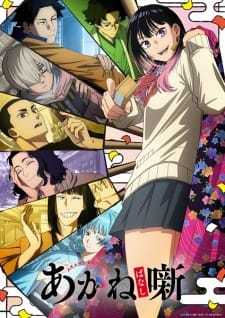
The premiere dedicates significant time to Shinta’s performance — and this is where the visual genius of Akane-banashi kicks in. When Shinta tells his story, the screen doesn’t just show him sitting on a cushion. It brings his tale to life around him, with lighting shifts, perspective changes, and color transformations that make you feel like you’re inside the narrative he’s weaving.
Then the expulsion happens, and the color drains from everything. It’s the kind of visual storytelling that separates great anime from good ones. The Akane-banashi premiere understands that how you show something matters just as much as what you show.
Akane witnesses her father’s fall and makes a vow: she will become a rakugoka herself. Not just to perform — to reach the rank of shin’uchi and prove the masters wrong. It’s revenge through art. It’s a shonen promise elevated to something deeply personal and profoundly moving.
Visual Spectacles That Rival Bankai Releases
This is the part I need you to trust me on, because it sounds absurd until you actually see it. The anime visualizes rakugo performances with imagery that fans are already comparing to Bankai from Bleach and Domain Expansion from Jujutsu Kaisen.
I’m not exaggerating. When a rakugoka enters the zone — when they’re fully immersed in their performance — the screen erupts. Abstract dreamscapes, floating imagery, impossible perspectives that make the stage feel infinite. The performance space transforms into a living painting.
Director Tetsurou Watanabe, known for his expressive and creative approach, treats every rakugo sequence like a cinematic set piece. The premiere uses first-person camera perspectives that put you directly in the audience seat. Freestyle jazz drumming underscores the performances, giving them a heartbeat that’s impossible to ignore. The lighting shifts from warm amber during comedic moments to cold blue during dramatic revelations.
This isn’t just good direction — it’s the kind of creative vision that makes you reconsider what anime can achieve as a medium. We’ve seen incredible visual spectacle in fight scenes, but applying that same explosive energy to someone telling a story? That’s new territory, and this show owns it completely.
The studio behind the adaptation, Zexcs, isn’t a household name in the anime industry. They’ve handled solid projects before, but this feels like a breakout moment. The production quality in the premiere alone suggests this team understood exactly what they had and went all-in to deliver it.
How It Reinvents the Shonen Formula
Here’s what makes Akane-banashi so fascinating from a structural perspective: it’s a Shonen Jump manga adaptation with no fighting, no supernatural powers, no tournament arcs with energy blasts. It’s about competitive storytelling. And it works incredibly well.
The manga, written by Yuki Suenaga with art by Takamasa Moue, has been running in Shonen Jump and has built a devoted following precisely because it takes the shonen formula — underdog protagonist, rival-driven competition, escalating challenges — and applies it to an art form instead of combat.
Think about it this way: sports anime like Haikyuu!! or Blue Lock make volleyball or soccer feel like life-or-death struggles. This show does the exact same thing with rakugo. Every performance is a battle. Every ranking evaluation is a boss fight. The stakes are emotional and professional rather than physical, but they hit just as hard — maybe harder, because they’re grounded in something real.
Akane’s journey mirrors classic shonen arcs — she starts from nothing, faces rivals who’ve trained since childhood, and must master increasingly difficult techniques. But instead of learning a new jutsu or mastering a new transformation, she’s learning to make an audience laugh, cry, and lean forward in their seats. It’s competitive psychological warfare dressed up as performance art.
The manga has reportedly maintained consistent quality with no filler arcs or lulls. That’s rare for any long-running series, let alone one grinding through the relentless weekly schedule of Shonen Jump. If the anime adaptation maintains this trajectory, we’re looking at a genuinely special production.
What’s especially clever is how the series maps traditional shonen beats onto rakugo’s structure. Training arcs become practice sessions. Tournament arcs become ranking performances. Rival encounters become contrasting performance styles. The DNA is identical to what makes shonen compelling, but the expression is entirely fresh.
The Premiere That Set the Standard for Spring 2026
Let’s talk specifics about episode one, because the execution here really matters. The premiere doesn’t rush through setup. It takes its time establishing Shinta’s love for rakugo, his genuine skill, and the weight of what this art form means to him and his family.
When Shinta performs, we see it through Akane’s eyes — a daughter watching her father do the thing he was born to do. The anime adds more motion and emotional emphasis to these beats compared to the manga, which is exactly the kind of adaptation choice that justifies switching mediums. Animation can do things static panels simply cannot.
The expulsion scene is where the premiere truly ascends. The masters’ decision lands like a physical blow. Shinta’s silent reaction — the way he accepts it with dignity while something fundamental inside him breaks — is the kind of character moment that separates competent writing from exceptional writing.
And then Akane’s vow. No screaming. No dramatic background lightning. No explosive reaction. Just a young woman sitting in the aftermath of her father’s destroyed dream, deciding that she’ll walk the same path that broke him — and she’ll walk it further than anyone expected. It’s quiet, determined, and absolutely electric.
The episode ends with you desperate for more. That’s the mark of a perfect premiere. Anime News Network called it one of the strongest openers of the season. Screen Rant praised its accessibility for international audiences. CBR highlighted the balance of drama and comedy. They’re all right, and they’re all talking about the same thing: a show that knows exactly what it wants to be.
Why International Fans Are Connecting With Rakugo
Here’s a question the anime had to answer: can international fans, who’ve likely never seen rakugo performed live, actually connect with this story? The answer is a resounding yes, and the reasons why are worth examining.
First, the show doesn’t assume you know anything about rakugo. It explains the basics naturally through Akane’s perspective — she’s learning too, so the audience learns alongside her. The competitive structure is clear and intuitive. You don’t need to understand the centuries of tradition to feel the weight of what’s at stake.
Second, the emotions are universal. A father’s dream crushed by an unfair system. A daughter’s determination to right that wrong. The fear of putting yourself on stage. The thrill of genuinely connecting with an audience. These themes transcend any cultural boundary.
Third — and this is crucial — the visual direction makes rakugo visceral. Even if you don’t understand Japanese wordplay or the specific comedic traditions, you can feel the energy of a great performance through the animation. The visual spectacles aren’t just eye candy; they’re emotional translation. They take something that might feel distant and make it immediate.
If you’re looking for where to watch, Akane-banashi is streaming on Crunchyroll and Netflix, making it easily accessible worldwide. Check out our guide to the best anime streaming services in 2026 for full platform details and comparisons.
Stacking Up Against Spring 2026’s Heavy Hitters
The Spring 2026 anime season is incredibly competitive. New seasons of established shows. Hyped adaptations of beloved manga. Original projects with serious talent behind them. So where does Akane-banashi fit?
In terms of pure originality, it’s at the top. No other show this season is doing anything remotely like this. Even among a crowded field, Akane-banashi stands out because its core concept — competitive traditional Japanese storytelling — is genuinely unlike anything else airing. It occupies a category of one.
In terms of execution, the premiere is right there with the best of them. The direction, animation, sound design, and voice acting all come together with the confidence of a show that knows exactly what it wants to be. Sakamoto Days deserves its hype, and Wind Breaker brings the delinquent energy, but the Akane-banashi anime offers something neither of those can: an experience that’s completely its own.
What’s especially promising is that the source material only gets better. Manga readers consistently report that Akane-banashi improves with each arc, introducing deeper rivalries, more complex performances, and character development that pays off long-term. If the anime stays faithful — and the premiere strongly suggests it will — we’re in for a genuinely special run.
This is also a show that rewards patience the way the best long-running series do. The premiere is excellent, but it’s laying groundwork. The real fireworks come later, and if the adaptation maintains this quality, those later arcs are going to be the kind of television moments people reference for years.
The Sound of Rakugo — And Why It Matters
One aspect of Akane-banashi that deserves special attention is its approach to sound. Rakugo is, at its core, a verbal art form. The performer’s voice is the entire instrument. And the anime treats it that way, with remarkable respect and creativity.
During rakugo sequences, the background music drops away. It’s just the performer, their voice, and the audience’s reactions. This is an incredibly bold choice for an anime — most shows use music as emotional guardrails, telling you how to feel at every moment. This one trusts its performances to carry the emotion on their own.
And when the music does kick in — like those freestyle jazz drums during climactic moments — the impact is explosive precisely because of the contrast. It’s the audio equivalent of a color splash in a black-and-white manga panel. You’ve been sitting in quiet tension, and suddenly the whole soundscape opens up.
The voice acting deserves massive praise here. Whether it’s Shinta’s passionate delivery during his final performance or the subtle shifts in Akane’s tone as she processes her father’s expulsion, every line feels lived-in and real. This is the kind of show where you should absolutely watch in Japanese with subtitles, because the vocal performances are part of the art itself.
What Makes Akane Osaki Such a Compelling Lead
Let’s talk about Akane herself, because she’s the heart of everything Akane-banashi does right. In a medium flooded with protagonists who are defined by their special abilities or chosen-one destinies, Akane is defined by her refusal to accept injustice.
She’s not a prodigy. She’s not chosen by fate. She’s a teenager who watched her father’s life’s work get destroyed by a system that should have celebrated him, and she decided to do something about it. That’s the entire premise, and it’s more than enough to carry a series.
What makes Akane work so well is that her motivation isn’t abstract. It’s not “I want to be the best” — it’s “I want to prove that what happened to my father was wrong, and I’ll master this art to do it.” There’s a specificity to her anger and her ambition that makes every small victory feel earned and every setback feel personal.
The manga develops her into a nuanced performer who has to learn that rakugo isn’t just about technique or revenge — it’s about connection with an audience. It’s about making people feel something. If the anime follows the same path, and all signs suggest it will, we’re going to see some extraordinary character growth over the course of this series.
She also represents something important for the medium: a female protagonist whose story isn’t defined by her gender. Akane is a rakugoka who happens to be a young woman, not a young woman who happens to be a rakugoka. The narrative treats her ambition as universal, and that’s genuinely refreshing in a genre that doesn’t always handle this well.
Should You Watch Akane-banashi? My Verdict
Unquestionably, yes. This is the real deal — a Shonen Jump adaptation that takes a seemingly niche subject and transforms it into one of the most gripping premieres of the Spring 2026 anime season. It’s confident, creative, and emotionally resonant in ways that catch you off guard.
If you love shonen anime but are tired of the same formulas, this is your show. It proves that the genre’s core appeal — underdog determination, rival-driven competition, escalating challenges — works just as well when applied to storytelling as it does to fighting. Maybe even better, because the stakes feel more human.
If you appreciate great direction and creative animation, Tetsurou Watanabe and studio Zexcs have delivered something special. The visual approach to rakugo performances alone is worth the price of admission. These sequences are unlike anything else airing this season.
If you’re looking for a show with genuine emotional depth that doesn’t talk down to its audience, the premiere has that in abundance. Shinta’s story is devastating, and Akane’s response to it is the kind of character moment that stays with you long after the credits roll.
Streaming on Crunchyroll and Netflix. Start from episode one. Don’t skip ahead. Let the premiere work its magic at its own pace. You can check MyAnimeList’s seasonal page for full scheduling details and community ratings.
This is the show I’ll be recommending to everyone this season. The Akane-banashi anime is something special — don’t sleep on it.
You Might Also Enjoy
If Akane-banashi has you hooked, here are more AnimeTiger articles worth checking out:
- Best Anime Streaming Services 2026 — Find the right platform for every show this season
- Best Anime Character Development — Shows that nail the slow burn of characters growing over time
- Best Psychological Anime — If you love the mind-game aspects of competitive rakugo, these will hit the spot
- Sakamoto Days Deserves the Hype — Another Shonen Jump adaptation that’s exceeding expectations
- Best Anime Fight Choreography — When you want to see how visual spectacle works in a more traditional shonen context