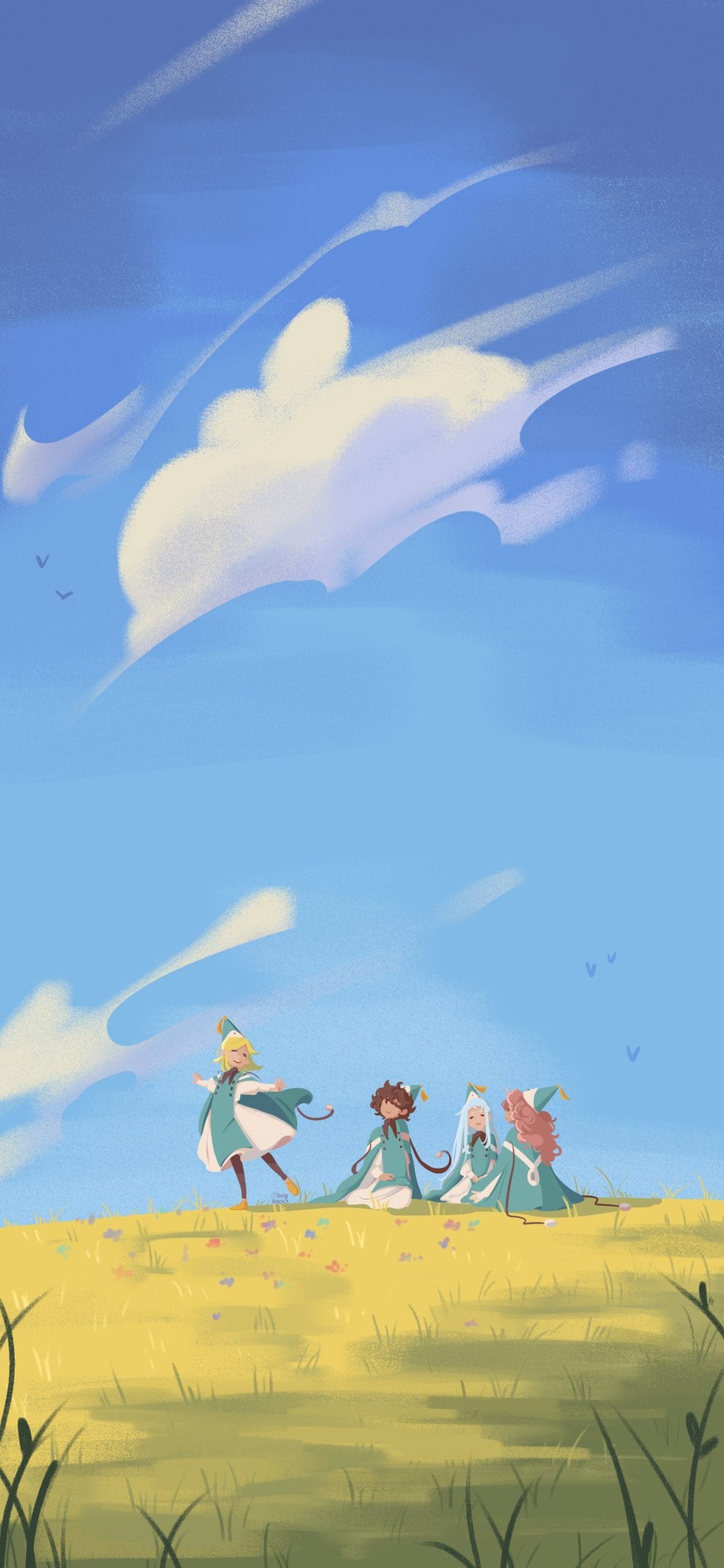
Every season has that one show. The one that ends up on every year-end list, the one people are still rewatching three years later, the one that gets recommended to outsiders as “the thing that finally made me care about anime.” Spring 2026 has that show. It’s called Witch Hat Atelier, and there’s a decent chance you’re sleeping on it.
That’s not a dig — it’s just the truth. The anime adaptation of Kamome Shirahama’s manga has been in production long enough that a lot of people wrote it off as vaporware. The manga has been running since 2016, the hype peaked in certain circles around 2019–2020, and without a constant social media drumbeat keeping it alive, casual fans drifted toward shinier objects. But here we are, and the show is finally real, it’s finally here, and it’s going to hit people who aren’t prepared for it like a freight train made of stained glass.
This is your preparation. By the end of this, you’ll understand exactly why Witch Hat Atelier is a must-watch this spring — and why skipping it would be one of the bigger anime mistakes you could make in 2026.
Why Witch Hat Atelier Is Flying Under the Radar (And Why That’s About to Change)
Part of what makes this situation so strange is that Witch Hat Atelier is not obscure. The manga has won the Kodansha Manga Award, the Harvey Award for Best Manga, and has been translated into over a dozen languages. Shirahama is the first Japanese creator to win a Harvey Award — the comic industry equivalent of an Oscar from American professionals. This is not some niche doujinshi that only fans of niche doujinshi know about.

And yet, the anime announcement cycle has been so long and so fragmented that outside of manga readers, the broader anime community has never fully locked in. The first announcement came years ago. Production realities slowed things. Studio details trickled out quietly. For comparison, a show like Frieren or Dungeon Meshi had massive social momentum by the time their adaptations aired. Witch Hat Atelier has been more of a slow build — trusted, respected, quietly anticipated by people who actually read it.
That’s about to change. The first trailer dropped and immediately started doing numbers among people who hadn’t read a single chapter. The art direction alone is enough to stop scrolling cold. Once this show is airing weekly and clips are hitting Twitter, Reddit, and TikTok, the “why didn’t anyone tell me about this” wave is coming. You have the advantage of knowing early. Use it.
For more on what else is worth watching this season, check out our Spring 2026 anime season complete guide.
The Manga’s Prestige: What You’re Actually Getting
Before we get to the anime itself, it helps to understand what source material the production team is working with — because this matters more than people give it credit for when assessing whether an adaptation will land.
Witch Hat Atelier (originally titled Tongari Boshi no Atelier in Japanese) is, structurally, a coming-of-age fantasy about a girl named Coco who accidentally uncovers the secret behind magic — something forbidden to most of the world — and is taken in as an apprentice witch to both learn and fix what she’s broken. That premise sounds relatively standard until you actually read it and realize Shirahama is doing something much harder than it looks: building a world where every single detail is internally consistent, emotionally weighted, and visually expressive simultaneously.
The magic system isn’t just window dressing. The characters aren’t just archetypes. The conflicts aren’t just obstacles. Everything is load-bearing. That’s rare in manga, and it’s even rarer in manga that’s also this beautiful to look at.
The Harvey Award win in 2019 was significant not just as recognition but as a signal — American comics professionals, people who grew up reading everything from Eisner-era work to contemporary independent comics, looked at Witch Hat Atelier and said this belongs in the conversation about the best sequential art being made anywhere. That’s the bar the anime is working from.
Kamome Shirahama’s Art: The Real Reason This Show Looks Different
Let’s talk about the art, because this deserves its own section and probably its own essay.
Kamome Shirahama’s visual style is immediately identifiable and very difficult to categorize. It draws from European fairy tale illustration traditions — think Arthur Rackham, think the Pre-Raphaelites — but filtered through contemporary manga sensibility and Shirahama’s own background as someone who spent years working as a concept artist. The result is something that feels old and new at the same time. Organic and intricate. The kind of art where zooming in on a panel reveals more detail, not less.
The witches’ robes in the manga are famously complex — layered, textured, covered in embroidered details that actually mean something within the world’s logic. The landscapes feel like they were painted before they were inked. The magic circles and sigils that characters draw to cast spells are so carefully designed that fans have tried to reverse-engineer the underlying rules from the visual grammar alone.
Translating this to animation is an enormous technical challenge. The production team has spoken openly about the approach they’re taking, and from what’s visible in the trailers, they’ve made smart choices: leaning into limited animation for complex sequences where movement could destroy the detail, and saving full fluid animation for action and emotional beats where motion matters most. The result, from what we’ve seen, preserves the soul of the art without trying to do something impossible.
Watch the trailer carefully. Notice the way the spell-casting sequences are handled — the ink-drawing aesthetic, the deliberate pacing. That’s not a budget constraint. That’s a creative decision that respects the source material. The show looks like Shirahama’s work, which is the only outcome that matters.
The Magic System: Rules That Actually Make the World Feel Real
Magic systems in fantasy anime exist on a spectrum. At one end, you have vague power-based systems where characters get stronger because the plot requires them to. At the other end, you have fully codified systems with internal logic so tight that the story can generate genuine drama from the rules themselves rather than just violating them whenever convenient.
Witch Hat Atelier sits firmly at the second end of that spectrum, and it does so in a way that’s unusually elegant.
The core conceit: magic in this world works through drawn sigils — specific shapes and patterns that, when correctly constructed, produce specific effects. The knowledge of how to draw these sigils is strictly controlled by the witching community, kept secret from the general population. Coco’s entire arc begins because she sees magic performed through a gap in the curtain, accidentally replicates what she saw, and causes irreversible harm to someone she loves.
What Shirahama does with this system is consistently impressive. The rules don’t bend for convenience — they create the stakes, the obstacles, and the solutions. When characters solve problems, they do it by understanding the system more deeply, not by transcending it. The apprentices in Olruggio and Qifrey’s atelier aren’t just learning spells; they’re learning a craft, with all the discipline and craft thinking that implies. Coco’s growth is measured in her understanding of the underlying principles, not just her power level.
This makes the storytelling more satisfying on a structural level, but it also makes the world feel real in a way that looser systems don’t. When the magic has rules, breaking those rules has weight. When the forbidden knowledge is actually forbidden for reasons the narrative takes seriously, the central conflict carries genuine moral complexity.
Emotional Storytelling That Doesn’t Condescend to Its Audience
Here’s where I want to push back against a lazy framing that sometimes follows this series: it’s not a “kids’ show.” It’s not a “shoujo” in the diminutive sense people sometimes use that word. Witch Hat Atelier is a story about guilt, disability, identity, and the ethics of knowledge — wrapped in the visual language of a fairy tale, yes, but operating at a level of emotional sophistication that a lot of “adult” anime never reaches.
Coco’s central wound is guilt. She did something she can’t undo, to someone she loves, because she wanted something badly enough that she didn’t think through the consequences. That’s not a child’s premise. That’s a premise that resonates with adults who have spent time living with their own mistakes. The series never lets her off the hook cheap — her path forward requires actually reckoning with what happened, not just finding a magical fix that erases the damage.
The supporting cast is equally well-drawn. Richeh, one of Coco’s fellow apprentices, has a physical disability that the manga handles with care and specificity — her arc isn’t about overcoming her disability, it’s about finding approaches to magic that work for her, and it’s one of the more thoughtful portrayals of disability in manga I can point to. Tetia and Agott bring contrasting energies to the atelier dynamic that create genuinely interesting friction, not just comedy-relief conflict.
And then there’s Qifrey. The mentor figure in this story is not a simple archetype. He’s warm and skilled and clearly invested in his apprentices, but he’s also carrying secrets and pursuing goals that the narrative makes you slowly uncertain about. The show is going to make you care about him and then make you uncomfortable about caring about him, and that’s exactly the kind of layered character work that sticks with you.
For a closer look at the character driving the emotional core of the story, see our deep dive on Coco’s character arc in Witch Hat Atelier.
The Studio Ghibli Comparison: What It Gets Right (and Why It’s Still Earned)
“It’s like Studio Ghibli” is one of those comparisons that gets thrown around so often it’s almost become meaningless. People say it about anything that has female protagonists, nature backgrounds, or a gentle pace. So let me be specific about why the Ghibli comparison actually applies to Witch Hat Atelier — and why it’s not just marketing language.
The structural parallel is closest to Kiki’s Delivery Service: a young girl learning a craft, finding her own relationship to a tradition larger than herself, making mistakes that have real consequences, and growing not through combat or power escalation but through understanding and effort. The apprenticeship model, the cozy-but-not-safe world, the idea that magic is work — all of that lines up.
But the more interesting parallel is tonal. Ghibli films operate in a register where genuine threat and genuine comfort coexist without either undermining the other. The world is beautiful and also contains things that will hurt you. Characters face real loss and also find real joy. The emotional palette refuses to be simple. Witch Hat Atelier does the same thing. The atelier scenes have warmth and safety and the pleasure of craft being practiced well. The scenes outside the atelier have menace, moral complexity, and stakes that the story honors rather than dissolves.
That tonal balance is hard to maintain. Most fantasy anime collapse into one register or the other — either pure comfort, or pure tension. The ability to hold both is rarer than it looks, and it’s one of the things that puts Witch Hat Atelier in the same conversation as the best of Ghibli.
Why This Show Works for People Who Don’t Think They Like Anime
If you have someone in your life who’s been anime-curious but bounced off most entry points — this is your show to hand them.
The barriers that typically stop non-anime fans cold don’t apply here. There’s no extended power-scaling arc. No tournament arc. No harem dynamics. No 47-episode prologue before the plot starts. The story is visually stunning in a way that reads as “art” rather than “animation genre,” which lowers the conceptual resistance for people who’ve decided anime isn’t for them based on surface-level impressions. The themes are universal enough that you don’t need any prior context — guilt, craft, learning, the ethics of forbidden knowledge — these aren’t niche concerns.
The European fairy-tale visual DNA also helps. There’s something in Shirahama’s design language that feels familiar to Western audiences without being derivative — it doesn’t look like anything they’ve seen before, but it doesn’t feel alien either. That’s an unusual accomplishment for any visual work, let alone one rooted in Japanese manga tradition.
If you’re building a watchlist for someone new to the medium, Witch Hat Atelier belongs alongside the classic entry points. See our list of the best anime for people who don’t watch anime for more recommendations in this vein.
Don’t Sleep on This: What’s at Stake If You Wait
There’s a specific kind of regret that comes from sleeping on a great show during its original run. You miss the communal experience — the weekly episode discussions, the theories, the reaction videos, the moment when a particular scene hits the internet and everyone loses their mind simultaneously. With a show like Witch Hat Atelier, those moments are coming. There are chapters in the manga that are going to become anime moments people talk about for years.
Don’t let Spring 2026 end and then spend six months watching everyone else talk about how good it was.
The season is stacked, as it usually is — see the full Spring 2026 guide for everything worth tracking — but Witch Hat Atelier is the one you’ll regret skipping most. Not because it’s the most hyped. Precisely because it’s not.
If you’re looking for more under-the-radar picks this season, we’ve also put together a guide to the most underrated anime of Spring 2026 — and Witch Hat Atelier deserves to be on both lists simultaneously, which is a strange position for a show to be in, but here we are.
Final Verdict: Set the Reminder Now
Let me put this plainly: Witch Hat Atelier is a must-watch for Spring 2026, full stop. It’s the rare adaptation where the source material is award-winning, the art direction looks faithful, the themes are substantial, and the emotional intelligence is evident from the first trailer. These things don’t all line up often. When they do, you watch the show.
The manga has been one of the most quietly acclaimed fantasy works of the past decade. It won awards from American comics professionals who had no particular obligation to pay attention to it. It built a passionate, patient fanbase that waited years for an adaptation without losing faith. It tells a story about learning and guilt and the weight of forbidden knowledge, wrapped in some of the most beautiful art being produced in comics anywhere.
That story is now an anime. It’s arriving this spring. If you care about the medium at all — or if you know someone who might care and just hasn’t found the right entry point — this is the one.
For further reading on Shirahama’s work and why the manga community has been passionate about it for years, the Manga UK feature on Witch Hat Atelier is worth your time as pre-season reading.
Set the reminder. Clear the schedule. The witches are coming.