Subaru Natsuki: Re:Zero’s Most Polarizing Protagonist Explained
Few anime protagonists have split fanbases as cleanly down the middle as Subaru Natsuki. You either find his breakdowns exhausting or you think he’s the most honest depiction of trauma ever put in a shonen-adjacent show. There’s almost no in-between. And that divide — that friction — is exactly what makes a proper Subaru Natsuki character analysis worth sitting down and doing properly.
Re:Zero didn’t invent the isekai genre, but it broke something loose inside it. Where most isekai protagonists arrive in a fantasy world and immediately start winning, Subaru Natsuki arrives and dies. Then he dies again. Then he watches people he loves die while he helplessly resets back to a checkpoint no one else can see. The show asks a genuinely uncomfortable question: what would that actually do to a person? The answer it gives, through Subaru, is the reason this series belongs in conversations about the best character writing in anime — full stop.
Why Subaru Natsuki Divides the Fandom
The first thing people bounce off when they try a Subaru Natsuki character analysis is the famous Episode 15 spiral. Subaru, desperate to save Rem and Ram from the Demon Beast curse, throws a temper tantrum at Emilia because she won’t listen to him — and he can’t explain why he knows what he knows without violating the absolute rule of Return by Death. He’s cruel. He’s selfish. He says things he can’t take back.
A certain tier of viewer checks out right there. And honestly? That reaction makes sense on a surface read. Anime conditions us to root for protagonists unconditionally. The genre trains us to expect that when a main character does something bad, it’s either played for laughs or quickly justified. Subaru Natsuki refuses that comfort. His mistakes have weight. He doesn’t get a pass.
But here’s the thing: that scene is supposed to be uncomfortable. The show isn’t endorsing his behavior. It’s depicting how a person with untreated psychological damage, zero support system, and an impossible secret actually handles pressure. Not heroically. Not coolly. Badly. Like a real person would.

The audience members who hate Subaru Natsuki are often the ones who wanted a different show. The ones who love him are watching the show Re:Zero actually is.
Return by Death: A Power That Destroys Its User
Most isekai protagonists get a power that makes the world easier. Subaru Natsuki gets a power that makes him harder. Return by Death sounds like a resurrection cheat — you die, you reset, you try again. But the mental cost is never reset. Subaru carries every death with him. Every death of someone he loves. Every failure. Every moment where he wasn’t fast enough or smart enough or brave enough to prevent the worst from happening.
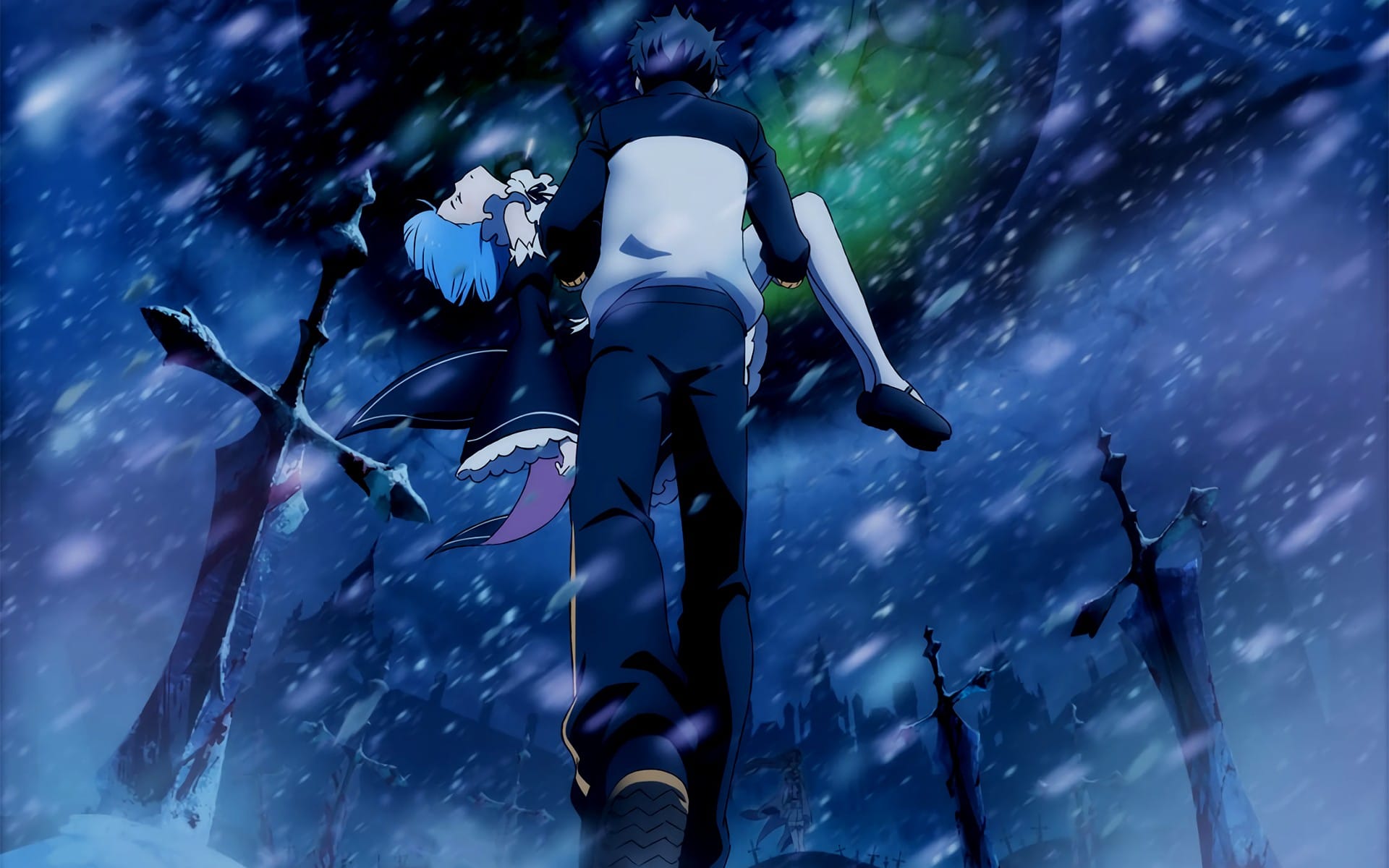
By the time we reach Arc 4 at the Sanctuary, Subaru Natsuki has died dozens of times in ways that would shatter most people permanently. He’s been stabbed, slaughtered by his own companions, torn apart by mabeasts, killed by the Witch’s Cult, and crushed under the weight of choices that had no right answer. He can’t tell anyone. Satella’s curse ensures that the moment he tries to explain Return by Death, black hands reach out of his chest and kill the person he’s talking to. He is, in the most literal sense, completely alone with his trauma.
The academic framing here is complex PTSD, and Re:Zero depicts it with a fidelity that clinical descriptions of trauma would recognize: hypervigilance, dissociation, emotional dysregulation, and a desperate need to control outcomes because losing control has killed people before. Subaru Natsuki’s worst moments aren’t character flaws the author forgot to address — they’re symptoms of a person breaking apart under conditions no human being was built to survive.
What separates Re:Zero from lesser isekai isn’t just that it gives Subaru Natsuki a traumatic power. It’s that it takes that trauma seriously, follows it to its logical conclusions, and forces Subaru to actually confront it rather than power through it on vibes alone.
The Arc That Changed Everything: Breaking Point at the Sanctuary
If you’re doing a complete Subaru Natsuki character analysis, Arc 4 is where the whole story earns its reputation. The Sanctuary arc is twenty-plus episodes of Subaru Natsuki dying in a time loop he can’t escape, slowly losing his grip on what’s real, what’s worth fighting for, and whether he has any self-worth to speak of.

The Ryuzu loop forces him into a Groundhog Day-style scenario where Beatrice is going to die, Emilia is going to break under the Sanctuary’s trials, and the Great Rabbit is going to eat everyone unless Subaru figures out the answer — and he doesn’t have the answer for a long, devastating time. He tries everything. He tries sacrifice. He tries manipulation. He tries giving up. He sits in Roswaal’s library and reads a book that tells him the future and realizes the man he trusted has been engineering his suffering.
The cave conversation with Emilia — where she finally asks him what’s actually wrong and he tells her everything — is one of the best scenes in anime in the last decade. Not because it’s action-packed or visually spectacular. Because it’s just two broken people being honest with each other in a moment where honesty costs everything. Subaru Natsuki says out loud what he’s never been able to say: that he’s terrified, that he doesn’t know who he is without Return by Death as a crutch, that his entire identity has become “the guy who resets until everyone lives” because he doesn’t know who he’d be otherwise.
That admission — and Emilia’s response to it — is the turning point of his entire arc.
Mental Health Themes: What Re:Zero Is Actually About
This is the part of any Subaru Natsuki character analysis where people sometimes get uncomfortable, because it means taking a fantasy anime seriously as a piece of psychological fiction. But Re:Zero demands that seriousness. Tappei Nagatsuki didn’t write Subaru Natsuki as an action hero who happens to have emotional moments. He wrote him as a character study first, and everything else second.
Before being transported to the New World, Subaru Natsuki was a hikikomori — a socially withdrawn shut-in who had checked out of school and was spending his days gaming and isolating. He hadn’t collapsed dramatically. He’d just… faded. That backstory matters enormously because it establishes that even before Return by Death, Subaru was a person dealing with depression and avoidance. The isekai didn’t break him from a healthy baseline. It broke someone who was already fragile.
What the show does with that foundation is remarkable. Subaru Natsuki’s isekai journey isn’t escapism — it’s the story of a person who used fantasy as escapism getting forced to confront reality instead. In the New World, he can’t log off. He can’t reset his save and try a different build. His actions have permanent consequences for other people even when they have none for him. The loop teaches him, brutally, that he is not the only person in the story.
By Season 3 and the events covered in our Re:Zero Season 3 breakdown, Subaru Natsuki is a fundamentally different person than the kid who stumbled out of a convenience store into Lugunica. He still makes mistakes. He still has moments of arrogance and desperation. But he’s learned — at enormous cost — how to ask for help, how to trust other people’s strength instead of trying to carry everything himself, and how to find worth in who he is rather than what he can fix.
Subaru and Emilia: Beyond the “Chosen Girl” Trope
The Subaru/Emilia dynamic gets flak from people who think Subaru is irrationally fixated on a girl he just met. That critique misses what’s actually happening between them. Yes, Subaru Natsuki falls for Emilia almost immediately after she helps him during a mugging — but what he falls for isn’t just her appearance. It’s that she was kind to him when she had no reason to be. For a person as hollowed out as Subaru was, that kind of unconditional decency hits differently.
What makes the relationship genuinely interesting is that it evolves from that romanticized projection into something more honest and harder-earned. Emilia has her own arc — her own trauma, her own isolation as a silver-haired half-elf who everyone associates with the Witch of Envy. She’s not just a goal for Subaru Natsuki to protect. She’s a person with her own wounds, and watching those two wounded people figure out how to support each other without using each other as crutches is the actual love story.
The Sanctuary confession scene works because it’s not just Subaru opening up to Emilia — it’s Emilia refusing to let him martyr himself again, matching his vulnerability with her own, and choosing him back with full knowledge of how broken he is. That’s not a typical anime romance beat. That’s something earned.
The Rem Question: Why Her Love Matters Even Without Resolution
No Subaru Natsuki character analysis exists in a vacuum without addressing Rem, and the fandom split over the Subaru/Emilia vs. Subaru/Rem debate has been one of the most persistent arguments in anime communities for years. Here’s the honest take: both perspectives have merit, and Re:Zero is deliberately complicated about it.
Rem’s love for Subaru Natsuki is arguably the purest thing in the show. She watched him at his worst — at his most self-destructive and broken — and chose to love him anyway, not despite his brokenness but fully understanding it. Her speech in Arc 3, where she tells him that she will be his reason to live if he can’t find one himself, is devastatingly good character writing. It also highlights something the show never lets Subaru Natsuki forget: that he is loved, that he matters, that his life has value independent of how many checkpoints he can survive.
Subaru’s choice of Emilia over Rem isn’t a dismissal of Rem’s love. It’s a recognition that what he has with Emilia is something unfinished and real that he can’t abandon. The fact that this choice costs him — that he carries the weight of Rem’s feelings — is part of what makes Subaru Natsuki a complete character rather than a wish-fulfillment avatar. He doesn’t get to have everything. His choices mean something.
Subaru and Beatrice: The Partnership Nobody Expected
If the Emilia relationship is about Subaru Natsuki learning to love someone else properly, and the Rem relationship is about him being loved fully for the first time, the Beatrice relationship is about recognition. Beatrice had been waiting in the Forbidden Library for four hundred years for “that person” — someone Echidna prophesied would come for her. She’d spent centuries believing she had no purpose beyond waiting, and when it became clear that the prophesied person might never come, she made peace with dying.
Subaru Natsuki doesn’t fulfill the prophecy. He walks into the library and chooses her anyway, not because of destiny or because he needs her power, but because he can see a person trapped in the same isolation he used to live in. He refuses to accept that she doesn’t matter. Coming from a former hikikomori who knows exactly what it feels like to decide your existence is irrelevant, that choice lands with genuine weight.
Their dynamic afterward — grumpy tsundere spirit and chaotic disaster protagonist — provides some of the show’s best comedy, but the foundation is something more interesting: two people who had both, in different ways, given up on themselves, deciding to give each other a reason not to.
Subaru Natsuki vs. Other Isekai Protagonists
To fully appreciate a Subaru Natsuki character analysis, you have to put him in context. The isekai genre has produced a lot of male leads, and most of them share a template: overpowered, surrounded by women who love them for reasons the narrative doesn’t earn, and emotionally invulnerable in a way that reads as wish fulfillment rather than characterization.
Think about the genre’s biggest names. Kazuma from KonoSuba is explicitly played as an unlikable loser for comedy purposes. Kirito from Sword Art Online is competent to the point of blandness. Ainz from Overlord is compelling precisely because the show is aware he’s a villain — and for deeper digs into what makes isekai antagonists work, our breakdown of the best anime villains covers that territory. Even Rimuru from That Time I Got Reincarnated as a Slime, who has genuine charm, is fundamentally a power fantasy — problems get solved by Rimuru getting stronger and people naturally gravitating toward him.
Subaru Natsuki breaks every one of those templates. He is not overpowered — his one “ability” is a curse that kills him. He is not emotionally invulnerable — his emotions get him and others killed repeatedly. He is not surrounded by people who love him for free — every relationship he has was earned through failure, honesty, and a willingness to keep showing up even when showing up hurt. And he is not static. The Subaru Natsuki of Arc 6 is a categorically different person than the kid who got stabbed in the alley in Episode 1, and that growth is credible because the show made us watch every painful step of it.
For anyone checking what the isekai scene looks like heading into 2026, the Spring 2026 anime season guide has plenty of new arrivals in the genre. Very few of them are going to build a protagonist with this kind of intentionality.
The character that Subaru Natsuki most usefully gets compared to isn’t another isekai protagonist — it’s Shinji Ikari from Neon Genesis Evangelion. Both characters were created as deliberate deconstructions of genre conventions. Both protagonists refuse heroic behavior on demand and melt down under pressure in ways that make audiences angry. Both are, on careful inspection, the most psychologically honest protagonists in their respective genres. The fandom reactions to both are almost identical: an initial split between viewers who find them realistic and compelling, and viewers who wanted a different show.
Character Growth Across Seasons: From Arrogance to Genuine Heroism
Early Subaru Natsuki has a bad habit that’s separate from his trauma: he’s arrogant about his own importance. The isekai logic that he internalized from games and light novels told him the protagonist is always central, always the one who matters, always the one who has to fix everything. That belief — that he is the main character and therefore must solve every problem personally — is almost as destructive as Return by Death itself.
Season 1 is largely about that arrogance getting punished. Every time Subaru Natsuki acts like the plot revolves around his decisions, people die. The Witch’s Cult attack on the mansion happens partly because Subaru tried to handle threats himself rather than trusting the people around him. His spiral in Episode 15 is arrogance curdled into desperation — he thinks Emilia should just trust him because he’s the protagonist and protagonists get trusted.
The arc of growth that follows across Seasons 1 through 3 is, at its core, Subaru Natsuki learning that heroism isn’t about centrality. It’s about showing up for other people at cost to yourself, supporting their growth rather than making yourself indispensable to it, and accepting that you are not the most important person in every room. By the events that Season 3 covers, Subaru Natsuki fights alongside Emilia rather than in front of her. He celebrates Beatrice’s strength rather than treating her as his asset. He trusts Rem’s instincts rather than trying to protect her from information. The shift is quiet, but it’s total.
That’s what real character development looks like. Not a sudden awakening, not a power-up triggered by a dramatic speech. Just a person, slowly, learning how to be less of a problem for the people they love.
Why Subaru Natsuki Is Actually One of the Best-Written Protagonists in Anime
Here’s the case, plainly stated: Subaru Natsuki is one of the best-written protagonists in anime because he is the only one in his genre — and one of very few in the medium — who is allowed to be completely, embarrassingly, recognizably human.
He makes bad decisions under stress. He says things he regrets. He protects himself with bravado when he’s terrified. He fixates on the people he loves in ways that sometimes cross into obsession. He has an ego that keeps showing up even after life has repeatedly kicked it in. Every single one of those traits is a real trait that real people have — especially real people who grew up isolated, who never had healthy models for relationships, who carry damage from things that weren’t their fault.
And every single one of those traits gets addressed. Not smoothed away — addressed. Re:Zero doesn’t fix Subaru Natsuki by making him better at everything. It fixes him by making him more honest with himself and the people around him. The measure of his growth isn’t his combat stats or his tactical genius. It’s that by the later arcs, when he’s scared, he tells someone he’s scared. When he needs help, he asks. When he’s wrong, he eventually admits it. That sounds like a low bar until you realize how few protagonists clear it.
The argument against Subaru Natsuki as a great character usually comes down to: “he’s annoying.” And look — that’s fair. He is, at times, genuinely difficult to watch. But annoying and badly written aren’t the same thing. Some of the best characters in fiction are difficult people. The question isn’t whether they’re pleasant to be around. It’s whether they’re true. Whether they illuminate something real about human experience. Whether the story they’re in earns its emotional payoffs.
Subaru Natsuki clears all three. Re:Zero earns everything it asks you to feel, because it made you watch Subaru Natsuki fail, and break, and try again, and break again, and eventually — slowly, imperfectly, credibly — become someone worth rooting for not out of genre convention but out of genuine respect for the distance he’s traveled.
That’s not an accident of writing. That’s craft.
Final Verdict: The Protagonist Re:Zero Deserves
Any thorough Subaru Natsuki character analysis ends up in the same place: appreciating that the show built something genuinely rare. A protagonist who starts as a mess, gets worse before he gets better, and earns his growth through suffering that feels neither gratuitous nor unearned. A character whose flaws are features, not bugs — symptoms of a real psychology rather than convenient obstacles to dramatic moments.
Subaru Natsuki is divisive because he demands something from the audience that comfort-food isekai doesn’t: the willingness to sit with a person at their worst and trust that the journey matters. For viewers who can give him that, he pays it back with one of the most satisfying character arcs in the genre. For viewers who can’t, there are plenty of other isekai protagonists who will never make them uncomfortable.
Both audiences are valid. But only one of them is watching a show that takes them seriously as a viewer.
Subaru Natsuki is, flaws and all, exactly what isekai needed — and has been missing ever since.