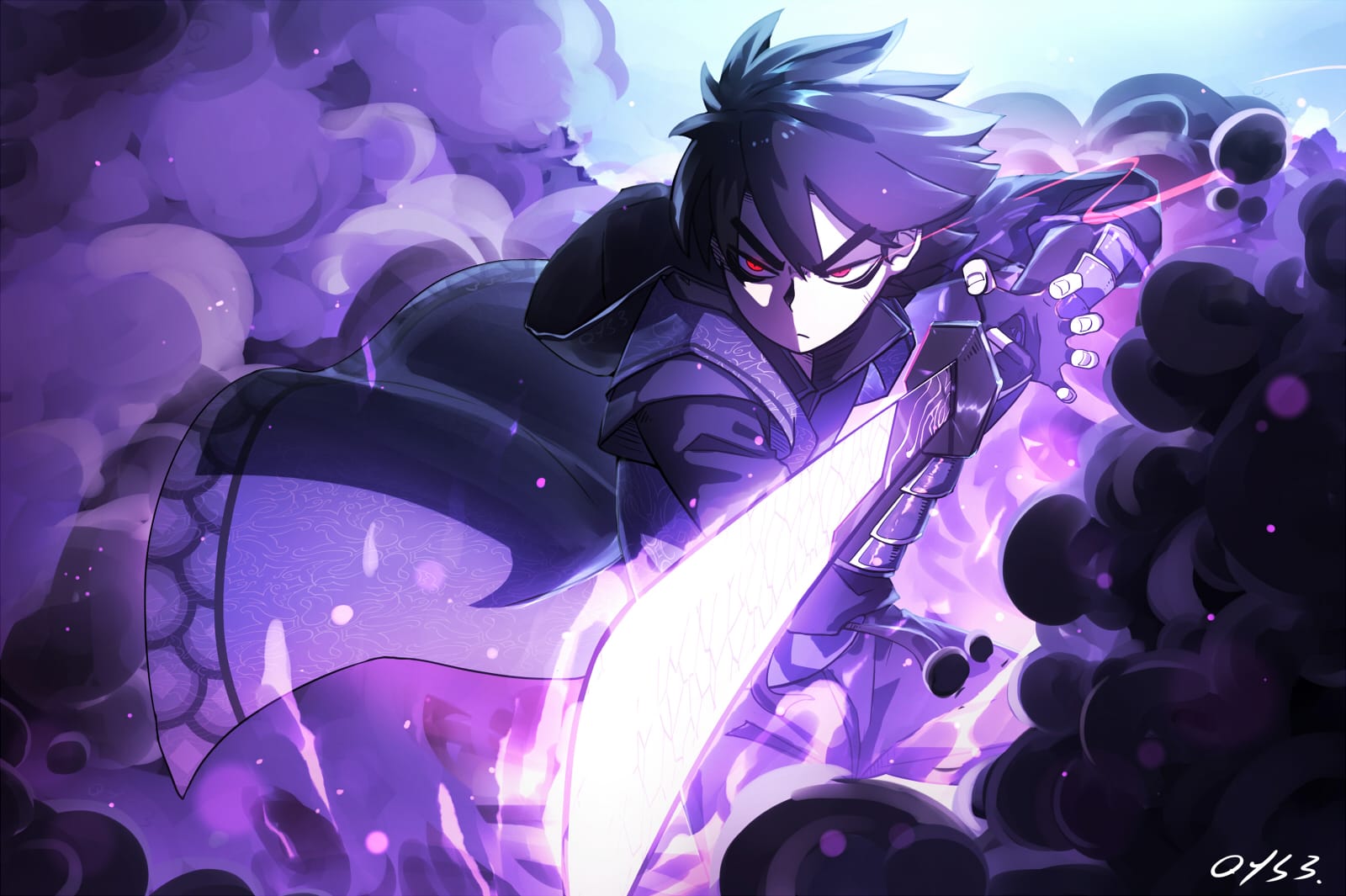
Let’s be honest for a second. When The Strongest Sage with the Weakest Crest aired back in Winter 2022, the reaction from the anime community was… complicated. Not a disaster, not a triumph — something messier than either. A story with genuine bones underneath a production that clearly bit off more than it could chew. Four years later, Strongest Sage Season 2 is locked in for Spring 2026, and there’s a real question hanging in the air: has enough changed to make this worth your time?
Short answer? Probably yes — but only if you walk in knowing what this show actually is, and what it was always trying to do. This guide covers everything: the source material, the crest system, Matthias Hildesheimer’s reincarnation arc, the legitimate criticisms of Season 1, and what the sequel needs to deliver to earn back the audience that drifted away.
Season 1 Was Controversial — And the Critics Weren’t Wrong
If you watched Season 1 and came away feeling vaguely shortchanged, you were picking up on something real. Shikkaku Mon no Saikyou Kenja — adapted from Shinkoshoto’s light novel series and the manga illustrated by Liver Jam & Popo — had a production that struggled to keep pace with its own ambitions. SILVER LINK handled the animation duties, and while they’re no strangers to isekai adaptations, the results here were inconsistent at best.

The animation quality wobbled episode to episode in ways that were hard to ignore. Action sequences that should have been showcase moments — this is a story about the single most powerful mage in the world obliterating enemies — frequently looked rushed or underrendered. Off-model character art showed up at unfortunate moments. Magic effects that needed visual weight often landed flat.
Then there was the pacing. Season 1 covered a significant chunk of the source material in twelve episodes, and it showed. Character introductions felt compressed. Plot beats that deserved room to breathe got collapsed into single scenes. The worldbuilding — which is actually one of the stronger elements of the light novel — barely had time to establish itself before the show was off to the next story beat.
None of this made Season 1 unwatchable. Matthias’s raw appeal as a protagonist carried a lot of weight, and the core concept is legitimately interesting. But “not unwatchable” isn’t the same as “good,” and anyone going into Season 2 pretending Season 1 was secretly great is setting themselves up for disappointment.
Understanding Matthias Hildesheimer: The Reincarnation Setup That Actually Works
Here’s where the show distinguishes itself from the endless pile of isekai clones — the reincarnation premise has actual structural logic to it, rather than just being a convenient plot device to hand the protagonist superpowers.
In his previous life, Matthias was Gaius — the greatest sage in the world, a mage who had pushed his abilities to their absolute ceiling through centuries of study and combat. The problem? The crest system that governs magical ability in this world had him locked into the wrong type from the start. His Crest of the Stars was powerful, but it was optimized for a style of magic that Gaius had already theorized was inherently inferior to close-range combat magic. He could see the ceiling of what he could achieve, and it frustrated him.
So when death comes, Gaius doesn’t simply accept it. He uses his final moments to engineer his own reincarnation, deliberately targeting a future body that will be born with the Fourth Crest — universally regarded as the weakest and most worthless crest in existence. He knows something nobody else does: the Fourth Crest, dismissed for generations as a combat liability, is actually the most perfectly suited crest for the close-range destruction magic style he spent his entire previous life theorizing about.
He reincarnates as Matthias Hildesheimer, born into a minor noble family, immediately written off by everyone around him because of his “failure” crest. Then he starts demonstrating that every assumption the world has made about magical power is wrong.
This setup works because Matthias isn’t just powerful — he’s right in a way that the world hasn’t caught up to yet. His overpowered status isn’t arbitrary gift-giving from a truck or a game menu. It’s the result of a prior lifetime of work, applied through a specific lens that nobody else has thought to look through. That distinction matters for how the story’s power fantasy lands emotionally.
The Crest System Explained: Why the “Weakest” Crest Is Anything But
The crest system is the foundational mechanic of this world, and Season 1 did a frustratingly shallow job of explaining it. Here’s the version you actually need to understand the story:
Magical ability in this world is governed by four types of crests, each associated with a different magical affinity. The First Crest is considered the most prestigious — it excels at long-range, wide-area magic, the kind of flashy high-impact spellwork that makes you look impressive in a court or on a battlefield where enemies are far away. The hierarchy descends from there, with the Fourth Crest sitting at the bottom of every official ranking system.
The conventional wisdom is that Fourth Crest mages are essentially useless — their affinity is for short-range combat, which in a magical world seems counterintuitive. Why get close when you can blast from a distance? Every magical institution, every academy, every guild in this world has internalized this assumption so deeply that it’s stopped being examined.
Gaius spent his previous lifetime building a different theory. Close-range destruction magic, properly developed, is faster, more precise, harder to defend against, and allows for a combat style that long-range mages simply can’t adapt to. The issue wasn’t that Fourth Crest mages were weak — it was that the magical research infrastructure had never bothered to develop Fourth Crest techniques, because everyone assumed it wasn’t worth the effort.
Matthias arrives with millennia of theoretical work already done. He doesn’t just perform well despite his “weak” crest. He performs at a level that exposes how backward the world’s understanding of magic has become over the generations — and that degradation of magical knowledge turns out to be its own significant plot thread.
What Strongest Sage Season 2 Needs to Fix
The fanbase has had four years to think about this, and the wishlist for Season 2 is pretty consistent across communities. Here’s what actually needs to happen for this sequel to succeed:
Better production consistency. This is the obvious one. The Season 1 animation problems weren’t about budget alone — they were about pipeline management and the consistent application of whatever resources were available. Season 2 needs fight sequences that look like the animators understood why those fights matter to the story. Matthias obliterating opponents should feel visceral. When it doesn’t, the entire power fantasy collapses.
More room for the worldbuilding to breathe. The light novel and manga are doing something genuinely interesting with the idea of a world where magical knowledge has been slowly degrading over centuries — and the reasons for that degradation are darker than they first appear. Season 1 barely scratched the surface. Season 2 needs to let these threads develop instead of rushing past them.
Better character work for the supporting cast. Lurie and Alma are solid companions with distinct personalities, but Season 1 didn’t give them enough space to actually develop relationships with Matthias that felt earned. The group dynamic is one of the story’s quiet strengths in the source material; the anime hasn’t fully utilized it.
Commit to the tone. One of Season 1’s stranger problems was tonal inconsistency — moments that should have landed with weight got undercut by rushed transitions or awkward comedic beats at the wrong time. Season 2 needs a clearer sense of when it’s being a power fantasy, when it’s being a mystery story, and when it’s being something darker.
How Matthias Compares to Other OP Isekai Protagonists
The “overpowered isekai protagonist” genre has become so crowded that it practically needs its own subgenre taxonomy at this point. So where does Matthias actually sit in that hierarchy, and what makes him worth caring about compared to the dozens of other god-tier reincarnators flooding the genre?

The obvious comparison is Rimuru Tempest from That Time I Got Reincarnated as a Slime — another protagonist whose power grows into something genuinely ridiculous, but who earns audience affection through personality and strategic thinking rather than raw force alone. Rimuru wins partly through cleverness and empathy. Matthias wins through expertise — he’s less a character who lucked into power and more a professional who already put in the work.
Against Ainz Ooal Gown from Overlord, Matthias looks positively warm-blooded. Ainz is compelling partly because of his moral ambiguity and the vast gap between his public persona and private uncertainty. Matthias has no such ambiguity — he’s straightforwardly trying to help people, fix the world’s degraded magical knowledge, and defeat genuine threats. He’s a more traditional protagonist in that sense.
The closest spiritual cousin might be Anos Voldigoad from The Misfit of Demon King Academy — another ancient, supremely powerful entity reincarnated into a world that doesn’t recognize him, forced to prove what should be obvious. Both characters share that specific dynamic of being the most qualified person in any room and having to demonstrate it repeatedly. The difference is tone: Anos leans into theatrical confidence; Matthias is more matter-of-fact about his superiority.
What distinguishes Matthias from the weakest entries in the OP isekai genre is that his power has a rationale. It’s not assigned. It’s not a divine gift. It’s the product of work done in a previous life, applied through knowledge nobody else has. That’s not a revolutionary concept, but it’s executed with more internal consistency than most of the competition. For more on how isekai protagonists are stacking up in 2026, check out our full ranking at Best Isekai Anime 2026: Ranked and Reviewed.
The Spring 2026 season is particularly stacked with isekai entries, which means Strongest Sage Season 2 is going to face more direct competition than Season 1 did. For a full breakdown of what the season is offering, see our Spring 2026 Anime Season Complete Guide. And if you want a deeper analysis of why isekai as a genre is both thriving and struggling simultaneously, our piece on the Spring 2026 Isekai Problem gets into the structural issues facing the genre right now.
Spring 2026 Air Date and What to Expect
Strongest Sage Season 2 is slated for the Spring 2026 anime season, which runs from April through June. An exact premiere date hasn’t been locked in with full confirmation at the time of writing, but all promotional materials and announcements point to an April 2026 launch window.
The source material available for Season 2 is not a concern — the light novel series has been running since 2017 and has accumulated substantial volume, and the manga adaptation has similarly built up a deep well of material. The question has never been whether there’s enough story to adapt. It’s whether the production will handle that material with the care it deserves.
Based on promotional artwork released ahead of Season 2, there’s reason for cautious optimism on the visual quality front. The character designs look more polished than mid-season Season 1 episodes, and promotional videos have shown action sequences with notably cleaner compositing. Whether that quality holds across a full cour is another matter — promises made in promotional materials and promises kept in broadcast episodes are different things, as Season 1 demonstrated painfully.
Season 2 is expected to push deeper into the mysteries surrounding magical degradation in this world — specifically, why humanity’s understanding of magic has been in such steep decline for generations, and what (or who) is behind it. This is where the story shifts from “powerful guy impresses everyone” to something with genuine stakes and a more complex antagonist framework. If the season handles this material well, it has the potential to significantly reframe how people think about the series overall.
For reference, the manga adaptation is widely regarded as the best way to experience the story in a visual format, and fans who want to calibrate their expectations for Season 2 would do well to check out some coverage from Crunchyroll’s coverage of the original series to understand the baseline the production team is working from.
Is Strongest Sage Season 2 Worth Watching?
Here’s the honest version of this answer, broken down by who you are:
If you watched Season 1 and liked it despite the problems: Season 2 is absolutely on your watchlist. The story was always pointing toward more interesting territory than Season 1 had time to reach, and the core appeal — Matthias systematically dismantling a world’s worth of wrong assumptions — hasn’t diminished. You’re watching this.
If you dropped Season 1 halfway through due to animation quality: Give Season 2 one episode. If the visual quality has genuinely improved, you’ll know immediately, and you can go back and catch up on the story beats you missed. If it looks the same as the worst parts of Season 1, you have your answer and you’ve only spent twenty minutes.
If you’ve never watched the show at all: The premise is strong enough to be worth trying. Matthias is a more thoughtfully constructed overpowered protagonist than most of his genre peers, and the crest system gives the power fantasy a mechanical foundation that makes it feel less arbitrary. Go in with adjusted expectations for animation quality and you’ll likely find more to like than the show’s mixed reputation suggests.
If you’re a strict animation-quality-first watcher: Wait for episode reviews after the premiere. Don’t commit until you’ve seen real broadcast footage, not promotional clips. Season 1 is a cautionary tale about trusting pre-release material for this franchise.
The honest take is this: The Strongest Sage with the Weakest Crest was never a bad story trapped in a bad anime. It was a solid story trapped in an inconsistent one. Season 2 doesn’t need to be brilliant — it just needs to be consistent. If it delivers that, it’ll be one of the better isekai offerings of Spring 2026, a season that has no shortage of competition but also no shortage of entries that will quietly disappoint.
Matthias Hildesheimer spent a lifetime being dismissed because the world misunderstood what his crest was capable of. There’s a version of this story where Season 2 gets a similar redemption arc — dismissed because of Season 1’s reputation, then quietly proving that the real thing was worth waiting for.
Four years is a long time to wait for that payoff. Spring 2026 will tell us whether it was worth it.