There’s a particular moment in Steel Ball Run where Johnny Joestar — paraplegic, bitter, stripped of everything that once defined him — fires a nail from a Stand powered by the spinning energy of the universe, and it loops across dimensions to pierce a man who can literally redirect fate itself. That moment is absurd. It is enormous. It is completely earned. And it is exactly why Steel Ball Run is not just the greatest JoJo’s Bizarre Adventure part ever written — it might be the greatest long-form manga arc of the 21st century.
Bold claim? Sure. But Hirohiko Araki spent 24 years building toward this story, and it shows on every page. Let’s break down why Part 7 stands alone.
The Case Against Every Other Part (And Why They All Fall Short)
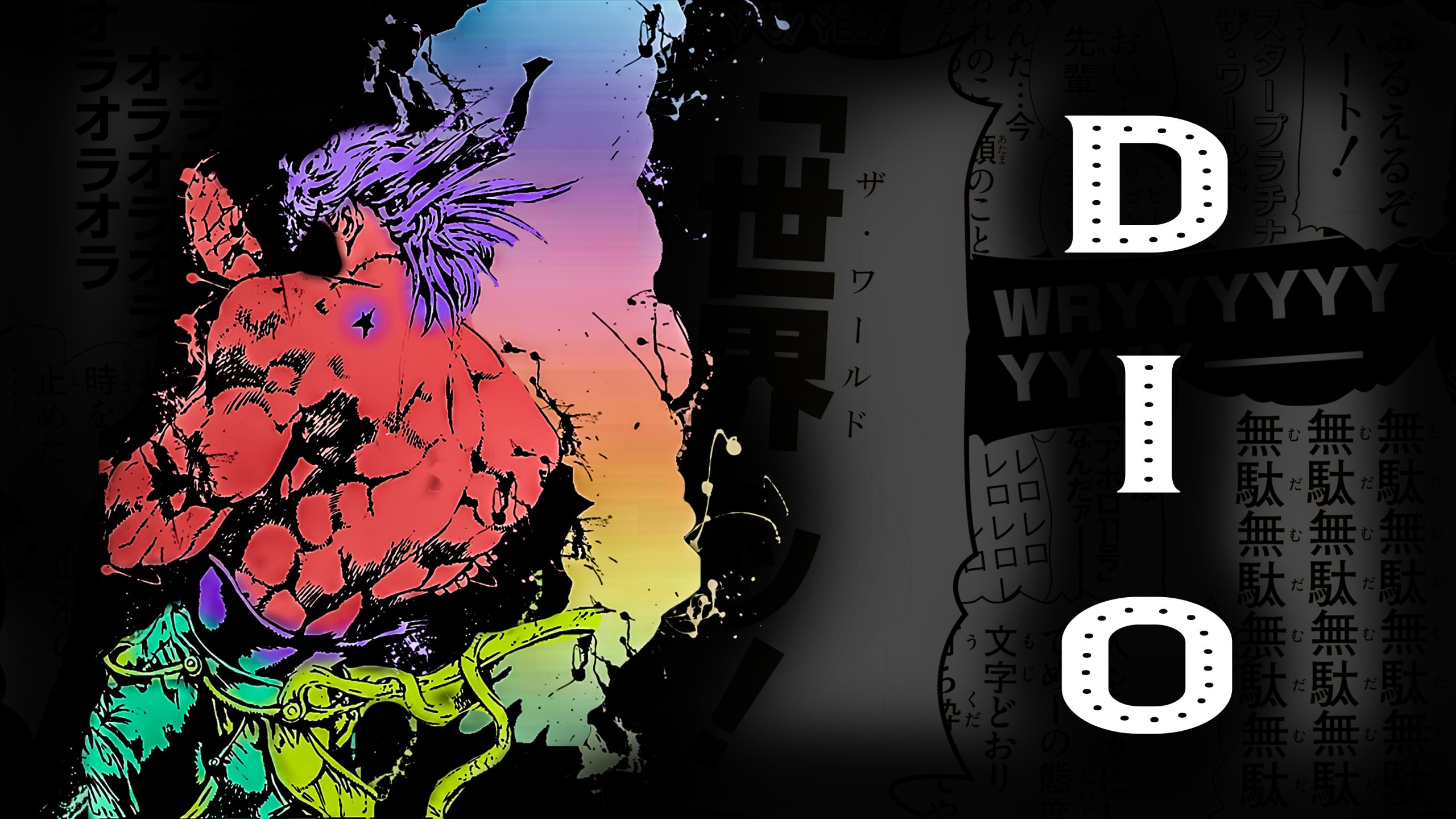
To understand why Steel Ball Run is the peak, you have to reckon honestly with what came before it. Phantom Blood gives us the foundational mythology and Jonathan Joestar’s noble tragedy — but Jonathan is less a character than an ideal. Battle Tendency perfects the formula, gives us Caesar and Lisa Lisa and Joseph’s chaotic genius, and remains endlessly rewatchable. Stardust Crusaders is the cultural juggernaut, the part that sold millions of Dio cosplay kits and made “WRYYY” a household sound in anime spaces.
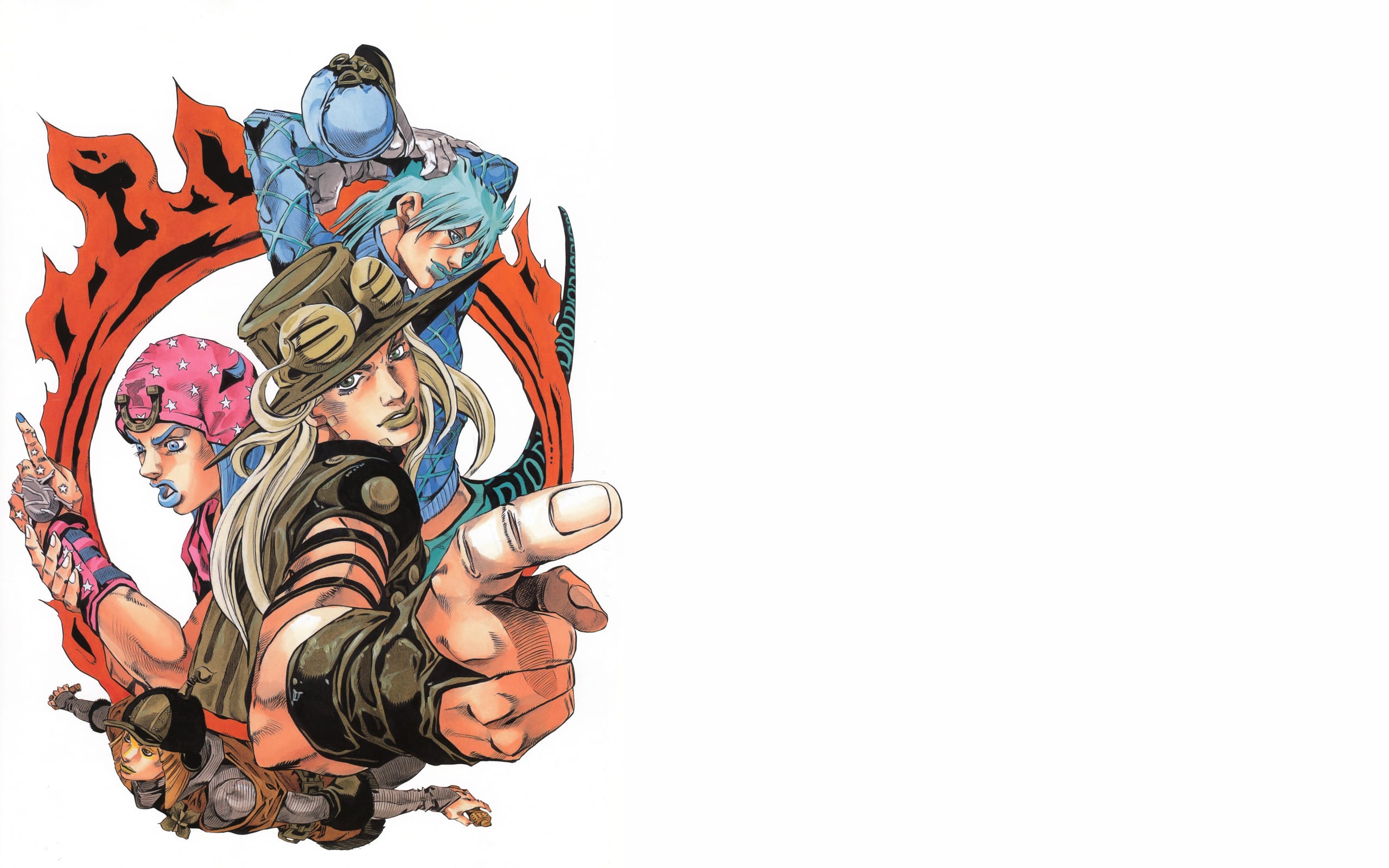
Diamond is Unbreakable is maybe the most purely enjoyable part — Morioh is warm, the cast is deep, Kira is legitimately terrifying. Golden Wind is operatic and gorgeous and carries some of the best fight choreography Araki ever conceived. And Stone Ocean, for all the discourse around its ending, is a genuinely ambitious swing at cyclical mythology.
None of them do what Steel Ball Run does. None of them operate at that altitude simultaneously across character, theme, plot architecture, villain design, and visual ambition. Steel Ball Run doesn’t just win the JoJo bracket — it redefines what the bracket is even measuring.
Johnny Joestar: The Best Protagonist in the Entire Franchise
Jonathan Joestar is a hero. Josuke is a good kid. Giorno is an ideal. Johnny Joestar is a person.
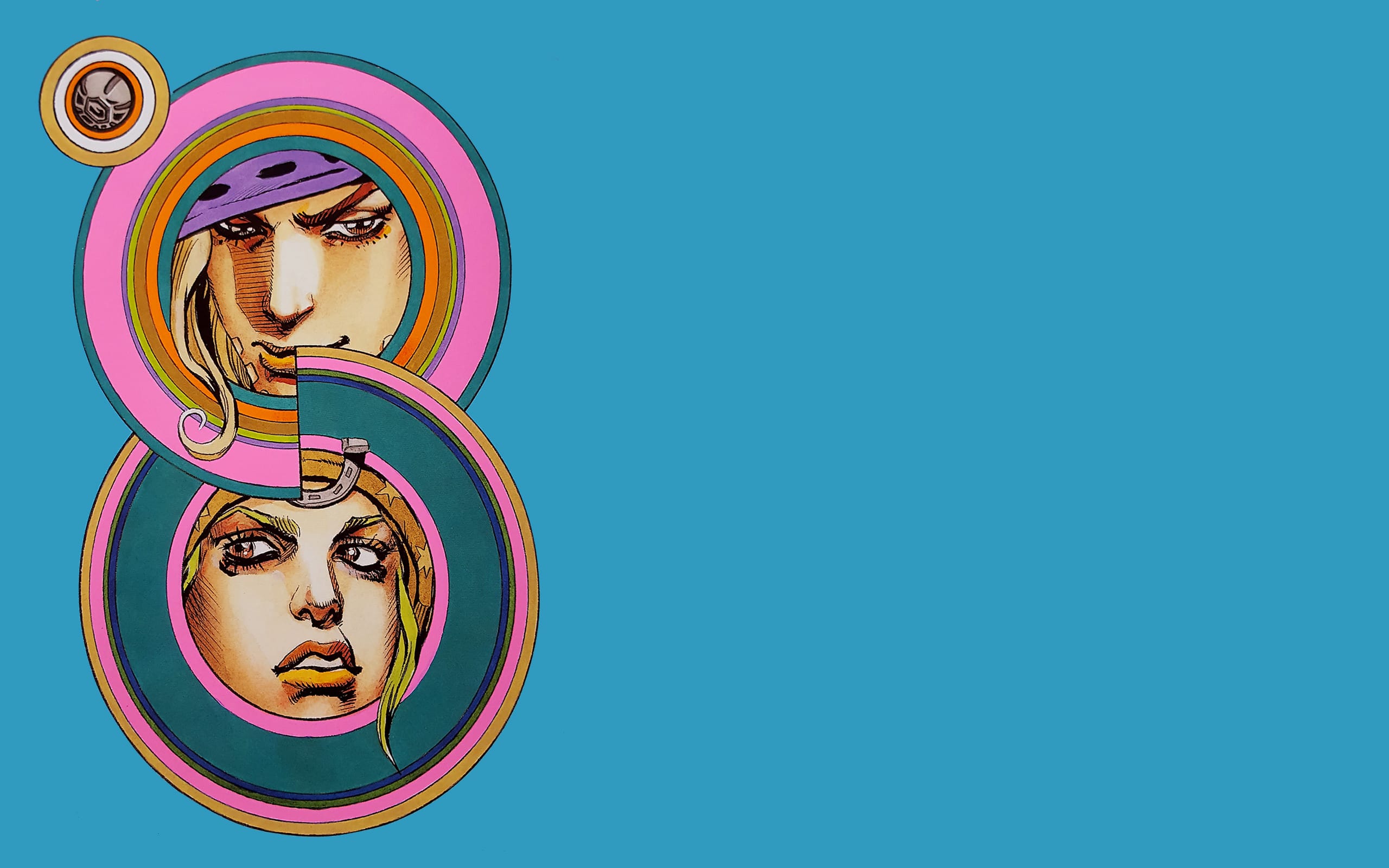
When we meet Johnny at the start of the Steel Ball Run race, he is twenty-two years old, unable to walk, sitting in the dirt watching other people do things he used to be able to do. He was a champion jockey. He was famous. He was arrogant — not in the charming, swaggering way of Joseph Joestar, but in the small, petty way that costs you your relationships and eventually your career. He shot a man’s kneecap off over a queue at a nightclub. He got shot in the spine as a direct result. The universe administered a precise and humiliating correction.
That backstory alone would be enough to make Johnny interesting. But Araki goes further. Johnny doesn’t start this race as a hero. He starts it as a hanger-on — literally grabbing Gyro Zeppeli’s leg to get dragged into the starting lineup because he wants to see what this strange Italian does with steel balls. He has no goal. He has no courage. He is running on spite and curiosity, and the manga is completely honest about that.
His arc across 95 chapters is one of the most carefully constructed character progressions in shōnen manga. His relationship with faith — specifically with the idea that God has abandoned him, and his slow, agonizing journey toward believing he deserves to live — underpins every Stand upgrade, every alliance, every choice he makes in the final acts. By the time Tusk reaches Act 4, the power isn’t coming from nowhere. It’s the culmination of a broken person deciding, against all evidence, to keep going.
Compare that to Giorno Giovanna, who arrives fully formed as a concept and remains largely unchanged. Or to Jolyne, who is compelling but whose emotional beats are sometimes crowded out by the sheer density of plot. Johnny earns every single thing he gets. That’s rare.
Funny Valentine: The Villain Who Was Right (And Still Wrong)
Dio Brando is iconic. Yoshikage Kira is terrifying. Diavolo is a spectacular tragedy. But Funny Valentine — the 23rd President of the United States — is the most intellectually formidable antagonist Araki has ever written, and the argument for that starts with the fact that he is genuinely, articulately correct about almost everything.
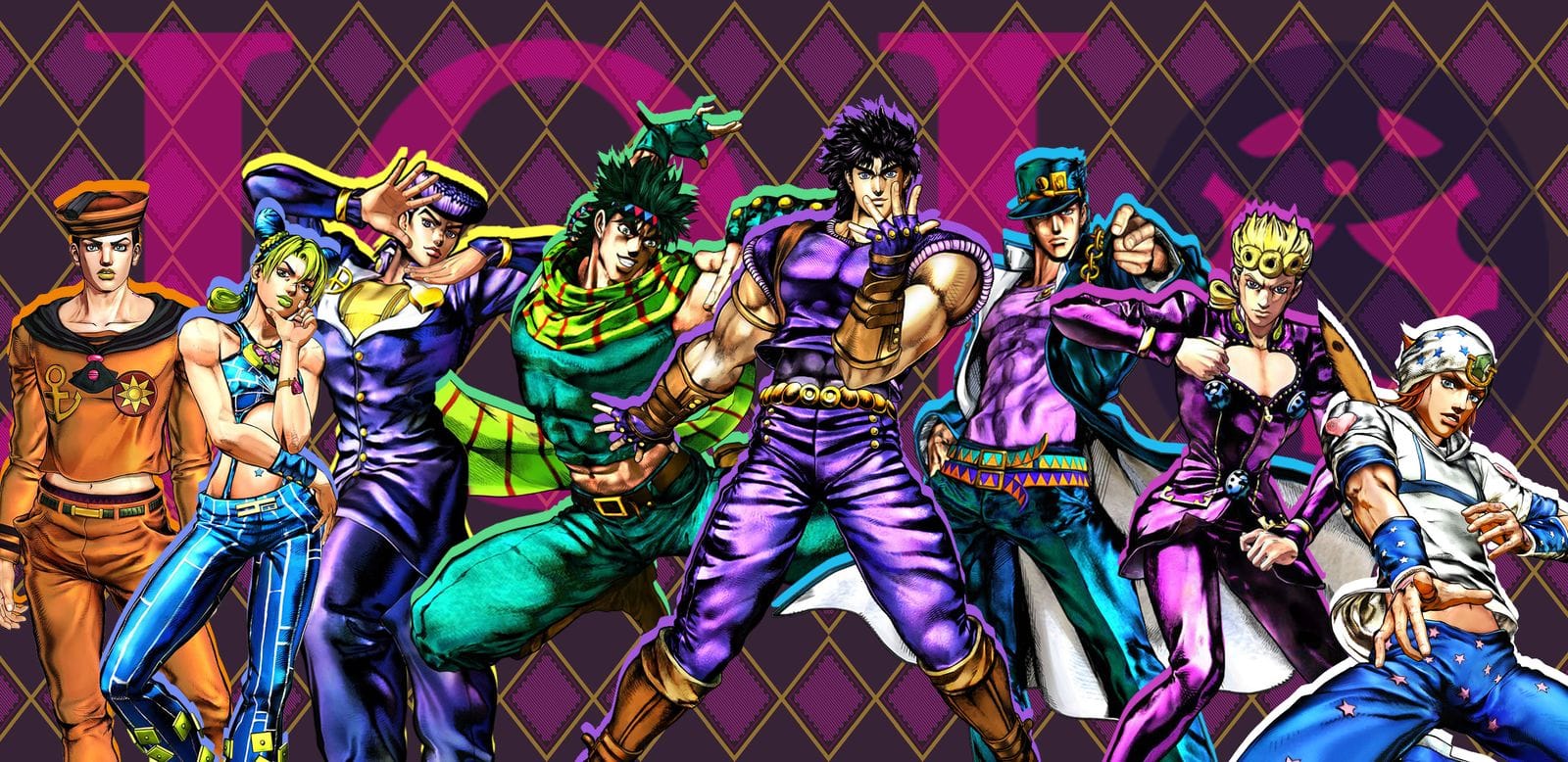
Valentine’s core philosophy is rooted in what he calls “misfortune redirection.” His country, he argues, exists at the center of the world’s fate. The Holy Corpse parts scattered across America are a divine anchor. If America controls them, America controls the flow of suffering — and crucified on that logic is the idea that a nation’s first obligation is to its own people, that someone will always bear the world’s misfortune, so it should be directed outward rather than absorbed inward.
This is not mustache-twirling evil. This is a man who watched his father die horribly in a POW camp because of a coin toss, who built an entire geopolitical philosophy on never letting that randomness hurt his nation again. His methods are monstrous. His reasoning is internally consistent and emotionally grounded. The scene where he explains D4C to Johnny — calm, even empathetic — is one of the most chilling exchanges in the entire franchise precisely because he’s not wrong that someone has to lose.
D4C (Dirty Deeds Done Dirt Cheap) is also just a spectacular Stand conceptually: the ability to travel between parallel dimensions by being compressed between two objects. It’s elegant, it’s weird, it scales beautifully throughout the arc, and its ultimate evolution into D4C Love Train — which redirects all misfortune away from Valentine onto anyone who tries to harm him — is a perfect mechanical expression of his ideology. The Stand is the character. That’s peak Araki Stand design philosophy.
The final confrontation between Johnny and Valentine doesn’t end because one of them was stronger. It ends because Johnny finds the one thing Valentine’s philosophy cannot account for: the acceptance of personal suffering rather than its redirection. It’s a philosophical resolution dressed as a battle. That’s writing.
The Race Structure: Why the Format Is a Masterstroke
Every JoJo part before Steel Ball Run is fundamentally a journey toward a single antagonist. Stop Dio. Stop Kira. Stop Diavolo. The destination is known from relatively early on, which means the tension is almost entirely local — will this person survive this fight?
Steel Ball Run is structured around a transcontinental horse race from San Diego to New York. Nineteen stages. Shifting terrain. Evolving field of competitors. And embedded in that race is the quest for the Holy Corpse parts, the escalating interference of Valentine’s government forces, the mystery of the Corpse itself, and the slow revelation of what Gyro’s steel balls really are.
The race gives the story something most manga arcs lack: a natural pacing mechanism. Each stage is a discrete unit with its own geography, its own threats, its own subset of competitors. Readers can track exactly where we are in the story. The finish line is always visible. But the meaning of reaching it keeps changing — at first it’s survival, then it’s understanding Gyro’s mission, then it’s stopping Valentine, and finally it’s something much more personal about what Johnny deserves.
This structure also lets Araki do something he rarely does elsewhere: build a large secondary cast of competitors who feel distinct and memorable without needing full backstory arcs. Hot Pants, Mountain Tim, Sandman, Pocoloco — these characters function like recurring NPCs in the best sense. They have defined personalities, clear motivations tied to the race, and meaningful roles in the plot without ever threatening to become their own story. That’s disciplined writing.
Tusk Act 4 and the Philosophy of Stand Design
A lot has been written about overpowered Stands — the best anime fights are often defined by creative Stand matchups rather than pure power — but Tusk Act 4 deserves specific attention because it achieves something rare: it feels earned, it’s conceptually elegant, and its power ceiling is defined by something other than author fiat.
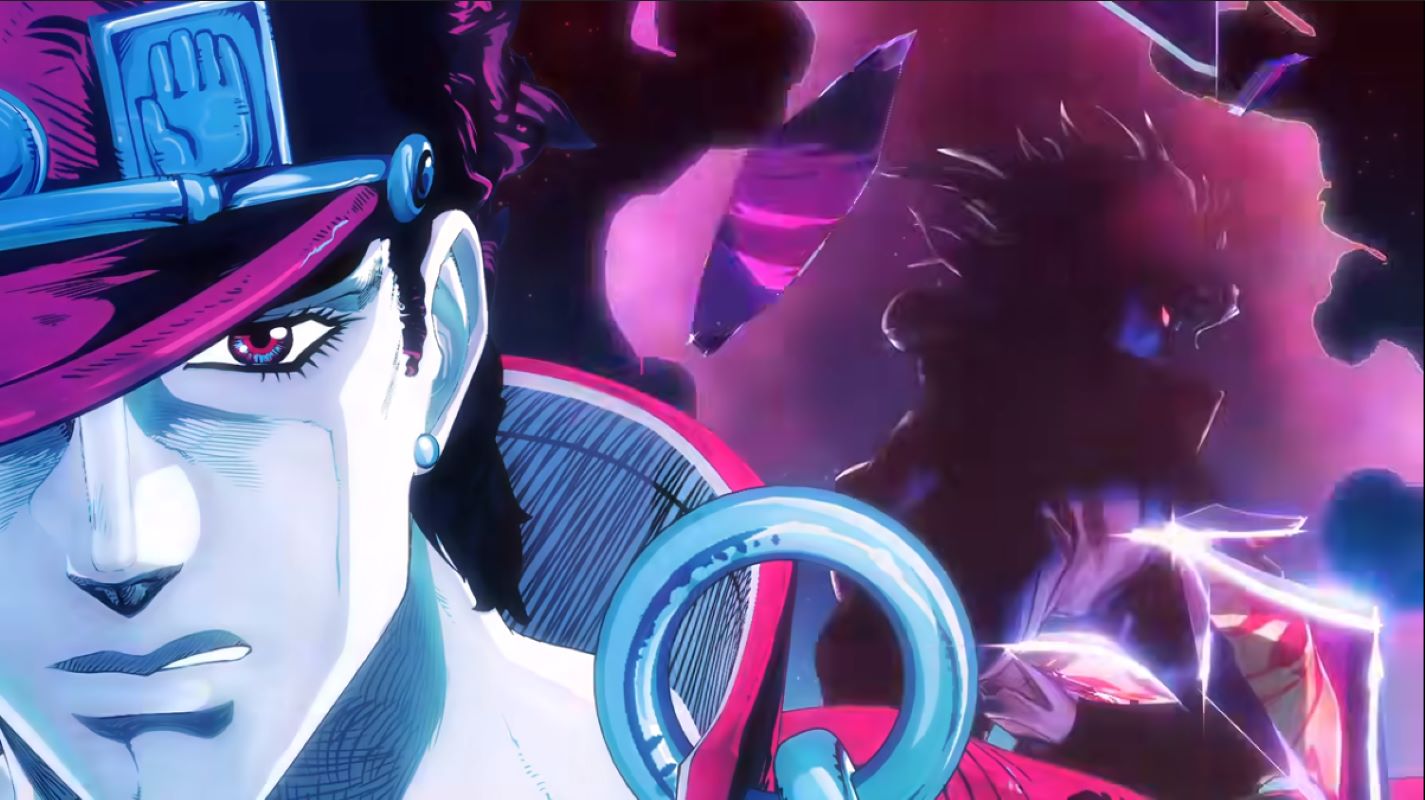
Tusk evolves through four acts that mirror Johnny’s emotional arc. Act 1 is a crawl — spinning nails that barely function. Act 2 gives those nails limited rotation. Act 3 allows for rotational attacks on organic matter. Act 4 is what happens when the infinite rotation of the Golden Spin achieves escape velocity: a wound that never stops, that exists outside of space and time, that follows its target across dimensions and parallel worlds.
Here’s what makes it brilliant: Act 4 doesn’t work because Johnny is the most powerful. It works because he fully accepts the Golden Spin’s logic — that the universe has a natural rotation, and aligning with it completely requires absolute surrender to that natural order. It is a power that literally cannot function without the internal state that produces it. The mechanic and the character arc are the same thing.
This is the refinement of everything Araki learned about Stand design since Stardust Crusaders. Stands in Part 3 are largely analogues for personality — Dio is The World because he wants to stop time, to dominate, to make the universe answer to him. By Part 7, Stands aren’t just expressions of personality; they’re expressions of philosophy. Tusk Act 4 doesn’t just reflect who Johnny is. It requires him to be that person to function at all.
Themes of Faith, Suffering, and the Question of Deserving
Strip away the Stands and the race and the alternate-history American setting, and Steel Ball Run is a story about whether broken people deserve to be saved.
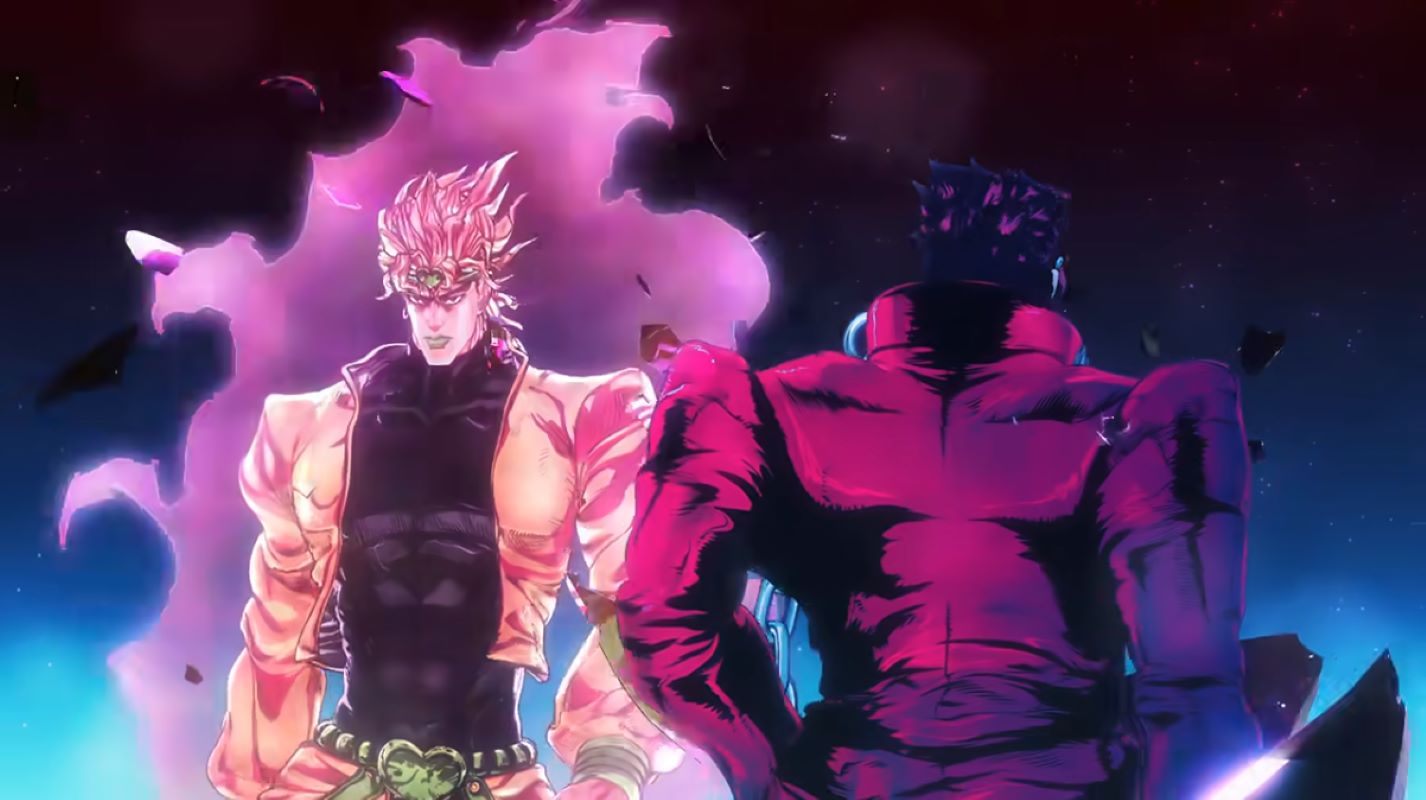
The Holy Corpse — the dismembered remains of a saint scattered across America — functions as a genuinely multivalent symbol. For Valentine, it’s a geopolitical asset. For Gyro, it’s the key to freeing an innocent child condemned to death. For Johnny, it becomes something more personal: proof that the universe has a center, that there is something at the axis of all things worth reaching toward, even if reaching for it costs everything.
Johnny’s relationship with the divine is explicitly central to the text. He prays. He questions. He accuses God directly of abandoning him. And the answer he eventually arrives at isn’t that God saved him — it’s that he decided to save himself, and that the power to do that was always available to him, waiting for him to stop spending his energy on resentment.
Gyro Zeppeli’s role in that process is what elevates the story beyond a standard redemption arc. Gyro is Johnny’s mentor, but he’s also his mirror. Where Johnny starts with nothing and builds toward meaning, Gyro starts with conviction and learns doubt. Their relationship has the texture of a real friendship — competitive, occasionally antagonistic, built on respect rather than affection, and ultimately one of the most affecting bonds in all of JoJo. The moment Gyro dies — the way it’s staged, the way Johnny responds — is the emotional pivot point that makes everything after it land.
Araki’s Artistic Evolution: Steel Ball Run as Visual Masterwork
Hirohiko Araki has always been a distinctive visual stylist — his posing language, his fashion influences, his color sense are unlike anything else in manga. But Steel Ball Run, which began serialization in 2004, represents his most cohesive and mature visual period.
Part of this is the Western genre framework giving him new visual vocabulary. The American frontier — wide open plains, desert canyons, Mississippi wetlands, the Rocky Mountains — demands a different compositional sensibility than the European Gothic of Phantom Blood or the Italian baroque of Golden Wind. Araki’s panels open up. Negative space becomes expressive. Horses are rendered with an anatomical attention that you genuinely don’t expect from a manga serialized weekly.
His character designs in this era are also more restrained than the maximalist fashion experiments of earlier parts. Johnny and Gyro look like people who exist in a historical world — their cowboy gear is period-appropriate, the details are grounded, and the fantastical elements (the steel balls, the Stands, the Corpse) land harder against that realistic baseline. Valentine’s presidential aesthetic is impeccable — stars and stripes worked into his design in ways that feel authoritative rather than costume-party.
For those preparing to experience this story animated, our Steel Ball Run anime guide covers everything you need to know about the upcoming adaptation, including what to expect from the production and how it compares to the source material.
The fight sequences in SBR are also some of Araki’s most spatially coherent. The D4C fights in particular — which require communicating dimensional travel and parallel-world duplicates — are masterclasses in manga choreography. Readers always understand where everyone is and how the rules are operating, which matters enormously when the rules are this strange.
For historical context on how far Araki’s visual storytelling has come, manga scholar Patrick Galbraith’s analysis of JoJo’s Bizarre Adventure in Otaku and the Struggle for Imagination in Japan (Duke University Press, 2019) traces the visual evolution from Parts 1 through 8, noting that Steel Ball Run represents Araki’s full synthesis of Western comics influence — particularly Neal Adams and Alex Ross — with his native manga tradition. The result is genuinely singular.
How Steel Ball Run Compares to the Rest of the Franchise (Part by Part)
It’s worth being direct about this rather than diplomatic. Here’s where every other part stands relative to Part 7:
Phantom Blood: The foundation. Jonathan is a compelling archetype but not a complete character. Dio’s introduction is tremendous. Everything else is prototype. Essential reading for context, not competition for the crown.
Battle Tendency: The best pure-fun JoJo. Joseph Joestar is one of manga’s greatest characters and nothing in this analysis is meant to diminish that. But Battle Tendency is a greatest-hits album, not a symphony. It doesn’t attempt what SBR attempts.
Stardust Crusaders: Culturally indispensable, narratively repetitive. The road trip structure that SBR perfects originated here in cruder form. Dio’s payoff is iconic. The 70 chapters of episodic Stand fights between Cairo and Japan are a slog that SBR never inflicts on its readers.
Diamond is Unbreakable: The most lovable part. Morioh is one of manga’s great settings. Kira is genuinely terrifying in a domestic, mundane way that SBR’s epic-scale villain doesn’t try to replicate. Different tool for a different job — and DU is exceptional at its job. But its scope is smaller by design.
Golden Wind: Operatic and beautiful. Giorno is underdeveloped as a protagonist but surrounded by one of the franchise’s best casts. The Naples setting and the mob narrative give Araki a canvas that suits his fashion sensibilities perfectly. Several of GW’s fights (White Album, Notorious B.I.G., King Crimson’s reveal) are the franchise’s best standalone sequences. But the ending — and Giorno’s complete absence of interiority throughout — keep it from the top.
Stone Ocean: Underrated. Jolyne is fantastic. The prison setting is inspired. The ending is one of the most ambitious things Araki has ever attempted and genuinely divides readers — which is its own kind of achievement. Better than its reputation, not better than Steel Ball Run.
If you’re catching up on the franchise in preparation for what’s coming down the pipeline — including the Spring 2026 anime season — Steel Ball Run is the part you build toward. Read everything else first. Not because it requires the lore (the alternate universe setting means it technically doesn’t), but because it rewards readers who understand what Araki has been refining across six previous parts. You’ll see what he kept, what he fixed, and what he transcended.
The Verdict: Why Steel Ball Run Is the Greatest JoJo Part Ever Written
The Steel Ball Run greatest JoJo debate is, by this point, mostly settled among serious readers of the franchise. Part 7 wins because it does something none of the other parts manage: it operates at maximum ambition across every dimension simultaneously and mostly succeeds.
The protagonist has the franchise’s deepest arc. The villain has the franchise’s most coherent ideology. The central relationship — Johnny and Gyro — is the most emotionally resonant in the series. The Stand system reaches its philosophical apex. The themes are substantial without being didactic. The art represents Araki at his most visually accomplished. And the structure — a transcontinental race that doubles as a spiritual journey that doubles as a political thriller — is the most formally inventive thing he’s ever built.
Other parts are great. Some are beloved. A few are genuinely perfect at what they set out to do.
Steel Ball Run set out to do everything, and it got most of the way there. In manga — in any long-form serialized fiction — that’s as close to masterpiece as you’re allowed to get.
The animation is coming. If you haven’t read it yet, start now. Not because you need to get ahead of the curve — but because this is one of those stories that changes the shape of your expectations for everything that comes after it. You’ll read the final chapter and spend a quiet moment just sitting with it.
That’s not something most stories can do. That’s something Steel Ball Run does every time.