Let me be blunt: Spring 2026 is drowning in isekai. Again.
Walk into the seasonal chart right now and count the shows where someone either gets hit by a truck, reincarnated into a fantasy world, or wakes up in an otome game they played in a past life. Go ahead. I’ll wait. The number you land on should alarm you — and if it doesn’t, that might itself be a symptom of the problem.
We’ve been having some version of this conversation for years. But Spring 2026 feels different. It’s not just that there are a lot of isekai this season — it’s that the gap between the ones doing something meaningful and the ones shamelessly factory-stamping the same power fantasy template has never felt wider. The top of the genre is genuinely exceptional. The bottom is almost comically bad. And the industry keeps ordering more of both.
So let’s do it. Let’s actually look at what Spring 2026’s full anime season has put on the table, talk about which isekai deserve your eyeballs, and have the honest conversation about what this glut tells us about where anime is going.
Just How Many Isekai Are We Dealing With in Spring 2026?
Let’s do the math. Spring 2026 gives us — depending on how strictly you define the genre — somewhere between five and eight isekai titles. That’s a conservative count. If you include reincarnation-adjacent shows, supernatural rebirth premises, and “transported to another world” variants that technically aren’t truck-kun specials, the number climbs.

The headliners are not subtle: Re:Zero Season 4 returns to drag Subaru through another arc of grief and impossible choices. That Time I Got Reincarnated as a Slime Season 4 kicks off a five-cour monster run that’ll stretch well into next year. Ascendance of a Bookworm Season 4 picks up with Myne-now-Rozemyne navigating noble society with book-obsessed determination. These three alone would make this a stacked isekai season by historical standards.
Then you have the new blood. The Strongest Job is Apparently Not a Hero or a Sage, but an Appraiser — yes, that’s the actual title — is your classic “generic transported protagonist discovers he actually has overpowered skills everyone underestimated” setup. Goddess: What Do You Want to Turn Into When You’re Reincarnated? Me: Into a Hero’s Rib is… something. The increasingly unhinged title arms race in isekai manga has produced a winner, folks.
There’s also Reincarnation no Kaben, which sits in interesting territory: it uses reincarnation mechanics but in a contemporary supernatural thriller frame rather than a fantasy world. Whether that counts as isekai depends on how purist you’re feeling today.
Bottom line: a significant chunk of Spring 2026’s real estate belongs to the isekai genre. For a genre that was “just a trend” in 2016, it shows no sign of cooling down a decade later. The question isn’t whether isekai is popular. It’s whether this much isekai — particularly the hollow stuff — is actively making anime worse.
The Isekai Fatigue Debate: Is It Real, or Are We Just Complaining?
Isekai fatigue is one of those things that hardcore anime fans have been announcing since approximately 2018. And yet here we are. The genre keeps growing. Sales keep coming in. Light novel publishers keep greenlighting more of them. If fatigue were truly setting in, the market would reflect it. It mostly hasn’t.
So who’s actually fatigued? Honest answer: a specific subsection of the community — long-term anime fans who consume seasonals voraciously and have pattern-matched themselves into misery. They’re not wrong about the patterns. But they might be wrong about who those patterns affect.
For a twelve-year-old discovering anime in 2026, The Strongest Appraiser isn’t a tired trope. It’s a gateway. The OP protagonist, the underestimated ability, the slow accumulation of power and allies — that hits differently when you haven’t seen it forty times. The genre’s audience isn’t just the veterans who remember when Re:Zero felt revelatory. It’s constantly refreshing itself with new viewers who don’t carry that baggage.
That said — and I mean this — isekai fatigue is real for the people making the shows. Studios and writers churning out generic entries aren’t bringing passion to the page. The fatigue shows in the craft. When a show’s script reads like a Mad Lib filled in by someone who has read too many LN synopses, audiences feel it even if they can’t articulate why. The emotional stakes feel hollow. The protagonist feels like a placeholder. The world feels rented rather than built.
The debate isn’t really “is isekai overdone?” The debate is “which isekai justify existing, and which ones are just occupying timeslots that could go to something more original?” Spring 2026 makes that question impossible to ignore, because the contrast between the genre’s ceiling and its floor is that stark this season.
Check out our full breakdown of the best isekai anime of 2026 ranked if you want a definitive tier list — but for now, let’s talk about why the good ones are actually good.
Why Re:Zero, Slime, and Bookworm Still Work (And What They Have That Others Don’t)
Here’s a thing people who dismiss isekai don’t want to admit: the best isekai are doing genuinely interesting things with genre conventions, character psychology, and world-building that hold up against the best anime in any category. Re:Zero, Slime, and Bookworm aren’t popular because isekai fans will eat anything. They’re popular because they’re actually good.
Re:Zero Season 4 picks up from one of the most brutal emotional cliffhangers in recent anime history. Rem is in suspended animation. Julius has lost his name from Gluttony’s ability. Subaru’s victory at Priestella cost more than it should have. Now he’s heading into the Pleiades Watchtower — a location even Reinhard apparently couldn’t conquer — to find the sage Shaula. The writing team understands something most isekai don’t: consequence. Subaru’s deaths aren’t a reset button. They’re accumulated trauma. The world doesn’t bend around him. It keeps breaking him. That’s not a power fantasy. That’s tragedy wearing genre clothes.
Re:Zero Season 3 already raised the emotional stakes to near-unbearable levels, and Season 4 is inheriting all that weight. If you haven’t watched it yet, stop whatever you’re doing.
Slime Season 4 operates differently — it’s aspirational rather than tragic — but it earns its place through sheer scope. Rimuru has evolved from a confused slime in a cave to the leader of a nation navigating geopolitics, alliances, and existential threats. The Slime Season 4 arc that kicks off this spring sets up what longtime manga readers know is one of the most ambitious storytelling moves in the series. The five-cour run suggests the production committee is betting big. Given the source material’s quality at this stage, that bet seems sound.
What makes Slime work where its imitators fail is that Rimuru’s power fantasy is social and political, not just martial. Yes, he can vaporize most enemies. But the interesting challenges are diplomatic. How do you build a nation? How do you protect people who can’t protect themselves? How do you deal with human institutions that don’t want you to exist? That’s a different kind of power fantasy — one that requires the writers to actually think.
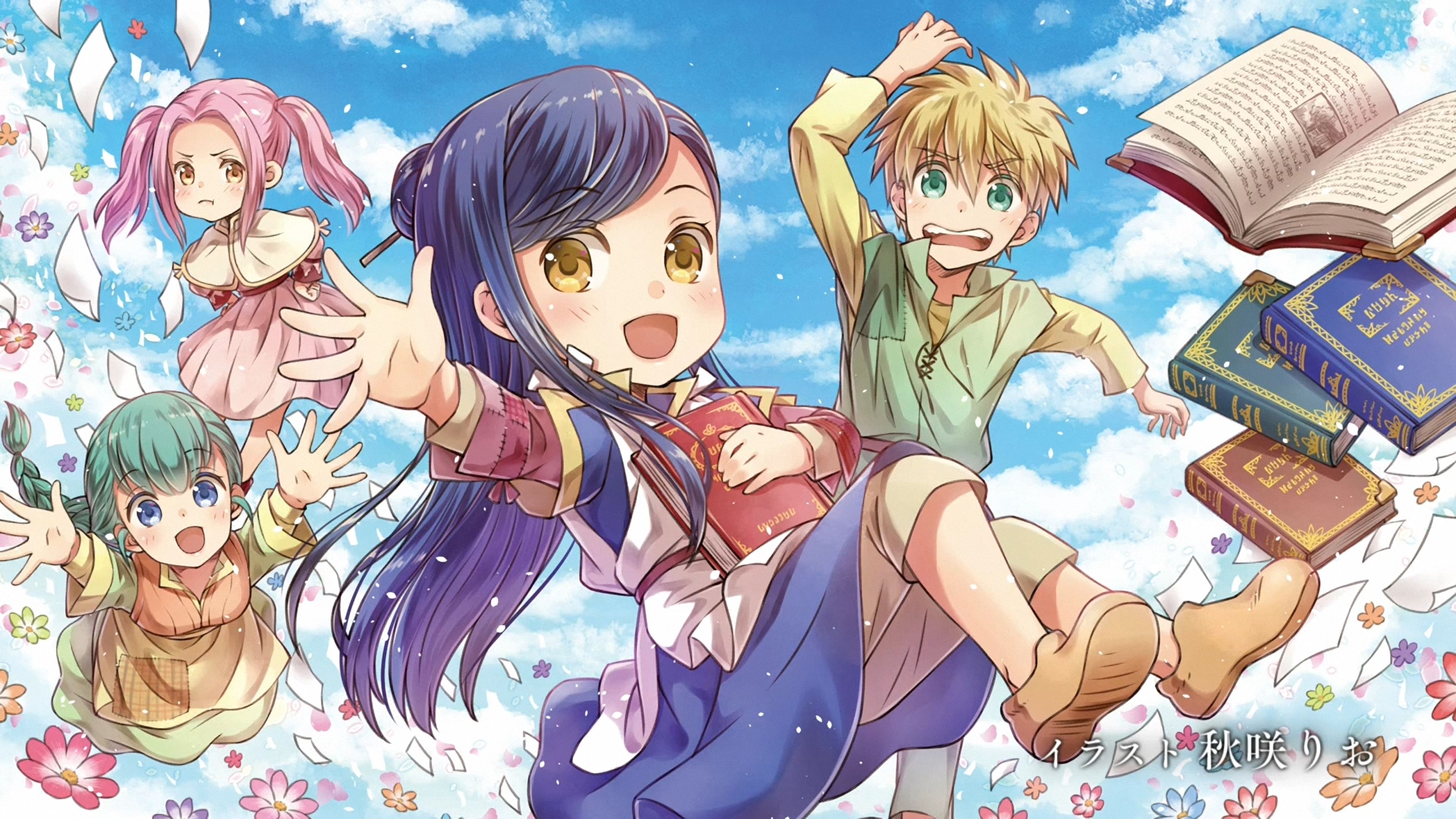
Bookworm is the purest case study. Myne — reincarnated into a medieval fantasy world as a sickly commoner girl — wants exactly one thing: books. Not power. Not a harem. Not revenge on her bullies. Books. Everything else in the story flows from that one specific, human, relatable motivation. By Season 4, she’s navigating noble society as Rozemyne, managing the complexities of her dual identity, and the show has built one of the most internally consistent fantasy worlds in modern anime.
Bookworm is proof that “isekai premise + genuine character motivation + thoughtful world-building” equals something worth watching. The problem isn’t the genre. It’s the laziness of most entries in it.
The Generic Isekai Problem: What’s Actually Wrong With the Bottom of the Barrel
So if we’ve established that good isekai can be genuinely excellent, what’s the actual complaint about the bad ones? It’s not really about the premise. Being transported to a fantasy world is a vessel. You can fill it with anything. The complaint is about what the generic entries choose to fill it with.
Take The Strongest Job is Apparently Not a Hero or a Sage, but an Appraiser. Hibiki is a high schooler dropped into a fantasy world with only “non-combat” skills — specifically Appraisal. This is a premise we have seen, in nearly identical form, in approximately fifteen other shows. The beats write themselves: everyone underestimates him, his “weak” skill turns out to be secretly godlike, he accumulates companions who are impressed by his hidden power, conflict arises and he triumphs in unexpected ways.
Is this inherently unwatchable? No. But it asks nothing of its audience and offers nothing in return except the comfort of familiarity. It’s the television equivalent of processed food — engineered to satisfy a craving without nourishing anything. People eat it because it’s there and it tastes like the thing they like. Studios make it because the light novel sold decently, the production cost is predictable, and the risk is low.
The increasingly absurd title phenomenon is its own symptom. Titles like Goddess: What Do You Want to Turn Into When You’re Reincarnated? Me: Into a Hero’s Rib exist because the LN market is so saturated that titles have become synopsis-length SEO grabs to stand out on Shosetsuka ni Narou’s ranking pages. The titles are a search engine algorithm shaped into text. That’s the market. And the market is telling us something about how these properties get made: not from passion, but from algorithm-chasing.
The real cost of generic isekai isn’t that they’re unpleasant to watch. It’s that they consume resources — studio labor, animation talent, broadcast timeslots, fan attention — that could go toward more original or ambitious work. When a studio capable of decent production values spends a season on an Appraiser isekai, that’s a choice. Usually a choice made because the financial math looked safe, not because anyone in the building was excited about the story.
And as someone who watches a lot of anime every season, the fatigue isn’t from any single generic isekai. It’s from the cumulative weight of watching that choice get made over and over and over again. Anime News Network’s breakdown of the “isekai industrial complex” lays out exactly how this pipeline operates — and why it’s self-perpetuating regardless of what critics say.
What Spring 2026’s Isekai Lineup Tells Us About the Industry
Pull back from the individual shows and look at the shape of Spring 2026’s isekai slate as a whole. What does it tell us?
First: the franchise model has completely won. Re:Zero, Slime, and Bookworm are all on their fourth seasons. These are established intellectual properties with massive fanbases, merchandising pipelines, game tie-ins, and guaranteed revenue. Producing Season 4 of an established hit is essentially a different business than greenlighting a new show. The risk calculus is totally different. The confidence is earned.
This is fine on its own. Sequels for beloved shows should happen. But when the “safe established franchise” side and the “cheap new LN adaptation” side together crowd out most of a season’s isekai real estate, you start to wonder where the mid-tier innovative stuff goes. The shows that are ambitious enough to try something new but not yet proven enough to justify a guaranteed greenlight. Those are getting squeezed.
Second: the title arms race has jumped the shark and nobody’s stopping it. When titles become plot summaries designed for search engine discoverability, it tells you the market these shows are born in — web novel platforms competing for clicks — has fully colonized the adaptation pipeline. The assumption is that the title itself needs to filter the audience because there’s too much content for any other discovery mechanism to work. That’s a symptoms-of-oversaturation diagnosis dressed up as a marketing strategy.
Third — and this is the one that actually matters — the ceiling is rising while the floor stays exactly where it is. Re:Zero Season 4 is almost certainly going to be exceptional. Slime’s five-cour commitment signals a production that’s been given room to breathe and execute properly. Bookworm’s fourth season is arriving with years of goodwill and a fanbase that’s deeply invested. These shows represent isekai at its possible best.
But the floor hasn’t moved. The generic entries are as generic as they were five years ago. The distance between top and bottom has stretched, not compressed. Which means that for a seasonal watcher trying to navigate Spring 2026, the skill required isn’t “find the good isekai” — it’s “distinguish the top 20% from the bottom 80% as fast as possible so you don’t waste your time.”
That’s a weird place for a genre to be. Simultaneously producing some of the best long-form fantasy anime of the decade and also producing content that is genuinely indistinguishable from a randomized LN premise generator.
The Verdict: Yes, There’s a Problem — But It’s Complicated
Does Spring 2026 have an isekai problem? Yes and no, which I realize is an infuriating answer, but stay with me.
Yes in the sense that: the volume is excessive relative to the quality of new entries. The generic pipeline is producing diminishing returns. The titles are increasingly a joke. The resources being consumed by mid-to-low quality isekai adaptations represent opportunity costs that the industry seems uninterested in examining. And for seasonal watchers who have been paying attention for years, the cumulative effect is a specific kind of exhaustion — not from isekai itself, but from the sense that the genre could be so much more than it mostly settles for being.
No in the sense that: the genre’s best work is genuinely excellent and getting better. Re:Zero, Slime, and Bookworm aren’t coasting. They’re building toward arcs their fanbases have waited years to see animated. New viewers are still discovering isekai for the first time through these shows and the accessible-if-generic new entries. The genre’s cultural footprint isn’t going to shrink because some of us have seen too many Appraisal protagonists.
What Spring 2026 really reveals is that isekai has bifurcated into two genres wearing the same label. There’s Prestige Isekai — shows with genuine creative ambition, years of world-building investment, and production values to match — and Commodity Isekai — safely produced, algorithmically conceived, designed to satisfy a predictable appetite without surprising anyone. They air in the same season and occupy the same genre tag on your streaming service, but they’re not really the same thing anymore.
The problem isn’t that isekai exists in abundance. The problem is that the industry hasn’t found a way to let the commodity tier fund the prestige tier in a healthy way. Instead, both coexist awkwardly, the commodity stuff diluting the genre’s reputation while the prestige stuff fights to prove that reputation doesn’t reflect the ceiling.
If you’re new to isekai or just picking up for Spring 2026: go straight to Re:Zero, Slime, and Bookworm. Start from the beginning if you need to — they’re all worth it, and our ranked guide to the best isekai of 2026 has everything you need to prioritize. Then, if you’ve got bandwidth left and you’re curious about the new entries, approach them with calibrated expectations: some will surprise you, most won’t, all of them are trying to scratch a specific itch, and there’s nothing wrong with occasionally scratching it.
Just don’t mistake the volume for the verdict. Spring 2026 has an isekai problem, yes. But it also has some of the best isekai anime that have ever aired. Hold both of those thoughts at the same time. The genre earned the contradiction.
Final Thoughts: Where Does Isekai Go From Here?
The genre is at an inflection point that the Spring 2026 season makes visible in sharp relief. Isekai can’t keep expanding indefinitely at current quality distribution ratios without something giving. Either the audience fragment further — prestige isekai fans and casual power-fantasy fans barely acknowledging each other’s taste — or the commodity tier collapses under its own weight when the LN market shifts, or studios start taking more creative swings with the premise because the safe version stops being profitable.

My bet is fragmentation. The prestige isekai will keep getting better because they have dedicated, invested fanbases who hold them accountable. Re:Zero fans will absolutely eviscerate a disappointing season on every available platform. That accountability pressure is a quality driver. Meanwhile, the commodity tier will keep finding new audiences who don’t have the context to be cynical about it. Both will coexist. Neither will acknowledge the other much.
What won’t survive is the middle: the ambitious-but-compromised adaptation that tries to be better than commodity but can’t get the budget or the episode count to pull it off. Those shows are the saddest cases in the genre — you can see what they wanted to be, and you can see exactly where the constraints squashed it.
For now: enjoy the sequels. They’ve earned their time. Eye the new entries with appropriate skepticism. And keep your complete Spring 2026 guide bookmarked, because there’s enough good anime this season — isekai and otherwise — to fill a watchlist worth being excited about.
The trucks keep coming. Some of the people they hit become interesting characters. That’s the deal. You decide how many times you want to watch the rest.