Who Is Ryuk? Death Note’s Apple-Obsessed Death God
If you’ve watched Death Note, you know that Ryuk is impossible to forget. The Ryuk Death Note dynamic is the engine that drives the entire series — a shinigami (death god) who drops his notebook into the human world out of sheer, bone-deep boredom. From the moment he appears on screen — all jagged teeth, wild eyes, and that unsettling backwards-bending laugh — you know this is not your typical supernatural sidekick. Ryuk isn’t a villain in the traditional sense, and he’s certainly not a hero. He’s something far more interesting: an immortal being who just wants to be entertained.
Ryuk belongs to the shinigami realm, a dimension populated entirely by death gods who extend their own lives by writing human names in their Death Notes. The thing is, Ryuk already had a ridiculous lifespan stacked up, and he’d spent all of it doing basically nothing. So he made a decision that would reshape the entire world: he picked up a spare Death Note, dropped it where a bored human genius could find it, and sat back to watch what happened. The chaos that followed? That was the point.
In terms of raw power, Ryuk is terrifying. He can fly, become invisible to anyone who hasn’t touched the Death Note, and — as we eventually see — he’s perfectly capable of writing a name in his own notebook when the moment calls for it. He’s not weak, he’s just disinterested in using his power unless something amuses him. That combination of raw capability and absolute indifference makes him one of the most compelling Death Note characters in the entire cast.
His design is iconic for a reason. Character designer Takeshi Obata leaned into the grotesque — the elongated limbs, the fang-filled grin, the leather-and-chains aesthetic that screams “supernatural entity” without any ambiguity. Ryuk looks exactly like what he is: a creature from beyond death who finds humanity’s struggles fascinating in the same way you might find an ant farm fascinating. Interesting to watch. Completely disposable if it gets boring.
The Boredom Problem: Why Ryuk Dropped the Death Note
Here’s the thing that makes Ryuk so brilliant as a character: his motivation is devastatingly mundane. He’s not evil. He doesn’t want world domination. He doesn’t have a grudge. He’s just bored. Infinitely, existentially, cosmically bored — the kind of bored that only an immortal being with nothing to do can truly experience.
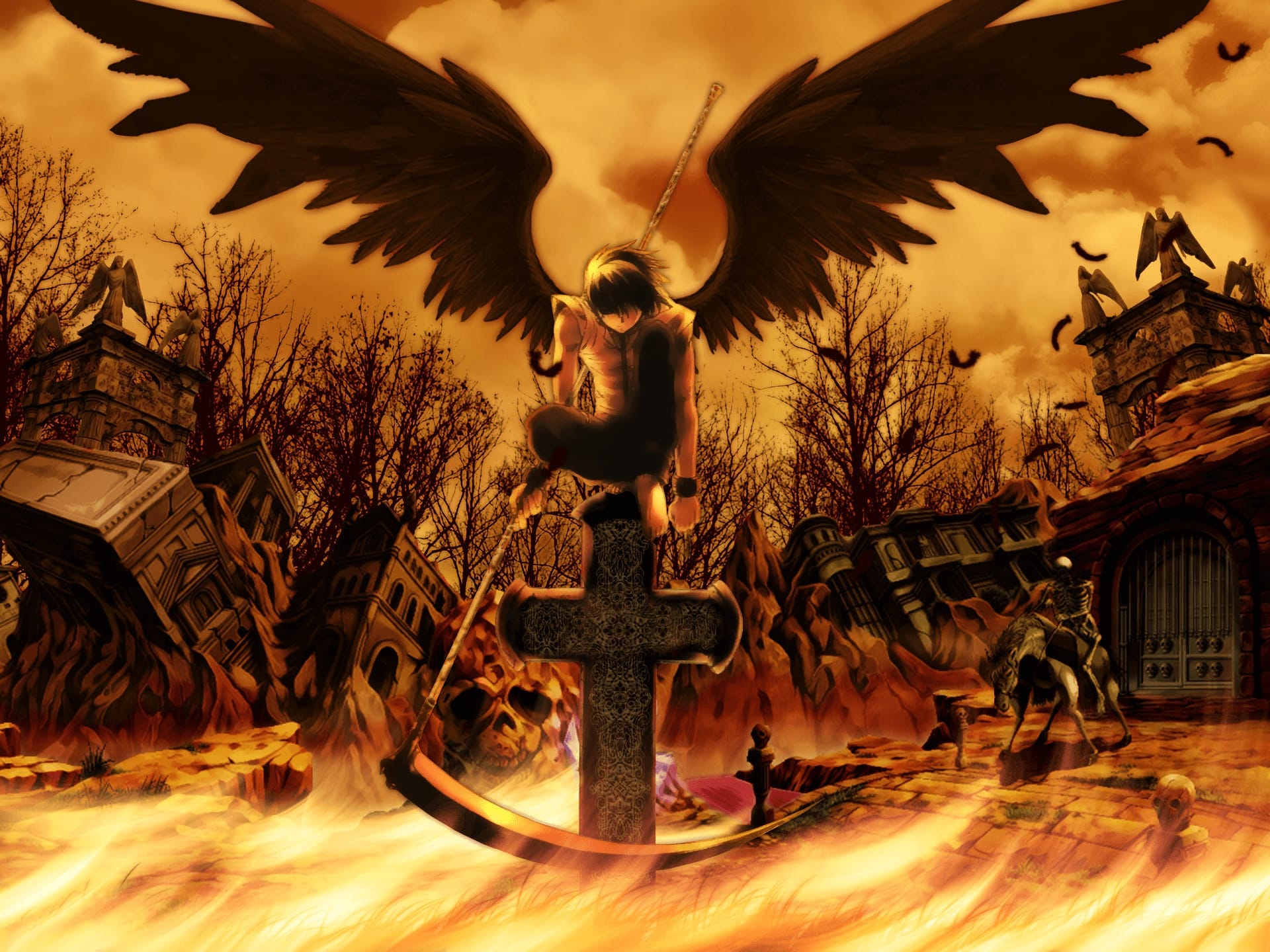
The shinigami realm as depicted in Death Note is genuinely bleak. Other death gods lounge around doing nothing, gambling, sleeping, completely checked out from any sense of purpose. Ryuk looked at that existence and decided it was unacceptable. He wanted stimulation. He wanted to see something new. And what’s newer, more unpredictable, and more chaotic than handing a human teenager the power of a god and watching what he does with it?
This is where the Ryuk explained conversation gets really interesting. Because Ryuk’s boredom isn’t just a character quirk — it’s the entire philosophical setup for the story. Death Note asks what happens when absolute power falls into human hands, and the answer begins with a death god who didn’t drop that notebook out of malice or grand design. He dropped it the same way you might flip channels when nothing’s on. Light Yagami’s rise and fall is, at its core, Ryuk’s entertainment.
What makes this even sharper is that Ryuk never pretends otherwise. He tells Light early on: “I’m not on your side. I’m not on anyone’s side.” He means it completely. He’s not Light’s ally, not his guardian angel, and definitely not his friend in any meaningful sense. He’s an audience member who got the best seat in the house and has absolutely no intention of influencing the show. That honesty — from a death god — is oddly refreshing.
Ryuk’s Role in the Story: More Than a Mascot
It would be easy to dismiss Ryuk as set dressing — the supernatural element that makes Light’s rise to power possible and then hangs around looking menacing. That reading undersells him significantly. Ryuk is the frame around the entire Death Note story, and understanding his role changes how you read everything Light does.
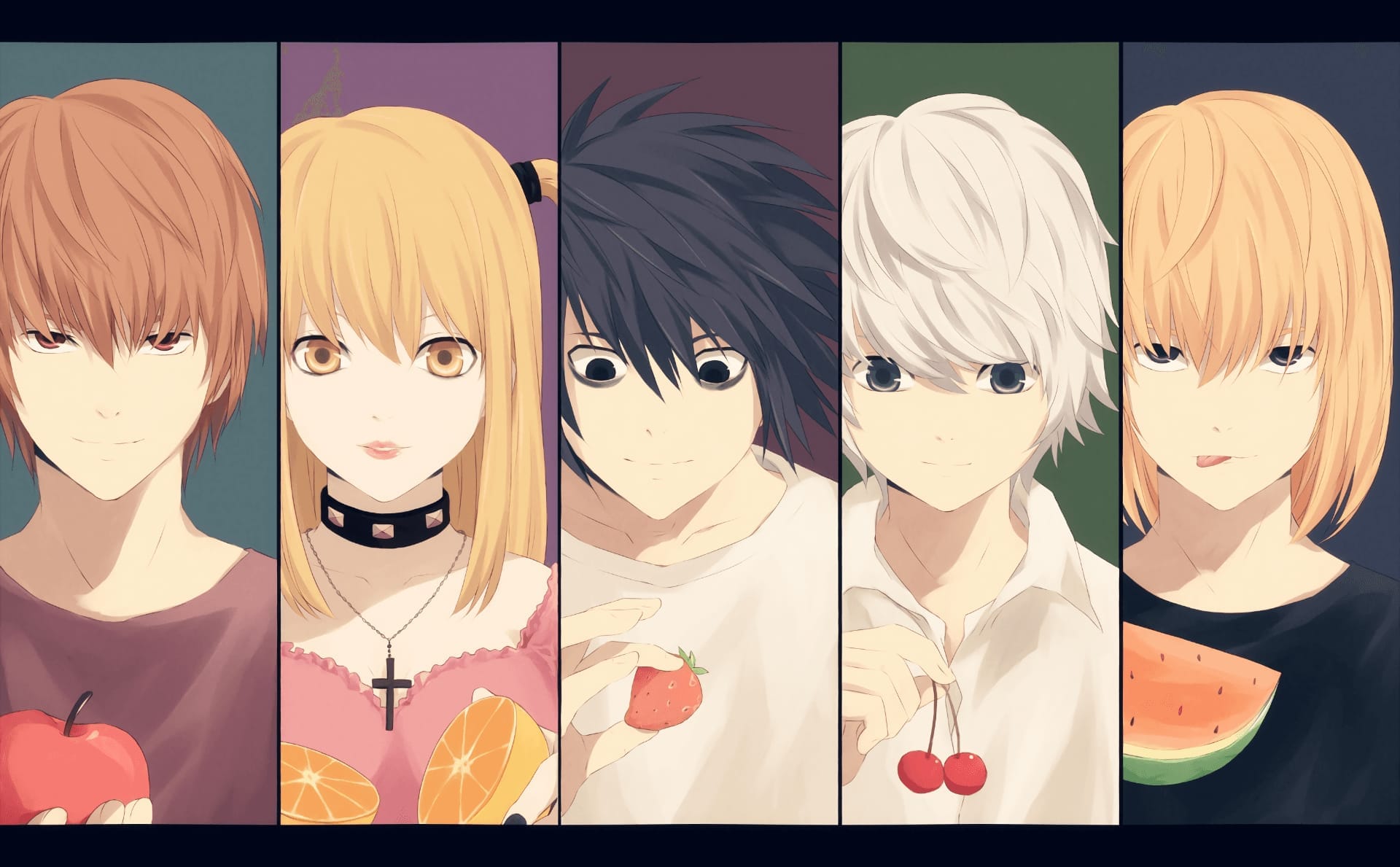
For most of the series, Ryuk functions as a narrator of sorts — the only character who sees the full picture without any skin in the game. L is brilliant but emotionally invested. Light is consumed by his own god complex. Near and Mello are shaped by their rivalry. Ryuk alone has no stakes. He watches with clear eyes and zero agenda, which means his rare moments of commentary land with unusual weight. When Ryuk finds something funny, it’s usually the darkest possible joke about human nature.
He also serves as a constant reminder of what Light actually is dealing with. In the heat of Light’s scheming and monologuing and god-complex spiraling, Ryuk is right there — a literal death god — floating around eating apples and radiating the energy of someone watching their favorite soap opera. Every time Light thinks he’s become something transcendent, Ryuk is there to make the whole thing feel slightly absurd. It’s a tonal masterstroke from Tsugumi Ohba.
Then there’s the ending. Ryuk’s role in the story’s conclusion is the payoff the whole series was building to. Without getting too deep into spoilers for anyone still working through the show: Ryuk makes a decision that is completely consistent with everything we know about him, and it reframes the entire relationship he’s had with Light from episode one. He was never a companion. He was always an observer waiting for the story to end. The final scene between them is genuinely gut-punching.
It’s also worth noting that Ryuk has practical narrative value beyond his thematic function. He explains the Death Note’s rules to Light (and to us), he can provide information when it suits him, and his apple addiction becomes a surprisingly useful plot point. The Ryuk apples are funny on the surface — this ancient cosmic entity losing his mind over fruit — but they also establish something important: even death gods have desires. Ryuk is not above wanting things. He just has different priorities than everyone else.
Ryuk and Light: The Most Unequal Partnership in Anime
The Ryuk-Light relationship is one of the most fascinating dynamics in all of anime, precisely because it is so deliberately not a relationship in any conventional sense. Light sees Ryuk as a tool, a subordinate, or at best a companion in his mission to reshape the world. Ryuk sees Light as his current source of entertainment. These two understandings of what they are to each other never actually align, and that gap is everything.
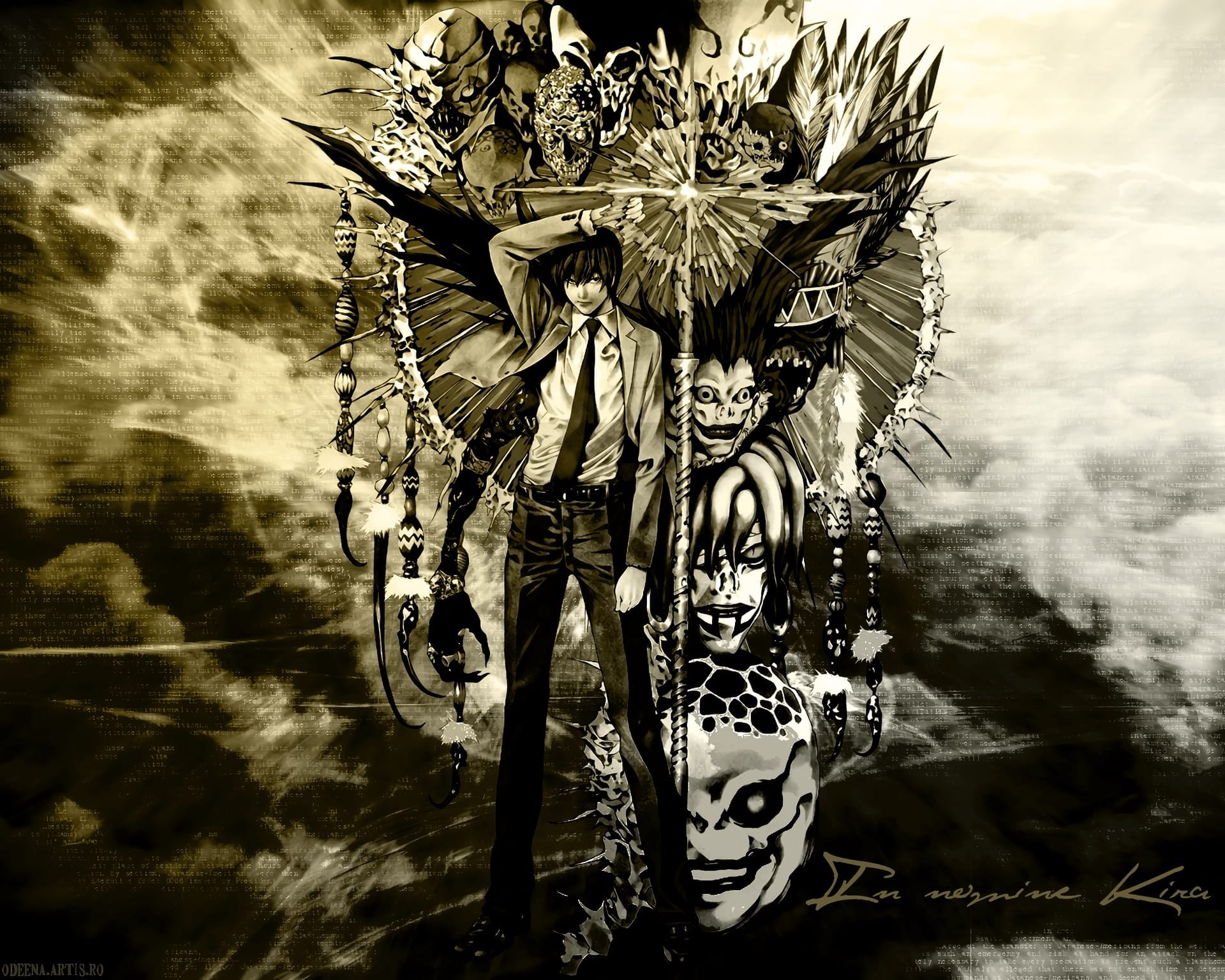
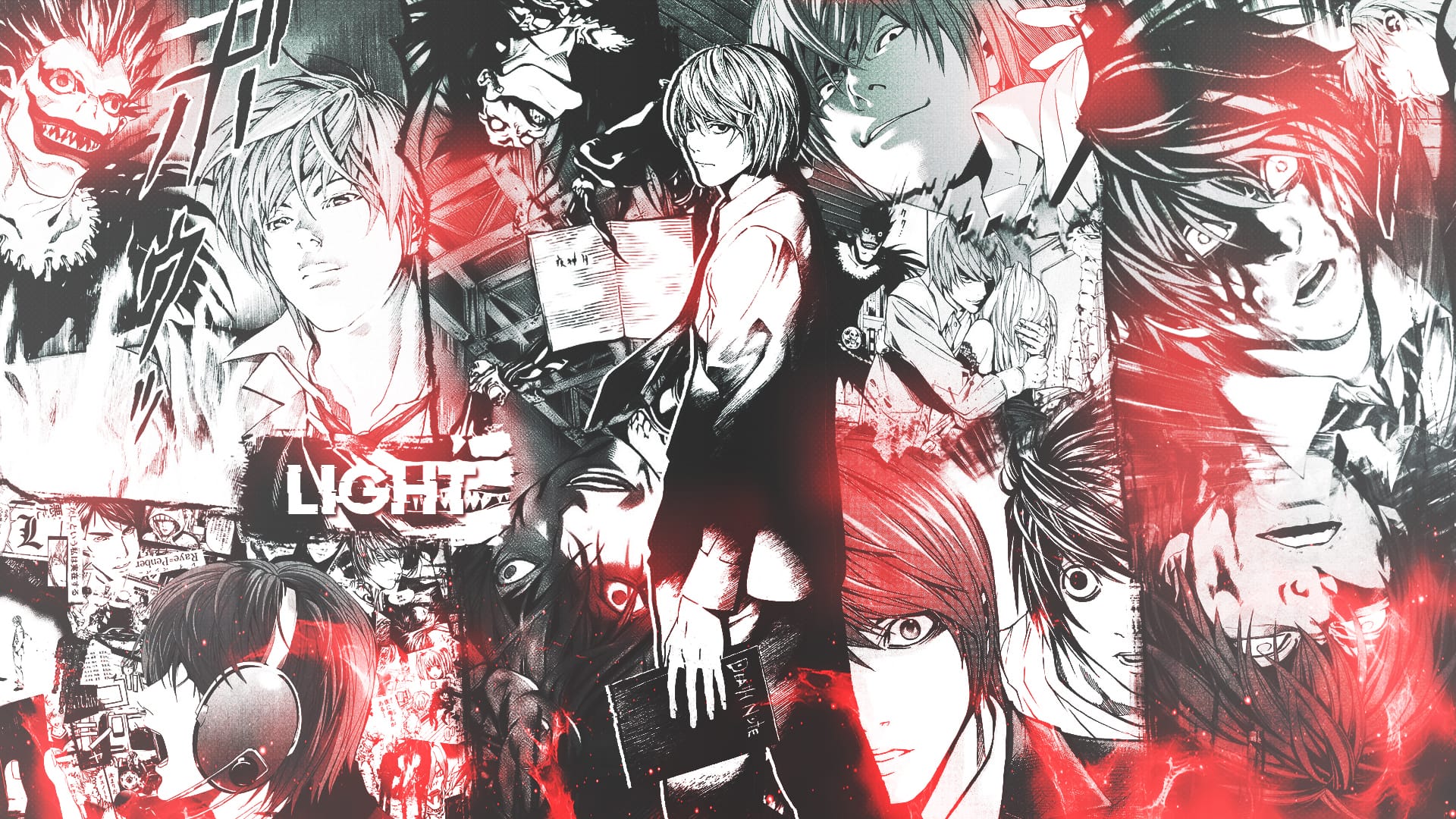
Light Yagami is one of anime’s great megalomaniacs — brilliant, ruthless, and completely convinced of his own righteousness. He genuinely believes he can and should reshape humanity, and he has the intelligence to actually pull it off for a remarkable amount of time. But for all his genius, Light consistently misreads Ryuk. He tries to manage him, bargain with him, even show off for him. Ryuk just laughs. You can’t manage something that doesn’t care about your goals.
What’s quietly terrifying about their dynamic is how Ryuk enables everything without ever actually helping. He answers questions when Light asks. He explains rules. He doesn’t interfere with L’s investigation. He doesn’t warn Light about threats. He is the most powerful being in the room at any given moment and he uses that power to eat apples and watch events unfold. Light’s plan succeeds or fails entirely on Light’s own merits — Ryuk just provided the instrument.
There’s a dark comedy to their interactions that the anime absolutely nails, especially in the early episodes. Light trying to have a serious conversation about his divine mission while Ryuk floats around upside down cackling is peak Death Note energy. The show is aware of how absurd its premise is, and Ryuk is the primary vehicle for that self-awareness. He keeps the show from collapsing under the weight of its own self-importance.
The power imbalance is also thematically critical. Light thinks he’s the protagonist of his own story — the god standing above humanity. But from Ryuk’s perspective, Light is just the most interesting human he’s seen in a while. The god of the story isn’t Light. It never was. Ryuk is the actual death god in the room, and he’s fundamentally unimpressed by Light’s pretensions. He just finds them amusing, which is somehow worse.
Best Ryuk Moments That Made the Show
Ryuk has a knack for stealing every scene he’s in, which is impressive given that he shares screen time with some of anime’s most charismatic characters. A few moments stand out as genuine series highlights.
The apple withdrawal scene is an early classic. When Light cuts off Ryuk’s apple supply as a power play, Ryuk goes into full withdrawal — contorting, shaking, turning into a scribbled mess of misery. It’s played for laughs and it works perfectly, but it also does something important: it humanizes Ryuk in a very weird way. Even a death god anime character has addictions and weaknesses. It makes him feel real.
His introduction to the human world is another standout. Ryuk’s first appearance on the rooftop, towering and grotesque and absolutely delighted to be there, sets the tone for everything that follows. He doesn’t menace Light. He doesn’t make demands. He just grins that enormous grin and says, essentially, “this should be fun.” The whole show is in that moment.
Any scene where Ryuk laughs is gold. The animators gave him this full-body cackle that bends him backwards, and it always hits right when something has gone spectacularly, catastrophically wrong for everyone involved. Ryuk’s laugh is the show’s laugh track — pointing at the absurdity and saying “yes, this, exactly this.”
And then there’s the ending. Ryuk’s final scene is the most memorable thing he does in the entire series, and it’s a perfect payoff for everything the character represents. It’s the one moment where he acts rather than observes, and the choice he makes says everything about what he always was and what Light always was to him. It’s quiet, efficient, and absolutely devastating.
What Ryuk Represents: The Themes Behind the Grin
Ryuk is funnier and more entertaining than most anime characters, but he’s also doing serious thematic heavy lifting. On one level, he represents fate — the impassive, indifferent force that sets events in motion without caring about the outcome. He didn’t drop the Death Note because Light deserved it. He dropped it because he was bored. The greatest events in the story happened for the most meaningless possible reason.
That randomness is a direct challenge to Light’s worldview. Light believes he was chosen, that finding the Death Note was destiny, that his use of it is righteous and purposeful. Ryuk’s presence is a constant implicit refutation of that belief. There was no grand design. A bored death god wanted to see something interesting. Light’s “divine mission” is, from Ryuk’s perspective, just good television.
Ryuk also represents the danger of unchecked power as entertainment. He gives Light an instrument of mass death and then sits back to watch what a smart, ambitious, morally compromised teenager does with it. The horror of Death Note isn’t just that Light uses the notebook — it’s that someone gave it to him knowing full well what would happen, and found the resulting carnage entertaining. Ryuk is the show’s most pointed commentary on voyeurism and moral detachment.
There’s also something being said about the nature of death gods specifically. In the Death Note mythology, shinigami extend their lives by taking human lives. It’s a transaction — death for existence. Ryuk already has enough lifespan banked that he doesn’t need to kill anyone, which is why he can afford to be a passive observer. He’s the shinigami who has stepped outside the system, and that freedom is what makes him so dangerous and so fascinating. He operates by no rules that Light can predict or exploit.
Finally, Ryuk is a comment on the audience itself. We watch Death Note because we’re entertained by watching Light’s rise and the cat-and-mouse with L. Ryuk does the same thing from inside the story. He’s us, in a way — detached, entertained, rooting for a good show rather than a specific outcome. That’s a slightly uncomfortable realization, and Death Note absolutely intends it to be.
The Apple Thing: A Genuine Character Detail That Works
You can’t write about Ryuk without giving the apples their due. The Ryuk apples obsession is one of those details that could have been nothing — a quirky character note that fades into the background — but instead becomes a genuine part of his identity throughout the series.
Ryuk describes apples from the human world as being like the finest alcohol to him, a sensation completely unlike anything available in the shinigami realm. For a being defined by boredom and endless grey existence, the intensity of human-world apples is legitimately mind-blowing. It says something kind of beautiful about the story: even a death god can be surprised by what the human world has to offer. Even Ryuk can want something simple.
The apples also serve a practical narrative purpose. They’re a reminder that Ryuk has preferences and desires, which means he can be inconvenienced. Light figures this out and uses it. The apple withdrawal scene creates real tension because it establishes stakes in the Ryuk relationship — you can annoy him, you can get on his bad side. He won’t help you get killed, but he won’t help you either. The balance of that dynamic matters.
And honestly? The apples are just good character design. An ancient, immortal, terrifying death god who goes absolutely feral for fruit is funny. It keeps Ryuk approachable even when everything else about him screams cosmic horror. You can be afraid of Ryuk and find him charming at the same time. That’s a hard balance to strike, and the apple obsession is a big part of how the creators pulled it off.
Why Ryuk Is the Most Rewatchable Character in Death Note
Death Note is a show that rewards rewatching, and Ryuk is a huge part of that. The first time through, you’re caught up in Light vs. L, the twists, the tension. On rewatch, you start watching Ryuk — and you realize how much he’s telling you with his reactions, his silences, and his laughter.
He’s the only character in the show who always knows exactly what’s happening and never lies about it. He’s not playing chess. He’s just watching the chess match and finding it genuinely amusing. There’s something almost zen about his detachment, even as everything around him spirals into tragedy. Ryuk will leave the human world the same way he arrived: entertained, unharmed, and ready to be bored again until something interesting comes along.
In a show packed with genius-level strategists and deeply conflicted characters, Ryuk stands apart because he’s completely at peace with what he is. He doesn’t wrestle with morality. He doesn’t have an arc in the traditional sense. He’s fully himself from episode one to the last scene, and in a show this dense with psychological complexity, that consistency is genuinely refreshing.
Ryuk is proof that you don’t need a tragic backstory or a complex motivation to be a memorable anime character. Sometimes boredom is enough. Sometimes the funniest, scariest, most thematically loaded character in the room is just a death god who wanted to see what would happen. And what happened was Death Note — one of anime’s greatest stories, kicked off by a shinigami who needed something to do.
You Might Also Enjoy
- Light Yagami Explained: Genius, God Complex, and the Fall of Kira
- L Lawliet: Why Death Note’s Greatest Detective Still Hits Different
- Death Note’s Ending Explained: What Really Happened and What It Means
- 15 Best Psychological Anime Series That Will Mess With Your Head
- Best Shinigami Characters in Anime, Ranked