If you just finished Jujutsu Kaisen Season 2 and you’re sitting there with your jaw on the floor, you’re not alone. The Shibuya Incident changed everything — and at the center of that beautiful, horrifying chaos was Ryomen Sukuna, doing exactly what he’s always done: reminding everyone that he is the most dangerous being to ever walk the JJK universe. No speeches. No tragic backstory to excuse him. Just pure, unfiltered destruction.
Ryomen Sukuna isn’t a villain who wants to rule the world or avenge someone he loved. He doesn’t have a sob story. He kills because he can, fights because he wants to, and respects exactly zero people — except, begrudgingly, the very few who can push him. That’s what makes him so different from every other antagonist in anime right now. He’s not misunderstood. He’s not redeemable. He’s just the strongest, and he knows it.
This is a full breakdown of Ryomen Sukuna — who he is, where he came from, what he can do, and why he’s become one of the most talked-about characters in modern anime. Buckle up, because this goes deep.
Who Is Ryomen Sukuna?
Ryomen Sukuna isn’t some cursed spirit that spawned from humanity’s negativity like most of the curses in JJK. He was a real person — a human sorcerer who lived during the Heian era, roughly 1,000 years before the events of Jujutsu Kaisen. And during that era, he was already untouchable. The sorcerers of his time threw everything they had at him, and none of it was enough.
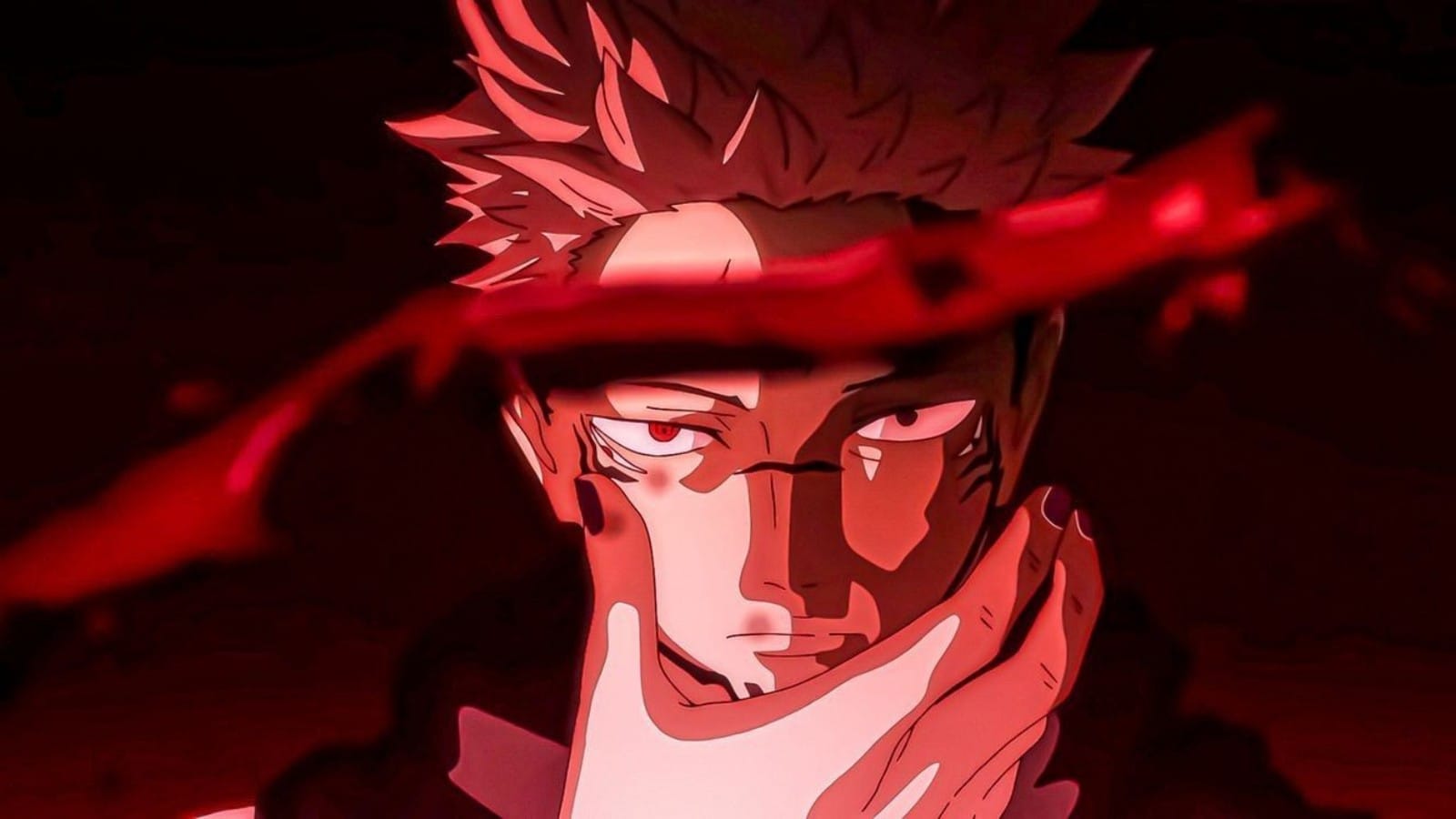
Think about what that means for a second. The Heian era was supposedly the golden age of jujutsu sorcery — more sorcerers, more techniques, more raw power than the modern world has seen in centuries. And even then, with all of that firepower aimed directly at him, they could not kill Ryomen Sukuna. The best they could manage was a draw, and even that required a massive collective effort. They couldn’t destroy his soul, so they did the next best thing: they severed his fingers — all twenty of them — and sealed his cursed energy inside each one, turning them into near-indestructible cursed objects.
Those twenty fingers scattered across Japan over the next millennium, each one radiating so much cursed energy that they attracted increasingly powerful curses. The idea was that over time, the fingers would be collected and destroyed by jujutsu sorcerers. Instead, a teenager named Yuji Itadori ate one on a dare — and Ryomen Sukuna came roaring back to life inside him.
Here’s what the old texts called him: a “cursed spirit” with two faces and four arms. But that’s not quite right. Ryomen Sukuna was never a cursed spirit — he was a human who became something else entirely through sheer, incomprehensible power. By the time he manifested inside Yuji, he was already planning his return. Every finger Yuji consumed gave Sukuna more power and more influence over the body they shared. It was never a partnership. It was a countdown.
For anyone who wants to understand where all this cursed energy comes from and how it works, check out this breakdown of cursed energy explained — it puts Sukuna’s power level in real context against other anime power systems.
Sukuna’s True Form and Appearance
When Ryomen Sukuna fully manifests — either taking over Yuji’s body or later in Megumi Fushiguro’s — you’re not looking at a typical villain design. You’re looking at something that the JJK character designers clearly put serious thought into, because Sukuna’s appearance is immediately iconic and unmistakably dangerous.
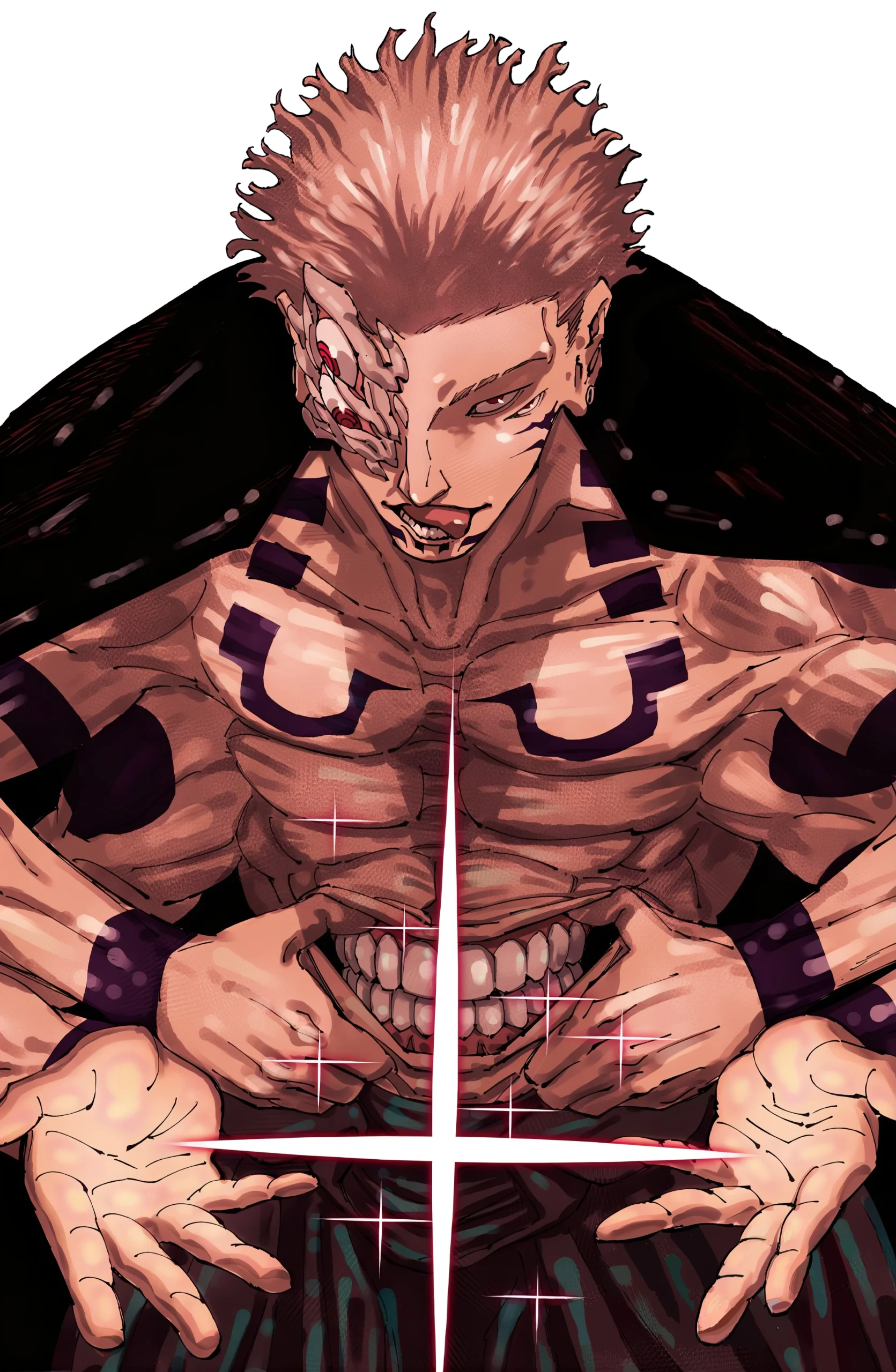
In his true form, Ryomen Sukuna has four arms and four eyes. The extra set of arms sits just below the primary pair, and those extra eyes open beneath the normal ones when he’s fully present and not suppressing himself in a host body. His entire body is covered in tattoo-like markings — dark lines that trace across his skin in a pattern that feels ancient, almost ritualistic. It matches the Heian-era aesthetic perfectly, like looking at a woodblock print that came to life and decided to start murdering people.
When he’s inhabiting Yuji Itadori’s body (which is most of Season 1 and the first part of Season 2), the full four-armed form is suppressed. What you see instead are those tattoo markings bleeding through onto Yuji’s face and body, and those signature lips appearing on Yuji’s cheek. That detail — the mouth on the cheek — is one of the most recognizable visual shorthand moments in recent anime. The second you see it, you know Sukuna is in control and someone is about to have a very bad time.
The design philosophy behind Ryomen Sukuna is brilliant because it takes real Japanese historical imagery seriously. The name “Ryomen Sukuna” itself references actual Japanese mythology — a figure described in the Nihon Shoki (Japan’s ancient chronicles) as a being with two faces and four arms. Gege Akutami took that mythological framework and built something that feels genuinely threatening rather than cartoonish. The extra limbs aren’t there for shock value — they represent a body built for combat, with twice the striking capacity of a normal human and a silhouette that reads as fundamentally wrong to the human brain.
Later, when Sukuna transitions to Megumi Fushiguro as his permanent vessel during the Culling Games, the visual contrast becomes part of the horror. Megumi’s face — calm, serious, younger — wearing Sukuna’s markings and that smirk. It shouldn’t work as well as it does, but it absolutely does.
Sukuna’s Cursed Technique: Cleave, Dismantle, and Malevolent Shrine
Let’s talk about what Ryomen Sukuna can actually do, because this is where the character goes from “very powerful antagonist” to “genuinely in a different category from almost every other character in the series.” His cursed technique is a slashing-based ability that operates on two distinct modes, plus a domain expansion that breaks the rules of how domain expansions are supposed to work.
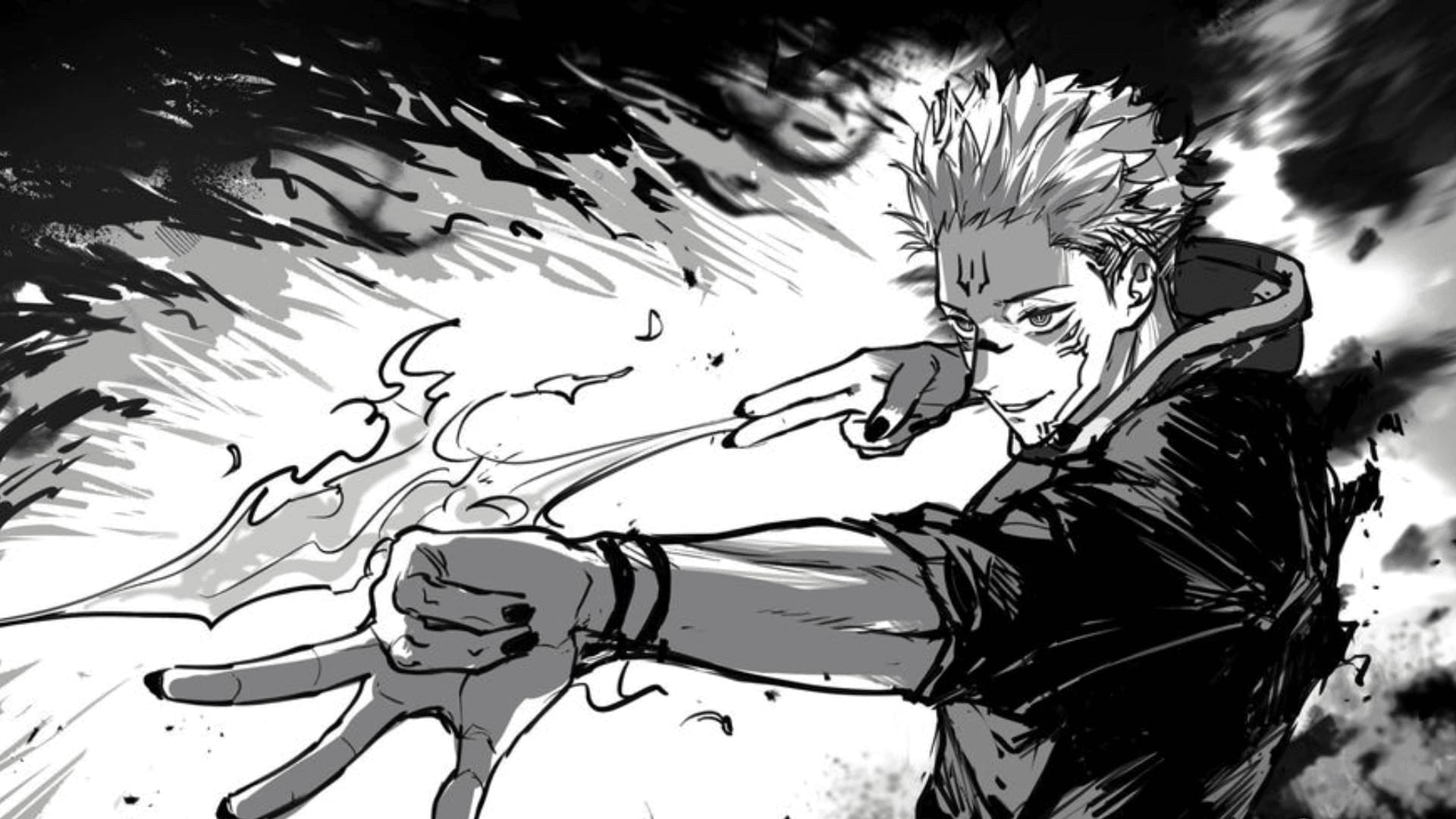
Dismantle is Ryomen Sukuna’s basic slashing attack. It’s a fixed-output technique — a blade of cursed energy that cuts with a set amount of force. In a vacuum, “fixed output slashing attack” sounds almost underwhelming until you see what Sukuna’s baseline looks like. A casual Dismantle from Sukuna can carve through buildings, barriers, and special-grade curses like they’re paper. This is his “low effort” attack. He uses it the way most people use a greeting.
Cleave is where things get disturbing. Cleave is an adaptive slashing technique — it reads the target’s cursed energy and physical durability in real time and automatically calibrates to deal exactly the right amount of damage to cut through them. It self-adjusts. You can’t out-harden yourself against it, because the more durable you are, the more damage Cleave outputs. It’s a technique that theoretically has no hard counter, because the counter would just make it stronger. Against multiple targets with different toughness levels simultaneously, Cleave parses each one individually and adjusts on the fly.
Then there’s Malevolent Shrine. This is Ryomen Sukuna’s domain expansion, and it is genuinely unlike anything else we’ve seen in JJK. Every other domain expansion in the series works the same fundamental way: you create a closed barrier, your technique activates with guaranteed hit inside, and anyone caught inside is trapped. Malevolent Shrine doesn’t need a barrier. It projects Sukuna’s domain directly onto the real world — an open-air domain that extends in a massive radius around him, with Dismantle and Cleave firing automatically at everything within range. It cuts. Everything. Constantly. Buildings, streets, people, curses — all of it getting shredded simultaneously while Ryomen Sukuna stands at the center.
The technical reason this works without a barrier is that Sukuna’s technique is so refined, so complete, that it doesn’t need the containment that other sorcerers rely on. Other domains use the barrier because they have to — it’s the mechanism that makes the guaranteed hit work. Sukuna’s is powerful enough to operate without that limitation. He expands into reality itself rather than creating a pocket dimension.
Beyond his named techniques, Ryomen Sukuna also demonstrated the ability to use fire-based techniques during the Shibuya Incident — specifically when he crushed Jogo and then had the audacity to compliment him before finishing the job. That fire ability is believed to be a technique he absorbed or accessed through Megumi’s Ten Shadows Technique later in the story. The man is also a master of reverse cursed technique, capable of healing himself to a degree that makes conventional damage largely irrelevant unless you hit him with something extraordinary.
Sukuna vs. Gojo: Why the Fight Was Always Inevitable
From the moment Ryomen Sukuna appeared in Season 1 and Satoru Gojo walked on screen five minutes later, every single JJK fan had the same thought: these two are going to fight, and it’s going to be the most insane thing we’ve ever watched. It took three seasons to get there, but the Gojo vs Sukuna battle delivered everything the fandom had been imagining — and then some.
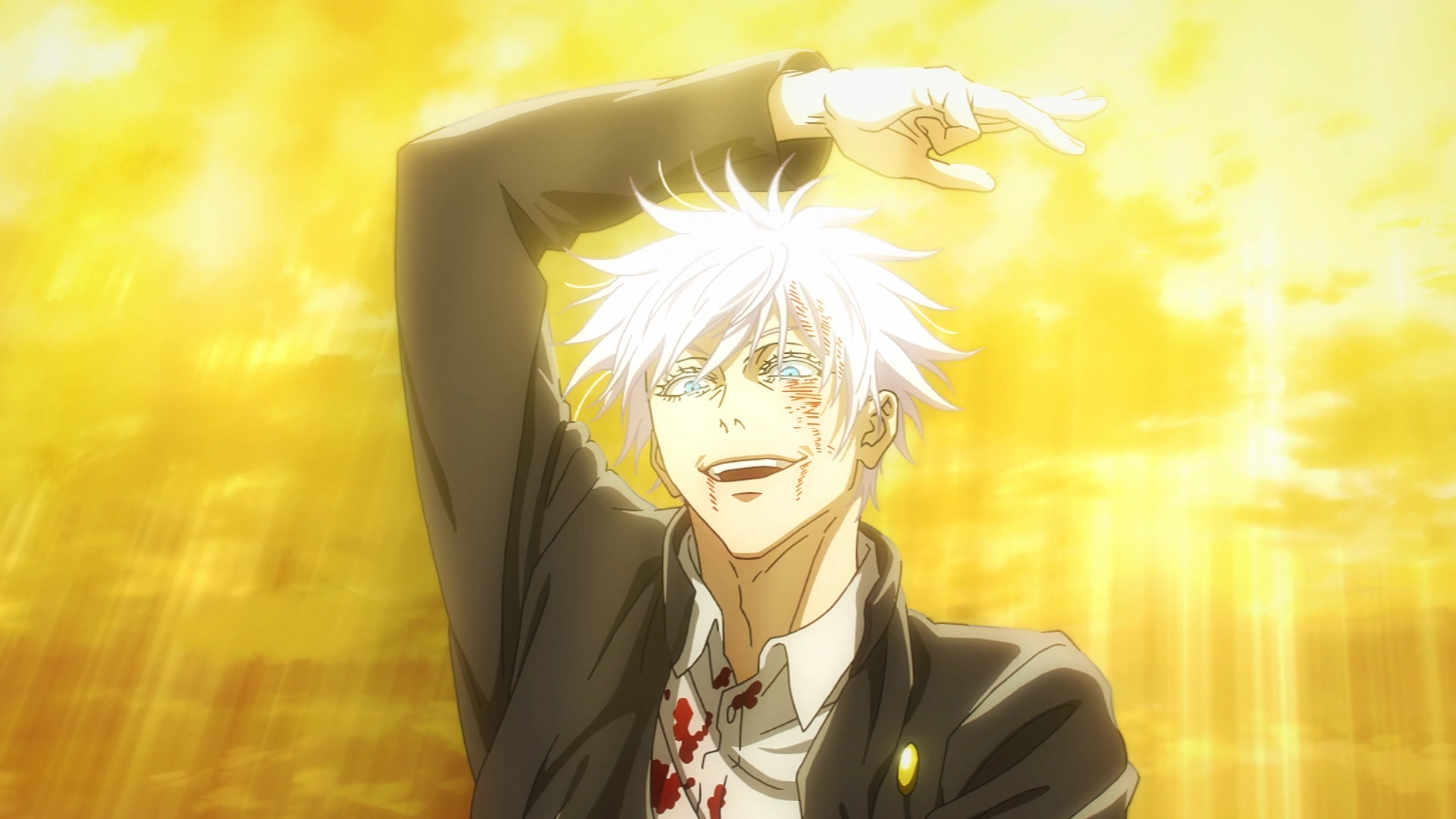
The reason this fight was always inevitable goes deeper than just “two powerful people existing in the same story.” Ryomen Sukuna and Satoru Gojo are philosophical opposites who agree on one thing: strength is the only thing that matters. Gojo uses that belief to protect people — he’s the strongest, so he can stand between the weak and the things that want to kill them. Sukuna uses the same belief to justify doing whatever he wants — he’s the strongest, so he doesn’t answer to anyone, owes anyone nothing, and will kill anyone who interests him enough to bother.
There’s also the matter of mutual recognition. Sukuna genuinely respects Gojo, which is remarkable because Ryomen Sukuna respects almost no one. During their few interactions before the big fight, Sukuna watches Gojo with something that looks almost like anticipation. He wants to fight him. Not to prove something to the world — to satisfy his own curiosity about what a collision between their techniques looks like. Sukuna has an almost aesthetic appreciation for Gojo’s power, the same way someone who loves craft appreciates seeing a master at work, even if they plan to destroy that master immediately afterward.
The fight itself, when it finally happened, went the way Sukuna fights always go: he pushed further than anyone expected, found the angle nobody saw coming, and won. In Megumi Fushiguro’s body, using the Ten Shadows Technique in combination with his own abilities, Ryomen Sukuna deployed a technique called World Slash — and that was enough. Gojo Satoru, the man who had been invincible for the entire run of the series up to that point, lost. The fandom reaction was seismic. That fight sits comfortably in any list of the best anime fights ever animated.
What makes the outcome so effective narratively is that it doesn’t feel cheap. Ryomen Sukuna winning against Gojo makes sense within the logic of the world — Gojo was fighting someone who had a thousand years of experience, techniques drawn from two bodies, and absolutely zero emotional attachment to the outcome. Gojo cared. Sukuna simply did not. And in a fight between equals-ish, caring is a liability.
Sukuna’s Role in the JJK Culling Game Arc (Season 3)
If Shibuya was Ryomen Sukuna showing the world what he was capable of in a borrowed body, the Culling Games arc is him finally getting what he’s been working toward since Yuji ate that first finger: a proper vessel. Not Yuji Itadori, who was always a temporary solution — a container that fought back, that resisted, that made Sukuna work for every second of control. Megumi Fushiguro, for complicated and devastating reasons, becomes something closer to permanent.
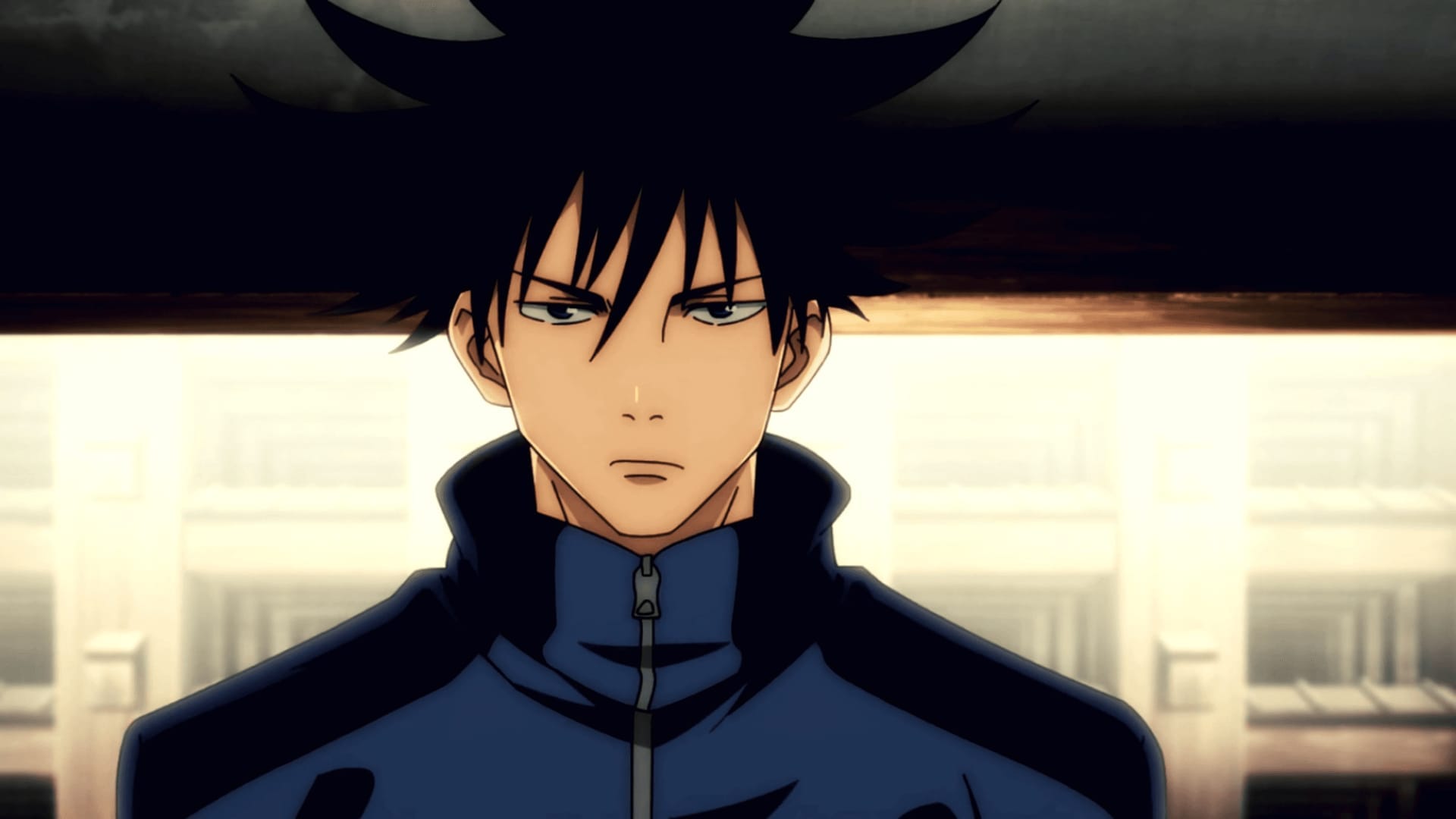
The mechanism of how Sukuna takes over Megumi is one of the most calculated moves in the entire series. Ryomen Sukuna didn’t just wait for an opportunity — he engineered one. By forcing the death of Megumi’s sister Tsumiki (indirectly, through Culling Game machinations), Sukuna shattered Megumi’s will to fight back. A vessel that’s broken, that doesn’t want to resist anymore, is exactly what Sukuna needed. It’s monstrous, and it’s intentional, and it tells you everything about how Sukuna operates: he thinks in terms of moves and outcomes, not feelings.
Once fully installed in Megumi’s body, Ryomen Sukuna gains access to the Ten Shadows Technique — Megumi’s inherited ability to summon shikigami (shadow constructs) — on top of his own already absurd capabilities. The Ten Shadows Technique has always been theorized to be a match for the Six Eyes (Gojo’s ability), and now Sukuna has both his own technique AND the Ten Shadows. The power ceiling just moved up again.
For anyone trying to follow all the moving pieces of this arc, the JJK Season 3 Culling Games guide breaks down the rules, players, and stakes in a way that makes the Sukuna-centric storyline much easier to track. The Culling Games themselves are technically Kenjaku’s game — but Ryomen Sukuna uses them the same way he uses everything: as an opportunity to find strong people and either kill them or use them.
What the Culling Games arc does for Sukuna’s characterization is strip away the last ambiguity about his motivations. In Yuji’s body, you could tell yourself maybe he was contained, maybe he was limited. In Megumi’s body, with more freedom and more power, Ryomen Sukuna is exactly who he always was. He’s not interested in Kenjaku’s goals. He’s not a team player. He’s a force that happens to be currently pointing in a direction that causes maximum chaos, and when he gets bored of that direction, he’ll change it without warning.
The sorcerers trying to stop him — including Yuta Okkotsu, who gets some of his most significant moments in this arc — face the brutal reality that there is no trick, no technique, and no combination of fighters that straightforwardly beats Sukuna at full power. Learn more about how Yuta Okkotsu’s power stacks up in this increasingly impossible situation, and how Maki Zenin’s rise factors into the resistance against Sukuna’s domination.
What Makes Sukuna the Greatest Anime Villain of His Era
Here’s the argument: Ryomen Sukuna is not just a great JJK villain. He’s the best anime villain of his generation, and it comes down to a few things that the series does with him that almost no other shonen does with its main antagonist.
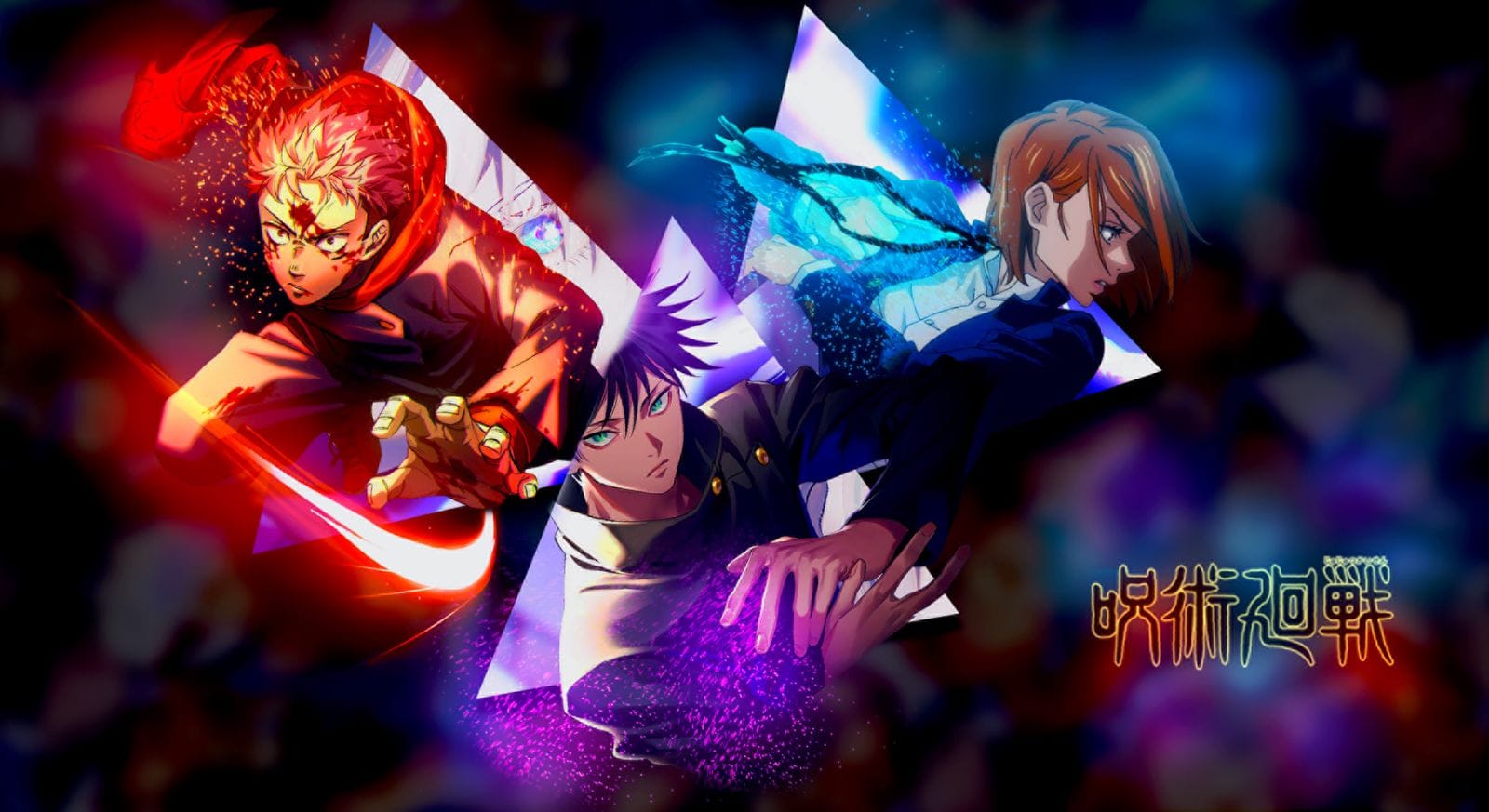
He has no redemption arc, and he never will. This is the big one. Modern anime is full of villains who turn out to be misunderstood, or who had their heart broken by tragedy, or who secretly want what the hero wants but are just going about it wrong. Ryomen Sukuna is not that character. He is not going to have a moment where he remembers the people he loved before he became a monster. He was never anything other than what he is now. The ancient sorcerers who fought him in the Heian era weren’t fighting a corrupted hero — they were fighting Sukuna, who was already exactly this. He was born terrifying and stayed that way for a thousand years.
This makes him genuinely scary in a way that “tragic villain” characters often can’t be, because you know they’ll be softened eventually. With Ryomen Sukuna, there’s no softening coming. He’s going to keep being this until he’s stopped. That’s it.
His philosophy is coherent and internally consistent. Sukuna believes that strength is the only real thing in the world — the only thing worth having, worth chasing, worth respecting. Every single action he takes flows from this. He doesn’t kill weak people out of malice; they’re just irrelevant to him. He kills strong people because that’s interesting. He lets Yuji live sometimes because Yuji being alive means more fingers getting consumed, which means more of Sukuna’s power returning. He manipulates Megumi not out of cruelty (though it is cruel) but because Megumi is the vessel he calculated he needed. There’s no randomness to Sukuna’s decision-making when you understand his values.
He has aesthetic appreciation alongside his violence. Ryomen Sukuna isn’t a mindless force. He appreciates craft, artistry, and genuine skill — which is part of why his relationship with Gojo is so interesting. When Gojo does something technically brilliant, Sukuna notices. When Yuji shows unexpected resilience or creativity, Sukuna acknowledges it (usually right before trying to break him again). There’s a connoisseur quality to him — he’s been alive for over a thousand years and he’s developed actual taste. It doesn’t make him less dangerous. If anything, it makes him more unsettling, because it means there’s something watching behind those four eyes that genuinely understands what it’s destroying.
He respects the story enough not to lose cheaply. This sounds like a meta-point, but it’s actually a character point: Ryomen Sukuna wins the fights he should win. When Sukuna defeats Gojo, it’s not because the plot needed Gojo to lose — it’s because within the established rules of the JJK power system, Sukuna at full power in Megumi’s body with Ten Shadows available represents a combination that even Gojo’s Six Eyes couldn’t definitively overcome. The series earned that outcome. And Sukuna, by being a character whose power is rigorously defined rather than vaguely “very big,” gets to win credibly. His victories mean something because you understand how they happened.
Look at the current anime villain field: you have powerful antagonists, tragic antagonists, manipulative antagonists. Ryomen Sukuna is the rare combination of all three flavors of threatening — physically dominant, intellectually superior, and completely without the moral anchors that would make him predictable. He’s what happens when you write a villain who has had a thousand years to figure out exactly what he is and make peace with it.
The MyAnimeList community rankings consistently have Sukuna among the highest-rated antagonist characters in recent memory, and the community discussion around him is exactly the kind of engagement you get from a character who genuinely surprises people. Not because he does unexpected things out of nowhere, but because he consistently does exactly what his character dictates — and that character is more dangerous than almost anyone anticipated.
Ryomen Sukuna doesn’t need your sympathy. He doesn’t want your understanding. He’s the King of Curses, he was the King of Curses a thousand years ago, and he’ll be the King of Curses until something finally stops him. In a genre full of villains with tragic origins and hidden hearts of gold, that absolute refusal to be anything other than what he is makes Ryomen Sukuna genuinely unforgettable.
You Might Also Enjoy
If Ryomen Sukuna has you hooked on the deeper lore and character analysis side of Jujutsu Kaisen, here are some of our other pieces that go just as deep:
- The Gojo vs Sukuna Battle — How It Broke the JJK Fandom — Full breakdown of the most anticipated fight in recent anime history, how it played out, and why it landed the way it did.
- JJK Season 3 Culling Games Guide — Everything you need to understand the rules, players, and stakes of the arc where Sukuna goes full villain mode in Megumi’s body.
- Yuta Okkotsu Character Analysis — The one sorcerer who might actually have the ceiling to challenge Sukuna eventually. Here’s why his power set is different from everyone else’s.
- Maki Zenin’s Rise — The Sorcerer Who Rewrote the Rules — How Maki’s unique physiology makes her one of the most interesting characters in a world where cursed energy is everything.
- Cursed Energy Explained — JJK vs HxH Power Systems — A cross-series deep dive into how cursed energy actually works and how it stacks up against Nen from Hunter x Hunter.