Who Is Roy Mustang? The Man Behind the Flame
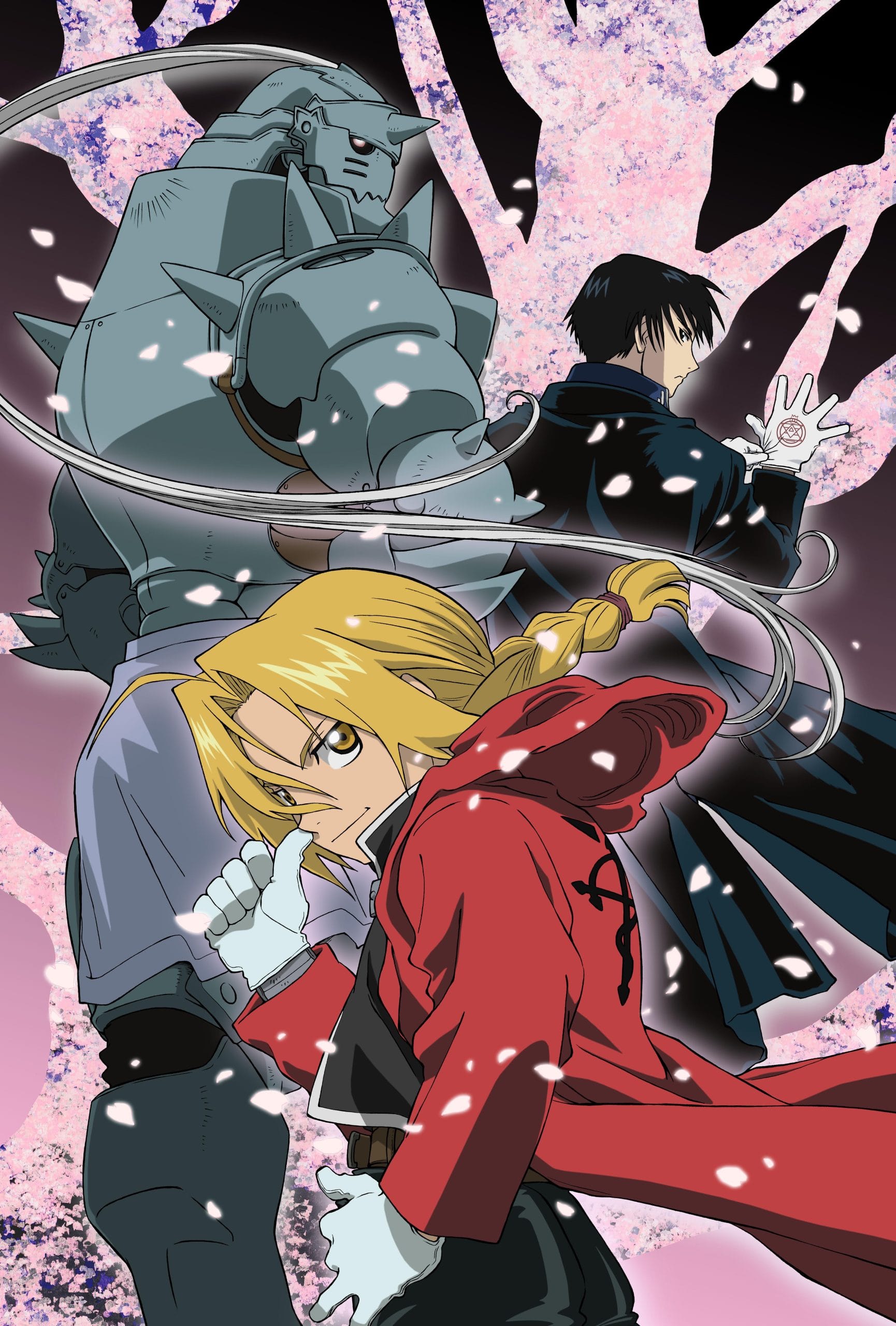
Any serious Roy Mustang character analysis has to start with the contradiction at his core: here is a man who became a state alchemist — a “dog of the military,” as Edward Elric would say — specifically so he could tear the entire military system apart from the inside. Roy Mustang is introduced in Fullmetal Alchemist: Brotherhood as a slick, casually arrogant colonel who seems more interested in flirting with office women than doing actual work. That performance is deliberate. It is armor. And peeling it back is one of the most rewarding experiences the series offers.
Roy Mustang was born in Amestris and trained under the legendary alchemist Berthold Hawkeye, who passed the secret of flame alchemy to him — burned, literally, into Riza Hawkeye’s back. He served in the Ishval Civil War as a State Alchemist, and what he did there broke something in him that never fully healed. After Ishval, he made a vow: he would climb to the top of the Amestrian military and become Führer, not for power, but to dismantle the corrupt machine that turned him and his comrades into instruments of genocide.
That vow drives everything. Every political maneuver, every alliance, every calculated sacrifice — all of it is in service of a future he’s not even sure he deserves to see. That tension between ambition and guilt is what makes Roy Mustang one of the most fully realized anime characters in the medium’s history.
He is brilliant, vain, occasionally reckless, deeply loyal, and haunted in ways he rarely lets anyone see. He is, in short, a real person trapped inside a war story — and that’s exactly why fans can’t stop talking about him.
The Military Philosophy of the Flame Alchemist
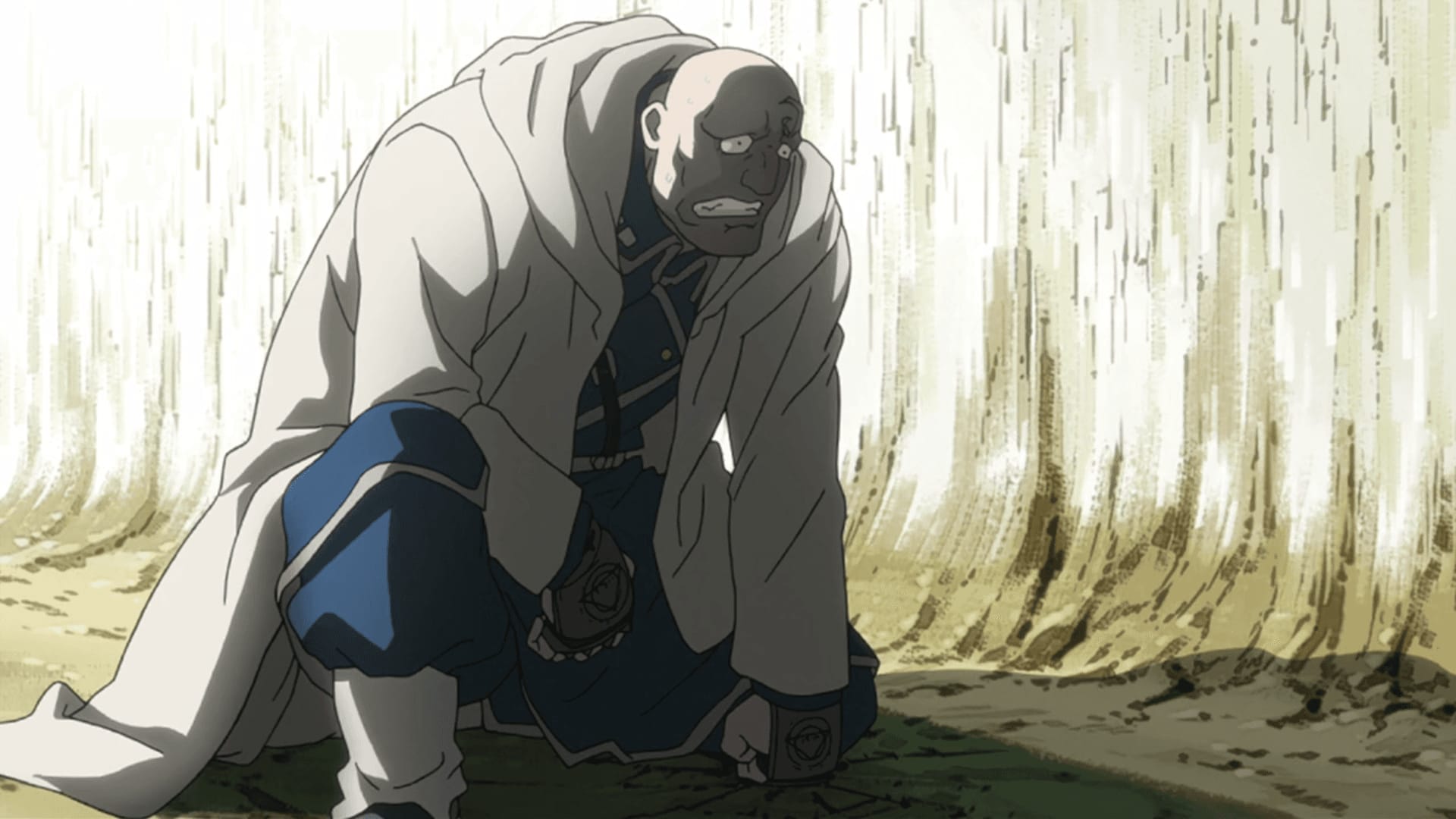
Roy Mustang’s relationship with the anime military is the philosophical spine of his entire character arc. He does not believe in the military as an institution of honor — he has seen too much for that. What he believes in is the potential of power to do good when wielded by someone with the right intentions and the courage to act on them. It’s a dangerous philosophy, one the series doesn’t fully endorse, and the narrative is honest enough to challenge him on it repeatedly.
His inner circle — Riza Hawkeye, Maes Hughes, Jean Havoc, Heymans Breda, Vato Falman, Kain Fuery — is not just a team. It’s a chosen family built on shared values and mutual trust. Mustang runs them not with orders but with earned loyalty. When Hughes dies, when Havoc loses his legs, when Hawkeye is taken hostage, the grief and fury that erupt from him are not the reactions of a commander losing assets. They are the reactions of a man losing people he loves.
This is the core of his leadership philosophy: he fights for people, not abstractions. He wants to become Führer not because he craves authority, but because he believes — with the particular arrogance of a very talented man — that he is one of the few people in Amestris positioned to actually fix things. It’s worth noting the series doesn’t let him off the hook for that arrogance. His certainty in his own judgment has cost people enormously, and he knows it.
His famous line — “It’s a terrible thing to kill someone” — delivered quietly, without drama, is the clearest window into his military philosophy. He is not a pacifist. He will burn you to ash without hesitation if you threaten his people. But he carries the weight of every life he’s taken, and he refuses to pretend otherwise.
Flame Alchemy: How Roy Mustang’s Power Actually Works
The Flame Alchemist title isn’t just for show — Roy Mustang’s alchemy is among the most tactically sophisticated in FMA Brotherhood, and understanding how it works makes his fight sequences dramatically richer. Mustang doesn’t conjure fire from nothing. He wears specially crafted ignition cloth gloves embedded with a transmutation circle. When he snaps, he creates a small spark. What he actually manipulates is the oxygen in the surrounding air — he can increase its concentration in a targeted area, then ignite it with that spark to produce controlled explosions and columns of flame.
The practical implications of this are staggering. Mustang can pinpoint flames to surgical precision — he’s demonstrated the ability to cauterize a wound without burning the surrounding tissue, and to incinerate a target while leaving the person standing next to them completely unharmed. He can shape the fire, direct its trajectory, and vary its intensity from a small controlled burn to a massive conflagration that reduces a target to ash before they can scream.
His power has a well-established weakness: rain. Water neutralizes his ability to generate and direct flame effectively, which is why the Lust fight — where he has to burn himself repeatedly to stay conscious and cauterize his own wounds in pouring rain — is so viscerally intense. He turns his own weakness into a desperate weapon through sheer willpower and self-destruction. It’s one of the best fight sequences in the series for exactly this reason.
It also matters that his power is inscribed in Riza Hawkeye’s skin. The secret of flame alchemy lives on her back. If she ever wanted it destroyed, she would have to be destroyed with it — and both of them know this. The power itself is entangled with their relationship, which is a piece of storytelling so elegant it rarely gets the attention it deserves.
Ishval and the Envy Fight: Roy Mustang’s Defining Moments
The Ishval Civil War is the wound that never closes for Roy Mustang. State Alchemists were deployed as weapons of mass destruction during the conflict — walking into Ishvalan communities and eliminating them systematically. Mustang was there. He did what he was ordered to do. He was extraordinarily good at it. The series does not flinch from this. It shows us flashbacks of the Flame Alchemist at work in Ishval, and the contrast between the controlled, calculating soldier he was then and the man wracked with guilt he has become is genuinely disturbing.
What makes Ishval so important to understanding Mustang isn’t just the guilt — it’s what he chose to do with it. A lesser character arc would have him wallow or seek absolution through self-sacrifice. Instead, Mustang chose ambition as his penance. He decided that dying for his sins would be too easy. The harder thing — the thing he owes to the Ishvalans — is to live, climb, and fix the system that put him in that desert with orders to kill civilians. It’s a form of guilt-driven purpose that feels psychologically authentic in a way most anime doesn’t attempt.
Then there’s the Envy fight — arguably the most emotionally raw sequence Roy Mustang gets in the entire series. When he discovers that Envy murdered Maes Hughes, the man who was his closest friend and confidant, he loses himself completely. He corners Envy and begins burning him methodically, piece by piece, refusing to let the homunculus regenerate fully before burning him again. It is torture. Deliberate, cold, and utterly unrecognizable from the composed colonel we’ve been watching all series.
Edward, Scar, and Riza all have to talk him back from the edge. The moment Riza presses her gun to the back of his head and tells him she’ll have to kill him if he continues — because she refuses to watch him become a monster — is one of the most devastating scenes FMA Brotherhood produces. Mustang steps back. He lets Envy go. And the relief and shame on his face in that moment contain more character work than most series manage in entire arcs.
Roy Mustang and Riza Hawkeye: The Relationship That Holds Everything Together
The dynamic between Roy Mustang and Riza Hawkeye is the emotional center of everything he does, and it is handled with a restraint and depth that rewards patient viewers enormously. Their relationship defies easy categorization. It is not played as a conventional romance, though the care between them is unmistakable. It is not simply a commanding officer and his adjutant, though that structure is always present. It is something more specific and more complicated: two people who share a terrible history, who are bound together by guilt, loyalty, and a promise that may cost both of them everything.
Riza Hawkeye served in Ishval too. She was the sniper who covered Mustang’s advancement through enemy territory. They both came back carrying the same blood on their hands, and they made an implicit agreement — she would watch his back and make sure he never crossed the line he shouldn’t cross, and he would become the leader he was promising to be. It’s a relationship built on accountability as much as affection.
The flame alchemy tattoo on her back is the most potent symbol of how thoroughly their lives are intertwined. She carries his most dangerous secret on her skin. He can never fully step away from her, and she can never fully step away from him — the secret connects them in a way that goes beyond loyalty or love into something almost metaphysical. When she allows him to read the tattoo before burning its edges to prevent anyone else from copying it, it is an act of profound trust and profound sacrifice that neither of them puts into words.
Their coded language during the Promised Day — when Hawkeye speaks in oblique hints to signal that she’s being monitored while held hostage — and Mustang’s immediate, accurate interpretation of it shows a bond so deep that words are almost redundant. They know each other’s minds. They’ve had to, to survive this long. That intimacy, earned over years of shared horror and shared purpose, is more affecting than most fictional romances precisely because it’s never overwrought.
Why Fans Love Roy Mustang: The Character That Grows Up
The reason Roy Mustang occupies such a permanent place in the hearts of FMA Brotherhood fans comes down to one thing: he is a character who is genuinely allowed to be wrong, and who is forced by the narrative to reckon with it. He is not presented as a cool older mentor who has everything figured out. He is a man with a plan that contains fatal assumptions, a temper he can barely control when the people he loves are threatened, and an ego that occasionally blinds him to perspectives he needs.
He gets humbled. Repeatedly. The rain fight against Lust strips him of his greatest weapon and nearly kills him — and he survives through desperation and self-destruction rather than tactical genius. The Envy confrontation strips away his composure and exposes the grief and rage he’s been suppressing for years. The loss of his eyesight during the Promised Day forces him to be dependent in a way that must be agony for a man with as much pride as Mustang has.
And through all of it, he keeps going. He adapts. He accepts help when he has to. He rebuilds. That arc from the casually arrogant colonel in episode one to the genuinely reckoning, growing, still-flawed man in the finale is one of the most complete character journeys in FMA Brotherhood. He earns his place in the story by being tested at every level — moral, physical, emotional — and surviving in ways that cost him something real each time.
The fans who love Roy Mustang aren’t loving a fantasy of effortless cool (though he certainly has moments of that). They’re loving a portrait of what it looks like to carry real guilt, pursue a meaningful goal despite being imperfect, and choose, over and over, to be better than your worst moment. That’s not common in anime, or in fiction generally. When you find it, you hold onto it.
The Promised Day and Roy Mustang’s Ultimate Test
The Promised Day sequence is the culmination of everything the series has been building for Roy Mustang, and it is brutal in the best possible way. He is forced to perform human transmutation at the Gate — the one act he has always refused, the one act that symbolizes the kind of unchecked alchemical arrogance he has been fighting against. He performs it to save Hawkeye’s life after her throat is cut. In doing so, he loses his eyesight, paying the toll the Gate demands.
What follows is Mustang at his most vulnerable and most compelling. He is taken to fight Father essentially blind, guided by Hawkeye’s verbal commands telling him where to aim. The image of the Flame Alchemist — a man whose entire power depends on precision and spatial awareness — fighting without his sight, trusting completely in the voice of the woman who has always been his anchor, is an extraordinary piece of visual and emotional storytelling. It is, in miniature, their entire relationship: his capability, her guidance, their absolute reliance on each other.
He recovers his sight through Lan Fan’s philosopher’s stone offer, which he declines, and eventually through Dr. Marcoh and the Xingese alkahestry — a restoration that feels earned rather than convenient because of everything it cost him to get there. When the dust settles and Amestris survives, Mustang’s political project is still in front of him: the climb to Führer, the reform of Ishvalan policy, the long and unglamorous work of actually fixing things. The series ends before that work is done. Intentionally. Because the point was never the destination.
The point was always the man making the choice to try.
You Might Also Enjoy
- Edward Elric Character Analysis: The Full Metal Heart of FMA Brotherhood
- Riza Hawkeye: Why the Hawk’s Eye Is FMA’s Most Underrated Character
- The 10 Best Fight Scenes in Fullmetal Alchemist: Brotherhood, Ranked
- The Ishval Civil War Explained: FMA Brotherhood’s Darkest Chapter
- The 15 Greatest Military Anime Characters of All Time, Ranked