Let me be blunt: I have been watching anime for a long time, and very few shows have done to me what Re:Zero has done. Season 1 destroyed me. Season 2 rebuilt me, then destroyed me again. But Season 3? Season 3 is shaping up to be the one that makes the entire journey feel earned — and I think when it’s all said and done, we’re going to look back and call it the best season yet.
That’s not hype. That’s not cope from a fan who refuses to admit their favorite show peaked. That’s a genuine read on where the story is, what Tappei Nagatsuki has been building toward, and why the arcs Season 3 covers — culminating in the setup for the Pleiades Watchtower — represent the full flowering of everything Re:Zero planted in its first two seasons. Let me break it down.
The Foundation: What Seasons 1 and 2 Actually Built
A lot of casual viewers watched Season 1 and took it as a dark-ish isekai with a cool twist — Return by Death, an interesting protagonist, some brutal moments. Season 2 scared off a chunk of that crowd with its slower pace and deeper psychological excavation. But for those who stayed? Season 2 was the show pulling back the curtain and saying: this is what we’ve really been doing the whole time.
Season 1 established Subaru as a broken, self-destructive mess of a person who masks insecurity with bravado and needs external validation to feel worth anything. His arc with Emilia and Rem wasn’t just a love triangle — it was a dissection of codependency and the difference between loving someone and needing them. The “I love you, so I want you to run away with me” scene isn’t romantic. It’s a red flag. And the show knew that.
Season 2 at the Sanctuary stripped all of that away. Echidna’s trials, Beatrice’s centuries of isolation, Emilia finally confronting her past — and above all, Subaru’s utter collapse in the “Sloth” episodes — forced both the character and the audience to stare into the void without blinking. By the time Subaru crawls back and says “I love myself,” it doesn’t feel triumphant in a cheesy way. It feels like a man who almost didn’t make it telling you he found something worth holding onto.
That’s the baseline. Season 3 walks in with all of that loaded in the chamber.
If you want the full rundown on what we already know Season 3 is bringing, check out our breakdown of Re:Zero Season 3: Everything You Need to Know. But here I want to go deeper on the why — why this specific stretch of the story hits different.
The Watergate City Arc: Highest Stakes, Widest Cast
For the uninitiated: Season 3 covers Arc 5 of the light novel, set in Pristella — the so-called “Watergate City.” Where earlier arcs confined Subaru to the Roswaal mansion or the isolated Sanctuary, Arc 5 throws him into a sprawling city under siege. Multiple Witch Cult Archbishops operating simultaneously. A hostage situation that forces impossible choices. Side characters who were previously background fixtures getting genuine, brutal spotlights.
This is where Re:Zero stops being a story primarily about Subaru’s trauma and becomes a full-scale war narrative — except it never loses the intimacy that made you care in the first place.
Wilhelm van Astrea fighting Kurgan. Crusch Karsten navigating a devastating loss while refusing to quit. Felt and Reinhard doing what they do. Priscilla being Priscilla, which is to say completely unhinged in the best possible way. The Watergate arc is Re:Zero at its most operatic, and the anime’s production team — if they’re operating anywhere near their Season 2 ceiling — is going to make these set pieces land hard.
The fight choreography requirements alone are going to test the animators, and I mean that as a compliment. The sheer scale of simultaneous conflicts across a flooded city, each one carrying real narrative weight, is the kind of thing that either gets remembered as a classic or collapses under its own ambition. Based on what we’ve seen from the production so far, I’m betting on the former.
For context on how these fights stack up in the broader Re:Zero canon, our Best Anime Fights of All Time list has some benchmarks worth revisiting — Arc 5 is going to be gunning for entries.
Why the Pleiades Watchtower Is Peak Re:Zero — And What Season 3 Is Building Toward
Here’s where I want to plant a flag, because this is the argument at the heart of why Season 3 could be the best season yet: even if it doesn’t fully animate Arc 6 (the Pleiades Watchtower arc), everything in Arc 5 is explicitly building toward it. The seeds are being planted in real time.
The Pleiades Watchtower — Shaula’s domain, the ancient structure tied directly to Flugel and the mysteries of Beatrice’s contractor — represents the moment Re:Zero stops dancing around its deepest questions and starts answering them. Or more precisely, starts replacing each answer with three more questions that are somehow even more disturbing.
Why does this matter for Season 3? Because the arc 5 material establishes the emotional and narrative pre-conditions for everything the Watchtower is going to demand. Beatrice’s arc reaching its conclusion. Subaru’s relationship with Echidna (or “Echidna” — you know what I mean) becoming load-bearing in ways we can’t fully clock yet. The nature of Satella’s curse and what she actually wants from Subaru becoming impossible to ignore.
The Watchtower is where Nagatsuki takes the screws he spent four arcs tightening and removes them one by one. Season 3, even if it’s Arc 5-focused, is the final twist of the wrench. When those screws come loose — whenever that gets animated — the foundation will have been laid right here.
And honestly? That’s exactly how great multi-season storytelling is supposed to work. You don’t just watch it for the individual payoffs. You watch it because each season is a chapter in an argument the author is making, and Season 3 is the chapter where the thesis becomes undeniable.
The Character Dynamics That Make This Arc Hit Differently
Let’s talk about Emilia for a second, because the fandom discourse around her has always been a little unfair. “Boring.” “Generic heroine.” “Rem is better.” I’ve heard it all, and I think people who say that watched Season 1 without understanding what Nagatsuki was doing.
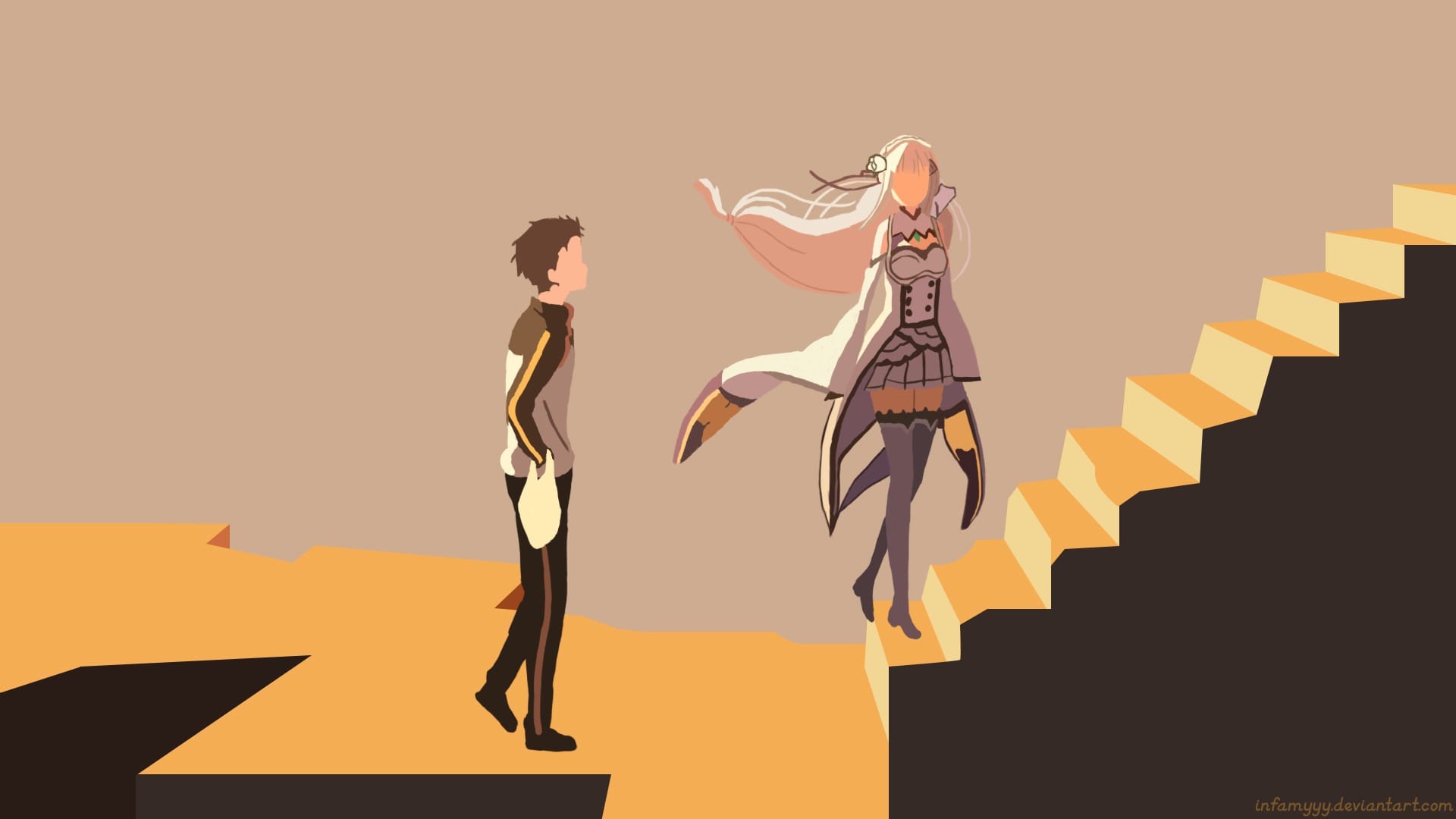
Emilia in Season 3 is not the same character she was when she was refusing to enter the mansion trial. She’s been through the Sanctuary. She’s confronted her past — literally walked through it in those trials. She is, by Arc 5, a woman who has decided she’s going to be someone worth following, not because the narrative needs a heroine, but because she chose it. That shift is subtle in the text but it’s going to be electric when animated well.
The Subaru-Emilia dynamic in Arc 5 is no longer a boy desperately protecting a girl because she’s his reason to keep looping. It’s a partnership between two people who have seen each other at their worst and decided to keep showing up. That’s a fundamentally different relationship, and it changes the emotional register of every scene they share.
Then there’s Beatrice. Beatrice, who spent four hundred years in a library waiting for “that person” to come and end her contract, finally got her answer in Season 2. That answer was Subaru. Season 3 now shows us a Beatrice who is no longer waiting — who is, for possibly the first time in centuries, present. Watching her operate from that new emotional ground, interacting with a cast she’s now genuinely invested in, is going to be one of the quiet pleasures of this season for anyone paying attention.
For the deep dive on Subaru’s psychology and how his relationships have evolved, our Subaru Natsuki Character Analysis covers the full arc — it’s essential reading before Season 3 hits its stride.
The Unsolved Mysteries Keeping Me Up at Night
Part of what makes Re:Zero Season 3 so anticipated — and so potentially explosive — is the sheer volume of open threads that are finally going to start getting pulled. Let me list the ones that are going to be relevant this season and beyond:
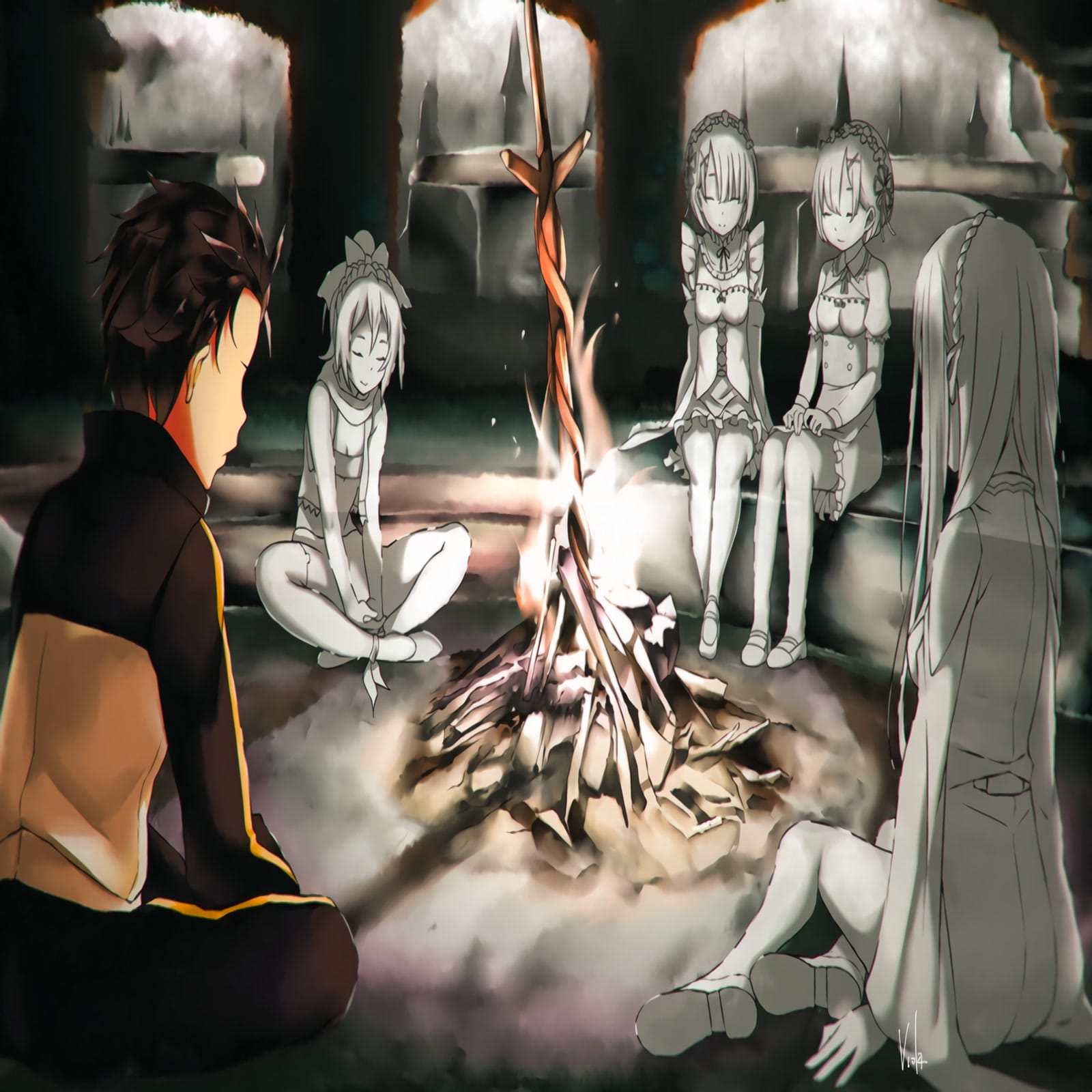
What does Satella actually want? We know she loves Subaru. We know she’s the Witch of Envy and has been sealed for centuries. We know she’s somehow connected to Emilia in ways that haven’t been fully explained. But her actual goal, her actual nature — whether she’s a victim, a villain, or something genuinely uncategorizable — is the central mystery of the entire series, and Season 3 is where that mystery starts to crystallize.
Who is Flugel, really? The Sage who planted the Stella tree (sound familiar?), who supposedly worked with Shaula and Reid and the other heroes of an earlier era — the clues have been accumulating since Season 2. The Pleiades Watchtower is literally named in connection to his domain. Whatever the show reveals or implies this season about Flugel’s identity is going to send the fan theory community into absolute chaos, and I am here for it.
What’s the real cost of Return by Death? We’ve seen Subaru die in increasingly horrible ways. We’ve seen the psychological toll. But the actual mechanics — whether there’s a finite number of returns, whether the Witch’s “protection” is really protection or something else — remain deliberately opaque. Arc 5 pushes these questions to the foreground in ways that earlier arcs could sidestep.
The nature of the Witch Cult’s endgame. Each Archbishop represents a different Sin, and by Arc 5 we’ve seen enough of them to notice that they’re not random. They’re a system. Someone built that system. The answers to who and why have implications that stretch back to the very beginning of Subaru’s isekai experience.
The Anime-Original Potential
One thing the Re:Zero anime has consistently done well — and this is worth acknowledging — is using the adaptation format to enhance material that was already strong on the page. The anime-original scenes in Season 2 weren’t filler. They were emotional connective tissue that the light novel format couldn’t quite provide. The “I love you so go die” scene, certain Betelgeuse sequences, moments of visual storytelling that the text had to convey through description instead of imagery.

Season 3 has enormous potential for this kind of enhancement. The Watergate arc’s city-scale conflicts are made for visual medium. Certain character confrontations that were powerful in the novel are going to be devastating with the right musical cues and animation — and Re:Zero has always had exceptional music. Kenichiro Suehiro’s score for Season 2 was one of the best anime soundtracks in recent memory. If he returns in similar form for Season 3, we’re in for something special.
There’s also the pacing question. Light novel readers who found parts of Arc 5 overwhelming in text form have noted that the anime format — by its nature forcing a certain rhythm of revelations — might actually smooth out the rough edges. Multi-threaded plots that are hard to track across chapters become easier to follow when you’re watching them cut between in real time. This could be Season 3’s structural advantage over its predecessors.
If you want to see where Re:Zero Season 3 lands in the context of the broader 2026 anime scene, our Spring 2026 Anime Season Complete Guide has the full picture — but I’ll say upfront that Re:Zero is the title I keep coming back to when I think about what this year in anime means.
The Emotional Stakes Are Different This Time
Here’s the thing about why Season 3 might land harder than anything that came before it: the emotional stakes are no longer abstract.
In Season 1, you were rooting for Subaru to not die horribly and to win Emilia’s acknowledgment. Stakes were high but contained. In Season 2, you were watching Subaru confront the possibility that he fundamentally didn’t deserve to survive — that his Return by Death was less a gift and more a curse being used as a leash. Stakes became existential.
In Season 3, the stakes are relational. The people around Subaru are no longer moving pieces in his personal trauma loop. They’re people with full histories and futures of their own, and the story is making you care about those futures independently of Subaru’s survival. Wilhelm losing Theresia. Crusch being robbed of herself. Felt carrying a lineage she didn’t ask for. When these characters hurt in Arc 5, you hurt with them — not because of what it means for Subaru, but because of who they are.
That’s a fundamentally more mature kind of storytelling, and it’s the direct result of five seasons’ worth of patient, sometimes agonizing character work. The official Re:Zero website has been teasing Arc 5 content that suggests the production team understands exactly what’s at stake here — and they’re swinging for the fences.
This is what separates Re:Zero from lesser dark isekai. Other shows put characters in danger to raise the tension. Re:Zero makes you love the characters first, then puts them in danger — and the difference is everything.
Why “Best Season Yet” Is Actually a Defensible Claim
I want to acknowledge the counterarguments, because this is an argument worth taking seriously.
Season 1’s Rem confession scene is one of the most emotionally devastating single episodes in modern anime. Season 2’s Sanctuary arc is a masterclass in sustained psychological horror and character deconstruction. These are genuine peaks. The bar is not low.
But Season 3 has something neither of its predecessors had: everything they built. The emotional payoff of a character like Beatrice finally choosing to live instead of waiting to die is only possible because of the hundred-and-something episodes that preceded it. The weight of Subaru walking into an impossible situation with something actually worth protecting — not just Emilia-tan as a symbol, but a whole network of people he’s become genuinely responsible for — is only possible because we watched him earn that network one brutal loop at a time.
Great serialized storytelling compounds. Each volume of a manga, each season of an anime, either depletes the goodwill and investment you’ve built with the audience or pays interest on it. Re:Zero, more than almost any other long-running anime I can name, pays interest. Season 3 is cashing a check that Seasons 1 and 2 spent years writing.
That’s why I think “Re:Zero Season 3 best season” isn’t just a hopeful take — it’s the most logical read on where this story is, what it’s doing, and what it still has left to say. The arcs ahead, from the Watergate City through whatever eventually gets adapted of the Pleiades Watchtower and beyond, are the reason Nagatsuki wrote everything that came before.
We’re not building to the climax anymore. We’re in it. And if the production holds — if the animation, the music, and the adaptation choices all land the way they should — then we’re going to be talking about Season 3 the same way we talk about peak Breaking Bad, or Evangelion’s third act, or whatever shorthand you use for “the part of a great story where it all clicks into place.”
I genuinely cannot wait. And I don’t say that about many things.
Are you caught up and ready for Re:Zero Season 3? Or just getting into the series now? Drop your hottest takes in the comments — especially if you think I’m wrong about Emilia. We can fight about it.