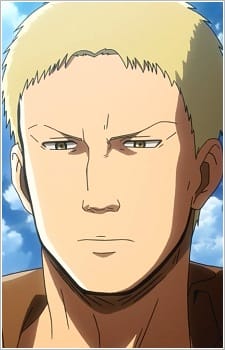
Reiner Braun is Attack on Titan’s most tragic figure—a child soldier given an impossible mission, a traitor consumed by guilt, and a man who wants nothing more than death but can’t stop fighting for a cause he no longer believes in. His psychological complexity elevates Attack on Titan from action spectacle to genuine literature. Here’s the complete breakdown of anime’s most conflicted antagonist.
The Warrior’s Childhood
Reiner was born in Marley’s internment zone—an Eldian condemned by birth to second-class citizenship. His mother Karina raised him on propaganda: Eldians were devils whose only redemption lay in serving Marley as Warriors. If Reiner inherited the Armored Titan, he could become an “honorary Marleyan” and reunite with his absent father.
This indoctrination created the foundation for everything that followed. Reiner believed he was saving his people through service. He believed in Marleyan superiority despite being Eldian. He believed that becoming a Warrior would fix his broken family. Every belief was lies that reality would eventually shatter.
His selection as a Warrior wasn’t merit-based—he was chosen partly because he was expendable, and partly because his pathological need for approval made him manipulatable. Marcel, the actual candidate, deliberately failed evaluations so his brother Porco wouldn’t face the island mission. Reiner wasn’t chosen because he was best; he was chosen because no one would miss him.
The Paradis Mission: Identity Splits
At twelve years old, Reiner infiltrated Paradis Island with Bertholdt, Annie, and Marcel. Their mission: retrieve the Founding Titan and destroy the island devils. Marcel’s death on arrival left Reiner as de facto leader despite being the weakest Warrior present.
What followed was five years of living among “enemies” who turned out to be people. Reiner befriended Eren, admired Erwin, respected Levi. He became a big brother figure to younger trainees. His cover identity as loyal Paradis soldier felt more real than his actual Warrior mission because it was based on genuine relationships rather than childhood propaganda.
The psychological split became literal. “Soldier Reiner” and “Warrior Reiner” emerged as distinct personalities, one protecting his friends and one planning their destruction. His infamous scene telling Eren about being the Armored Titan—casually, dissociatively—demonstrated how completely his mind had fractured under contradictory demands.
The Guilt That Won’t Let Him Die
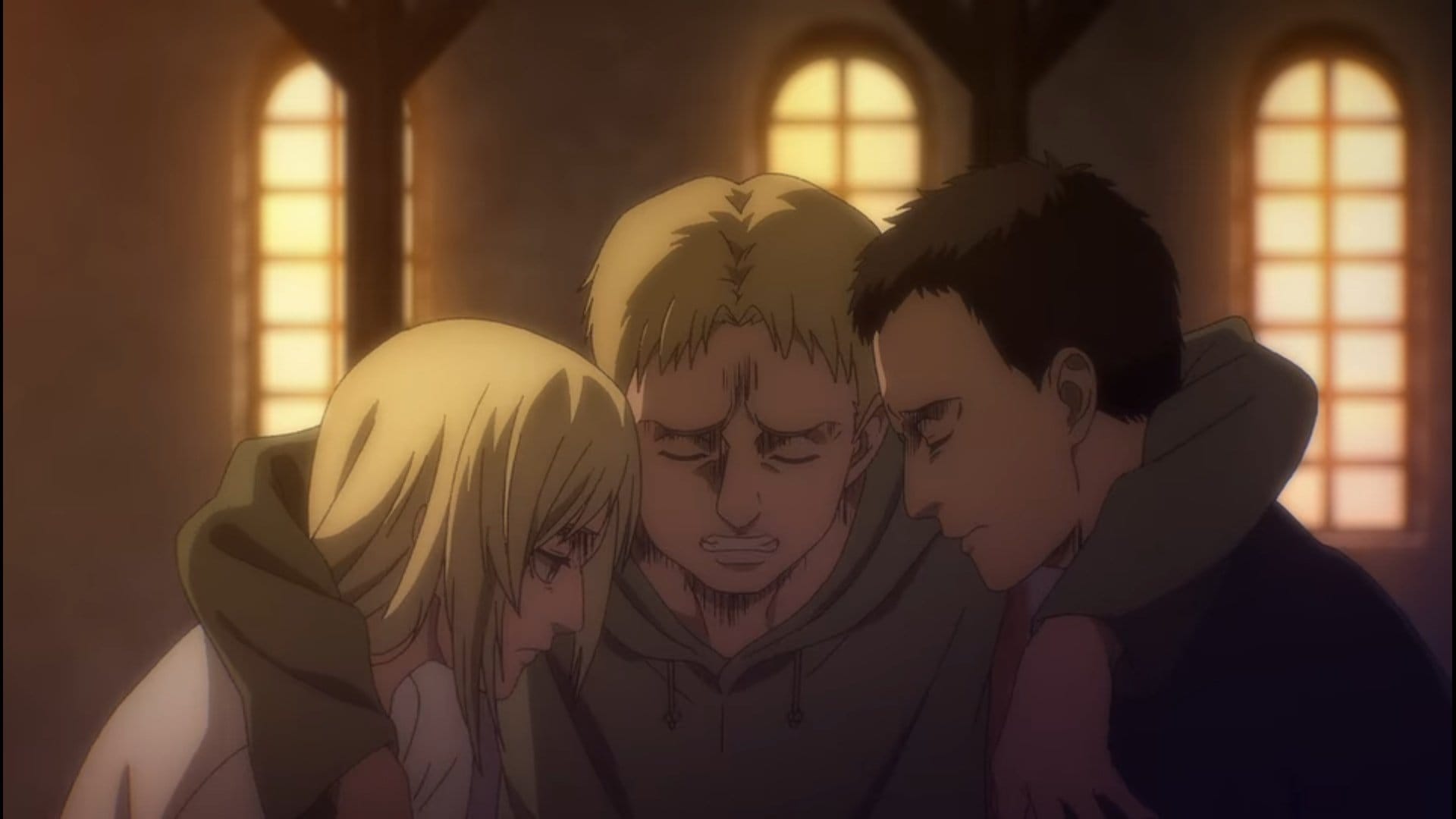
Reiner wants to die. He’s attempted suicide, contemplated it repeatedly, and explicitly envied those whose deaths freed them from guilt. But he can’t actually commit because his death would leave others—Gabi, Falco, his fellow Warriors—without protection. The same twisted sense of responsibility that drove him to Paradis keeps him alive against his will.
His survival becomes a curse that mirrors Eren’s freedom pursuit. Eren fights to live; Reiner fights despite wanting death. Both are trapped by circumstances they didn’t choose, both commit atrocities they believe necessary, and both have valid perspectives from their positions. Their parallels make their opposition tragic rather than simple.
The Marley arc’s most devastating scene shows Reiner putting a rifle in his mouth, then stopping when he hears Falco outside. He can’t even kill himself without considering others’ needs. His selflessness, twisted by circumstances, becomes the prison keeping him in pain.
Clash of the Titans: The Reveal
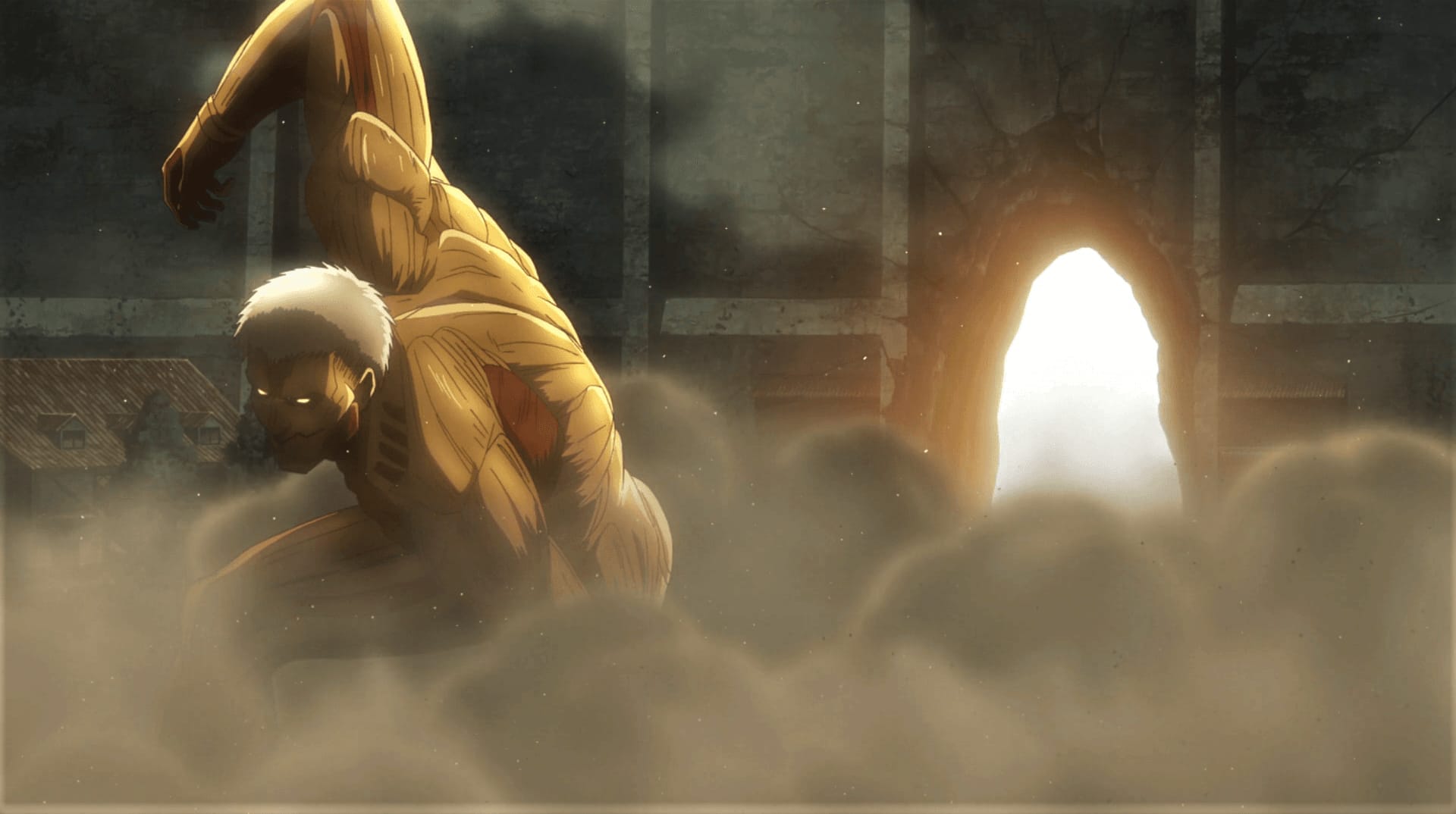
Episode 31’s reveal—Reiner and Bertholdt as the Armored and Colossal Titans—remains Attack on Titan’s most shocking moment. The casual delivery, Reiner’s dissociative affect, and the immediate combat that follows create a sequence that recontextualizes everything preceding it.
The brilliance lies in retrospective clarity. Rewatching earlier episodes, Reiner’s strange behaviors make sense: his protective mentorship of new recruits was genuine; his dedication to Paradis’s military was sincere for one of his personalities. He wasn’t acting—he was actually two people, and both were real.
His combat against former friends demonstrates the tragedy. Fighting Eren, someone he genuinely cares about, while knowing he caused Eren’s mother’s death—Reiner’s psychological state during this battle is incomprehensible torment. He wins or loses; either way, he loses.
The Marley Perspective
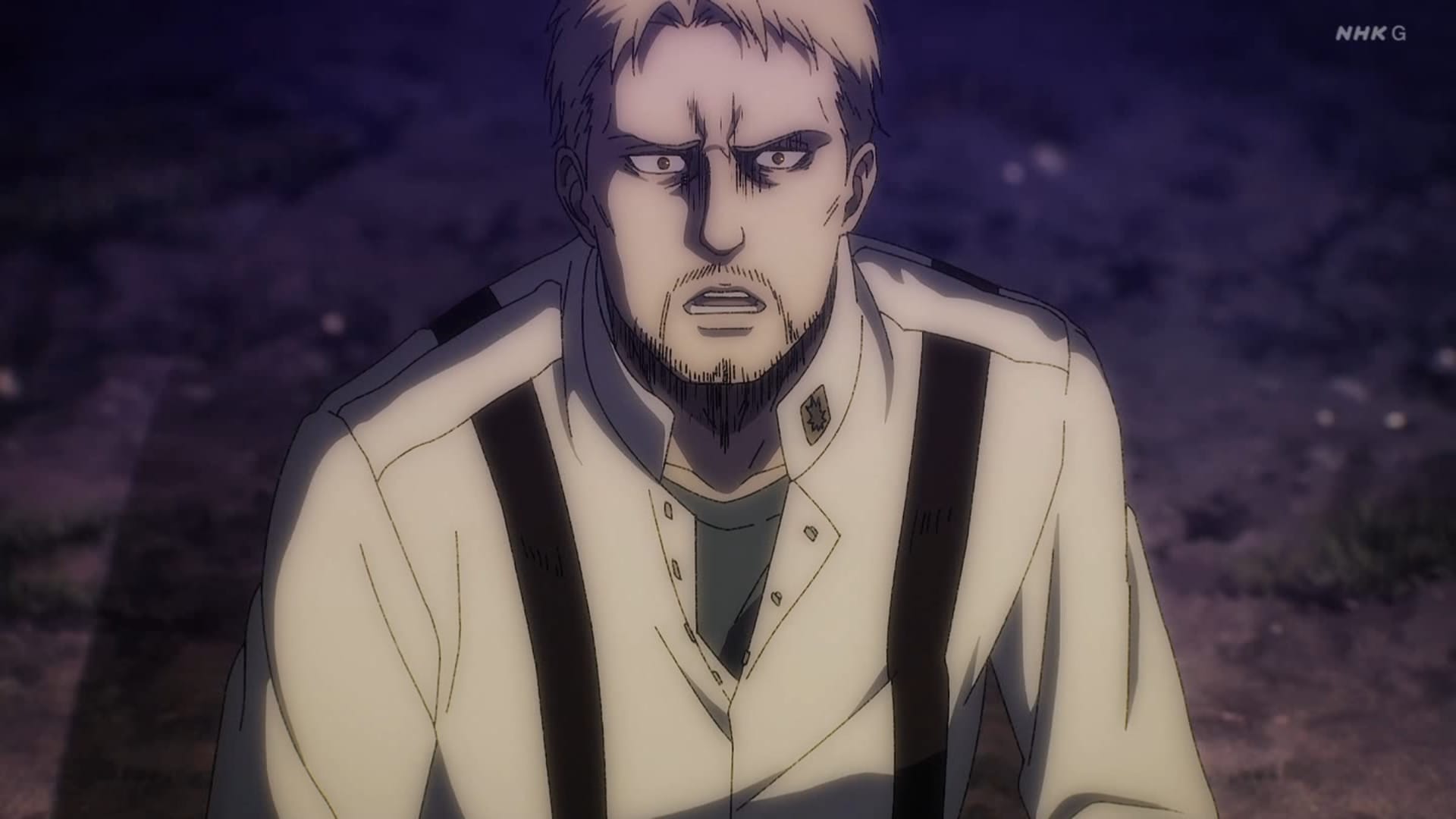
Attack on Titan’s Marley arc recontextualizes Reiner from villain to victim—but not through exoneration. We see the circumstances that created him: systematic oppression, childhood indoctrination, impossible choices forced on children. Understanding doesn’t excuse his actions; it complicates judgment.
His mentorship of Gabi and Falco during this arc shows attempted redemption through protecting the next generation from his mistakes. He tries to warn them about war’s reality, about enemy humanity, about the lies they’ve been told. They don’t listen—just as he didn’t listen when older. The cycle continues.
Confronting Eren in Marley, after years of separation, Reiner sees his own trajectory reflected. Eren has become what circumstances demanded, just as Reiner did. Their conversation—two people who understand each other completely while being enemies—provides the arc’s emotional peak.
The Final Battle: Fighting for Nothing
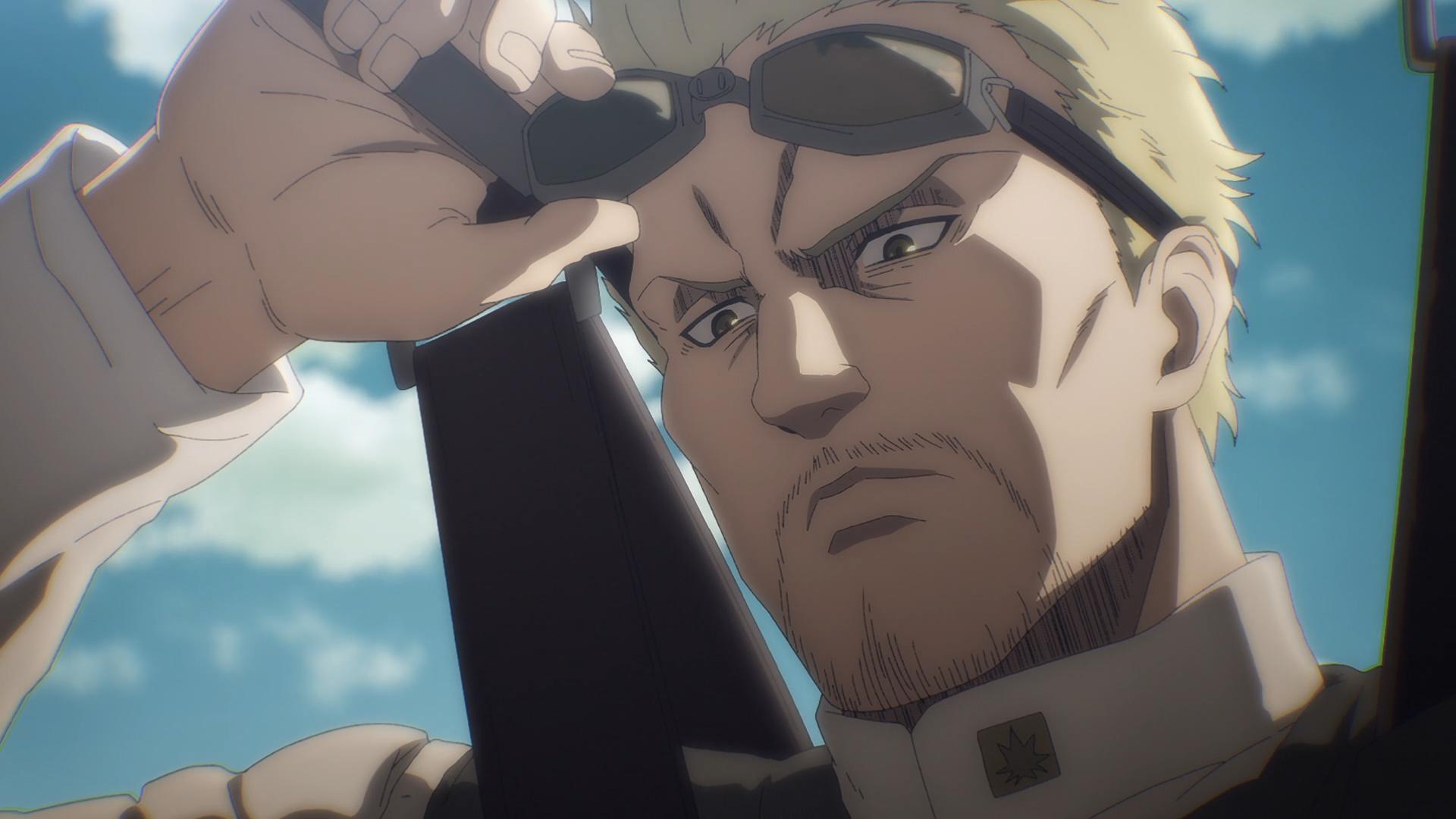
Reiner’s participation in the final battle against Eren’s Rumbling continues his pattern: fighting for others despite personal exhaustion. He doesn’t believe in victory, doesn’t want survival, doesn’t see purpose—but people he cares about need him, so he fights.
His combat against Eren’s Founding Titan demonstrates peak physical capability matching emptied psychological state. The Armored Titan was never Attack on Titan’s strongest shifter; Reiner’s significance was never about power. His role was endurance—surviving everything, including his own desire for death.
That he survives the series, forced to continue living in a world he helped destroy and partially saved, is perfect thematic conclusion. Reiner doesn’t get the death he wanted. He gets life, with all its burdens, as both punishment and opportunity. Whether that’s mercy or cruelty depends on what he does with it.
The Soldier-Warrior Dichotomy
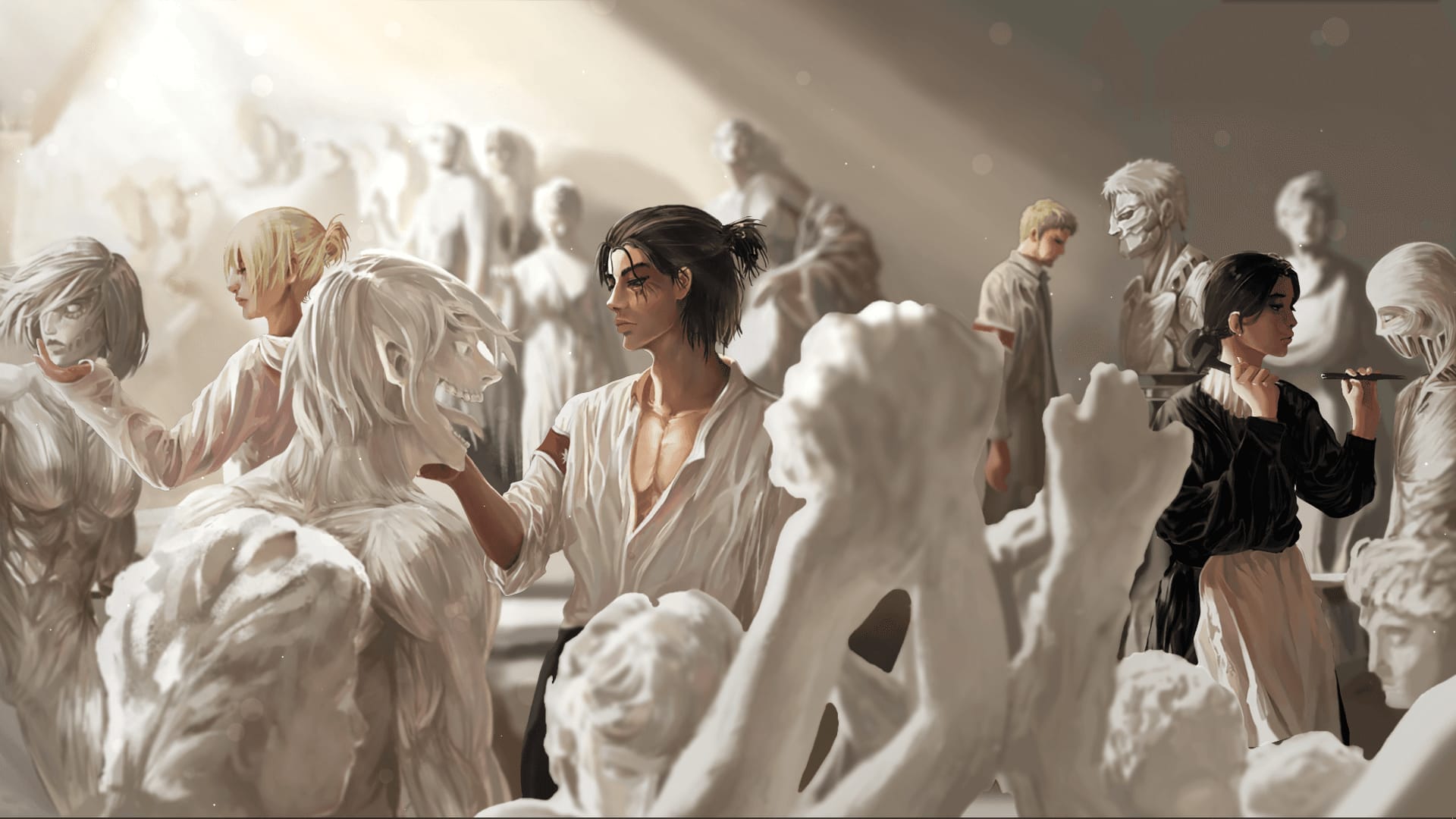
Reiner’s split identity represents Attack on Titan’s central theme: identity is constructed by circumstances. “Soldier Reiner” wasn’t false—it was who he became when living among Paradis people. “Warrior Reiner” wasn’t true—it was childhood programming he couldn’t escape. Neither was more authentic; both were him, shaped by environment.
This applies to every Attack on Titan character. Eren becomes a monster because circumstances push him there. The Warriors become killers because Marley requires it. The Survey Corps becomes ruthless because survival demands it. No one chooses who they become; they respond to what’s demanded.
Reiner’s explicit split makes visible what other characters experience implicitly. His mental fracture is dramatic manifestation of conflicts everyone faces. He’s Attack on Titan’s thesis statement in character form: people are what circumstances make them, and those circumstances are determined by systems beyond individual control.
Why Reiner Resonates
Reiner Braun works because he’s genuinely tragic rather than sympathetically excused. He did terrible things. He’s responsible for thousands of deaths. His guilt is appropriate; his suffering is earned. Yet we understand how a child could become what he became, and we can hold both truths simultaneously.
His desire for death without ability to pursue it resonates with anyone who’s known suicidal ideation prevented by external responsibilities. His fragmented identity resonates with anyone who’s been different people in different contexts. His guilt over past actions resonates with anyone carrying weight they can’t put down.
Attack on Titan created many compelling characters, but Reiner is its heart—the person who embodies every theme in their psychology. When analyzing what makes the series great, start with Reiner Braun. His tragedy is Attack on Titan’s tragedy, and both achieve greatness through unflinching commitment to emotional truth.