If you’ve been searching for a Psycho-Pass review that goes beyond surface-level plot summaries, you’re in the right place. Released in 2012, Psycho-Pass is a cyberpunk anime that didn’t just tell a compelling story — it built a world so close to our current trajectory that rewatching it in 2026 feels less like revisiting fiction and more like reading a policy brief. This is dystopian anime at its most intellectually rigorous: a show that asks what justice really means when the system measuring it is broken at the core, and whether safety is worth the price of total algorithmic control.
Produced by Production I.G and written by Gen Urobuchi — the mind behind Puella Magi Madoka Magica and Fate/Zero — Psycho-Pass arrived with serious pedigree and delivered on every promise. Over a decade later, it stands as one of the most important crime anime ever made. Here’s why.
The Sibyl System: A Perfect Society Built on a Terrible Lie
At the heart of Psycho-Pass is the Sibyl System — a vast, omnipresent network of scanners that monitors every citizen’s psychological state in real time. Your Crime Coefficient is a numerical score derived from your stress levels, emotional volatility, and latent criminal tendencies. If your number crosses a threshold, you’re flagged as a latent criminal — not for anything you’ve done, but for what the algorithm predicts you might do.

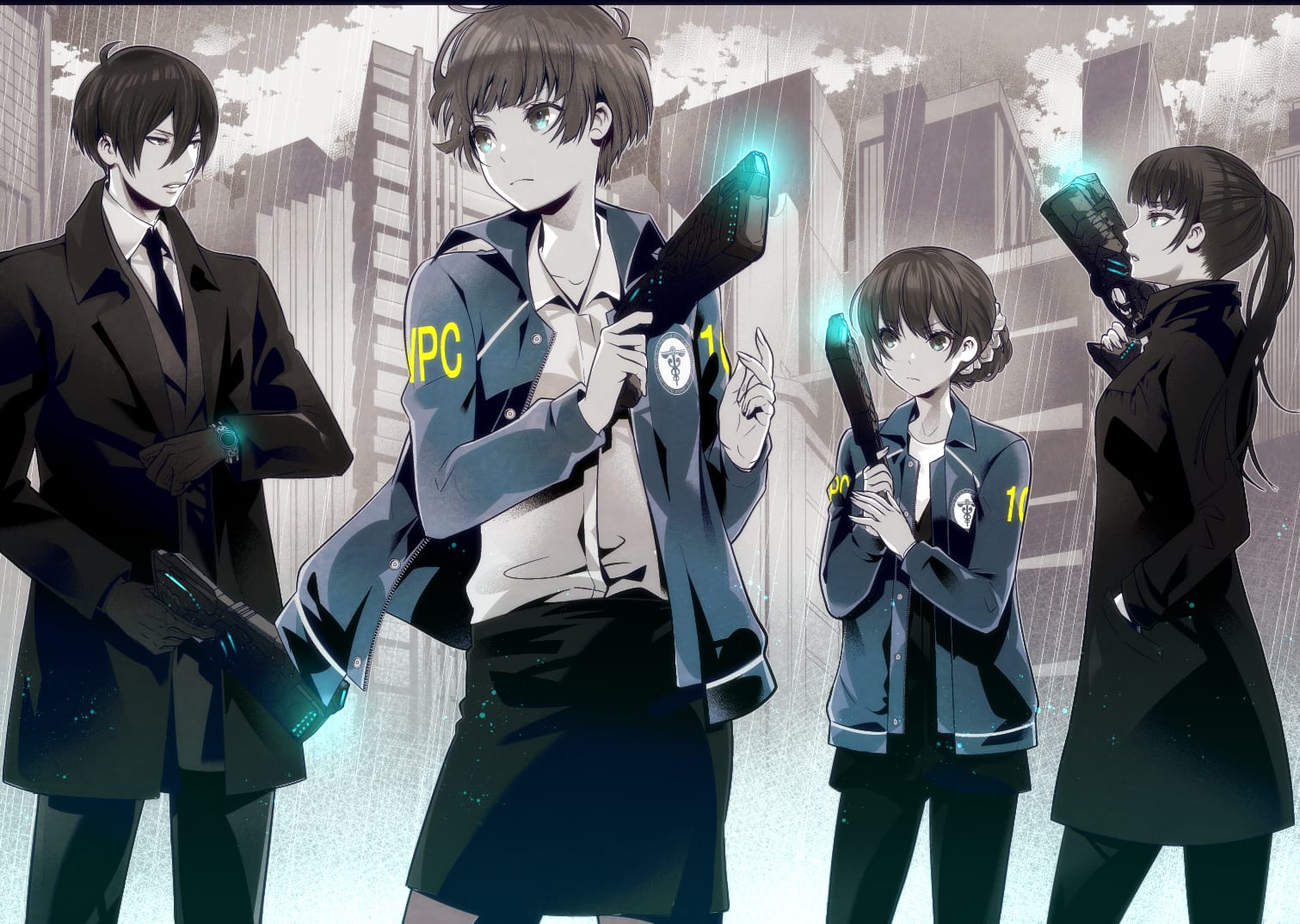
Enforcers — former latent criminals now working for the Public Safety Bureau — are dispatched with Dominators: weapons that automatically assess a target’s Crime Coefficient and either stun or, if the number is high enough, liquify them on the spot. The Dominator won’t fire lethally unless the system authorizes it. It’s not a gun. It’s a verdict.
The genius of this setup is how reasonable it sounds on paper. A world with almost no violent crime. Citizens who feel genuinely safe. A society that has essentially eliminated reactive punishment in favor of preventive intervention. Even the show’s protagonist initially buys into it. The horror creeps in slowly — through edge cases, through exceptions, through the faces of people destroyed by a number that doesn’t tell the whole story.
What makes the Sibyl System truly terrifying isn’t revealed until late in Season 1, and it reframes everything you’ve watched. The reveal is one of the best in sci-fi anime history, and it transforms Psycho-Pass from a great procedural thriller into something genuinely disturbing. The system isn’t just flawed. It’s built on a compromise so dark that the entire society would collapse if citizens knew the truth.
Why Psycho-Pass Feels Eerily Relevant in 2026
When Psycho-Pass aired in 2012, its premise felt speculative. In 2026, it feels like a direction marker. The technologies that underpin the Sibyl System — predictive analytics, biometric surveillance, algorithmic risk scoring — aren’t science fiction anymore. They’re operational in various forms across the world, and their expansion has accelerated dramatically in the years since the show’s release.
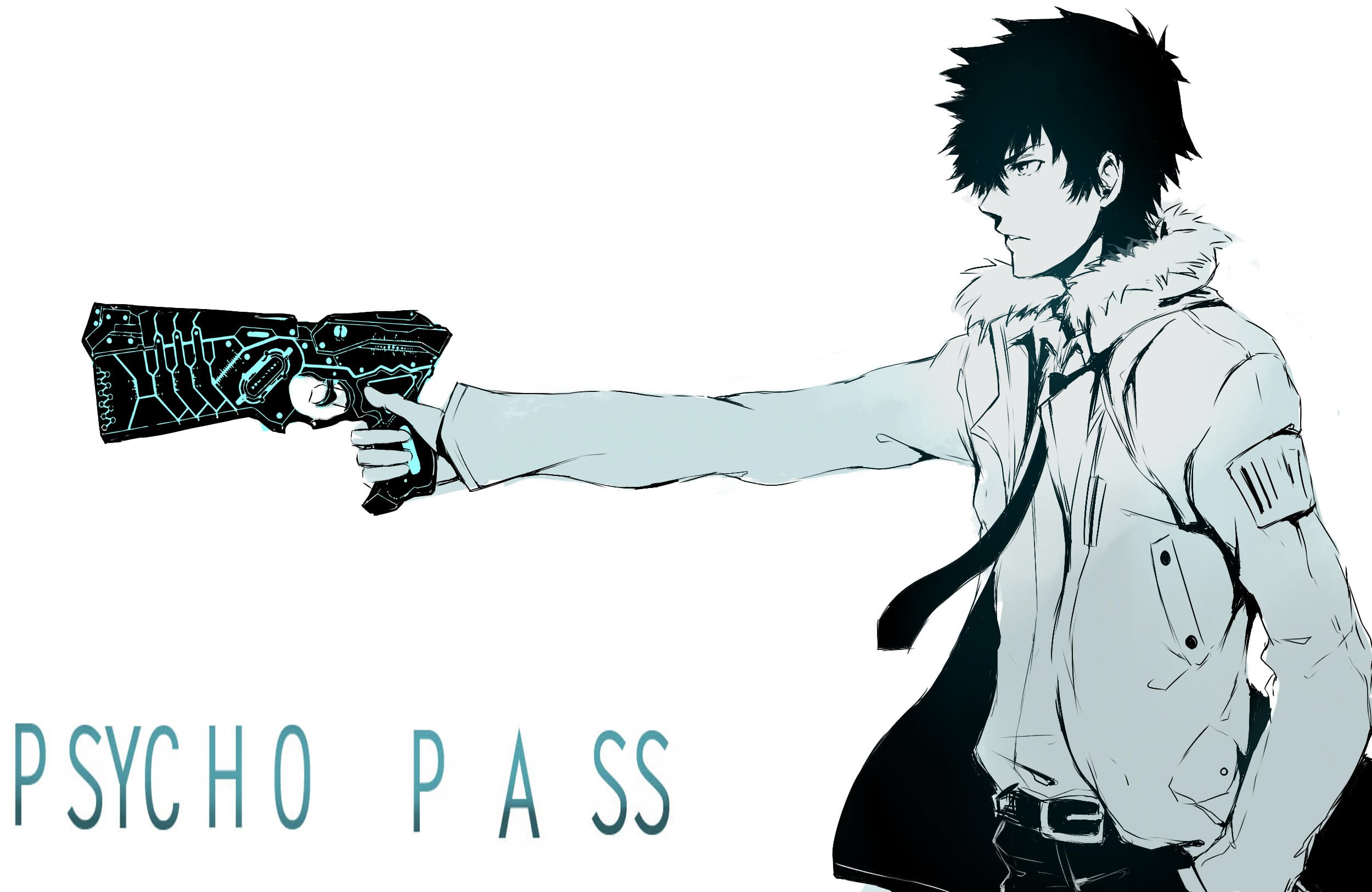
China’s social credit system, while often misrepresented in Western media, captures the same core anxiety: what happens when your behavior is continuously scored and that score determines your access to opportunity? Predictive policing software — used by law enforcement agencies in the United States and Europe — uses historical crime data to flag high-risk individuals and areas, leading to pre-emptive police attention before any crime has occurred. The algorithms are opaque. The populations most affected have no meaningful recourse.
In the financial world, risk scoring already determines who gets a loan, who qualifies for insurance, and at what rates. In hiring, AI systems filter resumes before human eyes ever see them. In healthcare, algorithmic triage systems influence treatment decisions. None of these are as dramatic as a Dominator, but the logic is structurally identical: a system reduces a complex human life to a number, and that number shapes what’s possible for you.
The show also anticipated the psychological cost of living under constant measurement. Characters in Psycho-Pass manage their mental state the way people today manage their social media presence — with awareness that they’re always being assessed, that the wrong emotional spike at the wrong moment could mark them permanently. The show calls this “clouding your hue.” If that doesn’t resonate with anyone who’s worked in a surveillance-heavy corporate environment, or grown up under the algorithmic gaze of social platforms, it should.
Gen Urobuchi didn’t predict the future. He just looked at the present trends of his time and followed them to their logical endpoint. That endpoint keeps getting closer.
Akane Tsunemori: The Best Kind of Protagonist
A lesser show would give us a cynical antihero who sees through the system from day one. Psycho-Pass is smarter than that. Inspector Akane Tsunemori begins the series as a true believer — a brilliant, top-scoring rookie who genuinely thinks the Sibyl System is a net good for humanity. She’s not naive in the insulting sense. She’s thoughtful, measured, and has the receipts to back her worldview. Her journey is one of earned disillusionment, and it’s one of the most compelling character arcs in crime anime.

What distinguishes Akane from most anime protagonists is that she never loses herself to the story’s horror. Characters like this often break — they either become the villain, burn out, or get rescued by some external force. Akane does none of those things. She watches the ugliest truths about her world get exposed, processes them, and decides how to act with remarkable clarity. She keeps her Crime Coefficient almost criminally low — a running motif that suggests not detachment, but an extraordinary capacity for moral processing.
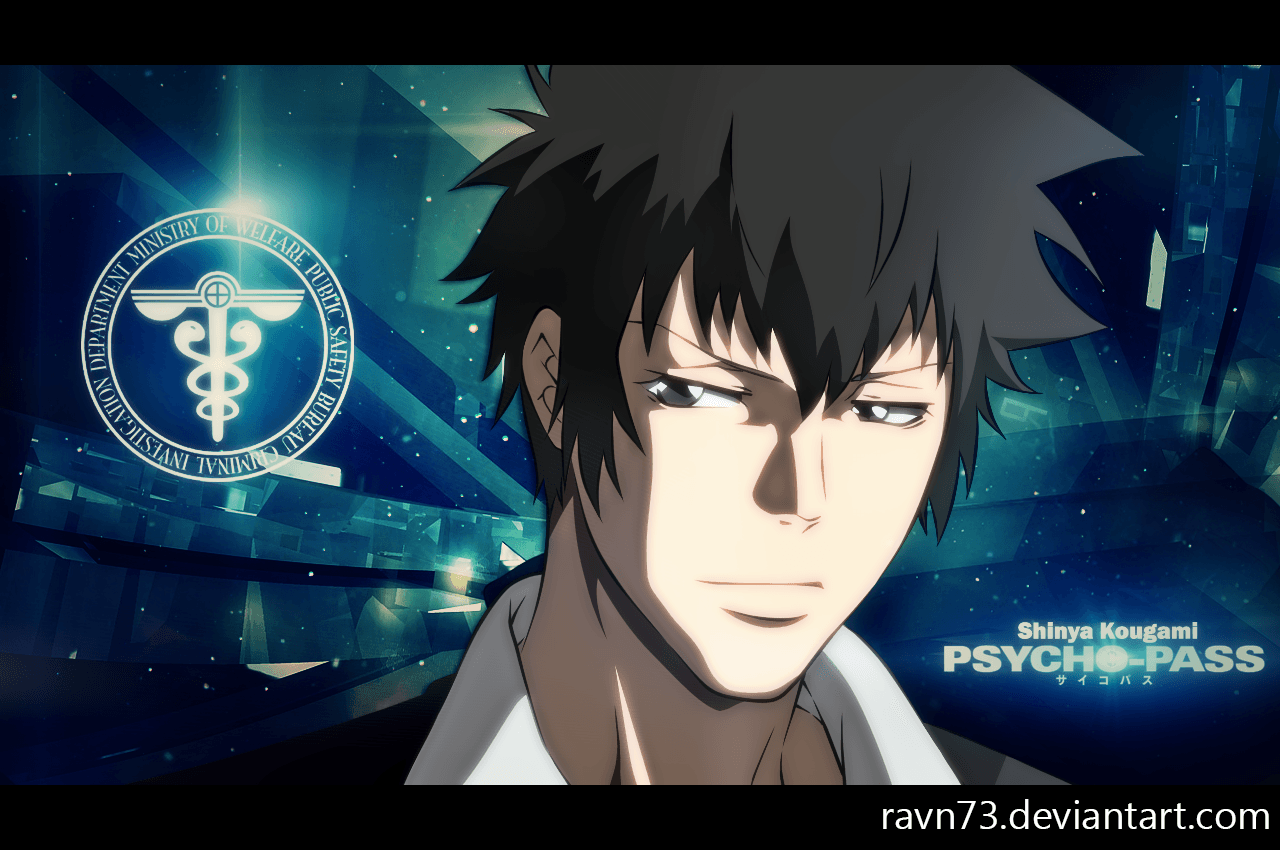
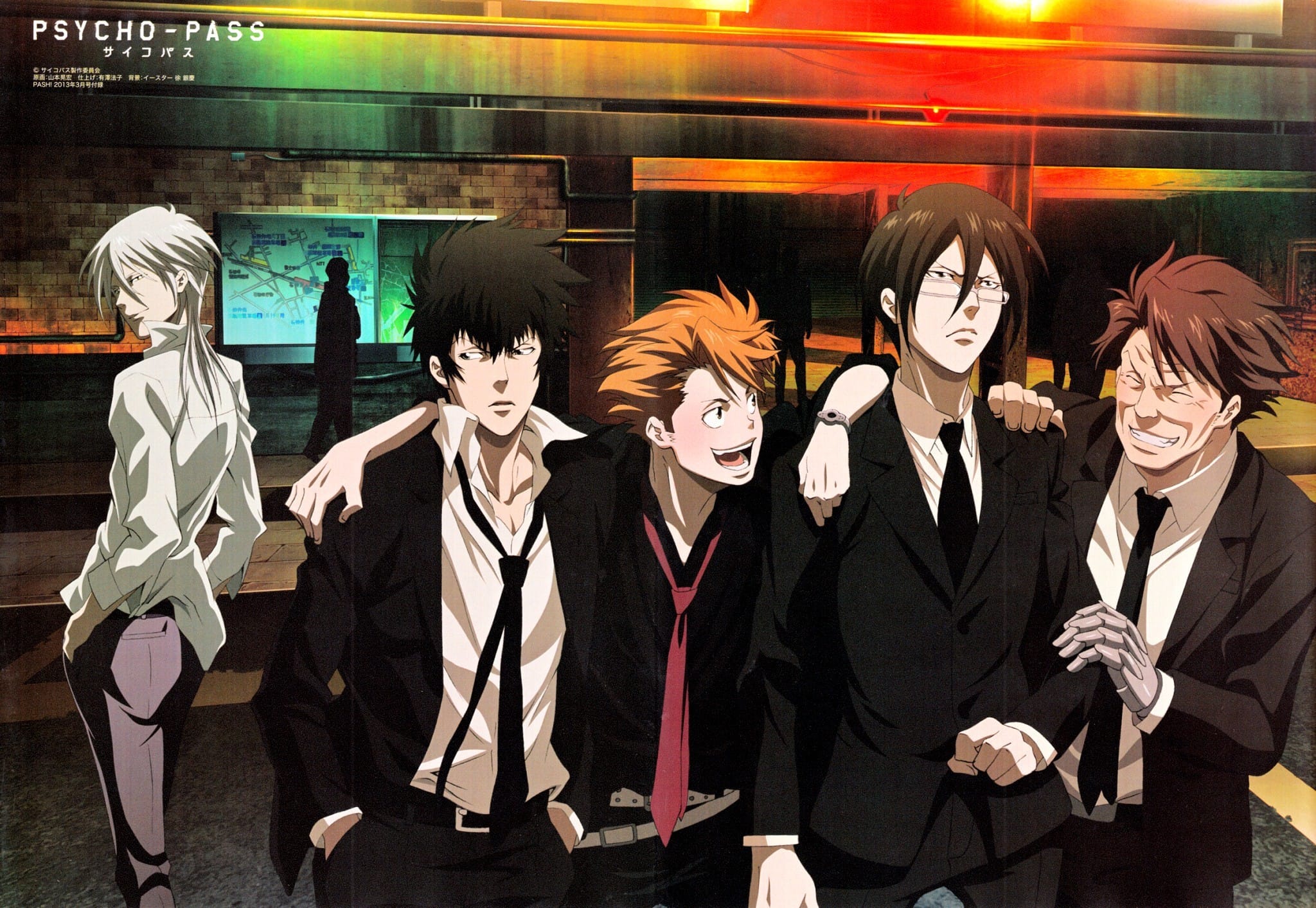
Her dynamic with Enforcer Shinya Kogami is the emotional engine of Season 1. Where Akane tries to work within the system’s constraints, Kogami is driven by something older and rawer: justice as personal reckoning. They don’t agree. They don’t need to agree. Their friction produces some of the show’s best scenes and most probing dialogue about the nature of law, punishment, and what we owe each other in a society built on control.
By Season 3, Akane has become a legend — operating in the shadows, shaped by everything she’s survived, still not broken. It’s a long arc for a character to sustain. She does it.
The Philosophy Underneath: What Psycho-Pass Is Actually Asking
Strip away the cyberpunk aesthetic, the action sequences, the procedural mystery structure, and Psycho-Pass is a relentless interrogation of some very old questions. It just asks them with Dominators and holograms instead of Socratic dialogue.

The primary question: Is it ethical to punish someone for a crime they haven’t committed? Philosophers have wrestled with this — John Stuart Mill’s harm principle, pre-crime theory, the ethics of incapacitation versus rehabilitation. Psycho-Pass doesn’t answer the question. It demonstrates the consequences of answering it in the affirmative without sufficient checks.
The show’s villain, Shogo Makishima, is one of anime’s most compelling antagonists because he isn’t simply evil — he’s a walking philosophical argument. The Sibyl System can’t read him. His Crime Coefficient stays clear no matter what he does, making him functionally invisible to the entire law enforcement apparatus. He uses this not to escape justice, but to expose the system’s fundamental flaw: it can only detect a certain kind of criminality, the kind that shows up in predictable psychological signatures. True aberration — true genius, true conviction — breaks the model.
Makishima is a humanist who commits atrocities because he believes the Sibyl System has robbed humanity of genuine agency. He’s wrong about his methods, but the show is too honest to pretend he’s entirely wrong about the diagnosis. That tension — evil means, valid critique — is what elevates him above most anime villains.
There’s also a deep thread about free will and determinism running through every episode. If your future actions can be predicted reliably enough to justify preemptive punishment, do you actually have free will? And if you don’t, what’s the moral status of any decision you make? The show doesn’t preach. It just keeps piling up evidence and letting you work it out.
Season 1 vs. Later Seasons: Where Does It Land?
Let’s be honest about this, because a complete Psycho-Pass review has to address the full run. Season 1 is one of the best single seasons of anime in the 2010s. It is nearly flawless — tight plotting, escalating stakes, a villain who earns his place in the pantheon, and a final arc that pays off everything the show has built. If the series had ended there, it would be remembered as a perfect self-contained work.
Season 2, produced without Gen Urobuchi’s involvement as lead writer, is a mixed bag. It introduces Mika Shimotsuki, a character many viewers found frustrating — and for reasons that feel thematically deliberate but are still difficult to sit with. The season’s antagonist, Kirito Kamui, operates on a conceptually interesting premise (what happens when a person is invisible to the Sibyl System, not because they’re unreadable, but because they’re composite?) but the execution doesn’t fully deliver on the idea. The season feels compressed — only 11 episodes versus Season 1’s 22 — and some of its ambitions outrun its runtime.
Season 3 and the subsequent film Psycho-Pass 3: First Inspector represent a significant format shift. Moving to a dual-protagonist structure with Arata Shindo and Kei Mikhail Ignatov, the season trades some of the original’s intimacy for a broader canvas. It’s more political, more globally focused, and denser with lore. Fans of the original are divided, but taken on its own terms, Season 3 is ambitious cyberpunk television that most shows couldn’t touch.
The theatrical films — particularly Sinners of the System — expand the world in interesting directions, especially the segment focusing on Enforcer Nobuchika Ginoza. If you’re invested in the characters, they’re worthwhile. If you’re a casual viewer, Season 1 is the essential text.
The hierarchy: Season 1 > Season 3 (with film) > Season 2. Watch all of them, but calibrate your expectations accordingly.
Animation, Aesthetic, and the Sound of Dystopia
Production I.G has been making beautiful anime since the 1990s — their fingerprints are on Ghost in the Shell, Jin-Roh, FLCL. With Psycho-Pass, they built a visual language specifically for a world that looks clean on the surface and is rotting underneath.
The cityscape design is intentional in its sterility. Buildings are sleek and modular. Public spaces are monitored by holographic interfaces that double as advertising, news, and psychological management tools. Citizens dress in standard-issue wear provided by fashion AIs — even personal style has been offloaded to algorithmic selection. The environment signals total optimization, which makes the moments of chaos and violence hit harder by contrast.
The color palette leans cool — blues, grays, and the occasional saturated pop of a Dominator discharge or a blood-soaked crime scene. There’s a deliberate clinical quality to the lighting that feels appropriate for a world run by a system that processes humans as data points. Season 1’s animation holds up exceptionally well, with fluid action sequences and expressive character work that doesn’t rely on shortcuts.
The score by Yugo Kanno deserves specific recognition. It moves between tense minimalist electronics and orchestral swell without ever feeling scattered. The opening themes — “abnormalize” by Ling Tosite Sigure for Season 1’s first half — capture the show’s aesthetic perfectly: technically precise, emotionally raw, slightly unhinged in the best way. The closing themes are quieter, more introspective, functioning as decompression after episodes that rarely let you breathe.
The English dub, produced by Funimation, is one of the better dubs in the crime anime genre. Robert McCollum’s Kogami and Kate Oxley’s Akane are both strong performances that hold up on rewatch. That said, the Japanese voice cast — with Kana Hanazawa as Akane — is the definitive experience, particularly in emotional peak moments where the writing demands maximum precision.
The Verdict: Still Essential, Still Unsettling
More than a decade after its premiere, a Psycho-Pass review in 2026 has to reckon with something unusual: the show has aged in reverse. It feels more urgent now than it did when it aired. The questions it raises about algorithmic justice, the ethics of prediction, and the hidden costs of safety have moved from speculative to immediate.
This is what separates the great dystopian anime from the merely good. 1984 doesn’t age. Brave New World doesn’t age. Ghost in the Shell doesn’t age. Psycho-Pass belongs in that company — not just as entertainment, but as a framework for thinking about systems of power, individual agency, and the seductive logic of optimization.
Season 1 is a masterpiece. The rest of the franchise is worth your time at varying levels of investment. The world-building is rich enough to sustain multiple entry points, and the central questions are inexhaustible enough that each return yields something new.
If you’ve never watched Psycho-Pass, start now. If you watched it years ago, rewatch it. The show didn’t just predict the future — it gave us a vocabulary for the present. In 2026, that vocabulary is more necessary than ever.
Score: 9.5/10 — Season 1 alone earns a perfect score. The broader franchise keeps it just shy, but Psycho-Pass as a whole is mandatory viewing for anyone who takes cyberpunk anime, dystopian fiction, or the intersection of technology and justice seriously.
Where to Watch and How to Approach the Series
For newcomers, the recommended watch order is straightforward: Season 1, then Season 2, then the three Sinners of the System films, then Season 3, then First Inspector. The theatrical films bridge the narrative gap between seasons and flesh out supporting characters who otherwise feel underdeveloped in the main series. Skipping them won’t leave you lost, but watching them gives the world significantly more texture.
Psycho-Pass is available on Funimation and Crunchyroll depending on your region. The series is also available for purchase on most major digital platforms. If you have the option, the extended cut of Season 1 — released as a film compilation — is a slightly tighter edit, though the episodic version is the definitive experience for first-time viewers because it lets the plot breathe.
One practical note: Psycho-Pass is not light viewing. Episodes regularly end on unresolved moral tension rather than clean narrative beats. The show trusts you to sit with discomfort, and it rewards that patience. Go in knowing you’re watching something that will ask things of you — attention, emotional engagement, willingness to think — and you’ll get far more out of it than if you treat it as background viewing.
For viewers who connected with the series on a philosophical level, the show has inspired genuine academic discussion about predictive policing, the limits of consequentialist ethics, and the sociology of risk-based governance. If that rabbit hole interests you, there’s real scholarly work engaging with the ideas Psycho-Pass dramatizes. The show is that rare piece of popular fiction that holds up under that kind of scrutiny without collapsing into oversimplification.
Whatever draws you in — the crime thriller structure, the dystopian world-building, the character work, or the philosophical weight — Psycho-Pass delivers. It’s the rare anime that earns every superlative applied to it, and in a landscape crowded with dystopian content, it remains the standard against which others are measured.
You Might Also Enjoy
- Ghost in the Shell: Stand Alone Complex Review — The Grandfather of Cyberpunk Anime
- Akira Review: How a 1988 Film Still Defines Dystopian Anime
- Ergo Proxy Review: Philosophical Sci-Fi at Its Most Demanding
- Monster Review: The Ultimate Psychological Crime Anime
- Death Note Review: Moral Decay in 37 Episodes