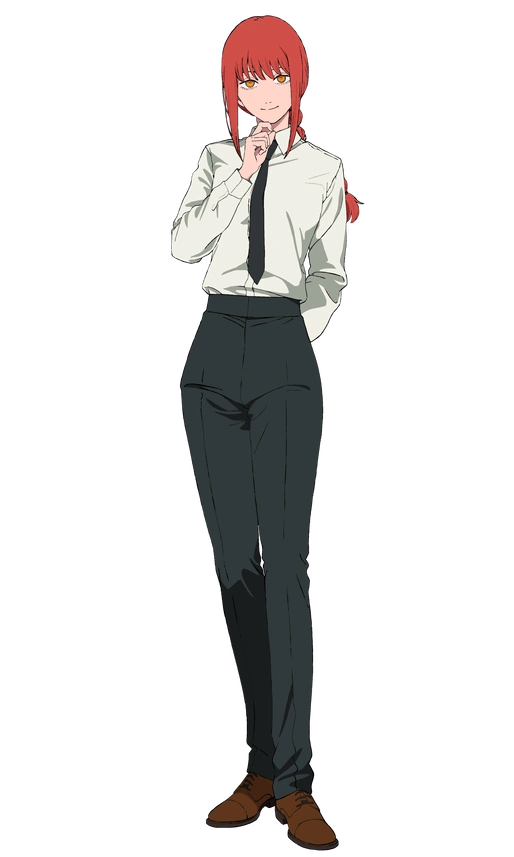
Who Is Makima from Chainsaw Man? The Devil Who Wears a Human Face
If you’ve watched Chainsaw Man, you know exactly where you were the moment you realized what Makima truly was. Makima from Chainsaw Man begins the story as a mysterious Public Safety Division 4 boss — calm, professional, weirdly magnetic. She recruits Denji off the street, gives him food, shelter, and the intoxicating feeling of being chosen. She seems, almost, like the first person in his life who actually cares. Then the manga reveals its hand, and everything you thought you knew collapses in spectacular fashion.

She’s not a character who hides her true nature behind a mask she nearly drops. She’s a character who makes you choose not to see it — and that distinction is what makes her genuinely terrifying on a level that most anime antagonists never reach. She doesn’t need to hide. She knows you won’t look. And when you finally do, it’s already too late for everyone involved.
Makima is the Control Devil, an entity that has existed since the beginning of humanity’s fear of control and domination. She walks around in a human body, serves as a high-ranking government official in the Public Safety organization, and methodically orchestrates events years in advance with patience that borders on geological. She is one of the most precisely constructed antagonists in modern manga history, and Fujimoto Tatsuki built her as a mirror — reflecting back everything dark and seductive about power, obsession, and the longing to be loved by something that cannot truly love you back.
Before we dig into everything she is, check out Denji’s complete character breakdown — because understanding Makima requires understanding exactly what she saw in him, and why she selected him as her instrument above everyone else available to her.
Makima’s Powers and Abilities — The Control Devil’s Domination System
The power system in Chainsaw Man centers on contracts between humans and fear devils, and Makima operates almost entirely outside the normal rules of that system. As the Control Devil, she doesn’t form contracts — she imposes them. Her ability allows her to dominate any being she deems “lesser” than herself, and in practice, that means almost everything alive. The domination chain she creates isn’t just metaphorical — it’s a literal supernatural mechanism that forces compliance on a fundamental level.
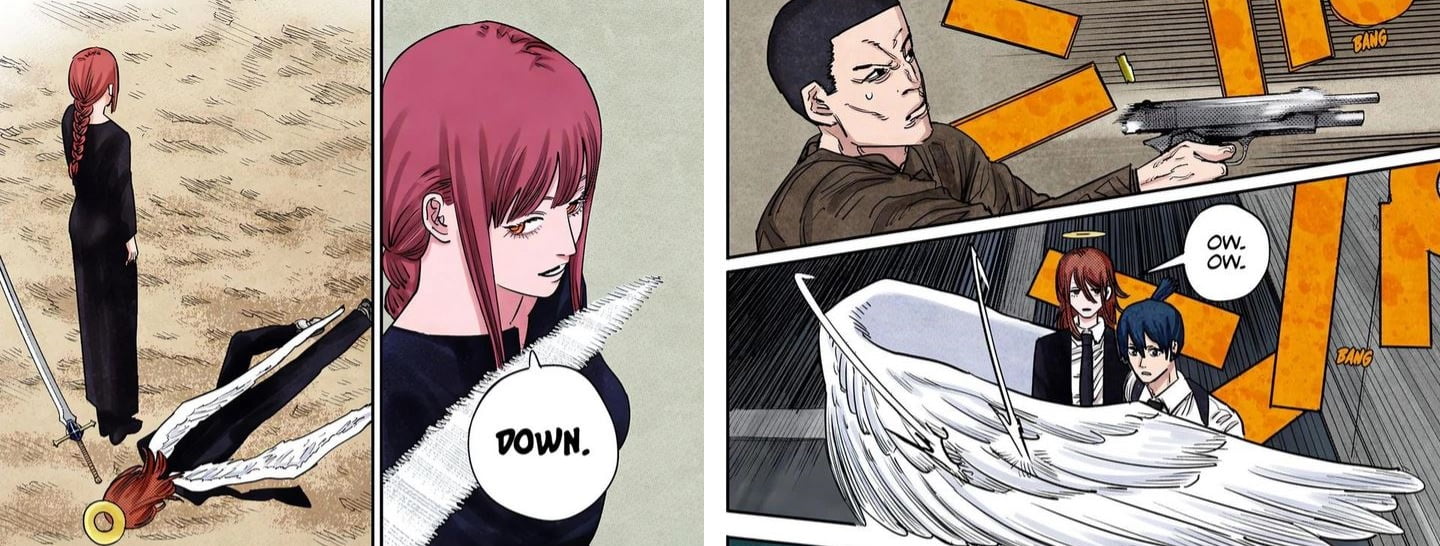
Her most visually iconic technique involves transmitting lethal force across vast distances. She points her finger, crushes her thumb and index together, and a target miles away implodes as though seized by an invisible fist. The actual damage is redirected through a human sacrifice somewhere in her control chain — she uses human lives as damage sponges without a moment’s hesitation. This is Makima in miniature: breathtaking power deployed with complete indifference to the cost paid by others.
During the Assault Devil attack on Public Safety headquarters, she casually summons and commands some of the most powerful contracted beings in the series as though pulling tools from a drawer. Princi. The Zombie Devil. Beings that took entire teams to subdue before — she stacks them up like pieces on a board. The makima chainsaw man fandom has spent years cataloguing exactly what she controls and when, because her capability ceiling is genuinely hard to establish. She always seems to have more.
There’s also the contract rule that every makima chainsaw man analysis has to address: she cannot be permanently killed by conventional means while operating under her contract with the Japanese government. Any lethal damage dealt to her is redistributed to ordinary Japanese citizens as random illness or injury. It’s not plot armor — Fujimoto Tatsuki establishes this deliberately to force the narrative into a corner where the only viable solution has to be as unconventional as she is. The answer Denji eventually arrives at is one of the most satisfying structural payoffs in the entire series.
Her specific fixation on the chainsaw devil‘s power is also central to everything. Part of her multi-year scheme hinges entirely on her obsession with Pochita’s true form — and what the Chainsaw Man’s unique ability can do to the concepts that define human suffering. Understanding her powers isn’t just about combat capability. It’s about understanding what she believes those powers make possible when pointed in the right direction. Check out why Pochita is Chainsaw Man’s heart for a deeper look at the other half of this equation.
Her True Goals — What Makima from Chainsaw Man Really Wants
Makima from Chainsaw Man doesn’t want money, political power, revenge, or simple survival. She wants to eliminate human misery — specifically by erasing the concepts of death, disease, and war from existence. On the surface, that framing sounds almost noble. But her method requires harnessing the Chainsaw Devil’s unique ability: the power to permanently erase a concept from human memory and history by consuming it. If the Chainsaw Man eats the concept of nuclear weapons, nuclear weapons cease to exist in collective human knowledge. If she engineers this far enough, she can reshape civilization from the foundation up.
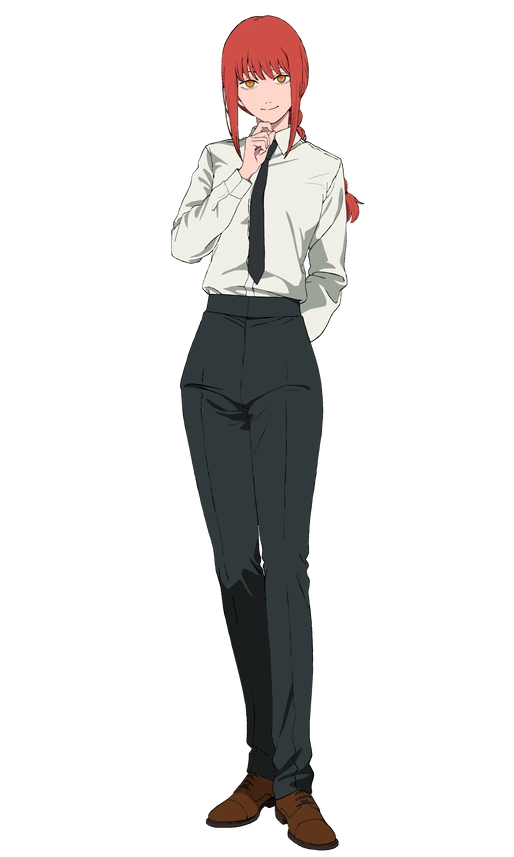
She wants to build a good world. She genuinely, completely believes this. That’s the most chilling element of the entire manga — she is not motivated by cruelty, nihilism, or the desire to watch things burn. She has a fully formed utopian vision, and she is absolutely convinced she is the only being with the combination of power, patience, and perspective to execute it. Her internal logic is airtight: fear devils exist because humans fear things, the Chainsaw Man can consume fears-as-concepts, therefore Chainsaw Man plus Makima equals the end of suffering. The catch is that she also requires total control over every person and power structure on Earth to pull the trigger.
This is where Fujimoto Tatsuki‘s writing reaches a genuinely different altitude. Lesser stories give their villains selfish, legible goals — power, revenge, immortality. Makima from Chainsaw Man has a selfless goal deployed through the most destructive methods imaginable, which is historically the most dangerous combination a human society can encounter. Her ideology has the architecture of a religion: the Chainsaw Man as messiah, herself as the high priest who will guide his power toward salvation, and everyone else as either congregation or obstacle.
She also wants, on a level that feels almost unbearably personal, something only the Chainsaw Man can offer: an equal. She has existed for an incomprehensible stretch of time, surrounded by beings she can dominate and therefore cannot genuinely connect with. Control and connection are mutually exclusive — you cannot truly know someone you own. The Chainsaw Devil is the one entity that terrifies the other fear devils themselves, because it consumes and erases them. It cannot be controlled. And in that singularity, Makima sees the only possible mirror that could reflect something back at her.
The makima chainsaw man discourse around her motivations has been some of the most interesting in recent anime fandom, precisely because it forces you to hold two things simultaneously: she is absolutely a villain, and her loneliness is absolutely real. Fujimoto doesn’t let you pick one and throw out the other.
The Manipulation of Denji — How Makima from Chainsaw Man Broke a Boy Who Had Nothing
To understand what Makima from Chainsaw Man does to Denji psychologically, you first need to understand what Denji was before she arrived. He had nothing — no family, no friends, no realistic future. He worked himself to physical collapse paying off his dead father’s debt to the yakuza, with only Pochita the chainsaw devil as his companion in a condemned shack. He had never been shown affection, never been given a name without conditions attached, never experienced what it felt like to matter to another person.
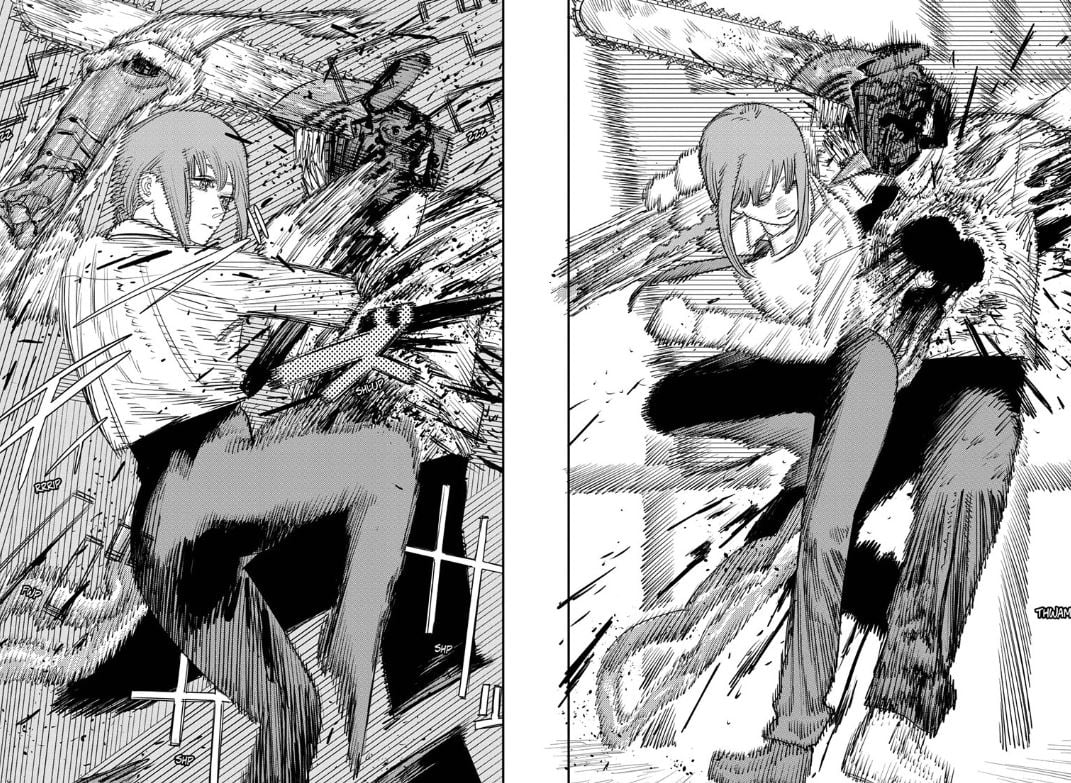
When Makima enters his life, she offers him the first genuine warmth he has ever experienced. She gives him food, shelter, a team, a sense of purpose, and — most intoxicatingly — the feeling of being seen and specifically chosen. The way the makima chainsaw man relationship is constructed, she positions herself as the possible future recipient of his love. Not explicitly, but precisely enough that Denji reads the signal perfectly. She rewards him with attention and approval when he performs well, uses his teammates as emotional pressure to keep him compliant, and dangles the possibility of closeness just far enough ahead to keep him running toward it.
Every interaction is calculated. Every smile is a transaction with deferred terms. She weaponizes his trauma with the kind of surgical precision that could only come from a being who has spent centuries studying human psychology. She knows what he needs because she knows exactly what she denied him — she knows the shape of the hole before she offers to fill it. That’s the horror of the manipulation arc, laid out in slow motion.
The community reaction to this storyline in the dark shonen discourse was enormous, because Fujimoto Tatsuki was doing something that almost no mainstream shonen manga had attempted: showing a protagonist being psychologically groomed and manipulated by a trusted authority figure, and refusing to soften a single edge of what that experience feels like from the inside. Denji doesn’t realize the full picture until the damage is done. And even then — even knowing what she is — part of him still reaches for her approval. That’s not a writing failure. That’s the most accurate thing in the entire series.
For a full look at how this shapes the protagonist’s arc, read about how Denji breaks every shonen rule — his vulnerability isn’t a flaw the story corrects with training and grit, it’s the wound the story keeps returning to, and Makima is the one who made it bleed.
Is Makima Really a Villain? The Tragic Logic Behind Her Actions
Here’s where Makima from Chainsaw Man analysis gets genuinely complicated and genuinely worth the effort. By the time the manga concludes, you’ve watched her orchestrate the massacre of beloved characters, psychologically destroy a traumatized child over years of deliberate manipulation, and engineer the deaths of hundreds without visible remorse. She is, by any reasonable metric, a villain. And yet Fujimoto Tatsuki refuses to let you fully hate her, and the refusal doesn’t feel like a cop-out. It feels like the point.
The argument for reading Makima with sympathy isn’t that her actions were justified — they absolutely were not. It’s that her actions were the logical, almost inevitable output of what she fundamentally is. She’s the Control Devil. She has never experienced a peer relationship in her entire existence. She has been summoned, feared, contracted, and worshipped across centuries, but she has never had someone look at her as an equal rather than a power to be managed. Control and genuine connection cannot coexist. She doesn’t know how to reach toward someone without closing her fist.
The Nayuta reveal at the manga’s end — where Makima is effectively reborn as a child, carrying traces of her memories but given the theoretical chance at actual human connection — is Fujimoto Tatsuki‘s most direct statement on her character. Denji, the person with every reason in the world to hate her completely, chooses instead to be her family. He chooses to raise the thing that destroyed him. It’s one of the most quietly devastating endings in dark shonen history, because it refuses the easy catharsis of the definitive villain death and asks something harder: what if the monster just needed someone to show it how to be human, before it was too late?
Stack Makima from Chainsaw Man up against the best anime villains of all time and she occupies a rare category — antagonists whose worldview is internally coherent enough that you can genuinely trace the path from their nature and experience to their actions, even as you recognize the destruction those actions cause. That moral complexity is what separates great villains from great characters, and Makima is absolutely both.
Makima’s Legacy in Anime — How She Changed Dark Shonen Forever
When Chainsaw Man debuted in Shonen Jump in 2018, it read immediately as something categorically different from the genre’s dominant mode. And Makima from Chainsaw Man was central to that distinction. She wasn’t a rival with a tragic backstory, or a power-hungry warlord building an empire, or a villain whose evil is explained by a single childhood trauma. She was something closer to an ideological force wearing a human face, operating through patience and psychological manipulation rather than raw escalating confrontation. The fandom felt it within chapters.
What Fujimoto Tatsuki accomplished with the makima chainsaw man dynamic is significant in structural terms: he built a villain who operates primarily in the psychological register, in a genre that typically uses power system escalation as its main dramatic engine. While other dark shonen series were busy designing new transformations and power tiers, Fujimoto was writing a slow-burn manipulation arc that culminated in one of the most emotionally brutal reveals the genre had ever produced. The “Makima was the enemy all along” revelation doesn’t feel cheap because every piece was in place from the very beginning. You just chose not to look, just like Denji.
Her impact on conversations about anime villainy is hard to overstate in retrospect. She’s one of the rare antagonists who works simultaneously as: a commentary on toxic relationships and coercive control, a meditation on the nature of loneliness in beings too powerful to connect, a critique of utopian idealism as a vehicle for authoritarianism, and a genuinely threatening physical force. You can write entire analytical essays on any one of those axes independently — and the fandom absolutely has, in volumes.
She also represents a meaningful shift in how makima chainsaw man discussions have influenced the framing of female antagonists in the genre. She is not written as a seductress whose danger lives in her appearance or her sexuality. She’s a cosmic force that presents as feminine. Her scariness doesn’t derive from aesthetics — it derives from her intelligence, her geological patience, and the totalizing nature of her will to control. That distinction matters in a genre where female villains have historically been reduced to their surface.
The ongoing influence of Makima from Chainsaw Man is visible in the way Part 2 of the manga handles the War Devil and the new cast — Fujimoto is clearly working with what he learned building Makima, and her shadow falls across every new antagonist he introduces. She set a bar for what this story is willing to do to its characters and to its readers, and that bar has changed what the fandom expects from dark shonen storytelling going forward.
For viewers who want to explore more series willing to take the emotional and narrative risks that make Chainsaw Man unforgettable, the best anime for adults list is the right starting point. These are series that treat their audience the way Fujimoto treats his — without flinching, without safety nets, and with full confidence that discomfort is a legitimate storytelling tool.
For deep canonical lore on her abilities, her history, and the full extent of her power set, the Chainsaw Man Wiki’s Makima entry is the most comprehensive reference resource available and worth bookmarking for any serious fan of the series.
Conclusion: Why Makima from Chainsaw Man Will Be Studied for Decades
Makima from Chainsaw Man is the rare fictional villain who operates on every narrative level simultaneously and succeeds at all of them. She’s a threatening antagonist capable of destroying anything the series builds. She’s a complex psychological study in what loneliness and absolute power do to a being over centuries. She’s a structural device that recontextualizes every scene she appeared in from page one. And underneath the manipulation and the corpse-counting, she’s a character with genuine emotional depth — not because her actions are forgivable, but because her yearning is completely legible.
Fujimoto Tatsuki didn’t create her to be loved or hated in simple terms. He created her to make you feel the full cognitive weight of what it means to be controlled by someone you trust completely — and to ask whether the controller is as trapped as the controlled. The answer the manga arrives at is one of the most unusual in the genre: maybe yes. Maybe the Control Devil was always a prisoner of her own nature, reaching for something she could only destroy by touching it.
The legacy of Makima from Chainsaw Man in anime discourse isn’t going anywhere. As the series continues in Part 2, her shadow falls across every new character and every new conflict. She set the template for what this story is willing to do — to its characters, to its readers, and to the conventions of the genre it inhabits. If you haven’t gone back to reread the manga with full knowledge of who she is, do it now. Every smile reads differently. Every moment of apparent warmth lands with different weight. That’s the mark of a villain built to last: one who rewards the second read even more than the first, and who stays in your head long after the chapter ends.