She Was Never Supposed to Be This Good
If you’ve been watching JJK Season 3 and your jaw keeps hitting the floor every time Maki Zenin appears on screen, you are absolutely not alone. Right now, in February 2026, with the Culling Game arc in full swing, Maki is having what can only be described as her moment — and it has been a long time coming. Born into one of jujutsu society’s most powerful families with absolutely zero cursed energy to her name, written off as a failure, pushed to the margins, and then systematically dismantled by the very people who should have protected her, Maki Zenin did not just survive. She came back and burned the whole thing down. This is the character deep-dive she deserves — every layer of her story, every brutal fight, every heartbreaking choice, and why she resonates with fans in a way that almost no other shonen character manages to pull off.
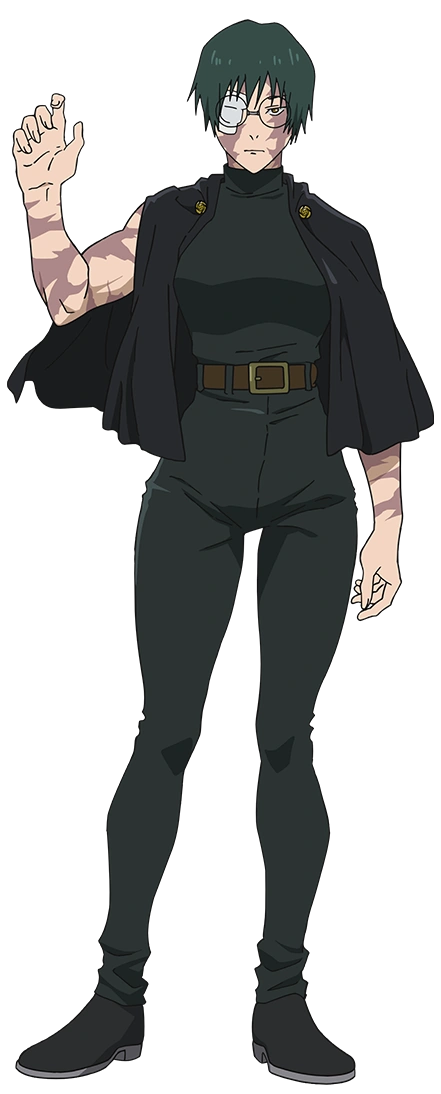
Whether you started watching JJK from day one or you jumped in for the Culling Game chaos, understanding Maki Zenin fully changes how you experience the entire series. This is her complete story. Let’s get into it.
Who Is Maki Zenin? The Outcast Who Refused to Quit
Maki Zenin was born into the Zenin clan — one of the three great sorcerer families in jujutsu society, alongside the Gojo clan and the Kamo clan. These families sit at the top of the jujutsu world’s hierarchy, controlling its politics, its resources, and its culture. Being born a Zenin should have been a golden ticket. Instead, for Maki, it was a curse.

The reason is simple and brutal: Maki Zenin was born without cursed energy. In a world where your worth as a person is literally measured by how much cursed energy flows through your body, having none is the worst possible outcome — especially when your surname is Zenin. The clan, led by the deeply conservative and viciously hierarchical Naobito Zenin and later reinforced by figures like Naoya, treated Maki as an embarrassment. Not a daughter, not a niece, not a person — an embarrassment. A stain on a bloodline that prided itself on producing some of the most powerful sorcerers in history.
What makes this even more layered is the existence of her twin sister, Mai Zenin. In JJK’s lore, twins represent a biological paradox when it comes to cursed energy. The universe, in a sense, treated Maki and Mai as a single entity — which meant the cursed energy that would have gone to one person was split between two. The result: Mai was left with barely enough CE to function as a sorcerer (her technique, Construction, is incredibly draining and lets her make only one bullet per day), while Maki received essentially none. The twins were each made lesser by the other’s existence, and the clan made sure they both knew it.
But here’s where Maki Zenin‘s story diverges from every other “weak character works hard” narrative in anime. She didn’t just try to compensate. She trained obsessively with curse tools — physical weapons imbued with cursed energy, wielded by sorcerers who can’t generate their own techniques — and became so skilled with them that she could fight alongside and against sorcerers who had actual techniques. She relied on raw physical ability, tactical intelligence, and an iron refusal to accept the story the Zenin clan had written for her. Her goal was to become a Grade 1 sorcerer on pure merit, with no technique, no clan support, and no safety net. That goal was never really about rank. It was about proving that the system that dismissed her was wrong.
Her relationship with Mai was one of the most painful threads in the entire series. They loved each other and resented each other in equal measure. Mai had stayed with the Zenin clan when Maki left to enroll at Tokyo Jujutsu High. She saw Maki’s ambition as selfishness — as someone forcing Mai to stay behind in a miserable situation because Maki’s rebellion made leaving impossible without consequences. Maki Zenin saw Mai as someone who had given up. They fought, they clashed, and underneath all of it was the grief of two people who understood each other better than anyone else in the world and couldn’t figure out how to be in the same room without tearing each other apart. That relationship is what makes everything that happens later hit so devastatingly hard.
Heavenly Restriction Explained — Why No Cursed Energy Is Actually a Superpower
To really understand what Maki Zenin has become by JJK Season 3, you need to understand Heavenly Restriction — and it’s one of the most fascinating concepts in JJK’s entire power system. Heavenly Restriction is a trade-off imposed at birth. The body gives up something — in Maki’s case, essentially all cursed energy — in exchange for something else. For Maki Zenin, what she receives in exchange is a physical body that operates at an entirely different level than normal humans or even most sorcerers.

Think about what cursed energy actually does for a sorcerer. It enhances their body. It lets them reinforce their flesh, move faster, hit harder, take more punishment. Sorcerers who pump CE through their body during a fight are essentially using it as a constant physical upgrade. Maki Zenin‘s body does that naturally — not through cursed energy, but through the raw biological dividend of Heavenly Restriction. Her baseline physical performance without any cursed energy enhancement rivals or exceeds sorcerers who are actively pumping CE into their muscles. Her reaction time is elite. Her raw strength is elite. Her pain tolerance and physical durability are in a league that should not be possible for a human being.
The spiritual predecessor here is Toji Fushiguro — and if you haven’t read our Cursed Energy power system analysis, it’s worth checking out to understand just how unusual the Heavenly Restriction trade-off is. Toji Fushiguro, Megumi’s biological father, was also a Zenin-born outcast with Heavenly Restriction. He had almost no cursed energy either, and he used the same physical dividend to become one of the most feared assassins in jujutsu history — the man who nearly killed Satoru Gojo in his prime. He was so dangerous that the jujutsu world assigned him an unofficial Special Grade designation even though he had no technique. The system that Toji broke wide open before Maki Zenin was born is the same system she’s now shattering from within.
But here’s the critical difference — and this is what makes Maki Zenin‘s story in Season 3 so explosive. The twin paradox. When Maki and Mai existed simultaneously, the universe still treated them as a single unit. That meant Maki’s Heavenly Restriction was never fully active. She was getting the physical benefits, but not at 100% — because the cursed energy “debt” was being partially compensated by her twin’s existence. When Mai died during the Perfect Preparation arc, giving everything she had in a last act to forge a single perfect weapon for her sister, that thread was cut. Permanently.
The result was immediate and terrifying. Maki Zenin‘s Heavenly Restriction activated fully for the first time. In the span of what felt like minutes, she reached the same tier as Toji Fushiguro at his peak — arguably beyond him. Her physical abilities became so extreme that she’s effectively invisible to opponents who rely on cursed energy sensing. Because she produces no CE signature whatsoever, CE-sensing techniques simply cannot detect her. In the Culling Game, where almost every powerful player is reading the battlefield through cursed energy perception, this makes Maki Zenin a ghost. She can walk up to opponents who should be impossible to sneak up on and they literally cannot feel her coming until she’s already on top of them. The girl who was rejected for lacking what everyone else had turned that lack into the most broken tactical advantage in the entire competition.
The Zenin Clan Massacre — Her Most Brutal (and Necessary) Moment
Okay. Let’s talk about the moment that broke the JJK fandom wide open. If you know, you know. And if you’re anime-only and haven’t gotten here yet — buckle up, because what Maki Zenin does to the Zenin clan after Mai’s death is one of the most cathartic, morally complex, and viscerally stunning sequences in the entire series.

To understand why it hits the way it does, you need the context of what the Zenin clan actually did. This was not a family that was merely cold or dismissive. They actively worked to destroy Maki Zenin and her sister. When Kenjaku’s Perfect Preparation plan was set in motion and Gojo was sealed, the clan saw an opportunity. With the political protection that Gojo had implicitly provided to people like Maki gone overnight, the clan moved against them openly. They captured Maki. They tortured her. They put her through their own private execution process, using their own clan’s resources to try to kill one of their own children — because she was an inconvenience to their pride and their hierarchy.
Mai died during this. She poured everything she had left into creating a single weapon for her sister — a katana forged from her own existence, her last act of love for the person she had fought with and loved and resented her whole life. And then she was gone.
What happened next is Maki Zenin at her most terrifying. Fully awakened, carrying the weapon her sister died to give her, she moved through the Zenin compound and she did not stop. Every member who had participated in their persecution, every powerful clan fighter who stood in her way — she went through them all. Naoya Zenin, a Special Grade threat who could manipulate the speed of time through his technique, did not survive the encounter. Neither did anyone else who tried to stop her. One young woman, alone, with no cursed energy, dismantled one of the three great clans in a single night.
Fan reaction to this sequence has been consistent since it appeared in the manga, and the anime community is currently losing their minds watching MAPPA bring it to life: this is cathartic in a way that’s almost uncomfortable. We watched Maki Zenin be dismissed and degraded for the entire series up to this point. We watched the clan treat her as subhuman. And then we watched her demonstrate, in the most definitive terms possible, exactly who she was. The show doesn’t frame this as a clean heroic moment. She’s not triumphant and smiling. She’s grieving and furious and moving forward anyway. The moral complexity is the point — this isn’t presented as purely righteous or purely monstrous. It’s the consequence of years of systemic cruelty finally finding its accounting. The show lets you feel the full weight of it without telling you how to feel.
Check out our piece on the most shocking anime plot twists — the Zenin massacre sequence deserves a spot on that list and we’ll make the case for it there too.
Maki in the Culling Game — Season 3’s Silent Monster
Maki Zenin in the Culling Game is everything those earlier arcs were building toward. If you’re watching JJK Season 3 right now and feeling like every episode is raising the stakes beyond anything the series has done before, you’re not imagining it — and Maki is a big reason why. Make sure you’re caught up on all the rules and structure of the competition with our JJK Season 3 Culling Games Arc guide before diving further into this section.
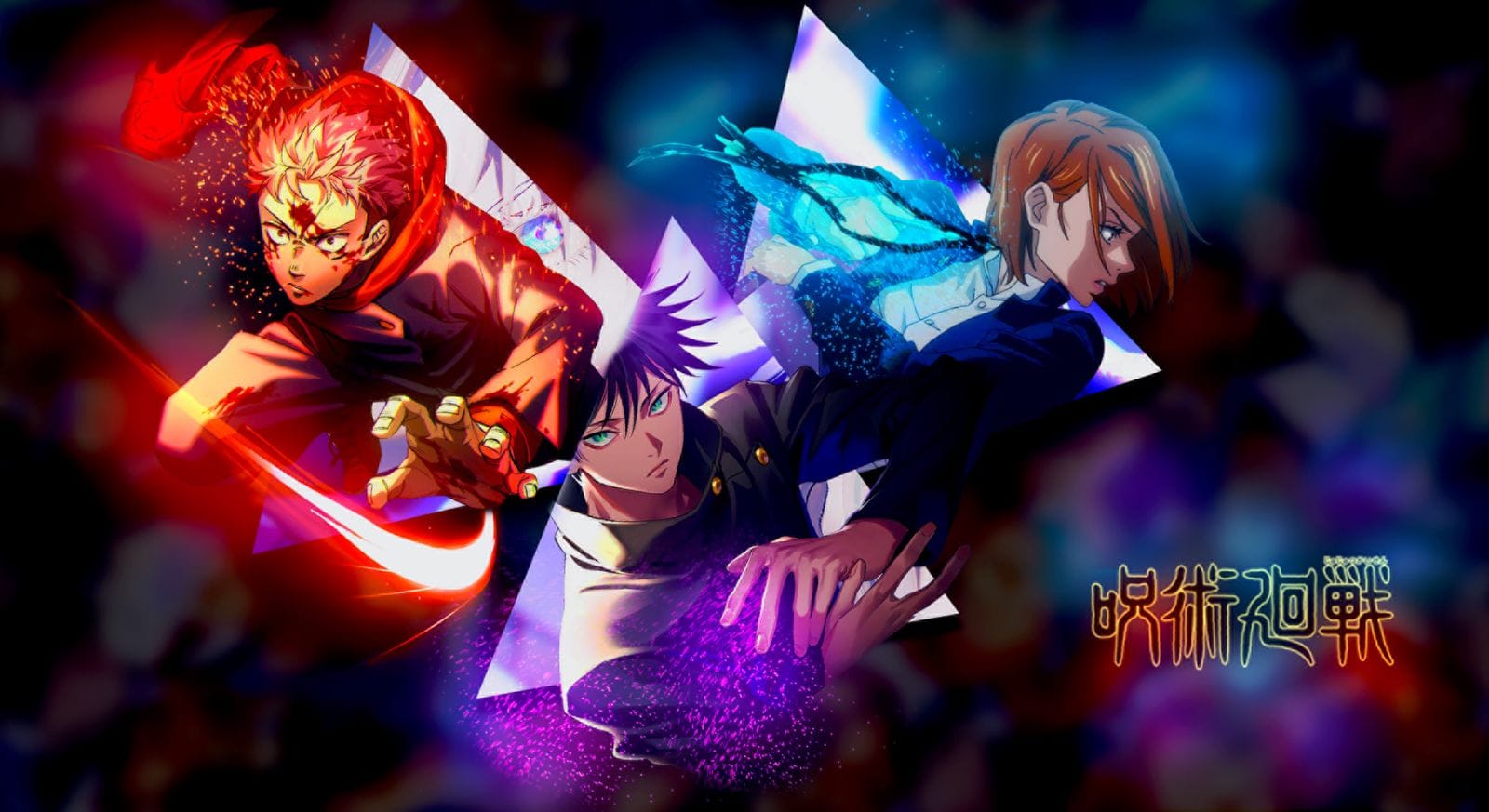
The Culling Game is a death tournament engineered by Kenjaku, designed to harvest cursed energy from mass death and chaos. It’s divided into colonies — designated areas across Japan where players (awakened cursed energy users pulled from the past plus current sorcerers) fight for points, with execution as the penalty for rule violations. The environment is brutal, the opponents are diverse and unpredictable, and the power ceiling is genuinely terrifying. This is exactly the arena where Maki Zenin‘s specific abilities shine brightest.
Her invisibility to cursed energy sensors in this environment is not a small advantage — it’s potentially the largest single tactical edge any Culling Game participant has. Almost every powerful player in the competition reads the battlefield through CE perception. They sense the energy signatures of opponents, track movement through CE flow, detect ambushes through disruptions in the cursed energy field around them. Maki Zenin doesn’t exist in that field. She is a void. She can approach from any angle, at any speed, and most opponents have no idea she’s there until contact is made. In a competition where everyone is trying to survive against opponents they’ve never trained against, the element of surprise Maki Zenin carries is invaluable.
Her primary weapon in the Culling Game is the Split Soul Katana — the blade Mai made for her in her final moments. This weapon is not a standard curse tool. It’s something more singular, forged from a sorcerer’s entire remaining reserve. Beyond that, Maki Zenin carries an arsenal of Grade 1 curse tools that she wields with a level of technical precision that most sorcerers can only dream of, because while other fighters have been relying on their techniques to do the heavy lifting, she has spent her entire life mastering the physical craft of using these weapons at maximum effectiveness.
In terms of how she interacts with the core cast in Season 3: Maki operates more as an independent force than as part of a team in the traditional sense. Her dynamic with Yuji Itadori is interesting — there’s a mutual respect there, and Yuji’s own CE-forward fighting style makes for an interesting contrast with her pure physicality. The relationship with Megumi Fushiguro carries its own weight given the Toji connection. But Maki Zenin doesn’t need a team to function. She’s one of the few characters in the series who is at her most effective alone.
MAPPA’s animation for her Season 3 fights (January–February 2026 episodes) has been genuinely impressive. Her movement style is distinct from every other fighter in the show — no particle effects, no flashy energy displays, no Domain Expansion circles. Just brutal, precise, terrifyingly fast physical combat. MAPPA has leaned into that contrast hard, and the result is that her fights look different from everything else in the season in a way that emphasizes exactly what makes her unique. When you’re watching episode after episode of characters throwing cursed energy techniques at each other and then Maki Zenin shows up and just… moves, it’s genuinely striking. This is easily some of the best work MAPPA has done on her character — if you loved the animation quality in the Gojo vs Sukuna breakdown, Maki’s fights in Season 3 deserve the same level of attention.
Maki vs. Toji Fushiguro — A Legacy Comparison
You cannot talk about Maki Zenin without talking about Toji Fushiguro. The parallel is built directly into the story’s architecture — both Zenin-born, both rejected by the clan, both operating through Heavenly Restriction rather than cursed techniques. Toji is, in many ways, the ghost that Maki Zenin is haunting. He blazed the trail that showed the jujutsu world what a Heavenly Restriction fighter could do. She is following that trail and leaving her own marks on it.
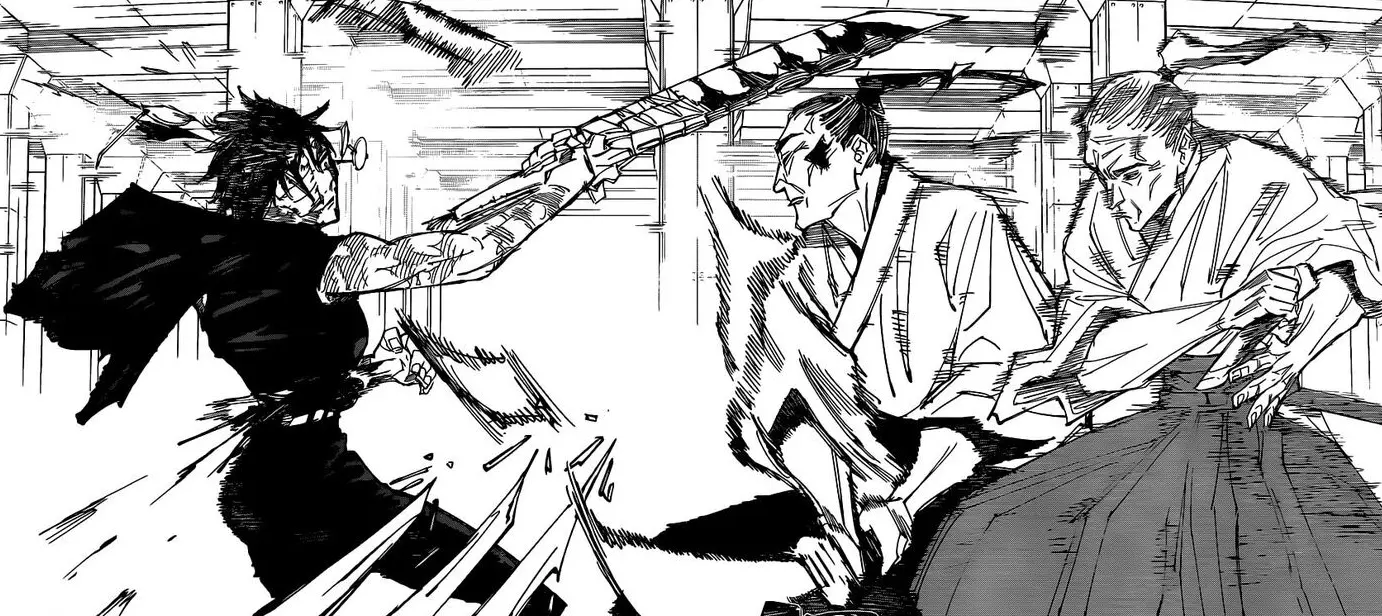
Toji Fushiguro at his peak was one of the most dangerous individuals in jujutsu history. He fought Satoru Gojo and Suguru Geto simultaneously and essentially won — Gojo only survived by triggering an awakening that Toji couldn’t have anticipated. Outside of that awakening, Toji was definitively the superior combatant. His physical speed and strength were extraordinary, his tactical intelligence was elite, and his use of cursed tools — including his signature Inverted Spear of Heaven, a tool that nullifies any cursed technique it makes contact with — was masterful. He was so dangerous that the jujutsu establishment had no official category for him. They just agreed he was Special Grade equivalent and hoped he never pointed himself in their direction.
Post-awakening Maki Zenin matches and possibly exceeds Toji’s physical ceiling. The key differences come down to fighting style and, more importantly, emotional stakes. Toji fought primarily for money. He was a mercenary — brilliant, terrifying, but fundamentally detached from the jujutsu world he’d grown up in and then rejected. He escaped from the Zenin clan. He walked away from jujutsu society entirely and made himself a killer-for-hire operating outside its structures. His Heavenly Restriction was freedom through disengagement.
Maki Zenin‘s Heavenly Restriction is freedom through confrontation. She didn’t run from the Zenin clan and jujutsu society — she stayed inside it, fought its systems from within, and when those systems finally tried to destroy her, she turned around and destroyed them instead. She’s still in the fight. She’s still surrounded by the world that rejected her, operating within the same institutions that said she was worthless, and she is making that world reckon with how wrong it was. That’s a fundamentally different emotional journey than Toji’s, and it’s why her story hits harder for so many fans.
As for who would win in a direct fight — the fan debates are endless and honestly that’s part of the fun. Peak Toji vs. fully-awakened Maki Zenin is the kind of matchup that generates thousands of forum posts for good reason. Both fighters are essentially blank slates to cursed energy sensing. Both are elite with physical weapons. The case for Toji usually rests on his specific tools (the Inverted Spear of Heaven in particular) and his experience. The case for Maki Zenin rests on her post-awakening physical ceiling and the argument that Gege Akutami has narratively positioned her as the successor who exceeds the predecessor. Neither argument is wrong. That ambiguity is part of what makes both characters compelling.
Why Maki Zenin Is One of Anime’s Best Female Characters
Maki Zenin does not have a love interest. Let that sit for a second. In a genre where female characters are routinely defined by who they’re in love with — where their entire narrative function can collapse into “the motivation for the male protagonist” or “the reward at the end of the journey” — Maki Zenin exists entirely outside that structure. Her goals are her own. Her failures are her own. Her victories are absolutely her own. Nobody gave them to her, no one handed her a power-up born of romantic significance, and no relationship defines her arc. She is a character who exists for herself.
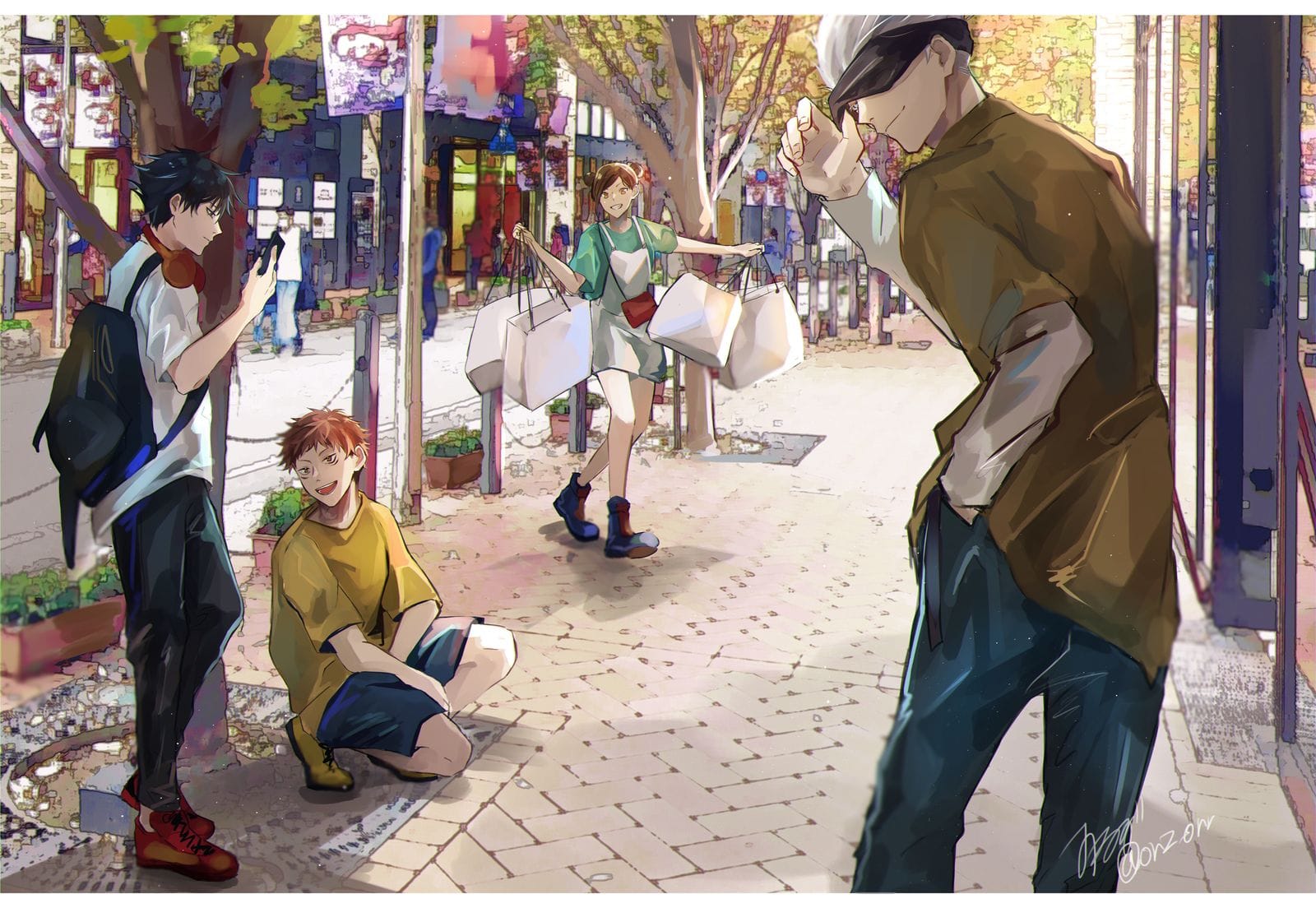
This might sound like a low bar to clear, but look at the shonen genre honestly and you’ll see how rare it actually is. The typical template for female characters in battle shonen gives them one of a few options: supportive ally who provides emotional grounding for the main cast, romantic interest who occasionally demonstrates competence to prove she’s “not useless,” or the early powerhouse who gets sidelined once the male characters catch up. Maki Zenin doesn’t fit any of these slots. She started the series as a mentor-adjacent figure who could physically outperform almost everyone around her, got consistently pushed down by narrative circumstance and systemic prejudice within the story itself, and then came out the other side as one of the most powerful beings in the world — not because a male character helped her get there, but because she was always this, waiting for the artificial weight of her twin paradox to be lifted.
Her arc is a genuine power fantasy, but not in the shallow “I trained hard and now I’m strong” sense. It’s a power fantasy about what it means to be told, repeatedly and by people with authority over you, that your existence is fundamentally defective — and choosing not to believe them anyway. Every fan who has ever been dismissed because of something they couldn’t control, every person who has had their potential underestimated by an institution or a family, sees something real in Maki Zenin‘s story. That’s not an accident. Gege Akutami built this arc with genuine emotional intelligence.
The community reception tracks that resonance perfectly. Maki Zenin started the series as a well-liked side character — cool, clearly capable, narratively interesting but not centered. By the time the Perfect Preparation arc hit in the manga, she had become one of the most discussed characters in the fandom. Season 3 has accelerated that dramatically for anime-only viewers, who are now experiencing that arc for the first time. Social media right now (February 2026) is absolutely flooded with Maki content — fan art, reaction videos, analysis threads. She went from the cool supporting cast member to the character people make their profile pictures. That trajectory is genuinely unusual, and it speaks to how well-constructed her arc is. If you want context on how she stacks up against anime’s greatest fighters across the medium, check out our piece on the best anime fights of all time — several of her sequences have already entered that conversation.
What makes Maki Zenin exceptional as a female character isn’t just that she’s strong. It’s that her strength has weight, context, cost, and meaning. She paid for everything she has. She grieved for everything she lost. And she kept going anyway. That combination — genuine competence, genuine emotional depth, genuine agency — is what separates her from the crowd.
Maki Zenin Is Just Getting Started
Here’s the thing about Maki Zenin in JJK Season 3: we’re still watching her story unfold. The Culling Game arc is deep and dense and full of moments where she’s going to matter — where her unique positioning in the power system, her specific set of tools, and her particular relationship to the Zenin clan’s legacy are going to be relevant in ways that will only become clear as the season continues. Anime-only viewers are in the best possible position right now — experiencing her arc fresh, with MAPPA’s animation doing justice to some of the most intense material in the entire series.
What Maki Zenin represents in Jujutsu Kaisen is bigger than any single fight or any single moment. She is the proof that the system is wrong. In a world that measures human worth in cursed energy — that literally ranks people on a hierarchy based on their power output — she is the argument that the metric itself is broken. That the thing you’re missing might be exactly the thing that makes you unstoppable. That the people who told you what you couldn’t do were measuring you by the wrong standard the whole time.
She earned every second of her Season 3 dominance. And if you want to understand the full scope of the story she’s operating in — the Culling Game’s structure, its stakes, its other players — our JJK Season 3 Culling Games Arc guide has everything you need. For more on the power dynamics and hierarchy that Maki Zenin is actively dismantling, the JJK Fandom Wiki’s Heavenly Restriction entry is the definitive reference for how the ability works at a technical level.
Keep watching. Maki Zenin is not done yet. Not even close.
You Might Also Enjoy
- JJK Season 3 Culling Games Arc — Complete Guide — Everything you need to follow the Culling Game from start to finish
- How the Gojo vs Sukuna Fight Broke Jujutsu Kaisen — The battle that changed everything heading into Season 3
- Nen vs Cursed Energy — HxH and JJK Power Systems Compared — Deep analysis on how JJK’s power rules actually work
- Best Winter 2026 Anime — Where JJK Season 3 ranks against this season’s competition
- Most Shocking Anime Plot Twists of All Time — Spoiler: the Zenin arc earns its spot here