Two Minds, One Stage — Why This Rivalry Hits Different
When you talk about the greatest rivalries in anime, Light Yagami vs L isn’t just part of the conversation — it is the conversation. From the moment L sits across from Light at the To-Oh University entrance ceremony, Death Note stops being a supernatural thriller and becomes something far more dangerous: a chess match between two people who might be the two smartest humans alive. No other rivalry in anime history has packed this much psychological tension into this little physical conflict.
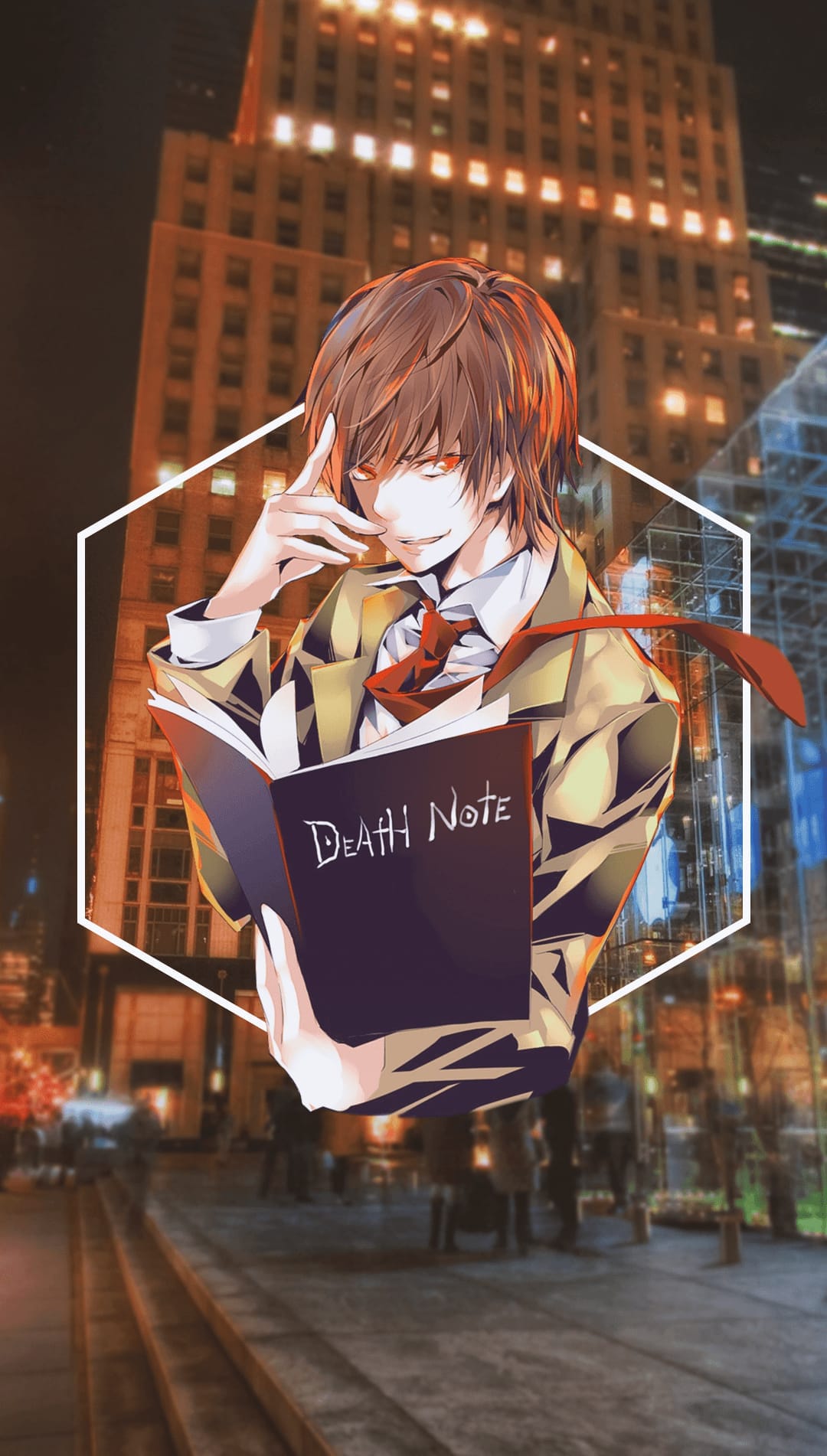
What makes the Light Yagami vs L dynamic so impossible to forget isn’t superpowers or sword fights. It’s the terrifying realization, which hits you about halfway through, that you’re watching two sides of the same coin try to destroy each other. One believes justice means eliminating evil at any cost. The other believes the process of justice is what makes it just. They are, in almost every meaningful sense, reflections of each other — and that’s exactly what makes the Death Note rivalry so emotionally devastating.
This isn’t an article about who was smarter or who “won.” It’s about why this rivalry changed what anime could be, and why it still holds up as the gold standard of psychological battle in the medium.
Two Philosophies, Two Gods — The Ideological Core of the Death Note Rivalry
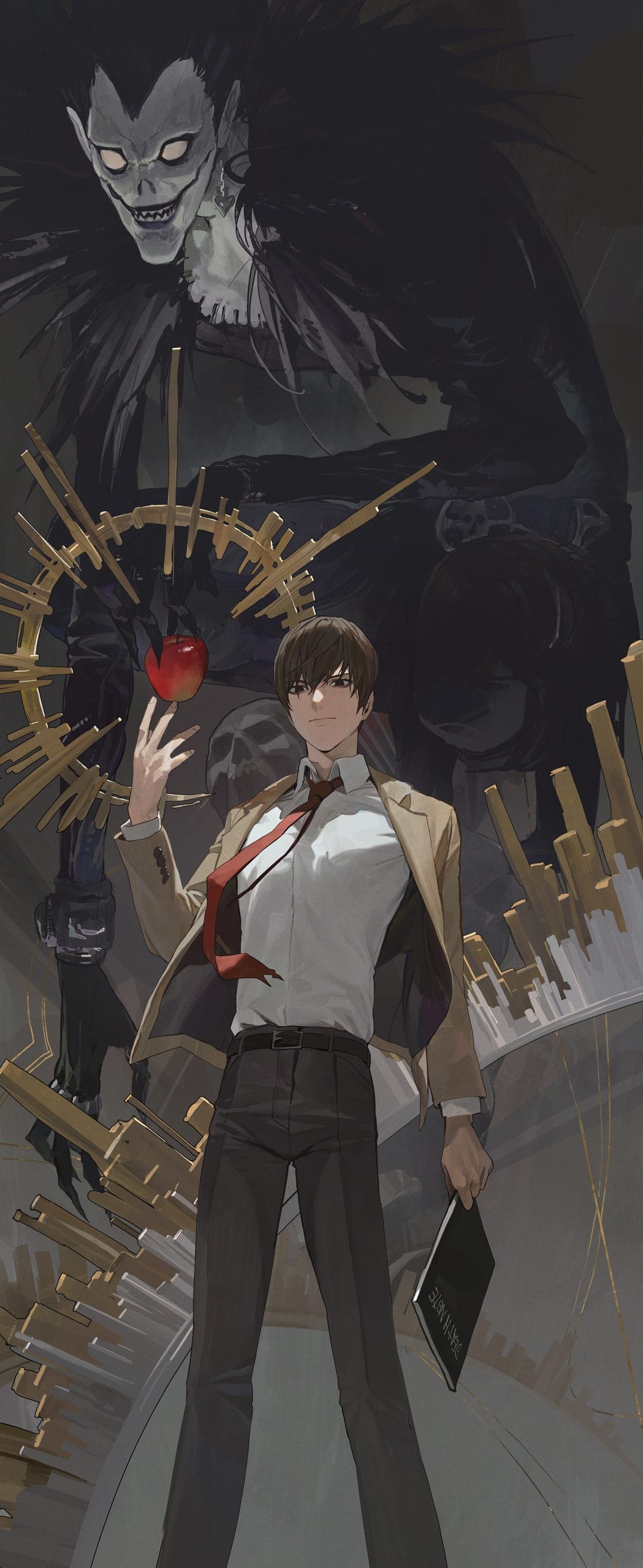
Light Yagami doesn’t pick up the Death Note because he’s evil. He picks it up because he’s brilliant, bored, and genuinely disgusted by a world that seems to let criminals walk free. His philosophy is utilitarian to its darkest extreme: if killing a thousand criminals saves ten thousand innocent lives, the math justifies the act. Light wants to become the god of a new world — not out of vanity, but out of a deeply held conviction that someone has to be willing to do what softer souls won’t.
L’s philosophy is the structural opposite. He’s a detective who has solved every case ever handed to him, but his obsession isn’t justice in the abstract — it’s the correctness of the process. For L, a conviction obtained through the wrong means is no conviction at all. He will break rules, manipulate people, and live in moral grey zones to catch Kira, but he will never simply declare someone guilty without proof. The irony is that L and Light both operate outside the law, but for fundamentally different reasons. Light bypasses it because he thinks he’s above it. L bends it because he understands it better than anyone.
This ideological clash is what elevates the Death Note rivalry beyond a simple cat-and-mouse story. It forces the audience to genuinely interrogate their own values. Most of us, if we’re honest, feel the pull of Light’s logic in the abstract. We’ve all had the thought: why is that person still free? L represents the inconvenient truth that feelings about guilt aren’t the same as proof of guilt, and that the moment you start executing people on certainty alone, you’ve become the thing you were trying to stop.
Neither philosophy wins cleanly. That’s the point. Death Note isn’t a morality tale — it’s a morality argument, and it refuses to let either side be simply right.
The Intellectual Battles That Made Anime History
The psychological battle between Light and L is constructed like a series of elaborate traps inside traps. Every move one of them makes is designed not just to advance their position, but to reveal as little as possible while forcing the other to reveal more. It’s baroque in its complexity and genuinely thrilling to watch even on a rewatch, when you know every outcome.
Take the tennis match in episode 9. On the surface, it’s two college students playing tennis. Underneath, it’s an extended psychological interrogation where both players are watching the other’s reactions more carefully than the ball. Light uses the match to project confidence and normalcy. L uses it to study Light’s competitive instincts and emotional control under pressure. No punches are thrown. No notebooks are consulted. It is, somehow, one of the most tense scenes in the series — because you understand exactly what both of them are doing beneath the mundane activity.
The “confinement arc,” where Light voluntarily gives up the Death Note and his memories to create a watertight alibi, is the most audacious gambit in either character’s playbook. Light essentially bets that he can fool L while literally incapable of lying about being Kira — because he genuinely isn’t Kira anymore. It works. It shouldn’t work. But it does, because Light’s understanding of L is deep enough that he can predict how L will interpret genuine innocence. That level of nested strategy is almost unheard of in anime storytelling.
What keeps these battles from feeling like puzzle boxes is that they’re always emotionally grounded. L genuinely starts to care about Light. Light’s performance of friendship becomes complicated by the possibility that some small part of it is real. The intellectual warfare is inseparable from the emotional warfare, and that combination is what makes the Death Note rivalry so much richer than a standard detective anime premise.
Two Sides of the Same Mirror — How Light and L Reflect Each Other
The genius of Death Note’s writing is that Light and L are structured as mirrors rather than opposites. Their differences are real and important, but they’re differences of direction, not of nature. Strip away the specific contexts of their lives and you’d have a very hard time explaining why one became a crusading detective and the other became a god of death.
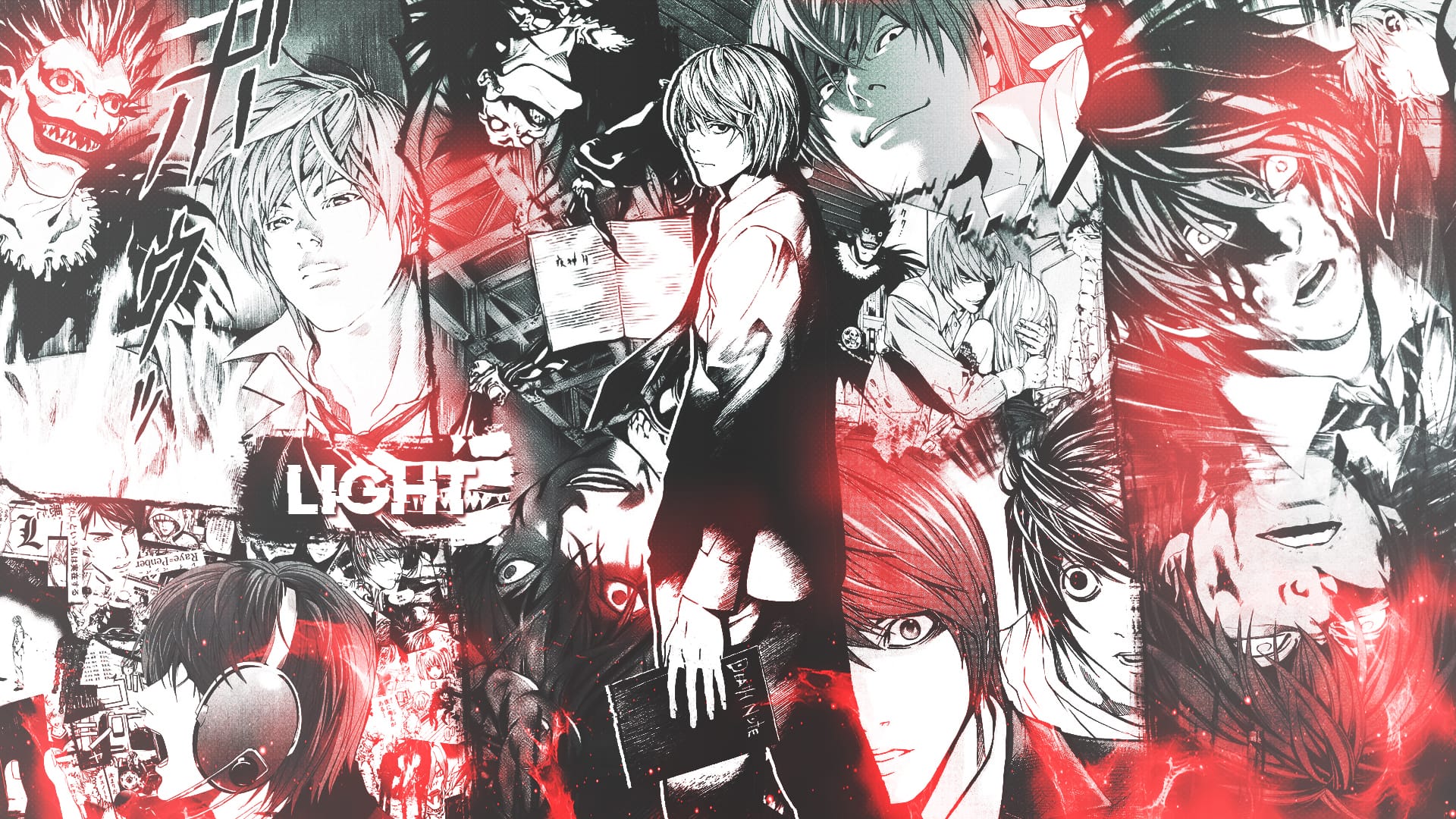
Both are extraordinarily gifted from childhood. Both are isolated by their intelligence — L literally cannot have normal human relationships, and Light’s genius creates a distance from his peers that he masks with performance. Both are driven by an almost pathological need to win that goes far beyond professional ambition. And critically, both are willing to use people as instruments. L uses his task force members as tools, lying to them and manipulating their emotions freely. Light does the same, more ruthlessly. The difference in degree is enormous. The difference in kind is smaller than either would admit.
The physical contrast reinforces this mirroring beautifully. Light is conventionally handsome, meticulously groomed, athletic, perfectly socialized. L is hunched, pale, wild-haired, socially bizarre. But these exteriors are both performances — Light performs normalcy to hide his true self, and L performs strangeness because he genuinely doesn’t know or care how to perform normalcy. Both are masks, just pointed in opposite directions.
Even their relationship to institutions mirrors each other in inverted form. Light comes from a police family, raised inside the system — and his rejection of its limitations reads as a kind of ideological patricide. L has no family, no institution, no roots. He is the system’s most powerful tool and simultaneously its most uncontrollable element. Light destroys the law from within. L operates above it entirely. Both positions are, in their own way, a complete rejection of normal accountability. Neither man answers to anyone in any meaningful sense, and that shared freedom from consequence is part of what makes them so dangerous — and so fascinating to watch.
L explicitly acknowledges this when he tells Light that if he hadn’t taken this case, he believes he might have ended up like Kira. That moment of honesty — quiet, devastating, dropped almost casually — is the show admitting out loud what it’s been building toward for 25 episodes. These are not hero and villain. These are two versions of the same exceptional person, shaped differently by circumstance and choice.
The Moments That Burned Themselves Into Anime History
The Death Note rivalry is built from a handful of scenes so perfectly constructed that they’ve entered the shared memory of anime fandom. These aren’t flashy action sequences — they’re dialogue scenes, quiet standoffs, and precisely timed revelations that land with the force of body blows.
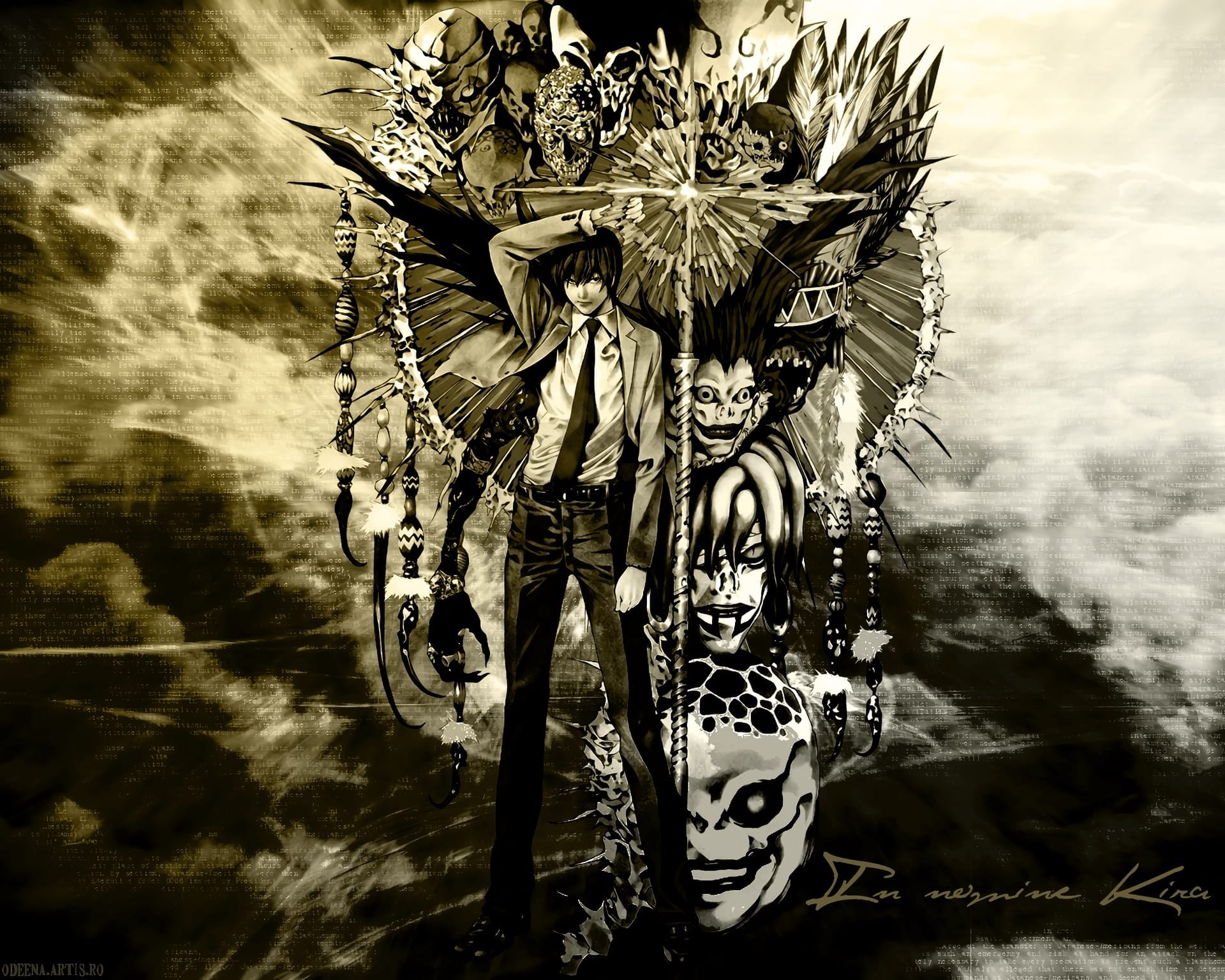
The moment L handcuffs himself to Light is almost absurdist comedy on the surface and pure psychological warfare underneath. L is saying: I know you can’t kill me while we’re connected, and I want to watch you pretend that’s fine. Light is saying: fine, watch me. The two of them sharing a handcuff chain while maintaining the fiction of friendship — while both knowing the other is their primary suspect and primary pursuer — is one of the most efficient pieces of character writing in anime. Every subsequent scene they share in this arc carries the weight of that chain.
The tennis match, already mentioned, deserves its own full recognition as a moment. Creator Tsugumi Ohba could have written any activity for this scene. Tennis was chosen because it’s one of the few sports where opponents face each other directly, reading each other’s body language, the entire time. The match ends in a tie. Of course it does.
And then there’s the ending of the L arc — Light cradling L’s body as he dies. Ryuk narrates. Light’s expression cycles through triumph, something that might be grief, and finally settles back into calculation. It’s one of the most ambiguous, uncomfortable victories in anime history. Whether Light feels genuine loss in that moment, and whether he would even admit it to himself if he did, is a question the show deliberately leaves open. That ambiguity is everything.
Why Light Yagami vs L Transcends the Genre — And Anime Itself
The Death Note rivalry doesn’t just stand at the top of anime rivals discussions — it regularly appears in broader conversations about great antagonist dynamics in fiction, full stop. That’s a remarkable achievement for what is, at its technical core, a supernatural shonen manga. The reason it transcends is that it works on every level simultaneously.
On the plot level, it’s a taut thriller with genuine mystery. You spend enormous effort trying to figure out how each side will outmaneuver the other, and the show consistently produces answers that feel both surprising and inevitable. On the thematic level, it’s a serious engagement with questions about justice, moral authority, and the corrupting effect of unchecked power. On the character level, it’s an intimate portrait of two people who might be the only two humans on earth capable of truly understanding each other — and who are trying to destroy each other because of it.
Most anime rivalries operate on one or two of these levels. Death Note runs all three simultaneously, at full power, for 25 episodes. That’s not just impressive — it’s almost unreasonable.
Compare it to any other major anime rivalry and the gap becomes clear. Naruto vs Sasuke is deeply felt but fundamentally about power and belonging — it’s emotional rather than intellectual. Goku vs Vegeta is iconic but operates almost entirely on the plot and spectacle level; the philosophical dimension is thin. Lelouch vs Suzaku in Code Geass gets closest to the Death Note rivalry’s moral complexity, and it’s not a coincidence that Code Geass launched the year after Death Note finished airing. Even there, though, the rivalry exists within a war narrative that gives both sides clear external context. Light and L’s conflict strips all of that away. It’s just two people in rooms, thinking at each other. The stakes feel enormous because we understand exactly what’s in both their heads.
The cultural footprint is impossible to ignore. Light’s “I’ll take a potato chip… and eat it” is one of the most parodied scenes in all of anime — a line so specific, so bizarre, and so perfectly in character that it became its own meme ecosystem. L’s posture, his sugar addiction, his bare feet on chairs — these have become shorthand for a certain kind of genius archetype that has influenced a decade of anime character design since. The fingerprints of this rivalry are everywhere in modern anime, from Code Geass to The Promised Neverland to Classroom of the Elite. Any show that pits two brilliant minds against each other in a psychological battle is, consciously or not, working in the shadow of Light Yagami vs L.
What the rivalry ultimately offers — and what no successor has quite replicated — is the feeling of watching two minds operating at a level you can barely follow, while still being able to feel every emotional beat underneath. It respects its audience’s intelligence without ever becoming cold or clinical. It’s thrilling and cerebral and heartbreaking all at once. That combination is extraordinarily rare in any medium, and it’s why this rivalry is still the one everything else gets measured against.
The Legacy: What This Rivalry Did to Anime Storytelling
Before Death Note, psychological battle in anime was a relatively niche proposition. The genre’s mainstream was built on power scaling, training arcs, and clear moral hierarchies. You knew who the hero was. You were rooting for the hero. The villain existed to be overcome.
Light Yagami vs L broke that framework openly and without apology. It created a generation of anime fans who understood that the most interesting stories don’t have a hero to root for — they have two compelling, flawed, brilliant people whose conflict forces you to figure out what you actually believe. That’s a fundamentally different kind of engagement, and it opened a door that anime storytelling has been walking through ever since.
The rivalry also proved that you didn’t need a single action sequence to sustain tension across 25 episodes. Death Note’s greatest battles are conversations. They’re scenes of two people eating cake, playing tennis, walking in the rain. The violence, when it comes, is almost administrative — it’s the paperwork that closes out the real battle, which was always fought in silence, in inference, in the space between what’s said and what’s meant.
For a generation of anime writers, that lesson was revelatory. Character complexity, moral ambiguity, and the intelligence of the audience aren’t obstacles to mainstream success — they’re the path to a different, deeper kind of success. Stories that trust their audience to handle difficulty don’t just attract viewers; they create devoted fans who return for years, who argue about the themes, who feel genuinely unsettled by the ending even a decade later.
It’s also worth acknowledging what the rivalry meant for anime’s global expansion. Death Note was one of the first anime series to achieve genuine breakout success in Western markets not because it was accessible or familiar, but because it was demanding. It asked international audiences to care about philosophy, moral reasoning, and quiet intellectual standoffs. And they did — in enormous numbers. That wouldn’t have happened without the gravitational pull of this central rivalry. The Death Note rivalry didn’t just change anime storytelling; it expanded what kind of audience anime could reach.
Light Yagami vs L did all of that. It earned its place at the top. And honestly? Nothing has come close to knocking it off.