Few anime characters spark as much debate as Kirito from Sword Art Online. Any honest Kirito character analysis has to start with that tension — because it’s the most interesting thing about him. He is simultaneously one of the most beloved protagonists in isekai anime history and one of the most criticized. Since SAO first aired in 2012, Kirito has become a shorthand for everything people either love or hate about the isekai genre. He has tens of millions of fans worldwide, and an almost equally loud crowd that considers him the poster child for lazy protagonist design. The truth, as usual, lives somewhere in between — and it’s worth taking a serious look at both sides.
Why Fans Love Kirito (And Why That Love Is Legitimate)
It’s easy to dismiss Kirito’s fanbase as uncritical or immature. That’s a mistake. The people who connect deeply with this character are reacting to something real in the writing — at least in the early arcs of Sword Art Online.
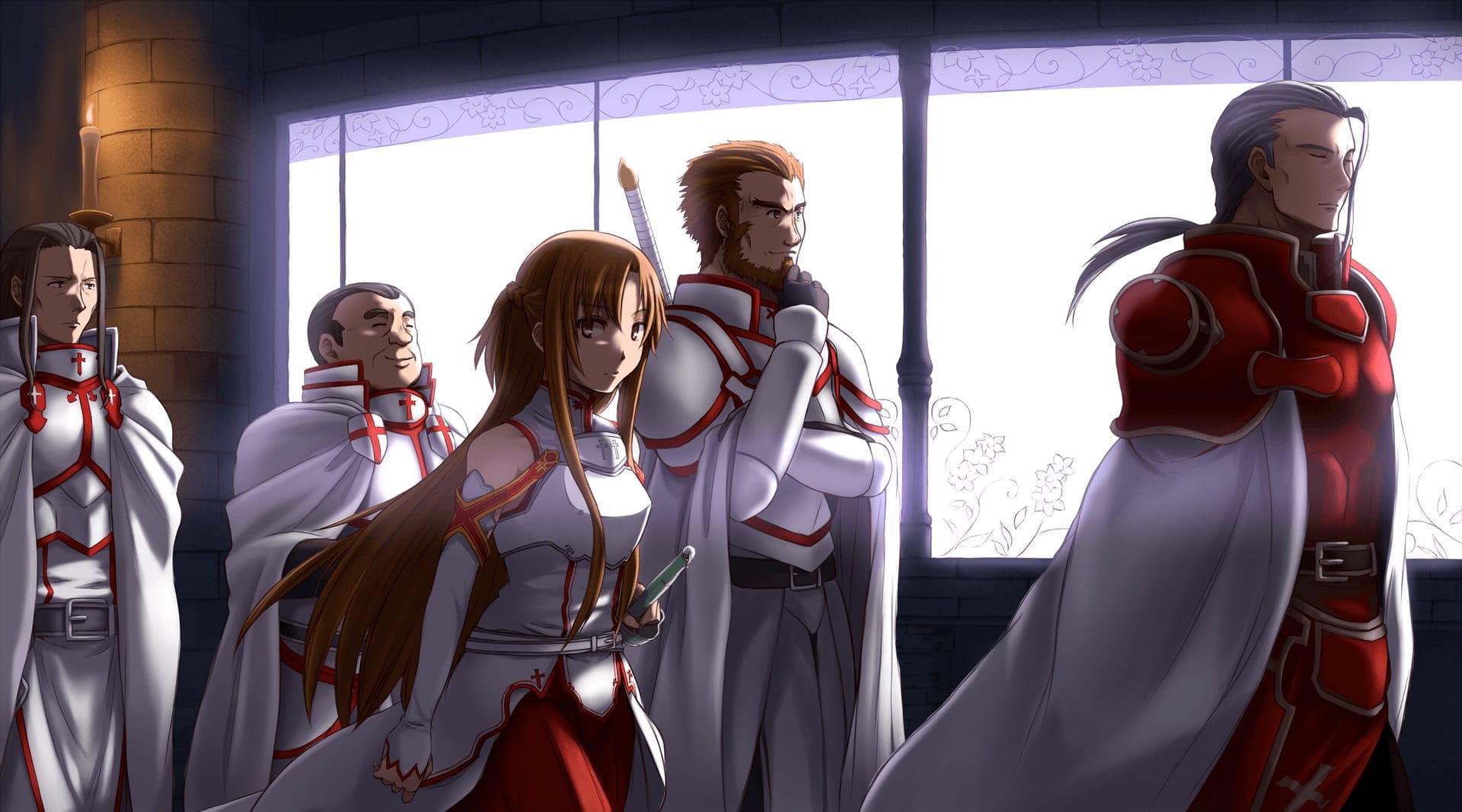
In the Aincrad arc, Kirito works as a character precisely because he carries genuine psychological weight. He starts SAO as a beater — a portmanteau of “beta tester” and “cheater” — and he chooses to absorb the hostility of the other players to protect the smaller group of beta testers from mob anger. That’s not a power fantasy moment. That’s a character choosing social isolation as a coping mechanism and a shield for others. He calls himself a solo player not just because he’s skilled, but because he’s terrified of losing people the way he lost Sachi and the Moonlit Black Cats guild.
Sachi’s death is the emotional backbone of what makes early Kirito compelling. He failed to save her. He carries that. The Christmas episode, where he receives her pre-recorded message telling him it’s not his fault, is genuinely affecting — not because it resolves his grief, but because it shows the shape of a person who has internalized blame as a survival strategy. That’s interesting character writing, full stop.
Kirito also lands for a specific demographic: teenagers and young adults who feel like outsiders, who pour hours into games, who are more comfortable online than in social situations. He’s a power fantasy, yes — but he’s also a portrait of social anxiety dressed up in a black coat. The fantasy isn’t just “what if I were strong.” It’s “what if my real self was finally seen and valued.”
Beyond the psychology, Kirito is genuinely cool in motion. His fight choreography in Aincrad and in SAO: Alicization is some of the best in the isekai genre. His dual-wielding ability, his combat intuition, his calm under pressure — these are satisfying to watch whether or not you’re emotionally invested in him as a person. Entertainment value is a legitimate thing. Not every protagonist needs to be Shinji Ikari to earn their place.
The Valid Criticisms: Overpowered by Design, the Harem Problem
Being fair to Kirito means being honest about where the writing genuinely fails him — and there’s quite a bit to dig into here. The criticisms that stuck for over a decade mostly stuck because they’re accurate.
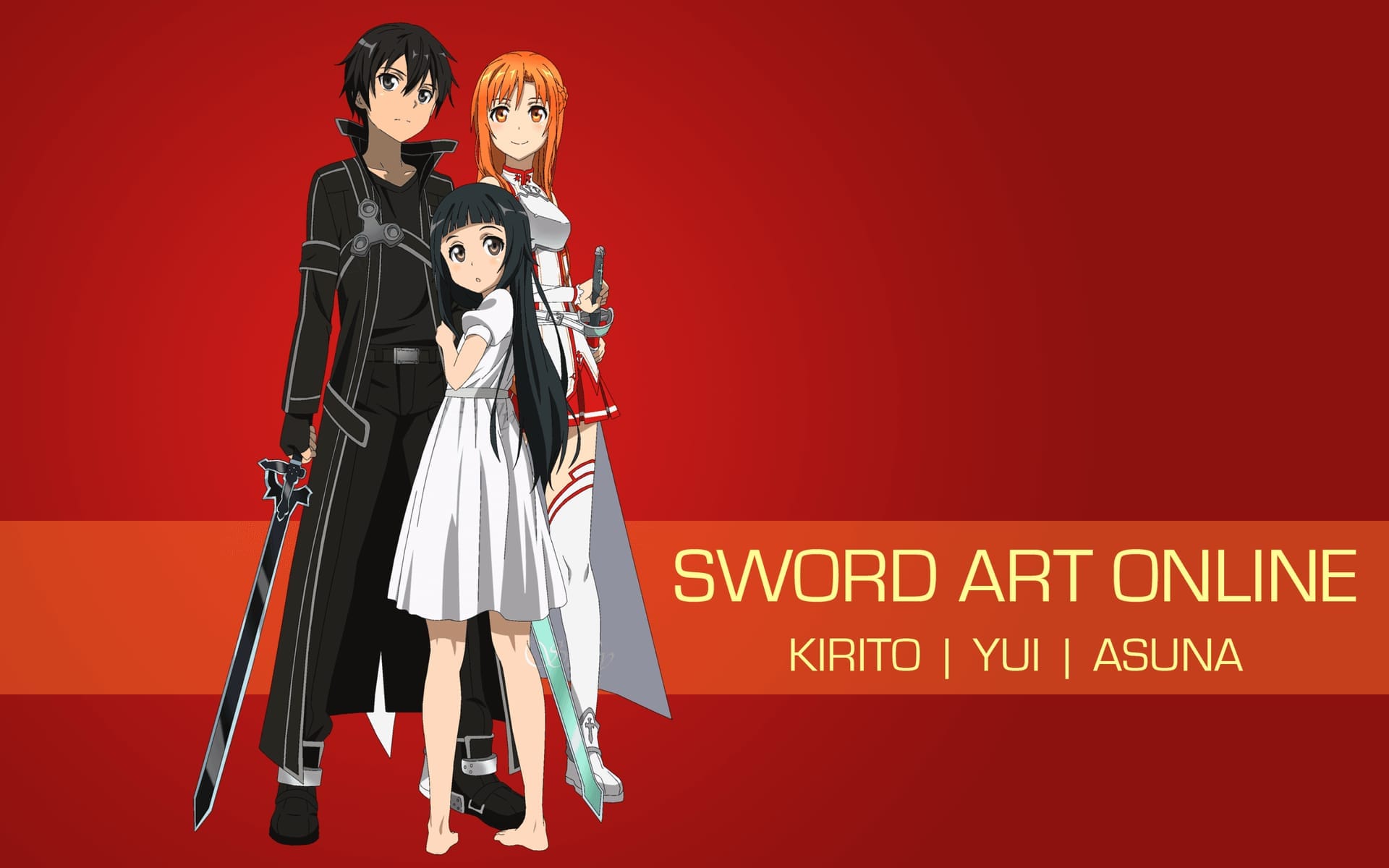
The overpowered problem is real, but it’s more nuanced than “he wins every fight.” The issue isn’t that Kirito is powerful — plenty of great protagonists are extremely powerful. The issue is that his power rarely feels earned in the moment. In the Fairy Dance arc (ALO), Kirito clears endgame content on his first day in a new game, not through strategy or accumulated effort, but because his stats transferred over and he’s just built different. In Gun Gale Online, he deflects bullets with a lightsaber. Fine in isolation, but it establishes a pattern where the narrative continuously invents reasons for Kirito to be exceptional that go beyond his existing skills. The SAO protagonist gets a new trump card whenever the plot demands one, which deflates tension in a way that has nothing to do with whether he’s “too strong” in absolute terms.
The harem dynamic is a more structural problem, and it’s mostly a failure of the supporting female characters rather than Kirito himself. Asuna starts Aincrad as a compelling co-lead — she’s skilled, independent, emotionally complex, and has her own arc. By Fairy Dance, she’s been reduced to a captive waiting for rescue. Sinon is introduced in GGO with her own trauma and backstory, then gradually repositioned as another satellite orbiting Kirito. Leafa has an unrequited-love subplot that the show never meaningfully interrogates. None of these women are bad characters exactly — they all have defining moments — but the pattern across arcs is unmistakable: interesting woman gets introduced, interesting woman’s arc curves toward Kirito and loses its own momentum.
This isn’t Kirito’s fault as a character — characters can’t control their narrative — but it does undermine any reading of him as a fully realized person, because fully realized people exist in relationship to other fully realized people. When everyone around him functions primarily as a Kirito mirror, his own depth gets flattened by association.
There’s also the infamous Fairy Dance arc climax, where Kirito defeats the villain largely through sheer willpower after being killed — resurrecting himself through force of emotion. It’s a moment that crystallizes the worst version of Kirito: a character the plot has decided cannot lose, no matter what the rules of the world say. That scene poisoned a lot of goodwill the Aincrad arc had built, and fairly so.
Alicization: The Character Development Kirito Actually Got
Here’s where a lot of Kirito criticism goes wrong — by stopping at the Aincrad and Fairy Dance arcs and treating those as the final word. The Alicization arc, which runs across SAO: Alicization and War of Underworld, is a fundamentally different piece of work. It’s longer, slower, more philosophically ambitious, and it puts Kirito through something he’s never experienced in any previous arc: sustained, genuine helplessness.
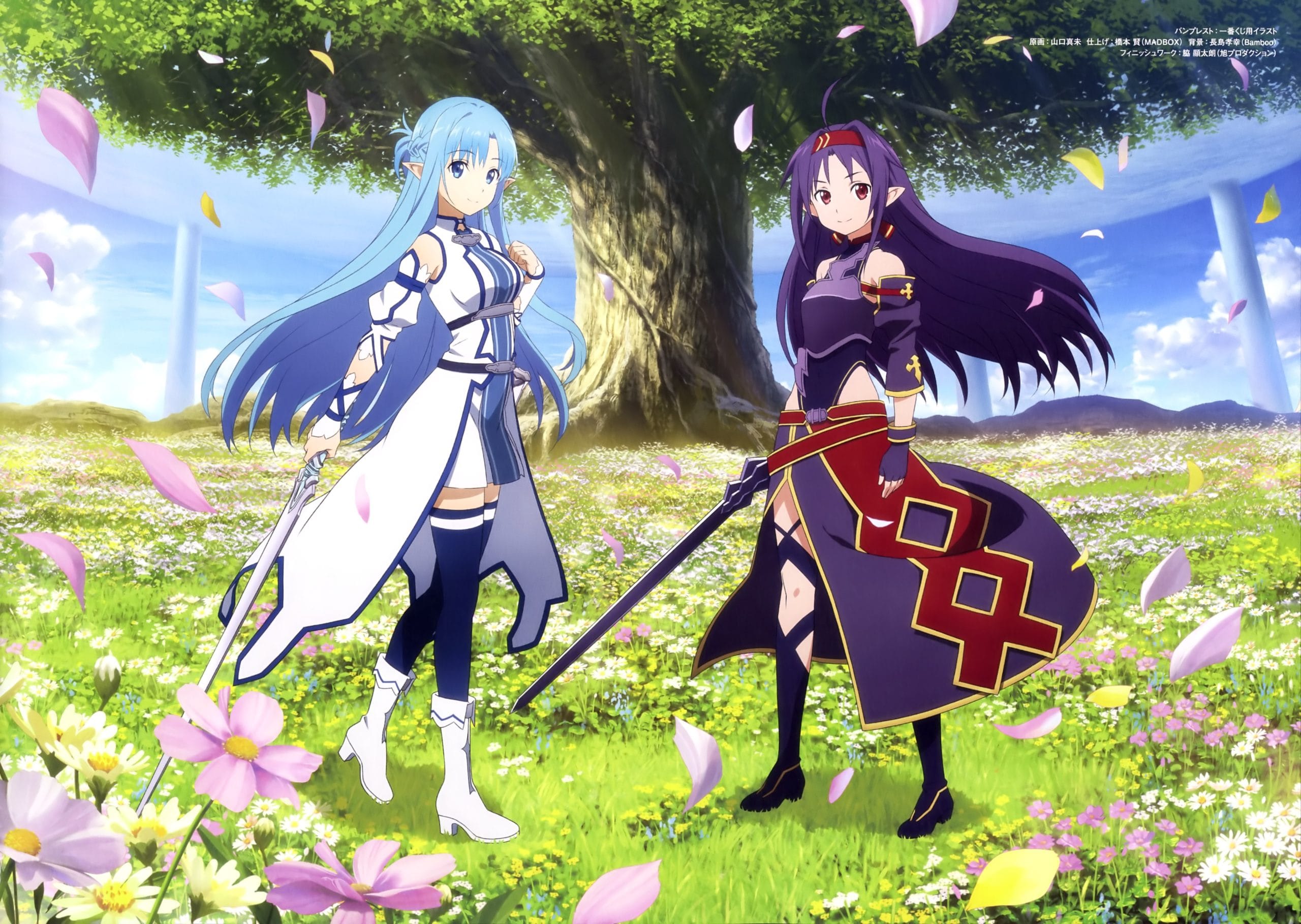
The most important thing that happens to Kirito in Alicization is that he loses. Not temporarily, not in a way that triggers a power-up — he is broken. After Eugeo’s death and the trauma of the battle in the Central Cathedral, Kirito collapses into a catatonic state that lasts for a significant portion of the arc. He has to be cared for. He is, for the first time in the series, completely dependent on others. Alice, the character who carries him during this period, gets to be genuinely heroic in a way SAO female characters rarely manage without being eclipsed. Kirito’s incapacity is the condition for her development.
His friendship with Eugeo is also the most emotionally substantive relationship in the entire franchise. Eugeo is a foil in the classical sense — where Kirito is intuitive, Eugeo is methodical; where Kirito suppresses emotion, Eugeo expresses it; where Kirito survives through detachment, Eugeo is destroyed by attachment. Watching Kirito fail to save Eugeo, and watching him sit with that failure in a way he never fully did with Sachi, adds a layer of genuine emotional consequence that the series had been building toward for years.
The Alicization arc also engages with ideas Kirito is uniquely positioned to explore: What makes a consciousness real? What do we owe to artificial beings? If an AI develops emotions, does it deserve rights? These aren’t questions that a shallow character can carry. Kirito’s history as someone who always treated the people inside games as real — from SAO’s Aincrad to the AIs of the Underworld — makes him the right lens for exploring them. His instinct to humanize digital consciousness, which was treated as naive or sentimental in earlier arcs, becomes a genuine moral position in Alicization.
None of this retroactively fixes Fairy Dance. But it does suggest that Reki Kawahara, the original author, always had a more complex character in mind than what the weakest arcs delivered. Alicization is what Kirito looks like when the writing takes him seriously.
Kirito vs. Modern Isekai Protagonists: Where Does He Actually Stand?
It’s worth contextualizing Kirito against the wave of isekai heroes that came after him, because he’s often blamed for conventions he didn’t invent and doesn’t fully embody.
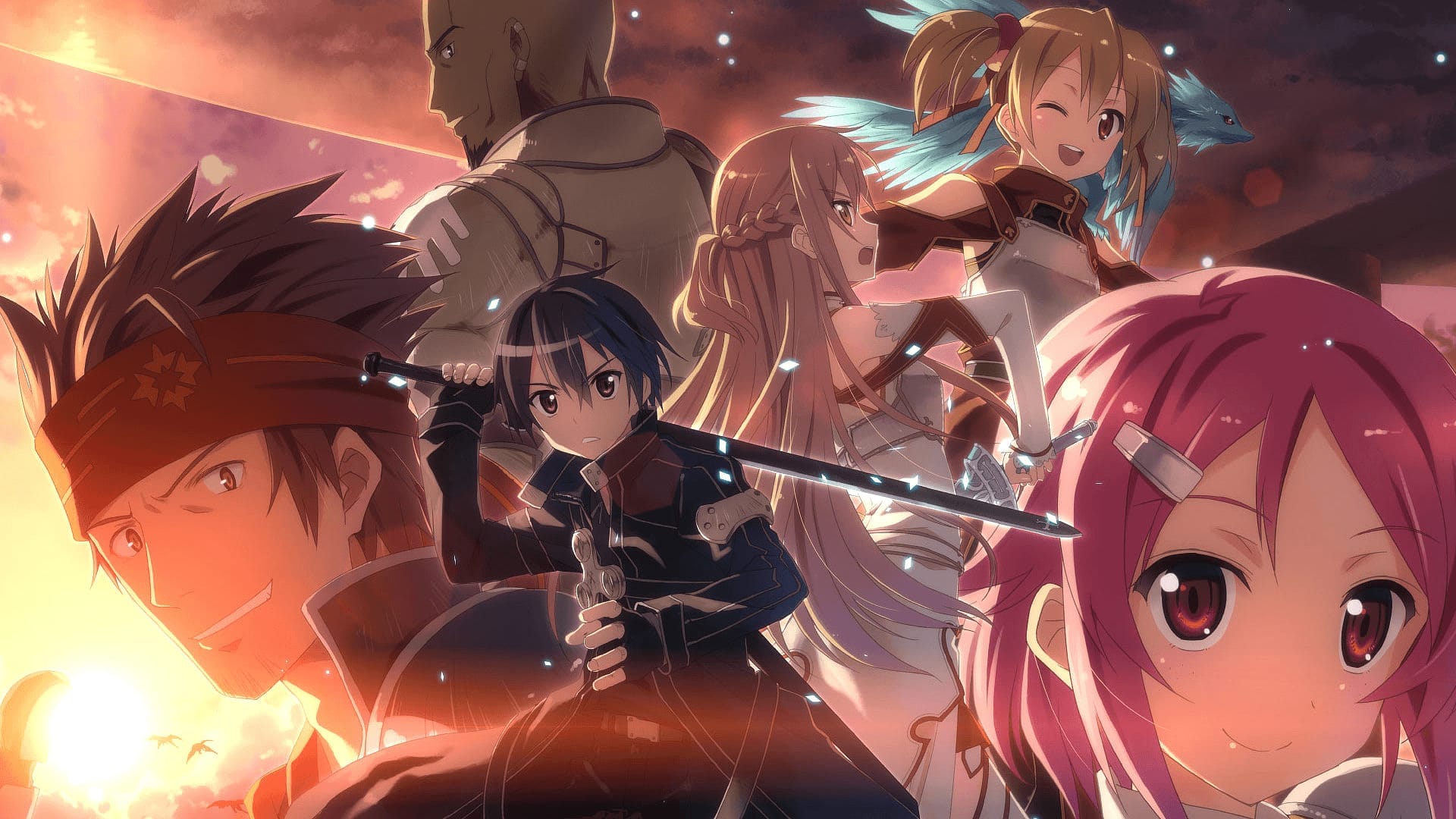
The overpowered isekai hero existed before Kirito. What SAO did was mainstream the formula for a Western anime audience at scale. But comparing Kirito to the blank-slate protagonists of many post-2015 isekai titles is instructive. Characters like Hajime from Arifureta or the average truck-isekai protagonist are power fantasies without the psychological scaffolding Kirito at least attempts. Kirito has a consistent personality, recognizable flaws, a defined aesthetic, and a relationship history that affects his behavior. That’s more than a lot of his successors can claim.
The more interesting comparison is against the isekai heroes who are genuinely well-written. Subaru Natsuki from Re:Zero is the obvious counterpoint — a character whose helplessness and emotional instability are the whole point, who earns every moment of growth through sustained suffering. Subaru makes Kirito’s flaws more visible by contrast, but also clarifies what Kirito gets right: he has a consistent moral core. He doesn’t waver on his fundamental values even when the plot rewards it. He believes in the humanity of digital beings before it’s proven. He chooses connection even after losing Sachi. That consistency matters.
Rimuru from That Time I Got Reincarnated as a Slime is another useful comparison — a power fantasy played almost entirely for comfort and satisfaction rather than tension. Rimuru is beloved partly because the show doesn’t pretend the tension is real. Kirito occupies an uncomfortable middle ground: the show wants us to feel tension, but keeps defusing it with power-ups. Rimuru’s honesty about what it is makes it easier to enjoy. Kirito’s inconsistency makes him more frustrating.
But look at someone like Tanjiro Kamado from Demon Slayer — not isekai, but a shonen contemporary who gets compared to Kirito frequently. Tanjiro is warm, expressive, and earns his power through explicit training and sacrifice. He’s a better-constructed protagonist in most technical ways. But he is also, arguably, less complex — his emotional life is more legible, his inner conflicts more resolved. Kirito’s contradictions, the gap between his competence and his damage, between his warmth toward individuals and his discomfort in groups, are messier and more realistic than Tanjiro’s almost saintly consistency.
The SAO protagonist is not the best isekai hero ever written, and the series’ handling of women and power scaling are genuine failures. But he’s not the lazy, hollow character his harshest critics describe. He’s an uneven character in an uneven series, with genuine strengths that get buried under the franchise’s worst instincts. That’s a more boring conclusion than either “Kirito is peak” or “Kirito ruined isekai,” but it’s the accurate one.
The Verdict: Complicated, and That’s the Point
After more than a decade, a proper Kirito character analysis has to land somewhere. Here’s where it lands: Kirito is a character who reaches toward something real and frequently falls short of it. His best moments — the Sachi episode, the entirety of his relationship with Eugeo, his catatonic arc in Alicization — show a writer and a character trying to say something genuine about grief, connection, and what it means to value someone who exists only in a digital space.
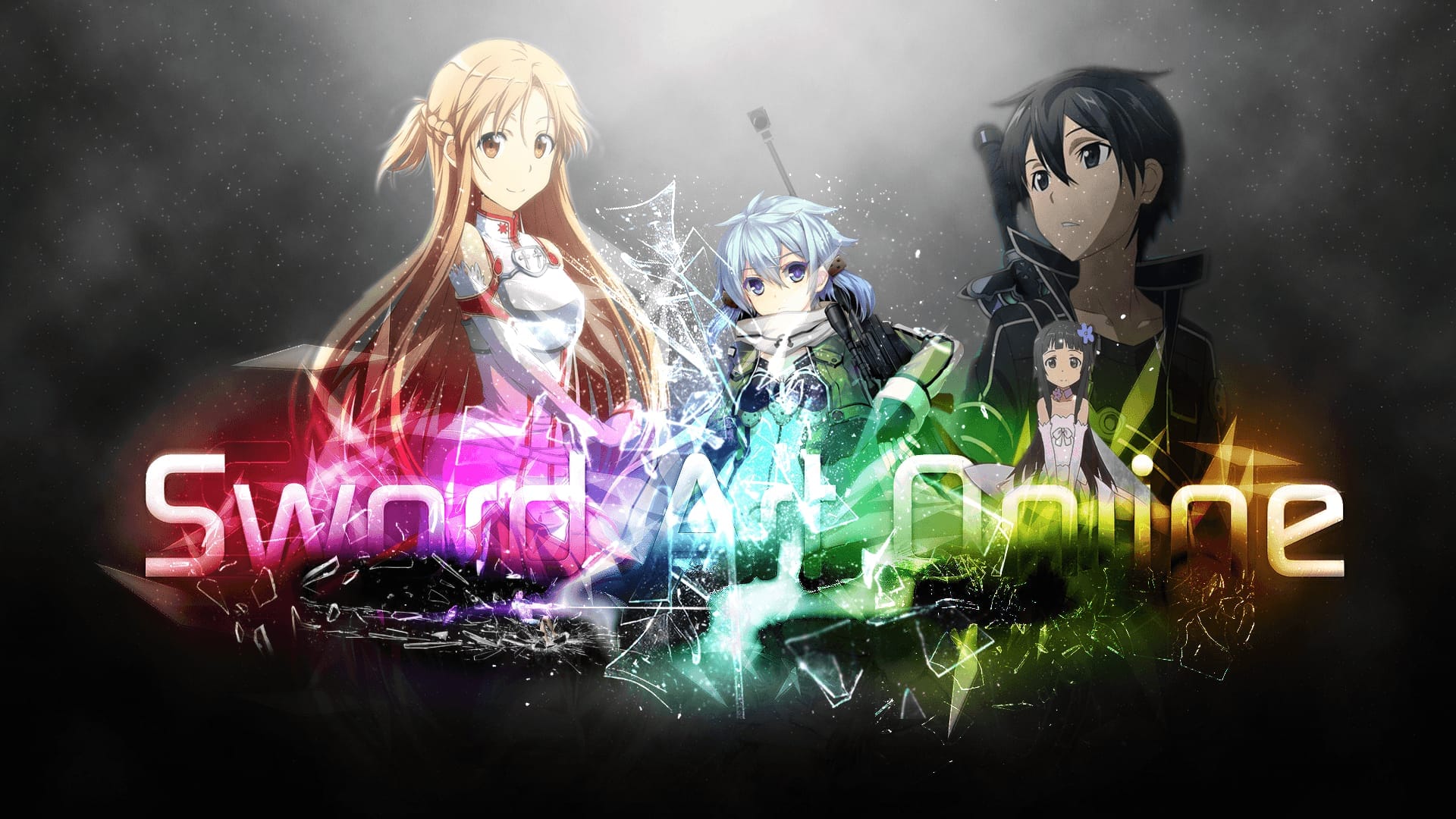
His worst moments — the bullet-deflecting, the self-resurrection, the way female characters collapse toward him like planets toward a star — show the franchise prioritizing wish fulfillment over coherence, and paying the price in long-term credibility.
What makes Kirito worth analyzing, rather than dismissing, is that the gap between his best and worst versions is so wide and so instructive. He is the isekai hero who almost escaped the limitations of his genre, several times, and was pulled back by commercial pressures and authorial inconsistency. That makes him a genuinely interesting case study in how protagonist design can succeed and fail within the same character.
If you came into SAO hating Kirito and you’ve never watched Alicization, watch it with fresh eyes. If you came in loving Kirito uncritically, sit with the Fairy Dance arc for a moment and let yourself be honest about why it doesn’t work. The character can hold both reactions. He was built for exactly this kind of friction — even when the show didn’t fully know what to do with him.
Kirito is the most polarizing protagonist in isekai anime not because he’s the worst or the best, but because he’s the one who comes closest to being genuinely good while remaining genuinely flawed. That tension is what keeps people arguing about him, writing about him, and watching the next arc to see if this time, finally, the writing catches up to the character’s potential.
You Might Also Enjoy
- Subaru Natsuki: Why Re:Zero’s Most Hated Hero Is Actually a Masterclass in Writing
- The 25 Best Isekai Anime Ranked — From SAO to Mushoku Tensei
- Asuna Yuuki: The Case for SAO’s Most Underrated Character
- Overpowered Anime Characters Ranked: Who Actually Earns Their Power?
- SAO: Alicization — The Arc That Finally Delivered on SAO’s Promise