From Bookworm to Ghoul: The Birth of a Tragic Hero
Few characters in anime history hit as hard as Ken Kaneki. A Ken Kaneki character analysis almost feels like an autopsy — you’re picking through the ruins of a person who was, at the start, just a quiet, bookish college student who liked coffee and Kafka. Then one date changed everything, and Tokyo Ghoul gave us one of the most psychologically rich protagonists the medium has ever produced.
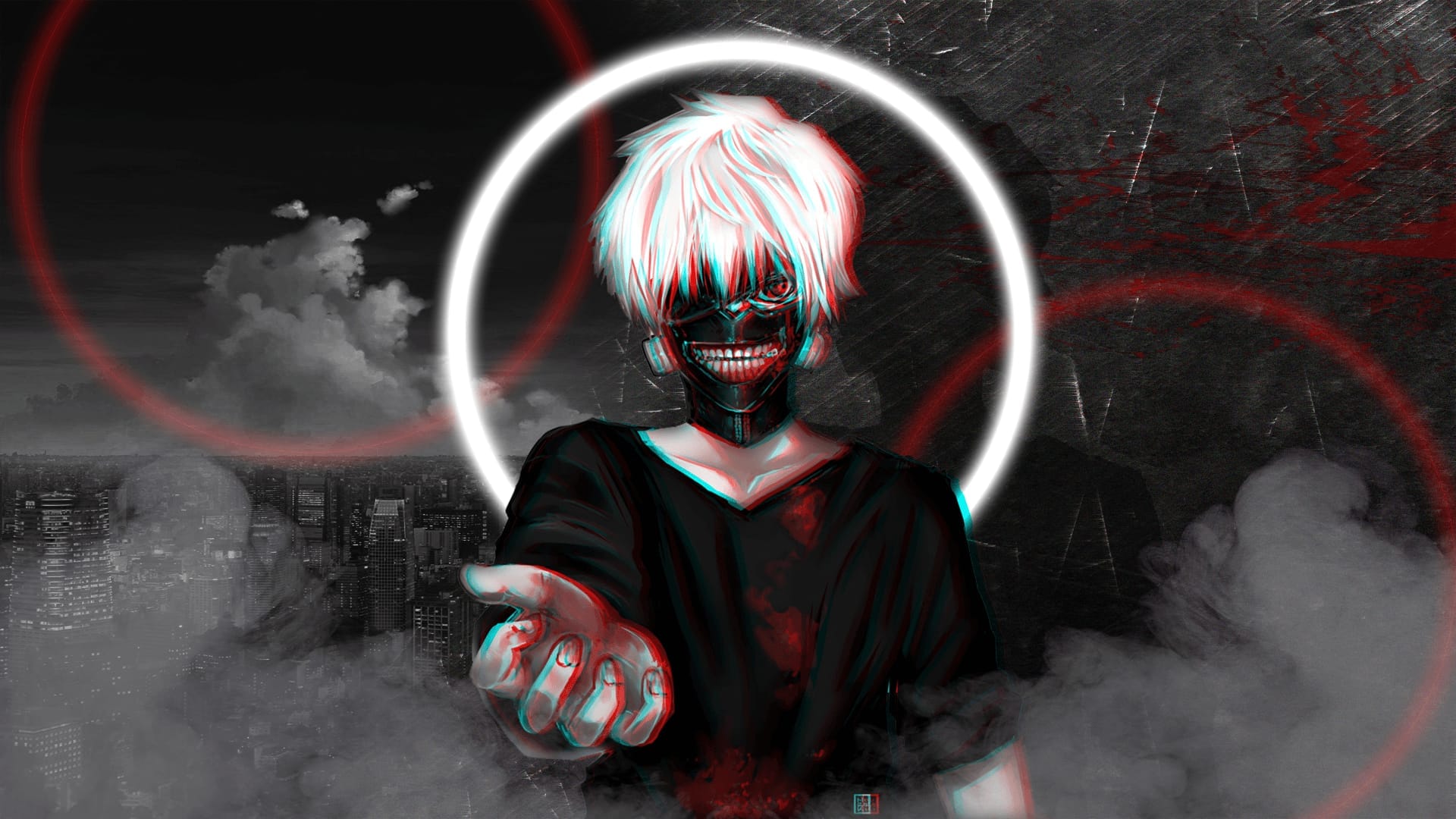
Kaneki starts as something rare in shonen anime: genuinely gentle. He’s not secretly powerful, not hiding some latent rage. He reads literature, he’s kind to his best friend Hide, and he harbors a quiet crush on a girl named Rize Kamishiro because she reads the same author he does. That fragile normalcy is exactly what makes what follows so devastating. When Rize reveals herself as a ghoul and nearly kills him, and when her organs are transplanted into Kaneki’s body during emergency surgery, the story doesn’t just change his biology — it detonates the foundation of who he is.
The early episodes of Tokyo Ghoul are almost cruel in how they handle Kaneki’s adjustment. He can’t eat human food anymore. The smell of it makes him sick. The only thing that satisfies his hunger is something he finds morally repellent: human flesh. For a character defined by his gentleness and his love of human connection, this isn’t just a physical curse — it’s a philosophical one. His body has become a living contradiction of everything he valued about himself.
What separates Kaneki from other “cursed protagonist” archetypes is that he fights his nature with his intellect. He reads about ghouls, he tries to understand them, he refuses to accept that becoming a ghoul means becoming a monster. It’s a coping strategy that’s very in-character — when the world gets incomprehensible, Kaneki reaches for a book. But the world he’s been dropped into doesn’t operate on the logic of literature, and that gap between his idealism and reality is where his tragedy lives.
The Torture Arc: The Point of No Return
If the first half of Tokyo Ghoul is about Kaneki struggling to maintain his humanity, the torture arc at the hands of Yakumo Oomori — better known as Jason — is where that struggle is brutally resolved. It is, without question, one of the most significant and discussed sequences in modern anime. Understanding it is central to any honest Ken Kaneki character analysis.
Jason’s method is specific and sadistic. He doesn’t just hurt Kaneki — he breaks him in cycles. He cuts off fingers and toes, then forces Kaneki’s ghoul regeneration to grow them back, then cuts them off again. He counts down from 1000, shifting to a different psychological torture at the end of each countdown. The intent isn’t just pain. It’s the destruction of Kaneki’s sense of self, his ability to hold onto hope, and ultimately his instinct for survival.
During the torture, Kaneki hallucinates a conversation with Rize — the ghoul whose organs now live inside him. This dream-Rize is cruel, sharp, and honest in ways the real world isn’t. She forces him to confront the truth he’s been avoiding: his passivity, his habit of letting others hurt him because he’s too afraid to push back, his deep-seated belief that enduring pain is somehow noble. She traces it back to his childhood, to a mother who worked herself to exhaustion and taught Kaneki, without meaning to, that self-sacrifice was the highest virtue.
The moment Kaneki “breaks” is the moment he flips Rize’s lesson. He decides that he will no longer be the one who gets hurt — he will be the one who does the hurting, if that’s what survival requires. His hair turns white. His mask cracks. And he defeats Jason in a way that’s more disturbing than triumphant, because it’s clear that something essential in the old Kaneki did not survive the basement.
The white hair is now iconic, but it’s worth pausing on what it actually represents. It’s not a power-up. It’s a trauma response given visual form. Kaneki didn’t get stronger because he trained harder — he got stronger because he broke in a specific direction, the way a bone sometimes heals denser at a fracture point. That detail, that his power is literally the shape of his damage, is what elevates this arc from “cool villain arc” to genuine tragedy.
Identity in Fragments: Black Kaneki, White Kaneki, and Haise Sasaki
One of the most fascinating aspects of the Tokyo Ghoul protagonist’s journey is that he doesn’t have one identity — he has at least three distinct ones, each a response to unbearable psychological pressure. This fragmentation is what makes the Ken Kaneki character analysis so rewarding to work through, because each version of Kaneki is both the same person and a fundamentally different one.
Black-haired Kaneki is the original — the reader, the dreamer, the boy who wanted to believe the world was more fair than it is. His defining trait is passivity. He absorbs pain rather than deflects it. He protects people at enormous personal cost and rarely asks for anything in return. He’s easy to love and almost as easy to exploit, which is exactly what happens to him repeatedly throughout the first arc.
White-haired Kaneki is the post-Jason version — hardened, colder, far more willing to use violence as a first resort. He forms his own ghoul group, Aogiri Tree defectors, and operates on the belief that he can protect the people he loves by becoming powerful enough to destroy everything that threatens them. It’s a logic that seems reasonable until you notice it’s the exact logic that turned every villain in the series into a villain. He’s not wrong that the world is brutal. He’s wrong that brutality is the only language it speaks.
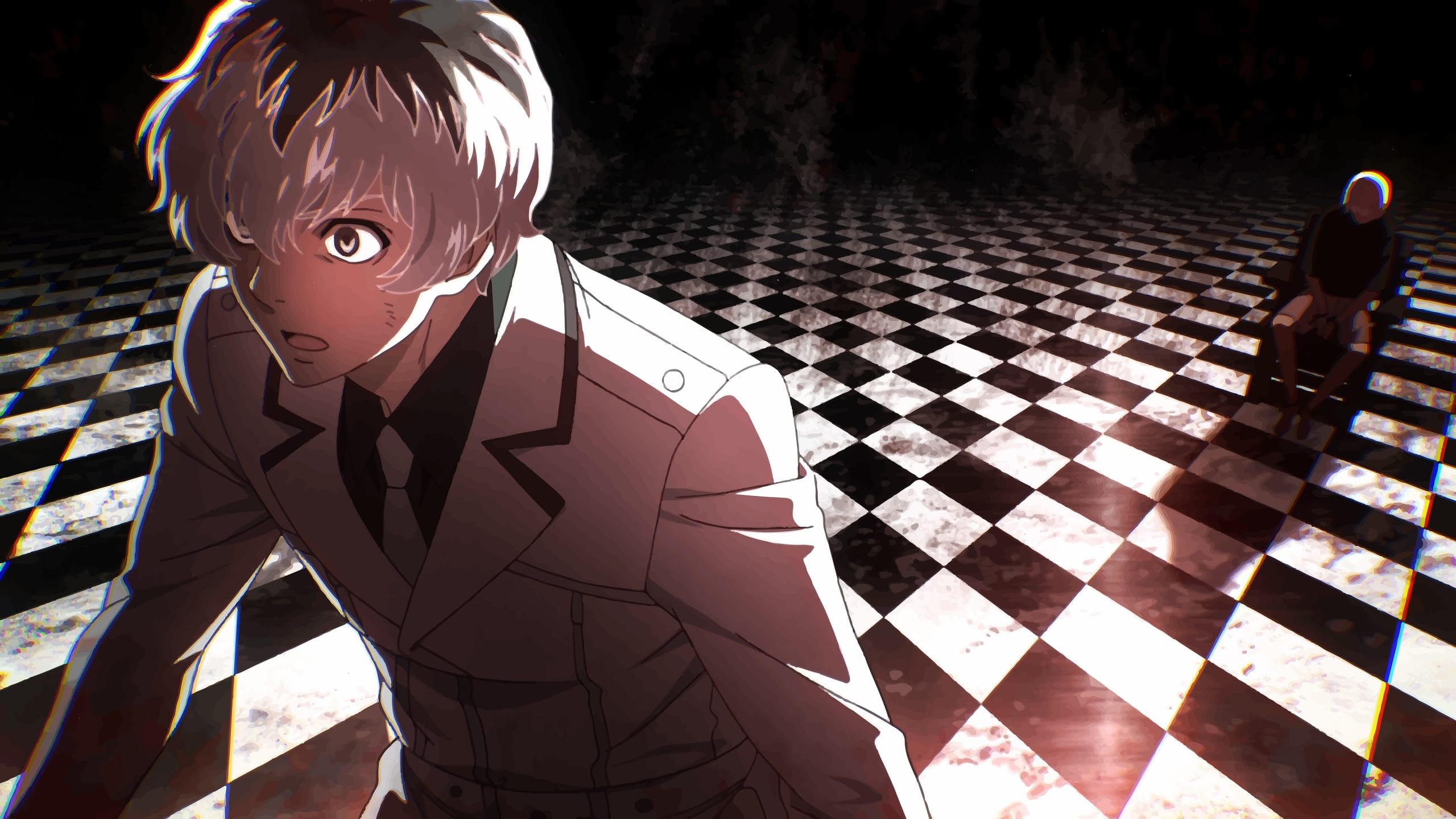
Then there’s Haise Sasaki — perhaps the most heartbreaking version of all. After a confrontation with CCG investigator Kishou Arima ends with Kaneki nearly dead, he is rebuilt by the organization as Haise: a half-ghoul investigator with no memory of his past. Haise is cheerful, earnest, mentorly. He cares deeply for his squad. He is, in some ways, the version of Kaneki that might have existed if none of the horror had ever happened — and that’s exactly why watching him is so painful, because you know what’s buried underneath. The Haise chapters are Tokyo Ghoul at its most quietly devastating, because the audience is always aware of the tragedy that the protagonist himself has mercifully forgotten.
What connects all three is a core wound: Kaneki has never been allowed to simply exist. Every version of him is a response to something that was done to him, a shape forged by external force rather than internal choice. His identities aren’t evolutions so much as they are survival adaptations, and each one costs him something irreplaceable from the last.
What Makes Kaneki Genuinely Tragic — Not Just Sad
Anime has plenty of characters with hard lives. What makes Ken Kaneki a tragic protagonist in the classical sense — the kind that sticks with you for years — is structural, not just emotional. His tragedy isn’t that bad things happen to him. It’s that the qualities that make him admirable are precisely what doom him.
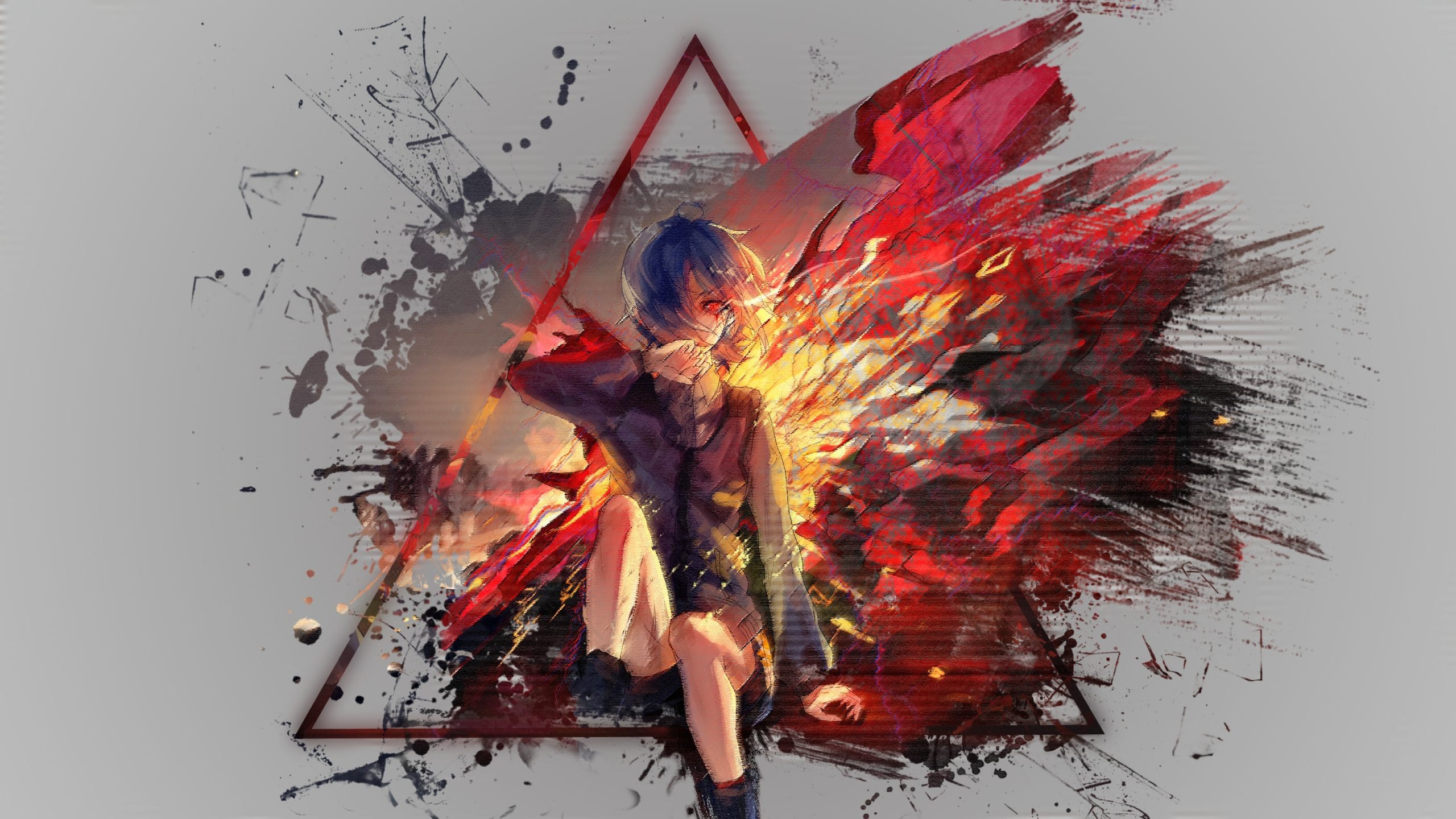
His empathy is extraordinary. He genuinely understands the pain of ghouls and humans alike. He can hold two competing moral realities in his head simultaneously. But that empathy becomes a liability in a world that runs on faction loyalty. Every time he tries to find a third path — one that doesn’t require choosing humans over ghouls or vice versa — he gets torn apart for it. His synthesis is rejected by both sides because neither side wants synthesis. They want victory.
His love for the people around him is equally intense and equally punishing. He repeatedly puts himself in catastrophic danger to protect Hide, Touka, Hinami, his Aogiri squad. He absorbs enormous suffering so that others don’t have to. This would be heroic in a story that rewarded heroism. In Tokyo Ghoul, it mostly just means he suffers more than anyone else and keeps going anyway, which is either inspiring or devastating depending on how you choose to read it.
There’s also the philosophical layer that Tokyo Ghoul creator Sui Ishida embedded throughout the series. Kaneki’s favorite book is The Rust Blossoms by the fictional author Sen Takatsuki, who turns out to be a ghoul herself. The recurring theme in Takatsuki’s work — that suffering builds the self, that pain is the price of depth — is something Kaneki takes almost as a personal gospel. He intellectualizes his own torture. He finds meaning in it. And while that’s a genuinely impressive coping mechanism, Ishida is clearly asking: at what point does finding meaning in suffering become an excuse to keep accepting it?
That question doesn’t have a clean answer, which is why the series lingers. Kaneki is an anime tragic hero in the truest sense — not because the story is unfair to him, but because he’s caught between forces larger than himself and equipped with tools that are exactly wrong for the fight. His intelligence makes him reflective when he needs to be decisive. His kindness makes him vulnerable when he needs to be defended. He’s not a failure. He’s someone built for a different world, dropped into this one by accident.
Kaneki’s Legacy: Why He Still Matters
It’s been over a decade since Tokyo Ghoul premiered, and the conversation around Kaneki’s character hasn’t gone quiet. He shows up consistently in discussions about the best-written protagonists in anime, about the most effective uses of psychological trauma in storytelling, about what separates a character study from a simple power fantasy. His influence on anime culture is real and worth examining.
Part of his staying power is how relatable his specific pathology is, in a way that doesn’t require any supernatural element to understand. The core of Kaneki’s tragedy — the belief that you must absorb pain to protect others, that asking for help is weakness, that self-destruction in service of love is noble — isn’t a ghoul problem. It’s a human one. Plenty of people watching Tokyo Ghoul recognized something in Kaneki that they’d seen in themselves or someone they cared about. Ishida wrapped a very real psychological pattern in fantasy clothing, and the fantasy made it easier to look at directly.
His visual design also contributed enormously to his cultural footprint. The white hair, the black and white mask, the eye patch — these became shorthand for a certain kind of anime aesthetic that spread well beyond the show itself. But more importantly, the narrative design of his visual changes — the idea that you could read his psychological state in his appearance — influenced how other manga and anime handled character transformation. Characters having a “before” and “after” look that reflects internal change rather than just a power level is something Kaneki helped popularize.
The ghoul character archetype he established — the monster who is more human than the humans hunting him, who suffers not because he chose wrong but because the system itself is rigged — became a template. You can see echoes of it in later series, in protagonists who exist in moral grey zones and are punished for refusing to pick a side. Kaneki gave anime permission to take that kind of protagonist seriously, to let the tragedy be real rather than resolving it with a tidy power-of-friendship victory.
Even the imperfect later seasons of the anime, and the sometimes chaotic second half of the manga, don’t fully diminish what Kaneki represents. The foundation was so strong that the character survives narrative stumbles that would have buried a lesser creation. You can point to specific chapters or episodes and argue they missed the mark, but Kaneki himself — the psychology, the wound, the way he moves through the world — holds up.
The Final Reckoning: Does Kaneki Get the Ending He Deserves?
Without wandering into deep spoiler territory for those still working through the manga, Kaneki’s ending is controversial. Some readers find it earned — a hard-won peace after unimaginable suffering. Others feel it sidesteps the bleaker implications of everything that came before. What’s interesting is that this ambivalence might be exactly the point.
Ishida has always been a writer more interested in asking questions than answering them. The ending doesn’t definitively prove Kaneki was right or wrong. It doesn’t vindicate his sacrifices so much as acknowledge them. He ends somewhere — not necessarily happy, not definitively broken, but somewhere. After everything, that somewhere feels both too little and, given what he went through, almost miraculous.
What the ending does confirm is that Kaneki’s story was never really about ghouls and humans. It was about a person who was taught to hurt himself for others, who built multiple different selves trying to survive that lesson, and who had to find — somewhere in the wreckage — something real to hold onto. That’s a story that works regardless of the mythology around it. It worked in 2014 when the anime first aired, and it works now.
The Tokyo Ghoul protagonist remains one of the most fully realized characters in the medium. Not perfect — no great character is perfect — but honest. Kaneki’s pain feels earned because Ishida never cheated on the psychology, never let the reader off the hook by making things simpler than they are. That honesty, more than any fight scene or visual transformation, is why people are still analyzing Ken Kaneki long after the series ended.
You Might Also Enjoy
- Guts from Berserk: A Character Analysis of Anime’s Darkest Warrior
- Eren Yeager’s Transformation: Freedom, Fate, and Genocide in Attack on Titan
- Shinji Ikari and the Weight of Expectation: An Evangelion Deep Dive
- The 15 Best-Written Anime Protagonists of All Time
- Tokyo Ghoul: Why the Manga Goes Places the Anime Never Could