The Boy Who Became a Soul Reaper
There’s a moment early in Bleach that hits different every single time you rewatch it. A fifteen-year-old kid with dyed-orange hair stands over a shallow grave marker by the road — the same spot where, years ago, he watched his mother Masaki get dragged into the dark by a creature he barely understood. That guilt never left Ichigo Kurosaki. It became the engine that drives every single decision he makes for the rest of the series. If you’re doing any serious Ichigo Kurosaki character analysis, that roadside grave is where you have to start.
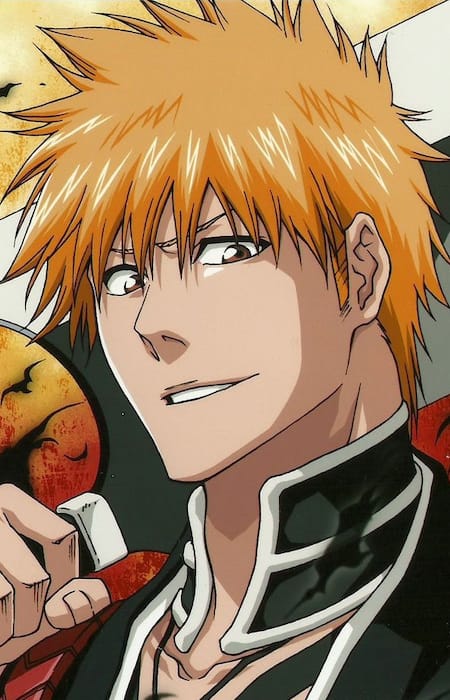
Ichigo was born into a household that shouldn’t have worked on paper. His father Isshin was a goofy, loud ex-Soul Reaper hiding his past behind dad jokes and flying kicks. His mother Masaki was warm, capable, and quietly carrying a secret that would shape Ichigo’s entire existence. Growing up, Ichigo had an unusual ability — he could see ghosts. He treated it like a nuisance, not a gift. Then came the night a Hollow named Grand Fisher tore Masaki away, and that nuisance became the weight of the world.
Fast forward to Ichigo at fifteen: he’s brash, protective to a fault, and gets into fights defending people who can’t defend themselves. He’s not particularly reflective. He doesn’t have a dream or a noble calling. He just doesn’t want the people around him to get hurt. That’s it. And then Rukia Kuchiki crashes through his bedroom wall with a Zanpakuto and a Hollow tearing through his neighborhood, and everything changes.
What makes Ichigo’s origin genuinely different from most shonen leads is that he doesn’t want power. He never dreamed of becoming a Soul Reaper. He absorbs Rukia’s shinigami powers out of desperation — to protect his family from the Hollow that invaded his home. That moment on the floor of his bedroom, impaled by Rukia’s blade, accepting her reiatsu into himself — it’s not heroic in the traditional sense. It’s raw survival instinct wrapped in love for the people he cares about. That distinction matters enormously in a full Ichigo Kurosaki character analysis.
If you’re new to the series or want to revisit the full timeline, check out our Bleach Complete Watch Order 2026 Guide — it’ll help you appreciate just how carefully Tite Kubo constructed Ichigo’s growth from that first night to the final arc.
Ichigo’s Shinigami Powers — More Than Just a Sword
Most Soul Reapers spend decades in the Seireitei learning to hear their Zanpakuto’s name, building a relationship with the spirit inside their blade. Ichigo Kurosaki manifested his Zanpakuto — Zangetsu — almost immediately. Not because he’s a prodigy in the conventional sense, but because his spiritual pressure was so obscenely massive that it basically forced the issue. This is actually one of the most underappreciated elements in any Ichigo Kurosaki character analysis: his power doesn’t come from discipline or formal training. It erupts from him like a flood with no walls.
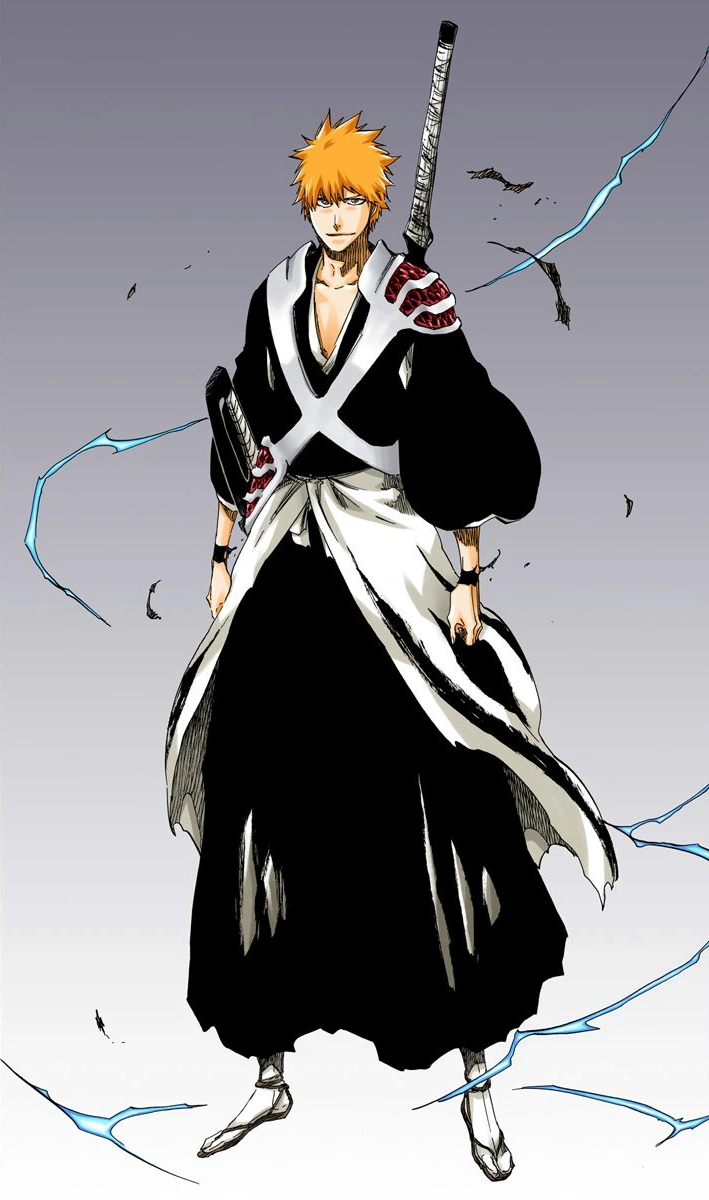
Zangetsu in its initial Shikai form is already ridiculous — a giant cleaver-like blade that looks nothing like a traditional katana, reflecting how Ichigo’s very nature defies the established Soul Reaper mold. Unlike captains who release their Shikai with a command phrase, Ichigo’s Shikai is always active. He can’t turn it off. That constant release is a physical manifestation of the fact that Ichigo can’t fully contain what he is.
Then comes the Bankai. Tensa Zangetsu — the exact opposite of what you’d expect. Where most Bankai expand and explode outward (think Byakuya’s thousand blade sakura, or Sajin’s giant wolf), Ichigo’s Bankai compresses. His enormous cleaver shrinks into a sleek black blade. His shihakusho becomes a long black coat. His speed becomes something that characters like Byakuya and Kenpachi — some of the most powerful Soul Reapers alive — could barely track. Tensa Zangetsu works by concentrating all of Ichigo’s spiritual power into a single, hyper-dense point rather than projecting it outward. It’s a Bankai built for precision and speed, not spectacle.
That makes Ichigo Kurosaki‘s power philosophy unique among Soul Reapers. He fights to end things quickly, to protect rather than dominate. His Getsuga Tensho — firing concentrated reiatsu in a black-and-red wave — is powerful enough to stagger gods, but it’s always deployed as a means to an end, never performance. For a full breakdown of how Tensa Zangetsu stacks up against every other Bankai in the series, our Bleach Bankai List: Every Bankai Ranked by Power has the complete ranking.
What truly sets Ichigo‘s shinigami powers apart is that they were never purely shinigami powers to begin with — though neither he nor anyone around him fully understood that until much later. His reiatsu had always carried signatures that didn’t belong to a standard Soul Reaper, but Kubo planted those seeds so carefully that most readers didn’t notice until the reveal hit them like a truck. That layering is part of what makes this Ichigo Kurosaki character analysis so rewarding — there’s always more underneath.
The Hollow Within — Ichigo’s Most Dangerous Transformation
Here’s the thing about Hollowfication that the fandom doesn’t always discuss enough: for Ichigo Kurosaki, it wasn’t just a power-up. It was a confrontation with the darkest version of himself. After Aizen’s experiments on Masaki before Ichigo was even born, and after the enormous spiritual pressure Ichigo was born with, a Hollow was seeded inside him from the very beginning. It didn’t manifest as something alien. It manifested as him — white skin, inverted colors, same face, same voice — just stripped of every restraint.
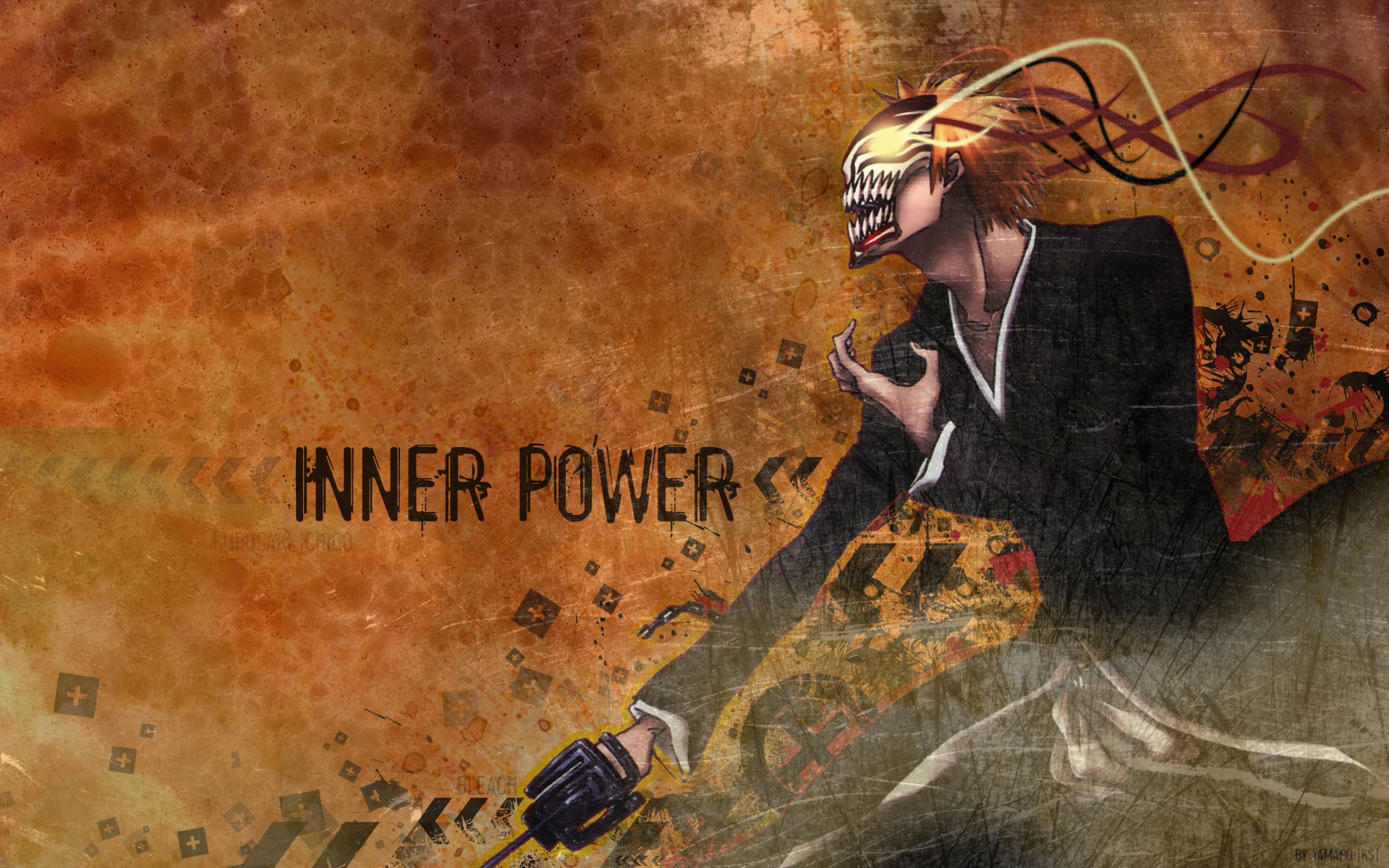
The inner Hollow first appeared during Ichigo’s Bankai training in the Dangai — a terrifying moment where the mask crept over his face mid-fight against Byakuya. Then it fully took over during the battle against Byakuya himself, nearly killing the Captain before Ichigo wrenched back control. That scene is chilling not because of the power on display, but because of what it implies: that somewhere inside Ichigo lives something that feels no love, no attachment, no hesitation. Just the pure, predatory will to devour and destroy.
The Vizard training arc forces Ichigo to actually face this. Hiyori Sarugaki and the other Vizards — Soul Reapers who survived Hollowfication and learned to control it — drag Ichigo into a room and essentially tell him: either master this or die when it takes over. What follows is one of the most psychologically loaded arcs in all of Bleach. The inner Hollow isn’t just a monster squatting in Ichigo’s soul. It’s the part of him that wants to give in, that’s tired of protecting people, that resents the burden. Ichigo can’t destroy it. He has to accept it and establish dominance — and the only way to do that is to be more himself, not less.
The Vasto Lorde transformation in Hueco Mundo — when Ichigo Kurosaki lost himself completely after watching Ulquiorra seemingly kill Orihime — is the scariest version of this. Full Hollow Ichigo, mask fully formed, Cero firing from his finger, power at a level that eclipses the Espada. He wasn’t protecting anyone in that moment. He was pure rage and grief given flesh. Ulquiorra, one of the strongest Espada, was annihilated by a version of Ichigo that Ichigo himself has no memory of. That’s not a power fantasy. That’s a tragedy dressed up in awesome visuals.
The psychological reading here is worth sitting with: Ichigo‘s Hollow isn’t an external corruption. It’s the part of him that emerges when he stops fighting for something and starts fighting because he can’t stop. The Hollowfication arc is Bleach asking a genuinely difficult question — what happens when a protector’s grief becomes indistinguishable from destruction?
Quincy Blood — The Final Piece of Ichigo’s Identity
This is where the Ichigo Kurosaki character analysis gets genuinely layered in a way that retroactively recontextualizes everything that came before. For most of the series, we understood Ichigo Kurosaki as a Soul Reaper with a Hollow problem. Then the Thousand-Year Blood War arc drops the bombshell: Ichigo’s mother Masaki was a Quincy — a pure-blood Echt Quincy from the Ishida bloodline — and she was infected with a Hollow fragment by Yhwach’s White proto-Hollow before Ichigo was even conceived.
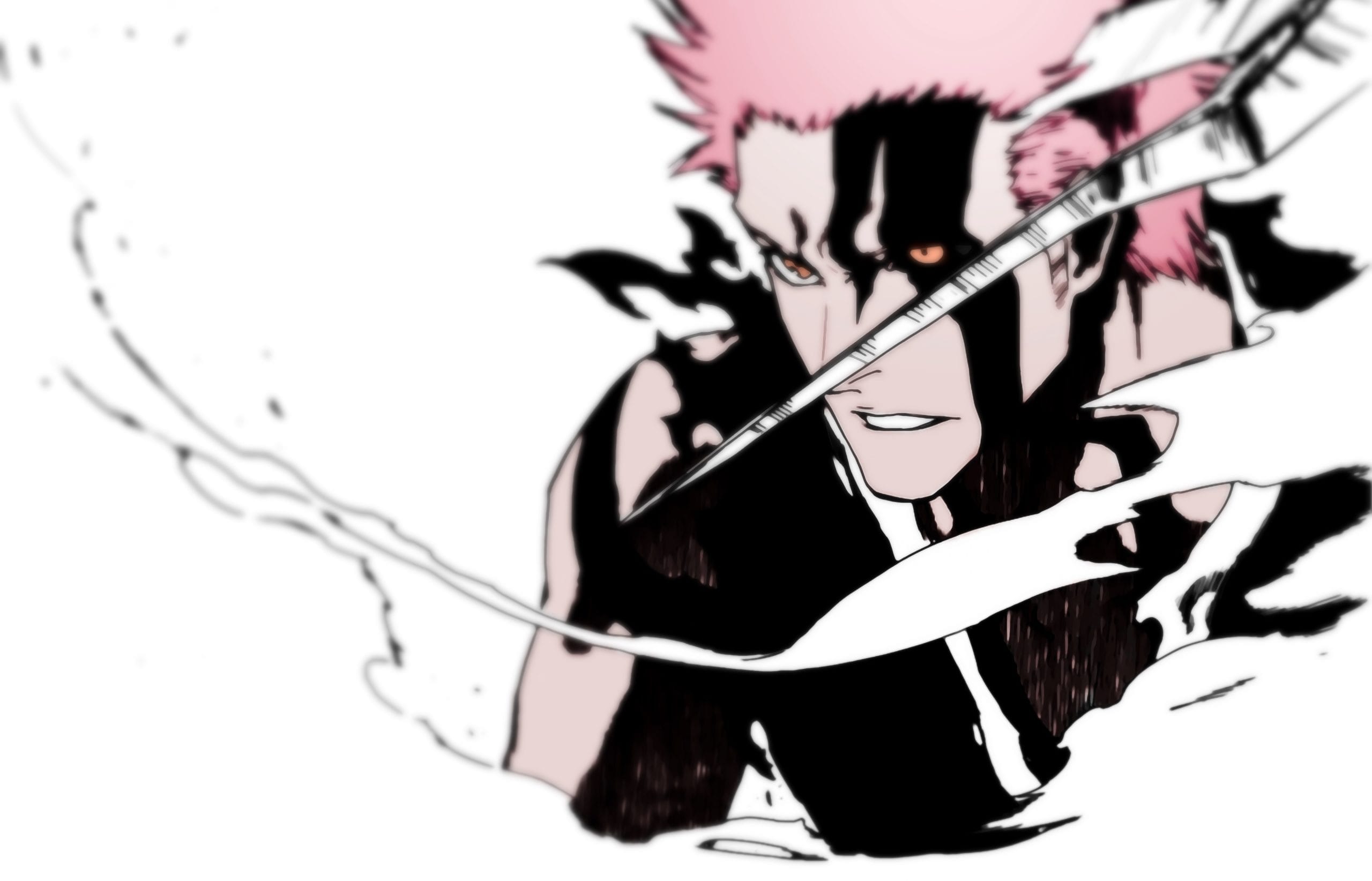
What does that mean for everything we thought we knew about Ichigo? It means his “enormous, irregular reiatsu” was never just shinigami power. It was three types of spiritual energy fighting for expression simultaneously — shinigami inherited from Isshin, Quincy inherited from Masaki, and Hollow seeded by the White fragment. Every time Ichigo seemed to break normal power ceilings, every time his Bankai did things that shouldn’t be possible, every time his Hollowfication worked differently than the other Vizards — this was why.
The reveal also reframes Ichigo’s relationship with Yhwach in a deeply uncomfortable way. Yhwach didn’t just show up as an arbitrary final villain. He was, in a twisted sense, connected to Ichigo before birth. The Hollow that corrupted Masaki came from Yhwach. Which means the Hollow inside Ichigo — the one he spent the entire series wrestling with — had Yhwach’s fingerprints on it. It’s not just thematic symmetry; Kubo built this entire reveal into the architecture of the story from day one.
In the Thousand-Year Blood War, Ichigo Kurosaki learns his true Zanpakuto — two separate blades, one shinigami and one Quincy, embodied by the Old Man Zangetsu (who was actually a manifestation of Yhwach’s power within him) and the white-haired spirit (who was the actual Zangetsu all along). Reforging his blades with full knowledge of what he truly is becomes one of the most emotionally charged moments in the entire series. He’s not choosing between his identities. He’s choosing all of them at once. For more on the villain side of TYBW, our breakdown of Bleach TYBW: Yhwach’s Almighty Explained is essential reading.
The Quincy revelation also gives Masaki’s death a brutal new dimension. She died because Yhwach absorbed the Quincy powers of all pure-blood Quincys on Auswählen day — including Masaki’s, which had been suppressing the Hollow inside her. Ichigo had spent years blaming himself for his mother’s death, thinking if he’d been stronger he could have saved her. The truth is far more devastating and far more exonerating at the same time. It wasn’t his failure. It was Yhwach’s calculation.
Ichigo’s Character Arc — From Protector to True Hero
Strip away all the power scaling, all the transformations, all the lore — and the core of any meaningful Ichigo Kurosaki character analysis is the question: what does it mean to protect someone? That theme runs through every arc of Bleach without exception, and Ichigo‘s answer to it changes in ways that are genuinely earned rather than arbitrarily escalated.

In the Soul Society arc, Ichigo’s motivation is embarrassingly simple: Rukia is his friend, she’s about to be executed for something that isn’t her fault, and he is going to stop it. Full stop. He doesn’t think about politics or consequences. He invades the afterlife with a handful of teenagers and a shopkeeper, fights his way through some of the most powerful warriors in existence, and does it on sheer stubbornness. The Soul Society arc is where Ichigo Kurosaki establishes his fundamental character truth: he will not let the people he loves be destroyed by systems that claim the right to destroy them.
Hueco Mundo tests whether that principle holds when the personal cost gets higher. Orihime is taken by Aizen, and Ichigo goes after her knowing she was told not to be rescued, knowing he might be walking into a trap, knowing he’s not ready. He goes anyway. The emotional honesty of Hueco Mundo — the way it forces Ichigo to confront his helplessness, his Hollow side, and ultimately what it costs to keep saying “I will protect everyone” — is what makes it such a critical arc for this Ichigo Kurosaki character analysis.
By the time the Thousand-Year Blood War rolls around, Ichigo has matured in ways that are quiet but profound. He still charges in. He still refuses to give up. But he’s no longer operating purely on emotion. He actively seeks out training, accepts truths about himself he’d rather not face, and fights with an understanding of what’s actually at stake — not just for his friends, but for the entire balance of the three worlds. His arc doesn’t conclude with him becoming invincible. It concludes with him becoming whole.
The theme of “protecting those he loves” evolves from a survival instinct into a genuine value system. Early Ichigo protects people because he can’t live with himself if he doesn’t. Late Ichigo protects people because he understands that connection between living beings is the only thing worth defending. That’s character growth done right.
Why Ichigo Stands Apart From Other Shonen Protagonists
Let’s be honest — shonen protagonists follow a template. Goku wants to fight strong people and get stronger. Naruto wants to be Hokage and earn acknowledgment. Luffy wants to be King of the Pirates and live free. These are great motivations! They’re clean, universal, and easy to cheer for. Ichigo Kurosaki‘s motivation is none of those things, and that’s exactly what makes this Ichigo Kurosaki character analysis worth having.

Ichigo has no dream. He doesn’t want to be the strongest. He has no ambitions to lead or conquer or be recognized. His entire motivation is defensive and deeply personal — he doesn’t want people he cares about to die. That’s it. And because that motivation is so specific and so human, it hits harder than most power fantasies ever could. When Ichigo pushes past his limits, it’s never because he wants the power. It’s because someone specific is in danger. That distinction changes the entire emotional texture of the fights.
Compare this to Naruto, who is genuinely inspirational but whose arc is fundamentally about earning recognition and belonging to a community. Naruto’s growth is outward-facing — he changes the world around him by changing himself. Ichigo’s growth is inward-facing — he changes himself by confronting what’s already inside him. The Hollow. The Quincy blood. The grief over Masaki. These aren’t obstacles to overcome; they’re parts of himself to integrate. That’s a psychologically different kind of story.
Goku and Luffy are fundamentally joyful characters. They find combat fun. Ichigo does not. He fights because he has to, and the weight of that shows. He gets tired in ways Goku never does — not physically, but emotionally. He carries guilt. He second-guesses himself. He feels the cost of every loss in his bones. That emotional realism makes Ichigo Kurosaki feel less like a superhero and more like a person under enormous pressure who keeps going anyway.
There’s also the identity angle. Most shonen protagonists know who they are. Their arc is about becoming more of what they already are. Ichigo spends the entirety of Bleach not knowing what he fundamentally is. Soul Reaper? Hollow? Quincy? Human? All four? The answer — all four — is unusual in shonen, where hybrids tend to be treated as power sources rather than identity crises. Ichigo’s fractured identity is the story, not just a plot device. It’s why the best anime fights of all time lists so frequently feature his battles — there’s always something personal underneath the spectacle.
Ichigo in TYBW — The Final Battle
The Thousand-Year Blood War arc is Bleach operating at its absolute peak — and it’s also the definitive proof of everything this Ichigo Kurosaki character analysis has been building toward. When the Wandenreich invade Soul Society, Ichigo isn’t ready. He gets his Bankai stolen — not by a trick or a trap, but because Yhwach’s Sternritter can take Bankai, and Ichigo’s, for all its raw power, is still incomplete. That humiliation is necessary. Ichigo Kurosaki needed to be broken down one final time before he could be rebuilt into what he was always meant to be.
The arc sends him to the Royal Palace to train with the Zero Squad — the most powerful Soul Reapers in existence — and then to his father’s homeland to learn the truth about Masaki and the Quincy blood running in his veins. Every truth he uncovers costs him something. The Old Man Zangetsu isn’t really Zangetsu. His mother’s death was orchestrated. The Hollow inside him was planted. Everything he thought he was gets dismantled piece by piece, and then he has to choose to pick it all back up with full knowledge of what it means.
His final form in TYBW — wielding two blades simultaneously, the shinigami Zangetsu and the Quincy Zangetsu — is the visual expression of everything Ichigo Kurosaki has been building toward. He’s not choosing one identity. He’s owning all of them. And facing Yhwach, a being who can see and rewrite all possible futures, requires exactly that — a person whose very nature is contradictory and unpredictable, someone who exists outside the patterns Yhwach can read.
The final battle between Ichigo and Yhwach is one of the most emotionally loaded confrontations in shonen anime history. It’s not just strong person versus stronger person. It’s Ichigo fighting the man who orchestrated his mother’s death, who planted the darkness inside him, who tried to use him as an instrument and failed. For the complete breakdown of everything going down in the final season, our deep-dive on Bleach TYBW Season 4: The Final Battle Approaches has everything you need.
What the TYBW arc ultimately concludes for Ichigo Kurosaki is the thing he’s been chasing since that roadside grave: resolution. Not power, not status, not recognition. The ability to finally stop running from what he is and stand still in it. The boy who became a Soul Reaper because he couldn’t bear to lose anyone becomes a man who understands that loss and love are inseparable — and chooses love anyway. That’s the Ichigo arc, complete. According to his official profile on Ichigo Kurosaki on MyAnimeList, Ichigo’s name literally means “one who protects” — and Kubo made sure every chapter of his story earned that name.
The fact that Ichigo Kurosaki‘s arc resolves not with transcendence but with humanity — with him choosing to live a normal life after all of it — is the quiet masterstroke of Bleach’s ending. He doesn’t become a god. He becomes a dad. And somehow, for this particular character with this particular history, that’s exactly right.
You Might Also Enjoy
If this Ichigo Kurosaki character analysis has you wanting to go deeper into the world of Bleach and beyond, these are the reads we’d recommend next:
- Bleach Soul Society Arc: The Golden Standard — Why the arc that introduced us to the Seireitei is still considered one of anime’s greatest story runs, and what it set up for everything that came after.
- Bleach Bankai List: Every Bankai Ranked by Power — From Tensa Zangetsu to Ryumon Hozukimaru, every Bankai in the series ranked and analyzed. Where does Ichigo‘s final form land?
- Urahara Kisuke: Bleach’s Greatest Mastermind — The man who trained Ichigo and quietly pulled strings across the entire series. How much did he actually know about what Ichigo truly was?
- Bleach TYBW: Yhwach’s Almighty Explained — How does a power that lets you see and rewrite all futures actually work — and what does it mean that Ichigo could overcome it?
- Best Anime Villains of All Time — Aizen and Yhwach both make the list. How do Bleach’s primary antagonists stack up against the greatest villains in anime history?