The Hero Who Haunts Every Frame
Here’s the paradox at the heart of Frieren: Beyond Journey’s End that takes most people a few episodes to fully register: the most important character in the entire anime is barely in it. Himmel the Hero died in the first episode. He appears in flashbacks. He speaks through other people’s memories. He smiles from old statues and faded portraits. And yet — Himmel is everywhere. Every conversation Frieren has, every flower she stops to pick on a forgotten roadside, every grave she stands before in the rain — all of it leads back to him. If you want to understand what this series is really about, you have to start with Himmel.
This isn’t just a character analysis. This is a deep-dive into the man who shaped a thousand-year-old elf mage’s entire emotional journey without being alive for most of it. Whether you’re watching Frieren for the first time or you’ve already rewatched the premiere six times just to cry at the funeral scene again — this one’s for you. For all of us who feel Himmel’s absence as acutely as Frieren does.
Who Is Himmel?
For anyone coming in fresh: Himmel is the legendary hero who led the hero’s party that defeated the Demon King. His companions on that ten-year journey were Frieren the elf mage, Heiter the priest, and Eisen the dwarf warrior. Together, the four of them accomplished what no generation before them could — they saved the world, made history, and walked back into civilization as living legends. Himmel became the face of the greatest victory humanity had ever known. Parades. Monuments. Ballads. The works.
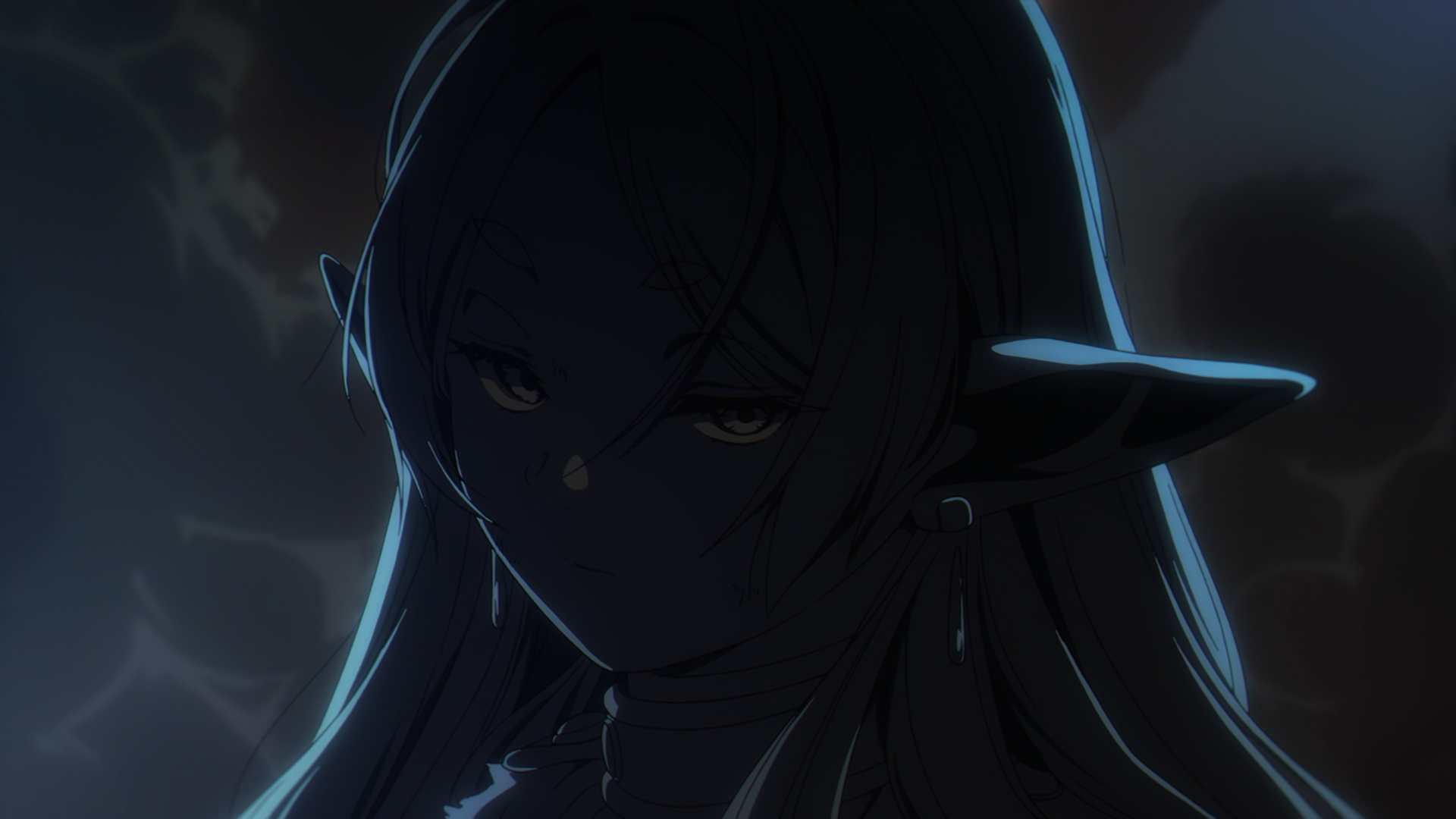
What makes Himmel extraordinary — and what makes him more than just a shining archetype — is the way the show quietly dismantles every expectation you bring into that premise. He wasn’t brooding and stoic. He wasn’t emotionally locked down, obsessed with power, or defined by his sword arm. Himmel was warm. He smiled constantly. He was openly a little vain — the type to strike a heroic pose the second he sensed an audience, completely unashamed about it. He cared about being remembered, not out of shallow ego, but because he understood something rare and profound: a hero’s true work isn’t just defeating the enemy. It’s leaving behind something worth carrying forward long after you’re gone.
Himmel stopped to watch meteor showers with Frieren when there was no tactical reason to. He planted flowers along roadsides in places no one would ever see them. He sat with the sick and the dying in villages that would never make it into any legend. He asked Frieren to take him to see the Aureole — the resting place of human souls — not out of fear, but out of a pure desire to keep experiencing the world alongside his friends for as long as possible. In a genre absolutely overflowing with heroes measured by battle power and kill counts, Himmel stood apart in the most fundamental way: his defining characteristic was his humanity.
The devastating irony of Frieren: Beyond Journey’s End is that the character most fully alive with human feeling is the one who runs out of time fastest. That’s the show’s thesis, delivered in the first twenty minutes, and Himmel is the one who has to carry it.
The Hero’s Death and What It Does to the Story
The first episode of Frieren does something almost no anime dares to attempt. It shows you the hero’s triumphant return, the celebration in the streets, a fifty-year reunion — and then it kills Himmel. Quietly. In a bed. Of old age. Before episode two even starts. If you haven’t watched Frieren Episode 1 yet, stop reading and go watch it right now — it’s one of the most precisely constructed first episodes in anime history, and the way it stages Himmel’s death is the thesis statement of the entire series.

Because here’s the tragedy: Frieren didn’t grieve at the funeral. She stood there, watching humans sob over a man she’d known for a decade, and she felt almost nothing. Not because she didn’t care about Himmel. But because, in her thousand years of living, she hadn’t understood that she needed to know him better. She’d spent ten years at Himmel’s side on the greatest adventure in history — crossing continents, fighting demons, laughing around campfires — and she’d never really looked at him. Never thought to ask who he was beneath the heroics. And now he was gone.
That realization — I didn’t know him well enough, and now I never can — is the engine that powers every single episode that follows. Frieren doesn’t leave home again in pursuit of power or glory or a new threat to defeat. She sets off, in large part, because she wants to understand Himmel. She wants to reconstruct him from the traces he left behind: in the people he helped, the villages he passed through, the flowers he mentioned once in passing, the statues he posed for without a shred of self-consciousness. It’s grief taking the only form an immortal elf mage knows — expressed across decades of slow, deliberate travel.
Himmel’s absence reshapes every relationship Frieren builds after his death. The way she raises Fern — the young mage she takes on as an apprentice — is inseparable from the guilt of never being fully present with Himmel when she had the chance. You can feel her trying harder, paying closer attention, watching Fern’s face in quiet moments the way she never watched Himmel’s. This Fern character analysis unpacks that relationship in full — but trace it back far enough and the roots always run to Himmel. They always do.
Himmel and Frieren — A Love Story Never Told
Let’s get into the thing the fandom debates endlessly: did Himmel love Frieren? Did Frieren love Himmel? Was there something real between them that neither of them ever fully named? The show keeps this deliberately ambiguous, and I think that’s not a flaw — it’s the entire point.

Himmel’s side of it is relatively clear, at least in retrospect. He called Frieren beautiful, knowing she’d dismiss it as flattery. He sought her out specifically to watch the meteor shower that only appears once every fifty years. He spent a decade building closeness with someone who lived on a completely different timescale — who would outlive him, who processed the world at a different speed, who might not even remember these years as meaningful until long after he was dust. That’s not casual friendship. That’s someone who saw Frieren clearly, understood her limitations, and chose to love her on her terms anyway. Himmel never asked her to be different. He just kept showing up.
Frieren’s side is harder, and the show earns every inch of its complexity. She’s an elf mage over a thousand years old. Human lifespans are, to her, a blink — a season, at most. When she first met Himmel, she probably didn’t register that this adventure would be any different from the hundreds she’d already lived through. She wasn’t paying close enough attention. That was her failure, and it’s the one she can’t undo.
But the depth of what she feels after Himmel’s death tells you everything about what was always there, dormant, unexamined. The way she flinches at his statue. The way she still stops at every inn where the party once rested. The way she carries the wound of his absence the way humans carry their most important grief — not loudly, but constantly, in the background of every single day. Frieren didn’t know she loved Himmel until it was too late to tell him. And the show refuses to let that off the hook with easy catharsis. It just lives with it, honestly, the way grief actually works.
There’s a reading of Frieren: Beyond Journey’s End where the central love story is between Frieren and Himmel — a romance that never got to exist in real time because Frieren didn’t recognize it until it had already passed. We’re watching the love story in reverse, in absence, through the shape of what’s missing. And there is nothing in recent anime more quietly devastating than that.
Why Himmel Chose to Be Remembered
One of the details about Himmel that rewards repeated viewing is how conscious and deliberate his relationship with legacy was. He wanted to be remembered — badly, openly, with a kind of cheerful self-awareness that made it impossible to read as pure vanity. Because Himmel had a reason for it that ran much deeper than ego, and the anime reveals it slowly, beautifully, over dozens of small moments.

Himmel understood, with absolute clarity, that his life was short. Every human’s life is short. But Frieren would keep walking through the world for centuries after everyone he loved was gone. If he could leave enough of himself behind — in the flowers he planted, in the statues he unabashedly posed for, in the memories he worked to create at every opportunity — then he could stay with her a little longer. He could be present in a future he’d never see.
There’s a moment — one I won’t spoil for newcomers — where Himmel explains why he does heroic things even when no audience is watching. It’s one of the most quietly powerful exchanges in the entire series. He doesn’t do it for the applause. He does it because someday, maybe decades after he’s gone, someone like Frieren will pass through a village and hear about the hero who helped them when he didn’t have to. And through that story, she’ll understand him a little better. He was building a trail of himself specifically for her to follow.
This philosophy connects directly to what Frieren: Beyond Journey’s End is ultimately about. The show’s central preoccupation is what we leave behind and who carries it forward. Himmel grasped this so completely that he essentially engineered his own legacy — not for glory, but for connection. For the hope that even after death, he could still reach across time and be known by someone who finally took the time to really see him.
That’s a completely different order of heroism from anything most anime explores. Not victory. Not power. Not sacrifice in the heat of battle. Love expressed through memory, through deliberate acts of presence stretched across decades. If you’ve ever wondered why the Frieren power system feels almost beside the point emotionally — this is why. Magic is a tool. Memory is the point. Himmel understood that before anyone else did.
The Flashback Structure — Himmel Through Others’ Eyes
The way Frieren delivers Himmel to the audience is as carefully considered as anything in the series. We never get a Himmel-centric episode with him as the active protagonist. We never get his inner monologue running beneath a scene. Instead, we get fragments — memories triggered by locations, objects, passing conversations, someone else’s grief surfacing at an unexpected moment. The show trusts its audience completely, and it shows.
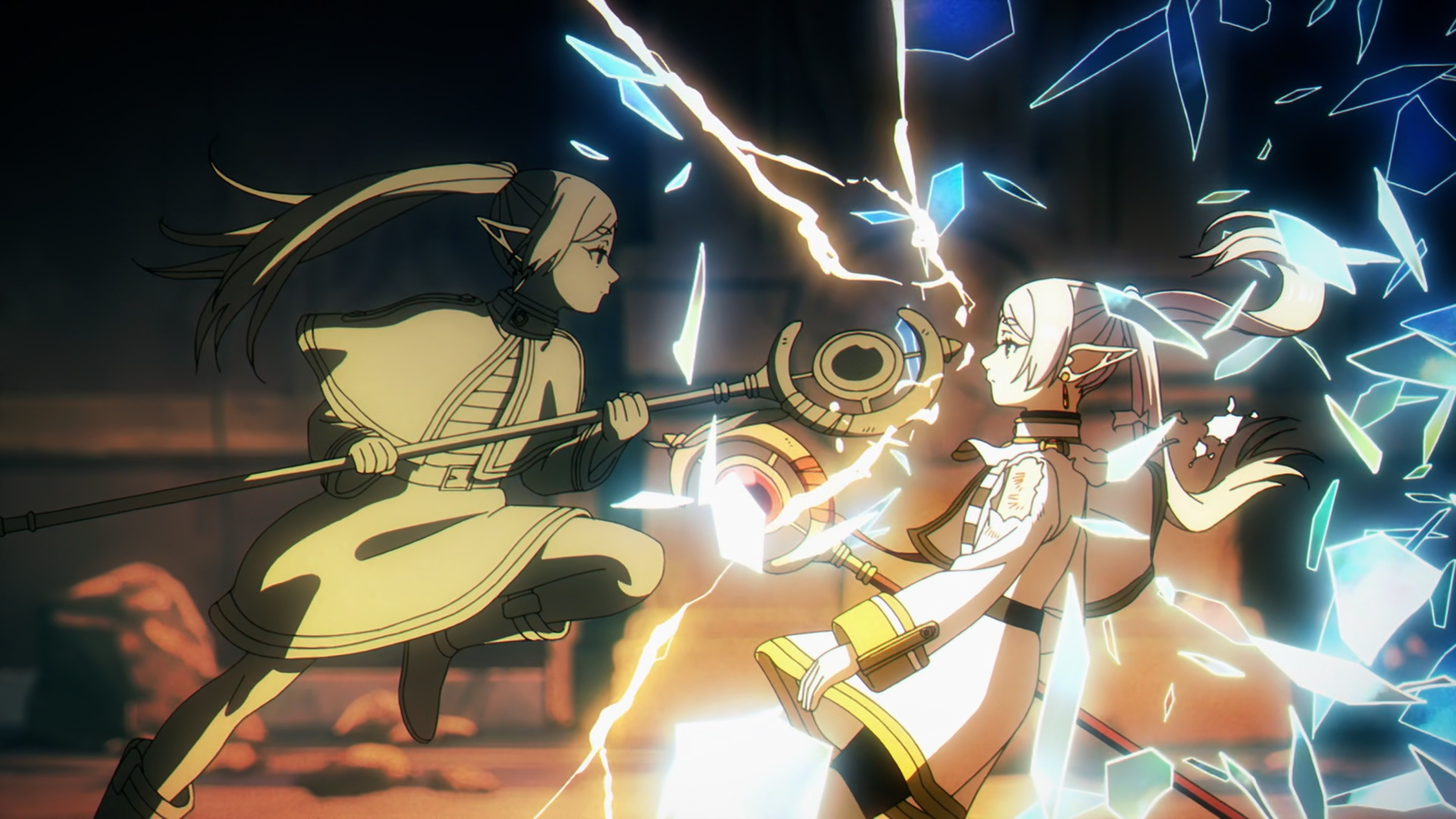
Each surviving member of the original hero’s party holds a different facet of Himmel. Eisen carries the memory of a young man who fought with reckless, joyful bravery and laughed about it after — who pushed past his limits not from discipline but from sheer stubborn love of being alive. Heiter held onto the Himmel who sat with the dying in silence, who prayed quietly when he thought no one was watching, who cared about the people at the margins of every legend. Frieren is still building her version of Himmel piece by piece, filling in the gaps she left when she wasn’t paying attention — each flashback adding a dimension she’d missed the first time around.
This fragmented portrait is one of the most sophisticated character constructions in recent memory. We fall in love with Himmel exactly the way Frieren does — gradually, incompletely, with the constant low ache of knowing there are parts we’ll never fully reach. Every flashback earns its place. Every new piece of Himmel makes him more real and more irretrievable at the same time. The man who smiled easily was also carrying fears he never shared. The hero who posed for statues was also planting flowers he’d never see grow. The legendary adventurer who brought down the Demon King also cried at meteor showers and told an immortal elf she was beautiful, fully knowing she’d dismiss it, believing she’d remember it eventually.
The flashback structure also does brilliant work for pacing. Frieren moves slowly by most anime standards — stretches of quiet travel, small moments, conversations that might feel uneventful to viewers conditioned to constant escalation. Himmel serves as the emotional anchor in those stretches. When the present-day story pauses and a memory surfaces, you feel the reason immediately. Every recollection of Himmel is another piece of the puzzle Frieren is assembling, and we’re solving it right alongside her.
The Frieren Season 2 guide addresses how Himmel’s centrality doesn’t diminish as the series expands its scope — if anything, the further Frieren travels from the moment of his death, the more precisely she can see him. Distance, in grief, is sometimes the only thing that makes clarity possible.
What Makes Himmel Such an Enduring Character
Ask anyone in the Frieren fandom why Himmel hit so hard, and you’ll get a hundred different answers. He’s warm. He’s sincere in a genre full of carefully guarded heroes. He figured out what actually matters. But I think the real reason Himmel resonates the way he does — the reason people write about him, draw him, quote him, cry for him — is more personal than any of that. Himmel represents the people we didn’t appreciate until it was too late.

Every person who watches Frieren has a Himmel in their life. Someone they took for granted. Someone they assumed would always be around. Someone they didn’t ask enough questions, didn’t sit with long enough, didn’t truly look at — until looking wasn’t possible anymore. The show doesn’t frame Frieren’s failure as alien or incomprehensible. It makes it feel uncomfortably, precisely familiar. That’s the sharpest thing this anime does. It turns Frieren’s immortal blindness into a mirror.
Himmel also lands because he’s genuinely admirable without being sanded down to sainthood. He was vain. He liked applause and wanted his name remembered. He had real ego about being the hero of the age. The show doesn’t file those edges off to make him easier to idealize — it lets him be fully human, which makes his wisdom feel lived rather than written. His understanding of memory and legacy came from someone who had actually grappled with what it meant to be mortal. To be loved. To be gone. It’s not enlightenment handed to him by the plot. He earned it by thinking hard about a short life and deciding what to do with it.
From a craft perspective, Himmel is the structural load-bearing wall of the entire series. Frieren: Beyond Journey’s End cannot work without a Himmel who is genuinely worth grieving. If he were a standard stoic hero defined by battle power and emotional distance, Frieren’s journey would be an intellectual puzzle with no weight behind it. The depth of Himmel as a character is what earns the depth of her grief. His warmth is what makes her emptiness feel like loss rather than plot device. His philosophy of leaving behind memories is what gives the whole sprawling adventure its direction.
There’s a reason Frieren shot straight to the top of MyAnimeList’s all-time rankings almost immediately after airing. The animation is stunning, the pacing is bold, the world-building is rich. But a massive part of why this series hit so deeply is Himmel. A character we barely see, who makes us feel everything. That’s not a trick or a gimmick. That’s genuine craft.
Himmel is also proof of what the golden age of anime we’re currently in is actually about. Not just bigger battles and better animation. Shows with the courage to tell slower, harder, more human stories. Himmel is a hero defined not by enemy kill counts but by how he treated one thousand-year-old elf who didn’t know yet that she loved him. In any era, that kind of storytelling is rare. Right now, in this moment, it’s everything.
You Might Also Enjoy
If this dive into Himmel left you wanting more Frieren content, these are the pieces worth reading next:
- Fern Character Analysis — Frieren’s apprentice carries more of Himmel’s influence than she realizes. Full breakdown of who Fern is and why she matters.
- Frieren Episode 1: A Perfect First Impression — The episode that started everything. Why it might be the single best anime premiere of the decade and how Himmel’s death sets up the whole series.
- Frieren Season 2 Complete Guide — Everything confirmed and speculated about what’s coming. Does Himmel’s shadow continue to shape the story? (Short answer: always.)
- Frieren Power System Explained — The magic in this world is fascinating, and understanding it reveals exactly why Himmel’s approach to heroism was philosophically radical.
- The Golden Age of Anime: We’re Living In It — Why Frieren — and characters like Himmel — represent what anime is capable of at its absolute peak right now.
The Space He Left Behind
Himmel is gone. The show tells you this within the first twenty minutes and doesn’t pretend otherwise. And then it spends every remaining episode proving that “gone” doesn’t mean absent. Not really. Not when someone loved deeply enough, lived fully enough, and left enough of themselves pressed into the world around them.
That’s the truth at the center of Frieren: Beyond Journey’s End, and it lives and breathes in Himmel. Grief, the series argues, isn’t only pain. It’s also the shape of someone who mattered — the outline of a person still visible in everyone they ever touched. When Frieren stands before a grave, picks a flower Himmel once described, watches the same meteor shower she watched with him fifty years ago and finally cries — she isn’t just mourning. She’s finally, truly, seeing Himmel for the first time. And that’s both the saddest and most hopeful thing in the show.
The adventure that changed the world was fought by the whole hero’s party together. But the story we’re actually watching — the deeper, quieter one — is Frieren learning to grieve, learning to be present, learning to know the people beside her before it’s too late. That story only exists because of Himmel. Because he was worth knowing. Because he chose to make himself worth knowing, deliberately, beautifully, with full awareness that he’d never be there to see it pay off. He planted seeds in a garden he’d never walk through. He left a trail in the dark for someone who didn’t know she was lost yet.
Most heroes in anime are defined by what they do in the climactic final battle. Himmel is defined by what he did every ordinary day in between. Every wildflower planted on an empty road. Every smile aimed at a distracted elf who was always looking somewhere else. Every statue he posed for, not for himself, but for the future that would come looking for him. He knew he’d be gone. He made sure he’d still be there.
If Himmel’s story makes you think about the people in your own life — the ones you haven’t fully looked at yet, the ones you’re assuming will always be around — that’s exactly what this anime was built to do. Himmel the Hero is already gone. He has been since episode one. But every frame of Frieren: Beyond Journey’s End is proof that the most important people never really leave. They just change form. They become the flowers you stop to look at. The memories that surface on quiet roads. The grief that finally teaches you what love was.
He’s still here. Himmel is always still here.