What Makes Fullmetal Alchemist: Brotherhood the #1 Rated Anime of All Time?
If you’ve spent more than five minutes in anime circles, you already know the name. This Fullmetal Alchemist Brotherhood review isn’t here to convince skeptics that anime is worth watching — it’s here to answer a harder question: what actually makes this show the undisputed king of anime rankings? With a near-perfect score on MyAnimeList and a reputation that has held strong for over fifteen years, Fullmetal Alchemist: Brotherhood isn’t just a great anime — it’s the benchmark against which every other shonen anime gets measured.
The short answer is that Brotherhood does everything right at once. The story is tight and purposeful. The characters grow in ways that feel earned rather than convenient. The emotional moments hit with the force of a freight train because the show spent time making you care. And the philosophical backbone — the concept of equivalent exchange — gives the whole thing a moral weight that most action anime never bother reaching for.
But the short answer doesn’t do it justice. Brotherhood is the rare series where every single element amplifies every other element. The worldbuilding makes the stakes real. The stakes make the characters’ choices matter. The characters’ choices make the themes land. It’s a machine built with extraordinary precision, and once it starts running, it doesn’t stop until the final frame.
So let’s go deep. Whether you’ve already watched it three times or you’re trying to decide if the hype is real, this breakdown will show you exactly why Brotherhood sits where it sits — and why it probably won’t be knocked off that throne anytime soon.
The Story and Worldbuilding — A Universe That Earns Its Tragedy
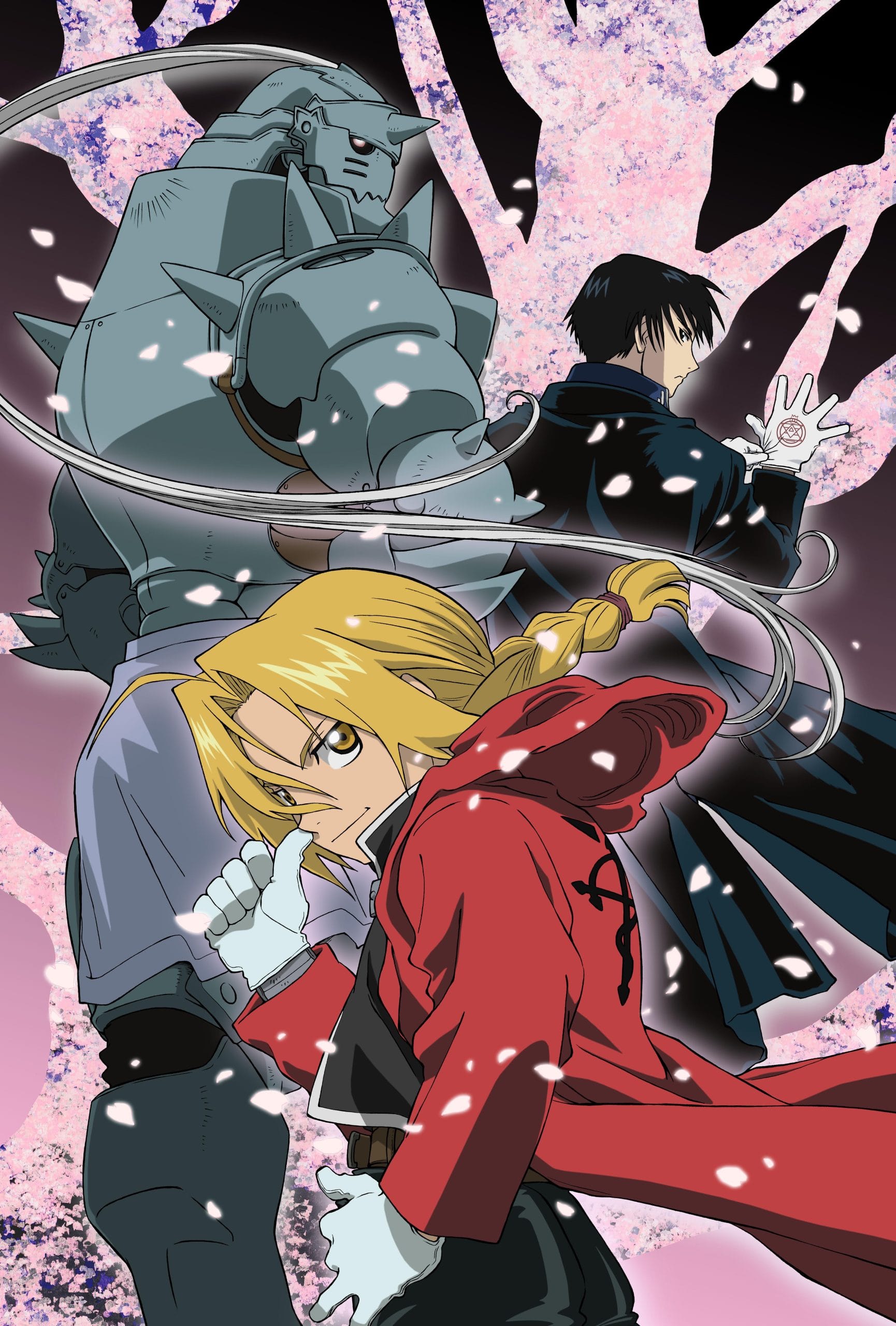
Brotherhood is set in the fictional nation of Amestris, a country whose military power is built on alchemy — a form of science-magic governed by strict laws of nature. Two brothers, Edward and Alphonse Elric, attempt something forbidden: using alchemy to bring their dead mother back to life. The attempt fails catastrophically. Edward loses his right arm and left leg. Alphonse loses his entire body, his soul bound to a suit of armor by Edward’s desperate sacrifice.
That inciting tragedy happens before the opening credits of episode one. Brotherhood doesn’t ease you in. It drops you immediately into the consequences of grief and hubris, and then it spends 64 episodes exploring what it costs to try to fix an unfixable mistake. The brothers’ quest to recover their bodies — by finding the legendary Philosopher’s Stone — gradually expands into something far larger and darker than either of them expected.
What’s remarkable about the Amestris setting is how fully realized it feels. The country has a functioning government, a corrupt military, class tensions, racial discrimination, and a colonial history of brutal conquest. The Ishvalan people — a minority group that Amestris systematically slaughtered in a state-sanctioned genocide — represent one of the story’s most gut-wrenching subplots, and the show doesn’t treat their suffering as mere backstory flavor. It makes you sit with it. It forces the characters who participated in that massacre to carry that weight onscreen.
Creator Hiromu Arakawa based much of Amestris on early 20th-century Europe, and that grounding gives the fantasy world a solidity that most anime universes lack. The political machinations feel plausible. The military hierarchy feels oppressive in the way real military hierarchies can be. The antagonists’ ambitions — which I won’t spoil here — are rooted in a cold, comprehensible logic that makes them genuinely frightening rather than cartoonishly evil.
The plotting is another thing Brotherhood gets spectacularly right. Unlike many long-running shonen anime, there is no filler. Every episode moves. Every character introduced serves a narrative purpose. The mysteries introduced in the early episodes — who are the Homunculi, what is the true history of Amestris, what lies beneath Central City — are answered with a payoff that actually justifies the buildup. This is a story that knows where it’s going from the start, and that confidence shows in every scene.
The Alchemy System — Rules That Make the Magic Feel Real
One of the most important elements in any fantasy story is the magic system. When magic can do anything without limitation, tension evaporates — if the hero is always one convenient spell away from solving every problem, nothing feels at risk. Brotherhood avoids this trap by building its alchemy around a principle that becomes the thematic spine of the entire series: equivalent exchange.
The rule is simple and merciless. To create something, you must sacrifice something of equal value. You cannot gain without losing. The universe doesn’t do charity. This isn’t just a plot mechanic — it’s a philosophical statement that Brotherhood interrogates from every angle over the course of its run. What is a human life worth? What would you give up to get back someone you love? Is it ever acceptable to sacrifice a few for the sake of many?
Edward and Alphonse’s original sin — attempting to resurrect their mother — is a violation of this principle so severe that it activates something called the Gate of Truth, a metaphysical entity that takes a toll for the knowledge of forbidden alchemy. Their story is, at its core, a meditation on what happens when humans try to break the rules of the universe out of love. And Brotherhood never lets them — or the audience — forget that the attempt, however sympathetic, came with catastrophic consequences for real people.
The alchemy itself is visually spectacular. Edward, having incorporated alchemy circles into his automail prosthetic limbs, can transmute without drawing a circle first — clapping his hands together to activate the reaction. The fight sequences built around alchemy are some of the most creative in action anime history. Rather than power-scaling shouting matches, they’re improvisational puzzle fights where the terrain itself becomes a weapon. Stone becomes a wall. Metal becomes a blade. The ground becomes a cage. The fights are won through cleverness as often as through strength.
Brotherhood also uses the alchemy system to explore different philosophical approaches to knowledge and power. State Alchemists — licensed practitioners employed by the military — each have specialized disciplines that reflect their personalities. Mustang’s flame alchemy is about precise, devastating control. Armstrong’s stone alchemy is about overwhelming force married to surprising artistry. Scar’s destructive alchemy — which can only break down, never build — is a deliberate inversion that carries enormous thematic weight given his history with Amestris.
Characters Who Earn Every Single Emotion You Feel
Here is where Brotherhood truly separates itself from the competition. The series has one of the most fully realized ensemble casts in all of shonen anime, and that’s not hyperbole — it’s the honest assessment of anyone who has watched the show carefully. Every major character has a coherent arc, a clear motivation, and at least one moment that makes them unforgettable.
Edward Elric is the heart of the series and one of the best-written protagonists in the genre’s history. He’s brash, stubborn, and hilariously sensitive about his height — but underneath that prickly exterior is a kid who carries enormous guilt for what happened to his brother, a fierce protector’s instinct, and an ironclad moral code. Edward refuses to kill. He argues with authority constantly. He insists on finding a solution that doesn’t require sacrificing innocent people, even when everyone around him tells him that’s naive. And crucially, the show never makes him wrong for this. His ethics are tested, repeatedly and brutally, and they hold.
Alphonse Elric deserves far more credit than he typically gets. Living as a soul inside a hollow suit of armor, Al has every reason to be bitter, frightened, and broken — and he occasionally is, in ways that feel completely human. But Al is also the warmer, more empathetic of the two brothers, often functioning as the moral compass when Edward gets too caught up in the mission. There’s a subplot involving Alphonse beginning to doubt whether his memories are real — whether he ever existed outside the armor — that is one of the most quietly devastating things Brotherhood does, and it pays off with one of the most emotionally satisfying resolutions in the series.
The supporting cast is where Brotherhood becomes exceptional rather than merely great. Roy Mustang — the flame alchemist colonel with political ambitions — is a deeply layered antihero whose charming, lazy exterior conceals a man haunted by war crimes he committed under orders. His arc is about atonement and the question of whether ambition can coexist with genuine conscience. Riza Hawkeye, his aide, is one of the finest female characters in shonen history: loyal, capable, defined by her own convictions rather than by her relationship to any male character.
The Homunculi — the series’ primary antagonists — are each embodiments of a deadly sin, and they’re written with far more nuance than their concept suggests. Greed becomes a genuine fan favorite. Envy is repellent and fascinating in equal measure. Wrath is terrifying in a way that lingers. And the overarching villain, whose identity I’ll leave for you to discover, is one of the most conceptually ambitious antagonists in anime — a being whose goals are comprehensible, whose methods are monstrous, and whose final defeat hits with the resonance of genuine mythological storytelling.
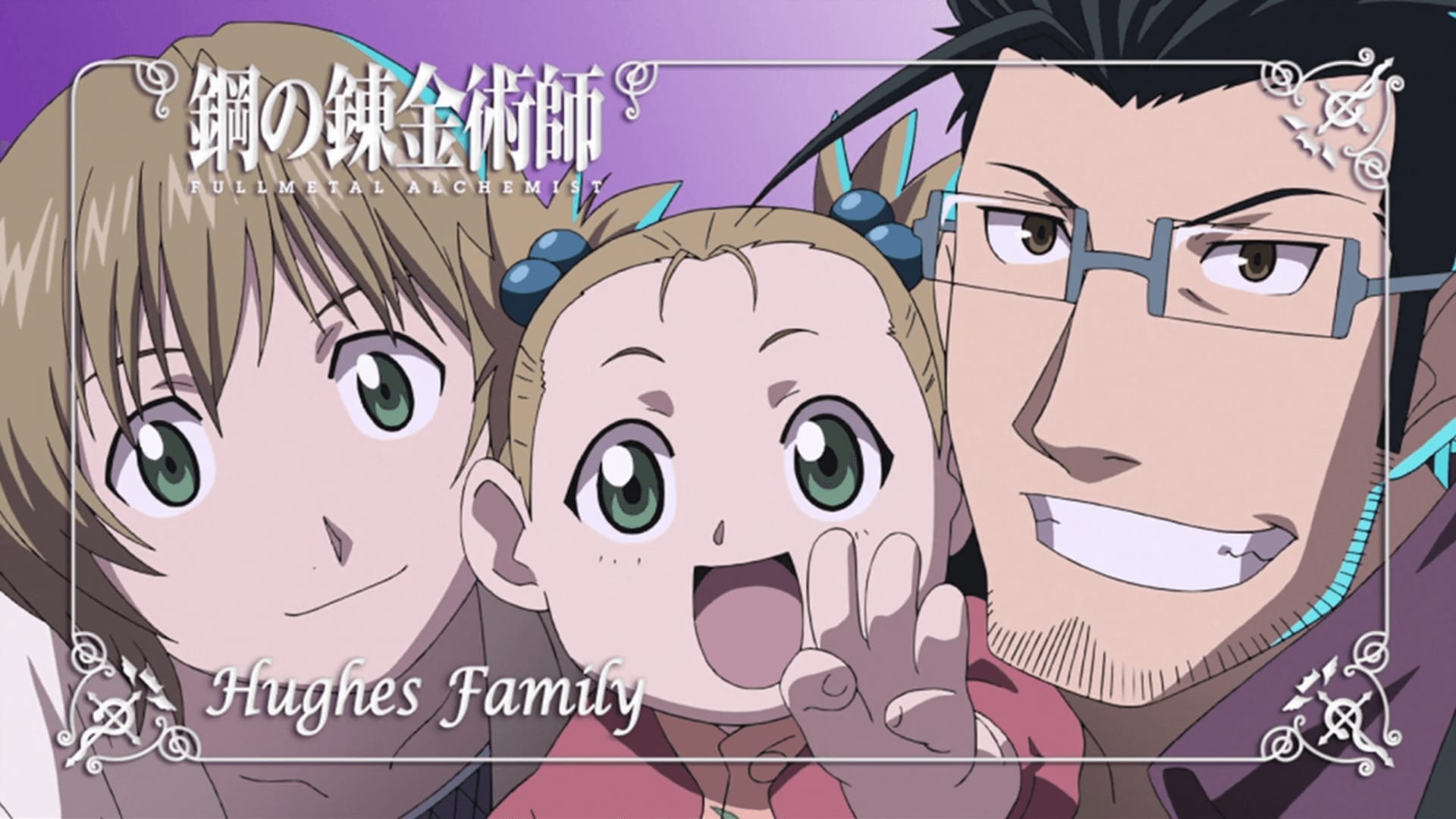
Even the minor characters leave marks. Maes Hughes — and you know what I’m about to say if you’ve watched the show. Scar, a vigilante whose hatred of State Alchemists evolves into something far more complex. Ling Yao, a foreign prince whose arc about kingship and sacrifice adds another layer to the show’s central themes. Izumi Curtis, the brothers’ teacher, who is simultaneously terrifying and deeply loving. This is a show that treats every character as worth fully developing, and the result is a world that feels genuinely inhabited.
The Emotional Gut Punches — Moments That Stay With You for Years
Brotherhood earns its emotional moments by building carefully toward them. It doesn’t manufacture tragedy for shock value — it puts characters into situations where real loss becomes inevitable, and then it doesn’t flinch. The result is a small collection of scenes that have become genuinely iconic in anime culture, moments that viewers remember with the kind of visceral clarity usually reserved for real memories.
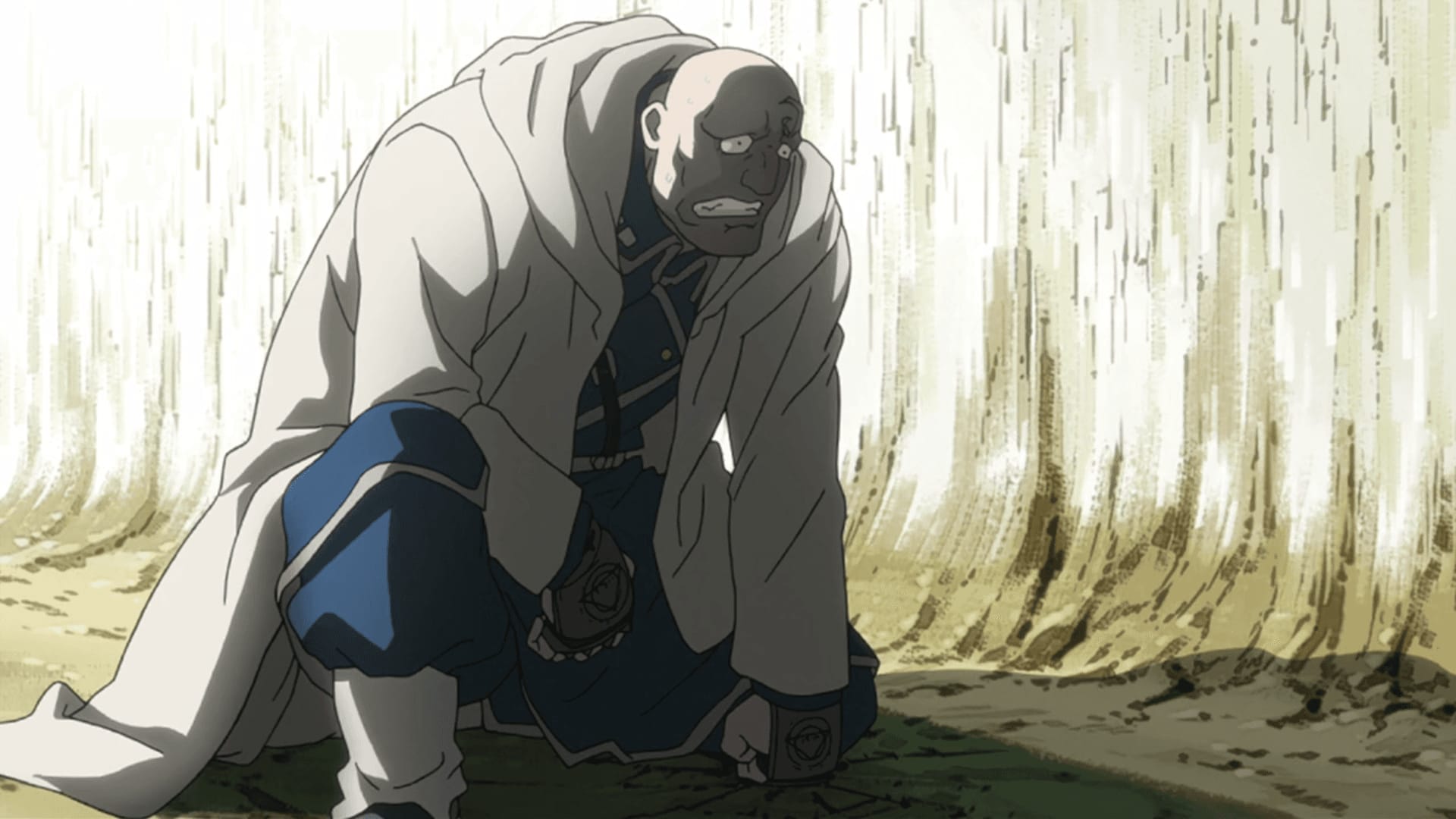
Without spoiling the specifics, episode four of Brotherhood — which covers the story of Maes Hughes and a military doctor’s tragic past — hits viewers in a way they rarely see coming. The show introduces these characters quickly, makes you like them immediately, and then does something unforgivable and completely earned. It’s one of anime’s most effective gut punches, not because it’s surprising, but because the show made you care so quickly and so completely.
The Nina Tucker storyline is another one. If you haven’t watched Brotherhood yet, all I’ll say is that it involves a child, her father, and the consequences of a man who let his ambition override his humanity. It’s one of the darkest things the show does in its early episodes, and it establishes early that Brotherhood is not a show where good intentions protect innocent people from bad outcomes. The world of this series is moral — but it is not safe.
What sets Brotherhood apart from many emotional anime is that its tragedies almost always serve the thematic argument. The show is fundamentally about the cost of trying to circumvent natural law — about the hubris of humans who think love or ambition or need can override the rules of the universe. Every loss in the series is, in some way, a demonstration of that thesis. This gives the grief a weight and a purpose that purely manipulative tragedy never achieves.
The final stretch of Brotherhood — roughly the last fifteen episodes — is one of the most sustained sequences of excellence in anime history. Everything the show has built converges at once. Characters whose arcs began in episode two pay them off. Themes introduced in the first episode find their resolution. And the climax is not a power-scaling battle where the hero simply becomes stronger than the villain — it’s a philosophical confrontation that concludes with an act of self-sacrifice so perfectly in keeping with the series’ themes that it feels, in retrospect, inevitable. The ending of Brotherhood doesn’t just feel satisfying. It feels right.
Animation Quality and Soundtrack — A Technical Masterpiece
Studio Bones produced Brotherhood, and the work they did here represents some of the finest animation the studio has ever delivered. The character designs are clean and distinctive — you could identify major characters from silhouette alone. The action sequences are fluid, creative, and choreographed with a spatial clarity that lets you follow exactly what’s happening even when multiple fighters are involved simultaneously.
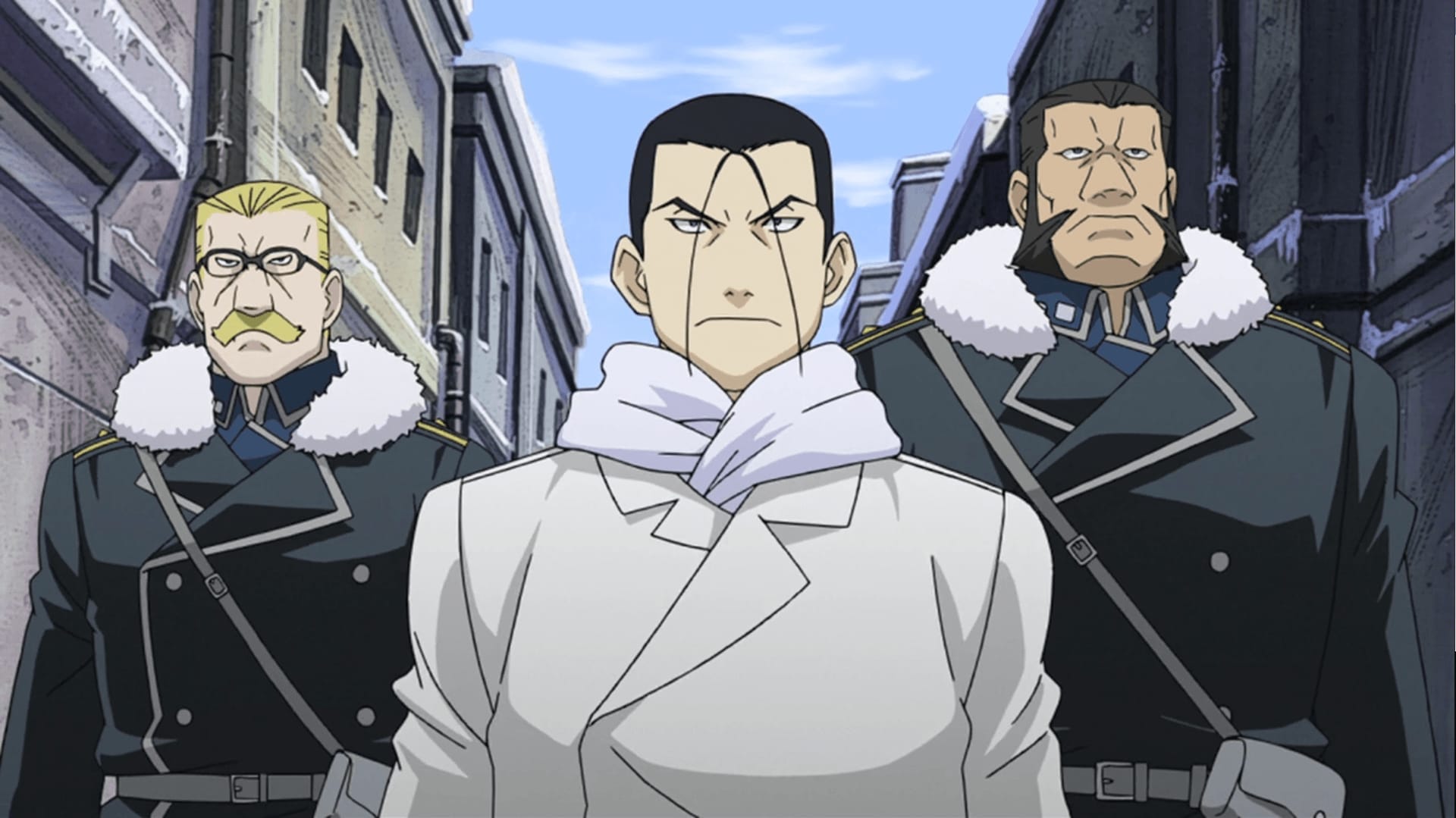
The visual language of Brotherhood is also surprisingly sophisticated. The show uses color and lighting to track emotional tone with consistency — the early episodes have a relatively warm palette that gradually cools as the story darkens. Flashback sequences have a slightly desaturated look that distinguishes past from present without being heavy-handed. The Gate of Truth sequences have a deliberately unsettling, almost abstract quality that sets them apart from everything else in the show.
Action highlights are abundant. The battle sequences in the final arc — which involve nearly every major character in the series converging on a single location — are an extraordinary feat of action choreography and animation. Characters who’ve been established over 50+ episodes each get moments that feel appropriate to who they are. Fan favorites deliver on everything the show promised about them. It is, by any measure, one of the most technically impressive extended action sequences in anime history.
The music, composed by Akira Senju, does exactly what a great anime score should do: it lives in the background until the precise moment you need it, then it swells and breaks your heart open. The main theme, “Lapis Philosophorum,” is one of the most recognizable pieces of music in anime. The quieter piano pieces that accompany the series’ most intimate moments are genuinely beautiful. And the use of silence — which Brotherhood deploys with precision — is as much a compositional tool as the music itself.
The opening themes deserve their own paragraph. “Again” by YUI (Season 1) and “Period” by Chemistry are among the best anime openings ever made, not just as standalone songs but as effective tonal scene-setters that put viewers in exactly the right frame of mind. The closing themes are equally strong. This is a series that took its music seriously at every level, and it shows.
Why Fullmetal Alchemist Brotherhood Still Holds Up in 2026 and Beyond
Many anime that top ratings charts do so on the strength of novelty — they’re the best thing available at the moment they air, and they accumulate fans and scores before anything better comes along. Brotherhood is different. It’s been the highest-rated anime on MAL for the better part of two decades, through periods when extraordinary new series have come along and challenged it. Attack on Titan challenged it. Vinland Saga challenged it. Demon Slayer and Jujutsu Kaisen generated enormous cultural moments. And Brotherhood is still at the top.
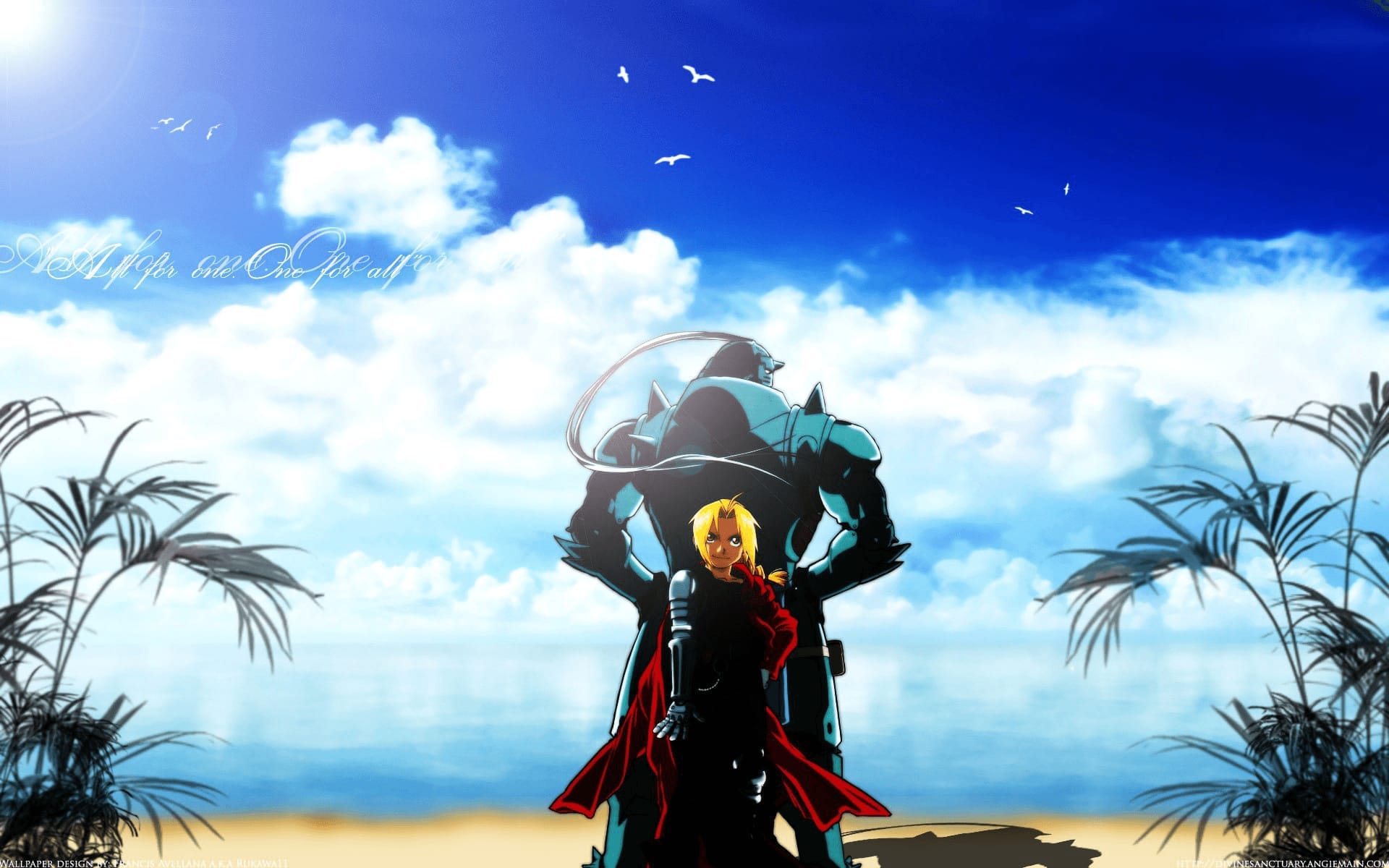
The reason is that Brotherhood has no meaningful weaknesses. Every other anime that reaches the top of the charts does so with at least one significant caveat — the ending is weak, the pacing sags in the middle, the female characters are underdeveloped, the animation drops off in filler arcs, the ending is unresolved. Brotherhood has none of these problems. It is a complete, finished story told at a consistent level of quality from episode one to episode 64. That’s an extraordinarily rare achievement.
The themes are also timeless in a way that trendy anime often isn’t. Brotherhood is about grief and guilt and the limits of what love can accomplish against the laws of nature. It’s about institutional corruption and the ways that ordinary people become complicit in atrocities. It’s about found family, and the question of what we owe the people we’ve hurt, and whether redemption is possible for someone who’s done genuinely terrible things. These questions don’t get old. They’re not rooted in a particular cultural moment. They’re the questions humans have been asking for as long as humans have told stories.
New anime fans discover Brotherhood every year, often as their first serious anime after moving past entry-level titles. And the experience of watching it for the first time remains as powerful now as it was when the show aired in 2009. The pacing holds. The characters work. The emotional beats land. This isn’t a show preserved in amber by nostalgia — it’s a show that is still, by almost any objective measure, genuinely better than almost everything else in the medium.
If you’re new to anime and wondering where to start, the answer is almost always Brotherhood. If you’re a veteran who somehow hasn’t rewatched it in a few years, you’re overdue. And if you’re one of the rare people who watched it and didn’t connect with it — try again. Some shows reveal themselves more fully on a second watch, and Brotherhood, with its extraordinary density of foreshadowing and thematic layering, is one of them.
Is Fullmetal Alchemist: Brotherhood Worth Watching? The Verdict
This Fullmetal Alchemist Brotherhood review could go on considerably longer — there’s more to say about the alchemy system’s philosophical implications, about specific character arcs that deserve their own essays, about the way the show handles its antagonists with a generosity that less confident storytelling would never attempt. But the core answer is simple: yes, without qualification or caveat, Brotherhood is worth every minute of its 64-episode run.
It earns its reputation as an anime masterpiece not through hype or cultural inertia, but through the accumulated weight of thousands of good decisions made at every level of production. The writing, the direction, the animation, the music, the voice performances — in both the Japanese and English dubs — all operate at a level of excellence that is genuinely rare. And the story it tells, about two brothers trying to fix an unfixable mistake in a world that runs on sacrifice, is one of the most complete and satisfying narratives in the medium’s history.
If anime has a masterwork — the equivalent of what The Wire is to prestige television or what The Lord of the Rings is to fantasy literature — it’s Brotherhood. Other shows are exceptional. Other shows are life-changing. But when you ask someone who loves anime deeply which single series they’d recommend to someone who’d never watched anything before, the answer is almost always the same. It’s not even a close call.
Watch it. Then come back and tell me I was wrong. I’ll be waiting.
You Might Also Enjoy
If Fullmetal Alchemist Brotherhood left you hungry for more anime at this level, here are five series that come closest to matching it:
- Attack on Titan Review — When the Stakes Are Truly Global
- Steins;Gate Review — The Best Time Travel Anime Ever Made
- Hunter x Hunter (2011) Review — The Shonen Anime That Breaks All the Rules
- Vinland Saga Review — A Viking Epic With Something Real to Say
- Cowboy Bebop Review — The Anime That Defined a Generation