Thirty Years Later, Nothing Hits Quite Like It
October 4, 1995. TV Tokyo airs the first episode of a robot anime about a boy who climbs into a giant mech to fight monsters. On paper, it sounds like every other show in the Saturday morning rotation. By episode 16, it has become something else entirely — a psychological autopsy of depression, identity, and what it means to exist. By the final two episodes, it has broken every rule of anime storytelling and sparked a debate that hasn’t stopped since.
Thirty years on, Neon Genesis Evangelion is still the most talked-about, analyzed, argued-over anime ever made. Not just one of the most important — the most important. And if you think that’s hyperbole, you probably haven’t watched it recently.
What Evangelion Actually Broke
To understand what Anno and Gainax did in 1995, you need to understand the genre they walked into. Mecha anime had a formula so established it was practically law. Giant robots, heroic pilots, escalating threats, triumphant victories. Gundam had injected some moral ambiguity into the mix, but the structural DNA was still intact: suits up, fights monster, saves the world, repeat.
Evangelion started inside that formula and then methodically dismantled it from the inside out. The Angels are terrifying not because they’re powerful but because they’re alien — unknowable, geometrically wrong, occasionally beautiful. The Evangelion units themselves are later revealed to be something far more disturbing than machines. And the pilots? They’re not heroes. They’re broken teenagers who have no business being in that cockpit and know it.
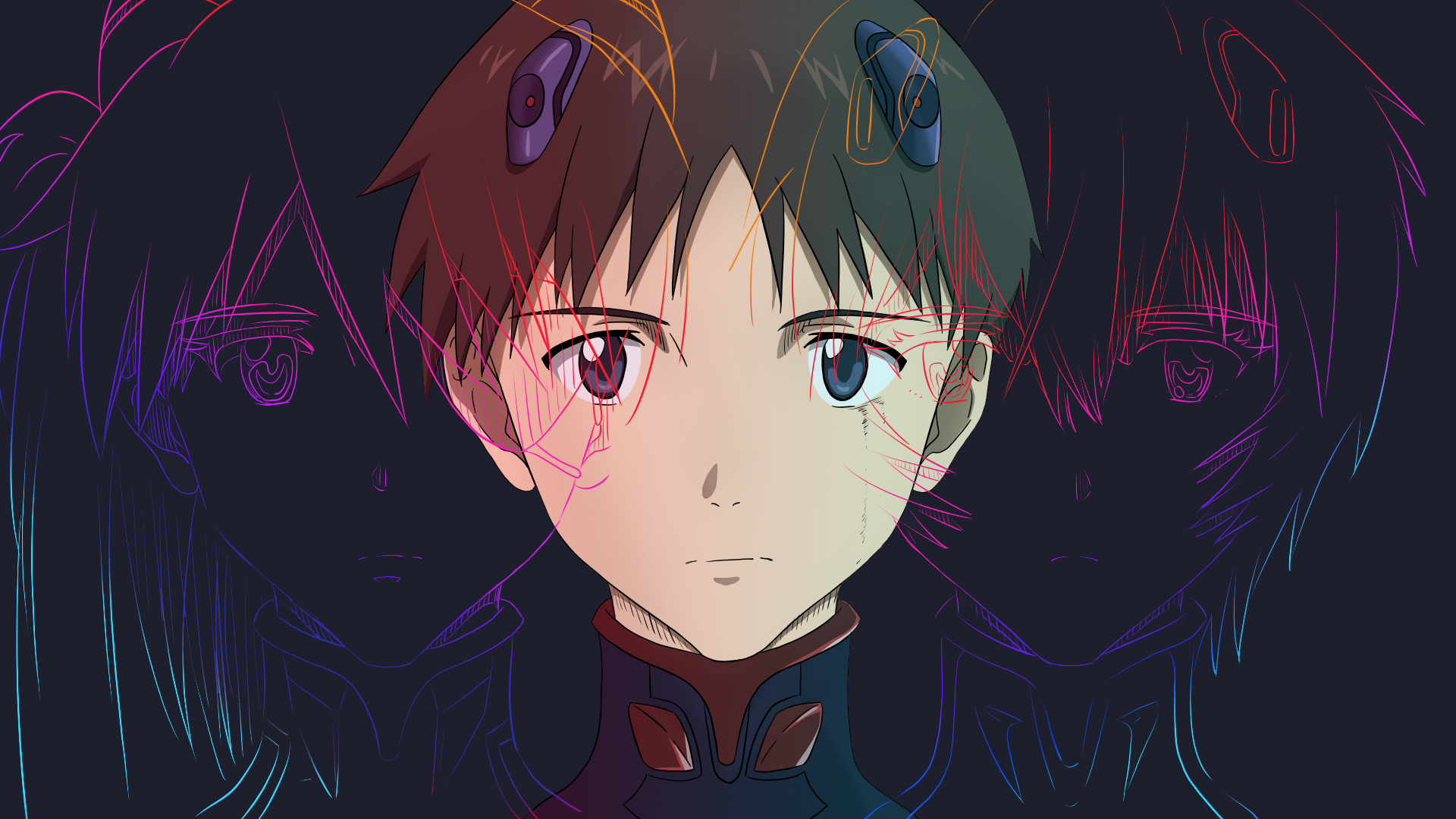
Shinji Ikari is the pivot around which the whole show rotates. He’s passive, self-loathing, paralyzed by the fear of rejection — and audiences in 1995 absolutely hated him for it. They wanted a Kamille Bidan, a Koji Kabuto, someone who wanted to fight. What they got instead was a mirror. A character who, when faced with an impossible situation, asked “why would I do that?” rather than “let’s go.” That refusal to perform heroism was radical. It still is.
The show borrowed the visual grammar of super robot anime — attack name callouts, monster-of-the-week structure, epic soundtrack swells — and used it to tell a story about a child in psychological freefall. The contrast was intentional and devastating. Every time a battle sequence resolves into an internal monologue, Anno is making a point about what these stories are actually about when you strip the cool robots away.
The Psychological Depth No One Was Ready For
Hideaki Anno has been open about the fact that he was in a severe depressive episode while writing Evangelion. The show is, in many ways, a document of that depression — channeled through NERV headquarters, through Shinji’s paralysis, through Misato’s self-destructive coping, through Asuka’s rage-as-armor. These characters are not archetypes. They are case studies.
The mid-series pivot — when the Angel attacks start revealing something deeper about the nature of the Evangelion project, the souls housed in the units, the real goal of the Human Instrumentality Project — is one of the most audacious structural moves in serialized animation. And it’s not just plot complexity. The show starts using surrealist imagery, unreliable narration, and repeated motifs to represent psychological states. The live-action inserts. The black screens with white text. The recursive conversations in Episode 16 and 17. These weren’t budget-saving tricks (well, not only budget-saving tricks). They were a visual language for interiority that anime had never tried before.
The plot twists and revelations throughout the series land differently than the standard anime shock moment precisely because they’re not just narrative — they recontextualize the emotional reality of every character. When you learn what Unit 01 actually is, you don’t just think “whoa, that’s wild.” You think about Shinji and feel sick in a specific, personal way.
End of Evangelion and the Long Road of Rebuilds
The original series finale — Episodes 25 and 26 — aired as internal psychological monologues set against still images and simple sketches due to production chaos and budget collapse. Audiences who’d been waiting for the apocalyptic showdown they’d been promised were furious. But those episodes, particularly the final “Congratulations,” have aged into something remarkable: a meditation on the construction of self and the decision to engage with the world despite its capacity to hurt you.
Anno heard the complaints. End of Evangelion (1997) gave audiences their apocalypse — and then some. The film remains one of the most viscerally upsetting and technically stunning things ever committed to animation. The destruction of Nerv headquarters, Asuka’s final battle, the Third Impact sequence, Rei’s transformation — it’s almost unbearable to watch, and completely impossible to look away from. It doesn’t resolve the philosophical questions the series raised. It sharpens them until they’re sharp enough to cut.
The Rebuild films — 1.0 through 3.0+1.0, released between 2007 and 2021 — initially appeared to be a streamlined retelling for a new generation. They became something stranger and more personal. Evangelion: 3.0+1.0 Thrice Upon a Time, the final Rebuild film, is Anno working through something he’d been unable to resolve for 25 years. It is, depending on your read, either the most cathartic or the most complicated ending in anime history. Probably both. What it is, definitively, is a filmmaker in dialogue with his own legacy — and with the audience that had grown up alongside his most personal work.
The Cultural Footprint Is Enormous
The influence of Evangelion on what came after it in anime is almost too large to map. The golden age of anime that followed in the late ’90s and 2000s would look completely different without it. Serial Experiments Lain, Revolutionary Girl Utena, Berserk (1997), and later Puella Magi Madoka Magica — all of these owe something to the door Anno kicked open. The idea that animation could be a vehicle for genuine psychological complexity, that anime could destroy its own genre from within and build something new from the wreckage — that was EVA’s gift to everyone who followed.
But the footprint extends well beyond anime. Evangelion‘s fingerprints are on Western media in ways that are sometimes cited and sometimes just absorbed. The psychological horror elements informed a generation of game designers — Xenogears, famously, is almost direct in its borrowing. More recently, NieR: Automata, Darling in the FranXX, 86 -Eighty Six- all carry EVA’s DNA in how they approach their pilots’ humanity.
The fashion world took notice years ago and hasn’t let go. EVANGELION x UNIQLO UT collections sell out within hours. The Japanese streetwear scene treats NERV and Seele iconography as legitimate design vocabulary. Supreme, Medicom Toy, and luxury collaborators have all circled the property. The imagery — the cross-shaped explosions, Unit 01’s purple and green, the NERV logo — has become shorthand for a certain aesthetic that transcends anime fandom entirely.
Streaming made all of this accessible to a generation that wasn’t alive in 1995. Netflix added the series in 2019 with a new dub and subtitle translation, which immediately sparked fresh debates about localization choices — debates that themselves illustrated how deeply people care about this show. Every few years, a new wave of fans discovers EVA for the first time and has the same experience: confusion, then obsession, then the quiet unsettling feeling that it knew something about you that you hadn’t told it.
Why It Still Hits Different
The staying power of Evangelion isn’t mysterious once you sit with it. Most anime — most fiction, period — treats its characters’ psychological pain as a problem to be solved. You heal, you grow, you overcome. EVA doesn’t do that. It treats psychological pain as the actual subject matter. Shinji doesn’t overcome his self-loathing by episode 26. Asuka doesn’t arrive at peace. The show refuses the comfortable arc, and that refusal is what makes it feel honest in a way that’s still relatively rare.
For fans of contemporary anime who come to EVA fresh, there’s often surprise at how modern it feels. The internal monologue aesthetic, the unreliable narrator, the refusal to explain its mythology cleanly — these feel cutting-edge even now. That’s partly because so much of what came after borrowed from it, but it’s also because Anno’s instincts about what makes human beings interesting were just right.
The 30th anniversary is being marked by new merchandise, retrospective screenings, and the inevitable reappraisals. But the real mark of what Evangelion accomplished is simpler than any anniversary event: someone, somewhere, is watching it for the first time right now and having their understanding of what animation can do permanently altered.
What Anno Is Doing Now
Hideaki Anno has spent the years since 3.0+1.0 on two very different projects. He served as executive producer on Toho’s Shin Godzilla (2016), which applied the same deconstruction-from-within methodology to the kaiju genre with similar effectiveness. He then directed Shin Ultraman (2022) and has been involved in the broader Shin Japan Heroes Universe project, which also includes Shin Kamen Rider (2023). The pattern is consistent: Anno takes beloved tokusatsu and special effects genres, strips them back to their emotional and philosophical cores, and rebuilds them into something simultaneously classic and deeply strange. At 61, he remains one of the most distinctive voices in Japanese visual media — still restless, still uncompromising, still apparently unable to make anything that doesn’t carry a visible personal cost.