The Boy Who Wanted Freedom: Eren Yeager’s Origins
There is no character in modern anime history quite like Eren Yeager. He starts the story as a hot-headed, wide-eyed kid inside a walled city, screaming at the sky about freedom while his adoptive sister rolls her eyes. By the time the curtain falls on Shingeki no Kyojin, he has become the architect of history’s greatest genocide — and somehow, the fandom is still arguing about whether he was right. That tension, that moral earthquake, is exactly what makes Eren Yeager the most compelling, infuriating, and unforgettable protagonist in anime.
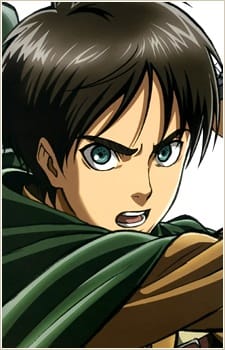
Hajime Isayama introduced Eren Yeager as a ten-year-old boy in Shiganshina District in the year 845. From the very first pages, his defining trait is clear: an almost pathological obsession with the world beyond the walls. While other children accept their confined existence, Eren Yeager seethes. He picks fights he can’t win. He drags his best friend Armin into schemes that nearly get them both killed. He is, in the most literal sense, a problem child.
But Isayama wasn’t writing a simple rebel fantasy. The anger in young Eren Yeager has roots — a father who disappeared after injecting him with a mysterious serum, a mother who was eaten alive by the Smiling Titan while her son watched, helpless, from inside a giant monster’s fist. The trauma that defines Eren Yeager isn’t backstory filler. It is the fuel that drives every decision he makes across more than a hundred chapters. Everything connects back to that moment. Everything.
What separates Eren from other shonen protagonists — your Naruto Uzumaki types — is that his core drive was never about becoming stronger or earning acknowledgment. Eren Yeager didn’t want to be Hokage. He wanted out. He wanted the cage to stop existing entirely. And when he finally had the power to make that happen, he didn’t hesitate.
Inside the Walls — How Shiganshina Shaped Eren Yeager
To understand what Eren Yeager becomes, you have to sit with what Shiganshina did to him. The fall of Wall Maria isn’t just a plot event — it’s a psychological detonation. In a single afternoon, Eren loses his home, watches his mother get eaten, and discovers his father has been keeping monstrous secrets. He is nine years old. He is furious and helpless simultaneously, which is the worst possible combination for a child’s developing psyche.
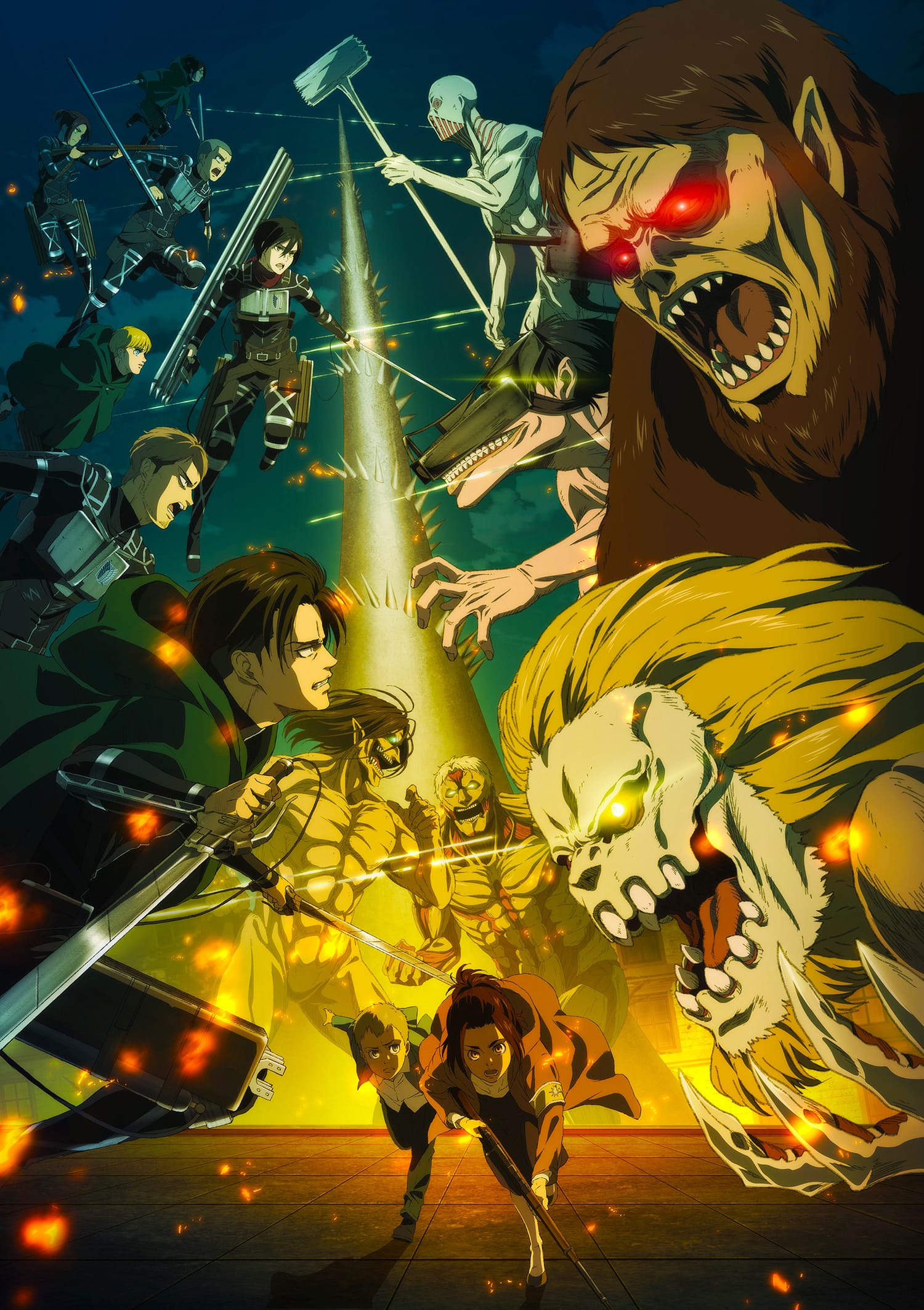
The years inside the refugee camps that follow only sharpen his resentment. Eren Yeager grows up watching Eldians get treated as second-class citizens within their own supposed sanctuary, reliant on the Military Police and the nobility for scraps. He sees the Survey Corps as the only humans brave enough to push back — which is why he enlists the moment he’s old enough. His hero worship of the Survey Corps is earnest, almost naive. He thinks freedom is something you fight your way to.
His friendship with Armin Arlert is a crucial anchor to this period. Armin has the forbidden books, the maps of the outside world, the theories about what lies beyond the ocean. Armin is the intellectual spark; Eren Yeager is the burning desire to act on it. Together they make a complete picture of what resistance looks like — the dreamer and the fighter fused into a single mission. Their bond is one of the purest relationships in the entire series, which makes what happens to it in the final arc so devastating.
Mikasa Ackerman‘s role in shaping early Eren Yeager deserves its own section — and we’ll get there — but it’s worth noting here that her presence was both protective and suffocating for him. She gave him safety he never had to earn and love he never asked for. For a boy obsessed with freedom, being perpetually guarded felt like its own kind of cage. The irony is perfect: his closest companion was a living symbol of the constraint he couldn’t escape.
The Timeskip That Changed Everything
If you want to know the exact moment Attack on Titan became something truly extraordinary, it’s the chapter 91 timeskip reveal. Eren Yeager, now a soldier posted in Marley, has been operating undercover for months. He is unrecognizable — gaunt, long-haired, cold-eyed, carrying a cane. He sits in a coffee shop in Liberio and listens to Reiner Braun talk. Then he reveals himself. The look on Reiner’s face says everything: this is not the Eren Yeager you knew.
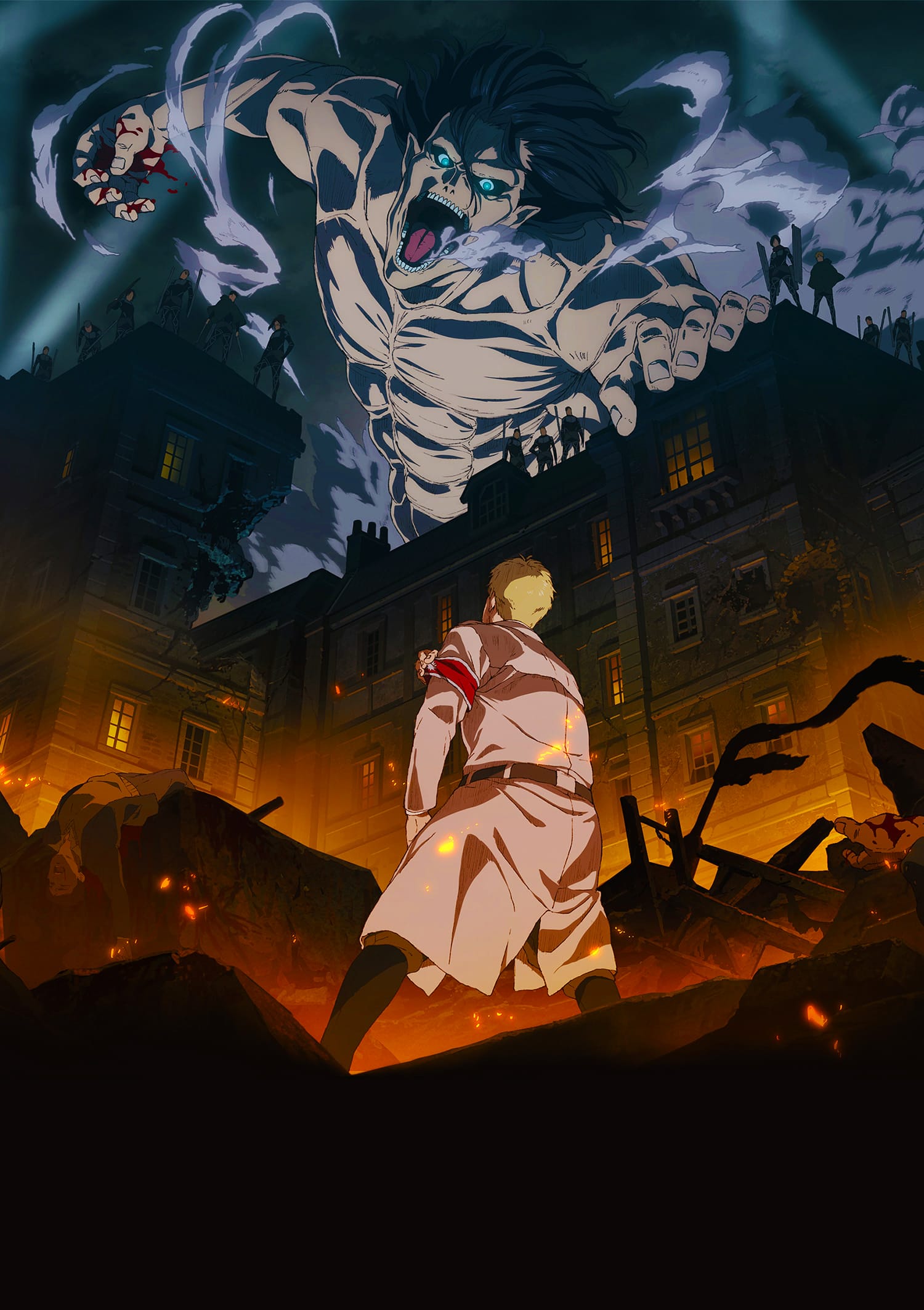
The Marley Arc is where the series fully commits to its most radical structural choice: making Eren Yeager morally illegible. Up to this point, the audience could track his reasoning. He hated Titans because they killed his mom. He wanted freedom because he’d been caged his whole life. Simple cause-and-effect. But post-timeskip Eren has seen the ocean. He has achieved the goal that drove him for years. And he’s more dangerous than ever.
The Declaration of War episode is a masterpiece of character writing. Eren Yeager stands before Willy Tybur’s speech, listening to himself be named the greatest threat in the world, and then he proves Tybur right. He transforms in the middle of a civilian crowd. People die. And the audience, who has spent years rooting for this character, has to reckon with the fact that they might have been cheering for a monster. That discomfort is intentional. Isayama engineered it deliberately.
What happened between the ocean and Liberio? That’s the question the final arc answers in brutal, complicated detail. Eren Yeager touched Historia’s hand and saw the full sequence of the future — his future, Zeke’s plan, the Rumbling, all of it. From that moment forward, every action Eren takes is calculated. His coldness toward his friends, his apparent betrayal, his manipulation of Zeke — all theater. He’d already seen how the play ends. Whether that makes him a tragic figure acting out a predetermined script, or a man who chose his path and hid behind fate to avoid accountability, is the debate that will outlive the series itself.
Eren’s Founding Titan Powers Explained
Let’s talk about the mechanics, because Eren Yeager’s power set is genuinely one of the most intricate ability systems in anime. He starts with the Attack Titan, inherited from his father Grisha’s injection in year 845. The Attack Titan is unique among the Nine Titans: it can receive memories from future inheritors, effectively giving it glimpses of paths not yet walked. This is the core of the time-loop paradox that defines Eren Yeager’s endgame — he has always known what was coming because the future Eren showed the past Eren.
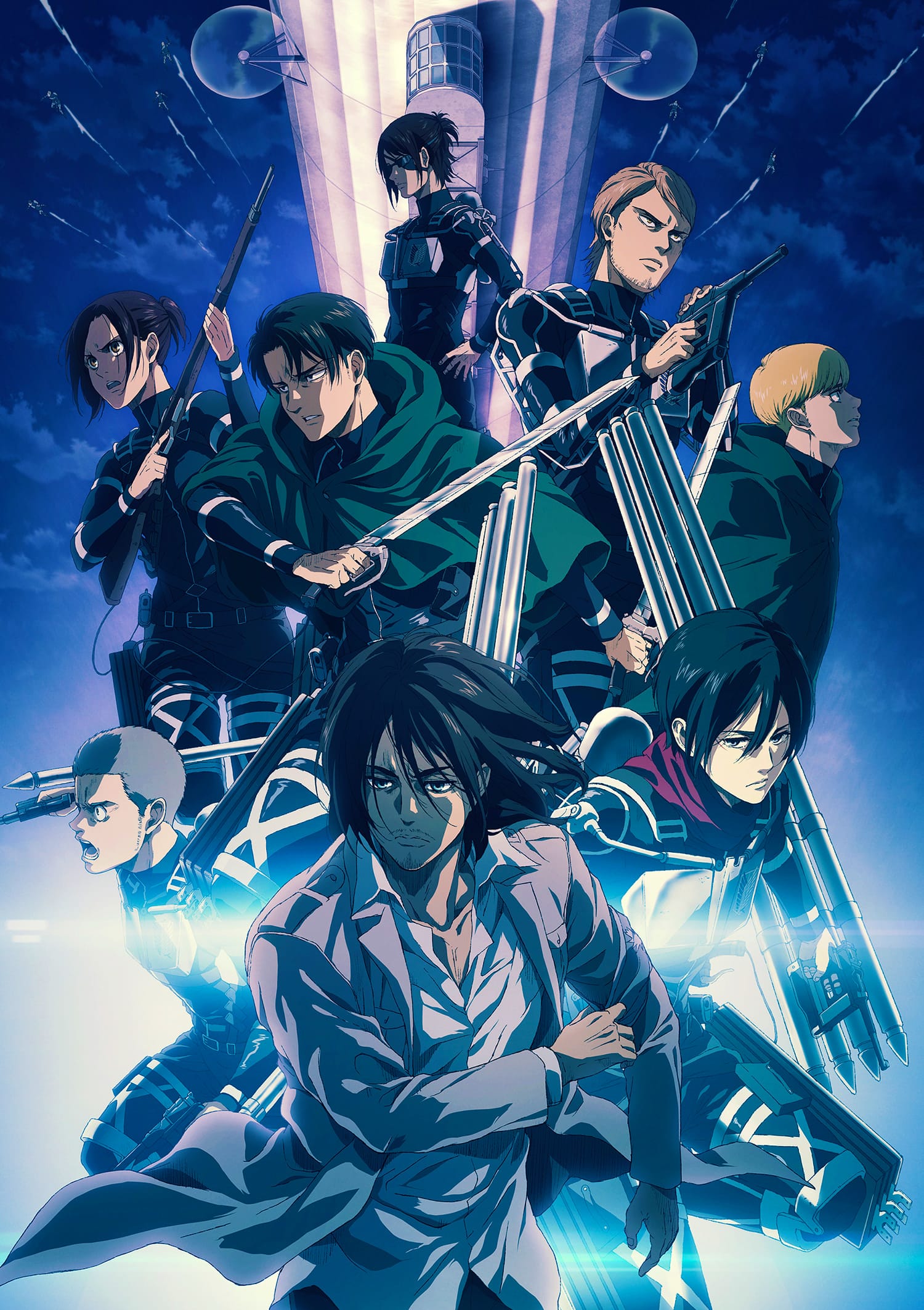
He later acquires the War Hammer Titan from Lara Tybur during the Liberio raid — consuming the crystal that contains her and absorbing her power. The War Hammer allows construction of hardened Titan structures from a distance, controlled by someone in a crystallized state below ground. It’s a devastating addition to Eren Yeager’s arsenal, one that he puts to efficient if grim use in later battles.
But the Founding Titan is the nuclear option. Normally, the Founding Titan’s power requires a member of the royal family to use — it can command all Titans, alter Eldian memories, and reshape the world. Eren Yeager circumvents this limitation through Zeke, his royal-blooded half-brother, and an apocalyptic trip through the Paths dimension. In the Paths, Eren confronts Ymir Fritz — the original Titan — and convinces her to lend him her power. The scene is one of anime’s most quietly devastating moments: Ymir, enslaved for thousands of years because she loved a king who used her, finally hears someone say she doesn’t have to serve anyone anymore. Eren Yeager, the boy who always wanted to be free, gives freedom to the source of all Titan power.
With the full Founding Titan power active, Eren Yeager commands every Colossus Titan in the world’s walls and sends them marching toward the world beyond Paradis. This is the Rumbling — and it is the event that forces the audience to decide what they actually think about him. You can check the MyAnimeList profile for the complete breakdown of the Founding Titan’s mechanics if you want to go deep on the lore.
The Rumbling: Was Eren Yeager Right?
This is the question that broke the internet and hasn’t stopped breaking it. The Rumbling — Eren Yeager’s plan to unleash the Wall Titans and flatten every nation beyond Paradis — is an act of genocide on a scale fiction rarely depicts. Millions of people, the vast majority of whom had no personal hand in oppressing Eldians, are crushed underfoot. Children, civilians, animals. All of it. Eren Yeager does not flinch.
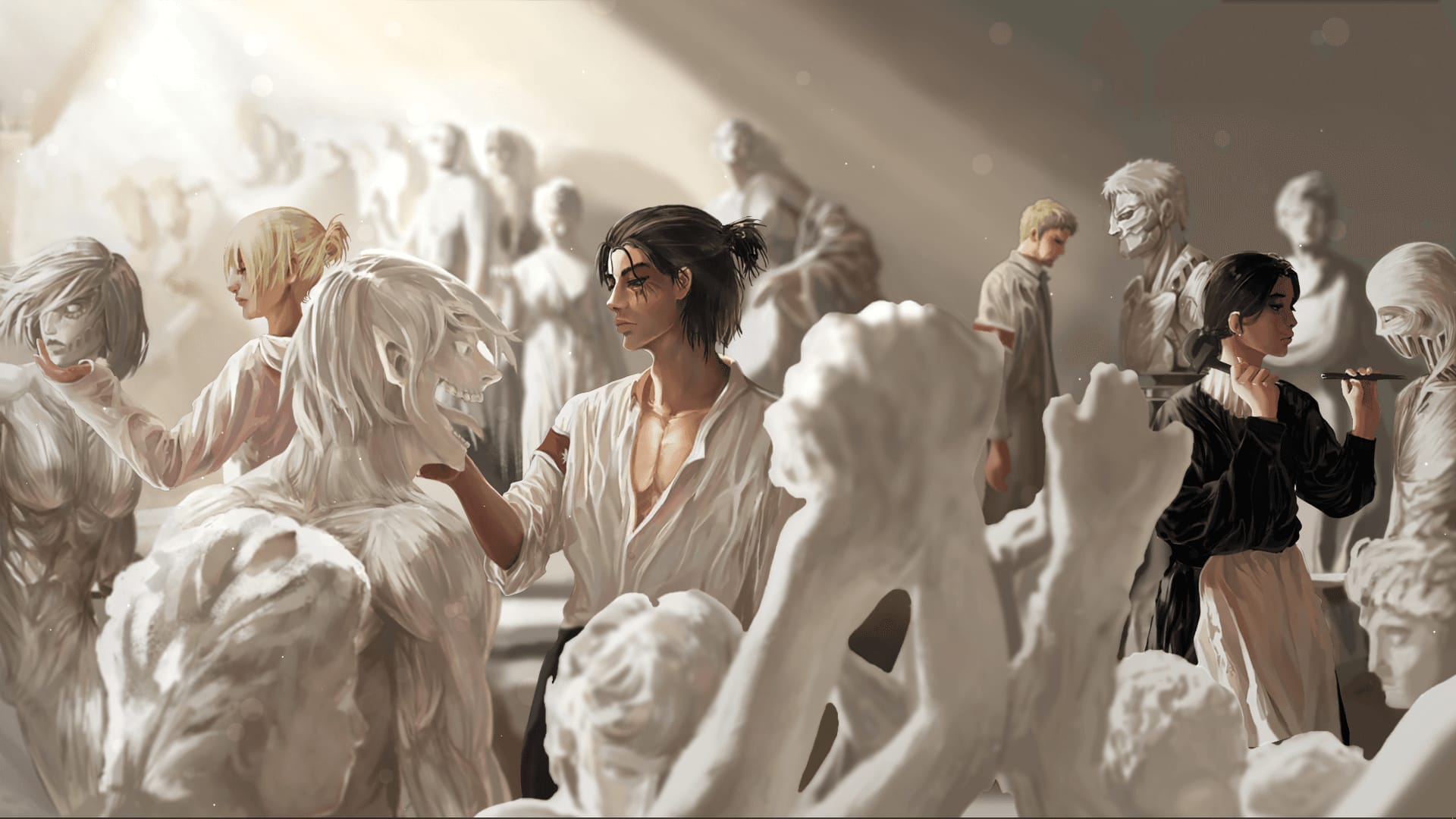
The case for Eren Yeager’s reasoning: The world had been hunting Eldians for generations. The moment Paradis was no longer militarily useful or controllable, the nations of the world had already greenlit a full extermination campaign. Eren had seen this future. He had seen what happened to his people when they had no deterrent. The Rumbling wasn’t rage — it was cold strategic calculation. Kill 80% of the world’s non-Eldian population, and the survivors won’t have the resources to mount another campaign against Paradis for at least one generation. Maybe two. Maybe enough time for the cycle to actually break.
The case against: This is monstrous. Full stop. Eren Yeager is capable of nuance — he demonstrates it repeatedly — and he chose the option that involves the least suffering to his group and the most suffering to everyone else. He had access to the Founding Titan. He could have neutralized Titan powers entirely. He could have taken the Titans away from everyone, including Paradis, and forced the world into a power reset. He didn’t. He chose the Rumbling because some part of him — maybe the part that watched his mother die and never fully healed — wanted the world to burn.
The most honest answer is probably both. Eren Yeager is a product of trauma operating at civilizational scale. His logic is internally coherent and externally monstrous. He is not a cartoon villain — he is something far more uncomfortable: a person who did something unforgivable for reasons you can almost understand. That’s what earns him a place alongside the most complex protagonists in the history of the medium when it comes to best character development in anime.
And for what it’s worth — Isayama never lets Eren Yeager off the hook. The final chapter shows him crying in the Paths, telling Armin that he didn’t want to do it, that he wishes there had been another way. Whether that’s genuine remorse or post-hoc rationalization is left ambiguous. Probably both. Eren Yeager contains multitudes and none of them are comfortable.
Eren and Mikasa: The Bond That Defines the Series
You cannot fully analyze Eren Yeager without analyzing his relationship with Mikasa Ackerman. It is the emotional spine of the entire series. Everything circles back to these two — from the red scarf in their childhood to the final, gut-wrenching scene in the Paths. It is one of anime’s most emotionally complex relationships precisely because it refuses to be simple.
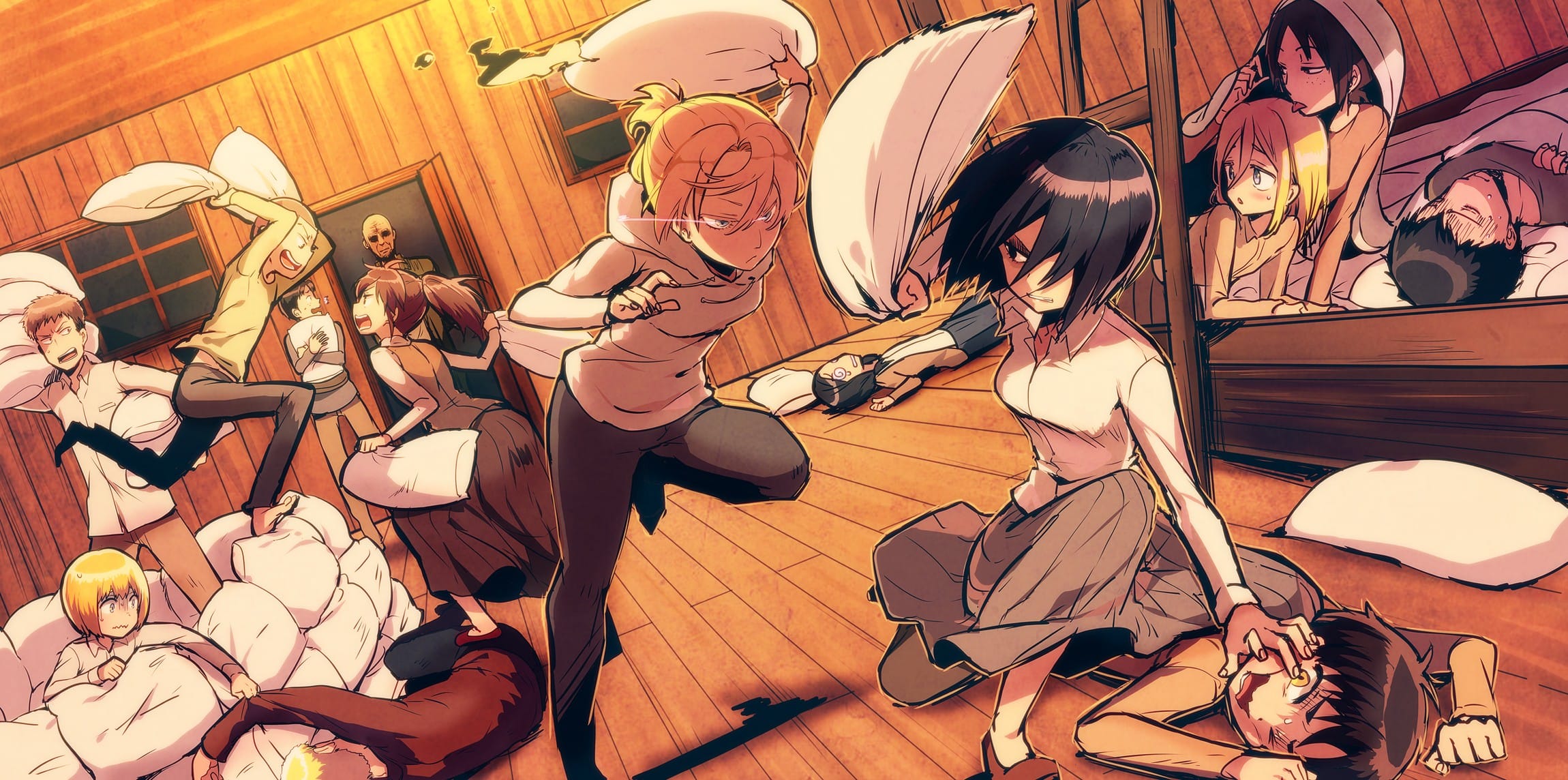
Eren saves Mikasa when they are children — kills her captors with startling, icy competence for a nine-year-old, and then tells her the world is cruel and she’ll have to fight if she wants to survive. That moment rewires something in Mikasa. Her Ackerman bloodline activates, binding her instinctually to protecting Eren. For years this looks like devotion. In the final arc, it’s revealed to be something more complicated: a biological imperative that Eren resents because it means he can never know if Mikasa’s feelings are genuine or programmed.
Eren Yeager’s cruelty toward Mikasa in the later arcs — telling her she was never anything more than a slave to her Ackerman instincts — is one of the series’ most polarizing moments. Fans split hard on this. Half read it as Eren being genuinely cruel, showing who he’d become. The other half read it as Eren deliberately pushing Mikasa away to protect her, engineering his own death so she could be free. The final chapter suggests the latter is closer to the truth: Eren Yeager, in the Paths, admits to Armin that he always wanted Mikasa to move on after his death. He wanted freedom for her the way he’d wanted it for himself. He just couldn’t say it to her face.
The final act — Mikasa carrying his severed head, crying into his hair, the red scarf still around her neck — is heartbreaking regardless of what you think about Eren Yeager’s choices. This is the cost of what he became. The people who loved him had to be the ones to stop him. That’s the tragedy at the center of the whole story, and it hits with the force of a Colossus Titan.
Levi, Armin, and the Allies Who Defined Him
Eren Yeager doesn’t exist in isolation. His character is sharpened by every relationship in his orbit, and two stand out beyond Mikasa: Levi Ackerman and Armin Arlert. These three represent the full spectrum of how a person responds to an impossible world.
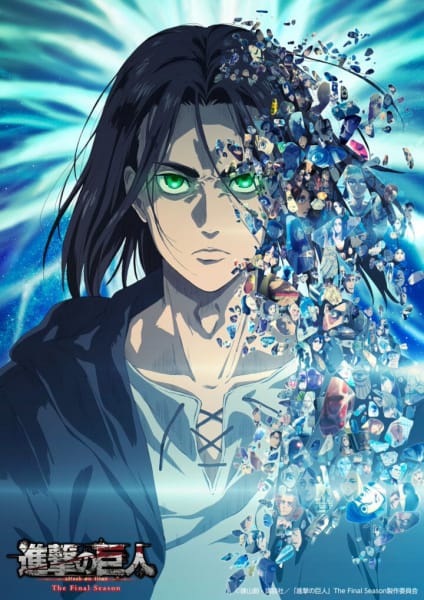
Levi Ackerman is everything Eren Yeager wants to be in the early series — effective, fearless, completely in control of his body and emotions. Levi respects Eren’s fire but has zero tolerance for his uncontrolled anger. Their relationship is mentor and trainee filtered through Levi’s signature brand of brutal pragmatism. Levi doesn’t coddle Eren. He breaks him down and expects him to rebuild better. The fact that Eren Yeager ultimately surpasses the need for a mentor — becomes something Levi actively has to stop — is one of the series’ sharpest ironies.
Armin is the soul Eren Yeager is slowly losing throughout the series. Where Eren becomes harder and colder and more calculating, Armin retains his capacity for wonder, for hope, for imagining a future where humans aren’t eating each other. The conversation in the Paths between Eren and Armin — where Armin finally understands what Eren did and why, and they both cry about it — is the emotional catharsis the series earns over hundreds of chapters. Eren Yeager needed someone to understand him. Armin is the only person who ever truly did.
The action sequences involving this trio are some of the most technically impressive in the genre — and for more on why, check out our breakdown of best anime fight choreography in the medium.
Eren Yeager’s Legacy in Anime
Here’s the argument: Eren Yeager is the most important anime protagonist of the 2010s. Not necessarily the most likable — that conversation goes many directions. Not the most powerful — the power-scaling debates in this fandom are endless. But in terms of what he did to the conversation around what an anime protagonist can be, Eren Yeager changed the rules.
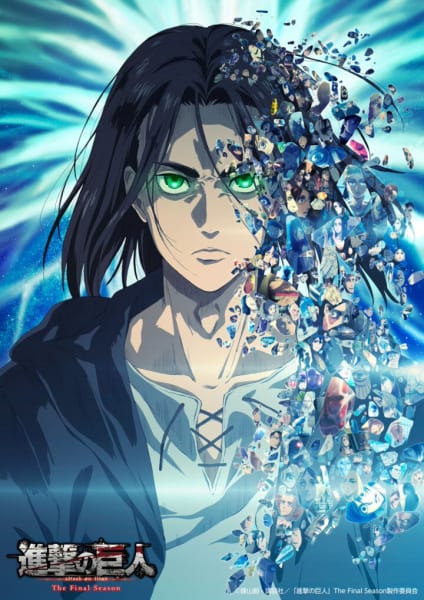
Before Shingeki no Kyojin, the dominant template for a shonen lead was clear: scrappy underdog, big heart, never gives up, wins through friendship and willpower. Eren Yeager embodies this template in the first three seasons — then Isayama sets it on fire. The protagonist you spent years investing in becomes the final antagonist. The boy becomes the monster. And the story doesn’t try to walk it back. It commits.
This forced a generation of anime fans to engage with questions that entertainment usually lets them avoid: What do I actually believe about violence and justice? Can I sympathize with someone who does something unforgivable? Is trauma an explanation or an excuse? These aren’t comfortable questions. Eren Yeager made them impossible to dodge. That’s the mark of genuinely great fiction — it doesn’t let you off the hook.
In the years since the finale, Eren Yeager has become a touchstone in anime discourse. Fans compare every complex villain-adjacent protagonist to him. The “Eren did nothing wrong” versus “Eren was a war criminal” debate still rages in comment sections worldwide. His character inspired entire essays on just war theory, free will, and the ethics of utilitarian violence. A shonen anime character prompted academic-level ethical debate. That doesn’t happen accidentally.
Eren Yeager also pushed the industry’s understanding of what long-form character arcs could achieve. Writers and creators across anime and manga have cited Attack on Titan as proof that audiences will follow a character through moral transformation without needing the narrative to validate their worst choices. You can let the protagonist be wrong. You can let them be the villain of their own story. The audience won’t abandon you if the work is honest about what it’s doing. Eren Yeager proved that.
For those who want to place Eren Yeager in the broader pantheon — comparing him to Lelouch, Light Yagami, or Guts — his defining distinction is that he started as an identifiable, relatable protagonist. Light Yagami starts compromised. Lelouch is already strategic and detached. Eren Yeager was the kid in the dirt, crying for his mom, promising he’d kill every Titan. We watched him become someone else. That transformation, witnessed in real time over years of storytelling, is what separates him from the pack.
The animation work in the series’ best moments — particularly in the final season — elevates Eren Yeager’s story beyond what the manga alone conveys. MAPPA’s rendering of the Rumbling sequences, of Eren Yeager’s transformed Founding Titan, gave scale and horror to events that needed to be felt viscerally, not just understood intellectually. It is exceptional work in service of an exceptional character.
When future generations of anime fans look back at the medium’s evolution in the 21st century, Eren Yeager will be cited as the point where the shonen protagonist grew up — where the genre stopped pretending that good intentions guarantee good outcomes, and started asking what happens when the boy with the dream becomes the nightmare. That’s a legacy that will outlast any individual debate about whether the ending was satisfying.
You Might Also Enjoy
If this deep dive into Eren Yeager fired you up, there’s plenty more where that came from. These articles pair perfectly with everything covered above:
- Mikasa Ackerman: Attack on Titan’s Deadliest Soldier — The other half of Eren’s story, and arguably the series’ true emotional anchor.
- Levi Ackerman: Humanity’s Strongest — The captain who could have stopped Eren and chose not to until it was almost too late.
- The Declaration of War Episode Breakdown — The scene that redefined what Eren Yeager was capable of, frame by frame.
- The Marley Arc and Attack on Titan’s Perspective Shift — How Isayama flipped the entire moral framework of the series in one arc.
- The Best Character Development in Anime — Where does Eren rank against the all-time greats? We make the case.
- Best Anime Fight Choreography — Attack on Titan’s Titan combat earns its place on this list. Here’s why.
- Naruto Uzumaki: Complete Character Analysis — The protagonist Eren Yeager was designed to subvert. An essential read for context.