The Shonen Protagonist Who Threw the Rulebook Out the Window
Let’s get one thing straight from the jump — Denji Chainsaw Man is not like any shonen protagonist you’ve ever rooted for. He doesn’t dream of becoming Hokage. He doesn’t train under a legendary master to awaken his hidden power. He doesn’t cry about the power of friendship before landing the final blow. Denji wants to eat bread with jam, maybe touch a girl, and have a roof over his head. That’s it. And somehow, that bare-minimum human wish hits harder than every grand destiny speech in the genre combined.
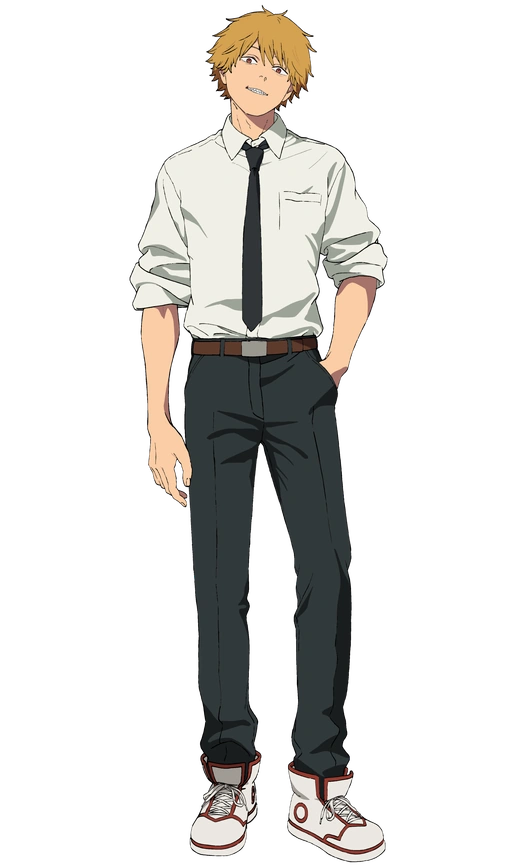
When Fujimoto Tatsuki introduced Denji to the world in 2018, the manga community was shaken. Here was a boy so crushed by poverty and exploitation that his dreams had been ground down to almost nothing — and yet he was the most magnetic, compelling protagonist to hit shonen in years. Denji Chainsaw Man doesn’t inspire you the way Naruto does. He breaks your heart, makes you laugh out loud, and then devastates you again before you even see it coming.
This is a character who literally sold his eye and one of his testicles to the yakuza just to eat. A character who slept in a shack, shared meals with a small orange devil-dog named Pochita, and dreamed not of saving the world but of basic human dignity. That’s the foundation of everything Denji is — and it’s exactly why he defies every rule the shonen genre has ever written for itself. Let’s break down why.
If you haven’t already checked out our piece on why Chainsaw Man is a different kind of shonen, start there — it’ll give you the full picture of the world Denji exists in. But right now, let’s focus on the man himself.
Born Into Nothing — Denji’s Heartbreaking Origin Story
To understand Denji, you have to understand just how brutal his starting point is. Most shonen protagonists begin from a place of tragedy — orphaned, bullied, born without power — but they usually have some kind of floor. A community, a mentor, a spark of hope. Denji Chainsaw Man‘s floor was somewhere in the basement. His father left him a mountain of debt to the yakuza before dying, and Denji inherited every yen of it before he was even old enough to understand what debt meant.

From childhood, Denji was essentially owned. He killed devils alongside Pochita — his chainsaw devil companion — and handed over every bounty to yakuza handlers just to keep himself alive. He wasn’t a devil hunter out of heroism or ambition. He did it because it was the only way he knew to survive. He sold organs to pay down debt. He ate slop. He didn’t go to school. He had no friends, no family, no future.
What makes Fujimoto Tatsuki such a genius is that he never lets the reader forget this origin. Denji’s dreams — eating toast with jam, living in a real apartment, being with someone who actually cares about him — aren’t small in the context of his life. They’re enormous. They represent everything he was denied from birth. When he joins the Public Safety Devil Hunters under Makima and gets a real meal for the first time, his reaction isn’t triumphant. It’s just hungry, tired gratitude. It hits like a gut punch.
This origin isn’t backstory flavoring — it’s the engine that drives everything Denji Chainsaw Man does. His desires, his choices, his vulnerabilities, his blind spots when it comes to Makima — all of it traces back to a kid who was so starved for basic human warmth that he’d latch onto anyone who offered it. That’s not a flaw that gets overcome. That’s a wound that shapes every chapter.
The poverty angle in Chainsaw Man is also unique in shonen because Fujimoto treats it with unflinching realism. This isn’t the “lovable poor kid” trope. Denji is malnourished, socially stunted, and operating at about 10% of his potential as a human being because his whole life has been survival mode. Understanding that is key to understanding why he grows the way he does — slowly, messily, and in directions that other protagonists never go.
Chainsaw Devil Hybrid — How Denji’s Powers Actually Work
Denji’s transformation into the Chainsaw Devil hybrid is one of the most visually iconic moments in modern manga. After the yakuza — working for a devil — betray and kill him, Pochita merges with Denji’s dead body to bring him back to life. The deal: Pochita becomes Denji’s heart, living inside him, and in exchange Denji keeps living out his simple dreams so that Pochita can experience them vicariously. It’s equal parts horrifying and genuinely touching.

When Denji Chainsaw Man pulls the cord in the center of his chest, he transforms into the hybrid devil — a being with a running chainsaw roaring from his head and both forearms. He’s not just wielding chainsaws. He essentially becomes a living, revving, violent machine. His healing factor as a hybrid devil is extraordinary — as long as he has blood, he can regenerate from almost anything. Enemies who’ve torn him to pieces have watched in horror as he just… puts himself back together.
But here’s what makes Denji’s power set interesting from a thematic standpoint: it’s loud, messy, and inelegant. There’s no technique to it. There’s no finesse. Denji runs at things and cuts them apart. That’s the whole move. In a genre full of elaborate techniques, signature moves with dramatic names, and carefully built power systems, the Chainsaw Devil hybrid just… saws through stuff. It perfectly mirrors who Denji is as a character — straightforward, blunt, surprisingly effective, and deeply uncomfortable for more “refined” characters to deal with.
The deeper lore around the Chainsaw Devil is genuinely terrifying. In the devil world, the Chainsaw Devil is feared above almost all others — not because of raw power, but because it can erase other devils from existence entirely. Devils that are eaten by the Chainsaw Devil are forgotten by both humans and the devil world. The fear that humans have of those concepts disappears. This is why Makima and other powerful figures want control of Denji Chainsaw Man so desperately — it’s not the boy they want, it’s the weapon wearing his skin.
The contrast between Denji’s terrifying power and his complete unawareness of how dangerous he truly is might be one of Fujimoto’s most clever tricks. The most feared entity in the devil hierarchy is wandering around thinking about girls and breakfast. For more on how the devil power structure works around Denji, check out our breakdown of the Chainsaw Man devils hierarchy — it adds a lot of context to why Denji’s existence is such a massive deal.
Denji’s Character Arc — Growing Up in the Worst Way Possible
If you go into Chainsaw Man expecting a traditional shonen growth arc — character starts weak, trains hard, gets strong, surpasses his limits through willpower — you’re going to be lost. Denji Chainsaw Man doesn’t grow through training. He grows through trauma. He grows through being used, manipulated, losing people he loves, and being forced to confront what he actually wants underneath all the surface-level wishes.

Early Denji is almost aggressively simple. He’s driven entirely by physical desires — food, touch, comfort. The story seems to be presenting him as a comedic, shallow protagonist at first, and plenty of readers initially dismissed him. But Fujimoto Tatsuki is playing a long game. Every time Denji achieves one of his simple goals, the satisfaction evaporates almost immediately. He finally gets a decent meal — and realizes it doesn’t fill the emptiness. He finally gets close to someone — and discovers that connection can be weaponized against him.
The Makima arc is where Denji’s character development becomes devastating. Makima offers Denji exactly what he’s always wanted — belonging, care, the feeling of being wanted. She calls him her pet, which should be a red flag, but to Denji, who has never experienced genuine affection in any form, even that feels like warmth. He becomes completely devoted to her. And then the full picture of what Makima is and what she’s done — using and discarding everyone around her, including people Denji loved — comes crashing down.
What Denji does with that revelation is where Fujimoto subverts expectations hardest. There’s no rage-powered powerup. There’s no triumphant speech about love conquering manipulation. Denji’s response is quiet, strange, and heartbreaking in its own right. He doesn’t overcome the manipulation by becoming stronger. He overcomes it by finally understanding, at a fundamental level, what he actually needs versus what he was told he needed. That’s not a shonen arc. That’s a literary arc.
By the time Denji reaches Part 2 — now navigating high school in Chainsaw Man: The Academy — he’s carrying everything that happened to him in Part 1 like weight in his bones. He’s not a triumphant hero who leveled up. He’s a survivor who’s figuring out who he is when nobody’s pulling his strings. The emotional continuity Fujimoto maintains for this character across both parts is remarkable — Denji doesn’t forget. He adapts.
There’s a reason so many readers connect with Denji Chainsaw Man on such a personal level. His growth doesn’t look like success. It looks like getting back up after being knocked down and choosing, incrementally, to keep going. For a lot of people, that’s far more relatable than the power-of-determination fantasy that most shonen serves up.
The People Who Made Denji Who He Is
No character exists in isolation, and Denji Chainsaw Man is defined as much by his relationships as by his own choices. The four most important relationships in his life — with Pochita, Makima, Power, and Aki Hayakawa — each illuminate a different part of who he is, and each leaves a permanent mark on him.

Pochita is the beating heart of everything — literally. Their relationship is the emotional core of the entire series. Pochita was the Chainsaw Devil, feared and alone in hell, until he met Denji and they made a deal: Denji would take care of Pochita, and Pochita would lend him his power. What developed between them was genuine friendship — maybe the only truly unconditional relationship Denji ever had. Pochita believed in Denji’s dreams not because they were grand, but because they were his. That’s everything. We’ve written a whole dedicated piece on why Pochita might be Chainsaw Man’s best character — and honestly, the argument is a strong one.
Makima is the most complex and devastating relationship Denji Chainsaw Man has ever had. She’s his boss, his obsession, and his abuser — all at once. She identified exactly what Denji was starving for and manufactured a version of it to keep him compliant. Denji’s devotion to her isn’t stupidity — it’s the predictable response of someone who’s never been shown what healthy attachment looks like. Makima is a masterclass in villainy precisely because she works with reality, not fantasy. If you want to go deep on her, our analysis of Makima as Chainsaw Man’s most terrifying villain covers exactly how she operates.
Power is Denji’s chaotic, selfish, loud, absolutely beloved partner. Their relationship starts as antagonistic bickering and becomes something genuinely beautiful — a friendship built out of mutual weirdness and shared trauma. Power doesn’t nurture Denji in any traditional sense. She’s just as broken as he is. But she’s real with him in a way almost nobody else is. Their dynamic is one of the funniest and most heartfelt things in the entire manga, and what happens to Power hits so hard precisely because of what she and Denji built together.
Aki Hayakawa is the closest thing Denji has to a big brother figure, even if Aki spends most of the early story trying to get Denji assigned to a suicide mission. Aki is everything Denji isn’t — disciplined, principled, driven by a clear and painful purpose. Watching their relationship develop from mutual contempt to genuine protectiveness is one of the great slow-burn arcs in the series. And what Fujimoto eventually does with Aki — turning him into something that forces Denji to make an unbearable choice — is the kind of storytelling that stays with you for years.
Denji vs Naruto, Goku, Deku, and Luffy — Why Denji Is Built Different
Let’s do the comparison that everyone’s been dancing around. How does Denji Chainsaw Man stack up against the gold standard shonen protagonists? And more importantly — why does he feel so fundamentally different from all of them? This isn’t a disrespect to Naruto, Goku, Deku, or Luffy. Those characters are beloved for very good reasons. But Denji operates in a completely different register, and understanding why helps you see just how intentional Fujimoto’s choices were.
The classic shonen protagonist formula goes something like this: protagonist is underestimated or disadvantaged, has a deep personal goal tied to protecting others or achieving a dream, faces increasingly powerful enemies, grows through training and friendship, and ultimately triumphs through willpower and the bonds they’ve formed. It’s a formula because it works. It delivers catharsis. It celebrates determination. There’s a reason billions of people love it.
Denji Chainsaw Man doesn’t do any of that. His goal is personal to the point of being embarrassing by shonen standards. He doesn’t get stronger through training — his power level is basically static, he just gets more willing to do brutal things. His bonds don’t save him in triumphant moments; they’re systematically destroyed around him. And his willpower isn’t the kind that overcomes impossible odds — it’s the stubborn, battered, sometimes pathetic will of someone who just keeps existing because stopping feels wrong.
Where Naruto’s origin (ostracized orphan with hidden potential) is about reclaiming a place in society, Denji’s origin is about never having had a place to begin with. Where Deku’s arc (quirkless boy who earns power) is about proving yourself worthy, Denji’s arc is about figuring out if you can trust the people who tell you you’re worth something. Where Luffy’s journey is fundamentally optimistic and adventure-driven, Denji’s journey is frequently dark, confused, and deeply unglamorous.
Fujimoto Tatsuki has talked about writing Denji as a reaction to the shonen protagonist archetype — specifically, writing someone whose dreams were modest enough to be real. The result is a protagonist who feels closer to actual adolescence than any of his peers. Denji is horny, confused, easily manipulated, sometimes cowardly, sometimes unexpectedly brave. He makes bad decisions for understandable reasons. He doesn’t have a mentor laying out his path. He stumbles through his story the way real people stumble through their lives.
You can see this comparison play out in how Chainsaw Man handles power escalation too. Traditional shonen loves the power ceiling breaking moment — the new form, the hidden technique, the screamed-name transformation. Denji Chainsaw Man doesn’t get that. When things get bad, Denji doesn’t ascend. He gets cut up, he bleeds a lot, he sometimes loses people, and then he gets back up and keeps being the Chainsaw Devil hybrid. It’s not satisfying in the traditional shonen sense. It’s honest. For a deeper look at how this compares to another dark shonen, check out our piece on Chainsaw Man vs Jujutsu Kaisen.
The other key difference is how Denji handles morality. Most shonen protagonists have a strong moral core — they won’t kill, they fight to protect, they believe in the innate goodness of people. Denji’s moral framework is much more fragile and situational. He doesn’t have a code. He has hungers, loyalties, and a vague sense that some things feel wrong even when he can’t articulate why. That ambiguity makes him more complex, even if it makes him less heroic in the traditional sense.
Part 2, the Academy Arc, and Why Denji’s Story Isn’t Over
Chainsaw Man Part 2 — subtitled The Academy — reintroduced Denji Chainsaw Man as a high schooler, living under the identity of Nayuta’s guardian and trying to have something resembling a normal life. It’s a fascinating tonal shift, and fans had big feelings about it. Some felt it was too slow after Part 1’s relentless pace. Others — and we’re firmly in this camp — saw it as Fujimoto doing something genuinely daring: showing what Denji looks like when the immediate crisis is over and the real work of being a person begins.
Part 2 Denji is quieter, more careful, and visibly shaped by everything that happened to him. He’s guarding Nayuta — who carries Makima’s soul — with a kind of fierce, determined protectiveness that feels like Denji trying to do right by something he couldn’t protect before. He’s not healed. He’s just trying to build something small and real that nobody can take from him. In a genre where the protagonist usually ends up with a grand victory, watching Denji try to just get through the week feels surprisingly moving.
The Academy arc also introduces new characters and complications that push Denji in interesting directions, forcing him to reckon with his identity as the Chainsaw Devil hybrid in a world that’s become more aware of what he is. The new antagonists and the ways they target Denji’s specific vulnerabilities show that Fujimoto hasn’t forgotten what makes this character tick — he’s still writing Denji as someone who can be hurt through his connections, through his hunger for belonging, through his complicated relationship with what he is versus who he wants to be.
You can follow the series on Crunchyroll for the anime adaptation, which has received massive praise for its production quality and faithfulness to Fujimoto’s vision — particularly the absolutely electric action sequences that bring the chainsaw devil hybrid fights to life in a way that makes your brain short-circuit.
Part 2 is also significant because it reinforces why Denji Chainsaw Man resonates with so many readers who feel beaten down by life. His story isn’t about becoming extraordinary. It’s about persisting when you’re ordinary and exhausted and the world keeps hitting you anyway. That’s not a shonen message. That’s a human one. And it lands harder than almost anything else currently being published.
Why Denji Chainsaw Man Resonates — And What His Legacy Looks Like
It’s worth stepping back and asking: why did Denji Chainsaw Man hit the way he did? The series launched, grew a massive readership, got a celebrated anime adaptation, and sparked the kind of passionate fan conversation that you just can’t manufacture. Denji isn’t the most powerful protagonist in shonen. He’s not the most noble. He’s not even the most interesting in the conventional sense. So why does he connect so deeply?
Part of it is timing. Chainsaw Man arrived at a moment when readers were ready for something that didn’t ask them to be inspired — just to feel seen. Denji’s core struggle, wanting something simple in a world that seems designed to make simple things impossible, is deeply resonant for a generation dealing with economic pressure, social anxiety, and the sense that the “work hard and you’ll get there” promise has expired.
Part of it is the honesty of how Fujimoto Tatsuki writes desire and loneliness. Denji Chainsaw Man doesn’t perform his emotions. He just has them, loudly and awkwardly, without the self-awareness to package them into something palatable. That rawness — the genuine desperation, the genuine joy at small things, the genuine devastation when those things are taken — feels real in a way that’s rare in any medium, let alone manga.
And part of it is that Denji represents a different kind of strength. He’s not strong because he’s powerful (although he is powerful). He’s strong because he keeps going when most people would have already broken. That brand of resilience — un-triumphant, unpolished, sometimes barely functional — is the kind that a lot of people recognize from their own lives. Not the hero in the spotlight. The person who just refuses to stop existing despite everything.
The legacy of Denji Chainsaw Man is already being written into the genre. You can see his influence in newer manga and anime that are willing to present protagonists with smaller, more personal ambitions and messier emotional lives. Fujimoto Tatsuki cracked open a door that a lot of creators are now walking through — the idea that you don’t need a grand destiny to be worth following. You just need to be honest.
Denji Is the Protagonist Shonen Didn’t Know It Needed
After everything — the brutal origin, the bloody fights, the devastating relationships, the quiet perseverance of Part 2 — what can we say with confidence about Denji Chainsaw Man? Here’s the thesis, plain and simple: Denji is the most honest shonen protagonist ever written, and that honesty is exactly what makes him one of the greatest.
Fujimoto Tatsuki built a character whose flaws aren’t obstacles to be overcome but permanent features of who he is. Denji doesn’t stop being easily manipulated through his longing for connection. He doesn’t stop wanting simple things in a world that has no interest in giving them to him. He doesn’t transform into a flawless hero. He just accumulates experience, carries his losses, and keeps moving forward — sometimes with chainsaws, sometimes with just stubborn, barely-articulate will.
The reason Denji defies every shonen rule isn’t that Fujimoto set out to be subversive for its own sake. It’s that he wrote a character true to a specific kind of human experience — growing up poor, exploited, and starved for love — and let that truth drive every choice. The chainsaws, the devils, the baroque violence of the Chainsaw Man world all serve that truth rather than overwriting it.
In a genre built on aspiration and triumph, Denji Chainsaw Man is something rarer and more valuable: a mirror. He shows us what it actually looks like to want simple things with your whole heart, to be failed by the world over and over, and to keep showing up anyway. That’s not a shonen trope. That’s something much more important. And it’s why Denji will still be talked about long after most of his generation of protagonists have faded from memory.