What Are Breathing Styles in Demon Slayer?
If you’ve ever watched Kimetsu no Yaiba and wondered how ordinary humans manage to stand toe-to-toe with terrifying demons, the answer is the demon slayer breathing styles. These combat techniques form the entire foundation of the Demon Slayer Corps’ power, and understanding how they work makes the series dramatically richer to watch and read.
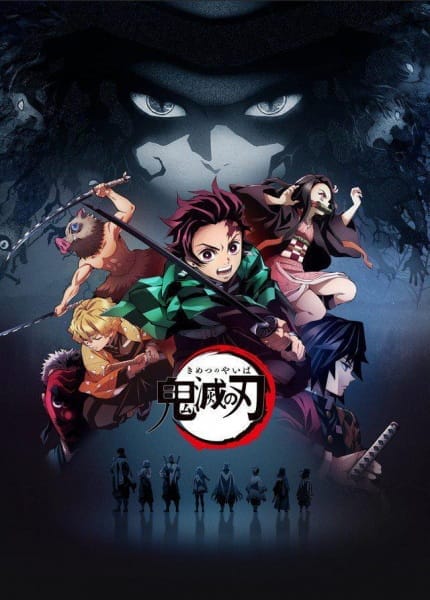
At their core, demon slayer breathing styles are specialized sword techniques that combine precise breathing patterns with swordsmanship to push the human body far beyond its natural limits. By controlling oxygen flow to the lungs, heart, and muscles, Demon Slayer Corps members can dramatically boost their speed, strength, and reflexes — enough to actually threaten creatures that regenerate wounds in seconds.
The demon slayer breathing styles are organized into named forms — numbered techniques within each style that represent distinct attack patterns. Each form has its own footwork, blade angle, and speed. Some are spinning attacks, some are rapid multi-slash combos, and others are deliberate single strikes designed to decapitate demons in one motion.
What’s especially fascinating is the hierarchy within the system. Every breathing style in the series — with one possible exception — traces its lineage back to a single source: Sun Breathing. Over generations, Sun Breathing was taught to students who couldn’t fully master it. Those students adapted the technique to suit their bodies, creating derivative styles. Those derivatives then spawned further derivatives. The result is the rich, interconnected family tree of demon slayer breathing styles we see across the manga and anime.
Sun Breathing — The Origin of All Styles (Yoriichi Tsugikuni)
Sun Breathing sits at the absolute apex of all demon slayer breathing styles. It was created by Yoriichi Tsugikuni, widely regarded as the greatest swordsman in the history of the Demon Slayer Corps — and arguably the most powerful human being ever depicted in the series.
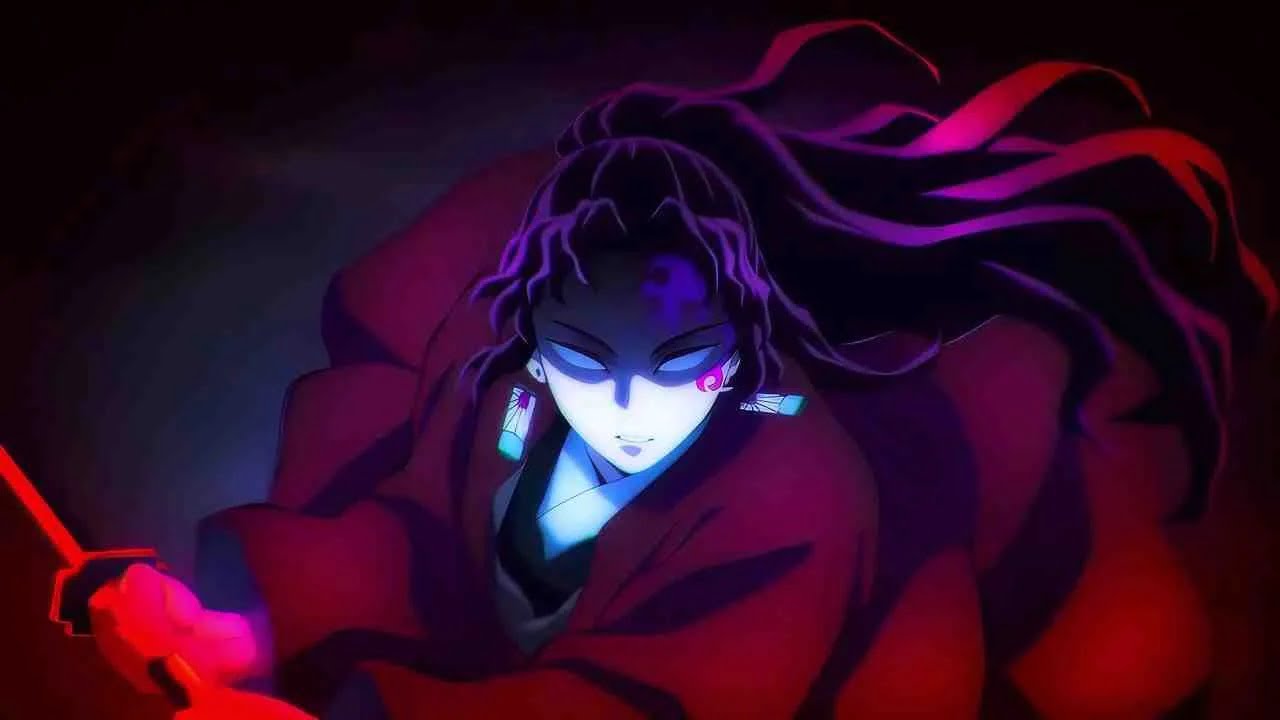
According to the Demon Slayer Fandom Wiki, Yoriichi was born with what the series calls the Transparent World — an ability to see an opponent’s muscles, blood flow, and joint movement in real time. This made him nearly untouchable in combat. He developed Sun Breathing as a complete system designed to attack demons from every possible angle, eliminating the possibility of escape. His Thirteenth Form — a continuous sequence of all twelve preceding forms performed in one fluid motion — was specifically engineered to destroy Muzan Kibutsuji, the demon progenitor.
Sun Breathing has thirteen named forms:
- First Form: Dance — A single, fast downward slash
- Second Form: Clear Blue Sky — A 360-degree spinning slash
- Third Form: Raging Sun — Two horizontal slashes that repel incoming attacks
- Fourth Form: Burning Bones, Summer Sun — An upward circular slash
- Fifth Form: Setting Sun Transformation — A backflip slash targeting the neck from above
- Sixth Form: Solar Heat Haze — A hazy, deceptive strike difficult to track
- Seventh Form: Beneficent Radiance — A spiraling downward slash
- Eighth Form: Sunflower Thrust — A straight, piercing thrust
- Ninth Form: Purgatory — A powerful, wide-arc slash
- Tenth Form: Flame Dance — A two-strike combo, vertical then horizontal
- Eleventh Form: Dragon Sun Halo Head Dance — A powerful continuous spinning slash
- Twelfth Form: Flame Dance (Blazing Wheel) — A circular spinning attack
- Thirteenth Form — All twelve forms in sequence, targeting all of Muzan’s weak points simultaneously
Tanjiro Kamado eventually rediscovers Sun Breathing through cellular memory inherited from his ancestor Sumiyoshi, who was close friends with Yoriichi. Tanjiro initially uses it disguised as the Hinokami Kagura — a ritual fire dance his father performed every New Year’s. By the series’ finale, Sun Breathing becomes Tanjiro’s primary style, and it’s what ultimately pushes Muzan to the brink of destruction.
Water Breathing — The Most Common Style (Tanjiro, Giyu)
If Sun Breathing is the origin, Water Breathing is the most widespread of all demon slayer breathing styles. It’s taught at the Butterfly Mansion and is the standard style passed down through the Water Hashira’s lineage. Its forms are elegant, fluid, and adaptable — making Water Breathing accessible to a wide range of swordsmen.
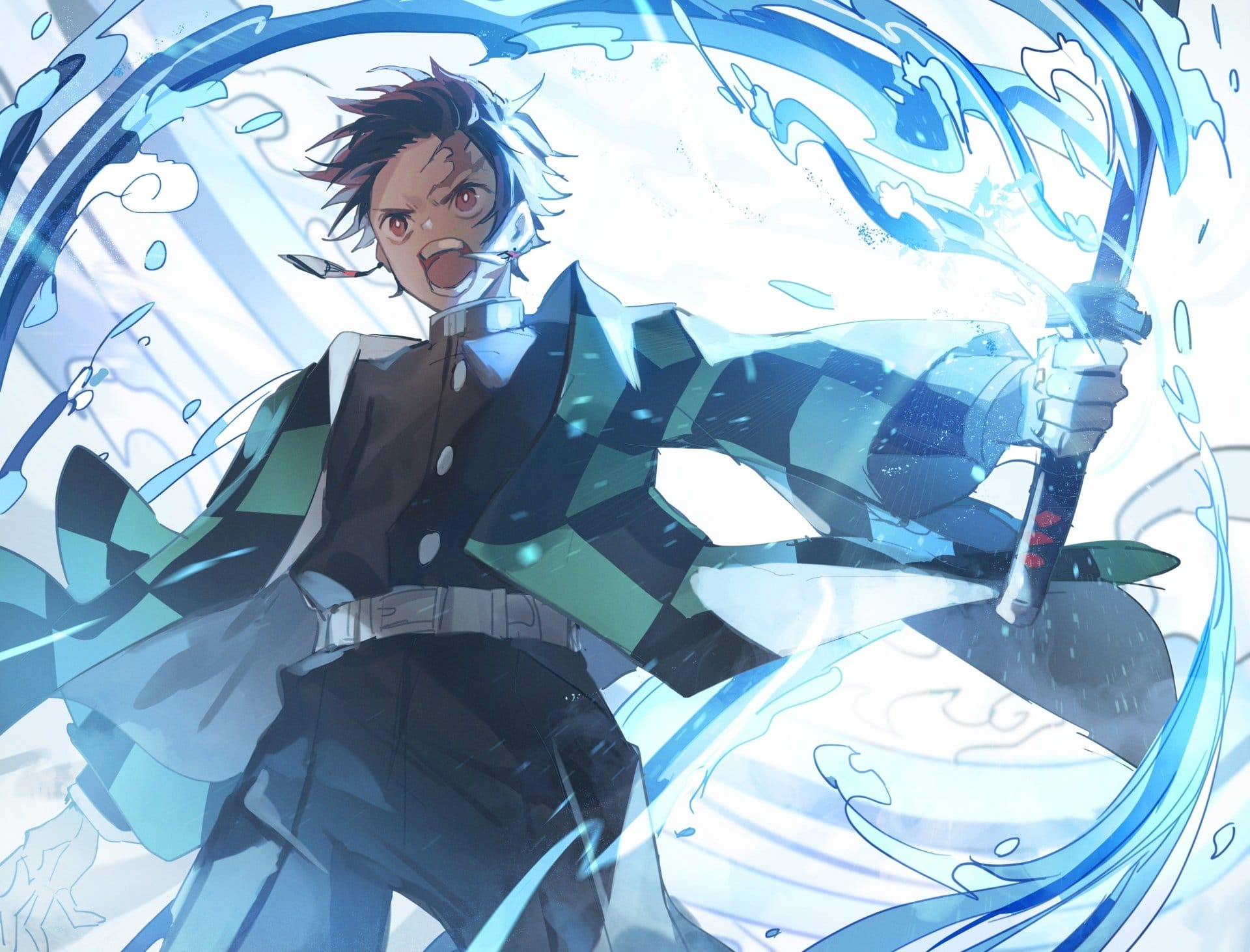
Water Breathing was derived from Sun Breathing and shaped to mimic the qualities of water — flowing through obstacles, building pressure, and striking with precision rather than raw force. It suits fighters who rely on technique and positioning over brute strength.
Water Breathing has ten standard forms, with Giyu Tomioka adding an unofficial eleventh:
- First Form: Water Surface Slash — A single fast horizontal slash
- Second Form: Water Wheel — A jumping vertical rotating slash
- Third Form: Flowing Dance — A continuous curving slash
- Fourth Form: Striking Tide — Multiple consecutive slashes in quick succession
- Fifth Form: Blessed Rain After the Drought — A slow, gentle beheading that minimizes the target’s pain
- Sixth Form: Whirlpool — A twisting slash that distorts the surrounding air
- Seventh Form: Drop Ripple Thrust — A fast thrusting attack
- Eighth Form: Waterfall Basin — A downward slash used to redirect momentum
- Ninth Form: Splashing Water Flow — Minimizes landing stance to reduce blind spots
- Tenth Form: Constant Flux — A rotating slash that builds power the longer it spins
- Eleventh Form: Dead Calm (Giyu only) — Giyu stops moving entirely and deflects all incoming attacks with minimal movement; a masterwork of counter-fighting
Both Tanjiro and Giyu Tomioka (the Water Hashira) use Water Breathing, though Tanjiro eventually transitions to Sun Breathing as his primary style. Giyu’s Dead Calm is considered one of the most beautiful and deadly techniques in the demon slayer breathing styles system — a form he created himself after watching a fellow student die protecting him.
Water Breathing is one of the styles you’ll see highlighted in our Best Anime Fights of All Time list — Tanjiro’s battles are standout moments of animated swordsmanship.
Flame Breathing vs Fire Breathing — What’s the Difference?
This is one of the most common points of confusion around the demon slayer breathing styles, and it’s worth clearing up definitively: Flame Breathing and Fire Breathing are not the same thing. They look similar on screen, but they have completely different origins, users, and philosophies.
Flame Breathing is the hereditary style of the Rengoku family, passed down through generations of Flame Hashiras. It’s a derivative of Sun Breathing and is one of the oldest and most prestigious of all demon slayer breathing styles. Kyojuro Rengoku, the Flame Hashira who sacrifices his life against Akaza on the Mugen Train, is its most iconic user. Flame Breathing has nine forms, with the final form — Ninth Form: Rengoku — so physically devastating that it destroys the user’s arm upon use.
Hinokami Kagura (which Tanjiro initially uses before understanding it as Sun Breathing) is sometimes mistakenly called Fire Breathing. It is not a derivative — it IS Sun Breathing, preserved across generations in the Kamado family as a ritual dance rather than a formal combat style.
The Rengoku family, at some point in history, lost the knowledge that Flame Breathing descended from Sun Breathing. This disconnect is one of the more poignant details in the series: the Flame Hashira tradition is deeply honorable, but it operates with an incomplete understanding of where its own power came from. Kyojuro’s story — his brilliance, his death, and what he means to Tanjiro — is a major part of our Swordsmith Village Arc Review, which explores how his legacy echoes through subsequent story arcs.
Thunder Breathing — Zenitsu’s Legendary One-Form Mastery
Thunder Breathing is one of the most electrifying of all demon slayer breathing styles — and it’s made even more iconic by the way Zenitsu Agatsuma uses it. Thunder Breathing is a derivative of Wind Breathing (itself derived from Sun Breathing) and is built around a core principle: explosive, lightning-fast movement.
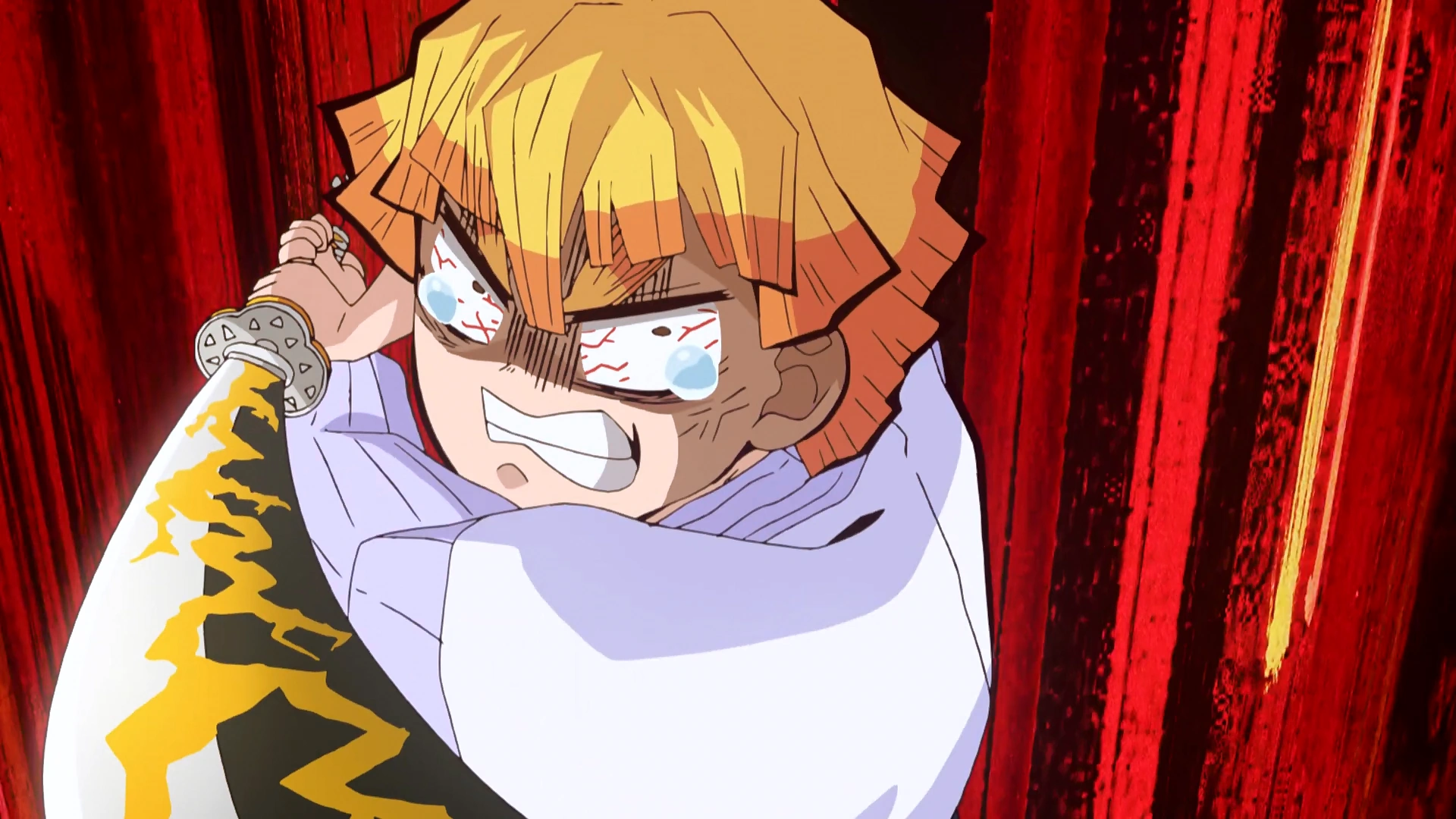
Thunder Breathing has six official forms. Most practitioners learn all six. Zenitsu, however, was only ever able to master First Form: Thunderclap and Flash — a single blinding dash slash so fast it appears instantaneous. Rather than accepting that limitation, Zenitsu refined it to an almost incomprehensible degree, adding the variants Sixfold, Eightfold, and eventually his own creation: Seventh Form: Flaming Thunder God.
- First Form: Thunderclap and Flash — A high-speed dash with a single draw slash at the end
- Second Form: Rice Spirit — A series of downward slashes while jumping
- Third Form: Thunder Swarm — Multiple rapid slashes in a swarm pattern
- Fourth Form: Distant Thunder — A spinning slash to the sides
- Fifth Form: Heat Lightning — A high-speed rotating slash
- Sixth Form: Rumble and Flash — A two-person simultaneous technique
- Seventh Form: Flaming Thunder God (Zenitsu only) — A custom form combining extreme speed with a complex curved slash trajectory
Zenitsu’s mastery of a single form and its variants is one of the series’ most compelling character arcs. He is terrified most of the time, but when pushed past a threshold — especially when unconscious or when someone he loves is threatened — he becomes one of the most dangerous fighters in the Corps. His battle against Kaigaku (the Upper Rank demon who was also Zenitsu’s fellow student) is one of the most emotionally charged fights in the entire series.
Wind Breathing (Sanemi Shinazugawa)
Wind Breathing is another top-tier style among all demon slayer breathing styles, and its user — Sanemi Shinazugawa, the Wind Hashira — is one of the most physically gifted fighters in the Corps. Wind Breathing focuses on violent, unpredictable slashes that cut from multiple directions at once, mimicking the chaotic nature of wind.
Wind Breathing has nine forms:
- First Form: Dust Whirlwind Cutter — Multiple horizontal slashes in a spinning rush
- Second Form: Claws — Sleeting Clouds — Two vertical slashes in a downward V shape
- Third Form: Clear Storm Wind Tree — Multiple rapid slashes in a twisting pattern
- Fourth Form: Rising Dust Storm — A wide, sweeping slash
- Fifth Form: Cold Mountain Wind — A sudden backward slash targeting pursuers
- Sixth Form: Black Wind Mountain Mist — A full-body spinning slash
- Seventh Form: Gale, Sudden Gusts — Multiple slashes aimed at specific points
- Eighth Form: Primary Gale Slash — A singular devastating slash
- Ninth Form: Idaten Typhoon — A headless handstand spinning slash
Sanemi’s raw combat ability is exceptional even by Hashira standards. He has a rare blood type that acts as a natural intoxicant to demons — which adds a tactical layer to his fights. His clash with Kokushibo (the Upper Rank One demon and Yoriichi’s twin brother) in the Infinity Castle is one of the series’ most devastating battles.
Stone Breathing (Gyomei Himejima)
Stone Breathing belongs to Gyomei Himejima, the Stone Hashira — and many fans consider him the strongest Hashira, period. His place within the demon slayer breathing styles hierarchy is notable because Stone Breathing is one of the oldest derivatives of Sun Breathing, and its five forms are extremely rare techniques.
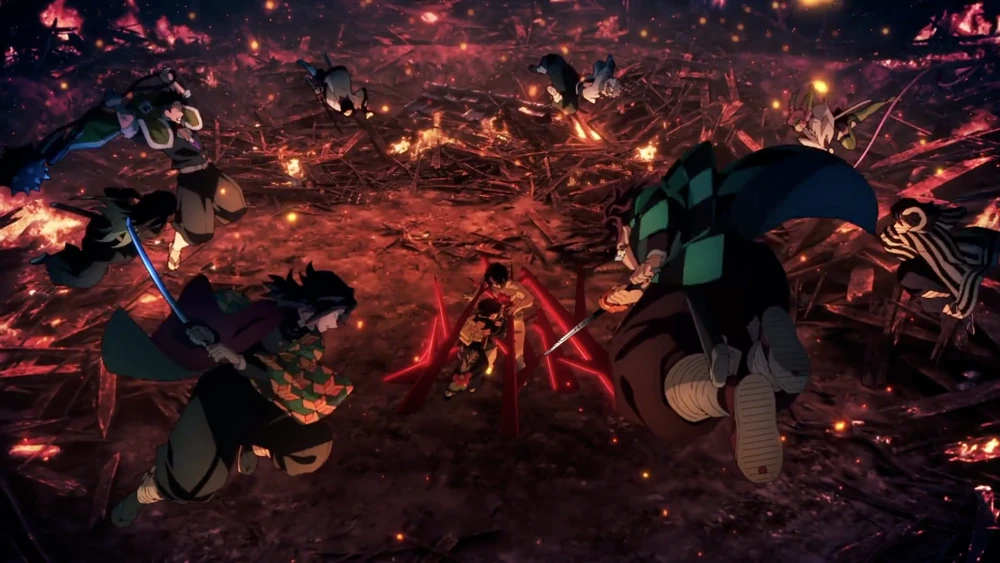
What makes Gyomei unique isn’t just Stone Breathing — it’s his weapon. He doesn’t use a katana. Instead, he wields a spiked flail and hand axe connected by a long chain, which means his Stone Breathing forms are entirely adapted for that weapon type.
Stone Breathing’s five forms include techniques like Fifth Form: Arcs of Justice, which involves swinging his chain in complex orbital paths to attack from every angle. Gyomei is also blind, which means he fights entirely through sound, air movement, and heightened sensory awareness — making his mastery of Stone Breathing even more extraordinary.
His battle against Kokushibo alongside Sanemi and Muichiro is considered one of the most brutal sequences in the entire manga, and it showcases exactly why Stone Breathing’s raw destructive power earns a spot near the very top of any demon slayer breathing styles ranking.
Sound Breathing (Uzui Tengen’s Flashy Style)
Sound Breathing is the style of Uzui Tengen, the Sound Hashira — a former Shinobi who brings an entirely different philosophy to the demon slayer breathing styles system. Where most styles emphasize precision or flow, Sound Breathing is about overwhelming sensory disruption.
Sound Breathing has five forms, all built around the concept of hearing the “score” of a battle — identifying rhythms and patterns in an enemy’s movements and striking during gaps in the beat. This is a direct extension of Uzui’s Shinobi training, where pattern recognition in combat was life or death.
His most famous technique is Fourth Form: Constant Resounding Slashes and the devastating Fifth Form: String Performance — which uses his twin Nichirin cleavers connected by a chain to create a massive spinning attack capable of cutting through enormous areas.
Uzui’s battle against Daki and Gyutaro in the Entertainment District Arc is one of the most cinematically spectacular fights in the anime — the kind of sequence that earns spots on any Best Anime Fights of All Time list. The explosion-heavy finale, where Uzui fights while having lost an eye and a hand, is a high point of the entire series.
Love Breathing (Mitsuri Kanroji’s Custom Form)
Love Breathing is one of the most unusual of all the demon slayer breathing styles because it was created entirely from scratch. Mitsuri Kanroji, the Love Hashira, originally trained in Flame Breathing under Rengoku. But her body — with its uniquely flexible muscles and unusual physical makeup — couldn’t perform Flame Breathing’s forms efficiently.
So she invented her own style. Love Breathing takes the base of Flame Breathing and adapts its movements for extreme flexibility and a custom weapon: an ultra-thin, almost ribbon-like whip-sword that no other Hashira could even lift correctly, let alone wield. The result is a style that looks nothing like conventional swordsmanship — it’s sweeping, acrobatic, and almost dance-like.
Love Breathing has six forms, including First Form: Shivers of First Love, which involves a rapid series of whip-slashes across a wide area, and Sixth Form: Cat-Legged Winds of Love, which uses her flexible legs and spinning momentum to generate enormous cutting range. Mitsuri’s unique physical composition means she hits significantly harder than her petite appearance suggests — her muscle density is eight times that of a normal person.
Mitsuri is also notable for her role in the Swordsmith Village Arc — check out our full Swordsmith Village Arc Review to see how her story develops there alongside Tanjiro and Muichiro.
Insect Breathing (Shinobu’s Poison-Based Innovation)
Insect Breathing is perhaps the most intellectually creative of all the demon slayer breathing styles. It was developed by Shinobu Kocho, the Insect Hashira, out of a very specific problem: Shinobu is not strong enough to decapitate a demon.
Every other Demon Slayer Corps member kills demons by decapitating them with a Nichirin blade. Shinobu physically cannot generate enough force to sever a demon’s neck. So instead of finding another style, she engineered around the limitation entirely. She developed a style built entirely around her modified blade — a thin, needle-like sword coated with wisteria flower poison — and focuses on piercing attacks that inject lethal doses of poison rather than cutting.
Insect Breathing has four forms:
- First Form: Butterfly Dance — Caprice — Three rapid thrusts from different angles
- Second Form: Beetle Sting — Lasting Nip — Two simultaneous pierces at precise points
- Third Form: Dragonfly Dance — Layered Disorder — High-speed thrusts in multiple directions
- Fourth Form: Centipede — Hundred-Legged Zigzag — Extremely fast multi-directional thrusts
Shinobu also spent years researching and stockpiling wisteria poison — ultimately ingesting enough of it into her own body before her fight with Doma (Upper Rank Two) that she became a living poison delivery weapon. It’s a brilliant — and tragic — piece of strategy that reflects her entire character: someone who fights impossibilities not with brute force, but with intelligence.
Shinobu stands alongside other remarkable antagonists and heroes in anime — read our analysis of the Best Anime Villains of All Time to see how Doma and other Demon Slayer antagonists compare to the medium’s all-time greats.
Beast Breathing — Inosuke’s Self-Created Style
Beast Breathing stands apart from every other entry in the demon slayer breathing styles family tree because it has no formal lineage. Inosuke Hashibira — raised by wild boars in the mountains — taught himself swordsmanship from scratch with zero formal training, and what he created is something no Corps member had ever seen before.
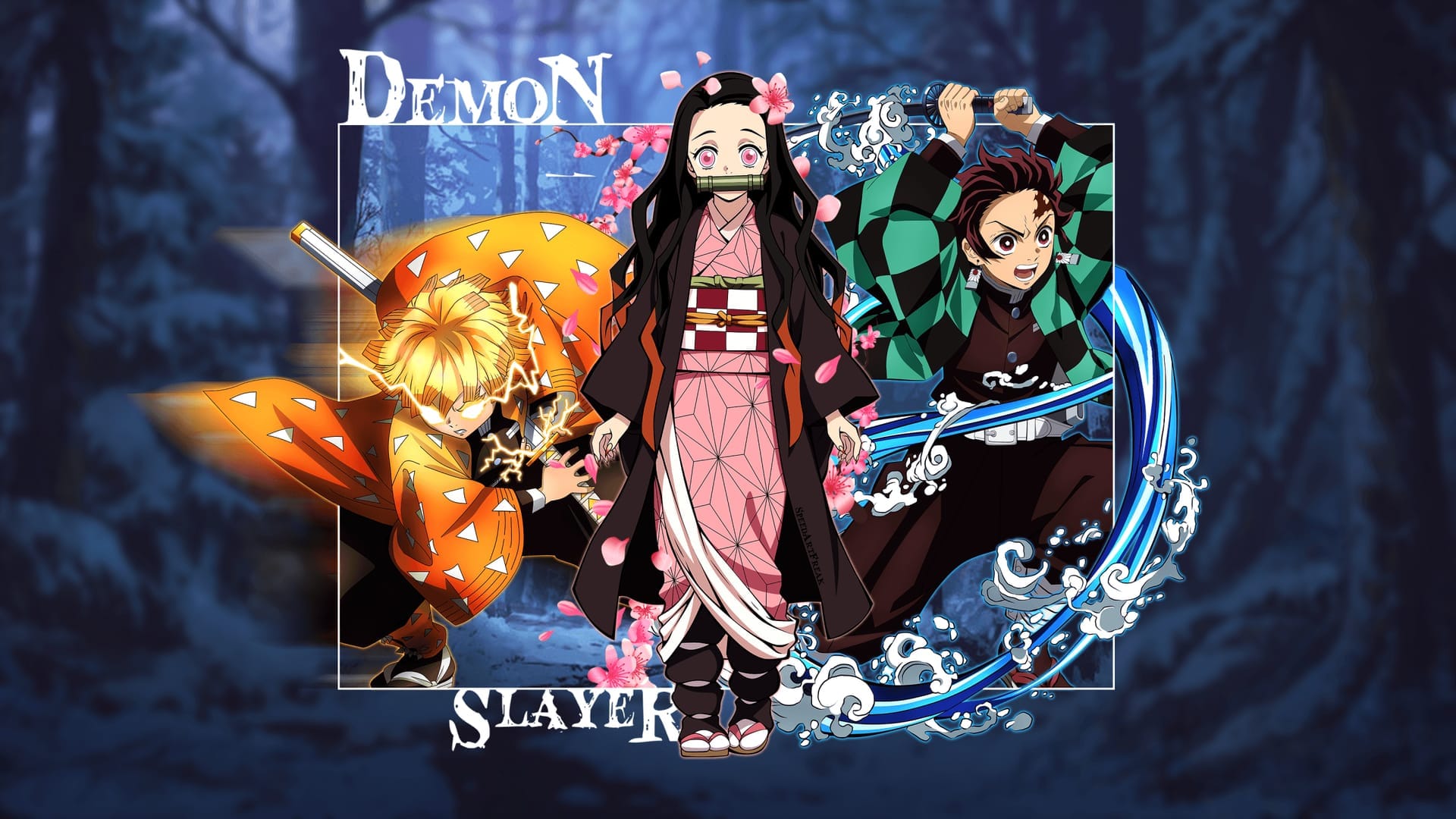
Beast Breathing mimics the fighting patterns of wild animals — unpredictable, aggressive, and designed to overwhelm opponents through sheer ferocity and spatial disorientation. Inosuke uses two chipped swords simultaneously and bends his body in ways that shouldn’t be physically possible (his joints are uniquely loose, allowing him to rotate limbs far beyond a normal range).
Beast Breathing has eleven forms, including:
- First Fang: Pierce — A rushing straight thrust
- Third Fang: Devour — A pincer-like scissors slash from both blades
- Fourth Fang: Slice ‘n’ Dice — Rapid alternating left-right slashes
- Seventh Fang: Spatial Awareness — Inosuke extends sensory awareness to map all nearby movement through surface vibration
- Tenth Fang: Whirling Fangs — Twin swords spun rapidly to deflect attacks
- Eleventh Fang: Sudden Throwing Strike — Throwing a blade at an opponent
Because it was self-taught and based entirely on animal instinct rather than formal technique, Beast Breathing exists outside the Sun Breathing lineage — or at least in a way that can’t be cleanly traced back. Inosuke’s style is wildly effective but also highly specialized to his own unusual physiology. Nobody else could replicate it even if they tried.
Serpent and Mist Breathing
Two more important demon slayer breathing styles deserve attention: Serpent Breathing and Mist Breathing, both carried by Hashira-level swordsmen with distinct personalities and tragic backstories.
Serpent Breathing belongs to Obanai Iguro, the Serpent Hashira. It’s a derivative style characterized by curving, winding slashes that twist toward targets like a striking snake. Obanai’s unique straight-edge blade is curved at the tip, which allows him to execute these twisting cuts more effectively. Serpent Breathing’s most memorable form is Fifth Form: Slithering Serpent — a series of meandering slashes that are extremely difficult to predict or read.
Obanai is one of the more complex Hashira emotionally — his devotion to Mitsuri Kanroji and his dark origins within a family that used him as a sacrifice for a demon makes him one of the series’ most quietly devastating characters. His final battle alongside Tanjiro against Muzan is a defining moment for him.
Mist Breathing belongs to Muichiro Tokito, the Mist Hashira and youngest Hashira in Corps history — achieving that rank after only two months of training. Mist Breathing is a derivative of Wind Breathing and emphasizes disorienting speed and unpredictable movement patterns. Its seven forms include standouts like Sixth Form: Lunar Dispersing Mist — a spinning slash where Muichiro continues to turn and slash with his back leg as a follow-up — and Seventh Form: Obscuring Clouds, which shifts his attack speed between extremely fast and slow in unpredictable patterns to confuse demons.
Muichiro’s background — he lost his memories after his twin brother was killed — gives his cold, detached demeanor enormous emotional weight once you learn the full story. His battle against Gyokko (Upper Rank Five) in the Swordsmith Village Arc is one of the anime’s most visually distinctive fights.
All Breathing Styles Ranked — Which Is Strongest?
Ranking the demon slayer breathing styles is genuinely difficult because strength depends heavily on the user, their mastery level, and the context of a fight. That said, looking at feats, design, and lore, we can make a strong case for a rough hierarchy. Note that this is about the styles themselves and their theoretical ceiling — not necessarily the power level of their current users.
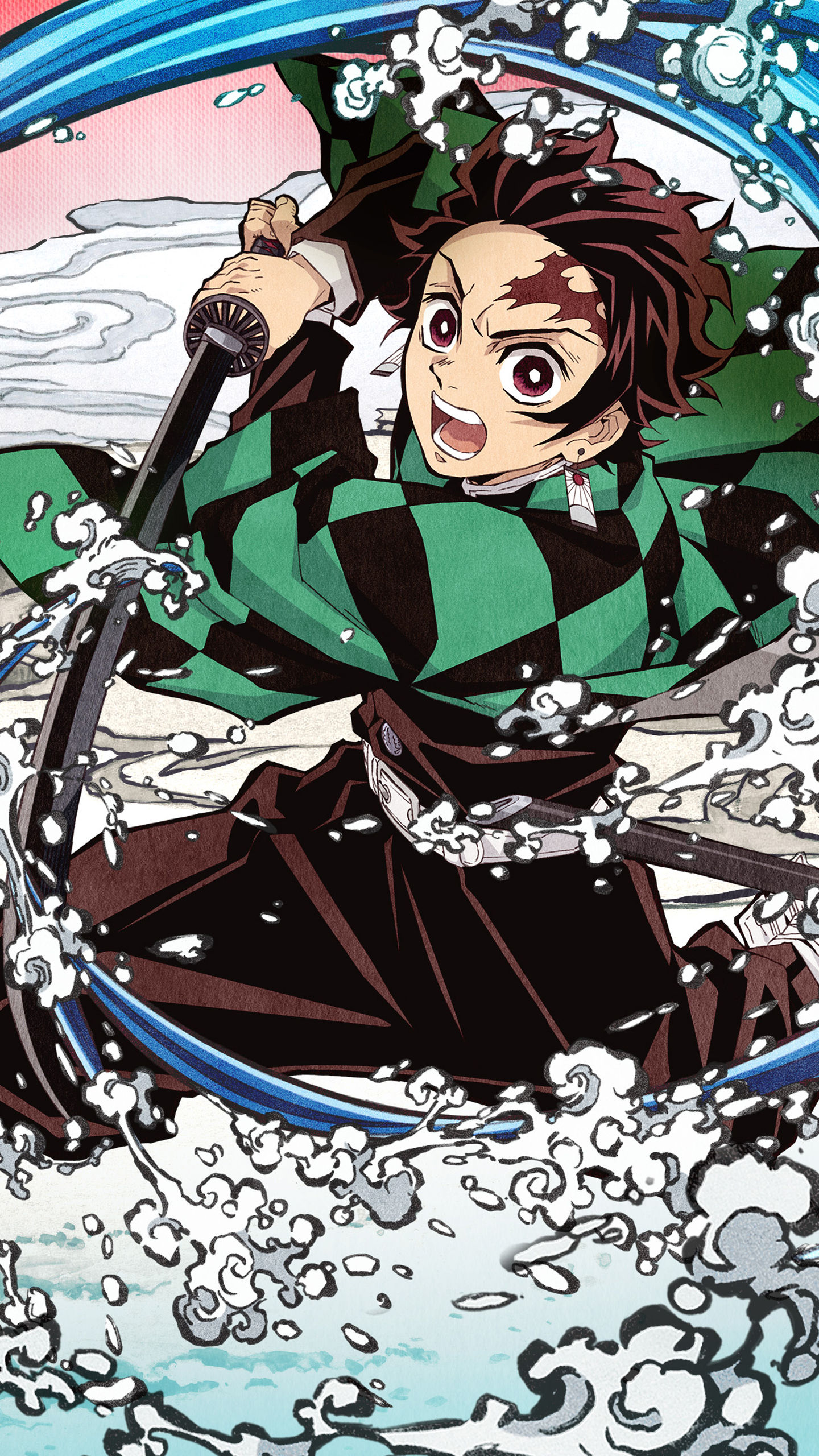
Power systems in anime are endlessly debated — if you enjoy these comparisons, check out our breakdown of Nen vs Cursed Energy for how Demon Slayer’s system stacks up against other top-tier anime power systems.
| Rank | Style | User(s) | Verdict |
|---|---|---|---|
| 1 | Sun Breathing | Yoriichi, Tanjiro | The origin of all styles; designed specifically to kill Muzan. No style surpasses it. |
| 2 | Stone Breathing | Gyomei Himejima | Gyomei is widely considered the strongest Hashira. His forms are brutally effective at any range. |
| 3 | Flame Breathing | Rengoku, Michi | Ancient, powerful, and refined over generations. Ninth Form is potentially self-destructive — it’s that powerful. |
| 4 | Wind Breathing | Sanemi Shinazugawa | Nine aggressive, multi-directional forms. Sanemi’s raw physicality makes this terrifyingly effective. |
| 5 | Water Breathing | Tanjiro, Giyu | The most versatile and teachable style. Giyu’s Dead Calm is one of the best defensive techniques in any style. |
| 6 | Mist Breathing | Muichiro Tokito | Speed and unpredictability are deadly. Muichiro’s mastery at age 14 is proof of this style’s ceiling. |
| 7 | Thunder Breathing | Zenitsu, Kaigaku | Pure speed can overwhelm almost any opponent. Zenitsu’s Flaming Thunder God is a personal peak of the style. |
| 8 | Sound Breathing | Uzui Tengen | Spectacular and devastating in open combat. Uzui’s Shinobi training amplifies it considerably. |
| 9 | Serpent Breathing | Obanai Iguro | Uniquely unpredictable. Less raw power than others but extremely hard to defend against. |
| 10 | Beast Breathing | Inosuke Hashibira | Wildly effective within its niche. Highly user-specific — nearly impossible to replicate. |
| 11 | Love Breathing | Mitsuri Kanroji | Powerful and unique, but extremely body-dependent. Almost no one else could use it as intended. |
| 12 | Insect Breathing | Shinobu Kocho | Lowest raw power of any Hashira style — but Shinobu’s innovation turns this into a deadly poison-delivery system. |
It’s worth noting that ranking the demon slayer breathing styles in isolation misses the point somewhat. The series is consistent in showing that mastery matters more than the style itself. Zenitsu mastered one form of Thunder Breathing and defeated an Upper Rank demon with it. Shinobu’s Insect Breathing — objectively the weakest in terms of cutting power — played a direct role in killing Doma, the second-strongest demon in existence. The style is the tool; the fighter is what matters.
What makes the demon slayer breathing styles system so satisfying as a power system is that it rewards character consistency. Every fighter’s style reflects who they are: Inosuke’s wild Beast Breathing fits his feral upbringing, Shinobu’s intellectual Insect Breathing fits her analytical personality, and Zenitsu’s thunderous speed fits someone who — when he actually fights — moves too fast for fear to keep up. You can compare this to how other anime handle power systems by reading our piece on Nen vs Cursed Energy.
The demon slayer breathing styles are also unusual among anime power systems in having a clear, traceable history. Unlike many shonen systems where power just escalates arbitrarily, every style in Demon Slayer has a reason it exists, a person who invented it, and a lineage that connects back to a single genius swordsman standing alone in a field seven hundred years ago. That kind of worldbuilding depth is part of why the series resonates so strongly — and why the demon slayer breathing styles remain one of the most discussed combat systems in modern anime.
You Might Also Enjoy
If you enjoyed breaking down the demon slayer breathing styles, here are some other deep-dives worth reading:
- Demon Slayer: Swordsmith Village Arc Review — How does the third arc hold up? We break down every episode, fight, and character beat.
- Best Anime Fights of All Time — The definitive ranked list of the greatest animated battles ever put to screen.
- Nen vs Cursed Energy: HxH vs JJK Power Systems — How do Demon Slayer’s breathing styles compare to the power systems in Hunter x Hunter and Jujutsu Kaisen?
- Best Anime Villains of All Time — Muzan Kibutsuji, Doma, Kokushibo — where do Demon Slayer’s demons rank among anime’s greatest antagonists?
- Best Anime on Netflix — Looking for your next series? We’ve ranked the best anime currently streaming on Netflix.